Lena Waithe on the Process of Writing a Script
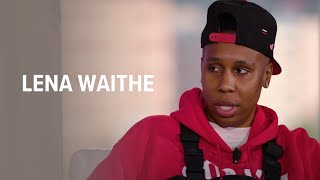
Interview (Inbound studio) with Lena Waithe, hosted by Laura Moran (recorded April 17, 2019). Waithe describes how she balances multiple roles (actor, writer, producer) by relying on a small team (assistants, execs, agency), how television and films she watched growing up shaped her desire to make people "see themselves," and her writing process (beat-based, visual image writing, strong action lines). She reflects on responsibility when representing underrepresented groups (focus on truth of characters rather than representing a community), what she looks for in projects (they must "haunt" her or change the conversation), frustrations with the business side of art, mentors who influenced her (worked for Mara Brock Akil, Gina Prince-Bythewood, Ava DuVernay), and advice to younger self (lean in, make mistakes, keep going).
Questions this video answers
April 17, 2019.
Raquel Baker and Mendonna.
Andrew Coles.
An executive named Rishi.
Queen & Slim; Daniel Kaluuya is named as a leading man.
Chapters
Always. Great.
Excellent.
I love Ira. I've known Ira for a really long time.
Excellent.
He's good.
We are live. So welcome everybody to the Inbound studio. I'm Laura Moran, your host, and I'm joined with Lena Waithe, actress, producer, screenwriter, Emmy award winning writer. Thank you so much for being here with us at Inbound. Thank you for having me in the studio. That's a lot of titles. You've got a lot going on. How do you sort of balance all those different roles and bounce between one and the other?
You know, it's interesting because I think there's a sort of thought that people maybe in my position like that we just sort of do everything and we just like have eight hands and, you know, clones of ourselves. I have a really great team. It's a small team, but it's a really mighty one. I have two assistants, Raquel Baker, who's in the building right now, another second assistant, Mendonna, who's amazing. And they both came to me through Instagram and interning and all that kind of stuff. So they really do act as the people who run. I have a lot of mentees and things like that. And they do all of that because they've been there and they sort of operate it. And then I have a wonderful exec named Rishi who reads through everything before it gets to me. I have an awesome manager, Andrew Coles, my amazing team at wme and then just people, you know, there's no project that I'm on where I'm the only. Where I'm a one man band. Like, there's like producers, there's showrunners, there's directors and things like that. So I'm really good at bringing on people that I trust and I love and I think are amazing. So that way I can let them do their job while I go do what I do. But really, it's like scheduling is just sort of a shit show fair. But that is something I don't handle. Like, people seriously. Like, I even do it with friends. Like, they're like, hey, I'm like, ask Raquel. You know, like, I could be out of town, I could be, you know. But also what we try to do is when I have a thing, like I'm filming a movie right now, I can't say what it is yet because it'll be out soon. But like, when I'm on that set, yeah, during breaks, I'll check my email, but I'm focused and locked in on that. When I'm on this other show, I Can't say just yet, but announcement will be out on the 10th. You know, I know I'm locked in and I'm paying attention to that. So I think what I try to do is when I'm doing a particular thing, I'm there 120%. And then when it's like, okay, and I do. I've gotten practice that. Okay, I've been feeling. I'll be filming for like four hours. And then I'll have a conference call about wine producers on this project, or I'll have a call about directors for this show and this and that. And so I can divvy it up on a certain day. And then I'll have a call with my uncle, you know, in Chicago about, like, advice about things and stuff like that. So it just sort of goes with territory. You're just like, your brain is just constantly moving and going. And so at the end of the night you come home and watch Real Housewives of a Potomac or something.
Yes, you do. I could go, we could have an entire in house studio about the Real Housewives.
My fiance enjoys that kind of show. So you don't.
Definitely not.
I, you know, I'm gonna try to be a good partner and go, okay, cool, cool, cool.
Fair enough. Well, obviously you've got a large team that does all that with you. How do you or what do you look for in the people that you do work with to pick the right team and get the support that you need with everything you've got going on?
No, that's a great question. I mean, people that, you know, will put up with me and constantly asking for updates on things. I think that's really kind of what I feel like my job is most of the day. Like, where are we at on this? What's the update on that? And so I'm looking for people that don't stutter but say, don't know. I will get an answer for you by end of day. You know what I mean? Like, people that are just like. And also I like people who are like myself in that there is. You never take no for an answer. There's always a way. And that's a certain kind of personality. And there's some people that are timid and shy and are like, oh, how do I. You know? And my thing is always no. You know, I have this thing I always say, I'm like, don't be afraid to show your teeth sometimes. And you don't have to do it often. But I always say, like, if there's a Thing like, my system's like, oh, I can't get this done. Or they're not giving me back. I'm like, then. Or there's not respond to my email. I say, then. Yeah. Like, I call it, like, then text. Yeah. You know, like. And then it's like, okay, they hit me. So I'm trying to teach, like, if the one way doesn't work, then figure out another way to get. Like, those are the kind of people I want around that they won't come back to me with a reason why something isn't done yet that is going to stay away until they figure out how they come back to me with a. With an answer. Yeah. So those are people I like to be around.
Where does that drive? Like, in you. Where does that drive come from?
It's interesting. I recently told someone about this. It's, like, very random, but. And my fiance makes fun of me. I like this movie a lot, and it's like, a very random movie. Right. But for some reason, I found this inspiration in this exchange. So y' all in the movie, Troy? Yes. Okay. See? Thank you. Okay.
See, I slept through it in high school.
It's fine. Fair enough. I did not.
Fair enough.
There's a moment at the beginning where this little boy is sent to go get Achilles to fight. And of course, Achilles is in bed with two women and, like, sleep and all that kind of stuff. So he comes out, and the little boy is like, you gotta go fight this guy for the king. And he says, and the little boy. And he's like, okay, you know, typical. I'll go do that. And little boy's like, I wouldn't fight him. He's. Because I'm too afraid. Like, he's so scary. He's so big and intimidating. And Brad, his character, says, that's why no one will remember your name. So the drive is so that way that I don't want to be forgotten. Every step is like, I want to work so hard and make something that it was worth the sacrifice. Absolutely.
So, speaking of maybe Troy or anything else. I know you. No, no, but my point, you've talked about, like, taking inspiration from watching television, watching movies, and in particular, as a kid growing up. And I kind of wanted to ask about, like, there's a lot said about screen time and don't sit in front of the tv, and a TV shouldn't be a babysitter. But, like, you've drawn so, so much and have made so much out of time spent in front of the television. So I just wanted you to talk a little bit about that and, like, why and how that was such an inspiration for, like, your creative mind.
Yeah, well. And I watched a ton of different things. You know, I was just saying, like, I watched everything from don't tell mom the babysitter's dead to, you know, Alex Haley's queen to Amistad and Troy and Chicago and, you know, Mary Tyler Moore show and Golden Girls and Murder, she Wrote and Matlock. Like, so many things I was taking in. And I knew then that it wasn't just me watching television. I was digesting it, and I was really fascinated by it and what it could do and the fact that it literally brought us together, you know, as a family. We were. You know, I lived with my grandmother, and my mom and my aunt would come over, like my sister, and the only way we could get in one room is on Thursday night watching the Cosby show in a different world. It literally had the power and ability to make us come together and be in each other's presence. Yes. To watch a thing. But the thing that we were watching was, like, it's funny because it wasn't a reflection of us. We were working class, like black folks on south side of Chicago, living in my grandmother's home, but we still saw ourselves. Mm. And I think that that is very powerful. And I think I'm constantly trying to be a mirror for us. And, you know, and that's a very big. You know, it's a lot of pressure of, like, am I getting it right? And this and that. And the thing is, there's no one way to be black. There's no one way to be queer. There's no one way to be anything. And we do live in a space now where everybody's a critic. You know, everybody can talk about a thing. And that, I think, is a little messed up in terms of. For artists, because we just need to be able to make stuff and not always get it right. But I love that I've created something that hopefully makes people want to gather to watch something. And even if it doesn't look like them, I want them to still see themselves. Right.
I mean, speaking of that a little bit, you know, as a member of traditionally underrepresented groups in media, what do you think? What do you see as your role and your responsibility? But, like, specifically thinking of those as two separate things in creating and telling stories that do represent groups that have not had that fair share?
Right. Well, I think, to me, that's. I understand the question, and I get. I understand that. I Think. But as an artist, when I sit down to write the Shy or the Thanksgiving episode or, you know, Queen and Slim, the feature, I'm not sitting down thinking about the community as a whole. I'm sitting down thinking about this character, this scene, this response to this question that they have to answer, like, what is the truth? What would this person really say? What would this person really do? You know? And I'm fighting between, like, that and the outline of what I had. And, like, well, I wrote it that way there. But it makes more sense for her to leave here. So. Well, now I gotta. Whatever. I'll figure that out later. But she gotta leave now. That's the honest thing. She would walk away in this moment right now. That's what she would do. And I'm not thinking about being a queer black bitch from Chicago. I'm just like, is this the right moment in this scene? Like, that's what it boils down to. It's about these quiet moments that you want to last forever. And it's funny because on the way, on the plane ride here, I don't know, I watch, like, old, random movies on planes. I was watching Willy Wonka and the Chocolate Factory, the original with Gene Wilder. And the moment when Charlie gets that golden ticket, like, it still sent a chill.
Yeah, in your heart.
Down my. My fucking spine. Yeah. And I was like, that's the bar to write a moment like that. That writer is not thinking about where they come from, what's going on. Whoever wrote that was like, I want people. Because they know it's a thing. Like, we've all wanted something really badly, that we could taste it. That. The way he built it up, the way the work that he did to, like, he literally. Because I think it's. I don't know if it's a rule of three, if he's open to already, you know? And so. And then finally, it's like, that one. And, like, even you as an audience member is like, this ain't gonna happen. This ain't gonna happen for this cat. He needs to give it up.
He's got dreams.
And he has gotta, like, the writer has, like, convinced you, like, this motherfucker is, like, not gonna win in life. You know what I mean? You know? And she feels like your victory. You become Charlie in that moment, you know, and it's like. And even, like, you know, like, Pursuit of Happiness. Like, some people may be like, oh, it's a cheesy movie when he gets the job in the end. Like, if you don't get A little emotional like that, to me, is what I'm thinking about. I want to like, and I don't. These are very, like, heartwarming moments.
Sure.
But, you know, I want people to feel something, and that is first and foremost. And because of the way I walk through the world, because I happen to be a brown person, because I happen to be a queer person, because I happen to have come up and be born where I was born and raised by the people I was raised by. Then those things come into play. But I feel like, as a writer, it's my job to be a student of the world and of people and of human behavior. And I'm closer to the black community. That's what I was a part of. And I know. And there's a language that we speak, There's a way that we react to things because of our history in this country, that there are things that we still do that are reminiscent of our ancestors that we aren't even aware of. And that's the shit I want to tap into and get into and make seamless that when somebody can watch it, they go, oh, yeah, I've said that. Or, oh, yep, I see that. That, to me, is the most amazing thing when you can watch a thing and go, I see myself.
Yeah.
And it doesn't always have to be beautiful, Right. Because I think that's a place we got to a lot Black cinema for a time, where everybody was contoured and the baby hair was just right. I like, you know, when we can just sort of, like. And it's not fun because, you know, it's not fun is looking in the mirror without makeup. Right?
Yeah.
So to me, although there's no makeup here because I'm a cliche lesbian bitch. But like. But like, so. And that's the interesting thing. I look at myself without makeup all the time, like, constantly, you know, intentionally. You're saying, well, because I don't. That's because you don't wear it. Yeah. Like, so that's another layer that I have that I don't put a mask on every day. Like, I literally don't do it now that I don't hair. I have hair. I don't do that either. So there's a freedom that comes with that and a knowing that comes with that that maybe everybody doesn't have that I use as definitely a tool in my toolbox about. Because I stare at myself in the mirror every morning and don't put anything on it. And so then when I go into scripts, I don't Want to put anything on these characters faces either? Yeah.
I feel like what we just talked about is a lot of, like, what you see in the world, what you see in the self through your eyes. Is there other elements of your creative process that are, like, less introspective and more about going and collecting ideas or thoughts or stories or experiences from elsewhere?
It depends. I don't always write. I mean, well, yeah, there's fragments of myself and everything, but I tend to try to listen to the muse, you know, and say, like, where do I go next? Like, what's the thing? And it's rarely me searching. It's the thing, like, ringing. It's the thing I can't get out of my mind or the thing that keeps me up at night. The thing I can't stop obsessing over for whatever reason. So those things are still. For whatever reason, if it's a thing in my head or, like, the thing with the shy. Like, I was like, huh? Like, there's a lot. I was watching TV and seeing stories about, like, coming out of Chicago, and I was like, oh. As I was seeing reports, like, oh, they don't understand. Yeah, the people. Right? And that was like, oh, well, that's a show. I remember saying that in my apartment in the Valley. And like, in la, I was like, that's. There's a show. And I know that that's where I'm from. Like, I instinctively know it. Like, there's a thing that they're reporting on that they don't understand, and I don't understand it. And I think there's so many interesting characters that could be born out of that, and those characters are born. I mean, I had an Uncle Ronnie. Like, you know, my mother's name is Laverne. Like, my mother's first name was Ethel. Like, I was like, Then I put all that stuff in it. You know, I grew up with a kid named Kugi, whose name I actually still do not know to this day, but, like, who was alive and well. He's fine. Light skin with curly hair, though. But, like, you know, so, like, those are things that, like, I can't help but draw from and, like, pull in. But I think ultimately, like, I just really want to tell a truth and. But that's the thing. Truth looks different depending on whose mouth is coming out of.
So how do you get, like, what is your process for all of that coming out of your head and getting onto paper, onto screen?
Yeah, you know what I do? I have dry erase boards in my office at home. Like, Four of them, four big ones around. And that's what I do. I just beat stories out. I literally just, like, do a beat. I don't really do, like, lengthy outlines because I tend to. I need freedom and space to play. So I'll just do a beat. Like, we open on a girl in a bedroom that's very modest. And she's on the phone. Her friend comes over. They have a conversation. You can tell that they're more than friends but less than lovers. Her brother climbs in the window, like, smoking a cigarette. He shares it with her and her friend. And then they get called downstairs to dinner. And then at the dinner table, you meet the father. And then her brother comes in, and you see the silence in the house is deafening. And then I write it.
Have you always been a storyteller? Like, even, like, as a little kid?
Yeah, because I would have a day and I would come home and I would retell it. Yeah. In my way.
In depth.
Yeah.
I'm gonna guess, like, there was a lot of detail there.
Yeah. But that's what I do, I think, in beats. I think I like a beat, a clean beat. Like a girl on the phone in her room. And also, too. And then like an opposite. A rotary phone. So now I don't have to tell you. Like, so now you know. Okay, so we're. We're in a different time. Like. And there's a girl, and she's, you know. And I say, like, she's black. But there's. It's evident that a master has dipped into one of her great grandmother's beds at some point. So now I'm telling you what kind of black she is. And I can write a scene in that. And then it's like, okay, then what are the words coming out of her mouth? What is she doing while she's on the phone? Is she like. And I said I was like. And I want to express that this person she's speaking to who ultimately comes over is. I want to get across that this is more than a friend. So she's rubbing her chest in a very suggestive way and things like that. So that's how I think in images, I think in beats, I think in moments. I think in moments of quiet, you know, I think in letting characters, you know, exist in a space that feels honest and real. You know, just trying to create something just authentic. Yeah. Yeah.
For the projects that you work on, that you're not a writer for, per se. And, like, it's not your story that's coming out. What do you look for in those. In terms of stories that you want to get involved in.
I want them to haunt me.
Okay.
I don't. I don't. I don't. I don't. If I forget it after I've read it, then it's not. Yeah. Then I feel like it's not special. I wanted to. To stick to my ribs. I want it to be something that I feel like changes the conversation. It's like if you read. Get out. You go, oh, okay. This is a new outfit on an old body. Because we know that horror can be used to remind us of what we're really afraid of. And Jordan used horror as a way to show that black people are in fear always. Our life is like, constantly running from someone trying to kill us. And that, to me is like, oh, well, that changed the conversation, you know, so I'm looking for things that. Cause there's no new stories. It's just a new way. It's a new way of telling it. And that is a real artist's job. It's like, what's a new way into this? You know, I think Ryan do a wonderful job of, like, here's a new way to tell a story about a superhero. Barry Jenkins and Tara Moore Craney did a beautiful way of. Here's a new way to show what coming of age can look like when you're brown and you're gay and you're in the hood and you're in Miami and you don't know how to touch or be touched and what masculinity is like. That to me is what's really exciting is like, when I can see a voice. And also, like, the way people, you know, the way you play on the page. Like, I. The thing is, like, you guys. Yes, you can. No one will never know what my action lines look like except for the reader and the director. You know, what the dialogue sounds like, but you don't know what the action lines are. And that's what great is about. That's the secret between myself and the writer. So action lines are, I feel, where writers can be themselves. And the dialogue is where you have to speak through the characters. You know, there was a thing I wrote in the shy about. I knew we would start with a dead body. I was like, I want Kooky to happen upon a dead body and not be phased by it. But just to describe to the reader, I said, whoever this boy was, he must have been special because he seems to make death look beautiful. That's for the reader, you know, that's for the director, you know. And I also said too, because I can be a little crass. I was like, he is, you know, every teenage girl's favorite masturbation material, you know, like, that's who he is. Yeah. And now he's gone, but Coogee's here and alive and taking his shoes because he no longer needs them. Yeah. And then you go into dialogue. So in that action lines, I've told the reader who I am, how I view him. And when the characters start to speak, then I'm telling you who they are because they are the star. I'm just. I'm just your tour guide.
What is. There's like, there's so much going on with all of this. And like, there's. Your brain must be going a million miles an hour as you're doing. Mine is listening to it. Are there aspects of all this that are your favorite? And like, are there aspects of the whole process that frustrate you to no end? Or is it all one thing?
I think the thing that can be frustrating is the business element of it. Yeah. Because the art is pure, business is not. So it's your job to make something artful and then protect it. But to know how to protect it, because you don't want to protect it too much if it can be made better. But you also don't want to. You don't want your desire to be light outweigh your desire to make sure you make something undeniable. And that really is the line, like, there are people that don't know how to play human jazz. And if you don't know how to play it, then it'll be checkmate all day long. You gotta know when to show your teeth. You gotta know when to be Barack Obama. You gotta know when to be Malcolm X. You gotta know when to stop. Because that's the thing, too. It's like. That's a thing to learn for writers is like, you have to know when to stop painting. Because if you don't, if you're like constantly doing a thing, you know, that's the thing I've learned is like, where I'll be like, okay, this is it. This is the script. I'm done. And I'll step back and I've gotten a place where with this new feature, Queen and Slim, that I know people are saying it's sort of a black Bonnie and Clyde. I think it's more of a heterosexual black Thelma Louise because they kill a cop in self defense and then go on the run and it's after these two. Like, it's their first date, and they get pulled over, things get a little heated, they kill them in self defense, and they decide to go. And over the course of the movie, they fall in love. So. But the thing is, is that it's like, that is. I had to know, like, okay, I've written this in a way that's like, I was a vessel for this. And so when it went out into the world, they were like, yeah, whatever you want, if you want to make it, but this is what you want to be. Cool. But I wrote it in a way that was so. Excuse the. Excuse the pun. Bulletproof. That, Like, I'm like, you can try to change. Come at her, but it ain't gonna change. Yeah, but I had written something, but I had. And I'm still clocking in my 10,000 hours, I feel. But I got into a place where I felt like when I was writing that, I felt like Jordan in Game 6, where I was just, like, going. And when we put it out into the world, they were like. All these studios were like, we'll give you whatever you want, like, to do. Yeah. And for Melina to get the deal that she got and for me to get the deal I got with Universal and Donna Langley has been phenomenal, and Daniel Kaluuya is gonna be a phenomenal leading man, and we'll find whoever our queen is supposed to be. But I felt like, oh, I've earned the right to say, like, this is the script, and I'll tweak things as needed. But at some point, you have to get confident in your space and be able to do it. But not everybody, you know, you have to work to that space. I'm still working to it. I don't think that I know everything or that I've gotten it, but I know what I'm going for. I know I just have a thing where I'm like, yeah, that's it. Like, I can tell when I. When it leaves my fingers is going in or if it's not.
Are there mentors or people that you've worked with that you particularly admire that have helped you learn some of those lessons or helped shape how to navigate this industry?
It's funny. I've had a lot of. Well, I've worked. Hell, I say, like, I worked for a lot of people who were my mentors, whether they knew it or not. Like, I was like, you're paying me to be my. Be your mentee, you know, because I was an assistant on Mara Rocket. Kill's shows, the Game and Girlfriends. And then she got me gig working for Gina Prince bythewood on her film Secret Life of Beads. And I was a PA on Ava's first narrative film. I will follow Ava DuVernay. And so the funny thing is, though, I'm a very different artist than all of them. You know, it's like I admire all of them and how they move through the world, but I also can look at their work and not feel bad that my voice doesn't sound like theirs. I think that's the thing that sometimes people have. They want to be like somebody else. And it's interesting because Gina and I have very different philosophies. She, mind you, she wrote on. She came up on a different world and, like, all that kind of stuff. So she came up at a very different time than I did, obviously. But she says, I want to write the world in which I want to live, and I want to write the world that I live in which you live. Yeah. And both are fair. You know, I look at. It's like boys in the hood versus Minister Society. I love both dearly. You can see the influence of the boys in the hood and the shy with the kids and all that kind of stuff. But what I love about Menace to Society is that they kill Cain, they kill the protagonist, because that's what would have happened, right? Like, his choices would have. That he did everything. Every step he took was leading to his own demise. Trey gets out of the car, and they're going to go kill the guy to kill his friend. To me, they're both valid. But there's something about Minister Society that stays with me in a way that I can't shake, because there's a bravery in doing that. Not that Boyz N Hood is not brave, because it is. But Trey has a father, you know, a strong one. And, you know, he's a good old boy. Like, he does the right things and is sort of like, good kid, mad city. Yeah. Cain is a menace to his society. Literally. Yeah. And there's a truth in that that very few people are willing to tell.
Explore.
Yeah. Yeah.
Knowing all the things that, you know, today, having had the experiences, having told these stories and made an impact and broken down some of the barriers that you have been able to have impact on. Looking back, what advice, I guess, would you give to your teenage self?
To do exactly what I'm gonna do, which is, you know, make the mistakes, go really hard in the paint, and to not. To not stop. Like, that's the thing I never hesitate. I never am afraid to lean in. I'm never afraid to go run in the ring, you know, even if I'm bloodied and out of breath. Like, it's those that are willing to go to the death that are going to be remembered.
Absolutely.
You know what I'm saying?
Absolutely. Inbound is a predominantly business audience. A lot of marketers, a lot of sales people, customer experience. You're here with us on the studio. You were already on the main stage. If you had one thing that you wanted to leave this audience with after having spent the day here, what is that?
Well, I think it's a thing that I often try to leave people with because I think it applies whether you're in the business or not. But it's that we all have been given a gift of some sort. I don't believe that there was a person that got missed on the assembly line when the gifts were being handed out. We just all have a choice. Either you can suppress it or lock into it. No one has special powers. I think there's an idea that people who are in the public eye do. It's the funny joke of, like, we all have the same hours in the day that Beyonce has. You know what I'm saying? Now, what we tend to do with those 24 hours, so many people. She does have a lot of people out there, but there's a thing that people who are great have in common, I think. And there's a level of obsession, there's a level of drive, but I don't think it's always about talent, you know, in a weird way, because to me, the person who wants it more will get it before the person who maybe is better suited for it. So I think what I'm grateful for is that I was hyper aware of the gift that I had, and I just decided to grab it and hold it and forget everything else. Like, there are times where I could just, like, be. I can go all day without eating and, like, just be, like, writing and watching things and listening to music and da da da, da, da da. Because it is something that is outside of my body. And I think that when you're hooked into that, you feel like you're walking on hollow ground. And what saddens me is that most people have suppressed their gift. Most people have. They're working at jobs that they really don't want to be working at and doing things they really don't be doing to support a family that they kind of like, you know, they happened into. And that saddens me on one end, but on the other side, I kind of think. But everybody can't be Beyonce. You need to have an audience as well.
Absolutely.
So it's like, you know, you need the audience, you need the star. They both exist. You know, it's like one of my favorite documentaries is 20ft from Stardom. All these amazing background singers who never got their time in the spotlight. But the truth is, the background singers are needed. They are valid. Without them, we have no hook. Now, they may feel like, but I want to be in the front, but both things are necessary. So it's either be in the front or be in the back. But wherever you are, be great at it. Love it. Yeah.
Last question we ask, everybody.
Cool.
What does inbound mean to you?
I think it means, you know, that you come into a thing open and willing to receive. And just even the term, like just in being in anything is to be. Is to be completely immersed in a thing. And I think there's nothing more interesting or more special than that. And technically, when you think of Bound, you may think you're sort of being, like, contained or held down, but I think sometimes you kind of need to be contained for a beat, you know, in order to come out of it the other side. And I think also, just in terms of my experience, I think it's one of just good energy and good vibes, But I think there's something about the word is just. It just feels good because it feels positive. You know what I mean? It feels like a forward movement, and I think that is always a good thing to always be moving forward.
I couldn't agree more. Thank you so much for joining us here at inbound on the studio. It's been fantastic having you and listening to you talk about your stories.
Thank you.
Can't thank you enough for being here.
Thank you so much. Thank you. Thank you so much.
Thanks, everybody.
Thank you.
More from Patrick



A NEW BREED OF PARTNER: The Partnership Ecosystem Model Journey of Patrick Biddiscombe, Part 1








Customer Success Workspace: Never Lose Sight Of What Matters Most | HubSpot Spotlight