Leveraging Your Data for Growth | INBOUND 2024
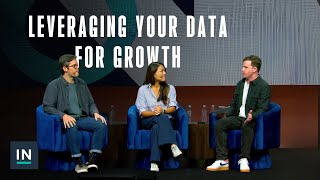
Karen Enge and Jared Williams from HubSpot explain how Operations Hub solves data problems: siloed sources, poor quality, and unstructured data. New Data Sets feature lets you join columns across objects and warehouses for reporting and automation. The platform uses AI to monitor data quality and deduplicate records automatically.
Questions this video answers
Enterprise base API limits were doubled from 500,000 to 1,000,000 requests.
Data Sets are now available in Operations Hub Pro (announced in the session).
Operations Hub Enterprise supports Snowflake data sharing and a Snowflake→CRM sync (enabling reverse ETL from Snowflake into HubSpot).
Burst limits were doubled in Pro and Enterprise, CRM Search API requests-per-second were increased, and additional API capacity packs are now available for purchase.
Chapters
What a morning. So far, I think we're like the first hero stage session after the keynote. So, like inbound morning Wednesday, how are we feeling?
How are you guys feeling?
Question for the audience too, I guess.
Amazing. Okay.
We are really excited to be here this morning and talk about data and more importantly, how to bring data together, make data good, and most importantly for customers and users, I think making data useful. So we're going to touch on all kinds of topics this morning, but without further ado, a round of introductions. I think that usually helps when we're talking live to figure out who is on stage. So first off, I'm Nick Carbone. I'm a product marketer for operations hub at HubSpot. I'll be moderating this morning, but more importantly, to my right are Karen Enge, our SVP of Product and GM of Operations Hub, and Jared Williams, SVP of Engineering, essentially Karen's counterpart on the engineering side of the product triad. So that's my version of your introductions. Would each of you like to give a little more context for the audience?
Sure. I hope you love the keynote. Talked a lot about AI and data. I'm Karen. I run Operations Hub. So a lot of things you saw around workflows or automation or around data. Also the Smart CRM and also our ecosystem and partnerships.
Hey, I'm Jared. I am Karen's engineering partner and so similarly I work in Operations Hub, the Smart CRM dev ecosystem. Lucky enough to have been here 10 years ago when we launched CRM, four years ago when we launched Operations Hub, and to be with you all today as we continue the data story for HubSpot.
So operations hub, AI data CRM. Quiet year for both of you, right? I take it? Let's talk about the keynote a little bit easy first question. I'll send it to both of you first. Karen, leading off with you, so many exciting things we just talked about on stage during the keynote. What has you most excited though, and why?
Yeah, I would also love, as we talked to all of you, what was exciting? I think the thing that's most exciting for us at HubSpot and for me is what AI can empower you to do. So it's not about the hype, but some real cases of actually using AI. I love what we've done with Breeze Agents Copilot. You saw AI assisted workflows, a real natural language way to be able to generate that. I love the amplitude integration that we just launched. Imagine taking behavioral product analytics and then tying that to your campaigns or intense score. That's super powerful. So I love all that.
Yeah. For me, breeze intelligence, you get to fill gaps in your data and you get to demystify the anonymous web traffic data between enrichment and intent. So I'm just really excited about bringing those products to market.
Yeah. So I think we could chop up the keynote the entire 30 minutes. Let's not though. Let's move on. We'll talk about data and talk about what we're here to talk about. Data is a broad topic, but what we really want to get to is making data useful. I think that's like our end goal here. So, Jared, question for you. You lead a really large team of engineers at HubSpot, so how do you, in a leadership role, think about using HubSpot's business data just to make decisions to measure success and ultimately, because we're a software company, help our company grow.
Yeah, for sure. You know, there's a bunch of different categories of data. We think about product usage, I think about developer efficiency. So some of you may have heard of DORA metrics. What's a cycle time for a team, what's meantime between failures? Those sorts of things. Think about unstructured data. So one project I was a part of over the past few years is sensitive data. And one of the things we looked at was call transcripts to understand when are people mentioning terms that refer back to HIPAA or sensitive data, so we can get that value out of unstructured data like that. And then other things like cogs as an example, you think about automation and a workflow. We want to be able to understand what every single workflow costs from a COGS perspective. That way we can understand where are there efficiencies or inefficiencies, where can we find opportunities to make the entire platform more efficient or to find different product levers that we can move to help make you run your workflows better. So across the board, that's all interesting, but it requires bringing kind of a broad, vast set of data together. And so for cogs in particular, that's about product usage. It's about taking the bills we get for our vendors and figuring out how to stitch it back to that product usage and that system utilization. And then understanding how do we then operationalize teams to actually make changes as a result of the data. And so that's bringing it together, that's making it good, making sure it's sound, and then operationalizing it, getting the right value and getting usage out of it.
Yeah.
Is there like a specific part of that process, like bringing it Together or making it good or useful, Is there a specific part of that that's most difficult or that you have to spend the most time on? Maybe.
I think oftentimes it's bringing the data together, like getting data out of silos and figuring out how do you actually connect it in a way that helps you create, make the right decisions and then making sure the data is valuable. Like those two steps in the process are often most challenging at that point. Getting insights to the data can also be a challenge, but at least you have the right canvas to start to make decisions.
Yeah.
So connecting, building off the theme of that question and that answer. Karen, you've spent essentially your entire career in data focused roles, so building data centric products for technical end users. Now as a leader at HubSpot, you're making data driven decisions. Can you just give us generally some examples of common data focused or data centric challenges that you faced as a leader and maybe how you think about solving them and then how you think about those solutions flowing down to end users or consumers of data like myself or Jared, maybe in our roles.
I'll try to quickly summarize a little bit, but just, you know, having worked in a career of kind of building data centric platforms or products, you know, how do I think about some of the challenges that come with that? I think all of you probably use data in a lot of ways and I think data is only good if you can take action from it. So data is really around. Can you make it good, can you get a set of insights from it and then what are you actually trying to do? So some of the challenges I see in using data is sometimes it's setting metrics or setting goals or how you're going to measure if it was good or not. So that's always one part. I'm sure many of you set metrics or goals or try to achieve different ends with that. I think the other part is what data can you gather together? We talked in the keynote today, what we're trying to do at HubSpot is we're really trying to make it easy for you to get data at your fingertips, but it's all over the place. Andy was talking about these puzzle pieces. That's what I find really hard with data. It could be somebody visiting. So imagine for instance that you wanted to find a high prospect, like customer. I used to work at a startup before I worked at HubSpot and we were always trying to close, but where your customers or prospects or potentially people who might be interested in Getting value from your product, coming from. It could be a website, it could be social, you can get sentiment, they could be complaining on a ticket. How do you get insight into all of that? And so Jared was kind of mentioning it's really important, our engineering teams that we inside our product, that we bring data together. We're using that every day to see where are people using the product, where are they having issues, where is it hitting cogs, where are we having errors. And I think one of the big challenges is data is so siloed and disparate that that is a really hard thing to do.
Yeah.
So going back to what Jared said about bringing it together being one of the most things. So on that note, we have marketing, product and engineering up here talking about how important data is in each of our roles. So let's pivot and talk about Operations Hub. So the product at HubSpot from HubSpot that we want to help you or we want our customers to use to help manage their data. So I think that we're going to have a pretty wide range of roles and titles and just experience in the audience. So Karen, question for you. Can you just quickly first just level set a little bit, explain what Ops Hub is all about and what challenges we want it to solve for our customers?
Yeah. So Ops Hub itself, I'm going to go back to this, what we do at HubSpot, which is we want it to be easy, we want it to be fast, time to value, and we want it to be unified. That unified is so key to what Ops Hubs tries to contribute. Ops Hub is designed to bring your data together and, and the how that you do so that you can easily sync your data, you can curate it, you can clean it, you can prep it and then you can make it useful. So data that is not accurate or clean is not very useful. And then data that is not set up to do things like being able to automate, being able to report on, being able to define a segment is not that useful. So those are the really the main things that Operations Hub is designed to do. It is a key part of that unified data story. It helps you break, bring data together, essentially prep it, ensure the quality is good, make it clean, and then it makes it useful that it can be used in anything from a segment to an agent to a copilot.
Yeah. So Jared, I'm going to double click kind of on Karen's answer from the engineering side. Your team builds those products. Can you just tell us a little bit more about some ways that Our customers can use Operations Hub like specific features to solve those challenges around bringing data together, making it good and then making it useful.
Yeah, for sure. So to bring data together. When we first launched Operations Hub, part of the backbone of the product launch was the sync product, where you can sync contexting companies and kind of connect your SaaS constellation and bring it all to HubSpot as your unified customer platform. And over the years we've added more breadth and depth to our sync offerings. You can sync more and more data into HubSpot. So that's a great way to think about, like, how do you bring that data together? I also think about things like Snowflake data sharing, part of our operations of enterprise, where you can see all of your data, query all of your data in one place, so it makes it really easy. And then things like APIs, like all the APIs we're opening up that allow you to get more data in and out of HubSpot in easy ways for developers. So those are great ways to think about bringing your data together in terms of making it good. That's where I think about the data quality command center. And so building monitoring, AI, power transformations, single lines, deduplication. This is how you actually make sure that the data you're working with, the data you're querying, you're reporting on, is exactly what you need it to be. And you're not kind of misattributing or misunderstanding the truth in your business. And then for making it useful, there's a lot of ways we do that. Obviously in operations, if we want to be a unified customer platform, it's not as good as just having the data inside of the product, but you actually need to be able to use it. And that's where I think about things like all of our reporting functionality, attribution reporting journeys. We can bring all these rich data sets together. I think about calculated properties, sync properties, roller properties. These are different ways you can kind of get the same, same value. Automation and more recently, the thing I'm actually really excited about is data sets. And data sets are a great way that we're building over the past few years and putting more and more energy into it. But that's another great way we're actually helping you bring your data together to get more value out of it in your business.
Yes.
So that's actually a perfect segue. I was just about to ask about data sets because as of this morning today, data sets are now available in Operations Hub Pro, so. So if you're a customer, check out Your product notifications in app to learn more about those changes. But I'm pumped about that. As a product marketer, it brings a ton of value down into our pro tier. But like, first off, maybe Jared or Karen, you guys can chime in here. What should people know about data sets at a high level? Like if folks are unfamiliar, like what do datasets do? Maybe more in depth than Jared, what you just said, and what kind of challenges do we want them to solve for our customers? Like maybe like specific use cases folks can, can wrap their heads around with data sets.
Sure.
Yeah. So I think a good way to think about compare data sets to lists. If you're used to lists or segments, you're filtering your contacts down to a particular set of contacts based on some filters. You might filter based on an associated company. And so you can say, find me contacts where a company has more than 1,000 employees. That's great. But at the end of the day, you still just get contacts. You look at that company data in context. You can't use the other associated data in context. And what datasets allow you to do is to actually take columns from a contact, take columns from a company, take a roll up of web analytics or events, and put it all into the same place. And so you have all that data at your fingertips. Sort of like you just built the most powerful spreadsheet inside of the product. And so thinking about bringing data together, data sets are the way that we're allowing our customers to bring data together in a really powerful way. And the really cool thing about data sets is you can put together a template. And, and so if there's a common set of data that you need to join across your customer platform, you can put it together, you can put sophisticated calculations or formulas into it the same way that you might a spreadsheet or an Excel doc. And then you can save that and you can use that as a starting point for every report you're going to build or for someone on your team who's also going to build a report. And so it kind of lowers the barrier to entry for driving really sort of sophisticated or complex insights without having needing someone to really deeply understand your data model or how to work with an upspot. You can just stitch those things together and then kind of let them at it. And I'm really excited about datasets moving down to pro because it means that more and more people are gonna be able to get the value and sort of get that ease of use from the power they're offering. And you know, again, comparing datasets to lists, I think data sets are probably gonna be one of the key ways that people are gonna get value out of their data inside HubSpot as we move forward. And just to kind of double click on moving forward for a second too. The thing that's most exciting about data sets is honestly the vision where already today we're starting to expand on the functionality where not only can you not just leverage your customer, your data inside of your HubSpot instance, but you can start to connect CSV data. And so there may have been workflows in the past where you would dump your HubSpot data into a spreadsheet and then you would pull in some other data. You would calculate a column, then you would sync that back into HubSpot by bringing CSVs into data sets, by connecting the data inside of your platform, you can actually start to take some of those kind of previously complex, annoying workflows and do all that right in the product. And I think where you needed a spreadsheet in the past, where you needed a data warehouse, etl, reverse ETL in the past, I think we're going to actually simplify a lot of that data stack. A lot of those problems, we can start to solve them on platform with HubSpot. And CSVs are the starting point for connecting data to data sets. We're also going to connect to data warehouses, other SAS tools. And so you can just dump all this data into a workspace and then you can start to get a lot of value, start to play with it. And that's going to be the way that you actually start to run a lot of your business process with that HubSpot.
Yeah, yeah. Just to add on that, like, Jared actually, he dropped a lot of, like, cool gems that were coming out in Operations Hub. He earlier talked about, if you had a day or warehouse, we now have two flight, two ways, Snowflake Sync. He also talked about the Data Quality Command center. And then what we're talking about now, data sets. You know, Nick was asking me, like, how do I. How do we think about products that just make it easier for you to bring stuff together? So you have like a fast way of saying this is the right thing. Data sets are this almost like visual way that you can bring in different sources from a CSV to a warehouse, and then you can join it together and then that output is really the thing that you're looking for, which a lot of times might be a customer segment. It's a much more advanced way of thinking about lists.
Yeah, I think last thing to add here is today data sets are great, you can use them with reporting. And tomorrow, data sets you'll use to drive automation, enrollment, to drive personalization. And so it's going to power more and more of what you do inside of HubSpot. And so in the same way that you see lists across the entire product, you're going to start to see data sets across the entire product.
Yeah, I like that a lot.
Shameless Plug.
If you want to learn more about any of the features we're talking about today, directly behind this stage we have the demo centers. So every hub will have a couple different booths, a couple different screens set up. So stop by, learn more about data sets, about the data quality command center, or about data warehouses and our integration. We've gently touched on it a few times, but maybe. Jared, I'll toss this one to you first. Can we just talk a little bit about, or maybe explain what we're talking about when we say, hey, hook up HubSpot with Snowflake or Reverse ETL or ETL or things like that? Can we like, just break that down and then maybe talk about the vision for integrating HubSpot with data warehouses and the why behind that?
Sure, yeah. So with, again, with Operations Hub Enterprise, we built data sharing with Snowflake, and that was a great way to sort of like dip our toe in the water with how can we get your HubSpot data into a data warehouse? And then if you have a Snowflake account, you can connect your own tables, your own data, you can connect to other tools to get more and more value out of like, the kind of the entirety of your HubSpot data set. And when I think about a data warehouse, as much as HubSpot wants to be like your unified customer platform, there's clearly going to be data that's not going to make sense to sync into HubSpot. And so say you're at E Commerce and you have some inventory management system, you might want to roll up what inventory is like. So when your sales teams and their CRM, they kind of know what's available, but you don't want all of the inventory data inside of HubSpot. And so you might sync your inventory data to a data warehouse and then sync the sort of aggregation of what's available from an inventory perspective back into your CRM. And that is what's known as reverse etl. Taking data from your data warehouse and putting it into a SaaS tool or a CRM. We expect that customers are going to or, you know, a lot of companies are going to have data warehouses. And what we wanted to do is make it easier and easier for you to connect that data warehouse to HubSpot. I think the great first example of this is we've just enabled Snowflake to CRM sync. And so if you are a Snowflake customer or if you're using Snowflake, you can start to push that data back into your CRM. And what we expect is that we're going to have more and more support for you to be able to dump all of your data into something like S3 or BigQuery or other providers where you can put your data where you need it and then you can figure out how to connect it with other data systems. And similarly we expect we're going to have a lot of interesting things to say in the future around how we just both do real time and sort of like ad hoc syncing between data systems with ETL and reverse etl.
Yeah. So really all about that bringing data together theme wherever you need it, whether it's in HubSpot or not, getting it where it needs to be to like at the end of the day make it useful. Connecting front of house CRM to data warehouse maybe connected to backup. We're getting like very close to like CDP territory, customer data platform territory and customer data platform positioning. So where does a CDP factor into that ecosystem of maybe the HubSpot Smart CRM connected to a warehouse, connected to an inventory inventory platform, if at all like any takes on that from either of you.
What do you think everyone internally knows? I kind of hate the name CDP in a way. Like it describes a set of problems that I do believe that we solve as a data platform. But the way that we kind of think about it is you have the Smart CRM and you also have Operations Hub. The CDP you kind of throw in the middle here. It isn't necessarily like, it's not another thing that you might need. The Smart CRM and Operations Hub together gives you this unified picture of your customer data. One of them we expect. You know, if you don't use Operations Hub, that's okay, you know, it depends on kind of what you need in your company and your current stage of company where you can just have your data in through integrations, through import, through sync. Smart CRM itself gives you all the context you need within a record. As Jared mentioned, sometimes you don't want all that data if you're doing kind of advanced personalization of email. You don't want some of all those signals showing up just in your CRM, but you do want to have that segment to know how to do real time personalization of email in your automation campaigns. That's where operations come in. Or if you're asking about a cdp, you know, like that's where you want to use a set of tools to bring. It's the how to bring data together and then to create that customer data platform that you can do things with like segments. So I kind of, I don't like the name that much. What we do know is like when we talk to customers, if you're B2B to B2C, in B2B, you often don't always see a CDP directly. You see a CRM. And if you're in B2C, you often see something like a CDP kind of directly in your stack. So either way, I think about it as the customer, you know, what are the challenges you have and then what are the right tools to solve that for?
Yeah, and I think it's unfortunate how complex the tech stack has become to set us to all these problems. And what I'm looking forward to with what we're working on is like helping a lot of our customers actually get more out of HubSpot. So you have to do less of that sort of jumping through hoops to actually get value out of the data.
Yeah, I think I wanted to ask that question just so the three of us could take credit for the first hot take maybe of inbound 2024. So good job, guys. All right, I will also plug that at 12:15, I think this morning or this afternoon we'll have a talk upstairs education session from Jasmine, our product manager who handles our data share products as well as David Benson, one of our partners. All about the value of integrated data, reverse etl, ETL connecting with Snowflake, all of that great stuff. So hope to see folks there in just a few minutes after this talk. Switching gears. We've talked a lot about connecting data. Let's assume, Jared, that data is connected. What does it take to make it useful? So assuming it's unified in the HubSpot platform, what does Operations Hub have that helps us get the right insights out of our data and again make it useful?
Yeah, I mean a huge element is our data quality command center. And again, that's where you go to understand what's the state of my data today? How do I understand that the data is not shifting out from under me in a way that I'm actually losing value out of it and so thinking about reporting, thinking about anomaly detection, thinking about AI based transformation or other rules you can create, those are the ways you're going to help keep your data in sync. And then of course, going back to data sets, things like calculated properties, you can run pretty complex transformations to make sure that not only do you have the right source data, but you're also bringing things together. You're building formulas that are helping you get the data as you need it in the right time. And so I think those things altogether help you prep the data in a way that's actually going to make it useful for you and your users downstream.
Yeah, I've always liked the command center, like being a proactive place for folks to go and just keep an eye on things and maybe move from a reactive state with data management or with operations to more of a proactive should.
Do work for you.
All right. I'm contractually obligated, I think, as an inbound moderator to ask you both about AI and the impact of AI and what it's going to do specifically for data management and how people interact with their data. So I guess, like the question, and Karen, I'll start with you. Yeah, like maybe at first, like a macro level, how can folks expect to see AI change the way they interact with their data? And then maybe from there at a micro level within the HubSpot platform and within Operations Hub, how will folks see AI trickle down into there?
Yeah, I think you probably heard some in the keynote today and like some of our thinking around data. But data is really the cornerstone of AI. Like your AI, if it's trained on really bad data, it's not great AI and it can't help you. And so that's a really important element. And as an example, if you use the AI agents and they don't, you're a company that's not going to be as helpful. So in general, there are a couple themes I see happening with data. One, data is, you know, we talked about, we're used to it even at HubSpot, about we're used to your contacts, your companies, potentially a website, maybe a form. Data's becoming more unstructured. And what we mean by that is like we're talking right now and like this is potentially like on a live stream, like wouldn't be great to get a summarization of like how this live stream happened, but that those video calls, the transcripts that's just going to be given, we're going to have to. AI is going to reason about data and it's Going to reason over all kinds of data. And so I think of one big thing that we're thinking a lot about is how do we just make those insights like something you don't have to think about where we can help extract out those, like all the calls that you have, people who are visiting websites. Did someone in an exec role potentially come to your pricing page? That's a big deal. Did they come in in the middle of your cycle? So unstructured is one. I think another that we talked about too is we think about multimodal data. Like AI is trying to replicate humans and our reasoning and our intelligence. It's going to take in multimodal. That is also a ton of data. So we're thinking a lot about volume and stream. We think a lot about the security of that data. Is it good? Do you have duplicate contacts? So if you think about tools to really help you reason across really good data the way humans would, that's all the things that we're building in kind of automatically in how we think about how we treat data. So the AI one as well, since Dharmesh, now there's always talking about agents and ageonic workflows. I think the biggest thing with operations is like automations has been the cornerstone of a lot of what we do here, which is to help you do marketing automation, campaigns, workflows. We are definitely thinking about. The way you can think about agents is agents are just tiny things that are broken up by tasks. So that company agent you saw, it's broken up by. I want you to research a company, I want you to grab Crunchbase, I want you to do all these different things and then I want you to give me a second summary of it and I want you to give me a format in a format that is useful. Those are what we call kind of agent skills. And so even in our automation platform, we're exploring and building a lot of that agent builder of you should be able to use a workflow to automate AI skills and then build together your own agency workflows.
Yeah, I guess one thing I'd add there is with the launch of Copilot, you all just kind of gained an expert coworker. And one of the great things about that expert coworker is you can ask some questions that you don't know the answer to. And so if it's hard to get value out of reporting today, you can ask your coworker, that copilot, like, how do I, you know, what do I need to know from this? How do I do this, it can help you get that answer. And so one way to view that is that we start to actually democratize insights and like, where you maybe needed a team in the past, like analysts or data scientists, whatever the case may be, to figure out, like, how do I actually get value of my data? Like, AI really helps, like, lower that barrier to entry so more people, more and more people can actually get value out of it. And that I think is, like, is a really exciting piece. Like, one of my favorite quotes from a HubSpot product leader, I'm not sure if it's misattributed, is like, HubSpot can make small companies feel big and big companies feel small. And I think, like, this actually is like a great equalizer for small companies to get more and more and do more and more, become more efficient, drive better business results.
Yeah, makes sense. Last couple of questions here. I want to get into the weeds. Karen, we just made some exciting changes to API limits this week. I'm not sure when the last time API limits got mentioned on stage at Inbound was, but we're doing it right now. Can you talk us through the changes that we made this week?
Yeah, I know it's. You didn't make the keynote, but we just increased all of our API limits today. Yes. So if you do anything with integrations. I know it's been five years actually. So it's been five, six years since we actually launched API limits, but we've increased the base limits across all the different tiers. We doubled the API limits in Enterprise from 500k to a million. We doubled the burst limits in Pro and Enterprise. We increased the number of requests per second for the CRM Search API. And then one of my favorites too is we actually increased the number of capacity packs that you can buy around API limits. That's really important if you're helping customers integrate or you're doing it yourself. That's just a really important thing. So I love API limits. I love APIs because it allows you to, you know, it's the currency or it's a language in which you can transfer data. So it's a really important part for things that we can build.
So fair to say, extensibility of the platform. And again, like, bringing data together.
Yeah.
Is a big focus. Okay, last question. Personal anecdote. When I joined HubSpot, I was on our customer onboarding team. So helping new customers get set up, get their data imported, just basically start using HubSpot. And I think customers often struggle with data. And I think they still do today in some cases. Like, you have a lot of data when you first start using the platform, as you grow into the platform, but it might be siloed, it might be just not immediately usable for whatever reason. So I think, like, on that theme, to close us out for each of you, can you just talk about what you're most excited for on our roadmap, even beyond what we've seen here today on the keynote, but, like, what you're most excited for, that's going to help customers more easily manage their data and make it useful.
Yeah, for me, it's really around those three categories and you should keep an eye open. You're going to see us do a lot more, but we should make data easier for you to have it be accurate and make it useful. And at the end of the day, data is only as good as the action it drives. A lot of the data we have that we talk about, it's like a moment in time. If you're finding your inbound leads drop, why did they drop? Being able to ask that question and connect it to action is really key. So I think about it in three buckets, we will do a lot more to make it automatically possible to bring your data together. And it doesn't necessarily mean move that data. I think 10 years ago it was really important to move all the data in the same spot. I think that is no longer true. You have to operate and reason on that data and in roughly real time or like in good time, but you no longer have to move it. I think the second bucket, making it good, there are things like deduplication or error detection. I'll give you an example. You have a database of colors, you know, orange, red, blue, yellow. Yellow is misspelled in like three of the different things coming in. Those are things we should automatically detect. And you'll see more of that and then making data really useful. I think of those as the actual things you're going to use, which is like if you want to automate a marketing campaign, if you want to build an agent and put it on your website, how do you train that agent? Those things should be really easy. So those are the three buckets you'll see us work a lot more in.
Makes sense. Jared, what about you? What are you most excited for?
Yeah, a detail in there, and Karen already mentioned is just what we can do with unstructured data. I think that's one of the biggest gold mines, black boxes that we can help unlock. So all that engagement data you have, the calls, the emails, everything else actually let that start to run your business. Instead of you kind of going through copying everything over making sure you're keeping your CRM up to date, we want to do more of that for you. And I think actually managing unchecked data and getting value out of it is going to be one of the biggest value drivers that we're able to going to be able to offer.
Yeah, agreed. That's it for us folks. Thank you so much for joining us. Quick couple plugs. We have the integrated data session at 12:15 at 1:45 today we're going to have a session all about data management. So if you want to learn more about data quality, data cleanup, that data quality command center, join us for that one. And then like I mentioned behind us there are all the demo booths so feel free to stop by, chat with product managers, chat with myself and learn more about Operations Hub. So thanks a lot everybody.
More from Patrick



A NEW BREED OF PARTNER: The Partnership Ecosystem Model Journey of Patrick Biddiscombe, Part 1








Customer Success Workspace: Never Lose Sight Of What Matters Most | HubSpot Spotlight