Living to 120: It Could Be Possible for You - Melanie Goldey | INBOUND 2023
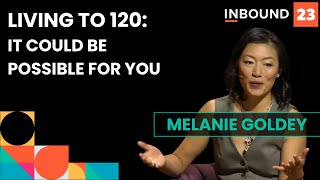
Melanie Goldey, CEO of Tally Health, discusses an epigenetic test that measures biological age through DNA methylation. Lifestyle and environment drive over 90% of aging, and personalized recommendations can lower your epigenetic age. Tally uses machine learning on thousands of samples and encourages quarterly retesting to track changes.
Chapters
My name is Stephanie Mehta. I am the CEO and Chief content Officer of a company called Mansueto Ventures. We publish Fast Company and Inc. And I'm very pleased to introduce today's speaker, Melanie Goldie. She's the CEO of Tally Health, which, as you just saw, is a biotech company that is developing solutions to extend longevity and healthy aging. Melanie is a longtime health care leader. She previously served as COO and CFO of Tamar Tomorrow Life Sciences, and she helped to take Everyday Health Group public. I hope you're really excited to learn a little bit more about Tally Health and Melanie's journey. Melanie, welcome.
Thank you so much, Stephanie.
So you were kind enough to supply me with a Tally Health test, and I was shocked, shocked to discover that my Tally age is seven months older than my chronological age. I eat right, I exercise. There's a history of longevity in my family. So what does Tally tell me about my health? That some of the traditional metrics like cholesterol tests and stress tests and blood tests. Don't tell me.
Yeah, well, first of all, I know how you feel. I took my first Tally test before I joined, and I too, got an age that was older than my chronological age. I'm happy to share it. Nearly two years older. And so, you know, that hit me as well. I was pretty surprised. I eat well, I take care of myself. I rarely get sick. And so it really got me thinking, like, how could this be? What is this? First of all, I don't think it's a bad result. Right. I think that when we look at our data, which includes over 10,000 people in our data set who helped us to create this epigenetic age clock and test, many of the people are actually within three years, plus or minus their chronological age. So it's not a bad result. And I think the really important thing that I realized is you can actually change it. So there is a recently published study in a very prestigious scientific journal that shows that less than 10% of your longevity is actually based on your genetics. So, so to me, that was shocking because, yes, you could luck out. You could have a family with a history of longevity, and that certainly helps. But over 90% of your aging is defined by your life, child choices, and your environment. So what we're looking at at Tally that you may not get at your sort of routine physical exam is what's called DNA methylation. So we have a simple cheek swab, super easy. We analyze your DNA by looking at hundreds of thousands of spots along the DNA where there's a Methyl group attached, essentially, it just tells the gene how to express itself. And over time, as you age, your cells actually lose information. They forget who they are, they forget how they're supposed to act, they start to degrade and those expressions change. And so that's what we're measuring. We're saying, okay, based on that DNA, your unique methylation profile, you look like maybe you're 40 years old, when in fact your chronological age could be 42 or 35. And then what we do is, you know, we give you that number. But what's, I think most important is, okay, what do I do now to change that number? And so we have a platform that develops personalized recommendations and insights for how you can live a healthier life by giving you specific lifestyle adjustments that are unique to you.
And so what do we know are some of the lifestyle interventions that generally speaking, can help slow the process of aging?
Yeah, well, it turns out that everything that you think you know is right is valid. Sleep well, eat well, don't smoke, unfortunately, don't drink.
That's going to be tough for the inbound crowd. There's a lot of happy hours here.
I know, and I admit I will see some of you there later this afternoon. But you know, those sort of common concepts are valid. In our data set we see that the people with the youngest epigenetic ages don't drink at all and have a largely plant based diet as two examples. But I think the key here again is everybody, while we all share DNA, we are uniquely different from each other. And so what is most impactful to your aging, Stephanie, is going to be different than what's most impactful to mine. So again, when I have been taking the tele test and seeing my recommendations, it's things like drink less red wine, it's going to be hard. Meditate was a big one for me because stress is a very large driver of aging. And that's something that you can't physically see or get measured in one of these markers that you mentioned earlier. But it is a significant driver of aging. I have two young children at home. I'm also running a new company and you know, turns out those things give me stress. And some of it's good stress and obviously some of that's very joyful for me. But it is stress. It affects quality of sleep and quantity of sleep. That's another very big driver.
I was surprised when I was filling out my tally profile that you have questions about how satisfied are you with your social life? Can you talk a little bit about why? That's a factor.
Yeah. So one of the big yes.
I'm not satisfied with my social life.
Who is? Right? I mean, I think it's really hard to juggle everything that's going on in life, you know, and look, nobody's perfect. You can't do all the things, eat well, sleep well, have happy relationships, don't stress, don't drink, don't smoke. It's just too hard. But one of the biggest, maybe not shocking, know, drivers again of lowering your epigenetic age, but AKA you know, having a longer health span is joyfulness and are you happy? Do you have a tight knit community? There are areas around the world with particularly long lived people called the blue zones. Some of you may have seen there's a new Netflix special on this which is quite good. But they, there's areas where these communities have centenarians, people who are 100 or even older. And it is a generational thing and unique to these regions. And when we look at those regions and we see what the common themes are, one of the biggest ones is a tight knit community. That doesn't necessarily mean close families. It's also close friendships, sense of purpose, a sense of support.
We just saw on the video Dr. David Sinclair. What's interesting about Tally Health is that so much of what we've already talked about and so much of what the company is based on is real science and research. Tell us a little bit more about Dr. Sinclair and how he went from researcher to co founder of the company.
Yeah, we're really fortunate to have Dr. Sinclair as our co founder and scientific advisor. Some of you Boston based folks may know him. He runs a lab out of Harvard for the past 30 years and he's dedicated his life and career to understanding aging and how to slow or even reverse it. He wrote a New York Times best selling book called Lifespan why We Age and why we don't have to and also has a very popular podcast of the same name. But he's been doing incredible research. He recently published a seminal paper in the prestigious journal Cell that suggests that the loss of epigenetic information leads to cellular dysfunction and accelerated aging in mice. And what he showed in that study was by restoring the cellular information, by resetting the epigenetic marks, that these mice actually got more youthful. Now that is really incredible because it supports the idea that you could have aged cells in your body that may have acquired mutation, but that by resetting the epigenome that could be enough to, to rejuvenate the body. He's also Doing some really incredible work now with vision restoration and non human primates. And so, you know, just incredible innovation that I think many people think, well, that sounds like science fiction, but actually it's just science.
And so how did he go from the theory of all of this to actually creating a business around it and a platform to essentially help consumers, consumers take more control of the way they age?
Yeah, so he, you know, Dr. Sinclair is an incredible communicator. Like I said, he's, you know, able to sort of synthesize all of this incredible research, these very complex topics and explain them in a way that people can easily understand people who aren't scientists or maybe don't have access to this kind of research. And when I met him and our other co founder, Whitney Casey, we said, you know, there's got to be a way to bring this information to more people. Everybody ages. We should all be able to leverage what's going on in the lab, the takeaways from that, and learn, you know, how can we incorporate these things into our day to day lives. And so, you know, Dr. Sinclair is pretty business focused as well, but he said, let's create a company around this. Let's create a company where we can be the people who translate the science and give people tools to be able to affect change, to essentially change the way we age.
And so how do we make sure that this kind of information and the interventions are available to a broader range of people? I know the democratization of healthcare and health services is a really important value of yours. What are the things that need to happen beyond the availability of products like Tally Health in order for us to really make healthcare and make age intervention a much more broadly available tool for all people.
Yeah, it was incredibly important to us when we started Tally to make a product that could be available for the many and not the few. Part of that was through aggressive pricing of our product versus competitors out there. I think that the other piece though for us is how we promote the content and the learning. Right. And so, you know, I'd love for everybody to become members, but we also provide really enriching, helpful content that, you know, you can read for free and take some of those takeaways and literally make a change today about, you know, whether it's something that you eat or if you go to the grocery store, maybe you make a different choice about what you buy. And I think that's also really helpful in raising the conversation around this. You know, I think it's ironic when you look at the vast majority of Healthcare spend in the US in particular being directed towards hearing sick people versus helping people prevent getting sick. And so I think that there is a big discussion that needs to be had around that and we want to be one of the companies at the forefront leading that conversation. But TALLY is just one piece of this, right? And of this movement. I think that as a broader community we can do things to come together. For example, there are things that cities and towns can do to promote pro longevity lifestyles such as, you know, making sure that there are enough green spaces, walking, walking spaces within cities, that there's outdoor gym equipment, that there is grocery stores with fresh food in every community. So I think barring any sort of remarkable invention of some sort futuristic innovation, you'll probably see for societal health span a lot more impact from public policy initiatives than medical interventions.
Melanie, I have to ask about the topic that everyone in the world seems to be talking about right now, which is generative AI. What role do you see generative AI having at first of all at TALLY and then more broadly on health care?
I think generative AI can be really helpful. I think AI is incredibly helpful and it's such a, it's a, we live in a really exciting time right where I think it can be very helpful for a lot of different industries. We've heard a number of panels and discussions at this conference about the power of AI and I do think that it can be used for the good in healthcare. At tally, our algorithm, which is the clock that calculates your body's real age, that was built on a machine learning model. So we had over 8,000 people take their DNA swabs and send them in to us. They also answered a questionnaire of about 30 or some odd lifestyle questions. And we created this AI based model that said, okay, let's look at everything that these people are doing. They're not doing. Let's look at their methylation. And so when we have a new client or customer, like when you took your test, it's running through that machine learning model. And the more information we have, the better we can make those personalized recommendations and the more insights that we can actually give you. And the other piece that's exciting about TALLY is not only do we have this large database of data, but we're actually building the world's largest longitudinal database. Our members take their tests every three months to track their progress. It also helps them stay accountable. But they're seeing like, are these recommendations working? Are the supplements that we also provide our members, are those working? And so that Longitudinal data again goes feeds that AI model to make the product even more robust.
What are some of the guardrails that you think are important again for Tally or for healthcare more broadly when it comes to the use of, of generative AI to either run the business or provide results to individuals?
Yeah, I think there's a lot of different schools of thought on this question, some possibly controversial. My personal opinion is that I think it still needs to be a hybrid approach in healthcare. Healthcare still needs to have a human element. And so I think that again for things like discovering new innovations, understanding drugs, discovering new ways to affect your aging, which is what we're doing, that is super helpful for AI to power. But then there needs to be a human element at the end that says, hey, is this right? Does this make sense? And also because we're talking about people aging and living their lives and really trying to improve their health span. You know, this is an emotional topic too. And so I think there needs to be a level of empathy layered on top of whatever is produced from the AI.
We talked earlier about sort of the democratization of healthcare and you know, it is interesting because there's almost this bifurcation we see where there are huge portions of the population that are still underserved by healthcare, underserved by health information. And then we have this whole other population that is obsessed with aging, obsessed with smoke, obsessed with sort of the self examined health care system. And you know, I think that's exemplified by the fact that, you know, we saw Dr. Sinclair's video which has gotten, you know, hundreds of thousands, if not millions of views. Andrew Huberman is here. People are huge fans of the work he does. Why do you think this phenomenon is taking place where there is this sort of desire for the self examined life?
Yeah, I think it's really hard not to notice the rise of the popularity of longevity as a consumer topic. It seems like every week there is an article or a post or a new video or a new tweet about it. And you know, I joke that like articles about Brian Johnson's diet, amongst other things, which we shall not talk about are practically inescapable. But we also have longevity showing up as a conversation in popular shows like Succession. And so it's really everywhere. And I think that people are extremely excited and curious to understand their health at a cellular level. And you cannot improve what you can't measure. Right. And so we've seen, I think we've seen hints of this in the rise of what we call the quantified self. Movement, which started many years ago actually with the first Fitbit. I don't know how many people in the room had one of those little green things that you stuck on your jeans and you, you know, did I get my steps in? But that was really the start of this movement. And now there's been an explosion of additional tools, measurements, you know, people with the rings or whatever, your. All of these different ways to measure and track, even if you don't do it consciously. Your Apple phone is tracking. So you, if you look in your health app, you will see that it's been measuring your steps for weeks, months. So it's theirs, the tools are there. And I think that there's just been another, you know, explosion in health centric people wanting to optimize their health. And it's not just biohackers anymore. Right? And we're talking about urban professionals, health conscious moms, newly motivated millennials. I think it's everywhere.
I would love to talk a little bit about Tally as a business. You know, you are a startup. A lot of startups are probably represented in this room. A mantra is, you know, move fast and break things, but you're dealing with human health. So how do you balance the imperative to move quickly with the fact that you are dealing with something that is regulated, something that, you know, as you said, involves the desire for a level of empathy. It just seems like those two things are moving in opposite directions.
Yeah, it's a great question. I love to move fast. My team knows that. But at the same time, it is a science based company and we are really honored and proud of that fact. I think one of the great fortunes that we have in this business is that we're actually leveraging decades of research that has been done, real science that has already been done. And so in some ways, Talley is really the, the vehicle through which that research can be brought to other people, to consumers at large. But there is a significant ethos within our team of scientific integrity and I think that comes from our co founder, Dr. Sinclair. We don't want to rush or launch anything that isn't well thought through. All of our recommendations and our supplement formulations are backed by clinical research and scientific studies that show not only efficacy and impact, but also safety as an example. So we have very high standards internally. And I think that, you know, for what I want personally for my science team, we have a team of five scientists, many of whom are PhDs and have spent their lives dedicated to the science of aging. I want to give them the freedom and the space to be able to do that research and development while also balancing the need to actually move the needle for consumers.
So what attracted you to the CEO role?
I am not a scientist, but I've always been fascinated with science. And when I met Dr. Sinclair and our other co founder, Whitney, I was just shocked. I was shocked by the statistics that I learned. This 10% is based on your genetics. I was like, what? This is crazy. I can actually change this. Because the way that I was viewing aging was kind of an inevitable thing. I'm in my 40s, you know, when I hit my milestone birthdays, I get upset. You know, I kind of redefine what aging means to me. I buy all the products and I said, you know, there's actually other things that I could be doing, simple changes that could actually change the trajectory of your life. And again, when I looked myself in the mirror, I said, gosh, you know, I have these two kids and my husband. I want to spend more time with them. That is the motivator for me personally. And so I got so inspired by the mission of just saying we need to build this, we need to bring this to people and we need to tell people about it. Let's spark a big movement around changing the way we age. Let's make it a positive.
And how did your set of experiences, cfo, coo, you've been in media, you've been, been an investment banker. How did that journey prepare you for the role of leading a fast growing company?
You know, there's been life is not a straight line. I always like to tell people that there's a lot of zigzags, different decisions, things that come out of left field that turn out to be amazing, you know, moves. And I feel really fortunate about that having had all of these different experiences. But I think the common theme is that I've always, always really felt that technology, data science, automation, these things are going to disrupt every industry. And you've seen this already happen in a lot of other industries. And I think healthcare is, you know, coming along now. And so for me, tally is really the combination of a number of my personal passions. This thesis that technology is going to help make lives better for patients, caregivers, care providers. I've been, you know, always very much in consumer and I love telling stories and sparking conversations.
Right.
And again, I think that people need to know about this science. And if we can build a platform that is technology enabled, whether that's AI or machine learning or data, data science, I think that is what is so exciting about Tally and why I wanted to be part of it.
What's it like to manage scientists? And are you ever intimidated? Because I come from a family of a lot of scientists in my husband's side of the family, and I do find their intellect sometimes a little daunting. What's it like to manage them day to day?
They're incredible. The team is incredible. The whole team is incredible. But our science team is really incredible. They were the first employees of the company, which obviously made a lot of sense as they were developing our test, our algorithm, our supplement formulations, et cetera. But it's really wonderful. Going to work every day is like, I learn something new every day, whether it's literally a new word or a new process that's going on in your body or new research that's coming out. They do this great thing called journal club once a month where they pick a paper, a scientific paper, they all read it and then they have this big discussion. And anybody on the team is welcome to join in. And so sometimes things go over people's heads. Sometimes, you know, it's. It is intimidating because you're like, I don't. They're talking so fast with all this jargon and like, I don't know what that means, but it's really exciting to be working in a company where you have access to that and you can say, hey, like, I don't actually understand that. Can you take 30 minutes and explain it to me? So I think it's been really amazing.
Do. Does tally or do your scientists have a goal in mind when it comes to human longevity? Do they sit around and say, we know it'll be successful when the average age, the average age of mortality is a certain level, or when we are able to reach a certain number of customers. What does success look like for your scientists, and what does success look like for you?
So there's a couple of ways I'll answer that. So one thing is we actually believe that the first person to live to 150 may have already been born. That's pretty shocking, I think.
But we believe 150 years.
150. So we believe that may be true. The science is there and it's very exciting. And so that's why we think that in terms of measuring success, we do look at our member base and how they're tracking, and we've only been launched for six months, so it's still slightly early. But we do have a couple of sets of longitudinal data already, and people's epigenetic age is coming down as a group. And so I think that that's really amazing. I would love to stand up here maybe next year or the year after and say as a community, the tally members ages have. Have been reduced by so many years. I'd love to send my members a negative happy birthday card. You know, that is success to me. Right.
Anybody, all the marketers out there. That could be a really good.
That happens. I will send you one. I will. But those are sort of the metrics that get us excited internally. I think as a business, obviously I want to grow a nice business and all the financial metrics and all of that. But really what success is to me is again, having conversations with people. Right. You know, can we go to happy hour tonight and just talk about this? And, you know, can some of you make different choices today that might affect your trajectory of aging? I think that is real success.
Do you think that you'll have an impact on destigmatizing chronological age? I mean, this is a much bigger societal issue and it's gendered and it has things to do with, you know, a whole bunch of things that people bring to the table. But, you know, will there come a point where age really is just a number?
Yeah, I think that time is now. I do. I think that. Look, again, everybody ages. Why does this have to be a negative thing? Why is it taboo that we have to talk about it? Why. Why are we embarrassed when somebody asks, how old are you? Why do we feel like we have to lie about it? I think all of these things need to be flipped on their head. And I think, you know, there's a really important distinction that some of the other, you know, Dr. Sinclair certainly talks about this, but other folks like Huberman or others about the difference between lifespan and health span. You know, lifespan, I think, is the concept that most people really easily understand. It's just how long you live. And people always talk about the stats. Okay, what is the average life expectancy? Is that going up, is that going down? And they're using that as a metric of success when actually at Talley and how. I think we should have the conversation. Conversation is about healthspan, which is not just the traditional definition of how many years that you're disease free. That is the definition. But to me, it's about how many vibrant years can you have if you're going to live in your 70s, 80s, 90s, 100, beyond. Let's make as many years of those as possible as joyful. And you know that you can be full of vitality for as long as possible that you can do the same same things that you still love that you could do decades before.
Before we leave, you talked about in your own routine, you've added meditation. What are some of the things that you've done to sort of reduce your tally? Health, age. And maybe before we leave, one thing that you think everyone in the audience can do to sort of start to reduce their tally age.
Okay, I get this question a lot now because you know, I'm up here telling everybody what to do. So people want to know what I do. I mentioned a couple of them started to meditate at least five minutes a day. Anything counts. I do something a little silly in between meetings. Sometimes I have back to back zoom meetings. Many of you probably do as well. But if I have a little break, I get up and I move, I put on some music and I kind of do a little 30 second dance party. It does help. Any sort of movement helps. Standing desk also very important to stand throughout the day. A lot of us are tied to our chairs and movement is a huge driver of aging. And so I've started to do that more often. Really a lot more intentional about sleep. And it's not just the number of hours of sleep, it's actually the quality of your sleep as well. So, you know, I know people say I can run on five, six hours. It's really seven to nine. So I've been trying to do that as well and then drinking just a little less.
Melody Goldie, thank you so much for your time and thank you all for joining us today and hopefully if we are back here in a year, my tally age will be down and I hope everyone checks out the website.
Thanks Stephanie.
Thank you.
Thanks everyone.
More from Patrick



A NEW BREED OF PARTNER: The Partnership Ecosystem Model Journey of Patrick Biddiscombe, Part 1








Customer Success Workspace: Never Lose Sight Of What Matters Most | HubSpot Spotlight