Liz Gilbert on What Gives Her Inspiration
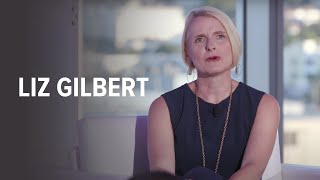
Transcript of a live interview (Inbound 2019) with Liz Gilbert (Oct 24, 2019). Gilbert reflects on the legacy of Eat, Pray, Love (including emotional shame she felt then), the importance of accepting stewardship for one’s own life, setting priorities and boundaries (examples: monitoring screen time, sacrificing TV to write), and practical paths to growth (daily practice, teachers/apps). She contrasts courage with fearlessness—defining courage as feeling fear and acting anyway with kindness toward oneself—and discusses bringing spiritual practice into the "marketplace" (corporate life). Gilbert names teachers she follows (Byron Katie, Ram Dass, Mooji, Rob Bell), describes many mentors as virtual (books, recordings), and shares a personal pivot after her partner Ray Elias’s death: aspiring to "be love in the room." She closes by urging the audience to cultivate deep relaxation as a source of power and better vision.
Chapters
Welcome to Inbound 2019. Thank you all for coming and thank you for joining us for our first session with Liz Gilbert before she's up on the main stage. Thanks for being here, Liz.
Hello, Elizabeth.
I'm sorry.
Oh, well, go. Doesn't even. Liz, from here on out doesn't even begin to matter.
Excellent.
Excellent.
So I want to get started first with. You wrote Eat, Pray Love. And I know you posted on Instagram today that it's the 16th anniversary today of your flight to Italy.
That's right.
So I would love. I know, like, what brilliant timing.
Go us this time o'. Clock.
That's crazy.
This time o'. Clock. That kind of language is why they pay me the big bucks for writing. And it was at this time o'. Clock. Sorry. I've been at the beach all month and I'm very, very relaxed. So who knows what's going to come out of this?
Now, can you give us a reflection on your. I mean, certainly E Pray Love is probably what you're most known for in terms of your writing, but a reflection on that time and what that meant for you and how that trip and that book has sort of gotten you to where we are now today in your life.
Well, I'll tell you this. A few years ago, I guess four or five years ago, was the 10th anniversary of the publication of the book. And I hadn't read it since I wrote it. And I went back and read it because they asked me to write it forward. And what I was struck by the most, the biggest difference between how I feel in my own self now and how I felt then is that I was so ashamed. I was so ashamed that I had left this marriage. I was so ashamed that I didn't want to have children. I felt like I had failed epically at what a woman is supposed to be, which is understandable because I'd only ever been shown one story. And it's the story that just. It's less so now. But when I was growing up, there was just the one story. And all the women in my family had that story. And they'd all gotten married young and had kids and had houses. And so I just repetitively, you know, reflexively entered into that. My mom got married at 24. My sister got married at 24. I got married at 24. It's like, you know, 15th grade. It's like what you do, you just, you know, like there was no thought about it. It's just what you do. And then my life started to fall apart because my nature didn't do well in that environment, not in that marriage, not in that home, not in what was expected of me. And I fell apart and had no. There comes a point, a friend of mine always says, there comes a point in a woman's life where she. In everybody's life where you either have to stop lying or die. And so e pray love was the beginning of me stopping lying. But I was so embarrassed. And when I read the book again, I just saw so much apologizing that I was doing. And what really struck me was this one moment when I was in Italy, at the very end of the Italy section, where I'm having the best meal that I had in Italy, in Sicily. And I can speak Italian now and I'm happy and I'm relaxed and even there I'm apologizing. And what I said, it shocked me and it hurt me when I read it at my age now I said, I know I can't live like this forever. I promise. Who am I even talking to? I promise that someday I will be a respectable, civilized person again. But for now, just let me have this one beautiful person meal. And it made me like weep to read that because who am I bargaining with? You know, like, how about you have a couple more really beautiful meals?
And like that should be the, that should be the goal.
And also this, every time I've tried to be civilized, it hasn't really worked and it doesn't and it doesn't seem to suit me. So I wish that I could have gone back and said to that 34 year old young woman, you're actually closer right now to being on the right track than any of the other stuff that you've tried before. And you don't need to apologize to anybody for that.
You had that, have had that revelation, had the time to take that trip and learn all the things you learned, have had that time since to do that. You know, generally speaking, the average person doesn't necessarily have the opportunity to take a year off and think about these things or find themself in that way, knowing what you know from your own experience. Do you have like tips or tricks or ideas of how somebody who can't just take off to Italy or India or Bali or anywhere else can recognize those things in themselves.
Okay, two points. One is that I think it's based initially in a sense of whether or not you have agreed on a kind of cosmic level that you accept the responsibility of being the steward of this being right. So this has taken me a really long time to figure out the major difference between how I treat myself, how I speak to myself internally, how I choose, how I spend my hours is for some reason that I will never know, that none of us will ever know. Like, whatever governs, whatever the literal fuck is going on on this planet, I have no idea, like, what a put me, like, gave me this one to take care of, gave me this being, this body, this mind, this spirit, these talents, these mental illnesses, these obstacles, this family, this culture, this moment in history dropped me in and said, we're going to give you this one. And. And I'm. And I have gradually come to think that they must have thought that I could take care of it. And. And so the biggest transformation of my life was the accepting where I just said, I. I accept that and I take stewardship over this one. And that's going to mean different things for every single person in terms of what that looks like for you. But what it looks like for you is honoring the growth and the evolution of this soul in any way that you can. And that for me has also meant the next thing, which I'm going to be talking about in the main stage, which is learning how to set priorities and boundaries about what matters to you. Because I have a lot of people, I mean, I'll sort of joke about this on stage too, but a lot of people will come and say, like, I don't have time to do any of that stuff. And I'm like, do not make me pull your phone out and look at your fucking screen time. Like, do not, because I will bust your ass. I know. Like, I. Right, like, come on. And I do it too. Like, it's like, most of us won't even look at that screen time thing because it's shocking, right? Where's your time going? What are you doing with it? My friend Glennon Doyle, who some of you may know and follow, mother of three, unhappy housewife, went into her closet, started. Started blogging and realized that if she wanted to be a writer, there was only one thing she had to do, and that was go to bed at 9 o' clock every night. That was it. She was like, this is what matters to me. I have to go to bed when my kids go to bed. That way I can set the alarm for 4:30 in the morning, wake up an hour and a half before everyone in the house and write. If I care about that, that's what I'm gonna do, right? But she's like, it was a sacrifice. I don't get to watch tv, which is the home run For a mom, you know, it's like, you know, it's like the end game. I won. I survived another day. Like Law and Order, you know. But she just decided to sacrifice. There was something she cared about more, but that's stewardship. That's what stewardship looks like. And it's a beautiful thing once you decide to say yes to it.
I don't want to get into too many of the things that you're going to talk about on the main stage and spoil that. But I know, especially in Big Magic, another one of your books which focuses heavily on creativity and sort of your journey towards that and finding that and being able to identify that in your life, there's a correlation that you've identified between courage and creativity. And so how do you define the relationship between those two things?
Okay, first of all, I want to distinguish between courage and fearlessness. We live in a culture that fetishizes this idea of fearlessness. I don't fetishize that idea. I don't romanticize it. I have no interest in being fearless. I've met a few people in my life who I would genuinely describe as fearless, and they were sociopaths. They're sociopaths. Like, you look into their eyes and you see something very important is missing behind that screen. And they are a menace to themselves and to other people. Fear is an intrinsic part of our nature and our biology and our evolution and our minds. And it's also a kind of a violence, I think. And this whole sense of self stewardship means that I try very hard not to practice violence against myself in any way. And insisting to me that I have to be fearless is a kind of violence against myself because I'm not. And so courage is fearlessness is like, I don't feel that feeling, you know, in which case I do not want to be your friend. I don't want to work with you. Like, you're not a human being. Who I want to interact with Courage is I feel this feeling, and I'm going to do this thing anyway. And what that has meant for me has been approaching my fear with a very gentle, loving, almost maternal kindness, which is also not taught in this culture, which is very merciless culture. So instead of shaming myself for my fear or abusing myself for my fear, or, you know, following the bumper stickers that say, like, kick fear in the ass. Punch it in the face, show it. Like, what is this, like, Navy SEAL training? I'm trying to write a poem, you know, like, it doesn't have to be that violent. It's just addressing the fear, acknowledging it, welcoming it, allowing it to exist, allowing that phenomenon to have its expression and saying, okay, sweetheart, now I'm like, kind of like the way my sister talks to her very self absorbed 19 year old daughter. I'm gonna give you five minutes to complain and then you have to go do something else. Right. It's like, that's how I talk to my fear. Tell me what's, tell me what it is. I'm gonna listen to you. And now we're doing this. I can't tell you how much of my life is me saying to my fear, I hear you, I respect you, I understand you. And now we're gonna go do this. Yep. And it's just a very different tone than I think what any of us were taught.
You've referenced the sort of the culture that we're all a part of and that we live in. And probably most people here at Inbound are coming in a business capacity. You know, it is a business event. And so how do you, you know, how do you navigate everything that you're talking about for yourself as a personal individual and also for yourself as someone, a part of a larger context that is a company with colleagues, with people who have different levels of authority than you, that people have different decision making powers, but you have to play a part in that and still want to live into all these different ideals. Does it? You know, like, how do you do that and relate to everybody around you at the same time?
I think it must be very hard and I want to say that very candidly and not blow smoke up your ass and be like, you should just be able to glide through your corporate job floating on a sort of meditative space, three inches above the carpet, you know, like, I don't think that is very easy. And I think the culture in those worlds must be very competitive with enormous expectations and a lot of scarcity, a lot of a sense that there's just not enough for everybody and you've got to get yours. And to live and breathe inside of that culture, I think must be really hard. But what I was thinking about when you said that is that I used to be really afraid to come and talk to corporate audiences and I used to turn down jobs because I was like, I was a waitress, you know, I was a waitress and then I was a novelist. And now I'm like spirit lady and.
And we love you for it.
And I've never had a real job and I'm embarrassed, like, I don't know, like I would think I was so intimidated to come and talk the first time I gave a TED Talk, you know, And I'm looking out there in the audience at, like, robotics engineers and literally Bill Gates, and I'm like, I'm going to talk about fair and muses, you know, but it was a very cold room. It was tough, tough crowd. But then over the years, what I've learned is, come on, like, you telling me that all the people that you work with and you are not also people who are terrified and ashamed and struggling with your addictions and your divorces and your bankruptcies and your troubled children and your aging parents and. And all of it, you know, like, there's no such thing to me anymore as a corporate audience. You know, I don't. It's just a room filled with human beings who are all trying to figure out how to do this thing that literally nobody knows how to do. And so, like, this spiritual teacher who I love, Ram Dass, always says, be a spiritual person, but also embrace the incarnation. You know, embracing the incarnation to me means, okay, so I work here, you know, okay, so this is my job. It's not entirely who I am, but this is pretty interesting. For some reason, this is where I've landed. Okay, so I live here. Okay, so this is my family members. I also know that I'm made of light and that I'm a piece of God and that I literally made of stardust. And this is my job, and I have a 401K. And both of these things are true. And to dishonor one, I don't think is honoring the other. I don't think that to be a spiritual person means that you leave all of that. In Buddhist teachings, they call that place the marketplace. You know, the true great masters are the ones who can walk through the marketplace and the home, just, you know, and not just keep it in the. In the ashram or the monastery. So that's why I actually, you know, I spent four months in an ashram, but I had no interest in ever going back. I met people there who had lived there for. For 10, 20 years. And to me, I felt like, no, I'm supposed to live in the marketplace. I'm supposed to be rolling around. My incarnation is to be immediate contact with everything that's happening at the same time and to be fascinated with it, not to be in seclusion. So I don't know if that helps, but I would just say, to remember. I'm gonna say one more thing about this. There's a poet who I love named David White, who's an English poet who's very beautiful and very spiritual. And he was speaking one time in Seattle at a reading that was filled with the kind of audience that he normally speaks to, which is like poetry people. And at the end of the night, a guy in a suit came up to him and said, I am the vice president of HR for Boeing, and I want to hire you to come and work for Boeing and be our poet laureate and our poet in residence. Because I'm in charge of the souls and the spirit of 25,000 people who have hopes and dreams and fears and aspirations and emotions. And I don't have big enough language for that because. And truly, it was almost as if this man rightfully saw his work as some kind of a human ministry. And he just said, the language of HR isn't human enough for what I do. So we need a poet. And it was so great because David White was like, I'm Irish and I'm a poet. I'm meant to be anti authoritarian. Like I am the definition of against the man. But he said, I was so moved by the chance to be in the midst of that many human beings. And he speaks about it very eloquently about how it's changed him and his view of the world and his view of corporations and his view of humanity. So, yeah, we're all just trying to walk ourselves home, right? Or walk each other home.
I mean, I guess, a little bit. On that note, like you said, you're the Spirit lady now. You know, that's what a lot of people look to you for. You've been doing that for a while.
How do I've been on the Spirit lady gig?
You've been on the Spirit lady gig for a bit now, but how do you continue, like, where do you continue to find inspiration and drive and new sources of passion and invigoration in for yourself to be able to, you know, share with all of us?
I'm an inveterate student, so this is my favorite time of the year because it's like new lunchbox time, right? It's like new pencil box, new lunchbox, new school outfit. I was that kid, and I'm still that kid. And so my life has been nothing but being a student. And so I'm always looking for teachers so I can just throw out some names of some teachers who have changed my life recently. It's Byron Katie. I don't know if anybody's familiar with the work of Byron Katie. She's extraordinary. Ram Dass has been a great teacher to me. There's a meditation teacher who I've recently discovered on that great app Insight Timer, which I gotta tell you, has taught me more about meditation than four months in an Indian ashram. Which is also to answer your question about, hey, I can't go to India. Okay, you can't go to India. But like, it's on your phone. You know, like the greatest teachers who have ever lived. You've got this satellite driven. Every teacher who's ever lived is on your phone. And this guy's name is Mooji and he's Jamaican and lives in India and has the world's most reassuring voice and is a really, really great teacher. Rob Bell. I don't know if anybody knows Rob Bell. He's a minister who came out of the evangelical Christian tradition, but then found that he just couldn't bear the dogma, but didn't want to lose the spirit. And he's become a refuge for a lot of people whose intellects have outgrown the religions that they grew up with, but who still long for the base note of faith and trust in something bigger than themselves. And he's a brilliant, brilliant teacher. Very science based, but also very spirit based. He's great. So, I mean, I go to these people's workshops and like, sit in the front row and take notes and go home and read their books. And I'm never going to stop doing that, no matter what.
In terms of that, I mean, I'm taking this to mean these are people whose work you admire and you look to and you listen to read. Maybe. Do you have mentors in your life that are a more personal relationship and, you know, how has that, what role has that played in your. Your being and your work?
I have some, but I think most of my best teachers I've never met. And even when I went to the ashram in India, the guru wasn't there. I was like, are you kidding me? You know, like, I'm 12,000 miles away from home and she's not here, you know, and they're like, yeah, but she's here in spirit. I'm like, well, I could do that on my phone. New Jersey. Literally, like punk'd, you know, but that's. I think it's also true. I think it's like, as an autodidact, I feel like I grew up in a family. And I think the greatest thing about my family and we have our stuff, believe me. But the thing I really love about the way that my parents live is that they have very little respect for formal teaching or authority. They really do believe that you can learn, learn it yourself. And so I grew up in a house where like, for instance, like, they don't have respect for things, like you have to get a permit to do that to your house. They're like, no, we don't. We're just gonna. We're just gonna put the electricity in ourselves. Like, you know, sometimes you wish that, you know, my mom sewing up my dad's face when he almost chopped his nose off with a chainsaw. She's like, there are people for that. I'm a sewer. I could probably do that, you know, but my mom came from a farm in Minnesota. My dad's from a Yankee upstate New York upbringing. My mom literally taught herself how to swim as a teenager with a book called how to Swim. And that I think defines so much of my whole life. I don't have a degree in writing. The greatest teachers in writing that I ever studied with are not only people I've never met, they're dead. You know, Charles Dickens taught me more about how to write a novel. Walt Whitman taught me more about how to appreciate language than any classroom I could ever be in. And so my mentors are really on my bookshelves and I feel like that's really liberating. I have a friend recently who I got frustrated with because I had taken her to a Byron Katie retreat as a gift to her because she was really struggling. And we did. I got her this nine day retreat and at the end of it, flash forward a year later, and the Byron Katie work, like all work is about showing up for, you know, like it's not. You can't just sit in the audience and get a transmission of it unless you're very graced. Like, you've got. There's a project and there's a program and you do it and you show up for it. And my friend fell apart and started crying because she was like, I miss Katie and I just want to be in her presence. I just want to be in her presence. And I was like, the way to be in her presence is to do the work she taught you how to do every day, which you could be doing, but you don't. You know, you could be. Or to listen to her free podcasts, which you could be listening to every day, but you don't. Or to go and watch these infinitude of videos. That's how you be with her. It's not about being in the physical presence of the person. So, yeah, to answer Your question? I think most of my mentors are virtual and they were virtual even before we had the Internet, which has made it even more easy. So I don't really accept, obviously, as I was yelling at my very best friend and saying, I don't have a lot of patience for this self pity when all of this is free and available at your hands. And I know how you spend your time. I know how you spend your time and you're not doing any of this stuff and you're expecting your life to be changed by going to a $5,000 retreat instead of doing the work every single day, which is unfortunately the only way it ever works.
You keep saying that and I keep thinking of all the reality television that I watch.
And I know, but it's.
Maybe my time isn't best spent doing that.
Yeah, I mean, look, there's a, it's also just, it's so funny because I feel like we're taught to work our asses off to give and give and give to the workplace so hard that at the end of the day all you can do is watch reality tv. And so I think it's, I think it's challenging because I think you're also living in a culture that says it's not normal to work a 90 hour work week. So who has the energy in that culture to be like, I'm gonna do a 90 minute meditation class now. You know, it's like, no, I'm gonna put a, I'm, put a microwave baked potato in my face and watch people fake scream at each other. You know, like, but, but, and there's, so there's limits. But I also think there's a lot of grace and self accountability. There's a lot of grace and, and I don't, you know, I've said it before and I'll say it again. And I've said it about myself and I'll say it again about myself. I've never seen any person's life transformation that did not begin with them getting sick of their own bullshit. That is it. It's like you get sick of, you stop being able to co sign your own bullshit after a while. And you're like, look, am I going to do this or not? You know, am I going to blame my job, my boss, my, my president, my mom, my ex husband, my kids? I remember just waking up one day and saying to my depressed, lazy self, who are you blaming your life on today and when are you gonna stop and when are you gonna take full stewardship over this? So there's nothing wrong with reality tv. There's nothing wrong with reality tv. There is something wrong with saying I can't do that because of these 27 obstacles. Because you all know that like I can drag up examples of people who have a lot harder lives and I'm, you know, and I won't do that to you. But we all know this is, this is the case, you know, so just choose, choose, choose. And I think the most important thing is whether or not you want to live in constant creative response. You know, the opposite of a victim is a creator. You know, a victim is like, I can't, I can't, I can't. It's all beyond me. And a creator is like, well that's really interesting what just happened to me. How am I going to now what? Now what? This is how the world is. It's totally unfair. And now what? You know, and if you just stop before the now what then, you know, Long boring ride of life. Really? Yeah.
When you think about like, what's next? Are there things that are sort of on your career, career bucket list, if you will, that you want to see happen for yourself?
Not really, I have to say. I mean, I've like, I mean I love my work and I, and I. But something in me has changed where I, I would have said 10 or 20 years ago that, that my purpose in the world was to be a writer. I always felt that as a kid. I always pursued that. It's my passion, it's my vocation. It's very holy to, to me, it's very sacred to me and I'm very grateful for it. But I don't anymore. I'm not purpose directed in that way anymore. At this point, truly I feel like writing books is a hobby, you know, and it's a, it's a hobby that I really like. But it doesn't feel that much different than like, you know, like drawing in my buju journal or like it's just a creative expression to me. And a lot of this was, was born out of watching the love of my life. My, my partner Ray Elias passed away at the age of 54 a year and a half ago. And being with her through the last 18 months of her life, I feel like my, my real aspiration at this point is to just be love in the room, in whatever room I'm in. And, and that became something that was very clear to me while when Rhea was dying. And there comes a point that all of us reach and it's a very difficult one where you Reach the end of your power with something. And mortality has a really good way of showing us that like Rhea reached the end of her power, I reached the end of my power to be able to even help her be out of pain at certain points, to help her be out of fear. And there's nothing we hate more than powerlessness. But when you surrender into can be a very beautiful experience when you've actually done all you can and you reach the end of your power. If any of you have ever sat in a 12 step room, the reason those places feel so sacred is because they're filled with people who reach the end of their power. And there's something kind of magnificently holy that happens when people admit that. And what I felt in that room in Rhea's dying was all I can be now is love. That's it. That's all I can be, is love. I can't fix any of this. But when she looks up, I to want her to see love in the room. And, and once I got a taste of being love in the room, I was like, why would I ever be anything else? You know, like, why would I ever put that away? And if I'm the only person in the room, then I have to be love in the room to that person. You know, that's my assignment. Like, clearly the one who you're supposed to be taking loving care of right now is this one. Because you're the only one here.
So.
So, so that's my aspiration going forward is only that and only to learn more and more how to be that and everything else is just kind of how you spend your time, which is more about the kind of embrace the incarnation thing. But that's the thing that feels really important to me.
I mean, it's a beautiful message and I think it probably could be the answer to the question I'm about to ask you. But knowing that we're headed down to the main stage and you're going to share all these amazing things with everybody that's here at Inbound. Is there one key thing that coming here you want this audience to take away from what? From your time with us?
Yeah. Yeah. I. I don't know. It's so hard. It's the hardest thing that there is in the world. And it's the whole thing that I'm going to be talking about on stage, but it's. If you can try to relax, it's going to be better. And I know that seems impossible, I know that seems impossible, but that's what I want to try to talk about. And that's what I always want to try to bring. You know, I'll say it on stage two, but martial artists know that the most relaxed person in the room is the one who has all the power. And. And so even if you see it from a standpoint of sheer ambition or aspiration or climbing or like, try it, try it out that way. You want to have power, be the one who's relaxed because, you know, tension is a constriction of your entire being and even your eyes, like when you're tense, the whole world kind of pin. It just sort of pins down and you can't. And to be able to be relaxed is not just going to make your life have more value, but it actually makes you have 360 degree vision where you can see what other people who are very stressed can't. And you can see where there might be a solution that other people can't see. And you can see where there's no solution. And so there's no reason to even have this battle. So it gives you a tremendous equipoise. And. And I think it's. I think that it would be very revolutionary for all of us to relax. And it's not what you think it is. It doesn't mean spa weekend. It's something at the cellular level. And that's what I wish for all of you to be able to find. And that's what I'm going to talk about tonight.
Well, I'm super excited to hear it. I'm pretty sure I can see speak for everybody here. We're so blessed to have you at inbound. Thank you so much for being here.
Thank you, sweetheart. Thanks, everybody.
Thanks, everybody. Okay.
More from Patrick



A NEW BREED OF PARTNER: The Partnership Ecosystem Model Journey of Patrick Biddiscombe, Part 1








Customer Success Workspace: Never Lose Sight Of What Matters Most | HubSpot Spotlight