Marketers: Stop Obsessing About ROAS... Focus On THESE Metrics Instead
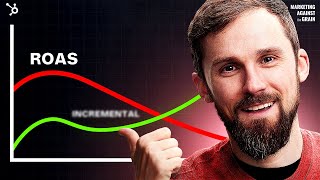
Two marketers argue companies obsess over ROAS because it's easy to measure, but ignore harder-to-track strategies that actually grow new demand. They break down direct ROAS versus incrementality, point to Nike spending billions on programmatic ads that looked good on paper but underperformed, and explain how to spot when you're chasing the wrong metrics.
Chapters
All right. On today's show, we're here to tell you that as marketing, you've been measuring the wrong advertising metric this entire time. We're going to tell you what you should be measuring and how you should be measuring. And it's all inspired by something we read on LinkedIn, and it was about a company. We're going to tell you who. Who really messed up their marketing. And it said because they made this mistake, they invested billions of dollars into something that was less effective but easier to be measured versus something that was more effective but less easy to be measured. We're going to tell you who this is, what they did, and how you're making the very same mistake. All of that on today's show. Last night, I whatsapped you a tweet, and your response was like, oh, my God. That was basically exactly right and so funny. And we want to share it with everybody and use it as the jumping off point to break down how businesses, how founders, how marketers should think about making their investments and their metrics in marketing. Okay, you ready for this?
Let's do it.
Okay. All right. Our tweet today comes to us hot from Preston Rutherford. He is the co founder of Chubby's, which is a big D2C brand that makes shorts and shirts and men's apparel. And I'm just going to do a dramatic reading of some of this tweet for the folks listening on RSS and audio and all. This tweet is the dialogue between a chief marketing officer and a chief financial officer. Naseimo says, if you want me to hit two ROAS. ROAS stands for return on ad spend. Or a 20 ROAS. A 20 times one return on ad spend. I can do that. That was the perfect headline, Karen, because one of the beliefs that you and I talk about, talk about all the time as marketers, we can rationalize everything. If you're solving for a metric, we can make that metric work. Right? Like, you could rationalize any metric to be true.
It's.
It's.
The quickest way to make your number is just to change what you measure.
You and I have seen so many people do that over the years. We're like, oh, why are you. Why are you doing so well? Oh, you just changed the metric. Sweet.
It's like this one of the teams, oh, this metric is going up, and the one we're trying to measure is not going up. Let's just track this one. It looks way better.
It's totally true.
We're now prioritizing the metric over here, by the way, it's way more important. It's like my. I did a. So it's like my. It's a feature, not a bug. Which really just means we ship this thing. We didn't really mean to ship it and now we're just going to pretend it belongs in the product.
Yeah. The most passive aggressive thing a product person can ever say. It's a feature, not a bug.
Look, this is a total fuck up, but now we're just gonna pretend it's part of the product. So shut off.
Totally. But what, what this is saying in this opener for, for folks who are a founder or maybe newer to marketing, return on ad spend is kind of the default metric for most companies, especially when it comes to paid advertising and direct response paid advertising. So if you're somebody like Preston and you're selling shorts online, you deeply care about your return on ad spend so that you can have profitable customer acquisition. Right. And this thread is about to argue that return on ad spend, this metric that everybody uses, is actually not the right metric to use. Right, Right.
Or it's a metric to use.
It's a metric to use, but it's not the end all and be all metric. Which is where a lot of people think of it today. Right. Like us included. We use return on ad spend very deeply. And one of the things that why this hits close to home is like we were think we were planning around how we evolve past return on ad spend and this, this conversation we're having today in this tweet is like the perfect example of why. Right, Right.
I think this is the trend we have been talking around, which is primarily Markkane has in the Internet era been accountable to a direct return on investment. And so which is really great. I think as a marketer I would have, I definitely was fortunate to join marketing in a period of time where marketing could directly measure the return on the work they did.
Right.
We invest here, we get certain amount of dollars back and paid is the most extreme version of that. The return on ad spend means I can literally tell you and the finance team that I put a certain amount of dollars into these programs and I get a certain amount of customers back worth a certain amount of dollars, which we call usually lifetime value. So you look at cost to acquire a customer, lifetime value of a customer. I think what we have argued over the last year, when we think about the shift of that marketing is going to or the journey that marketing is going to go on, and we talked a lot about this with Ron Fishkin actually was because of all the changes we're seeing around the closed web to or the open web to close wed. Right. We're going to start to see much more of the attribution be indirect, right. That marketing did some work and it correlates to something getting better. But it's not as easy to measure that and this. And, and I'll end with this part, right? I think that's really good because I think ROAS is a metric on how efficient you are at capturing existing demand. The other metric you need is how efficient you are at growing net new demand. And that is much more like an incrementality model than. And we can get into incrementality model to explain to our listeners versus a ROAS model. And I think that's what the crux of the tweet was getting at. And for the most part, if I'm a cfo, I get it. I totally get it. I want to see the dollars that I'm getting back to assess if you're making good investments or not. Right. So I actually much prefer my direct return on investment. I get that metric.
You know, if you are working with a CEO or a CFO or a commercial business leader of some type, they want a very exact metric. I think one of the points we are trying to make for everybody today is that the more exact the marketing metric is, the more easy it is to manipulate it. Right? And like Preston does a really good job in his tweet explaining that because the next part of the dialogue was like, all right, CFOs like, what do you mean? You can have a 2 row as or a 20 row as. Like what does that even mean? And he's like, oh, well, you know, I can toggle if I do more retargeting, if I run discounts, if I reduce spend, I can drive return on ad spend to the moon. Right? Because there's ways to manipulate that metric. And what you don't want is metrics to be manipulated. You want a metric that is hard to manipulate. And to get that, it's often a little bit more opaque in my experience. Is that what you have found?
So I think we had somewhat similar and different takes at the same time.
I like that.
I think the ROAS maybe in a B2C setting is somewhat. I think any metric is easy to manipulate because you can, unless it's like a hard and fast rule of how you measure. There's always some sort of different versions of how you can measure it. Right? Like I can adjust and tweak the knobs so it looks one way versus the other way. But the return on ad spend and B2B, I think for the most part is going to be a return on like, for the most part it's going to be hard to manipulate. Like either cost me, I either have acquired customer profitably or I don't. I think in a B2C set. And what he's saying is I can manipulate it because I can literally. Maybe in a B2B you can do this as well. I can literally like discount my product to such an extent I actually wouldn't even understand how that would work. Because if you discount your product, you're making less money. And so it's. The ROAS is still not going to look that great in your favor. So I don't, I think roas, unless someone can correct me if I'm wrong, it's not a. It's not the easiest metric to, to manipulate. But if you only gravitate towards that, you're going to exhaust your market really rapidly because again, it actually is. It's a. How am I capturing the existing demand?
Well, that's why it is easy to manipulate though, Kieran, is because you can focus it on, you can focus your ad spend on your highest return part of your base, which is normally people who are aware of you and are already interested. Right. And what it doesn't solve for. And one of the points in this thread that he's making is like it doesn't solve for the hard part, which is top of the funnel. Every time. If you're a founder, you're watching or listening to the show Today, every time I talk to a founder, one of the points I always make clear to say to them is the hard part is getting new people interested in your product and service.
Right.
That is the hard part. And if you're looking to hire somebody to do your marketing, they need to be able to do that because that is the hard part. That is the quasi black magic part of marketing. The other stuff is it's largely spreadsheets and tactics. And like, it's not that it's not hard, doesn't require critical thinking, but it's not as hard as the getting new people to be interested in your product or service. Hey everyone, from one marketer to another, I want to help you out. It's tough keeping up with the content demands each year, especially across a variety of content channels. Balancing the workload while still maintaining quality can be a real challenge for everyone. We've got a free Guide from HubSpot on how to use AI to make that all easier. It walks you through how to integrate AI tools into your content workflows so that you can come up with more ideas and spend less time implementing them. This is going to save you a ton of time and a ton of money. I don't know what else I have to say. I've dropped the link in the description below. You're going to want to go check it out. Now back to today's show. Right.
I think this is the correct take. Like the roas, there is no world in which at some point someone's roas doesn't go to one to one, which means that you have saturated all of the demand that you can acquire in a profitable way. And if you only have a CFO who wants to look at that number, you are not growing your market. Right. Like you are not actually figuring out how do I actually grow awareness and grow demand from a new segment of my audience? And the only way you can do that is through these incrementality models. Right? An incrementality model is basically how many additional customers am I getting indirectly from this spend? And you usually do that through something called conversion of studies. Right? You take a certain number of states in the US you do marketing like we would have done in Zapier, a ton of social video through TikTok in certain states. And we would be able to then correlate that to the increase in number of free users signing up within those states versus those that did not have it on. And then we have like a ratio to say, well, we apply a ratio to say, okay, these dollars get a certain amount of additional signups when those campaigns are turned on. That's an incrementality model. How much incremental demand you get from other channels because you are spending in brand and these other, you know, other kind of paid campaigns in those states. And hey, Kieran, that's the part that I think is important.
I don't want. I want. I would love it for you. This is really important. If you could really, in like a couple minutes, dive deep into like the measurements and tactics of a return on ad spend model versus the tactics and how you measure an incrementality model so that. Because I think people are going to be like, okay, well you kind of tell me an incrementality model is better, but I don't quite understand the difference. Can you give people like a really clear understanding here?
Okay, definitely. A quick note here that I have always been fortunate to have really Great data science people. I do not want to pretend that I have not, but I always. So ROAS is basically I spend a certain amount of dollars within these platforms like Google Search and Facebook. And you can that someone clicks on the ad, someone goes through your funnel and you should be able to see how much dollars come out the other end because the customer signs up and they're worth a certain amount of average contract value. Now for a SaaS company, you usually look at lifetime value, right? And then you can see how much am I paying for that signup? Because I can see all the way through to the customer and the lifetime value. And. And so how much is it worth? Right? So I have a ROAS model. Every sign up I'm getting X amount of dollars back. Usually a great SaaS brand is in like the 3 to 5 bucket, right? I get 3 to $5 back for every dollar I spend on Facebook. I get three to five dollars back for every dollar I spend on Google Search. Now, in certain markets where they are building and developing, you can actually be at a lower ROAS, even 1 to 1, 2 to 1 because you were trying to develop that market, but for the most part you're trying to get into the three to one bucket. So again, big thing here is someone's actually physically clicking on the ad, the paid ad, and then converting through the funnel. And usually you can look at first click, last click, or you have weighted attribution. The incrementality model is. And it's really important for brands to do this because incrementality is usually used when you're doing things like video ads, because video ads, the person is consuming the ad and then at some point converting on another channel. And all of these social media platforms and all of the places that you're doing a lot of your paid marketing are moving much more towards video. So incrementally would say, hey, we are going to run a bunch of cool videos for our products in through meta on Facebook, right? We're going to do a bunch of cool video advertising. No one's going to click on these things, right? But they're going to consume them and then at some point convert elsewhere. Well, how am I ever going to measure that? Because the conversions are going to go through direct, the conversions are going to go through organic, the conversions are going to go through another channel. Well, what you have to do is figure out how much incremental revenue and demand is coming when the ads are switched on. And traditionally the way you do that. And again, I'm not going to give you the data science data science version is like I'll give you the more simplistic as you do these conversion lift studies. So you go dark in a couple of. You go dark in some states if you use the US and you turn them on in other states and then you look in those states to look how much incremental demand has Kim do we have we seen in that period of time that we can associate back to those campaigns being turned on. And that way you get a ratio so you get like some sort of every X amount of portals coming through these other channels. We're going to say that.05 of it came from these campaigns, right? And then I can start to say, well now I have an indirect return on ad spend, right? I know how much indirect revenue is coming through these other channels when I turn on these ad campaigns. And now I can actually kind of use the ROAS model to actually optimize and figure out how much I'm going to spend. And the other thing you have to do, which is really hard with incrementality is you have to update your numbers every so often. So like three to six months, maybe nine months. You have to then figure out has anything changed by doing more conversions of studies for that platform. And the challenging thing there is if I'm a brand, maybe I have, I have Facebook on for the entirety of the US and for a certain amount of time I have to turn it back off to get that conversion lift study. So I actually will see a decrease in demand in certain, in certain states to get my number. But it's worth doing because it's the way you really optimize and have a great working incrementality model. So did I do the simple version of that? Did I do the Kieran geek version of that? Because I think I try to keep it like the real simplistic version.
I think, I think you gave the 201 class. For somebody who kind of has the high level and really understand, really wants to understand the details. It's that if I wanted to give the 101 version, I think the basic summary is if you are doing advertising and your cost of ad units are going up, you are likely doing just return on ad spin programmatic marketing and that is going to be incomplete to grow your business, right? And you need a mix of those ad units plus some lower cost brand awareness ad units. And if you put those two things together, you have a new model called an incrementality model. Do you. Okay, do you agree with that?
Let's debate this because I actually think the interesting thing is I actually think they're not brand ads. Right. And so let me get you.
I said placements. I didn't say brand ads. I said placements. So I should say harder to measure placements is what I mean.
Let me give you the old school Kieran buckets framework. Do you remember this framework?
You love the buckets. You love the buckets. So let's bring it back, baby.
Yeah. This is a really easy way to think about your entire advertising strategy. And so you have three buckets. The first bucket is your direct ROAS bucket. And you want to fill that up because if you're a company, you want to spend as much money as you can on things where you get a direct return on investment. I do anyway, Right. I want to capture as much demand as I can because I get three to five dollars back in every dollar I spent. Now, at some point, that bucket gets filled up and you still have money to spend. The next bucket is the incrementality bucket. The incrementality bucket, I see is still part of direct response, but it's measured through incrementality. Indirect roas, then direct roas. And now you want to fill up that bucket because that bucket is going to create demand within that market. And what actually should happen is that bucket should allow your first bucket to get even bigger. Right. Because now you are creating more demand that you can suck up through the direct roas. And then your third bucket is brand awareness, like pure engagement. I'm not going to hold us accountable to any type of ROAS metrics. I just want to cover the market and get my message out there and look at the amount of eyeballs and I'm getting on that. And that could be billboards, it could be podcasts, it could be any type of thing where you're trying to have a core message and get as much eyeballs and engagement on it. So that means I would kind of look at my investments across those three things. I would suck up all my demand, and then I would try to do as much as I can in incrementality. I think that there's probably a balance between the incrementality and the brand awareness. I don't think you can not do brand awareness, but that's how I think about it. Like the direct, the indirect incrementality, and then the brand. The first two are roas, but one's direct, one's indirect, and the brand is engagement.
Yeah, I agree that. Look, I've always liked your Buckets Framework. Other than the name the Buckets Framework.
I think that's great, Brandon.
Maybe I'm going to ask Claude to rebrand the Buckets Framework for us. But the framework is generally right. And here's Kieran. There was one other piece of writing that really caught our attention this week that I think speaks to your Buckets framework very, very well. Okay. And it came to us from an unlikely source. LinkedIn. I don't read a lot of writing, long form writing on LinkedIn, but this one, this one was interesting. It was a complete, like, deep teardown of Nike written by a gentleman named Massimo. And one of the things he called out was a real shift in their marketing strategy. And here's what I want everybody to understand, that they shifted from a creating demand strategy, which would be like an incremental strategy, to a serve and retain demand, which would be like a ROAS strategy. Right? And that basically meant that they were going to spend way more their marketing dollars to directed at those who are already Nike customers and consumers. Okay? And so what that really means is they really shift to. This is a scathing paragraph. This is one of the most scathing takedowns of marketing I've ever read. Massive growth in programmatic ad investment as of 2021. To drive traffic to Nike.com, nike started investing in programmatic advertising and performance marketing. The double or more of the share of resources usually invested in other brand activities. For sure, the former CMO was ignoring the growing academic literature around inefficiencies of investment in performance marketing and programmatic advertising due to fraud, rising costs of mediators and declining consumer response to these programmatic platforms. And here's the scathing, the scathing thing. Because of that, Nike invested a material amount of dollars, billions into something that was less effective but easier to be measured versus something that was way more effective but less easy to be measured. In conclusion, an impressive waste of money.
This is the opening line. We should read. Just flag. We should probably recut and put this.
Is that.
That, that. That is awesome.
There's no better summary of the argument we're trying to make than that.
Cut all the stuff that we said and just. I've kept reading that line.
Yeah, but seriously, because of that, Nike invested a material amount of dollars, billions into something that was less effective but easier to be measured versus something that was more effective but less easy to be measured.
Can you slack me that or WhatsApp me that? Because that is a Kieran Flanagan LinkedIn Post Special Coming up.
Kieran's like I'm about to get cooking, baby.
I'm about to get trolling.
I will slack it to you after the show.
You finance people, be aware, I'm coming for you again.
When you think about how you're measuring your marketing, that, that LinkedIn post that, like those two sentences in the takedown of Nike, it's like, you don't want to be Nike in this situation. You want to be the company who is focused on the most effective things and to try to close out with some, like, really practical advice. Here's what I have found, Kieran, as like the warning signs that you're not chasing the most effective things. One, you care about the most direct measurement. Two, you care about discrete measurement. You're like, oh, I don't want to. These things overlap. I don't want to remove all the overlap, but I want to look at just this thing by itself and just this thing by itself. The universe compounds. That overlap is magical. That overlap is what gives you growth and what gives you a flywheel of customers. And you don't. If you want to minimize that overlap, you're in a bad place. If you're advertising your cost per conversion or your cost per whatever metric you're measuring, if that goes up, keeps going up, you're vested too densely in just easy to measure advertising versus a portfolio of the most effective advertising. Those are my 3 warning signs. Would you add anything to that?
Yeah, I think if you are going to only measure the things that you can directly measure, you are never going to grow your market in the. Your grow your serviceable market. Like, grow your market in the way you should.
Right.
I think you're. You're going to continue to, like, figure out how I extract the most amount of demand that I can and not think about how I grow the portion of demand for my brand that I need to. And the problem is when you get to the saturation point, like when you get to ROAS one to one, you haven't actually built the engine that can actually grow the demand. So now you have to do that, but you're not capturing demand over here efficiently. Right. So you actually are better doing that before you've ever saturated that first bucket. So I think the warning sign for me is you can plot it out like you actually can do this. We talked about this. If you are doing direct return on ad spend, you can run these things called burst tests, where you saturate the platform to figure out how much budget you can spend on that platform. Then you say, cool, the most I can spend on this platform is a million dollars a month. And then I will not be able to spend any more efficiently unless I grow my market. So that's going to take me X amount of months to grow into. So I better start figuring out the incrementality portion and the brand portion because I need to grow the amount of demand for this business.
I love the burst test. I love highlighting that. The thing I want to build onto that with. There are a lot of companies out there that think they can get there with just advertising, and you can't in most cases, if you want to be a truly big company. And the reason for that is exactly what you were trying to explain there. Somebody might have listened to you and said, well, why can I. Why is there a maximum to what I can spend on a given platform? Well, because there's only so much of an audience of a size that's relevant to your product or service. Right? And so when you are reliant solely on advertising, what you're relying is on other people to attract and grow a relevant audience for you. And if you have really big ambitions and you want to grow really, really fast, you eventually tap that out, and then you want to grow faster than other people can grow your audience for you, and then you're screwed. And that's why you have to be able to grow your own audience as fast as you want to grow. And if you can't do that, then your growth will always, always be limited to others. And the one thing I know if you're running a business, if you're a founder, is you want to put the power of growth in your control, not somebody else's control. And that's why you can't rely solely on advertising.
Agreed.
Today was all about ad metrics. And I hope that we talked you into thinking about your advertising a little differently. Talked you about evolving away from a pure ROAS model and thinking about how you grow the top of your funnel instead of just trying to monetize the folks that already know about your business. So that was today's show. We'll be back with you real soon on another episode. Market against the grain. This data is wrong every freaking time. Have you heard of HubSpot? HubSpot is a CRM platform where everything is fully integrated. Whoa. I can see the client's whole history. Calls, support, tickets, emails.
And here's a task from three days ago. I totally missed HubSpot grow better.
More from Patrick



A NEW BREED OF PARTNER: The Partnership Ecosystem Model Journey of Patrick Biddiscombe, Part 1








Customer Success Workspace: Never Lose Sight Of What Matters Most | HubSpot Spotlight