Marketing Storytelling: Craft Stories That Sell (Follow THIS Formula)
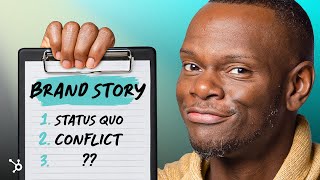
A YouTube video by Patrick Biddiscombe explaining how to use storytelling to increase marketing conversion. It outlines three story types to focus on—brand stories, customer success (case studies), and product stories—gives concrete examples and metrics, and teaches two frameworks (the Hero's Journey and the Benjamin Franklin reverse-engineering method). The video also lists common mistakes (jargon, self-focus, vagueness) and points viewers to 150 free content templates in the description.
Chapters
Picture this. Your potential customers are running away from you as fast as they can towards your competitors. This is what it looks like when your conversion rate is dropping. Why does that happen? One of the big reasons could be that your competitors are telling a better story. But I come bearing good news. It's within every business's power to tell better stories. Let me show you how. In this video, I'm going to outline exactly where you can use storytelling in your marketing, share a framework to streamline your creation, and reveal some pretty big mistakes you need to avoid. So so stick around as we unpack the practical ways you can harness the power of strategic storytelling to drive conversion, including a little lesson from your friendly neighborhood Spider Man. First things first. Storytelling means communicating ideas through a narrative structure. And when it comes to marketing, it has a very specific purpose to convert. That could be as small as gaining a click or as big as closing a deal. It's the most effective technique to build trust, engage audiences, enhance brand value, and differentiate yourself from the competition. So how can you practically realize these benefits? Let's dive into the three ways you can build great stories that drive conversion. First up, nail your brand story. A brand story recounts the series of events that sparked your company's inception and expresses how that narrative still drives your mission today. Just like your favorite books and movie characters, if you can craft a compelling brand story, your audience will remember who you are, develop empathy for you, and ultimately care about you. So sweet. I know. Your brand story should always have a status quo, a conflict and a resolution. Take this example from Harry's, a shaving company. Our founders, Jeff and Andy created Harry's because they were tired of overpaying for over designed razors. That's the status quo. Instead, they wanted simple, high quality products that felt good to use, all at a fair price. That's the conflict. When they asked around, they learned lots of guys were upset about the situation too. So they they decided to do something about it. That's the resolution. Word of warning when you come to apply this to your own brand story, keep it simple. There will be a real temptation to explore your USP in all of its glittery detail. Fight that urge. This needs to be a digestible narrative explaining why your business began and how this reason still serves your purpose today. Next, tell your customer success stories. Also known as case studies. These don't have to be a showcase of your company's achievements. When you with a thoughtful approach, they can illustrate how your product or service solves real problems for real customers. You can do that through a video, a blog, or an infographic which you can find some free templates for in the description. Down below, we offer 150 choices which include a case study template, so definitely check it out no matter the form it takes. In order to craft a case study that really connects, you'll need to include the Challenge how did the client feel at the beginning versus the end? So let's say a small business struggled with poor online visibility and low traffic, leaving the owner frustrated due to dismal conversion rates. The process what struggles did they face? Using our example from a second ago, Tori's web solution steps in overcoming initial hesitations and outdated website issues to create a powerful digital strategy boosting the online footprint and the results. How did they feel when they overcame the challenges? In just four months, the business saw an 80% rise in traffic, better search engine rankings, and a 30% uplift in conversion rate leading to growth and a delighted owner. That's the result. Two important tips to keep in mind when it comes to creating customer success stories 1. Always approach a customer success story from a customer first angle. It's about their success, not about yours after all. And number two, make sure you back up your story with real life results. Stats will help you quantify any claims or impact statements. Next up, Product Stories A product story is a narrative about your product that illustrates its benefits and the problem it solves in a compelling and relatable way. It's about creating an emotional connection with your audience and showing them how your product can transform their lives. A great product means nothing if it doesn't get the attention of the people who would benefit from it. In order to make it appeal to your audience, you'll need to understand what motivates your audience, define their pain point, introduce your product as the solution, and show the transformation of what life is like after using your product. Here's an example of a product story that delivered some amazing results. In 1984, Apple released this ad. They spent $1 million on a 60 second spot that premiered at the Super Bowl. In the ad, Apple told the story of a world in which people mindlessly obey Big Brother as they are brainwashed staring at a screen. But then a hero enters, smashes the screen that contains the overlord character and and sets people free. At the time, the company was an underdog in a personal computer market that IBM dominated. And rather than say we do X or Y function better than IBM, they identified the rat race feeling that many office workers experience and offered them an innovative alternative, an invitation to think different within 100 days, Apple sold 72,000 computers. Because when you get storytelling right, it can inspire motivation, motivate, foster brand loyalty, and convert customers. Now, at this point, you might be thinking, sure, I know how to use a story, but how do I actually write the thing? Well, before you start feeling the pressure to be the next Ernest Hemingway, let me reassure you, anyone can tell a story, especially with the framework and writing exercise I'm going to break down for you right now. First up, storytelling frameworks. These are templates that provide you with the an easy way to make unusual concepts and ideas feel familiar. This makes connecting with your audience an absolute breeze, because even though the characters are new and the setting is strange, your audience will have seen and heard the same structure a hundred times before, which means they can follow along with ease. The most popular storytelling framework is, without a doubt, the Hero's Journey. The Hero's Journey works so gosh darn well because the story template is one that you've been watching in movies since you were a kid. Star Wars, Harry Potter, Iron man, you name it, and once you see it, you'll see it everywhere, from marketing campaigns to the Tobey Maguire classic Spider Man. It starts with the ordinary world, with our main character living a regular life. As much as you can make your customer the hero in your stories, don't worry, there will be a role for your business, too, I promise. Then one day, he experiences a call to adventure. This could be your customer becoming aware of a problem or tasks that they must complete. While he initially refuses the call to adventure, he takes his mentor's words to heart. With great power comes great responsibility. Gets me every time. Do we have to show that scene? Do we have to show Uncle Ben dying? Like, come on, man, have some mercy. And here's where you come in. Your business is the mentor, the figure who will guide them in the process of completing the task. This could be a superstar salesperson guiding a lead toward a conversion. But the main character crosses the threshold into his new life, like a customer who's just made a new purchase and eventually encounters different trials in the process. The hero then overcomes a final challenge and deals with the outcomes of the journey. And that's the hero's journey. An ordinary person and the adventure that lies ahead. The distance from one to the other is the journey. Now, there are two major pros to the Hero's Journey framework. It's recognizable. Your audience will have seen this framework hundreds of times, which makes it much easier to digest. And it's relatable. It's all about making the hero's struggles reflect the customer's struggles, which makes the story very relatable. But there are cons, too. First, it's overused. It's a common framework, which means it lacks novelty and can stray into cliches if not executed with a unique take. And it's complex. It can be very difficult to execute properly, requiring careful crafting of narrative stages. Now let's touch on a writing exercise you can use to take that framework to the next level. It's called the Benjamin Franklin Method. Back in the day, Benjamin Franklin devised a system for mastering writing. He collected issues of a publication that contained some of the best writing of his day and reverse engineered it. He took notes at a sentence level, sat on them for a while, and tried to recreate the sentence sentences from his own head without looking at the originals. The exercise forced Franklin to pay extra attention to the tiny details that made the difference between decent writing and great writing. You can start to replicate this method by reverse engineering your competitor's copy. But before I reveal how, I need you to make me a promise. Raise your hand. Please repeat after me. I will not publish the material created in this exercise. If you do, it'll be seen as extreme levels of plagiarism, and you'll be flagged faster than you can say copy and paste. This is just an exercise to start flexing and training your writing muscles, nothing more. Take a piece of copy that you particularly admire from your competitor's website. It can be a webpage, a case study, a white paper, or an article and read it. Read it and note every detail of what's particularly effective about it. Then, without looking at it for a few days, rewrite. In Franklin's words, expressing each hinted sentiment at length and as fully as it had been expressed before in any suitable words that should come to hand. Be sure that you use your notes to guide your rewrite and try to identify the storytelling template your competitor is using. Take this story on Patagonia's website, for example, in Remembering Alan Steck, Patagonia writes about a pioneering mountain climber. Steck was no stranger to difficult climbing. He had begun his career as so many youths did back in those days in the High Sierra, hiking along trails and scrambling up rocky peaks. Then came a stint in the Navy, where he bobbed around the South Pacific on a destroyer escort during the waning months of the war. Discharged, he attended UC Berkeley, served as a ranger for the summer of 1948 in the Valley, and then spent the next summer bicycling through the Alps, climbing everything in sight. He became one of the first Americans to ever climb one of the first fabled six great north faces of the Alps. Let's note what's effective about it the use of concise and impactful language. The passage efficiently conveys important information using a limited number of words. Historical Context the mention of the protagonist's stint in the Navy during the waning months of the war provides context and adds depth to the character's experience. Vivid imagery the description of Steck's experiences in the High Sierra, hiking along trails and scrambling up rocky peaks, paints a clear picture in the reader's mind. Now set your notes aside for a few days, then come back and reassemble the sentences as well as you can. Ready to compare? Set the two versions side by side and ask yourself, how does yours compare to the original? What's missing? What did your competitor do well? What did you do well? Note your findings in a separate document and then repeat, repeat, repeat, repeat. This may sound laborious, but the insight it'll give you is invariably valuable. And if you're serious about wanting to drive your conversion, effective storytelling is how you'll get there. Plus, as you get more comfortable with this exercise over time and develop more competitive insight, you'll be able to apply your findings to your new stories as you're writing them. Just like the Hero's Journey, this exercise does have its advantages and drawbacks. Pros Simplicity it's more straightforward and easy to follow than the Hero's Journey. Teachability it's excellent for instructional or educational content. Now for the cons. Differentiation in some situations, this exercise can lead to brands repeating the same mistakes like jargon or corporate speak as their competitors. Lack of emotion. It doesn't start with that big emotive hook of the Hero's Journey, so it can fail to engage your audience. And it's not narrative driven. At its heart, it's more about analysis and learning than about telling a question. Great story. Now, storytelling frameworks, no matter how good, aren't going to be a magical solution for your conversion woes. They take effort, dedication, and no small amount of caffeine. To help you keep yours on the straight and narrow, here are some key mistakes you need to be aware of. Don't use jargon or business speak Corporate and tech jargon can be very confusing. Take it out. It's the difference between Our cutting edge solution leverages proprietary algorithms to synergize and streamline your business processes for optimal roi, and our tool uses smart technology to make your business run more smoothly and in a more profitable way. Use language that's easily understood so it's easily digestible and you don't alienate customers that might be a good fit for your product or solution. Don't focus on yourself. It's always about your audience. Bragging about product features can be super off putting. Focus on how you can help the audience understand something new, fix a problem, or make their lives easier. Think about how your story benefits them before you tell it. Don't be vague. Details are persuasive and when they're chosen well, they make stories tangible and evocative. This is about being able to efficiently and effectively capture a moment of your customer's life. Do that without trying to tell them everything about everything in your content will feel real, direct and relatable. And that's it. Now go forth and start telling your story. In the words of superstar author Patrick Ness, stories are wild creatures. The monster said. When you let them loose, who knows what havoc they might wreak. If you want yours to wreak positive conversion wreaking havoc, make sure you look at everything from a customer first standpoint. Whip your brand story, customer success stories and product stories into shape. Assess the storytelling frameworks that will work best for you and be as clear, concise and compelling as possible. Also remember, you're not alone in this journey. Our 150 content creation templates are here to assist you every single step of the way. Whether it's infographics, buyer Personas or case studies, we have free templates ready to make your content creation life just a bit easier. Got a great example of a hero's journey in the business world? Let us know down in the comments below. And as always, don't forget to subscribe until next time. I can find this client info have you heard of HubSpot? HubSpot is a CRM platform so it shares its data across every application. Every team can stay aligned. No out of sync spreadsheets or dueling databases. HubSpot grow better.
More from Patrick



A NEW BREED OF PARTNER: The Partnership Ecosystem Model Journey of Patrick Biddiscombe, Part 1








Customer Success Workspace: Never Lose Sight Of What Matters Most | HubSpot Spotlight