Media Masterclass: Content Marketing Tips From Media Leaders | INBOUND 2024
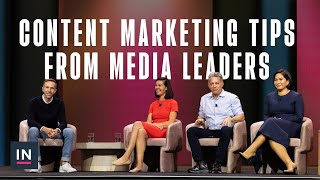
Panel discussion (INBOUND conference) where media leaders from Puck, Vox Media, and Business Insider discuss strategies for reaching audiences today. Key themes: delivering promised value and relevance, choosing and scaling formats (text, audio, video) pragmatically, using AI to protect/measure/monetize content and improve workflows, and recruiting/structuring talent and creator partnerships to drive engagement and business models.
Chapters
Foreign. All right. Hello, inbound. How are you doing? Yeah. Who's ready to talk about content? Content marketing, Media? Can I get another round of applause, please? Yeah. All right. My name is Jonathan hunt. I'm the VP of Media HubSpot and the head of our business publication, the Hustle. And I couldn't be more excited to have a conversation with these three media leaders today. But before we get started, I just wanted to do a little bit of scene setting. So yesterday you heard from Yamini that it's obviously becoming a lot more difficult for for marketers to reach their target audiences. And the old playbook doesn't work anymore. And you know what else doesn't work? Boring content. So there's a lot of trends that are driving this, right? You see audiences that are migrating to trusted journalists, trusted creators, trusted publishers with domain authority. You see audiences continuing to migrate to more shareable and more discoverable formats, like video, that have become a currency for a lot of third party social platforms. Today in Google, they're taking all these signals and really recalibrating their own search experience for audiences. And so I actually think this is a good thing. And so that's why I'm really excited to have these three folks on stage with me today, because the thing that they all have in common is that they create great content. Not boring content, not average content, but great content. And so give them a round of applause, please. So to my immediate left, I have Sarah Purcenet. Sarah is the CEO of Puck. If you don't read or listen to puck, you 100% should. If you care about Silicon Valley, if you care about Wall street, if you care about the Beltway, check out Puck. Before Puck, Sarah ran all of B2B marketing for Meta and then ran all of revenue for Twitter. I have Jim Benkoff. Jim Benkoff is the CEO and chair of Vox Media. So if you're not familiar with Vox Media, you're definitely familiar with the Verge, with New York Mag, who listens? Sorry, for the Verge, New York Mag, Vox, if you listen to the Pivot podcast as well. Yep, Kara Scott Galloway just had her on. Check those out. And finally, we have Barbara Penguin. So Barbara Peng is the CEO of Business Insider. Before that, she was leading a lot of business intelligence work within Business Insider, ran E Marketer, and now is the CEO of bi. So thank you three for joining us today. I'm going to start with just a quick round of hot takes, if that's okay.
Hot takes.
All right. I love hot takes.
Good content.
So three media CEOs of leading media companies. What would you say is probably the most important strategy today for actually reaching audiences at a time when it's becoming just so difficult to reach audiences through traditional channels and traditional methods? And, Sarah, I'll start with you.
Great question. So I think probably the most important thing is delivering on the value that you promised your consumers and your customers. So for puc, we promise access to the inaccessible. Our elite journalists are covering the center of the key decision makers in every single industry across media, entertainment, art, sports, fashion. And so it's really important that we're constantly providing that access to what is the story that is inaccessible. That said, when I ran marketing at Facebook on the B2B side, our value was delivering real business results to each of our customers. And so making sure that's woven into every product decision that you're making, every marketing decision, every content decision helps you to engage audiences at every single set of the intersection.
Cool, Jim.
Yeah. Building off of that, I would say one word for me would be relevance. And media has always been about relevance, but a lot has changed. We are in this pitched battle for attention that we've never seen before. There are so many things to choose from to get our time, and there's about to be a lot more with the introduction of AI, which I know is a big theme here. And so how are you relevant to get that attention? In our case, you rattled off a few of our brands where we, Jonathan and I used to work together, so he's probably tired of hearing this from me, but, yeah, give me the pitch again. My big motto then and now is, you know, for Vox Media is we want both relevance and reach. Sometimes I say quality and scale, like, we're not a small media company. We're a big media company. But by being big, you sometimes lose relevance. Particularly in this day and age, you see a lot of, like, if you're trying to mean something to everyone, you might mean nothing to nobody. Right. And so the way we organize ourselves is that we have brands that are relevant to their audience. Everything that Sarah just said, but through a portfolio structure. So Eater Boston really better know its audience. Our New England Patriots site, Pat's Pulse. But, you know, I'm doing all the Boston stuff, really better know its audience is part of SB Nation. And of course, Kara and Scott and Pivot know their audience. And I can rattle off all of our brands, which I won't, don't worry. But we try to make sure that each one of them is relevant, and then when you cume it all, you get together. So, you know, my guidance is it starts off whether you're trying to market yourself or create content for an audience of 10 people or an audience of 10 million people, you have to really understand what's going to resonate with them more than ever.
You know, just building off that people have more options than ever on where to spend their time. So. So it's not like you're just competing with other news publishers, you're competing with the Netflixes of the world, TikTok, et cetera, et cetera. And you cannot be everything to everyone. So you need to know the unique value that you provide and provide that consistently. And I think that's how you really engage your audience and keep them coming back, build those deep relationships. For us, our audience is ambitious, they are driven, they're optimistic, and they love our conversational approach, our ability to be inclusive and thoughtful, especially covering business and tech, because business doesn't need to be boring and people love us for that and come back to us for that.
Yeah, I mean, and Barbara, just to double click on that, I mean, I feel like that was a big impetus for why Business Insider went from Insider to Business Insider, which is where it started originally, was for that very reason, like a very focused value that you need to provide that business audience that maybe they can't get anywhere else.
Absolutely. For us, that was a big decision. And it was also, I think, a big risk and a bold move to go back to being Business Insider. You don't know what your audiences are going to say, your partner is going to say and what have you. And there was just really overwhelmingly positive reception from everybody, which is lovely, and what you really want to see and hear, and knowing that that's what our audience wanted from us, wanted more from us on that focus. And going back to our roots on business and. And innovation has really paid off for us in very tangible ways too.
Yeah. At the top of this conversation, we talked a bit about expanding the content creation playbook. Right. Fox Media started as SB Nation, very text driven, BI started text driven. Puck is heavily text driven, but also audio as well. Vox Media and Business Insider have obviously made substantial investments in video. Can you explain to the audience why you're doing that and what maybe the future holds for video at your companies? And then obviously, Sarah, we were talking a bit about this and you maybe have like a bit of a contrarian point of view to that, so I'd love to hear that as well. So I'll start with you.
Yeah. So we just talked about relevance and appealing to an audience. And you do that through storytelling. You know, we happen to be, you know, mostly journalistic storytellers, right? So fact based storytelling. And there are different mediums through which to do that. Now, you can't force it. You have to. If you're going to be relevant, you have to be good at it. And not many people are good at multiple formats. I'm old enough to remember when Howard Stern was the biggest radio personality and they put a camera in there. They still have one in there, and it's fine. He's actually getting pretty better at it. But there's a reason why Howard Stern wasn't in the TV medium. There's probably a reason why he wasn't in the written medium. Like, he is a talent that does one thing well. And so I think first and foremost it's about knowing how to serve that audience and the talent, whether it's in front of the camera or in front of the keyboard, like knowing what they can do well to serve that audience. You know, Mr. Beast has been in the news a lot the past couple of days, and there was a memo that was leaked about his playbook on how to serve the YouTube audience. And it starts off with, our job is to serve the YouTube, is to make great YouTube videos. He's not saying our job is to make content. He's not saying our job is to make great YouTube videos. And I know Sarah's about to speak. I think Sarah's team is among the best doing their beats in print since we have a variety of things. Some of you probably just saw Kara and Scott. I'm sorry, saw Kara here. We have begun, where appropriate, to be multi format for the creators and the opportunities to do that. So for instance, we just signed a partnership with Megan Rapinoe and Sue Bird, who are doing a great podcast. I don't know what to call it. Is it a podcast? Is it a show? They go into our studio, they film something, then they work with producers who will make sure that that content is relevant across social video platforms, across long form video platforms, across audio platforms, and even, where necessary, around text platforms as well. So I guess it's back to the old, like Marshall McEwen, like, the key thing is to match the message with the medium and be focused on what your audience cares about and not try to force it just because it's a business strategy. We're all human beings. We all consume information in a variety of modalities depending on where we are. I think all of us will look at an Instagram reel Probably all of us will read a long form article, all of us will listen to podcasts or radio. And so you don't have to try to do it all, but what you do, you have to do.
Well, yeah.
So what we were talking about, it was like, are you going to invest in video? And I said, no, we are not. It was, it started out as simply as that, but I think there are a few things. First, undeniably the consumer has shifted to video and video consumption and that's been happening for the last 20 years. So that part I believe in. If you guys are thinking about your content strategy, video makes sense for me. We are an early stage company and as you mentioned, our journalists break through that fourth wall by creating a very intimate relationship through our newsletter sends. And so I want to make sure that as we grow the business with a sustainable growth rate that were really, really, really protective of protecting that core and the way that we can do that while not creating a ton of bloated cost, is not setting up things like a large video, large video studio. But that said, I think in the future, and this is where we started going deep on different formats of content. We have a lot of different podcasts in our portfolio. Our readers both love to read our journalists and they love to listen journalists. There is a world where sweating that asset as you just described, like they're already on camera. Do we take that and do we scale that across different platforms? Possibly at some point in time, but we're going to do it in a way that is extremely efficient and effective. And that also really speaks to audience engagement. And if we don't see the audience engagement, I believe in sort of a test learn, scale type of structure, if we don't see that engagement, then we're not going to go doubling down on that particular format.
Yeah, I think that's a really great insight where if you are resource constrained, if you are capital constrained, trying to just create a flywheel with existing content formats that you're already investing in, I mean that's a great example and that's how we approach it. We don't do any new audio only products if there's no video component, if we can't capture video out of as well and sweat that asset, to your point, we don't do it. So being able to just take advantage of your existing content investments and remixing that into new ones that actually reach audiences across LinkedIn, across YouTube, across IG, et cetera, I think that's like the best approach that you would want to take for Any smaller to mid sized company that is just starting out in video.
So Business Insider does a lot of storytelling and video. We have a pretty massive team. They are incredible. They've won a lot of awards and there's just so many stories that are better told in video. About 1.2 billion minutes watched for us like every month. So they're just a big part of what we do and what we want to do moving forward. Because very much not only is it what how people want to hear and listen to stories and see stories, it's something that's really taking off. I think the really AI and the tools that are coming are making it easier too to get into video and to really kind of destroy some of the barriers, I think, between form factor and what it means for storytelling. And then for us at Business Insider, we've had some really wonderful collaborations between kind of more of the text based newsroom and video that have produced some incredible work. So it's something that we believe in and we're definitely doing more of.
Yeah, so you said the word AI. This wouldn't be a panel at Inbound if we didn't talk about AI to some extent. There's a great new podcast out called Channels with Peter Kafka, obviously a reporter at bi. It's part of the Box Media podcast network as well. There's some great partnerships happening already. But Peter was interviewing Neil, the CEO of YouTube, and Neil made this statement that the future of AI is either a tool, but the tool is either going to be used to create a bunch of repetitive content or it's going to be used to help people do more better. Right. And I definitely fall in the camp where I think AI is going to continue to help people do more better as opposed to take people's jobs. That's just not it. You need a human as part of the process. But I think that goes to the question, which is how are you all thinking about AI within your own content strategies, especially at a time whenever there's a lot of concern and skepticism, especially amongst newsrooms around the world, that AI plays. And obviously Jim and Barbara, you both have pretty big partnerships with OpenAI as well. So it seems like you all have gone pretty all in. I'd love to hear. Sarah, you're as well.
Do you guys want to share first.
Or go for it? All right. We're all eager to.
So agreed. Sort of. It will impact either workflow in some capacity and then it will also impact content. I think on the workflow side, everything from the large language models that we've built to. To a lot of different ways that we're looking at just the overall supply chain. It includes generative AI solutions. So that just makes us more productive, more effective, and doesn't require us to scale as quickly. On the content side, I think about it in sort of three different ways. There is protect, measure and monetize. Right now we're really in the protect and measure space. So the. When you place monetary value on content, then it's scraping that content actually is a federal crime. Our content is behind the paywall, which is important. But what we've also done is basically created an API wall that surrounds our content and allows us to capture and understand when different AI agents are essentially knocking on the door and trying to scrape and trying to learn. And it's not that we don't necessarily want to in the long term partner with those types of organizations, but right now we are in the early stages of learning and so we really just want to make sure that we can protect the content. And then I think we're also very closely. I'm very closely following the regulation in this space because I think that's going to be a huge driver of what ultimately winds up happening. And we can sort of take the. You guys are more of the market makers in this space. And so probably the work that you guys are doing, the partnerships you're doing, we're learning from as we continue to grow.
Yeah. I mean, at Business Insider, we've always been quick to embrace change and innovation and we did the same with AI. You know, there are so many good solutions out there that we've utilized to deliver better results for our partners throughout advertising subscriptions. We launched a new smart AI driven paywall this year that is driving 75% more subscriptions than our old one, which is. That's incredible. Like, we're in the early innings of what AI could do. So imagine what that looks like in a year, in five years. On the partnership side, the same embracing. I'm really proud of our partnership with OpenAI. Very much setting the precedent that you need to be compensated for your work in our industry, which is very important. And being part of partnerships like that, we have an opportunity to kind of define what the relationship is between publishers and tech and what is a really pivotal and foundational moment for us as this technology takes off.
Yeah, Echo. Yeah. Monetization, protection. Agree. Business applications, you know, to help with New York magazine subscription product. Definitely helping us, helping us, as I'm sure it is with you around marketing spend to grow that consumer revenue helping us with our advertisers. We are, you know, multiple revenue stream company talk about content for the consumer. But there's also advertiser content. Many of you are probably involved in that. Using AI to help in some cases, you know, on the art side, potentially, if not create, certainly test across, multivariate testing across thousands of creatives, across thousands of customer segments. You know, AI just makes that a whole lot easier. So a lot of business applications. On the consumer content side, we are, we are human first. Not only because we are humans and we believe in humans. I'm team human, I hope you are too. But also in all seriousness, we believe there is a strong place for technology. There always has been and there will continue to be a place for technology, in this case gen AI technology to elevate the work that the humans are doing. And I say in a serious note, reason why we believe the other reason we believe in human creativity is because it's the right business strategy for us. It's what distinguishes us, it's what differentiates us. And particularly in a world that is about to become flooded with AI crap, there's already a bunch of it out there. I think all three of our companies have a really vested interest in promoting our differentiated talent, our differentiated work. And then how do we use technology to elevate that work? For instance, we have a brand called the Strategist, which is part of New York magazine that has humans who are doing the work to evaluate products. Think wirecutter, but fun and you should go check it out. And it's great. But we do so many reviews and so many write ups that at times it becomes hard to navigate. And yes, you can search for the, whatever the, the device or whatever it is that you're looking for, the fashion, the makeup, whatever it is. But rather than just search for something, we developed a thing called Gift Scout that instead of just saying what you're looking for, you say, okay, my niece is turning 13. What would she's interested in this or interested in that? Show me something that the Strategist recommends for her. And all it's doing is pulling the content that our humans worked really hard to make.
Great.
But it's helping to sift through that and sort through it in a way that's relevant to the audience and relevant to the person who has that need. So in service journalism, you can imagine something very similar with our Eater brand, which helps you find the restaurant that you're looking for. Or Thrillist brand, which might help you plan a vacation or a Trip. So it's those kinds of applications to elevate what the humans are doing that we're really focusing on. On.
Yeah, yeah. I think if everyone takes away one thing from those three responses is that you're using AI to provide more value to your audience at the end of the day, which is the way that you should be doing it. So I wanted to quickly talk about the role that content creators, journalists, talent play within each of your strategies. Obviously, we're talking about before. Puck is a very personality driven first organization. Vox Media has some of the biggest journalistic talent in the world working for it, as does bi. You just hired a brand new EIC who's going to continue to lead the charge forward, which is really exciting. But we'd love to just hear about how you all think about identifying and working with talent, whether it's talent that you hire or talent that are third party talent, like creators that you may work with and then any advice that you have for this audience that may not necessarily have the same kind of capital that your three media companies have, but we're kind of like creator curious. Maybe I'll start with you, Barbara.
Excellent. Well, you mentioned we're so excited to welcome our new editor in chief, Jamie Heller. She is a force, she's a powerhouse. She's starting later this month. She's coming to us from the Wall Street Journal where she led business and tech. And as we kind of kicked off this conversation about a year ago, we went back to Business Insider, refocused on business, tech and innovation, and our audience and the results have been wonderful. Our audience is engaging with us more than ever, spending more time with us and bringing in Jamie. We really are looking forward to her taking us to the next level. I think what's important very much is the talent that you have, the journalists that you have. But one thing we've been trying to really refine and tighten and sharpen with this direction is who is Business Insider and making that meaningful and making that experience that people have with us consistent for us.
Back to my thing about the message in the medium. We talk a lot about creators today because I think the media is enabling creators in ways that it hasn't in times past, like go all the way back to broadcast television. Like it was hard to be a creator, like, you know, how are you going to, you know, unless you're supported by a network. And now we're in a meeting with Instagram and TikTok, YouTube newsletters, et cetera, where individuals can be very powerful and very relevant to Their audience. So we've kind of organized our company where a big part of it is around brands that have a bunch of talented people contributing to them. But the brand is the signifier of trust and relevance to the consumer. The Verge, SB Nation, the Cut, et cetera. Then we have another part of our company which is about talented creators again, Kara, Brene Brown, Esther Perel, I mentioned sue and Megan and you know, a lot of sports figures, et cetera. But what we the value we provide and this is something to think about for you all is like there is rel. We can provide services to those individual creators to make them stronger, really network effects. If you get common like set of people who like each other, respect one another, they can cross promote one another. When we try to make a business out of it that is helpful, we can then bundle together to go to market with advertisers to get real scale and real reach. And in doing so, the talent benefits as well because we can provide more compensation, more infrastructure for them too. So, you know, when we think about talent, we think about, all right, how do we first of all curate to make sure that we stand for something in the consumer's mind, but then get enough scale out of that curation such that we can build a successful ecosystem.
Out of it on the puck side. So we actually just celebrated three years last week and the founder and our editor in chief, John Kelly, built the concept of the company around talent first, journalists first. So our journalists actually have equity and ownership inside of the company. It's very personality friendly forward. And he is just a master at identifying really incredible personalities who can get access to that story. I think what's interesting though is I think about it for you as a company, as a media offering, are authentically anchored around these personalities for you. You might be like, I don't necessarily have a personality that is out there in the world, but the reality is you probably actually do. And if you look inside and you think about who are the people that have interesting perspectives in the different capabilities, services, products that you're building and how do you bring their personality and their voice forward. So it could be your head of research and development, it could be your CEO, it could be your policy lead, it could be someone who's new at the company that is just bountifully joyful about the services that you're providing and then how you help support them in understanding what it is that you want, a message in the world, but really making sure that can be their authentic voice and that they can really create that relationship with an audience I think helps to bridge the gap between being a media company and, and potentially other services or goods that are categories you might be in.
Thank you. Okay, we have 40 seconds left. I'm going to just do another rapid fire round real quick. So on a personal level, as a media operator, I found that the need to take bigger risks for bigger rewards has only increased over the last couple of years. I'm sure you probably agree as well. I'd be curious from each of you, like, what is one big risk that you've taken that was maybe a little unproven, that has either yielded high reward or maybe not at all.
So the background of that, I would say always follow, follow the consumer and the risk will always be worth the reward. Everything from, if I go back through my career, shifting investment from cable from broadcast to cable, shifting investment from offline to digital, shifting from display to social, shifting from broad based marketing to personalized marketing. At SC Scale, there's like four or five different jobs in all of that. But they were all, and they felt very risky. And there were a lot of clients and a lot of customers that were like, no, we do not want to do these things. But if you're following the consumer and you're seeing where they're heading, ultimately you're going to be able to measure that those investments really drive significant results for your business and for your customers. So that's kind of how I would think about it.
No, that's a great point. Build off it like, you know, platform shifts and the risk that you put into any platform shifts, you just rattled off a bunch of them like, and it's happening so far. Like me, I like to say there's more change in media than any other industry because you're subject to the technological and platform changes, subject to the economic changes we all have. And then you're subject to changes in taste and cover. You know, two years ago I had a staff, a team talking about crypto. This year at the staffing team talking about AI, you know, and it's always like, it's always changing. And so that creates opportunity, creates threats. And you have to like pick those spots wisely. You know, go in, you know, maybe in terms of risk, reward, take calculated bets, measure, test, iterate, refine, and don't be afraid to retreat if, you know, it's easy to retreat if something fails. It's harder to retreat if something's sort of working. And if we just give it one more, you know, 20,000 more dollars in budget or hire one more person like we know we can do it. Those are the ones that are hard to retreat from. And if you don't retreat, you can't focus on what's really working. You can't deploy your resources. So like test measure, retreat quickly, invest in the ones that are working, prune the ones that aren't.
Yeah, you cannot play it safe anymore. The environment is just moving way too fast and if you are playing it safe, I'm so sorry, you may not be here in a couple years. So the level of decisions you are making, being bold, moving fast, functioning like a startup in many ways which we were chatting about, you must do that. So I would just say be bold and go for it.
All right, well, Sarah, Jim Barber, thank you so much for joining us. Let's give her round of applause, please.
Thank you so much.
More from Patrick



A NEW BREED OF PARTNER: The Partnership Ecosystem Model Journey of Patrick Biddiscombe, Part 1








Customer Success Workspace: Never Lose Sight Of What Matters Most | HubSpot Spotlight