Meet the Founder of Shopify Who Started a Multi-Billion Dollar Company
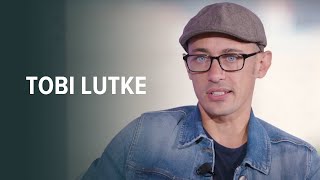
This is an interview with Toby Lutke, Shopify’s CEO and founder, about Shopify’s mission to enable entrepreneurship by making online retail accessible (described as “a realistic and attainable shot at independence”). Lutke recounts launching an online snowboard store (Snow Devil), building Shopify from that experience, and emphasizes technical literacy (programming as problem-decomposition) and broadening access to e-commerce (Shopify as a low-cost entry point). He also discusses mentorship, company culture, examples of direct-to-consumer brand success, and the importance of growing many small businesses rather than only a few megacorporations.
Chapters
Hi everyone. Welcome to the Inbound studio. I'm Lauren Moran, your host and joined by Toby Lutka, the CEO and founder of Shopify.
Thanks for having me.
Thank you so much for being here. I want to start with asking you from a experience perspective. Take it. What does Shopify sell?
What does Shopify sell can tell you what it isn't selling, which is the products of all our customers, which is usually the first misconceptions, right? Like people here, like Shopify has hundreds of thousands of merchants using it and the assumption is that people go to Shopify and purchase things and that is not the case. What people come to Shopify for is starting online businesses. They start their own store which they sell themselves and so on. So what Shopify sells is I think probably best summarized as a very realistic and attainable shot at independence. The company came from me starting and like beginning of like early 2000s, I started an online store selling snowboards and realized how difficult the process was of setting this up. There was very hard challenges to overcome, getting a payment gateway and all these kind of things. And so in the end I had to build my own software and then that became Shopify. And so the entire company exists really to present to people who want to reach for this independence, to say come here, bring your products and this is the most approachable way to start your own business or create a plan B or a new plan A for yourself.
Yeah, I know you have some ideas around retail and E commerce in particular being a equalizer of sorts in terms of opportunity. Can you talk a little bit about that and sort of your experience with, with creating those opportunities for people?
So I think the, I think the press has been really, really good about telling people about the opportunities related to startups over the last like let's say 15, 20 years. But it had a very strong focus on the tech startup opportunity. Right. We all like two people in a garage building Google, people on laptop at Starbucks can build the next billion dollar company. It's true that it happened, but it's what's underreported. Is this the requirements of those people, like how did the people spend their life up to this point? So in order to be able to take advantage of this opportunity, the that existed and the answer is in a very particular way, they're all fairly similar. We are all fairly similar. We are all middle class kids who ended up being computer programmers. We spent our, in many cases our entire youth doing that and that's why we could do this. So that's great opportunity, but only for very few. And at the same time, though, the world of online retail has got. Has gone to be a 1.9 trillion dollar industry and it's going to be a 4 trillion dollar industry in not a lot of time. This is potentially the largest economic opportunity of our times. And so the issue that I see and I'm trying to address to a certain degree, or at least help address with Shopify is if you have such an expansion of an opportunity and the only people who can participate in this opportunity are the people who are already there and already established and already big, have staff and all these kind of things, then I think that doesn't lead to this wonderful ecosystem of entrepreneurship and exploration of ideas that it otherwise could. And so Shopify is trying to allow people to access this opportunity for $29 a month.
Yeah. Has this has the entrepreneurial spirit for starting your own company and supporting entrepreneurs in the way that you do? Always been a part of your existence. Like, is this what you knew you wanted to do? Or is. How did you come to be in this place?
In my family, I come from a line of actually female entrepreneurs for a couple of generations. My grandmother ran a printing business like the. As in, you know, like real big metal things that stomp and it makes a. Makes a racket every time someone is printing something. It's wonderful. I loved spending my time there. And my mom had her own practice as a speech therapist and so on. So I think it never seemed like a big deal to be an entrepreneur to me. As in, it was something like growing up, it was a tool in my toolbox that was there. And therefore I used it when the opportunity presented itself. And it took me, it was many years later that I heard the term entrepreneur as a. Even as a bird.
Yeah.
It was just the way to solve a problem is to incorporate. And I think, like, I wish more people were growing up in an environment where this is such something so attainable. And I'm excited that that's actually becoming more and more of a reality of things. We have a lot of great success stories from high school students on Shopify and in schools in general and so on, which is really good.
Did your mother or grandmother or other people in your life do anything in particular in terms of your relationship with them to encourage you or feed the fire that was burning there?
I think my mother emphasized independence in general. Like she wanted me to walk myself to kindergarten. She told me she followed me a couple of times to make sure I actually arrived. I'm not actually sure she did. And Never got an allowance. So I always had to kind of find things my parents didn't want to do and then negotiate how much money it would be worth to them and then do it and this kind of thing. So I would say yes, I think it just sort of becomes something that the family kind of valued.
Talking about education, I know it's super important to you and you've talked, we were talking a bit about retail and E commerce and the opportunities there that don't require necessarily knowing programming. But also you have a lot of ideas around the importance of programming and computers and education. And I would love for you to talk a little bit about that and your role and the work that you're doing to help push that forward.
Yeah. So I think the computers are by far the most complex tools that we have in the world right now. They solve a lot of problems, they cause some new ones, but they also do solve a lot of the problems that we have. So using computers, well is incredibly important. This is sort of his technical literacy, which I'm really after. That's, that's the thing. I think if you manage somehow to grow up for your teens right now and end up not with significant technical literacy, then you start off like on the wrong foot. I think that's a difference you will have to make up somehow to reach your potential. But specifically computer programming, I, I wish it wouldn't be called programming languages. I wish we would talk about it differently because it sounds so much harder than it actually is. It's very basic syntax. Everyone who's used more than the most basic formulas in Excel actually has been programming. We just didn't know it was called that. And so what I would like to do is make it a little bit more accessible because I think one thing it does is really wonderfully is the process of programming is actually a two step process. It is a. That you are learning how to understand something. You can't program a solution to anything that you don't understand. It's just impossible. So you have to really, really understand some kind of process you're solving. Like I had to build my own online store before I could understand retail. And then second it is then after you understand this, you break it down into tiny, tiny little tasks. Every line of code is really just do this one thing. It's like the process of drinking a water bottle would be many, many lines there. You would move a couple of muscles to move your hand and then you know, like every part of this is one step. And I think learning that, just learning to do this once or twice kind of changes the way you generally approach problems, I find because I was again, I apprenticed in Germany as a computer programmer. I then built the technology for Shopify. Eventually only I transitioned to also be the CEO of a company. And I have found that this sort of thought process of taking like really, really researching deep and then breaking everything that was a problem down into very small steps ended up applying just as well to running of a company, of a increasingly bigger company, actually a public company. In the same way it did help me build software. And so I would love for this to be more represented in schools as an option, get people exposed. I'm on a board of an organization called Canada Learning Code. We are doing. Shopify is a Canadian company, so we are working with the government to roll this out. And I try to hit the high notes about the topic because I just think there's just a lot of confusion. I don't need to know this because I don't want to become a programmer. Like, yeah, I get it. But you also never wanted to become a chemist, I think. And we still figure it's a worthwhile thing for society, but everyone knows a little bit of chemistry. And so I think it's a worthwhile topic to study.
I know you've said that like the country that the place in the world or the country that figures that out the fastest will have like the most opportunity to just sort of take over in that way. Like, how is Canada doing? How is the US doing? Is there somebody that you think stands out in terms of really moving forward?
I think actually a lot changed in the last two years. I actually think the US is doing very well. I think the code.org effort is brilliant. And so I think a lot of countries are waking up. There's always the Scandinavian countries, which somehow always embarrass everyone on education matters. But I think this, from what I'm seeing Now, almost all G7 countries are doing an equal footpress in that direction. And I don't think there's a lot to give between them.
Moving back to your career, specifically a little bit you mentioned, you know, Shopify has grown and is much larger than it. Than it was when you first started it. What role has mentorship played in your career, especially as you've taken the company from beginning to where you are now.
It's been huge. I've had a incredible fortune of that. The first person who invested in Shopify and really believed it, John Phillips, as an angel investor, ended up being an amazing mentor. And he's still on the board of Shopify, has been involved in the entire like 10 years since and has played the role of being the person who always came with the correct like I'm a great believer that they say combination of probably five to six different words that is the solution to whatever problems any company ever has. It's just finding those words is the challenge. And John is one of those people who had those birds ready more than many times in the past. And then I learned a lot from my board of directors, from my co workers and like absolutely everyone in Shopify. One thing which is interesting is partly because we're not in Second Valley, we are not in, let's say, I guess Second Valley is almost special in this way. That average employee turnover times about 18 months. So there's an amazing talent pool. But it makes almost no sense to invest in people because you need to kind of get the most you can from them in that short time period. Luckily, Shopify is not subject to both forces. I'm very glad about this. People often spend five years decade with us and because of that we can spend a lot of time investing in their potential. So Shopify. I've been working with a business coach forever. Essentially we ended up hiring almost all the business coaches in the cities we were in and have a few fairly large talent acceleration team that really helps people in the company reach their potential and so on. So it's a big part of the company's culture.
What do you think are some of the best lessons you personally have learned along that way?
I mean they always seem so basic afterwards. Right then I was struggling with this transition like I was cto, which was a job I really wanted and various people wanted me to be the CEO. And I was like went through a year and a half of trying to hire CEO. Eventually I had one more conversation with John about potentially taking the role. And the final advice which then completely changed my opinion about it was that he told me that like he said hold on Toby, we don't want you to be the CEO because we think you have all the answers. He said, we want you to be the CEO because we think you can get the answers when you need them. And that completely moved the entire problem of having this job away from something I already had to be into a challenge that I could over like that I could succeed at. Which allowed me to wrap my own mind around that. That's something I wanted to do. But there's been many other cases like for instance when we were 20 people. At some point John came to me and said, toby, I really love your company, but everyone is the same guy. And it's true. And there was actually a good gender mix, but it was a worthwhile compression of what he meant, the way he said it. And then we ended up paying like the next 10, 20 people were people who have spent their lives completely differently from everyone, which ended up many of the executives of Shopify joined this group of people we hired specifically because we were different. And that was. It could not have been better timing.
At the core of everything, what drives the work that you do and gets you out of bed in the morning to keep doing it?
Yeah, what drives me is really this experience from starting my snowboard store. Like I said, I wrote the software, I worked from a coffee shop. And in this time, and there was a day in November of 2004 where I opened my laptop in a coffee shop and there was an email from my own software, which I wrote at some point that someone ordered our snowboard. That was the first time someone purchased something from Snow Devil. And I remember everything is about that day. I remember exactly what I was wearing, where it was. It just completely branded in my mind. Because I went from being someone who built something to then what I now know to be an entrepreneur in that moment. And it just became. It's one of those life experience that just told me that is I've discovered this as a gift and I'm going to develop something to be able to then share that gift. So it's really like what drives me is I want to help people have the same experience. I think there's a large amount of people who want to reach, engage in this sort of reach for independence that I talked about earlier. And I want them to have a chance at this. And I think if Shopify wasn't around, there is really no one else who is trying to make this a more inclusionary kind of opportunity. Right? Because everyone else who looks at a, hey, here's a trillion dollar opportunity, let's capture it, right? Like, we are looking at this like there's a trillion dollar opportunity. Let's give it away to as many people as possible and be of so much value that people can change their lives. And yes, we are also building a good business along the way, but we're also taking our money and reinvesting to make it simpler and simpler and simpler and simpler. Creating a flywheel and a reinforcing loop to hopefully make this available to more and more people. And so that's the. It's. Whenever there's a Choice in Shopify at any point there was two roads to take. We ended up choosing the road that would lead to more entrepreneurs and that's guided the progression of the company.
Are there any people or brands that you particularly admire or find inspiring as you think about, you know, your mission and the work that Shopify is doing?
Yeah, I mean I really love direct online brands like Bonoboss and Huawei and so on. I think it's just like lots of people say retail is over and that's just totally not true. It's just really boring. Retail is over, you know. And I just really admire the people who work figured that out early and went all in on this opportunity. This is something the best thing about Shopify is just seeing all these success stories. And there's a wonderful article about Kylie cosmetics and Forbes recently. Kylie was on a cover, which is a business that went, was got built in three years from nothing to $900 million of sales, which is mind blowing. And I mean Shopify has not reached a billion dollars of sales yet. People on Shopify have reached a billion dollars of sales before Shopify, which is, I mean that's a serious platform. And so I get like, I really love these stories and I like the Kylie one because we can talk about it now. I'm inspired constantly by people I cannot talk about because there's a lot of latent sort of secrecy in this world about people very much pretending to be a lot smaller than they are. And of course we see the real story because I constantly have to buy more servers. And so that's one of the really fun aspects of a company.
If you weren't at Shopify, what would you be doing?
Trying to build Shopify again, isn't it? No, I would be committed to this space, the intersection of retail technology. I would be somewhere in this, I would probably be programming. I would be very interested in machine learning, these kind of things.
Knowing all these things that you know now. Is there any advice looking back, you would give your teenage self.
Buy Apple stock. You know that it's funny. But I wouldn't use opportunity, frankly, because I think the worst thing I could do to my teenage self is prevent any problems from happening. Because I think we learn from the misfortunes and problems and mistakes just a lot more than from the successes. So I wouldn't compromise the journey.
You've joined us here in the studio. You're going to join take the stage in the ballroom for a spotlight in just a little bit. What is the one or two things that you're really hoping to leave this inbound audience with as you're here at the event with us today, I would.
Love just again the size of opportunity and the sort of skewedness of the spotlight when it comes to entrepreneurship. Like a lot of it is going on in a much less high tech way than is truly exposed but also with a little bit of a nuance on it. The total amount of companies being created is going down. Entrepreneurship at all is actually in decline right now. And I think this is flowing a little bit from the massive power that comes that the Internet gives to centralization. Like again even in the world where like in the retail world where Walmart is, Walmart can't start a store everywhere. Every city still needs a general store. That left a lot of opportunity for families and so on to jump in. The Internet really just needs only one Amazon. And so I think we should not take, we need to start have a conversation, a meta conversation about entrepreneurship rather than just politicians appreciating it or talking about it being the engine of economies because I think it's worthwhile digging into the numbers because if it's the engine of economies we need to get that engine going. Because I personally believe that to have viable and vibrant economies in the future we shouldn't try to create five new mega companies. What we should do is we should do millions of small businesses. And I mean Shopify is in the space is by no means it's possible for Shopify to solve this problem. This needs to be a much more coordinated, larger effort. And I think this is something I really like people to sort of meditate on, think about.
Final question. What does inbound mean to you?
Well, I mean first of all the HubSpot family is it's a very kindred spirit company. I've always had so much admiration for everything that's been been done. I have promised Dhmesh to be at inbound at some point and I'm so glad I could finally make it work. And I'm just amazed by I mean the love and care that goes into the conference. It's an amazing community. It's a massive community and there's some like in these rooms there's some amazing no knowledge being shared. Like there's a very free culture of people sharing the really valuable things that they've found out that they've figured out. And I think this is powerful and I think that it's really to be commended that this event happens and grows and so on.
Well, thank you so much for joining us and thank you for being a part of that knowledge share and thank you for stopping by the studio. Thank you on your way to the. To the next stage. So thank you so much, and thanks to everybody in the audience.
Thanks for having us.
More from Patrick



A NEW BREED OF PARTNER: The Partnership Ecosystem Model Journey of Patrick Biddiscombe, Part 1








Customer Success Workspace: Never Lose Sight Of What Matters Most | HubSpot Spotlight