Mike Rezendes on the Power of Journalism
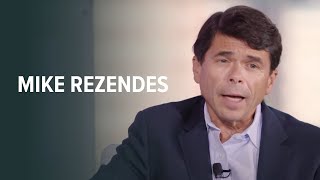
Live interview (Inbound 2018) with Mike Rezendes of the Boston Globe Spotlight team about the power and practice of investigative journalism. Rezendes recounts his start at a neighborhood paper in East Boston and describes journalism as a tool to effect change. He discusses structural challenges facing local newspapers (loss of classified and retail ad revenue, competition from search engines), the rise of nonprofit investigative outlets (ProPublica, Center for Investigative Reporting, Center for Public Integrity), and how Spotlight has expanded (now six Globe staff + two fellows) and uses multimedia and metrics to drive subscriptions. He gives examples of long-running investigations (the Catholic Church abuse series and a recent exhumation/DNA story), emphasizes doggedness, mentorship (Alan Lupo), and notes his screenwriting work and sold screenplay. He closes with reflections on Inbound's business ethos.
Chapters
But I eagerly await the reviews.
Excellent. Okay, we're live. So welcome everyone to the Inbound studio. I'm Laura Moran, your host, and I'm here with Mike Rosendes, Pulitzer Prize winning journalist from the Boston Globe Spotlight team. Yes, thank you so much for being here and joining us at Inbound this year. It's a pleasure to have you.
It's a pleasure to be here.
I want to just jump right in on journalism as a topic. What drew you to journalism and investigative journalism in particular?
Well, I started my career while still in university at a small, crusading newspaper in a low income neighborhood called East Boston, which isn't very far from here. The paper doesn't exist anymore, but it had about a 20 year run and we were trying to use journalism to make this impoverished neighborhood a better place. We were fighting expansion of Logan Airport. We're going after arsonists. We're taking on some pretty tough characters. And that was, that was the mission really, to use journalism to make change. And that is still my mission.
What drives that in you? To like, why journalism to do that for you, writing or reporting?
Well, I was very interested in politics. I was kind of precociously politically aware even in high school, in junior high school. But I found that I often didn't agree with people I was working with. And I found that I never really wanted to work, to march with a group along the party line. I just felt I often had disagreements, had a habit of asking too many questions, and, and it just seemed like journalism, once I got introduced to it, was a more natural place for me.
You've been in this business for a long time, and it has certainly changed. A lot of the landscape around journalism has changed in the past 20, 30 years. How have you experienced that in your own career? And I think, what is it like working at a newspaper in 2018?
Well, it's a little bit troubling to be working at a newspaper because the Internet, as wonderful as it is, and it's wonderful in many ways, has destroyed the revenue model of traditional newspapers. You know, it used to be that classified advertising was really kind of the mother's milk of a metropolitan newspaper, and it certainly was for the Boston Globe. But now the classifieds have disappeared. I mean, classifieds are all on Craigslist and retail advertising has disappeared, and there's, there's not a lot that's left. And newspapers are now trying to put a greater emphasis on circulation revenue. And that's fine for the New York Times, which has a global brand, and it's fine for the Washington Post, but it really doesn't work that well for other metropolitan newspapers or for smaller newspapers. So what we have in local journalism right now is really kind of a serious crisis. And you can see it in places like the press room at the Massachusetts State. When I was a young reporter, that room was packed. And if I had to go up there to cover a story, I was not a statehouse reporter at that point. You know, I would have to beg someone to borrow a corner of their desk or sit on the floor. Now you go up there, and there's no one in there. I mean, there's a couple of reporters for the. For the ap, and that's about it. We have a situation where city halls and state houses around the country are not being covered at all. That means basic accountability journalism. Holding public officials accountable for what they say and what they do for their publicly financed salaries is just not happening. So it is a kind of troubling time to be working at a newspaper, Even though at the Globe we've got. We put most of our energy into BostonGlobe.com, but still, it is not a revenue generator. You know, digital advertising was supposed to save the newspaper business, but digital advertising never materialized because newspapers can't compete with the search engines. So as bleak as that may sound, and it is bleak, and it is troubling, I think there are a lot of positive signs on the journalism horizon. I think there is a lot of interesting experimentation going on with the nonprofit model. I think we are seeing a lot of accountability journalism at the local level that is being financed by donors, and we are seeing it on the national level. Organizations like ProPublica, for instance, and the center for Investigative Reporting and the center for Public Integrity really do a lot of terrific investigative reporting, and they're experiencing greater and greater success. So it is both a troubling time and a scary time and a very interesting time.
As a reporter, what do you see as your role in sort of helping solve or save the newspaper or publication situation that you're in while, you know, not being on the commercial side of the business?
Well, one is to do a good job, because I believe that it's really more important than ever to draw readers through the content that we're producing. You know, for decades, we made money off people who really didn't pay that much attention to the stories. You know, they. They picked up the newspaper because of the classified ads or because of the inserts and the shoppers and things like that. But now what we're really understanding is that what we produce of value is our content, is the story. So in one sense, my responsibility is to just keep doing a very, very good job. But also in a wider sense, you know, I'm trying to be aware of the larger landscape and to follow a lot of the experimentations that's going on and to encourage it wherever I can, wherever I think it's wise.
In many ways. You know, thinking about what we're just talking about, the fact that the Spotlight team, as an investigative team at the Globe even still exists and is as large as it is, is pretty unique for many papers and many publications. How do you guys look for stories? Think about the way that you're. You're telling stories and, you know, both capturing an audience and telling a story, but also being third party, you know, independent reporters at the same time.
Sure. And one thing I want to say about the Spotlight team and the Boston Globe is that at the Globe, we probably have fewer than half the reporters we had 15 years ago. But the Spotlight team is bigger. You may have seen the Spotlight movie. There were four reporters working together on a single story. Today, the Spotlight team has six Boston Globe employees and two people on a fellowship. So the Spotlight team is almost twice the size that it was 15 years ago. And the Spotlight team is usually doing. Is always doing now, more than one project at a time. And there are a couple of reasons for this. One, it is altruistic. You know, we believe that it is our responsibility, our obligation under the First Amendment to produce this kind of journalism. But also, we've discovered, and I think this is maybe the most important message I can send out there, what we've discovered is that people really like it and they're willing to pay for it. And we know this with utter certainty, because now we have all these metrics that we can use to see how many people are reading us online. In other words, there is a website. Probably most newspapers subscribe to it. But I can go onto this website at any time, and I can see precisely to the number how many people are reading BostonGlobe.com and I know I can see the average amount of time that a reader is spending on a particular story. And to a certain extent, we can tell which stories are driving subscriptions, because if someone goes to BostonGlobe.com and then subscribes, we can see what the last story they read was. So, yes, expanding the Spotlight Team, it is altruistic, but also, again, and this is my main message, this is good business. You know, the Spotlight Team makes good business sets. And to answer the other part of your question, you know, we tell stories in many ways simultaneously. You know, we still do the three part series or the four part series or the two part series, but we also almost always have video that goes with the story and we have lots of interactive charts and things of that nature. So we're trying to use all the advantages that exist online, even as the online universe seems to be restricting our revenue. But we try to tell stories on different platforms in a lot of different ways so they're more accessible to more people.
Are there certain areas in that that you find resonate better or differently with your audience? Video versus audio versus print?
No, I don't. You know, I mean, one of the wonderful things about this is we've discovered that readers really the kind of news we enjoy producing, it's been a really pleasant discovery. I mean, I have to tell you, when we first got this technology, these metrics where we can see how popular each story is, you know, I was scared. You know, I was terrified because I thought, wait a minute, you know, how many people are really reading a 7,000 word Spotlight story? I mean, what if it's no one? But to my great surprise and delight, it was virtually everyone. And so it was incredibly affirming. And you know, we're doing the same kind of accountability journalism we've always done. We're just adding that video component and, you know, paying a lot more attention to how we can present data to readers in interesting and interactive ways than course we used to when we were just a print product.
Yeah. You mentioned the movie Spotlight and you know, the movie is about the story that you and the team here broke. Broke here in Boston around the church, the Catholic Church and the scandal with the priests. That story has sort of reared its head again in Pennsylvania. So I was just curious. I guess there are different papers, there are different areas. I understand that, but do stories like that ever go away for you? Are you always kind of constantly working on with the types of stories that are, you know, that you're working on? Do they ever end and do you ever stop fully thinking about them?
Well, some do and some don't. I think the story about child sex abuse in the Catholic Church is not going to end anytime soon because 16 years after we published our series, the Vatican has really yet to come to grips with it. Horrible issue and has really yet to take any significant action. And therefore this will go on and this will continue. And you know, when the Pennsylvania story broke, many people were very rightly horrified. And I was asked to speak about it. But my message was that as awful as this is, this is not new. This is exactly like Boston, it's exactly like Tucson, it's exactly like la, it's exactly like Ireland, Australia and Chile. And so this one, I think, is going to be with me for a while. I tell you about a story that I wrote just yesterday. I did a series last year. This was a church related series. It was about the children of Catholic priests who are of course, supposed to never have sex, never mind get married or have children. And a lot of these people, they're all over the world, of course, everywhere the church has a presence. And a lot of them really lead rough lives, either because they don't learn who their real father is until late in life, or they are compelled to keep their true parentage secret, or they grow up impoverished because the priest does not want to admit he has children or support them. So anyway, I was called, this guy called me about two and a half years ago and started telling me his story. When he was 42 years old, he learned that his father was a priest who was, was deceased. And he set about trying to investigate this matter and eventually prove that this priest was his biological father. And he spent 25 years doing this and getting stonewalled by a Catholic religious order called the Oblates. And finally, after badgering them for years, they gave him permission to exhume the priest's body and take a DNA test. And yesterday he got the DNA test results confirming that this priest was in fact his father. And the story's on BostonGlobe.com right now. But, you know, that's a story that I started working on two and a half years ago and it seems to have come to some resolution finally today. You know, other stories are not the same. Other stories. You do the story and you move on to the next one and they don't come back. But, but many do. Many of them are big subjects, big stories, and for that reason they stay with us.
Is the persistence, like in that case of working on something for two years, is that difficult to keep, you know, keep on keeping on over that long a period of time? There have to be, I would imagine, like ups and downs and lulls of no new information or no progress on the story. How do you keep up with that?
I think just pure doggedness is a requirement for any successful investigative reporter. You know, you have to be the kind of person that just doesn't want to let go once you get onto something and once you're convinced it's important, and you're convinced it's real and there's a story there. You just have to be sort of the person, the type of person that's just not. Not going to let it go until you get to the very end.
What's your favorite part of your job?
Well, it's difficult because there are really a lot of parts of my job that I like. You know, when I initially went to college, I wanted to be a novelist. So I do like the writing part of it, but it's possible that I'm just a more natural. I think for me, the most important part of it is inherent curiosity and empathy with people. You know, I have a lot of success talking to people who have lived through very trying events. And I think the reason people open up to me is because I really want to know. It's like I'm not fishing for a quote, for a story that I'm going to file and forget. You know, I think I usually sincerely want to know what's going on and what people have experienced. And so, you know, I like the people I meet, and I like research. I'm a natural researcher, and that's important. So I think, you know, investigative reporting requires a variety of skills, and it just so happens that I like several of them. There isn't much I don't like. The editing process can be a little grueling and unpleasant, but otherwise, I think I like all of it.
What role has mentorship played over the course of your career? Is there anybody that has been particularly inspiring or that you admire in a way that's had an effect on your work?
Oh, sure. Mentors are very important. And there was a. A reporter and columnist for the Boston Globe. His name was Alan Lupo. He's no longer with us, unfortunately, but he was someone. I read him in the Boston Globe, and then when I was working at this neighborhood newspaper in East Boston, Al just kind of liked what we were doing. He lived nearby in Winthrop, which is where I live today, and he would stop by the paper and just hang out. And every once in a while he would be the guest editor, and he would really give us a lesson in how a news story ought to be written, what you ought to be doing. And he was just wonderful. And I loved his. Eventually became a columnist in the Globe, and I loved his columns. And he was a very, very important mentor and encouraging figure for me.
Is there anything that's in particular that's on your career bucket list that you really want to see happen or achieve, which is not a Pulitzer Prize. Since you already have one of those.
Somehow in the middle of all this, I found the time to take a leave of absence from the Globe to go to film. Oh, and pick up an MFA in screenwriting. And I recently sold a screenplay.
So was this before or after Spotlight?
Well, I got the screenwriting degree way before Spotlight. Well, actually, not very long before Spotlight, But I sold the screenplay just a year ago and just finished writing it, so maybe I'll write another one. I guess. My bucket. The thing on my bucket list is to get the screenplay made into a movie.
Any sneak peeks on the story?
I can't, unfortunately, but it has nothing to do with the Catholic Church, but it is based on some. It is based on a true story and some stories I've written for the Globe, so.
All right. Knowing all the things that you, you know, you've seen and been through and know today, what advice would you give to your teenage self?
You know, everything sort of worked out, so I don't know if I would give my teenage self any particular advice. I might say, you know, don't give up. But I guess I never did.
Fair enough.
Yeah.
Okay, final question.
Sure.
We ask everybody. What does Inbound mean to you?
Well, I think what most impresses me about Inbound is, is that it's not just about marketing and business. It's about an attitude. You know, there's an attitude that businesses can succeed by treating people well and treating people respectfully. I think in a lot of ways, it's a counterintuitive attitude. I mean, a lot of people, maybe myself included, consider business just to be sort of a cutthroat environment. And Inbound seems to be promoting a different way of looking at a business that I think is creative and exciting and morally a lot more pleasing.
Excellent. Well, we're so glad to have you here. Thank you for being with us. Thank you for stopping by the studio and joining us this year at Inbound 2018.
It's my great pleasure and it's really nice to see everyone.
Thank you, everyone.
More from Patrick



A NEW BREED OF PARTNER: The Partnership Ecosystem Model Journey of Patrick Biddiscombe, Part 1








Customer Success Workspace: Never Lose Sight Of What Matters Most | HubSpot Spotlight