Navigating the Flywheel: Insights from Industry Experts
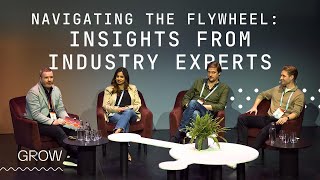
YouTube panel discussion (HubSpot) on applying the flywheel model to go-to-market (GTM) strategy, emphasizing alignment across marketing, sales, and service, data quality/enrichment, product-led growth, and AI as an enabler. Panelists (customers) from Teamwork, Swapfiets, and Pleo share practical use cases for HubSpot (attract, engage, delight), tooling consolidation, ICP refinement, and handling longer sales cycles; audience Q&A closes the session.
Questions this video answers
November 7, 2024
Patrick Biddiscombe (creator/uploader)
Krivin O'Malley — Vice President of Corporate Sales, HubSpot EMEA
Teamwork, Swapfiets (Swap Feeds), and Pleo
Chapters
My name is Krivin o'.
Malley.
I am the vice president of corporate sales for HubSpot in EMEA and my job this afternoon and the great pleasure is to talk to these three amazing customers. But before that, I want to talk to you. I'm going to be that guy. Show of hands coming your way. GTM go to market. For go to market, we're talking marketing, we're talking sales within sales, pre sales, BDRs, rev ops, and of course, we're talking service, which is our success teams and contract managers. Wherever you work in that GTM continuum, do you believe very connected, somewhat connected or not at all connected by show of hands, how aligned your GTM function is? Very connected. 4%. Some somewhat connected.
Okay, that's a bit better.
Not at all connected.
Okay, interesting. And I want to talk about the.
GTM in the context of the flywheel.
What we're going to spend our time talking to these customers about.
Put your hands up if you can say that your career started like I can in the late 1900s and I have a funnel seared into my brain. You guys do now too, right? It's got marketing inputs at the top.
It'S got sales at the bottom.
And I think one of the reasons why our GTM functions are misaligned is, is because Even though from 2018 on, Brian Halligan first coined this concept of using a flywheel model to describe what's happening in gtm, the reality within business is still very much a funnel. So let's just take two minutes to compare.
So you know what I'm talking about.
When we think of a funnel, we think of an impulse at the top. The focus in a funnel is the sale. When we think of a flywheel, the focus is on the customer. What Brian challenged you to do at Inbound 2018 was to put the customer right in the center of your growth strategies. If you think about a funnel, it's very linear marketing. Hand to sales, sales hand to service. And the output is the customer. What we try to do with a funnel is we have this sense of momentum, this sense of energy. The measurement is on customer success. The measurement is on the value that you can deliver. And the output is not a transactional sale. The output is customer growth. So who wants to learn a little bit more about the funnel? Let's join our customers, give us a.
Quick introduction, tell us who you are, where you work, and we'll get into the questions.
Sounds good. Hi, everyone. Great to see everyone. So, Lubna Qureshi. I lead marketingeamwork.com if you haven't heard of us, we're a project management app that's specifically designed for those that do client work. So we allow you to do all the things that a normal project management app does, but also allow you to do the time tracking, plan the resources to do the work, track the profitability and do it all over again. So especially for those that do client work, I've been with teamwork for two years and we've been a HubSpot customer for two years. So that's serendipitous, I think. And my background has always been B2B marketing, particularly in tech. The last kind of 15 years prior to teamwork, I was with a company in the Finance Transformation SaaS space. Prior to that I was with Intuit QuickBooks and I started my career in Accenture. That's a bit about me.
Fantastic. And thanks so much for coming.
Thank you.
Great to have you. Chris.
Yes, hello, my name is Chris Eilers. I work for Swap Feeds in Amsterdam. It's a Dutch company. Whoever doesn't know what it is, we do bicycle as a service, we call it. This is a subscription company for bicycles. Maybe you see the Blue Tire in London as well. So we are in seven countries. My role is a senior project manager product. So we are not very big. So I have several hats on. And yeah, we are two years now with the service hub and marketing hub Life and we just recently installed also the sales hub for our B2B efforts.
Yeah, cool company. And of all the Azure services I've heard about, bicycles as a service is quite cool.
Yeah.
Magnus.
Yeah.
Hi, my name is Magnus, I work for FinTech, Danish FinTech called Pleo. We do expense management and expense as a service. I want to say I've been with Pleo for about five and a half years now, so I've also been part of the whole HubSpot journey. Started in strategy and then realized we could use a bit more help in the HubSpot side of things. Moved over, joined and I've worked with HubSpot for about five years before that. I have sales experience and I had small consultancy where I also helped smaller businesses get used to working with customers in an Internet age. When I was a kid, so all came in relevant.
Fantastic. Well, look, you're also welcome and I think when we think about the functions of marketing, sales service and those sort of traditional handoffs and then we try and move our mindset forward to the flywheel, we talk about attract, engage and delight and I think what's really interesting about that is it's everybody's job in go to market to attract, engage, delight. But we are going to start in those sections. I'd love to start with you. An easy one to start. What are you doing at the moment? What's prioritizing you? What's keeping you up at night?
Yeah, great question. So I think like many leaders probably in the room 2025, planning is well and truly underway. So spending a lot of time thinking about that within that kind of piece, looking at redefining, kind of our refining, actually not redefining our icp. So you know, who do we go after? How do we focus on the right segments within that? We're also looking at slightly going up market. Now when I say up market, I always qualify that because really where we do well and where we have the strongest product market fit is really kind of between services firms between 50 to 500. So we're not talking about huge enterprises here, but kind of the smaller, sorry the larger end of SMB. And then in addition to that, looking at new industries. So we have a very strong foothold in agencies. That's where we were born out of. So that's a natural play. We have really strong customers in IT services in consultancies. So really looking at where the industries that we're winning and where can we double down. And then lastly, probably this is relevant for the marketers in the room. There's so much noise in the market and particularly I would think in SaaS, we're a little bit guilty of using a lot of jargon. Right. So really how can we simplify our messaging and lead with human messaging to attract people? Because that's the only way we're going to cut through the noise. So that's an important focus for me.
So not too busy?
Not too busy at all. Just a few things.
You raised a really interesting point there. And for those of you who caught Mark's keynote this morning, that transformation in the markets that we serve, we've got to look outside that fragmented experience, that clutter, that noise. And then how do you get attention? How do you get people to focus on what you do outside of teamwork? We will talk about teamwork.com of course. But right now, who's doing a good job in marketing at grabbing attention and cutting through some of that noise?
Yeah, there's so many great examples, I would say probably a few that come to mind. Right. So Canva's doing a really great job. They have this kind of design. Your what will you design today Campaign that some of the folks in the room may have seen where what they're really doing is putting customers at the center of, you know, how are they actually using, what designs are they doing to actually drive growth. So they really heavily profile customers, which I think is very interesting and very relevant to the discussions earlier. People want to hear from other people. They don't necessarily want to hear too much from brands and companies. So that's a really great one. Slack has done a really great job with their campaign called the Big Meeting. So for those that haven't seen it, check it out. It really puts the emphasis on the problem, which is meetings rather than solution. And by doing that, they're actually basically putting Slack as the obvious choice for solving that problem. This is a fun one. This is more from the B2C space, but Snoop Dogg has done a really interesting one. So he put a post out a while ago saying I'm giving up smoke. And that generated a lot of interest because everybody probably knows of Snoop's dog interest in smoke. He hadn't actually given up that illegal substance, but what he was doing is he was the brand representative for a smokeless fire pit company. So that was a really good one for me because it was just like you would not, you know, first you catch Snoop saying something that is completely unexpected of giving up smoke. And then two, you're actually putting a brand on the map that to be honest, I didn't even know smokeless fire pits existed, let alone the brand itself. Right. So it's category and product awareness. And then last but not least, I know you said we'll wait, but teamwork.com, we have actually done a huge brand play this year. We've done a series called the Client. It's all about putting again the emphasis on the problem, which is client woes and the challenges that clients present in the day to day lives of agencies and consultants. We've had about 7 million views on the videos collectively across channels. So really trying to cut through the noise in a unique and interesting way.
That's amazing. The lessons we need to learn are everywhere that well known go to market Professional Snoop Dogg teaching us valuable lessons on how to. Again, to Mark's point, the technology we talked about, of course we did. But it's how us, the humans create the creativity, the connection, the personality, the subtlety. That's a super one. I want to talk about teamwork.com because you're a fantastic customer of ours. If anybody caught the sales hub session earlier on with Lilitha, she talked about Some of the results that you guys have seen. But in the context of smaller businesses having to attract attention in a disciplined marketing where the bigger budgets historically won. How are you guys going about it?
Yeah, absolutely. There's probably three or four main principles that we're approaching. Right. We're going up against some really big hitters in the project management space. Probably names that people have heard of here. You know, I'm not going to mention them because I don't want to give them any air time. But they're very, very well funded and you know, very deep pockets and have big budgets and big brands. So we really need to kind of cut through the noise. But there are probably two things. So one, obviously demand is super important. All marketers in the room are responsible for pipeline generation or lead generation to an extent. But we're trying to really balance the short and the long. So for me I'm thinking about, okay, how can I capture the 5% of people that are in market today? That's great, that's going to give us the pipeline we need. But actually the 95% of people that aren't in market for a solution, how do I actually get on their radar and their mental short list so that when they come to buy software like ours, we're already top of mind. So really investing in the kind of brand 95% piece and what I call kind of demand creation and then obviously balancing that with the short Demand capture the 5% that are in market. So that's super important investing for both, which ultimately will lead to kind of better business economics and utter unit economics. Right. Second piece I think is really kind of tailoring content in a way that's kind of building trust. So again, I think some of the morning sessions reference this, but really how can we use social, which is obviously a channel that people are trying to, they're trying to keep us in the channels. How do we use influencers and content to actually cut through the noise? People want to hear from people like them. They don't want to hear from brands harping on about their product and their feedback feature set. Of course that's important, but that's further down the funnel. So really thinking about tailored content. And then it's interesting you asked the question around how connected the go to market experience is. And there's clearly some, you know, different viewpoints in the room. But I think actually having a connected go to market experience right across the board is super important. I would say we probably fall in the middle bucket of yours where we are aligned, but we're not perfectly there yet. So we're definitely thinking about how can we leverage the collective power of go to market, marketing, sales and success to actually really deeply understand the customer and then talk to them all the way through the flywheel as you guys describe it.
I mean it's so interesting and technology and I say this as a leader for HubSpot, it's an enabler in this conversation. Of course, you look at multiple CRM platforms, marketing automation companies and they all do different things. And we're very, very proud of where our product team have our product at the moment in terms of its market fit. But really what we're trying to do is create that energy with a connection and a customer and they kind of feel passionate about what you do. It's hard.
It is, it is. I think the whole AI landscape is very interesting. It very much resonated with Kieran was saying earlier. So we actually run talking about marketing attribution. We run surveys in the product, right. Asking where people, where people found about, heard about us. We are starting to see chatgpt in there, right. People are like, this is where I found you. And you're starting to see the, you're actually starting to see in the results that Google is going down and you're slowly starting to see that appear. So that's the whole landscape that's going to be really impactful I think for marketers because one, it's the efficiency, but the two, it's actually the growth side of the equation. We have to learn to leverage it on both sides actually. And that's something that I'm kind of actively still trying to figure out for my team and for the business as well.
Yeah, you talked about unit economics, lifetime value of customers. And I think what technology does allow is the marketing function, the marketing discipline, marketing leadership, to really have a voice that's more connected to a dollars conversation than a kind of an influence conversation. I think that's what some of those, some of those tools do. We talk about this concept of developing your ideal customer profile, your icp. How are you guys doing that at the moment? How are you developing that message? Because it's iterative, right? You can't stand still. And how is the technology helping in that effort?
Yeah, absolutely. So as I said, our ideal customer profile really is kind of client services businesses kind of, let's say between 20 to 500, you know, know, typically falling in kind of professional services or agencies industries. But we're like, it's an evolved, it's all, it's an evolving thing. Like I don't think the ICP today is something that you could just put on a page and then set aside. So we're continuously looking at that. Right. So there's probably a couple things obviously with HubSpot we're continuously looking at like actually where's the best product market fit. And we're doing that through assessing obviously all the data that HubSpot allows us to have to understand which industries are performing better compared to others and at what stage of the funnel. Because there's different performance at each stage of the funnel. Top of the funnel may be performing differently than ultimate ARR. So we need to keep an eye on that to understand where do we optimize and where do we double down. And for me that's super important as a, as a marketing leader because then I need to look at resource allocation, how much should I invest in IT services versus agencies versus consultants and. And so on. Right. So that's a super important part. Data enrichment. I think this was touched on earlier. We are a data enrichment customer. It fuels our go to market, it actually fuels our business. So we use it, we use the form shortening that was talked about. We use the enrichment. We've used it for about a year and a half and it's really made a huge difference for us because basically allows us to understand who the customer is but then deliver a personalized experience. Experience at pace. Yeah, the at pace piece is probably what I underline the most because what it allows you to do is not just personalize on the back end, but like we want to be able to take a customer who is in a certain industry and a certain size and deliver a different product experience to them. Yeah, Right after they sign up we have a 30 day free trial. Right. So if you sign up ideally your experience should be a little bit different than when you sign up. And we need to be able to do that pace. So enrichment's massively helped us there Reporting. It's kind of an obvious one but like I spend my day in all the various dashboards in HubSpot. Like literally it's always open. I have it on the app. That really helps us understand the funnel performance. And then lastly, I would say our life cycle team is really quite advanced, I would say in terms of really personalizing experiences across the web app and across life cycle using probably three or four dimensions. So company size, the industry they're in, the Persona they are and then product out, like product usage actually. So the product usage one I think is something that's massively powerful because if we can understand how people are using the product and what we need them to do next and power that through all the technology that's available, we can get them to value realization much faster.
Yeah, I'm talking to an amazing marketing leader, an amazing marketing professional, and yet at the start, when I talked about the flight flywheel, I didn't talk about marketing, sales and success or service. We talked about attract. But clearly, if that sort of influence is pervasive across the flywheel, anything in terms of what you're doing, that's supporting the engage sales piece, the delight service piece, just as a finish before we pivot.
Yeah, absolutely. I think the last point I just mentioned, so when I think about the work we're doing in life cycle, it's actually fueling all of the go to market. We're taking product usage data data, Persona data, what industry they're in and what size they are, and then that fuels our marketing motion. But actually more importantly, if anything else fuels our sales motion and our success motion, because we're able to say, okay, this is a customer that's of a certain size. They're using this part of the trial so far and they're not using this. So that then allows a tailored sales outreach, whether it's an AE or an sdr, to basically say, okay, how can we get you to use the entirety of the product suite in the trial? And that obviously facilitates a better, more meaningful sales conversation. And then we're also doing that on the success side. So if customers using XYZ and we want them to now use our more advanced features, which are ICP specific, whether that's reporting or resource management, we can make sure that customers are getting the full value of the platform. But all of that is powered by the data data that we have and the personalized efforts that we're doing that actually span beyond just attract is actually attract engage and the success piece.
Yeah, it's amazing. Amazing. Magnus, I'm going to jump down to.
You.
On the sales side. In this new mindset, this new flywheel approach to gtm, we talk about engaging customers.
So.
So Lubna talked about elements of product LED growth, but actually in moments that matter, humans do need to jump in in this conversation with all of the pressures macroeconomically, what's top of mind for you at the moment?
Data, I think, is still the biggest thing. You talked about it as well, Lubna. I don't think you can really do. You can't really talk to a customer if you don't have the foundation for what the customer is doing, what kind of issue they're facing. I used to be in sales, as I said, and you really want to sell this kind of like the problem, the solution. And I don't think you can really do that without knowing what the customer is struggling with. Some of the data points that we use is we have a brilliant customer success team and they feed information back to our sales team and it allows the sales team or it allows the customer success team to be the helping hand within the company. It allows them to be sort of a person you reach out to when you have issues and then the salesperson can come in with the feedback that they got from the CX rep or the customer success rep and they can give them a sales experience. And I think it's something that we enjoy with HubSpot as well. We have a great relationship to our customer success rep and when we need to upgrade it feels like we can ask questions and then go to a salesperson and get the salesy side of things and upgrade and so on.
I can do this. Who's your customer success rep?
Idel shout out.
Great.
Well done Adele. By the way, once we get through talking to the panel here, we're going to with a few minutes left, jump back to you guys and if anybody has has a burning question going on in your head, keep that ready with a few people with some mics. Again, I'm going to go back to the keynote that Mark took us through this morning. Multi channel cluttered noise Macroeconomic impacts. Multiple decisions. Sometimes decisions now are made by consensus, they're not made by individuals. If we talk about sales cycles and how they're becoming longer, what are you guys doing in to try to manage that obviously to try and shorten it, but just to try and manage that so the salespeople are doing the right actions at the right time.
So we're focusing a lot on our PLG motion, our product growth and kind of allowing our salespeople to talk to the sort of longer onboarding customers. So kind of moving the salespeople away from the customers that might upgrade themselves, maybe re engaging with them, but focusing on these bigger customers that take longer. We're quite lucky. We have a lot of experience with this at Clio because we have a very complicated customer due diligence process. So we are financial institution comes with a lot of responsibilities and we really need to make sure that we're dealing with the customers that we are. So where some companies can just send out, put your credit card in here and kind of just let anyone on board. We really have to make sure that we're talking to the right people. We have to get sign off from a financial director or from a CFO sometimes and that can really make the sales cycle a lot longer. We have to involve a bunch of different stakeholders from most companies. Especially as we move a little bit up market, it really becomes more complicated and I think it comes back to this data piece. I think if you as a salesperson need to engage with the customer over a long time, you really need to have this like data piece on point. If you're constantly going in and you're like scrambling as a sales rep trying to figure out what did I talk to about this customer or what did I talk to this customer about? And it just, it really makes the job hard and it takes away a lot of the sort of fun about being a sales rep. It's, I don't want to talk AI too much. I think we're going to end up doing so. But I think it's a great piece where AI can kind of help summarize a bunch of conversation that you've had with a customer. So even if like the customer needs to do a due diligence step, it takes them two weeks. You come back as a sales rep and you can like within seconds just get a summary of the emails that have been going back and forth that you might not have read because you have a bunch of emails to read as a salesperson it really helps out a lot. But you need the data to be good. Trash in, trash out. If the data isn't there in the first place, then you're not going to have great data from the AI.
It's so interesting, I think in working in the sales and working in GTM for a long time in different businesses and I think historically we spend a lot of time enabling our people and training our people and maybe we should do more of it. But we train them a lot on the skills. And for in sales, for example, you know, we'll talk about negotiation skills or we'll talk about managing the sale or discovery and those skills, even if they're refined to an excellent level, if you're pointing that canon at the wrong place, then your return is reduced. So it's connected to the points Lubna was making in terms of icp. When you get to that engagement conversation, more of the right stuff is going to deliver better outcomes for you. In terms of PLEO in particular, any kind of particular efficiency plays, obviously leverage of the technology that you guys have worked with in terms of optimizing what the sales individuals are doing at the moment.
Yeah, I mean we're trying to. Coming back to icp, we've been trying to rework how we define our icp. We've tried to rework how we define different customer levels. So like small business enterprise, we have a lot of different interests than most businesses have. So we look at a lot of other numbers that than a traditional business might when they define what an enterprise customer is, for example. So we've tried to focus on that, really make sure that we nail down our ICPs and also that we have the right information for again, coming back to data to define which bucket the customer lands in. And then I think also just like trying to cut down the noise. We used to have, everyone was a super admin in HubSpot. Luckily that's not the case anymore. We used to have, I want to say 100 different SaaS tools. I think it might have actually been more wow. And just trying to take a look at the entire architecture of like how are we doing business and looking at where we, where we have five tools that do the same thing and kind of minimizing it. And what we realize is HubSpot for the most part, maybe not while we are buying this fancy new shiny AI tool can like down the line do 80, 90%. So and I'm not trying to make HubSpot look great here. This is actually what I think he is. They do that all by their, all by themselves. But I think you can really do this 80, 20 thing where you can have one tool that does most of what you need to do. And if you do that, then you don't end up having all these data issues with trying to connect five different systems. And then you have different race conditions, data not ending up in the right place, that sort of stuff. So I think that's one thing where we're really trying to focus and I think it's providing an efficiency gain for our sales reps.
I'd love to ask you. So again we're talking about that engage section. That's when the salesperson hopefully is getting involved in the moment that matters. Having a conversation with a customer, a prospect, and obviously trying to make them a customer. And as somebody who has years in the sales discipline, I love it and I manage teams and I love all of them too. Let's make sure that's on the tape. But getting salespeople shock to use a CRM system can be challenging. And if you don't have the data in, you know, that usage, that easy to use. And I'm not looking for you to compare systems here, but how are you finding that compliance, commitment, that sort of mindset that change management to. This is how we're going to do things. And if we do us and do it really well, it's putting the customer at the center of the outcomes. How do you find managing the sales teams to use the systems that you're now adapting?
Yeah, I think most people, let's say, like half of the people that you work with are actively working against change or like not. Not enjoying change. Not that much. They come in, they want to do that job, they know how to do that job. They might even know how to do their job better than you as an operations specialist know.
Right.
And from my perspective, it's really about showing the value for the sales rep. Like, if you can really show them that, oh, if you fill out the information correctly in these places, we're going to give you this great thing over here. And hopefully that will then lead them to talk to their colleagues about, oh, if we actually fill out this data that they're asking us to and make sure that we go over our pipeline, make sure that we review the deals that we're working with, it's going to benefit us in the end, it's going to benefit our own pipeline. It's going to get us closer to those numbers that you need to reach as a salesperson. It's a numbers game for most salespeople, I think it should be. And if you can give them the incentive to put in the right data, then I think they're going to do it all in their own.
Yeah.
Yeah. I'm going to jump back to you for a second. Thanks so much, Magnus, because Beau, your VP of global sales, is obviously an advocate, I think, and is quite happy having been on different CRM systems. What's that relationship like? Because I think historically we expect sales and marketing to have a tension. Let's call it a constructive tension. I think it's a good thing. How do you guys plan strategies within the technology that your teams and his teams are adapting to make sure that's a seamless engagement. Are you guys working together?
Yeah. Great. No, I definitely 100% agree with you. I think a little bit of healthy tension is natural Right. Between that sales and marketing piece. I think that actually fuels go to market. From my perspective, we have a great working relationship. I think on the tech side in particular, we've actually consolidated that into kind of a rev ops team that's basically responsible for go to market technology, which actually has been a bit of a game changer, I would say because rather than me going off and buying my own thing and sales going off and buying their own thing and success going off and buying their own thing, we're actually trying to concentrate that. And one of this is a very simple thing like anytime we're looking at a technology possible adoption of a new platform is let's just get a simple one pager and write down what the use cases will be. And it better have some use cases, cases that span all three of those. Right. It can't just be a marketing use case or a sales use case or a success use case. There's got to be, it's got to tick some boxes on making sure that it fuels go to market and that there's actually going to be adoption right across those three teams. Otherwise we're probably ending up in a local tool that we won't end up using. It won't be powered by data that spans go to market. So that's a, that's a, that's a super important piece. And, and I think that's really one of the things that we've done that's helped us kind of of move the needle on really making sure that every platform that we use is being used across marketing, sales and success. So still a journey and there's a ways to go, but I think we're making some, some good strides there. I did want to add actually to your point because I think it's so interesting. What you said is like, how do you incentivize the sales rep to get stuff in there? Like, is this just an admin thing? You're just making me do stuff I hate to do. I think one of the things that's really like you said, is create value for them. So one of the things we've done recently is we've actually put a, a bit of a deal team in place for ops and we're basically saying the rep. We need a certain level of information for you to actually for your deal to qualify as part of the deal team. But by doing that, you'll actually get support from across your go to market to make your deal successful. So like as a rep, they're like, of course I want more support. I want marketing support on this deal. I want success support, I want leadership support. So that's been a very practical thing to your point of like as a rep. What, what's in it for me? It's like, well, we'll help you with your deal. Obviously that hopefully should improve the success of the deal and make you more successful as a rep. So I thought that was an interesting point.
I love that nugget that you shared. And if anybody is considering CRM platform, customer experience, application investment, getting that GTM leadership or at any level around and making sure that when we're going to vendors, the use cases that we articulate are cross the journey, the customer journey, because that is putting the customer in the center. If it just solves for marketing, if it just solves for sales, you're going to end up in that linear handoff funnel type conversation. And that increases tension, I think, not to get the physics of flywheel going, but what I will say as a GTM leader, you know when you're in a team that has momentum, right? And momentum is about alignment and connection. And the other thing you know is, you know when you're not. And I think the tooling can enable and support that. But the fact that you and Bo and the success team sit down and go, okay, what are we trying to solve here? Let's not just buy software, let's actually solve a problem for customers. That's. That's fantastic. I'm going to talk to Chris now. Chris is our representative of the service, part of the audience in the flywheel, we call it Delight. Delight should always sit in the middle.
Yeah.
How are you, Chris?
Very good.
And you?
I'm good. Enjoying the conversation. Very good. What is keeping you up at night at the moment? How are you doing?
Yeah, also data. I would say so. Data quality, data hygiene. We implemented HubSpot two years ago and it is already getting messy. So that's something that we need our application guys on top and our data engineers we need to clean up. So this is already like, after such a short time, it's already a lot of additional data in there and we of course try to enrich it also with our backend information. So this is like for me at the moment on top of my mind.
Yeah. I think again, connecting some of the conversations that we've had. Technology is great, intent is great, go to market. Alignment is fantastic. We got to watch the data. Data aggregated and activated in an optimized way is the goal that's going to fuel the icp, that's going to fuel the next decision and that's obviously going to give us great experiences and reduce churn.
And on the other side, of course, it can create a lot of problems if it's inaccurate and messy.
Yeah.
What I'd love to ask you is in an era, and I don't think this is true of HubSpot customers or even tech. This is ourselves as consumers. We have incredibly high expectations. They've gone through the roof. So when we talk about delight, it's a nice word. What does it mean for swap fits to try to delight your customers.
So yeah, in the recent months or in the last two years since we were with HubSpot, but we see that it is actually that we are actually able to do more proactive work on the customer. So like it's. For me, it's also more like a delightful service is something that is a little bit more proactive that we reach out to customers before a problem happens. For example, if someone is a bad debtor and this goes to a debt collection agency, we created the information with the workflow that they get a. Yeah, they get a notification and we call the customer and say, hey, before next week the letter goes out. There's a lot of extra costs. So let's work together on solving this. And yeah, through this kind of delight interaction with the customer, they actually trust us more. Staying longer and of course pay like what is open so it doesn't become a bad debt at the end. End. So this is for me really like one of the big. Yeah, big pos. Like positive things from HubSpot that you can really reach out with information from others from other spots in the company.
Yeah, I think that's interesting. I mean, how many times do we feel like the brand or the service we work for, even in B2C in our own lives? They're not really talking to me. You know, there's a number attitude to us. There's a certain of an automated feel to the experience that it's not just personal experience, it's hyper personalized experience. And I think that's what the data unlocked in an optimized way in the right tool. I think that can give our teams the ability to do that, which is amazing.
Yeah, we also have a little bit of a special situation where we have a lot of tickets. So we have half a million tickets a year, which is like from 300,000 B2C customers or members. We call them everybody with a blue tire on the street. And we have 50% of these tickets are phone calls. So we have a lot of people that call us. They have a problem with the bike on the street. So they need help immediately. Which is a very interesting challenge also to then compare it with a ticketing system that we had where it was really super messy and not straightforward. You, you were actually flying blind. Someone calls you and you say, yeah, what's your problem? Well, we now like with the air coil implementation which is working very well by the way. Big air cool fan, we can see already who's calling. We open the contact record and we see also the last couple of communications that went out. So we are much more now with the info at the fingertips, we are much more delightful towards the customer. So if they call us and it's.
Interesting like cross gtm, we talk about these moments that matter and you know, the ideal, the ideal customer is one that never needs to engage with your after sales success. But that's not reality.
Yes.
When, when they need to, they're on the street. There's a problem with the bike. That's when your people need to show up. And that's, that's really interesting. Curious. You know, we talked about AI in the different parts of the engagement. Is that something in the service delivery model that you're beginning to see?
Yes, a lot actually. Very big hopes. I didn't see a lot of really like tangible success yet. So like we will have to wait for this I think a little bit longer. But along this like that we are talking not about large language models anymore, but agentic AI and like customer service representatives are customer agents, you know, support agents. Which is like, yeah, like you could think that an agent would be replaced by a bot. You know, like, and this is like maybe also the fear of a lot of people that work in customer service that when we for example do a project on AI like in customer service, that they fear okay, I will be replaced next year or next month or so. So we like, I think it is very important to get the messaging right.
Yeah.
But also like you know, work out a proper use case and take, take your colleagues with you, like take the agents with you, take the everyone like in one boat. Be super transparent about it and say this is what we try to achieve and let's just test it out together instead of doing some project in the background and then drop it on the team.
Yeah. I mentioned Brian Halligan at the top of the chat in relation to introducing the concept of a flywheel to try and replace our funnel mindsets. I'm reminded with the, the contribution you just made there. Our other founder, Dharmesh, I think at least in the last couple of inbounds, but he's talked about AI in the context of AI is not going to replace your job, but somebody who uses it really effectively probably will. And it's all of those efficiencies to allow you turn up for customers in a more compelling, engaging way, which is, which is really interesting. Just to finish curious, what, what's the next step for Swap Bits in terms of the partnership with HubSpot? What's next on the agenda?
So, yeah, we are now focusing a little bit more on B2B. So we also have an offering for companies to like, for mobility offers. Like instead of getting from a company, like a ticket, a monthly ticket for the underground, you can also get a bicycle from us. So we have a couple of companies where we already work together with. They have like several, several bicycles or we have an employee model where the employee can sign up. So that's why we now also implemented Sales Hub and it's working quite nicely.
Fantastic.
We migrated all of our open leads into the sales hub. We have now all of our fingertips. And again, the, the fact that everything is connected also with the service hub and the marketing app gives us really like, like super nice insights and we can connect all the dots now. And I think this is like, yeah, the next step for us will be more like towards B2B.
It's that kind of holy grail. We talk about a 360 view, the customer journey, having it in one platform, really interested. And the more blue tires we see, you guys will know, you'll know where they come from. I'm going to ask the crew to bring the lights up. We have three or four minutes and I'm sure there is a couple of people out there who, who would love to ask these industry experts one or two questions on the flywheel. Any brave soul got a question?
Hi, how's it going? Thanks guys. That was a really great talk. Just to give a little bit of context, our business is B2B and generally if you know, if you're in our industry, you kind of know who we are, which is a great place to be. So we tend to kind of neglect the attract side of the flywheel because we don't necessarily want to spend a considerable amount of time on lower quality leads that we, you know, take attention away from our sales team. So we very much focus on engage and we very much focus on delight. But it makes me kind of sad that we neglect that part of the flywheel. So I'm just wondering if anyone on the panel could maybe offer some suggestions on how we might reinterpret that attract section within the context of people already knowing who we are.
Prioritizing. Attract.
Yeah, I guess there's probably two things. Right. So I think from what I'm getting from your question is actually you actually have broadly good awareness, but yes, no.
Kind of very strong market share.
Yeah. But perception is also an equally important part for me of the attract part of the flywheel, because people can know who you are, but you want them to know you for the right thing. Like, we're probably the best example of that. I would say at teamwork, people know teamwork actually fairly well, but they actually know us just another project management app. And so we actually need them to know that we're not just a project management platform. We actually do things that are far beyond that. And we're actually trying to play in the space where you can consolidate multiple platforms, such as project management, time tracking, resource management platforms into one. Right. So we actually don't have a huge awareness problem. We have a perception or perception or consideration problem, depending on how you frame it. So I guess it's thinking about if people know you, that's great. They know you for the right thing. So sometimes actually shifting the mindset of the customers and what they know you for could be another important part of that. That would just be my view.
No, it's really perceptive. I think the other thing about that flywheel, again, and it's a mindset as much as a model, you know, the people at the Engage and Attract function have a responsibility to think about. Sorry, the Delight function have a responsibility to think about the attract. It's not just a disparate piece of work. So hopefully that was helpful. We've time for one more question.
Okay.
This is for Magnus. So it sounds like in your company you have somebody, I guess, dedicated on the technology across the business and which apps to buy, which not to buy. How does. How everything syncs up? So first question is, is that the case? And if so, at what stage did you feel that was the right direction to go in?
Yeah, it's. It's really an area that we're doubling down on now. We have had teams that have been responsible for. We had. We have like an IT team, our tech ops team that has been generally responsible and we have a procurement team. Again, we're very conscious of which products we take in as vendors. So we have this procurement team and now we're building more teams on top. So we're really focusing on this CIO area where we're going to have some teams that are going to be focused on the GTM tool stack and the people tool stack. And just in general how tools interoperate so it was really a thing that we started doing I want to say within the past like two years. We're getting really, really big now and I think it's unavoidable when you have this much data, this many people that need to work together and a flywheel that needs to keep on concerning.
Yeah.
So can't really get more precise than that. But as we, as we grew and we started seeing these issues, we really needed to or we realized we really needed to double down on it.
Thank you. Thank you so much. I hope you've appreciated and enjoyed hearing from some amazing customers of HubSpot. These are three of our very best and they tell the story story better than we ever could. The QR codes are up there. These are published case studies with a hell of a lot more detail than we could go into in a short conversation like this. Please dig in on that content. We'll be available this afternoon to answer any questions. And finally to all of you, thanks so much for joining us here the afternoon and enjoy the rest of grow.
More from Patrick



A NEW BREED OF PARTNER: The Partnership Ecosystem Model Journey of Patrick Biddiscombe, Part 1








Customer Success Workspace: Never Lose Sight Of What Matters Most | HubSpot Spotlight