Only Pro Marketers Use These Untapped Marketing Channels
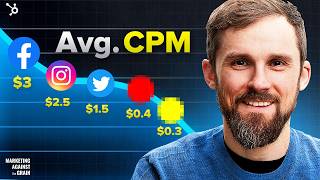
Kieran and Mike break down three underused marketing channels: creator partnerships through flat fees or CPMs, YouTube video ads with strong hooks in the first 2-5 seconds, and point-of-need placements like airport Wi-Fi and Uber ads where audiences are captive. They recommend conversion-lift studies to measure YouTube ROAS and testing these channels before scaling spend.
Chapters
We're going to give you the three places to spend your paid advertising dollars that no one else is. We're going to tell you how to get leverage, how to be successful, and the tactics that will make you famous in front of your CEO because you're going to be making them so much cash. You want to stay tuned to get the tactics, the places, and how you can get leverage against the competition. All of that and more on this episode of Marketing against the Grain.
Okay, Kieran, we're talking about a topic today. Advertising. We spend a lot of money at HubSpot and the work that we do on advertising. We also talk to a ton of different marketers, all different businesses, all shapes and sizes, from early stage startups to large public companies. When it comes to advertising, most people do some pretty basic stuff. They spend some money on Google keywords, they spend some money on the meta platform on Facebook and Instagram, and if they're really wild, maybe they'll do some, like, billboards or some basic or some like podcast ads or audio ads of some type. Right? Like, those are inherently where most companies are spending their money today. If you look at the data, like those where most advertising revenues come. We want to break down some places where you should be spending money instead of those. And the whole impetus, Kieran, for this episode was a tweet that got me really fired up that I want to share with you. And then we're going to go into everything. All right, so friend of the pod, Lenny Rojicki, he was on the pod. Go check out Lenny's newsletter and podcast. It's awesome. He posted this graphic on Twitter of different advice that people had given on his show as it relates to running out of home advertising, specifically billboards. And I was reading through all this advice and it's fine. I was like, this kind of sucks. Like, there's no real data in there. These are not compared to other channels. And I personally think billboards are largely like vanity advertisements where in some cases they can be effective, but in most cases you're doing them so that, like, the CEO sees them on the drive to work or when they land at the airport or those kinds of things. Right? And it just got me thinking. I was like, wow, as marketers, we need to be spending our money in the best places possible. And I wanted to pull back some of the places where people should really be thinking about spending their advertising dollars.
This is one of the places your CEO really figures out if they like your brand or not is, like, through external things like this CEO's love this. I don't know if it drives any real value, but CEOs feel really cool when they're driving to work and there's a billboard of your company. The other thing I would say is billboards have made a bit of a comeback because many more companies are going up market and so people blanket certain cities where they have key accounts to sell into. Like One of the CMOs I talked to who really does a lot of paid advertising to try to sell into very large accounts. They would do things like rent, they would brand the taxis, they would brand the billboards. So basically they would look for the one account that is like a large account that they want to sell into and they would look at all of the real estate that they could brand around that office block and buy it all, like the taxis, the billboards. So I think people do it for like really targeted accounts. But it is certainly not a thing that you can measure or I think will drive a lot of upside. One other thing about billboards, the kind of AI opportunity is kind of interesting for a little bit of time where you can have a phone number or a chat widget associated with every billboard and actually chat to the ad because you can have that for free. Right. You can have an AI voice enabled agent. You can have an AI chat enable agents. You can actually do a little bit of AI with billboard advertising.
Yeah. What's the company? Because I know people are going to ask you about the company that would do the AI agent for the phone numbers. What are a couple that we've looked at so far?
So here's the example. I think we've done this on a show before, but it's the company Bland AI. Well let's, let's, let's look at the video. You can start to see this is for a AI agent to do recruitment. But this is the billboard I think is pretty clever because it's all it is is a phone number and then.
You have millions of phone calls for.
Businesses and in any voice.
What's your name?
My name is Mike. What's your name? Nice to meet you Mike. I'm Bland.
I guess you're calling since you saw our billboard, right?
Yeah. So basically there's like companies like Aers AI that we had on before that will allow you to create a BDR to take voice calls and you can ring the billboard and put commute in. So I think that does to me make billboards a little more interesting, but not something I would spend a lot of my paid capital budget on.
Yeah, look, if you can do a very targeted or very focused point of a billboard strategy, it can work. This episode is not to say billboards are bad. This is more to just say like, oh, that Lenny's tweet just really got me thinking about where are the smart places to put advertising dollars and how can we share some knowledge with everybody watching about where they might be thinking. If you're watching the show and you're spending any money on advertising, you're likely spending it on Google and Facebook and maybe audio or one of one or two other channels. I want to give you three other places to think about spending your money, Kieran. The first place that people do not spend advertising dollars because it's a little harder than just like rolling up to Google and putting in a credit card and running some ads is creators. When you go in your market, if you have some influencers on YouTube, TikTok, Instagram newsletters, what have you with a real audience, even LinkedIn and you can run sponsored content program like we're doing this at HubSpot with different YouTubers where we will go to a YouTuber and say like, hey, we want to be a part of some of your future episodes. This is what the story we're trying to tell and we kind of co the like ad and everything to integrate with the episode that they're making. When we do that, we get a cost per lead of about four times lower than Facebook or Google. Somewhere between four to six depending on the actual like video and campaign that is like 400% lower is crazy. And it happens because one, it's harder and it does require a little legwork. But two, it's just way more contextual to the content and that person already has the trust of their audience and that has high engagement with that content and so they're more likely to actually like engage with your ad and take a qualified action.
Right. I think creators are going to be a big part of the B2B economy. They already are, obviously. I have talked my own book invested in a platform to allow you to easily run campaigns with creators for this very reason.
Tell them, tell them, tell them the app. I'm not going to let you ever get on the show. Talk about general apps without giving the URLs because people always want to know the.
Yeah, that's true. Kieran's using, you know, some of the. I tried to be like fair to. I try to not. I try to be fair to like all tools and not always just talk about the ones that I've invested in but I, I, I actually think it's useful for me to do that because some of these tools are great and I'm a great investor, so. Passion fruit.
Passion fruit.
So shout out to Jennifer and the team over there. Very happy to be an investor. It's a really cool tool. Like if I'm a company listening to this, I'm like, wow, I haven't thought about getting involved with creators. That the way to work with creators is if you can actually think about them as an extension of your campaign channels. And so you can basically figure out like a really good campaign that will work for their audience. Right. I think a lot of the reasons brands go wrong with creators is they say here's a ad kind of format of text and please just post that to your channel. And that doesn't really work in B2B. I think you want to find creators first who authentically like your tool and then basically allow them to have the kind of flexibility to craft a narrative around that tool that will work for their audience. So you can say, hey, like you can, here's the, here's the thing that we think is valuable for the users but like go, go ham and like create it in any style you want. And also I think the thing I would do is provide them with some like fun things like whether they're fun graphics, provide them with a fun stats, like some things that you think will actually be unique to their ad. Why do I know this? Because I actually started to get people reach out to me to post things on LinkedIn, right. Like to actually promote their tools. And so I've seen it from like both, both sides. But I think one of the things I agree, like if you are a company today, one of the things I would really experiment on is this kind of format. Right. Starting to figure out how you can work with creatives in a really nsync way and have them be an extension of your, the campaign you're trying to run and learn how you can best work with them to craft cool things for their audience.
Yeah. So to get tactical before we move on to the next channel, I want to go want to break down. If you're like, hey, I'm interested in and maybe testing some working with creators, you need to go to a marketplace like passion fruit or you need to do some research and find a handful of creators in your industry and reach out to them directly. Once you reach out to them or get connected with them from a marketplace, I think there are a couple of key things that you want to do the first is you want to create the sponsored ad content with them. You don't want to just give them pre made stuff because it's not going to fit for their audience. You just went over that, Karen. But you want to co produce that. You want to say like, hey, here's what I'm trying to promote. I want to learn from you. The creators always know better. Do not think that you knew better than them. They know what's going to work for their audience and you want to listen to them. The third step here, Karen, that I think is very, very important is that you want to get the pricing model right. You do not want to pay per lead on these deals. You want to pay. You want. If you're co producing, you think you're going to get high engagement. You want to either play a flat rate fee. Flat rates or a cost per thousand impression. Flat rate fee. Either one. But flat rates ideal. Like, hey, for this placement, for this episode, I'm going to pay you $5,000 for example. And that, yes, you're taking some risk, like what if that flops? But you're locking in a lot of upside. Do not go in that cost per lead. Do not worry about minimizing your downside. Worry about maximizing your upside when you're partnering with creators. Those are my three key steps that you're going to need to do.
Yeah, if you're using a platform, you can probably be more creative around how the relationship works in terms of the mon, like your monetary incentives. But 100 if you're going direct to the creator, make it really easy and just offer a flat fee. It is really an. It's not easy for a creator to get paid on leads and impressions because they have to try to track those things.
Exactly. Hey everyone. You know we're always getting requests on the show for more recommendations on how you grow with AI. Well, we're bringing you another one. We've got this free guide from HubSpot on how you can use AI to completely change the way you create content. This guide, it's got it all. Prompts to assist you writing and editing steps to incorporate AI into your marketing plan and guidance on how to roll out AI across your team. It is the guidebook on how to integrate AI into your content creation. I've dropped the link in the description below. You're going to want to check it out. Now back to today's show. So we talked about creators. They're very important strategy. Kieran. We can't do the show without talking about YouTube. We love YouTube we thank you for watching the show on YouTube. YouTube ads, despite it being a huge business, are still widely underutilized for B2B for business to business. For small businesses especially YouTube advertising is still predominantly large scale enterprises and large scale consumer businesses. And that is a massive missed opportunity. And the reason for that is creating video advertisements used to be really expensive and hard. But now with networks like Upwork and Fiverr, AI video tools like hey Gen and others like wow, you can really create pretty compelling video advertising creative for pretty low cost. And once you have some creative that works for your business, the magic about YouTube is the targeting. The targeting is incredible. Some of the best targeting in the world. So you can match really great creative with really great targeting with lower competition. So your, your advertising rates are not going to be as expensive if you were running text based ads on Google on the meta channels because text is easy for everybody, everybody does it. Taking the step out of your comfort zone to make some and test some video ads will likely give you very big results. And there are lots of companies, you know, from technology, from consumer goods across the board who've built entire businesses on acquiring customers through YouTube.
Yeah, the couple of things I'll say on this. So I went on a learning session a couple of years back to really learn how the best brands were advertising. B2B brands were advertising on YouTube really in search of like the Eureka conversion model, like the basically the analytics model. Right. So we should basically point out to our listeners if you are doing YouTube advertising, you're really correlating the people watching that ad to something happening in revenue. YouTube has a lot of analytics, but it's not direct attribution. What we mean by direct attribution is someone viewing use the ad and you can 100% tell that ad created a customer. Right. These, those ads influence customers. And so I talked to lots of brands like the likes of Grammarly and these other brands who really had mastered YouTube in search of like the kind of who has figured out the way to measure these kind of view through videos or the measure the impressions of video gets on the net outcome or increasing customers. And really no one has like everyone is doing conversion lift studies, right? Which is the kind of typical way to do indirect attribution. And what we mean by that is conversion list studies would be turning YouTube ads on in a certain number of states in the US because the targeting is really good. So I can turn it on for these certain states and then I can look to see if that correlates into revenue within my Customer base, right? Does. Do I see an increase in revenue? And then based upon that, I can figure out, like, a ratio, right? Like, these YouTube ads equal x percent more revenue. And so I can have some sort of return on ad spend money or return on ad spend. And a return on ad spend is a typical thing you would have in paid advertising when you would say, hey, I put a dollar in and I get $3 back out. You typically can do that when you're directly measuring things, but when you're indirectly measuring things, it's a lot harder. And so the way you do it is through conversion of studies. So I think that's one thing you have to be prepared off. Like, you have to have, like, good conversion of studies that you can run to get that ratio. And then to your point, like, the same things that work to get people to Interact with your YouTube video is the same things that will work on the actual ad, which is the hook. Like, one of the things you want to master as a marketeer today is basically, how do I craft an incredible hook? And a hook is how do I get someone in the first two to five seconds of anything I create? Right?
Video. But especially video.
Especially video. But podcast and content, right? Maybe you have a little bit more time. How do I really hook your attention in that first five seconds? And advertising is the same, right? And so one of the things I would do is when you're on YouTube, maybe you're not on it as much as me and Kip, because we love YouTube, but when you see. Stay present for the ads, like, and. And swipe the ads, right? So, like, ads in different industries, look for that first five seconds and try to replicate some version of that first five seconds for your ad.
And you want to replicate the hook. And then the reason you say when you say, like, swipe or quick or take the action is like, see what they're. What the next action. See what the entire conversion process is that they're trying to drive and, like, be a student of it. Look and see, like, oh, I got confused here. Why did I get confused? Oh, because they changed the language or they changed the design and color. So I felt like I was in a different place. Right? It's much easier to be a critic of somebody else's marketing that you don't know anything about because you're really coming from, like, a beginner's mindset than to critique your own. But if you can critique theirs and then be really honest of, like, where you get lost and then why, then you can reverse engineer that to make sure that doesn't happen when you make your own advertisements. And in that YouTube flow, it's very easy to lose people if you don't have the right continuity of experience.
Exactly.
Okay, so we talked about advertising with creators, we've talked about YouTube advertising because they're still hugely, hugely underutilized. The third one, Kieran, is like, I don't think it has a name, so I'm going to brand it. This I call point of need advertising. Like when you have like a captured audience of some type. And I'm going to give you. I'm going to give you two examples that we do a lot that work really, really well. We. Over the last year, we've run multiple brand campaigns. Karen, what do you think the number one performing ad campaign for both, like, awareness improvement for brand marketing as well as, like, conversion from a brand marketing channel. What do you think it is?
Well, I. I know what it is because I know what the third thing is.
Well, no, you don't know which of the ones I'm talking.
Okay. Okay, cool.
You actually don't know which of the ones I'm talking about.
Okay, I'm going to say WI Fi and airports.
Correct. WI fi on airplanes was by far and away the winner.
Because people can't leave.
Yeah, because people want. Because it turns out that when you're on an airplane, you want WI Fi.
Yeah.
You won't. And if, like, you have to watch an ad to get your WI Fi, that's like, fairly effective in terms of that, like, you have this very contained audience. Right. And so you're like, where else do those exist?
Where else can my audience not escape?
I'm talking about ad arbitrage here, Kieran. I'm just trying to give the people.
The arbitrage here is if you can lock your audience, if you can lock them in a confined space and they can't get out, then advertising is, like, really effective. I like. I actually really like this one because I am definitely a person that always wants WI Fi and does watch the ads both in the airport and on the airplane.
100 on the airplane.
I'm so. Have so much volume in me that I don't remember any of the ads, but I'm sure they're really good.
Well, for the second example, Kieran wouldn't know because he lives in some dumb country that has a service called Free now that, like, I don't even understand what that is. That's the whole brand. But freenow, is this in Ireland is what Uber is in the United States and other parts of the world. And you know what another contained audience is, is when you call an Uber or a Lyft and you're waiting for your driver to get signed up on your phone and you are trying to see how long it takes, it's going to take to get picked up advertising right there on that mobile device screen. Very, very effective. Not, I'm not talking in the actual car, I'm talking within the app. Because Uber has built a legit advertising product that has real targeting capabilities and you're capturing people at a real heightened moment of attention. Very, very successful channel.
Point of moment advertising. I like that term.
It is definitely a really, really good example of point of moment advertising and we have found it to be highly, highly effective. And I don't think that people are thinking about Uber, Lyft, DoorDash, all of these like gig marketplaces as advertising businesses and they have really big advertising businesses and very good advertising products.
Yeah.
And if you're out there, it is worth doing some testing because you can run these ads at a very reasonable cost and they might, they might turn out to be very effective for your business. Business.
This is like the unbundling of paid advertising.
Exactly. It's exactly what it is.
It's pretty cool actually.
It is the prime example of that. Even Reddit ads are similar like that. Right. I think Reddit ads are less effective. I wouldn't put them in that category. But they are part of the other channels that as search and like advertising unbundled. Like you have new opportunities. The last place that is kind of like point of attention advertising. That's very effective. But you do have to spend a little bit more money is OTT over the top television. So this would be like advertising on free or low cost streaming services. So it's like, hey, I'm on the free version of Hulu or the future free version of Netflix, et cetera. And I'm going to watch ads because I really want to watch the veil. The veil is awesome. Kieran, if you haven't watched the veil, you should go watch the veil.
Yeah, you told me about this last time. I keep thinking it's not a, I keep thinking it's a, it's not a.
Period drama about weddings. It's a spy thriller. It's way better. I hate period dramas. I would never recommend a period drama. But that over the, over the top because people are locked into that device and they're trying to watch that show. Very high engagement, very high retention rate. I'm just being Honest. This is why these ads work. I'm coming, I'm coming with the truth here.
Makes, just makes me feel about my.
Life.
Because these people are trying to do something. I, Yeah, I, but I do, I.
No, no, you are. You, you should feel good about it because you are sponsoring their ability to watch the thing that they want.
Yeah, that's true. Of course. Yeah. You can't watch these things for free. And that's right. Advertising makes the Internet a better place.
I, I think so. So for our, for our third bucket, like there are multiple channels that fit in that and to go over those again, that would be WI Fi sponsorships within airplanes and airports or trains, train stations, transportation. Basically it would be marketplace advertisements like Uber, Lyft, Doordash and then it'd be over the top television advertising, things like hulu, netflix, peacock, etc. Those are very valuable. Some of those are a little bit more brand focused than like direct response focus. But all of them can be used for either, obviously with testing and the right creative and all those caveats. But if you think about it, if you're spending all your money on Google and Facebook and you're doing basic text ads, you're playing in the reddest of red ocean, highly competitive, you're paying the highest prices possible and quite frankly you're paying high prices. The tracking is getting worse, competition's getting worse, it's worse. Testing on some of these new platforms and spending some of your money. I'm not talking 100%, but at least 10, 20% of your money. Potentially in a different way. Especially with creators. Creators, you can get started working with creators pretty cheaply. Thousand bucks, 5,000 bucks, $10,000. Not like millions of dollars. Right.
The, the one wacky idea I would have, I would leave us with just try to start with where there's a ready made audience that's maybe under monetized.
Under monetized.
And so there's like the entire B2B industry all have websites. A lot of the traffic that goes to these websites are customers because customers log in through the website in a lot of cases or they just go and try to find something on the website. You are really rarely trying to remarket to them and those products on the website. I always wonder if there should be some way to have the ability for B2B brands to create dynamic ads for other B2B brands that they partner with to actually get them to sign up to those products. Like cross share advertising. Right, like that. Actually me as a company, I could say hey, like I will show your product to any of the customers who come back to my website. And in exchange I can show my product on your website and you can do that on mass. Like I could just go in and I could click and I could sign up 15 partners and they could sign up to me. So like this kind of way of creating like an internal. A little network where you can actually show each other's products to customers. That to me is like a. That would be a pretty cool thing if it was easy to do some sort of, you know, if I was a CMS company, I would build that into as a feature, the AdNet Ad. Ad Marketplace websites.
Yeah, the kind of ad marketplace within all the people who have websites. I think you'll see a lot of the Internet go in that direction long term. Remember, Kieran, the golden rule of advertising that nobody talks about is being first to a channel pays. Pay straight cash on me. First mover advantage when it comes to advertising is key. The reason. Lower prices, less competition, more engaged, more engaged viewers, listeners, whatever, whatever they may be, depending on the channel. And so not only. If you just are staying static in the same old stuff, you are not getting much leverage. You want to be a student of channels and you want to try them and maybe you try them and you don't and they don't work. That's okay. But the ones that do work, especially if you're early on to the game, are going to work 10 times better than the current things you're doing.
Agreed that. And the. No one's going to get this reference because it's.
I'm glad you're sharing an obscure reference that nobody will enjoy. It's fantastic.
I don't even know. I don't know if you're going to get it. The Clockwork Orange rule. Do you know the phone?
I know the Clockwork Orange, but I don't know what you're talking about.
That you should force your customer to sit in the seat, strap them there and watch your ads, you know? Do you remember that there's a famous scene where they're strapped and he's like forcing his eyes. I like that. I like thinking.
That's basically WI fi ads. It's great.
Yeah, yeah, it's great. Hey, you can't get this WI fi unless you watch my ad. Damn it.
All right, we don't talk about advertising a ton. Leave us a comment if you like today's conversation. If you want us to talk about like paid marketing and advertising more on the show, let us know. Hit that subscribe button and we'll be with you real soon on Marketing Instagram. This data is wrong. Every freaking time. Have you heard of HubSpot? HubSpot is a CRM platform where everything is fully integrated.
Whoa.
I can see the client's whole history. Calls, support tickets, emails. And here's a task from three days.
Ago I totally missed HubSpot.
Grow better.
More from Patrick



A NEW BREED OF PARTNER: The Partnership Ecosystem Model Journey of Patrick Biddiscombe, Part 1








Customer Success Workspace: Never Lose Sight Of What Matters Most | HubSpot Spotlight