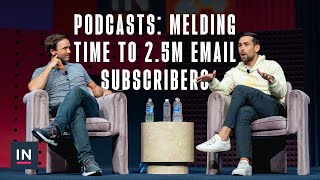
A conversational transcript where two speakers discuss the evolution of podcasting and practical guidance for companies considering launching a podcast. They note the huge growth in total podcasts (host cites ~4.5 million) but clarify active podcasts are far fewer. The hosts argue interview-based shows have high logistical costs (guest sourcing, scheduling, variable audio, editing) and high pod-fade risk; they recommend topic-based, problem-and-solution short episodes that can be batched, keep ownership of the audience, and better serve customers. Content draws on the host's experience running a large podcasting course and a long-running interview show.
Chapters
So podcasts. Podcasts look very different today than when you started the show.
How many years ago?
12, 12 years ago, when you were getting into podcasting, there was maybe 1 20th, 1 50th, 1 100th of the number of shows, last count I checked was 4.5 million podcasts that exist. So as people in the audience are thinking about their companies creating podcasts or launching podcasts themselves, when do you think it makes sense to actually launch a podcast?
So, first off, There may be 4.5 million podcasts that actually exist, but active podcasts, meaning one that have actually published an episode in the past 30 to 60 days, is a fraction of that. So active podcasts is actually a very small number compared to the overall dead pod faded podcast. Because over the years, everybody thinks it's a good idea to start a podcast, which it is. But then when they get into the meat potatoes of it, they realize the work that is involved with creating a meaningful, good value add podcast is really difficult. They pod fade, and that's okay. But we're going to be talking today about how you can start a podcast or recommend your company or business to start a podcast to avoid that inevitable pod fading that happens and be one of those podcasts that is actually continuing to be consistently producing the right content over time to serve your audience in a meaningful way. And that's what we talk about here today. So within that, what do you want to dive into?
Yeah, so I think something that's very interesting, maybe a contrarian view that you have even though you do an interview show yourself, is you don't think an interview show is the right type of podcast for most companies or new podcasts that are launching. Can you talk about why that is and if that is the case, if a company is thinking about launching a podcast and one that isn't dog shit and isn't just like marketing, that feels not like actually value add content, where you start to create a great content.
So it might be kind of crazy to say, like, wow, the Daily Interview guy that's been doing this for 12 years, over 4400 episodes is saying that interview podcasts are a bad idea for most people and for most businesses. But that is what I'm saying, and I actually have the data to back it up, because we've been running Podcasters paradise, which is the biggest podcasting course and community in the world, for 10 years now. So we see the podcasters, we see the data, we see the individuals and the shows that actually work, and we see the ones that don't work. Now, a lot of people in businesses specifically will not start podcasts because they know the effort that goes into doing an interview based podcast. And so they stay away. And rightfully so, by the way, because it is an unbelievable amount of work. Those people that start interview shows for the most part have no idea of the work that goes into an interview based show. It's called finding the right guest for your show. Coldly reaching out to that guest, having them somehow respond to you, somehow coordinating a scheduling time to have that interview. Then once you have that interview, them not showing up or them showing up with bad audio quality, and then if you make it through all of that and somehow you're doing the interview, there's background noise, there's dogs barking, there's babies crying, there's audio interruptions and all these different things. And guess what? You then have to edit that whole interview and then you're done. Finally, and that's one interview. You're like, I've got to do that again and again. If I'm doing a weekly show multiple days per week, even a couple per month, that is so much work. And that's why everybody, not everybody, but a vast majority of individuals who start an interview show end up pod fading because they can't keep it up on a consistent basis and they never get to that inflection point that takes time to get there. Now, the shows that actually work and the ones that if I were you, I'd be pitching to my company, to my business, or to myself, is, hey, let me sit down, let me get to know who my perfect customer clients are. What are their biggest struggles, their biggest challenges, their biggest obstacles. And by the way, you probably have all this data or can quickly attain it, and then you have, let's say, the top 50 obstacles, challenges and struggles that your audience has, that your perfect customers have, that your ideal clients have. And then what? Then you have 50 podcast episodes of you and a microphone or somebody in your company and a microphone sitting there and creating three, five or ten minute podcast episodes individually, giving the solution to that problem that your specific client has. All of that stuff that I said to do, one podcast interview goes away. You can then record 10, 20, 30 of those five to 10 minute podcast episodes in a day, in a couple of days, in a block of hours. And now you have months of content going out on a multi day per week or once per week basis. And now you have a real show that's going forward and it's meaningful and it's actually addressing the problems and obstacles and challenges that your ideal customers have. And I hate to say it too, on that interview thing, when you're bringing in that guest, that's the experts, they're probably going to give some great content. But then where's your listener going to go? To them, to their solutions. And it's probably not your company solutions or your products or your services. So why are you building a platform to send people to somebody else if you bring them in? Now, there are occasions when you can have an occasional guest and we'll talk about that later with Alex. But for the most part, a topic based podcast, a Q and A podcast, a problems and solutions podcast, is the way to go for all the reasons I just broke down.
I want to go a little bit deeper there because I agree with you. Like the place to start is effectively defining who's your marketer of one or who is your customer, what are their problems? How are you going to basically solve their problems through the content of the podcast. But if I think about your show right, you are helping entrepreneurs solve problems by having guests on the show who have levels of expertise around something that solve specific problems for entrepreneurs. I don't believe that anyone on planet earth could go start the show that you have in the sense of one. It's a logistical nightmare, as you alluded to and.