Rachel Botsman Discusses Trust
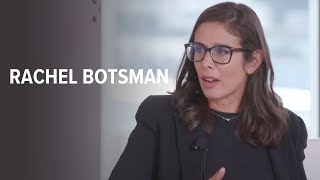
Rachel Botsman defines trust as a confident relationship with the unknown and explains how technology is shifting us from hierarchical trust toward distributed trust. She argues that speed and convenience actually undermine trust decisions, and that friction often protects it.
Chapters
Hello, thank you for being here. Welcome everybody to the Inbound studio. I'm Laura Moran. Hopefully some of you are downstairs to see Rachel in her Spotlight talks. And so thank you so much for joining us up here. It's much smaller, a little bit more intimate. You can see faces brighter, all the things. You know, you're such an expert on trust and technology and the relationship between those two things. Obviously you've talked a bit about that, but I would love for you to just about talk, talk a little bit about how you define trust and how that's changed over the last couple years in particular.
Yeah. So how many of you are at the talk? Just knowing quite a few of you. So what Trust is in itself hasn't changed. So the way my definition of trust is that it's a confident relationship with the unknown. So the idea that trust is changing, trust in itself is changing. And the role of trust isn't actually true. What's more interesting is this idea that trust is in crisis. And whenever I hear this idea that trust is in crisis, it sort of sends a message that it's going down. Right. There's less trust in the world. And that's not what I believe is happening. So the way I think about trust is more like energy. And anyone who's a physicist will know that you can't destroy energy. Energy changes form. And so what's happening in the world and is causing chaos, to be honest, is that for a long, long time in society, trust flowed upwards. It flowed upwards to, we believe religious leaders and we believed economists, and we believed scientists and experts, we believe politicians, some of us, and trust really was flying hierarchical. So in institutions, right, trust flowed from the top and that is being blown up. And so I talk about this idea of distributed trust, that what technology naturally wants to do is take this really sort of rigid upward trust and it spreads it out in these different patterns. And that is a problem in many ways because institutions want to hold on to the old way of doing trust. It takes place power away from people and it causes really interesting things to happen.
So as I was thinking about, you know, sitting down with you and talking and thinking about all of that, I have no idea if this is true. But what kept coming to me was when we think about some of these technologies, like you know, say an Uber or doordash, even just letting people come arrive to your house with anything like that, is there a relationship or, or a correlation between trust and trusting and the convenience factor of it all?
It's a great question. So sometimes, and I hate to admit this because I like to champion trust. Convenience will trump trust.
Yeah.
I was thinking about this the other day. I was in Mexico City and it was really, really late. And I have to say, I really believe in the goodness of most strangers. Like, I have a real high faith in strangers. And I just like turned on my Uber and got in the car and, you know, like, it's like, this is really probably not a good idea. Right. And I was actually at an event and the organizer's like, just wait 15 minutes. And I was like, I can get home in two. And so that's an example of convenience trumping trust. But I think the mistake is that, and I have to say Amazon, it's not. I have an issue with them as a company, but I think they often mistake trust in the brand with a loyalty to the convenience. And their relationship is actually quite fragile because if they did something that damaged people's trust in a way that would they still value that convenience. So sometimes we're really lazy when it comes to trust. Yeah. Because we'd have to make a little bit of a self sacrifice around the convenience to really say, no, I value the trust more.
Do you think, you know, in your research is that acknowledged or is it subconscious? Like do, are we, are we quick to trust? And the convenience is there, but we're not really making that conscious decision.
Well, you don't. If we thought about every decision like, do I trust you right now? Did I trust the hotel? You wouldn't be able to leave the house. Right. You don't want to be thinking about trust decisions every moment of the day. But what I do think is that in many of our lives, I talk about this idea of a trust pause that we need to slow down. And what technology does is it speeds things up and efficiency can be really, really bad for trust. Friction is really good for trust. And so one of the things that is a little bit worrying is if you think about the speed that people share information or the speed that people accept on terms and conditions, or the speed that people swipe right on a date, it's like we haven't really had the time to look for the information and say to ourselves, is this a smart trust decision? So speed, it can be really problematic when it comes to some trust decisions.
I wasn't down in the spotlight room, but I did hear that you asked a question about, like, who do people trust least? And ask for a round of applause. Appropriate. What any of those people that you called out, quite frankly, what is their responsibility? And Anybody else in a position like, like that, running a company where we are, you know, giving over trust probably quite quickly, what is their responsibility do you think, with you know, holding the data that we give to them or holding the trust that we as consumers just hand over.
Yeah, I thought I've never actually done the exercise with the same leaders as the brands.
Yeah.
So for me it was actually a first to people had a very different response to Amazon, to Bezos, which I think is really interesting. One of the things, the observations I make with companies, particularly within a trust crisis is they underestimate that responsibility and they will often point to something that happened or point to a system error or point to a problem that is out of their control. And now the Facebook leaders, like I think the media is actually giving them quite a hard time. But the piece they're getting wrong in their narrative is they are not communicating their intentions enough and they have not demonstrated enough empathy for what people feel. So they keep coming back saying this is a capability problem and we can fix this when we change our systems. And don't worry, you won't see the same issues with the next election. But no one believes them because they're like, what is fundamentally changed in your business model is your business model depends on you owning my data and using my data. And so until people, and this is something that it's really hard for leaders to sort of even process that they in their hands have the decisions around companies intentions. It's really damaging for trust.
Is there anything that you think based on what you know, that we as consumers like can and should be doing better upfront for our own personal relationship with that trust we're giving?
Yeah, I mean I think it's, it's sounds a little dramatic to say but you can vote with trust. Right. So I have a really hard time when people are bad mouthing a company and saying they don't believe this but they still use them and we're all guilty of that. Right. Like you know, I still order things from Amazon and I don't agree necessarily what they've done to the book industry, like we're all guilty of that. But I think this, particularly with financial services, this is something I've become really conscious of. Right. Like how are they using my funds that I give them in what they're investing in and if they're investing in companies that I don't believe are trustworthy, I don't want my funds with that particular bank. So that's where I've made a really conscious choice in my life to be like, you know, it's not okay that you increase interest rates, but you don't increase my saving interest rate. That, that doesn't show me an alignment of interest. So you don't get my money anymore.
Yeah. What led you into this work, into this being your, you know, focus area of research?
So I like really big, complex things in the world that are really difficult to understand that I believe need to be simplified because if we understand them, we can see the world in a different way. That's what I'm really drawn to and it sounds really funny, but I actually lived in America for almost 10 years and I was working with the Clintons and it was when Hillary, I was working on the foundation in the very early days and it was when Hillary first announced that she was going to run against Obama. And it was a real conflict of interest to me. He was a very big Obama supporter. Long story short, Hillary actually realized very early on that she didn't understand technology and she didn't understand the way technology was mobilizing people and the way people were sharing information in the way the Obama team did. And I just started deeply looking into that. Like, how is he forming trust through these digital tools? And you've got to remember like that first campaign ran even before the smartphone had launched. People didn't have the phone in the hand. It was like only later on in the election cycle, that famous speech in Berlin where you saw all the phones up, that was a real moment. And so I became just very intrigued with this idea that technology was going to change the way that we could trust one another. And then this hunch started to form that the way people were starting to share photos and they were sharing videos and they were sharing music was going to move into other areas of our lives. And then I started studying drug dealers and the dark web. And they understand trust and reputation better than most people. And you, you interview those people and it just became this really fascinating world.
What's next? Are there new areas of this same topic? Are there new topics? Are there ideas of how you think our relationship with technology is going to continue to evolve based on what you've learned?
Yeah, I mean, it's funny, I feel like my work tends to sort of of happen in these five year chapters. I don't know why, like you, you feel these ideas coming up and they're really annoying right when they first start to come up because they, I call them like threads, like, and you start seeing this and hearing this and then you start dreaming about it and Then you're just quite boring really because you haven't figured it out, but you know there's something there. And so all the work on trust and listening to the questions that people have been asking me and I get asked a lot of questions around the truth and the relationship to trust and fake news and has led me to a whole different question that I don't know the answer to, which is why do we believe what we believe? And how can you believe certain things around vaccinations or in my house, like my mum has one view on Brexit and my dad has another and it's always an argument. Or my 5 year old believes in God and my 8 year old believes in science and they can disagree about it. So I'm starting to look at the relationship of influence and trust, what influences us in the world today and whether that's the same as 100 years ago and how technology will impact that. So one of the areas that really concerns me is deep fakes. I'm really scared that we won't have a shared sense of reality. I'm really scared that in the legal system we won't be able to take photographic evidence and video evidence. I'm really scared that people who have genuinely lied can point to a video and now call it a deep fake. So that's. And I'm reading and I'm not finding the answers, I'm finding a lot of hype and hysteria. But I want to know what shapes my beliefs.
So what does that look like for you? Like you've got this idea you're not finding the answers. How do you then go about that next step of, you know, finding the answers or doing the work to get further along in being able to tell us some of those answers.
So the answers will take about five years and I'm very patient now that I know. Like it's that journey they start in stories. So with this I have gone out and sat down with people who have very different beliefs from my own. So I have just spent three months with people who do not believe in vaccinations. Now, as someone who I lost my eyesight when I was a child because I wasn't immunized for some reason and I got measles and luckily it came back and I want to understand why. How did they those beliefs form? Did something happen to them? Was it a friend? Was it something they saw on Facebook? And you know, what I found is that if you listen to them without judgment, you say, I don't agree with you, but I Want to understand where you come from. They will share their deepest fears. They will say, it is so nice to actually be listened to versus people shouting at them and calling them an anti vaxxer. And that's. They don't. No one wants to be anti anything, right? So now I'm doing it with people who have very extreme diets, like the potato diet or the banana diet or like, it sounds funny, but these people, like, they have. I just spent like a week with this guy called Chicken Connoisseur, right? He posts a video of people eating chicken and 4 million people watch that video. And like, does he know the responsibility he has has when he gives that chicken restaurant a really bad rating? Like, it's so interesting when you step into people's lives and you try to understand, like how they're being influenced and do they see that responsibility? So it's a long winded answer, but it starts in the beautiful place of people's stories of human beings. And once I, you know, now I've heard many anti vaxxers, I have a hypothesis and then I go and do like academic research, which is the boring part, but it's really, I mean, there's amazing research out there, there. So. And then it all. And then I'm always drawing and designing. That's. I always draw all the ideas. So that's how it stays interesting. Yeah.
What does that like? I mean, it's a creative outlet, of course, but what does that do for you, drawing them?
It's amazing. So when you draw, you capture it in a very immediate, raw way, right? And you're like, bring it to life and draw drawings to something. I have these little white cards. So I don't have a notebook because I find we're really precious when we have a notebook, right? So I have these white cards and I just draw things over and over and over. And it's amazing because you can see the ideas evolve and then you don't lose them. I find when, like, I have terrible handwriting. So I write like Liz in Ireland told me her son. Oh, I have no idea what that. You know, I tried recording it and they get hours of tape. And so the drawing is my way of freeing myself. And I hate the writing. I mean, people laugh, right? Like, they're like, you're an author and you hate writing. I'm like, it's like someone who finds running really hard, but they love the marathon. They hate the training, but they love the marathon. And for me, that's what writing books are like. It's like an intellectual marathon that I get to the end, and I'm like, I did that. I hated it. I'm in so much pain, but I'm gonna do it again. That was too much information.
No, I really. I'm like, I'm so fascinated by it. I'm so fascinated by it. I want to know, can when you look at. Or when. If I looked at that drawing, would it mean anything to me, or does it only mean something to you?
I've never been asked that. I don't know. I think some of them you'd go, yeah, I get that. And others, you'd be like, what the. Like, I mean, you'd be like, that's a squiggle with a circle and an arrow coming down. Because it's something conceptual going on in my head.
Right?
Like, it's like. So the whole idea of institutional drafts and distributed trust, it literally started with a triangle and an explosion. That was it. Right. I still had those drawings, and that's the idea. It didn't move that far. It just. Like a greenhouse. So it's often my advice to writers is that they've just become too. Even academics, they become too precious over the question that they've set themselves. And so if you find a process that is really quick, dead cheap to do, and if you want to keep it private, it's fine. It's amazing. It's really, really helped my work.
I love, love that. I'm so fascinated. Do you do anything with them? Like, do you frame them or hang them?
No, I don't frame them. My team actually said, like, can we put them up? I was like, where do you want to put them up? And they're like, the bathroom. I was like, that's, like, kind of offensive. They're like, no, because it's like, you know. And then they were like, no, it's a compliment because people have time. I was like, so when they're on the loo, you want me to look at my sketches? No, I've actually. I teach at Oxford, and, you know, my students say they're brilliant and they're really smart, but they are, like, so stressed. They're so worried about performing and reading and they should read. No, I should say that they should read, but. And I get them to draw, and they hate it in class one. And their drawings, they are. I mean, I can't even. I'm like, that's terrible. Right? But the end of the course, they are. Especially people who find it very hard to see. Speaking class, I have 83 students. They stick Their hand up and they're like, look what I did. I drew this thing. And you're like, that is genius. Like, I've never seen it in that way. Because what they're doing is people can often translate what they see into a picture or a diagram far quicker than they can into words.
So, yeah, I love this. I'm gonna start drawing.
It's like nursery school in my class.
Drawing is now on my to do list.
Budget food, crayons. And they were like, this is Oxford University. I was like, fuck it, I'm buying the crowns. Like, it's £5, right? Seriously, you'll give me the most sophisticated video technology, but I can't get crowns.
So that's amazing.
Play doh necks and Lego.
Now that you've been with us here, joining for the spotlight for here, you know, the studio, if you could leave this inbound audience with any know, one thing that you really want them to take away, what is that?
I think it's actually that it takes a long time to take a complex idea and make it simple. So if you pick something up in your life and you don't quite get it. So I've been reading a lot about vulnerability. And I keep, like, kicking these books away because I don't know why, like, something like, I love Brene Brown and Dan Cole and I cannot. And then I realized it's because I hate being vulnerable. And so that's the thing I leave with you, is that often when your mind or even your bodies are resisting understanding something, you know, don't, like, feel like, keep coming back to it and keep asking yourself the question, like, why am I not understanding this? Because. Because I think one of the problems in the world today is we're like on a sugar candy rush for advice and information and understanding things. And the one thing I try to do in my work is rigor simplified in some kind of beautiful way. And that's what I'd ask people to do.
I love that. One final question.
Yes?
We ask everybody. I ask everybody. What does inbound mean to you?
The word?
Yeah, being here. The word. It's vague on purpose.
Well, you know, I think inbound for me, I'm not going to describe the word because I don't know how to describe the word. But to be honest, like, selfishly, I lived in Boston and I realized I lived here over 20 years ago, and I think this place has. I just remember being incredibly happy here. So this is one of the first times I've been back. So it's a very selfish answer to your question that it made me. When I came back here, it made me realize, like, Boston was a very happy chapter in my life.
Oh, well, that's wonderful. I'm so glad that we could bring you back to Boston for that. But thank you so much for being here in the studio. Thank you so much for being at inbound. It's been absolutely wonderful having you.
Go buy some crowns now.
Thanks, everybody.
More from Patrick



A NEW BREED OF PARTNER: The Partnership Ecosystem Model Journey of Patrick Biddiscombe, Part 1








Customer Success Workspace: Never Lose Sight Of What Matters Most | HubSpot Spotlight