Reap the Rewards: How To Cultivate Customer Loyalty
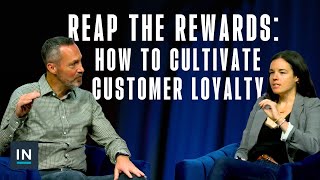
Fireside chat between Caitlin Simakoski (HubSpot) and James Macco (COO, Barn to Door) about cultivating customer loyalty for small, family-owned farms. Barn to Door describes its HubSpot journey (marketing → CRM/sales → Service Hub) and how unified data enables personalization, proactive outreach, and high retention. Key claims and metrics: Barn to Door began with ~2,500 contacts, expanded to serve farms across all 50 U.S. states, reports >135% net revenue retention, raised its NPS to 65, and reduced unit churn/raised unit retention metrics (unit retention improved >33% over six months) after adopting HubSpot’s customer success tooling.
Questions this video answers
Late 2018.
About 2,500 contacts.
About 74%.
One out of five farmers (about 20%); he also said 95% have no software in a related remark.
>135% (James stated they are over 135% net revenue retention).
Chapters
Good morning. Hi everybody. My name is Caitlin Simakoski and I am your moderator for today's Fireside Chat. I am here with James Macco and I'm excited to introduce him and to speak with you all about cultivating customer loyalty. So. So I've been at HubSpot for just over six years. I'm currently focused on our service hub and I'm excited to introduce James. James is currently the chief Operations officer at Barn to Door. Barn to Door helps farmers create and promote their brand, sell online and in person and save time managing their businesses. And prior to Barn to Door, James has spent the past 20 years in high growth tech companies. And a fun fact is that for four of those use salesforce. You are also the global business development in global business development for Dynamics. But you have now been a HubSpot customer for more than five years. So we are very excited to have you here today. Welcome and thank you for your time.
Well, thank you. It's a real pleasure to be here and obviously we're very big advocates for HubSpot, very excited to share some of our experience and honestly, I have to say, you know, it's just a real pleasure and honor to be participating here today. So I have nothing but great things to say about our experience with HubSpot.
Awesome. Well, thank you. So I'll dive right into it. You and I have spoken a lot about this and we've all been hearing a lot in the news about food and the supply chain. I want to ask you, why is that such a big deal right now? And how do you at Barn to Door work to capture such an enormous total addressable market with maybe not such a super tech sector, savvy customer base?
Yeah, we at Barn to Door we're focused on family owned farms and most people may not think about where the food comes from when they're eating three times a day, but about 74% of the food that you consume daily comes from a family owned farm that makes less than $5 million. Right. So these are small family owned businesses. They're often overlooked by the tech ecosystem. Most of the venture capital dollars go into big ag precision agriculture. But most of precision agriculture is focused on, you know, animal feed. 90% of what big farms produce is animal feed, ethanol, compostables, food additives like corn syrup, that type of stuff. Less than 10% of what they they produce is actually consumable by humans. So the market you can see the data on here, 74% of that food then that we're eating is coming from These small farms, but most of them, like you said, in fact 95% of them have no software. Right. The average age of a farmer, depending on whose data you look at, is somewhere between 55 and 65 years old. So building thought, leadership, credibility, content and acquiring those customers obviously takes a lot of work. And this is where HubSpot has been instrumental in helping us not only acquire, but serve and make these farmers happy and helping them comfortable with using Barn to Door.
Awesome.
Cool.
Thank you. Okay. And so now one thing I'm really curious about is you have been a HubSpot customer for over five years. You've been with Barn to Door for about that same amount of time. Can you kind of discuss your journey with us? How when you initially onboarded with HubSpot, what your goal was, what it is now and sort of. Yeah, like that journey.
Yeah. At Barn to Door, I joined in 20, late 2018, so six years now, actually. We had literally just brought HubSpot on board for marketing automation. HubSpot was still of its infancy on the CRM side. Not only just about two years in on its initial CRM product. At that time we had about 2,500 contacts. That's it. So very small. Right. We were startup six people just trying to get boots on the ground and really start to grow, focus in on one or two markets. But the key thing is we started to evolve. Not just started first and foremost with marketing. And once we started to build a really good marketing engine, we're able to acquire leads effectively with HubSpot that quickly led into sales team growth. Right. And so we went from one state to two states. And obviously you can see from this slide here behind me that we've now expanded to become the biggest player in the country with farms across all 50 states. And so we went from the marketing hub and then we grew with the sales hub. It wasn't called that at the time. I think it was just called CRM at the time. And then HubSpot really started thinking about service. We remember when they were starting the service hub, they're starting to think through ticketing and we were starting to get to the scale and size where we actually were only caring about acquiring customers. But we needed to start to service our customers really well because we started to have customers year over year and we wanted to make sure we kept them and most importantly kept them happy. Right. Because obviously that's a key thing in software as a service. I'm sure all of you here care about is customer sat, nps and most importantly Net revenue retention and lowering Unit Churn. Yeah.
Okay, very interesting. So would you say that your focus is like equally split between acquisition and retention or basically, where does your team focus?
Well, when you're a startup, early on it's all focused on acquisition. Now we're to the size where, you know, probably 80% of our revenue is existing customers. Right. In which case retention becomes an increasingly important part of the business. So for me as coo, I think I spent a lot more of my time focused now on the success side of the business and making sure that our customers are having great success and are getting what they paid for.
Yeah, yeah, I think that's really key because I speak with a lot of customers and they talk about this like you have this existing install base, this customer base, and people still tend to continue focusing on acquisition. We had a panel earlier this week and our Director of Global Customer Success talked about how much more costly it is to acquire new customers. And of course you still want to do that, but often I feel like it's to the detriment of your existing customer base. You could continue to provide more value to.
That's a great point. In fact, when we look at it, we're always benchmarking, benchmarking Ourself against other B2B SaaS companies in terms of net revenue retention. And so like when you look in the market today, you know, generally you see companies aiming for 105%, maybe 110% net revenue retention. And if you get to 120%, that's like astronomical. Believe it or not, we're over 135% net revenue retention. And a big part of that is due to the fact that not only do we have a great product, but we use HubSpot to provide, proactively, identify, engage and outreach to customers who might have at risk attributes. In which case we want to make sure that we're going to solve those problems for them. We're not a panacea. We're not going to solve all world peace. And we certainly have Unit Churn. But even factoring in Unit Churn, again, we're over 130% net revenue retention.
That's absolutely amazing. They're clearly happy.
Thank you.
Yeah. Okay, so moving on, I've got a couple data points I'm going to show you all over the next few slides. So earlier this year at HubSpot, we ran a global survey. So we, we asked service leaders from all around the world a series of questions and we learned that 78% of customers expect a higher level of personalization than ever before. And we're just hearing this. There's just more demand on providing that exemplary customer experience. And so I'm kind of curious if you could explain a little bit of how that all in one, you mentioned you have marketing, you have sales, you have service. How does that all in one aspect enable you and your team to deliver that level of personalization?
Well, I'm going to give a big shout out for HubSpot, because I can just tell you from my experience, having had four other companies I'd worked at where we were on Marketo, Salesforce, Gainsight, Zendesk, trying to keep that experience for the customer consistent in making sure that the data is going to be unified across all those different systems. I mean, it's a lot of work. In fact, personally, I would never do it again now that I've been a HubSpot customer for the last six years. The amazing thing about HubSpot is that everything is simple, it's unified, it's easy. It pulls all the data in one spot. In fact, I was reviewing with our leader who heads up our product and our support team, and I was just complimenting his team on what a great job the support team was doing it. Looking back through a ticket to look at the experience that a farmer was having, from sales, what their expectations were when they came on board to the conversations that they were having with the onboarding and the success team, to then resolve a ticket. Right. Ensuring that the farmer's not having to repeat him or herself, that all the information's in one spot. And now, obviously, with the AI tools to summarize that experience, it's going to even make it more effective. So I. I think, again, the data speaks loudly. Customers want a great experience, and HubSpot's enabling us to deliver on that.
Yeah, wonderful. I totally get that. Basically, if anybody's spoken with me this week, you've learned that I had some customer experience challenges with my airlines, and I can totally empathize with not wanting to repeat yourself. It's their job to have the information.
Exactly. No one wants to call in and have to repeat themselves. Say, hey, I've already explained this for three different times. Right. The most important thing here is you want all that information to be immediately accessible and right at the fingertips of that Service agent.
Yeah, 100%. Cool.
Cool.
Okay. So again, if you came to the panel that I was on earlier this week, you already saw this data point, and that is because I honestly just can't get over it. So I'M sharing it again. So again, we did a survey and we found that service teams whose data is integrated with the tools that they use are 225% more likely to say that their customers get a very personalized experience than those who don't. And so, you know, one of the things that I'm really curious about here is you brought Service Hub on to give that level of experience. Can you speak, Speak, I guess, you know, in a little more detail about that, that personalization or about that proactive aspect.
Yeah, personalization's very important. I think one of the key, key metrics we look at is CSAT and mps. So like, we use all the feedback tools from, from HubSpot to make sure that we are constantly taking the temperature of the farmer along the journey. And, you know, we bench again. Going back to industry benchmarks, we oftentimes are again competing against if a farmer has software. Again, only one out of five farmers has software. If they do, it's most likely going to be Shopify. And so when we look at Shopify's NPS score, they're sitting at 35 industry benchmarks for B2B. SaaS is about 41. And if you look at like the pinnacle, most people look at Apple and they're 61, believe it or not, over the last three years we've raised our NPS score to 65. Right. And a big part of that is again, just ensuring that we're delivering on the expectation that the individual farmer is looking for. And so just using the tools to make sure that we're listening to them, affirming their experience. But again, with HubSpot, you can bring all that information to the forefront and then the communications back to the farmer. Really great example. Our product management team uses HubSpot as well for feedback. So we capture if one of our account managers is on the phone with a farmer and they have some feedback, it will be tracked into a feedback survey which then attached to the company record that rolls directly right to our product manager. Our product manager can then assess all that feedback and information that plugs directly right into jira. Very simple. But then when that JIRA ticket is resolved, it will then actually close the ticket and then send an email back to the farmer saying, hey, your feedback on this topic has been addressed, personalized to that farmer. That's a huge deal because the farmer not only feels heard, but they're also knowing that they're getting resolution to the feedback that they gave us.
1000%. That's something that we're Actually, like we've made progress on internally at HubSpot as well. We would address it, but then it's like, but you have to take that next step to then let them know. And to your point, it's not just now they have this new functionality they can take advantage of. They feel heard, they feel like a true business partner. And I mean, people have many options when choosing who to partner with. So.
Yeah.
Okay, last data point for you service leaders with HubSpot CRM. 75% say that it increased their retention. And so you spoke about this a little bit, but I mean, you do have thousands of pharma customers already. I'm curious, like, if you think about today's macroeconomic environment, why do you feel like today it's maybe even more important than it has been historically?
Well, I think today when you look at the investment that you have to make in acquiring a customer, I think of all the effort we go into in building out great content and building out great assets to bring a farmer on board, you spend a lot of money to bring somebody on board. You want to retain them. So for us, you know, again, we're trying to look at the temperature of like how, how are they engaging not just in a lead score to acquire the customer, but most importantly from a life cycle perspective, how are they enjoying and using and adopting that platform? Right. So the adoption of the platform is really the truest indicator as to whether or not they're going to renew. And so this is, I think, an area where we've been investing with HubSpot. And I know we've been in conversation with you and many of the other folks inside of HubSpot of like, hey, how can we use all this data and bring some of our own data into HubSpot to get a more accurate picture of how that farmer is adopting our platform? And if they're not, then let's turn that into a proactive task or activity. Whether it's a marketing touch that goes out to them or if it's a certain size farm, we may say, hey, this actually deserves a proactive call from somebody that might be more senior in the business.
Yes, 100% like to determine is the functionality, like everyone had the best intentions when building it, when designing it, is it actually delivering value or do they just not know about it? So I can empathize with that as well.
Well, and especially if somebody stops using a particular feature on your product. Right. You may have put a lot of time and effort into building on something, marketing it and trying to work with your sales and your success team to upsell a new product to a customer. But if they're not using it, what value you, you know, they're going to churn or they're going to drop that product. So you want to get ahead of that as quickly as you can. And the only way you can do that is to run to the data. Don't run away from it. I think our co, she does a very good job talking about the fact that if you. She always wants the bad news. She wants to know. It's like, don't tell me everything that's working, tell me the things that aren't working. Because if you don't run to failure, you can't improve, Right?
Yes. And knowing in time. I've had a lot of customer conversations this week and a lot of you have come to me and said, like, after the fact, when they churn, then we try to identify the trends and it's all guesswork and it's too late. So I think that actually segues very nicely into our next topic here, which is the customer success workspace. And you and your team have been early adopters, so I want to check in with you, see how you're using it and how you're finding it.
This has been an absolute game changer for Barn to Door. And I can candidly tell you it's one of the things I enjoy the most about working with HubSpot is that we're not just a number as a business. We have a fantastic account manager who's sitting here in the front row, who is very responsive and works with us, brings innovation to us. But more importantly, we also get access to product managers like yourself who actually, candidly want the feedback. They're actually humble enough to ask for feedback, they take that feedback. And of course, you're not going to address every single thing we give you on our laundry list. But the fact that we feel heard right, and that we see product innovations come to fruition based on feedback that we and other customers are giving you, again, it's just a real shout out to the team. And I think it really culminates with this Lifecycle score capabilities. If you haven't adopted this or if you're thinking about adopting this, I can't say enough good things. You want to be able to have a sense, just very quickly, where to look, how to measure, how to look at things that can again, identify a customer who's having success versus one who may be at risk. And because all the data is unified, you're not gonna have to spend a ton of money on trying to figure out how to make salesforce and gainsight talk to each other. Or hire a new SFA administrator. Right. Who's very expensive to make it work. It just is simple. And so, again, all that data is unified in HubSpot, so this is easy to get started.
Yeah. Good. Well, I'm very glad to hear that. And I know that. So within the customer, if you're not familiar with it, first of all, after this, check out the demo station. It's behind me. You'll see a booth for service hub. We've got a whole team waiting for you. We have the product manager, Colette, who built it, so go tell her that I sent you. But within the customer success workspace, there's the customer health score as well. That is, we're getting so much interest and so much excitement about that. But I'm curious. You've been an early tester, an early adopter, and I'd love to just hear some of your thoughts about that as well.
Well, I think the key thing here is you have to look at. You can't just turn it on and just roll it out to everybo, Right? You need to turn it on in the background. You can look at it. We often like to do kind of distribution curve analysis to look at, like, hey, where are our customers following on us? Are our customers healthy? Are they, you know, okay, but they could need some improvement, or are they at risk? Right. Because you first off want to get a sense of like, hey, what is the health of our underlying customer base? Then number two, you then have to go through and identify what are the workflows, what are the activities, what are the tasks that we want to. We want to take? Does this just require a marketing touch that's personalized, where it looks like it's coming from the account manager to the account? Or is this an account that, based on some trends, actually deserves a call? And we need to put that at the top of the dashboard for that rep. So it's just, again, you just can't just turn it on. You need to be thinking, again, downstream about how you can roll this out across your success team. And for us, we've been obviously very thoughtful about it, and it's proven to be very successful. Our unit retention, for us in the small business space, we've brought our unit retention down in the last six months, over 33% in the last six months since rolling this out.
Okay, awesome. That's great to hear. And a lot of people have Been asking me over at the demo station, like, how do I get started? And to your point, you can't just sort of go. One thing that I've been suggesting is, is start with maybe three to five events, start small. Another thing is one of my favorite aspects of it is the CSM sentiment. Are you and your team, is that one of the ones that, that you're using?
We use CSM sentiment all the time. In fact, I was just looking at some responses this morning from that. That immediately triggers a set of activities if people are in certain areas from a sentiment. In fact, we do. Once they sign up, we send a sentiment analysis immediately. Within two weeks. We want to look at very quickly, how's it going? Sometimes there just may be a mismatch in terms of a culture fit. It could be a very good CSM and in the sentiment could be negative. And I might know that this person, she might be fantastic at her job and she's just not the right fit culturally with that particular farmer or vice versa. And so we just want to get ahead of that and actually just try to gauge the manager will reach out, try to figure out what could we be doing better. And again, the responsiveness that we see from the farmers, just seeing that we're proactive, that we actually care, boy, it just, it pays dividends for the business.
Yeah, Wonderful. Very cool. So, yes, make sure you check that out if you have not already. And so we love this question. If you could wave a magic wand, what would you know? You've spoken about all the things that you love, but there are probably some things that you wish we had. What would you add to certain service hub if you had your choice?
Well, I think I'm very excited about Breeze. Right. And trying to really uncover what the AI agents can tell us that we can't discern ourselves. Right. You know, and even if it's just 1% or 2% better than what we're doing today, it's worth it. Right. Just given our size and our scale. So I'm very eager to look at, like designing some of the agents with you guys as new agent creator, and then ideally having that agent help surface a other things that perhaps we're not seeing in the lifecycle score today. Right. Maybe there's some other activities or things that they're doing that that might be indicators that they might be thinking about making a switch or transitioning somewhere else. All the metrics could be green, but are there other things that they're doing that we hadn't thought about before? So I'm very excited to see what AI can tell us on the service side.
Very cool. Yeah, I will say stay tuned. I think this is just a massive area of investment of focus for HubSpot, so I think we'll see much more innovation there in the coming months and years.
Well, thank you guys for all your effort to put into making this such a great experience. I know the farmers we serve, you know, appreciate it even though they don't know it's HubSpot behind the scene. But, you know, I think, you know, for the first time, many times in these family farms who are pretty isolated and remote, feel oftentimes pretty out of touch and feel forgotten. And so it's really great to be able to work with HubSpot and be able to deliver such a great service powered by, by, by your business. So thank you guys for your investment.
Awesome. Well, we're thrilled to, to like have a connection with them through you. So also, in addition to going and checking out the customer success, go buy something locally from a farmer and support them. Okay, so we have just a few minutes left, but we wanted to open it up to questions. If anybody has a question, we have a microphone there. We've got a microphone there if you want to shout it out. I can repeat it for anybody at home, but just wanted to give you an opportunity to pick. James Brain here.
Yep. Hi, my name is Anthony. I work for a technology vocational school in Tulsa, Oklahoma. I wanted to ask mentioned multiple times with the statistics, the importance of personalization. I'm kind of curious for your company, what exactly does that personalization look like with your farmers? Is it more like, I guess, targeted in your communication? Is it more targeted information about their specific businesses? Is it just using, you know, their name, their location? Like, how in depth does that personalization go? And I guess, what tips would you give as to figuring out ways to best personalize your communication with your. Yeah, great question. So for those of you didn't hear he was asking, it's a little bit more details on how we do personalization across the farmers we serve. As you can imagine, all food does not grow at the same pace. Right. So, you know, a cow will take 18 to 24 months to finish, whereas produce might grow in a few weeks. Right. So personalization becomes very different in terms of how we talk to the farmer about their products, about their harvest times, etc. So that's number one. It's really trying to be able to segment our customers based on their business, not based on how we look at them, but based on how they run and operate their business because they're, they're all running on very different cycles in terms of how they're generating revenue and managing their own business. That's number one. Number two obviously is just personalization in terms of name, farm name engagement. Obviously we just try to integrate that into every single communication so that we're addressing that farmer by their first name so they feel that they're being heard. The other thing too is we use third party called Seventh Sense, which is a AI based integration into HubSpot that will look at every individual record based on whenever they've clicked on everything from ads to email opens to, you know, visiting your website. And it'll build a unique profile for every single individual that will then send information to them at the most optimal time that they will be likely to open it at a given time. So it's personalized send time optimization. So, so we're never just sending emails at a blast. Every email, every text message is going to be personalized in terms of delivery to that farmer. So it has the highest rate of deliverability and open rates as well. And I believe they're here as well. So if you haven't looked at those guys, they have a great relationship, they're tightly integrated with HubSpot. Couldn't say enough good things about them. So great question. Seventh cents. So, yep.
Yeah.
And now I think it's Sixth sense. It's right there. Okay, my question for the customer success space and the sentiment analysis, you said start small with three to five things. Where did you start so we can kind of get some sense of how did you actualize that process? Yeah, great question. So at first, you know, we looked at, you know, I was like part of looking back through like any churn and going back through the data over the past year, we were trying to figure out like, hey, what are the trends that we're seeing? What were the greatest indicators? So for us it was like whether or not the farmer had put through a certain amount of revenue, if they were using certain aspects of the product. Right. So there were some pretty glaring items that were kind of, I would say, obvious. So we initially started looking at a few data points there initially, and then over time we went back and revisited it effectively, I would say about every six months to ask ourselves, how do we keep refining this to make it more and more accurate? And then HubSpot, of course, most importantly heard the feedback. We were chatting with them about what we were doing, like, hey, we're actually building this out, which was Great. Because we're like great. We don't have to build it. You guys can just do it and we can plug into what you guys are doing. And that was just really critical. Right? It was just trying to find the time, time frame when a customer is going to be making a renewal decision. Right. Because depending on your mix of customers, and I'm sure many of you have a mix, some people may pay monthly, some people may may pay annually. But one of my board members gave me a great piece of advice which he said is that everyone makes a renewal decision within the first 90 days. If somebody doesn't see value, time to value, once they've signed up with your progress and, and are seeing measurable progress, you can pretty much kiss that Customer Goodbye by 180 days. Right. Cause they are not going to come back and you've put a lot of time and effort to get them there. So make sure the onboarding process is really good and sticky.
Yeah, 100%. We've definitely find that at HubSpot as well. I mean that first 90 days is incredibly crucial. So one of the cool things about the health score too is there's this decay aspect. So if one of your events is that one to one call engagement, that might be incredibly important in the first 90 days and then you can have that sort of become less important once they exit that time frame. And you can cater that to whatever your business is, but it is truly built to be customizable. So not to overwhelm you with all the possibilities but to really, you know, as you said, revisit it. I would say in the beginning, revisit it every like six weeks. Talk with your CSMs. Like if they're saying no, this customer's so healthy, they love us, we talk all the time. But then your health score says at risk. This is a perfect spot. Start with those and start figuring out how to adjust and vice versa. And then I think you said you and your team, once you have something established, you can let it sit for longer but continue to revisit it for sure.
Yeah, you always want to be revisiting your data. And I was smiling when Kaylin was mentioning the decay because we were so excited when this feature came out from HubSpot. And I know not just for Lifecycle but for marketing as well. So that decay feature is super valuable. So if you're not using that highly recommend it.
Yeah, yeah, 100%. Awesome. Any other questions? And if not, we'll let you all go and head to the demo station. I'm just kidding. Or enjoy the rest of your time here at Invand.
Thank you.
Awesome. Thank you.
More from Patrick



A NEW BREED OF PARTNER: The Partnership Ecosystem Model Journey of Patrick Biddiscombe, Part 1








Customer Success Workspace: Never Lose Sight Of What Matters Most | HubSpot Spotlight