Reviewing The Best AI Tools For Video Production
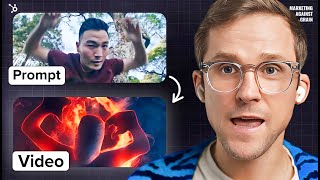
Kieran Flanagan and Kip Bodnar test AI video tools like Runway and HeyGen. They walk through a six-step process from research to analysis, show how David Beckham's malaria campaign used AI likenesses, and flag concerns about authenticity and whether AI is making video creation easier or just overwhelming.
Chapters
The problem where we are in the Internet today and media in general is if you're average, you're nowhere. So this show, we are going to break down the state of AI in video and where AI is have an impact today.
They're taking memes and making memes videos, baby.
All right, Kip. I want to open the show with an incredible video generated by AI with one of the most famous sports star and a video that has had over 700 million impressions. Now, there's a reason we're kicking off the show with this video. But first, let's quickly see this video in action.
David Beckham, you're looking good. Malaria. Malaria isn't just any disease. It's the deadliest disease there's ever been AI Dubbing on. This is. It's so cool. And what they've done, what I love is that they've kept the shot simple. One of the limitations right now is you have to keep the shot very tight and very simple so that you can. You can do the dubbing on the lift and get the language dubbed in. Right. Must die. One voice can be powerful, but all of our voices together, then they will have to listen. Malaria must die so millions can live.
So this is a campaign to eradicate Malaria. David Beckham is a spokesperson. An incredible campaign. But the pivotal part here, the critical part here is AI has taken David Beckham and created this video in multilingual. So it is completely AI generated. You're able to take someone's likeness. You were able to take someone's personality. You were able to take someone's voice, and you were able to bring it to life in a video through AI and make it multilingual. From day one. The thing we want to do in this video is we want to again make the argument that AI is going to make people more creative, not less creative. We think one of the ways that it does that is through making video much, much easier for all of us to use. And we want to tell you where AI is having impact within video, and what are the current shortcomings with video when it comes to AI I wonder, was this done using hey Gen? So I don't know if you've seen hey Gen can do this today. Like, you can uplo your photo, you can upload a graphic of you, and hey Jin can actually animate it, and it can actually dub it in this way. Yeah.
So there's two tools right off the bat that, like, if you wanted to do this yourself, hey Jin and Tavis, do this right now. And what basically how it, how they work, Kieran, is you basically train a version of a video model for your individual self or whoever is going to be the on screen talent. And you do like 15 minutes of reading. Have you done it where you like, you have this 15 minute script that you kind of read and go through. So they have all your movements and your sounds, then can use the AI model to incorporate them to do custom, you know, personalization or different things. So it might be like, hey, I make one video talking about my product, but I can dub in your name a couple of things you like. Other things like that even that it's not multilingual. The cool thing about this David Beckham video is that it is multilingual. And obviously David Beckham doesn't speak all these languages. I haven't even heard of some of these languages. But this video is so popular because one, it is in all those languages, and two, the message is dead simple. And I think that's actually one of the hidden benefits of these AI video tools is that they're going to force you to keep the message more simple. When you are trying to either personalize it for a wide group of people or put it across so many different languages, it forces the initial scripting and copywriting to be much, much tighter.
What is the tool you mentioned, Tavis?
Check out Tavis. Tavis is very, very smart folks. They won the pitch competition at our inbound event in September.
Ah.
And very, very cool product. And so basically, you do one recording and then you can personalize your video for people, for topics like, essentially like how you would use personalization tags and email. You can now do that video.
So that is why I think at some point, video is going to be baked into your personalization lifecycle marketing and that you can actually just change the video on the fly based upon the data that you're ingesting.
100%.
Let's go through, like, the process of creating a video. I think that's gonna be useful for everyone. And then like, where AI is having, where AI is impactful, where it has some shortcomings. So, like, there's kind of six core steps, right, to create a video. I'm sure that there are people who are watching this that are incredible at creating videos that will tell me, I've had some steps.
Hey, let's give us. Let's give us marketers who, you know, we love video, but moonlight is YouTubers, some, some. Some credit here. Okay? We're, we're doing our best.
So we've got. We, we research Right. Obviously that is just part of the writing process. We do our script writing, which is just part of the writing process. We generate the video, we edit and post the video, we publish the video and we analyze the video. Now I would argue that actually there's use cases for AI for again non technical video people, us in the research and the script writing in the generation in the edit and post and we're going to give some examples and then even in the analysis. Because you and I use chat GPT code interpreter to do analysis on the YouTube channel and RSS feed so you can actually do some good analysis. Let's start with the research part. AI is a great research buddy. Right? Like it is not a.
We've talked about this over and over again. It's good at research.
Yeah, it's so, it's so good at research. I will say on the script writing, it's a good assistant. It will not get you all of the way. One thing I did actually over the weekend was created this product position in GPT. I spent a ton of time over the weekend creating GPTs. I created GPTs with actions, I created GPTs, all manner of GPTs. I, I created this like product positioning bot. It was actually pretty kind of cool. Like I, I, I actually asked it for like popular storytelling frameworks and then I said create a PDF of four of them because there was four that I really liked. Then I actually downloaded the PDFs and then I created a GPT fine tuned on those PDFs and then you as a user, I can actually send it to you. You can go in, give it some details, choose your storytelling framework and it will position your product using that storytelling framework. But we'll actually give a step by step breakdown. Now one of the things that I read over the weekend, it's very, very dense. And so if you want to go full on nerd. I don't know if you've heard all of the rumors about q learning in OpenAI, which is like that's a whole nother show too. Yeah. And so like one of the things in one of the research papers talked about how you want to ask it to break down its thinking. Basically show me your, your thinking step by step and then you can kind of like ask it, hey, do you really believe step one is right? Do you actually believe we can improve in this? Do you really believe step two? So you iterate on each step and so part of what you can do in the storytelling framework is like break down the story in eight coherent steps and then iterate on those steps. So where am I going with all of this? Script writing is good, not great. It's a good assistant and you can fine tune to get better. Where I think we should spend some time. Kip is on the generation, the audio and video part and the editing, which is like the post production part, which traditionally are not being easy for us all to do. And so what I wanted to start with is I think the Goliath in this space or one of the really incredible companies in this space, which is Runway.
Yeah.
And so let me show you some of the improvements that Runway have made to their platform that are pretty incredible for people like us. Yeah.
Wait, while you're pulling that up. There are players in this AI video space right now. And we all know that AI video is in its early days, Right. You know, we are. We are really like only a couple years into teams even working on this and only, you know, sub a year. Most. Most of these tools being like, commercially available. Runway has stepped out to be the leader in this space. There's lots of others. We're going to talk about some of those others. But right now, if you're thinking about the state of AI video, Runway is kind of the de facto leader. And there seems like they have the aspirations to kind of be that default AI video platform long term.
So this is their. This is kind of their Gen 2 model. I want to show you some examples. First of all, awesome. This is an awesome product page. Awesome product page.
I was thinking. I was thinking the same thing.
The thing I really wanted to show here is like the multimodal part. So the cool thing is, right when we think of multimodal, I think people think, oh, you can go text to video. No, you can go like text, video to video. Right. You can go multimodal, which you can have different inputs and different outputs. This is a really good example, right? This is like text and image to video. Generate a video using a drive. Yeah.
So explain this to everybody because this is pretty wild where.
This is awesome. So the. So we basically input a vid, an image and a prompt. So the input image is the image here on the left, which is the realistic photo of someone wearing, I have to say, looking pretty dapper. Like, I'm wearing my new leopard print cardigan today. I'm like, I do like the cardigan.
I'm sorry that I hadn't mentioned it. We were just too into the show.
But you can see they input the image and then they actually have a text prompt to bring that image to life through A video. So the right hand side is the video. That is just incredible.
Right?
I'm actually going to give you some other examples of why this is incredible. So this is like first of all, you can bring this to life in many different whatever you can dream of in terms of what you want that video to look like. You can start with an image, which I think is a far better starting place for video than text. But this is another really good example where you can input an image here which is like I think Sydney harbor and then you can actually create multiple videos based upon that input image.
Kirig. Did you see what happened over the weekend? What people were doing with this lovely technology?
Oh no, no, no, no.
This is what people are doing now. They're taking memes and making memes videos, baby.
Oh geez, I didn't even think of that. That's my whole weekend, this weekend gone. I turn memes.
People who look. So here's the original. So this is this, this kind of still was the classic meme and they turned this meme into a full AI generated video. Like I see this meme with something like every day on the Internet and now it's like what? There's like a whole video. Like, like the girlfriend's reaction. Like everything is incredible.
This is an incredible example. This is we. We should each choose a meme and bring it to life.
But isn't that wild that you can see something that's part of just culture or you have an image of important event in your family even and that.
You can wild make a short video out of?
It is crazy.
You can take photos of friends, family, things like that and turn them into like videos even though they didn't do those things. Right. Like there is a whole other world happening.
Are you thinking about pranking your brothers?
I. Of course that's what I'm thinking. I'm thinking about that. There isn't. There was a news article about Gen Z using this technology for things that they should not be using it for. But it does speak to some of the. You can actually take a photo of someone and put them in any kind of position you want through a video that is going to be wild in the world.
Like wild where you're not going to believe.
I could take a lot of video video of you and create a video of you in whatever way I want. And you like it's going to look.
I have no control over it.
Yes, you have no control over it. So it doesn't mean to interrupt people.
I just knew that you love that meme as much as I do. And I had to show you that one of the applications of tools like Runway is to do to bring your memes to life in the form of video.
I think that resonates with people, right? Everyone understands those memes. Let me show you this one. This is like two images. This is like video. Again, multimodal. This is video. Now, this is video plus image, right? We've done text plus image. We've done image to video. Now we're doing the video source video. Is the guy doing some pretty amazing dance moves on the right hand side.
Sick moves. He's pulling out there. He's.
He's looking good on the dance. And then he has a drive in image. And then the AI is able to combine those two things to create the thing on the right. So you're able to have a source video. So you can again, take a family video and say, hey, take this family video. My drive in image is the Simpsons. And actually, I put the family video in Simpson style. See, now you can turn your family videos into any kind of style that you want.
You could turn. You could turn kids dancing into, like, grownups dancing at an EDM club, right? Like, right. What's crazy about all of this is that when we say multimodal, we really mean multi, right? Like, it's not just text or video or audio remixing. It's all the combinations of those things to create different moments in a video, which is wildly different than what we are used to being able to do, especially folks who are not true, like video editors, producers, etc.
Exactly. And this is the last one I'll show, which is you can take videos just using simple text prompts, being able to edit them really rapidly. So the video on the left, again, is the original video. And then this person has edited it just through a text prompt, asking it to put spots to the dog, right? So crazy. Like, you can just take that bit crazy. This stuff is just wild. So that is an example. If we go through that list, we have the research, the script write, and now we're on to video generation. I think one of the companies that are really making impact there is Runway. And their second model is going to really help all of us be able to create videos much, much easier.
A real sidebar question for you before we keep going. Do we think all of these choices are good? Like, oh, cool. Like, I have a video of my dog now. I can have my. That video of my dog look any possible way that I want. Like, that's fairly Overwhelming. Like in a world where anybody can create, you know, the tools of video, like a professional maybe could have in yesterday's world, like is it good that we have like endless options when making stuff? Now I feel like I'm going to be overwhelmed by it all.
This is the actual other episode I was kind of like insinuating we should do at some point, which is AI ux, which is natural language gives you the freedom to do all things. And so when I was building the GPTs and I wanted to just build them through natural language, not through the configuration panel. It's kind of like first of all, there's two parts to this. Your question is like, well, we could just do anything we wanted and it's kind of overwhelming and what should we do? Right? Whereas like in a, like a kind of traditional UX experience, you have all these templates, like to help you figure out what you want to do. Click on the template. Click on the template. No, you can just do like you can literally do anything. I think it's going to take some time for people to really understand what is worth doing. Like what is the separation between like meaningful work and play work. And then the other thing is like sometimes prompting through natural language is a lot more clunky than just being able to click the buttons and configure a panel. But do I think like this in terms of its impact in society? I think this is far greater than the impact of something like a text based chat gbt because we can, we are entering a world where it is hard to distinguish between any content, right. Original or fake. And I don't know if you've seen recently, we should do an episode on this. There's a lot of examples going about today of people doing searches on Google for different people, like actually known people. And the image Google's returning is like a mid journey image that someone's created of that person. Google itself is not, is starting to struggle to like distinguish between real or fake content. And that is a problem for all of us. Kieran.
I think the interesting point about the show, if you look at everything we've walked through so far, it used to be that we as people, we would go sit in a movie theater or we'd sit in front of a TV with Netflix or whatever. And when we were in that mode we were trained, hey, you are going to see fan fantastical fictional things, right, that these, these incredible artists have created and you're going to suspend your kind of belief in reality when that's happening.
And now you're going to have to.
Do that all the time. Everybody is going to be able to make stuff like that. And you might just be like randomly looking at something on your phone and you're being what? I don't know if that's real or not. I don't know what I should believe about that. And that is a very big change to the society that we're living in that I don't think we're all prepared for yet. Because we've had this very nice compartmentalization where like we've had these amazing video technologies for a long time, but they've been relegated to very high cost specific use cases. And now they're going to be democratized across all use cases. And that's one of the things that I want to make sure everybody watching today's show or listening to today's show understands.
And I think the next big unlock for video which is coming starting to happen is a video for gaming that you can actually use AI to build all of the kind of games. And that's going to be super interesting. Like imagine that. Imagine anyone can create a game. Like you and I could create a game if we have an incredible idea. Like my mom does these incredible. She's always done them for, for us and now for grandkids. She's always done these kind of like incredible books and she personalizes them to each person. Imagine she could take that and turn that into a game, like a child's game again. You know, our core thesis here is that it makes people more creative, not less creative. Because the thing that holds people back from creativity too often is the tools. It's not the ideas. It's actually not being creative, it's actually learning the tools and having been held back by not being able to code or do these things. One of the things I want to show you is let's give an example of how this is being used by go to market teams. So Zoom are using. Here's from their website. It's like a case study. They're using these to enable their sales team. Right? They have TRA. Yeah, they were like, oh, we improved training by 90%. Or video production 90%. Now let me show you the video and tell me if you were in this training onboarding class, at what point would you pick up your phone and start to check out the memes on Twitter to see if anyone else is bringing them?
All right, okay, so this is interesting. So they produced 200 plus micro videos. Because of using AI, they were able to save about $1,500 per employee. Because they did per employee. Like personalized videos.
Personalized videos.
So let's. Yeah. So let's check out this video. It's called Zoom Deal Detective Preview.
Hello. Deal Detectives. I'm Sergeant Peters.
Oh, wow.
Welcome to the Zoom Wave sign task force. We have been eagerly anticipating you joining the speed. We think you are a perfect person for this job.
Guys, come on.
This is my point. Like, why is the lady with her.
Back to me the entire time?
She's disgusted at, I don't know, she's super into the video. She's like just. I'm riveted by this video. I'm gonna snap completely upright and just like be very into the video. She's super. Your mission, should he choose, is to determine.
Look, I love a Mission Impossible ripoff. So I'm totally here for the theme of the video and I love that they personalized it and that they're tying it to salespeople commissioning. I actually think a lot of this video is good. I think the actual production choice and creative choices are not great. But that was interesting.
Well, I think, I think awesome. Yeah, I think so. I think for that use case. Right. I actually will say for internal sales enablement, I think your quality of video, okay, you can probably get away with that. It's pretty like, yeah, you know, monotone.
You're mandated people watch it and they're gonna make money based on watching it.
Right. But there's a couple of key points in that. To your point. First of all, you can personalize the video because it doesn't cost you much money to like small groups or individuals. You can actually create very personalized onboarding through video. And so your costs, again, we've said this before. Your cost to personalize video or any kind of content is gonna come down. So you're, you're probably gonna live in a world where you have one to one content. Oh. Like I, I kit that I can actually create you your own media experience through the things that I can create for you. Now, we are nowhere near that externally, but like internally. That's a good example of where you can use it. The second thing I want to show is from the other generation clip, like if you're out there today, the one that you will look at will be, wow, I can take all of the video that I'm creating and use AI to turn it into short form video. Right. Use it to actually generate short form video, bring it to life for my customers. And actually that's a good way for me to grow My audience. Now, one of the brands doing that is actually Saster. They're using something called Opus Pro. And Opus Pro has a bunch of cool clients, they have chili pepper as well who are using it. Now I want to give you my two cents on this. So first of all I want to show you a short from Saster and then once the short is complete, I want to give you my quick tldr on how I feel about it.
All right, so we're going to check out some shorts from Saster, who's using AI for their shorts. This is a short created from the Saster event and they're using AI to do all of the transcription and text over. Right, Karen?
They're using AI to actually go through the long form video and find clips and then create clips from that video. So this is AI being able to take your existing content and then package it up for other platforms. I've seen a bunch of companies do this. Like you take one long video and try to create 10 viral clips. Now here is the core challenge with AI and there's another episode that I want to do that's about a. You probably saw there was a post that went viral recently that this yesterday actually about this search agency who used AI to scale content, took their entire competitor site map, produced content for the entire site map and then stole all their traffic. Right now I have a ton of things to say about that. That's a future episode, but it's an example of using what I would say, AI, which is still good. I think we should be using these tools. But it's like lazy AI, right? It's like, oh, like take the sitemap, pump it into AI, produce the articles. Now these tools, I'm not saying these tools are lazy or any of these companies are lazy, but I'm saying the tools at the moment, where the tools are in terms of their functionality and their ability to do things, I would call it a lazy AI use case, which is take the long form video, figure out 10 clips and then give you the clips. The problem where we are in the Internet today and media in general is if you're average, you're nowhere. And to do truly great things, if you're going to create a truly great short from video, and you and I know this, you actually have to like sit down and craft a short script, right? You still need a hook, you need a. You need to tease the payoff. There's actually a formula to work and AI is not going to be able to get that from a long form video. Because you did not create that long form video with that short form formula in mind. Right. And that's the problem.
Well, look, for everybody watching, I would disagree with you a little bit. Like if you're somebody who has a lot of great long form video content, like our friends over at Sasta for example, they host an amazing event a couple times a year. They have some of the best experts in SaaS software around at that event. Like there's really good content and sound bites and it's not a massive team of people where they can just contrive short form videos backstage. Like with all these people. So like I get them wanting to use some type of app, they're going to get more eyeballs and drive some subscribers. Your point is it is going to be marginal value compared to what you would get if you did it in a very thoughtful, custom, kind of quote unquote, non automated, lazy way.
I think that it's a, again, I think Saster, if I was them, I would do the same thing. Like I have a huge repository of great content. I can use an AI app to try to generate short form video across that. I'm not going to hire multiple people to go and just do all of this for me. I'm just saying where we are today, that you will have marginal returns on that. Like that's just the, the, that is just the reality. And if you actually want to have outsized returns, it takes a ton of effort and takes like breaking out the formula for whatever platform or medium type that you're trying to create content for. And so I think that AI in a lot of cases solves for this kind of, this use case, which is, well, I can just do something, I'm not doing anything, I can do something and that something is better than nothing. But it's not actually helping me get to like the, the linchpin of this thing. Like it's not actually helping me to really excel at this thing. And that is where I see a lot of AI tooling today, especially in video other than like Runway, because you actually do have to put time and effort into a Runway. You still need to actually create the videos with the platform in mind. But a lot of the AI tooling helps you on the lazy use case, but doesn't help you in the kind of how do I get into the top category of excellent on this thing? Use case, AI and especially AI video.
Right now is going to take a great idea and make it easier to get out there and faster get out there and make it help and Potentially make the execution a little better, but it's not going to do that for you.
Right.
Like you still have to have the right idea, have the right packaging, scripting talent. It's just going to amplify what you're doing.
Right, right, right. You still need to understand the platform, the formula and craft content to that formula. And I think that is still where a lot of the creativity and skill sets come into play.
Yeah. So like if you think about the show today, like we walked through a bunch of different AI technology, we gave you some tools you could go out and use. If you think about the actual use cases that exist, it's really taking what you're already doing and making it better. Like the Zoom example is a great example idea. Like they were going to make that sales training video regardless.
Right.
They just happened to make an AI version that is much more personalized and got better engagement and everything from their salespeople because of that.
Which is great, great.
That's a win, win. But it's not like a transformational solution yet. All these use cases that we're seeing right now are kind of incremental to what people have been doing.
Agreed. So that really is the kind of breakdown on where we feel we are in the AI impact on video. Not all parts of video, but I think the things that we, the non video people really, really care about to get more of their content out there in video form. So I think my big takeaway is again, you keep using the tools. I think we AI is an incredible research assistant. You have actually no argument against not doing the research work upfront because it's so much quicker to do. AI is a great write in assistance. You can actually take some ideas and turn them into scripts. One of the things you actually can do is you can go find videos that you're inspired by and use those to fine tune the model to create scripts based upon those videos like in that format. And then generation, you have tools like hey Gen, you have tools like Havas, which I am going to play around with to be able to easily create videos in many, many forms. You have Runway, which we think is going to be one of the larger platforms in this AI video space and the incredible multimodal use cases that we took you through and you can start to play with those tools and create video very, very easily. We've showed you some of the real examples like internal enablement and of employees. I think at some point we're going to take that, that video and integrate it into our go to market and have personal one to one videos. We'll be able to ingest the data. I'll be able to say hey, there's a video just for a Kip, right? We saw the examples of taking your existing things like you're actually not doing anything with this repository of content if you're a Saster. Well I've got all of this video, I might as well try to turn it into like these short form videos. We think it can do a good job there. It's still like what I would term and I don't mean this for saster. I'm not saying that they are lazy, I'm just saying it's the lazy AI use case which doesn't still get you into the top echelon of like performers within that platform. Because the formula of the content still matters, the execution, the idea, all of those things matter. And they have to be tailored to the platform, tailored to the media. So I think that's where we are AI and video. If you enjoyed this, drop us the comments with any examples. If you've done anything in video or you've seen some great examples you want to share with Kip and I put them into the comments. We will be back next time. As always on Marketing Sigma, this data.
Is wrong every freaking time.
Have you heard of HubSpot?
HubSpot is a CRM platform where everything is fully integrated.
Whoa.
I can see the client's whole history. Calls, support tickets, emails.
And here's a task from three days ago I totally missed HubSpot Grow better.
More from Patrick



A NEW BREED OF PARTNER: The Partnership Ecosystem Model Journey of Patrick Biddiscombe, Part 1








Customer Success Workspace: Never Lose Sight Of What Matters Most | HubSpot Spotlight