RevOps in 2024: How to Drive Profitable Revenue & Team Alignment
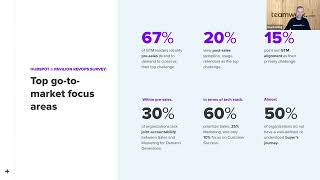
Panel discussion (Dec 18, 2023) on RevOps strategies for 2024 led by Jonathan Berg (New Breed) with Danae (New Breed), Sid Kumar (HubSpot) and Ray Keating (Teamwork.com). Key themes: prioritize investments that reduce complexity and increase alignment; organize around the customer journey (attract, engage, delight); strengthen data foundations (collection, integrity, reporting) and integrate systems to create a single source of truth; balance investments across pre-sales and post-sales (noting bias toward sales/pre-sales today); and apply AI (CRM capabilities, call summaries, guided GTM, automated personalized outreach) as productivity multipliers. Notable data points cited: only 7% of revenue leaders were confident in hitting targets (State of HubSpot research), 2/3 see pre-sales alignment as the top challenge, 30% lack joint sales/marketing accountability for demand gen, and many orgs prioritize sales tech (60%) over marketing (25%) and CS (10%).
Chapters
Foreign.
And welcome to today's session. I cannot be more excited to be here discussing how organizations can drive profitable and efficient growth with some of the industry's top revenue operations professionals. I'm going to intro the panelists in just one second. A little bit about New Breed. New Breed is an elite solutions partner in the HubSpot ecosystem and we're the only three time North American partner of the year. Helping organizations to optimize their technology, their CRM strategy and achieve their revenue goals and accelerate growth by generating demand with tailored tech enabled professional services. My name is Jonathan Berg. I am the SVP of revenue at New Breed and and my job is to help create the tools, the resources to help our community and our team really unlock meaningful growth. Prior to New Breed, I held chief revenue and marketing roles at high growth enterprise organizations. All right, now let's meet our panelists. We're going to go around the horn and each panelist is going to introduce themselves as well as say what their favorite song is. And. And I'm not going to let myself off the hook. Right now I am listening to Star Love by Cheryl Lynn. A lot of dance parties in my house right now. One of the one of the funk disco era's finest songs. So if you haven't heard it, please do so. All right, over to our first panelist. Danae, please introduce yourself.
Hi everybody. I'm going to check out that song. My name is Danae. I'm a revenue operation strategist here at New Breed. Biggest thing that we do here is helping customers configure their CRM to achieve their revenue outcomes. I also collaborate with our clients to integrate their technology as well as optimize their data and process. In terms of my favorite song, I'm listening to Afterthought by Joji, my favorite artist.
All right, very cool. Thank you so much. Okay, Sid Kumar, I'm going to hand it over to you to introduce yourself as well.
All right. Great to be here. I'm sid Kumar. I'm SCP of Revenue Operations here at HubSpot. Excited to chat with all of you on this. On this topic, my favorite song right now, just can't get out of my head is Jingle Bell Rock. You know, just on every radio station. It reminds me of Home Alone, which is just a classic holiday movie. So that's what's that's on top of mind right now.
Love it. A lot, A lot of Christmas music going on right now. Okay. Ray Keating, who is normally dialing in out of Dublin, but just beat his jag lag and is dialing in from Denver. So please intro yourself Ray.
Thanks Jonathan. Hey everyone. Lovely to be here. So my name is Ray Keating. I'm Director of sales operations and teamwork.com for anybody who doesn't know teamwork.com we are the number one place to run your client operations business that's backed by a project management system that people absolutely love. So as part of my role I'm. I'm looking after everything operationally from the sales operation side. But we're partnered really closely with CS product and marketing there as well. Previous to this role I've had sales roles, so I have been on what I now consider the dark side given I'm in sales ops, but I've also looked after Dell's EMEA cloud service Partner provider program previously. So a wide ranging career so far.
Great. Thank you very much. And just a reminder to everybody who is dialing in, please make sure you're submitting your questions throughout the event. I may ask the panelists the question through the flow of the session or wait till the end, so please don't hesitate. Please add your questions in. Okay, so first let's talk about challenges. In a recent research project that we ran in the state of HubSpot, only 7% of revenue leaders, so only 7% of us on this call reported that they were confident in hitting their revenue targets this year. Hopefully things accelerated for many, but the reality is is that many were not confident. And according to the data, the challenges that we are facing are prioritizing and configuring the most impactful investments, creating alignment across the organization, creating less complexity and using data to drive action, how to approach and integrate AI into our operations and finding and retaining the right talent. We're also in a changing landscape. Profitability is a priority, brand loyalty is growing harder to get and AI has redefined our well being and really how we work. So the thing that really motivates me is I get to talk to many leaders who really find these challenges as opportunities and are rethinking how we can maximize our time, our team, our resources to do better. And it really gives us all a reason to ask, is there a better way to grow? So what are better ways to grow and what is working? And that is some of what our research found. So in the state of HubSpot research we identified that the top quartile of organizations, the organizations who reported the highest growth, the best CAC and are really hitting their revenue targets, are prioritizing specific investments, are creating alignment across their teams and their organization are reducing complexity and streamlining their technology and using data to drive action. And they rank AI as their number one investment. Okay. So today we wanted to dig deeper into how overcoming these challenges and also learning how we can replicate some of what the best are doing. And I couldn't be more grateful to have you all joining me today and explore and drive into these topics through revenue operations strategies. All right, the first topic that we're going to be hitting on is all around focus and prioritizing the right investments. So I'm going to hand it over to Sid who also is full of data and has run a lot of research in his time and would like to hear a little bit more on where revenue leaders in the industry are really focused today based on your data.
Yeah, no, it's a really interesting topic. A little earlier this year we surveyed go to market leaders really across the world and across different phases and and stages and and found that 2/3 of them view pre sales and I define pre sales as brand to demand to close. You know really that marketing sales alignment as the top challenge in this environment. 20% called post sales adoption usage retention as their as their top challenge and about 15% called out go to market alignment as their top challenge. Like just the alignment across these different functions. And I think it's pretty interesting to see that that's so heavily weighted towards the the new customer acquisition side and not enough on the post sale side. So more to come on that later when we when we chat through that. But the balance is one that was not surprising but something I think we really need to think about as the as part of the future. In the pre sales context, 30% of of organizations did not have joint accountability between sales and marketing for demand generation which was was absolutely surprising. If there's a a team sport that exists in go to market it's that its demand generation. So it's surprising to see that a third of organizations were not thinking that way. From a tech stack standpoint, focus is still very heavy on pre sales. 60% calling sales as their top priority, 25% calling marketing as their top priority for investment and only 10% focusing on customer success and post sales and similar like when where we have rev ops teams and I think rev ops is still one of these functions that's being defined as we go. The the time being spent on sales is about 75% and marketing getting about 15% and CS about 10%. So yeah, three quarters of the time still focused on sales but yet we're calling it revops Right. And, and I think we need to really think about how are we balancing our, our time and investment across go to market and then this, this other one's also this last stat was really powerful as well. Half of the leaders we talked to through the survey don't have a well defined or understood buyer's journey which again surprising and I, I think also a huge area of opportunity for, for us as we go into 2024.
Yeah, this really puts a spotlight on that alignment challenge that we just heard from the other body of research as well. Sid, from your perspective, how should revenue leaders consider shifting their focus into 24? Right there can't be, can't shift everything but give some thoughts on, on some recommended shifts based on this data.
Yeah, I, I, I think it's really that balance between pre sales and post sales is the first area that I would point to. It doesn't need to be necessarily a wholesale shift. I think we still need to focus on new customer acquisition. But how are you thinking about usage outcomes and customer value on the, on the post sale side as maniacally as you're thinking about new customer acquisition? Because the math, the math doesn't lie. I mean it's compounding growth on the right side of the, of the customer journey if your customers are getting value and will continue to, you know, renew and expand with you. So I think more focus there and I think the other piece that we just hit on is that end to end view of the customer journey that you're orienting your entire organization around and getting really clear on what does success look like at each, each step of the way in terms of a customer outcome. So getting your getting on the same page as a go to market team, not thinking about it as sales, marketing and customer success.
Thank you.
Yeah.
Ray, as a practitioner does this, how does this data resonate with you in terms of your current state and any, anything in addition to to SIDS shifts in focus sort of you're pushing yourself on or you would recommend to others who are on the call.
Yeah. So first off I think this data is awesome and it really gives context and time to reflect which I think is, is important and it's a very natural thing at this time of year. I think the, the additional piece I probably look at is, you know, 2023 has been a challenging year. Right. Like if you look at it from the macroeconomic perspective, I think you showed the slide with 7% of, of leaders having the confidence of going hitting their targets and I think that's important context to to bring to, to all of these conversations that you could be doing a lot right and you could have still had challenges. So like, even if you're growing this year, it may not be as much as you would have liked to grow, but you're still doing quite well. You can't just tell a story, I think with one page. So I think having the context of the data that you and Sid just spoke to is just really valuable in reflecting where you are. Because I think the big thing that stands out for me and something that can sounds very obvious, but it's clearly getting lost based on the data we're seeing is the importance of the customer journey will never change. None of us will have a job without customers. None of us will have a business without customers. And yet so often clearly we go about our day and about a load of our time without maybe focusing on the customers. Right? So I think that data really gives me pause for thought about okay, what are we doing? What is the stuff that's actually helping our customers? What's actually helping and what's the stuff that maybe is just busy work or is the stuff that we like doing? And it just sort of helps me recenter, I think based on the year that we've had, getting the context with the macroeconomic stuff has been difficult. And we've, we've survived that and well done to, everybody's gotten through it. But with that we can bring the context of are we doing the right things? And that data would suggest we're doing some of the right things. But there is definitely room for us to grow. And unless your customers at the center, what you're doing, no matter what the economic climate is like, you are going to struggle.
Okay, We've, we've got a, we've got a panel full of revenue operations pros and, and we love data. So here's some more. And it's around alignment, right? It kind of, it digs deeper into the alignment conversation and really highlights how key alignment really is. So let's, let's dig into this even further. Sid, I'm gonna, I'm gonna come back to you on how, how does your RevOps team at HubSpot use the customer journey? So Ray, you just hit on the customer journey quite a bit. How are you using the customer journey to align your go to market teams?
Sid?
Yeah, I, I think it's, it, it starts with just that it's defining what the customer journey does look like for, for HubSpot. And it's something that we, we spend a lot of Time doing and trying to continually fine tune. We call it our customer centric operating model or ccom which is, which is really our single view across our go to market teams on the different phases of the customer journey. We call it attract, engage and delight. And what are the outcomes that we define as success or how would our customers think about success at each of those different points of the journey? And then how are we orchestrating and aligning our go to market teams to be able to go deliver those outcomes? So it's, it's really, it's the way we're driving alignment, collaboration, communication across our go to market team. So we, we show up as an, as an aligned engine to our customers, deliver a great customer experience and help them get the outcomes that they want to achieve. So just hitting on what Ray said. If we're working backwards from what our customers need and, and want at each of those different stages, we're doing the right things and then the rest sort of works itself out and Revops was, has been and continues to be the architect of this customer centric operating model. And we drive, you know, a regular operational cadence and mechanism to bring these teams together and then go look at how do we continually iterate and get, get better along the way.
Great, thank you Ray. Sort of what, what are important revenue operations practices that help drive team alignment@ teamwork.com so for me the, the key.
Really is looking at the bigger picture. Like too often I see people who are really stuck in the minutiae of details really honed in on one metric and that metric just isn't driving, isn't moving the needle, it's not driving the correct results. Like you can have people working on projects, they feel really good about where they are, they're at target with that metric. But if the overall company is missing what that revenue target is, it's not a success. Right. So looking at that bigger picture changed you from moving inches to moving yards and moving miles and, and moving further. And I think that's really important that when something is off or when there's a, there's an opportunity there, we take a step back and we look at like how big an opportunity that is or how we can fix it. And I think again, it's something that maybe sounds obvious but like starting with the numbers. So what are you actually trying to achieve? What is, you know, we're all, if we're in rev ops, we're, we're trying to drive additional revenue, we're trying to drive additional efficiency. So, so start there. What are you trying to achieve and what can you do to improve that? And if the stuff that you're doing isn't making a difference to that bottom line that you're trying to achieve, stop doing it. And so often I think we see people can be so stuck in those minutiae stuff and then in terms of the alignment, so we use our own software for this. So teamwork.com is a collaborative platform and we're big on using it ourselves. Right. So the key mistake I think I've seen across revenue ops is that people are working in silos. And what our own product allows us to do is we have a central place. Everybody can see the task that we're working on, everybody can see the project that we're working on, all of the communications in one place. So it's no longer digging through emails or digging through a spreadsheet and trying to figure out where things are. We have very open communication. And I think the best part about that is I love to challenge people and I love to be challenged because that is how you grow. But those challenges, they can come if you're keeping everything to yourself. Right. You've hopefully hired talented people in your business and trust that and get that difficult conversation, conversations with a bit of tension behind them that will help you drive. So we, we try to be as open as we can with ours and our own platform is ideal for making sure that we have alignment across all the departments of what's going on.
Great, thank you. So we've got customer journey mapping and really using that to drive the operations of the business. Staying focused on your North Star and metrics and clear communication. Danae, in your role, you're working with many companies around systems integrations and unifying technology and optimizing CRM. I hear often from you and the team that an outcome of this work is more aligned teams and environments that you're creating. So how does systems integration help with team alignment?
Yeah, great question. So for system alignment, it fosters effective teamwork by integrating the tools and data across the apartments or the departments rather. And that ties into what Ray is saying about silos. It's so common. So how do we eliminate those? And with the integrated systems, it enables seamless communication. There's shared goals, it standardized metrics, it'll boost efficiency and productivity. And then the consistent customer information enhances the customer experience. So while in real time, while real time data will empower informed decision making, it also enables agile strategies in response to those market changes. And that'll just allow you to eliminate those Silos slowly but surely amazing.
So I love the answer and it's almost as though the three elements that that Ray and Sid you just hit on systems integration sort of underpins that in order to really bring those things to life. So thank you. All right, we all just hit on data quite a bit is the next topic and really using data to drive customer connections and real action. So first things first, you need to help create the foundation for good data. So Danae, I'm going to turn back to you. How do you work with customers to help create the foundation for good strong data?
There's five, there's like a five step approach to this. It's really fun. I like revoff so it's cool for me. And the first step is always just understanding the data need. So identify what the essential data on a company level is or I'm sorry, let me rephrase that. Identifying essential data for company level qualifications. So stuff like job title or company name that aids in both sales and marketing efforts. So just understanding what's most important to each department and that again turns into alignment and communication. The second is data collection strategies. So you want to determine how to input that data into your CRM, whether that's through forms or an integration or through an import. This just allows you to have accurate entries. Next is the ensuring data integrity. So as you collect data, you want to make sure that you are addressing duplicate records or properties and this will just allow you to have a single source of truth maintaining that data accuracy and your data integrity so you can trust everything that you're seeing inside your CRM. You also want to train and create reports based on the data that you have. So let's say you have a new implementation or strategy in your portal or just within your department. You want to train the teams, all stakeholders that are involved, both people who are decision making and that it affects their day to day to boost the confidence in the tools that they're using within their CRM. You also want to generate reports based on the company needs and leveraging those that foundational data for insights like job titles by lead score or lead score by life cycle stage, stuff like that where you can end up getting very detailed data based on all that you're collecting. Lastly, you want to establish a feedback loop. So you want to engage in internal discussions to gather experience within the CRM to see how it's working and if all necessary contact information is available before prospect outreach. This just allows you to create strategies or adjust the strategy to improve the data collection process. So quick 5 step process on how to do that.
Great, thank you. Today you're, you're, you are one of the most process oriented. As we were preparing for today's session, I think there were probably four additional lists created. So much appreciated. And one of the, a great, a great approach that, that you do have. All right, Ray, I'm going to kick it back over to you. How are you using data to help your revenue teams be most effective and efficient? You had some great examples. Love hear those here.
Yeah. So this is the bit I find fun about my job. I love digging into that. I love trying to help the reps, sales reps have a really, really difficult job. So if we can at all make them smarter, I think it's really rewarding. So an example that we had this year is we looked at the amount of contacts that we had on every deal. Right. And HubSpot made this very easy for us to analyze. But we had a look and we noticed that if you've got one contact on a deal, you've got a very low chance of winning. That makes a ton of sense. We sell a collaborative platform and if people are collaborating on the platform, they're probably very unlikely to buy that platform. If we add to, if we have two to four contacts on the deal, we more than double our chances of winning that deal. And there's a tipping point there as well. Once we start to add 5, our win rates start to go down. They're better than one, but they start to go down. As there's more decision makers involved, there's a more complex process. And what that data showed us is that we could go to our sales reps and we could say, hey, if you want a better chance of hitting your quota, if you want a better chance of making your deals, get more people involved, one person might take a trial of our software, but it's your job to get a second person in, get a third person in, get a fourth person in and that make you more successful. And the key to that then, and it's the learning that I've had in the last maybe two years is don't just leave that and then move on to something else. Revisit it to re emphasize whether it's worked or not. And you do have to go into it without that ego. Maybe the analysis hasn't worked, maybe it hasn't held up. But what we did is we revisited it four to five months later. We compared the amount of deals that we had one contact previously versus what we had now. And then we checked to see if our win rate hypothesis held up and it had done. So we were able to show our reps. Hey, you guys have done a great job here. You, you've added more contacts to deals, you've increased your win rate as a result. Here is the, here's the data that shows exactly that. And I think that earns us credibility then for the next thing that we do. Again, it'll be a hypothesis based on data that may or may not work out, but it gained us that credibility with them that if we're showing them something, there's a logic behind it, there's a sense behind it and they're going to be more open to embracing it.
Yeah, I love that too. It's the example that you use. It's data driven, it aligns to action and it aligns to a key metric and conversion rate that is a critical revenue driver for teams. So great example. And Sid, I know you're very passionate about this topic as well. So we've got the how to create the foundation for strong data. Great example said, how can RevOps teams help their marketing, sales, customer success teams turn data into insights? Right. And then most importantly, action. So can you give a little bit more into like the, the how in there?
Yeah, I, I think you hit the nail on the head. It's data, not for data's sake, but data to drive insights to go drive action. And that action could be either a digital action or it could be a human action. So I think it's really working backwards from what are you trying to achieve and, and then what's the, what are the insights that would help you decide what the right course of action is and then corresponding what's the source of data? I mean, the way we think about it is there's, I think organizations typically spend a lot of time on hindsight looking in the rear view mirror. And there's certainly something to be said about learning from things in the past in the rearview mirror. But it's the hindsight, then there's insight. What have you learned about the hindsight that gives you clarity into what you might want to do differently? What actions or decisions might you change as a result of insights gleaned from past and current performance? But I think what's more interesting is foresight and helping in a business partnership context, helping guide what that next best action is helping your sales, your marketing or customer success leader see around corners. That's where I, I think the, you know, rev ops can play a real partnership role here to see what's coming around the corner. And I think it's been everything but consistent over the past couple of years. So instrumenting your business to think about those different external internal factors that might either take you off course or be a positive or negative surprise and how do you maintain the agility to go do that? So I think it's understanding those conditions and then using that to go drive what your analytics and data strategy are based on, the questions you're trying to answer, the decisions you're trying to make. Data is never going to be perfect. I think the other piece I would say is the way we will drive, we could drive business partnership in a much more effective way is through these, what we call accountability mechanisms. And underneath that customer centric operating model I talked about, within each of those different phases of the journey, we have a set of frameworks that help identify what are the leading and lagging indicators that help us see whether we're on track to go deliver that, that North Star and how do we course correct if we're not? How do we potentially double down if something is working better than anticipated? So I think it's about the accountability and the business partnership and just two in a box, you know, two way dialogue between your business partners and revops.
Great, thank you. Yeah, very business outcome focused and collaborative in nature. Okay, so we're going to shift gears into integrations. It's a topic that I feel like I'm talking about every day and in top of mind for, for many revenue leaders and we hit on it a little bit earlier. The state of HubSpot data highlights the importance of simplicity, integration and purpose built technology to really drive positive and efficient revenue outcomes. Ray, you recently migrated onto sales hub and that was really grounded on the principles of creating an efficient, simple, yet powerful revenue tech stack. I'd love to have you share some learnings from, from that, from that migration.
Yeah, love talking about this because this, this is a real success story for us. So the way that we approach this is we kept it as simple as we could at the start. So I love geeking out around HubSpot. I love learning what it can do, can do so many things and there was a temptation for us to try and implement a bunch of them at the start. But adoption is so crucial with that. We wanted to make sure that we were bringing our reps and those people who are going to use CRM along for the journey. And it wasn't just a case of someone in rev ops who'd like to do all these complicated workflows, put them in place we wanted to put the, if you want to related to what we're saying earlier, customer journey. Well, the rep is kind of the customer journey here when we're implementing a CRM. So we focus on the stuff that you absolutely need in your sales process. And when you boil that down, it's not a huge long list. There's a couple of absolute must haves. So we got that set up correctly. We didn't want to scare or overwhelm people. We have a lot of people who started their careers with us as an SDR and then moved into a closing role and maybe haven't as much experience with other CRMs, so didn't want to overwhelm them. We removed a piece of tech that was quite onerous for them that took up a lot of their time, which, as you can see there, allowed us to make our team 50% more productive, which was a huge win and help that engagement. And then we brought in one, what I would call showstopper for them. So previous to using HubSpot, we used to use Excel for all of our quoting. For anybody who's done that, yes, it's functional, but it comes with so many problems, particularly when you're working with different reps across different time zones. So we embrace HubSpot's quoting process and that allowed us again to get reps to save time. We became way more efficient there. But it also, we saw immediate success with it. So we implemented it in November 2022. While implementing, we also had our biggest month of the year. We could see what reps were sending to customers. We could see what discounts they were doing much easier. We brought in a better approval process. We got onboarding attach rates up. So we were putting the customer at the center that we were getting to them to adopt our product. And that happened straight away. So we kept it simple so that reps weren't overwhelmed. We got rid of some stuff that was onerous for them, and then we brought in something that was really excited them and got them into it. And then as we've progressed, we've brought in a lot more complicated stuff. We brought in a lot more of the power that HubSpot can do. But it's been. We've had a total adoption from the start. So anything new that we brought in has allowed us to be successful with continuing to improve on the platform.
Very cool.
Very cool.
Yeah. And it sounds like the impact was one immediate but progressive because of the nature of how you stayed on top of it, thinking through how you originally audited Your systems to come to the conclusion to migrate to sales hub. How did you come to that conclusion and get to that choice? Because I'm sure many people are sort of thinking through their tech and their systems and how can we consolidate to drive efficiency. Can you provide a little bit of insight into that process as well?
Yeah, sure. So I think, like we've spoken, we've all spoken on this call a lot about data, and we get super excited by data. But your data is only as good as the stuff that you put in. So for us, it came down to ease of use and it came down to ensuring that people would use the tech, the piece of tech. And I think we've all been there where we've brought this tech in that we're very excited about, that we think will change the world. We don't get adoption and it's. It's a sunken cost that, you know, you churn out after a couple of months or after a year. Right. We didn't want that to be the case. We didn't want to, you know, invest the money and the time in the partnership and signing up for this and then for it to fail. Right. So we like the thing with salespeople is no salesperson is getting involved in the sales career so that they can update their CRM. It's not what gets them excited in the morning. You will be fighting with them to do it. But the key is to make it as easy as possible. Right. Salespeople love talking to people. They love closing deals. They love the buzz of it. We've got a gong in our office anytime someone close a big deal and we bang that thing as loud as possible. So we want to work with what they like to do, but what we need as well. So keeping it as easy as possible brought them along for the journey. And then that just gave us really accurate data. So as I mentioned earlier, in terms of the analysis we did with the number of contacts, we were really confident that that was accurate data and we were really confident if we could change that we could get better outcomes. And that's what happened. So for us, it was all about ease of use with the ability to grow with the product, then as I mentioned, over time get things a little bit more complicated while keeping our reps happy that they don't have to do too much admin work.
Great. I also, I heard the word adoption a few times in that.
In.
In your answers as well. And Danae, when working with customers, I think this is a key focus of yours at all time when Implementing tech. So how do you help them get the most out of their newly implemented, newly configured technology driving the highest adoption?
Yeah, you're right. It's definitely our day to day to keep this process in mind. So New Breed has a New breed's Rev Ops team has an amazing modular approach we call it. So it's broken down between three steps. The first step is workshop and that's where we reviewing the current process and we're identifying refinements to match what we want our future state to look like. So this is where conversations are happening on what's working and what's not working and what we want our future state to look like. Whenever we're looking at the workshop phase, it's also tying into our second phase documentation. So once we have an understanding of our current and future state, it's outlined in an implementation plan with our clients. And I'll also use a centralized documentation for the modular approach so that again, everything is in one spot, everyone's aligned on where we are and what's being discussed. This also includes the definition of the strategies. Any workflows to support that process links to the deliverables once they're done so that they could be either reviewed or approved. So that's the second step and then the third is implementation. So now that we understand what the implementation path looks like, we want to make sure that we have a date scheduled for it and the training scheduled for it so that stakeholders can see the process in full circle and just understand what where we started, what we started with and what we landed on. So that's the modular approach, workshop, documentation, implementation. And this will happen for each strategy we implement with that is ongoing support for any questions that they have, they being stakeholders or the client client and just checking in after the implementation so that we can optimize as needed. And that's pretty much how we'll go through the whole thing and just making sure everyone's on the same page.
That's great. It's continuous and it also sounds like it's like it's quite agile as well. Small plug if people are very interested in this topic or something that you're embarking on moving into 24. We just recently held a session that is specifically on systems integrations and migrations. So reach out, we can get that session over to you A lot more around the methodology and other sort of implementation methodologies that Danae just hit on. Sid, you mentioned balanced investments earlier and a lot of this has to do with tech. Right? The data that you highlighted earlier is a lot of the tech investments is within sales and pre sales. So how can revenue leaders create this balanced investment across the customer journey? Yeah. And also adapt to these investments? Right. We're, we're in an ever changing environment. Can you, can you talk a little bit around creating the balanced investments around the journey from a tech perspective?
Yeah, I, I think there's, if you look at it from a lens of, I think first it's understanding what your existing tech stack, if we're sticking on tech stacks as investments, what does it look like today and doing an audit or an inventory of it. And in my mind, if it's not about, if every element you can't tie to improving customer experience or improving productivity in some way for your team, then you may want to question what role that particular piece of technology is really playing. So I really think of those two as, you know, defining aspects of a tech stack. And, and then I think that gives you current state. Then I think it's really looking at what are the jobs to be done across the customer journey. And from that I told you, the attract, engage, delight. There's different go to market teams that are, you know, powering each of those different aspects of the journey. Where are there types of work that can be automated, that can drive greater efficiency and productivity and deliver a better customer experience? And then where are there opportunities to leverage technology to go make humans more productive as they, as they do their job? So I kind of think about it that way really from a top down perspective. What are the goals you're trying to achieve for your customers? How are you trying to do it more productively? And then how does technology fit in? Because I think it's really easy to get caught up in adding yet another tool to the, to the stack and then not having a sense of how it all comes together. You sort of lose sight of what you're actually trying to achieve with the stack. And the other side of it is just, you know, tech fatigue. Right. When you, when you put the amount of context switching that you have for a rep, going from one application to another to, to do their jobs, you know, it's another thing, just really pay attention to when things are harder than they used to be.
That's a great point. One of your colleagues, Scott Brinker, chief Martek, he recently put out a Survey, I think 2023, there were more new applications introduced into the market than any year ever before. Right. So, and you know, it's a good segue around, around productivity and, and making sure all your investments, technology or Otherwise really are focused on that because we are in an environment as revenue leaders where we need to invest better versus more. Right. And I'd love to hear from each one of you. I love the some of the specific examples you all use. What are some examples where your teams have helped to create timely and value added customer connections? Ray, we'll start with you.
Thanks. So the way we think about it is like our customers are busy, okay? Like they're, they're not waiting around to speak to people who are, you know, maybe trying to help them, but trying to sell to them as well. So like we sell to a lot of agencies, a lot of professional services firms and anybody who's worked in an agency will know that it is 100 miles an hour. It doesn't stop. There's a lot to be do done all the time. So what we've aim to do in terms of supporting that journey is make sure that we're enhancing our customers time when we're speaking them to them and not draining that time. So we do that by looking at what our successful customers do, what makes them a successful agency, and how teamwork.com can help them get to that point. We look at the data in terms of their usage of the product versus how long they're staying with us, their seat utilization, all of these things about how they become a successful partner with us. And then we back that with success stories. So we've got the data that actually builds it, we've got the context that's provided by our customers and we use that as our basis to have our conversations with our customers as well. So that we can, yes, we've got an end goal in line. We'd all like to grow with our customers, we'd all like to maximize our revenue, but at the same time we can help them as well. Our mission statement is to make our customers more efficient, profitable and happy. And we can do that if we know the things that makes them efficient, profitable and happy. And we can tell that by the usage, overall usage of our product, what good looks like, how people are tracking time, how they're making sure they're billing for every minute, and when we bring that context to the discussions. So when a sales rep is doing what they do best at, which is talking to a customer, which is asking them questions, which is getting to those pain points, they have that little bit of a cheat sheet of hey, does this resonate with you? Because we see this a lot with our customers and that just leads to more valuable conversations, I think. And it leads us to getting more credibility with our customers and more willing to build that partnership. So because if they're successful, thankfully, we're successful then as well.
It's a great example, great example on how a data forward revops approach can really sort of impact not only go to market strategies, but behaviors among the whole organization as well. All right, Danae, over, over to you for an example.
You know, I see the greatest feedback when it comes to our HubSpot configuration projects. And this ties to what Sid was mentioning with the Attract, Engage, Delight flywheel model that HubSpot has in most cases or a lot of the cases that I do have with my clients as an example is that they want to optimize their form form process. And this year that includes diving into that modular approach, looking into how people are getting into our funnel, how people are giving us this information, how we can leverage this information across departments. And the best example I have is we had a client who needed to clean up their forms and some things to consider with that cleanup was there were duplicate properties that were in the HubSpot portal and then we can work on form strategy. So we took that in phases. There was a property that just that identified what service they were interested in. And the reason why this was important is because once we were able to clean up that property and implement that form, there were back end workflows also created to notify the sales team to update life cycle stage, lead scoring and Persona. So this one property was affecting a lot of strategies. The notification also included other qualifying information. So if someone was filling out a form and sales got to them, they had all this information upfront before the conversation even happened, making them more prepared if, let's say something went wrong or support needed to get in contact with this individual. Because everything is centralized on the contact record and within HubSpot and everyone seeing the same information support was also able to help the client in whatever needs that they had. And all of this was just because we had a centralized source of truth that was cleaned up and the data was being collected efficiently. So it started with just the marketing team and needing marketing hub. But because all of the cleanup and all of the implementation of the strategy, it resulted in more informed sales calls. It resulted in quicker support responses because it reduced the tech stack fatigue where we're hopping around trying to find answers about this contact and it just made it overall efficient across multiple departments. So it's my favorite thing to see whenever we have HubSpot configuration projects. It's just so clean and pretty.
Take, take the friction out. Right. For everybody.
Yep.
So so key. All right Sid, take us home onto this topic on an, on an example where you're creating value added customer connections from your role.
Yeah. One of the things, one of the things we're doing is just leveraging AI plus automation right. Really for, for our internal customer facing team. So sales and customer success to connect. It's the data with the insight to drive the action going back to that point. It's helping connect our reps with the right customer at the right time with the right message and value proposition for wherever they are in the journey. And it's something we call guided go to market and it's really about helping, helping our sales and CS teams who are customer facing have you know, just meaningful, relevant and impactful conversations with our customers and having the context in front of them so they, they can be informed and make that time valuable for, for both sides and, and, and being really just contextually aware of what the, what the customer is trying to achieve.
Great Sid. Taking it to the next level. Perfect perfect segue for us and diving us into the AI conversation which has really been focused on content generation generally. Right. Whenever I'm sort of researching, reading and thinking about AI right. Content content generation is, is at the at the forefront at New Breed. Our revenue operations team has been the biggest advocates and champions within the AI use cases and how to apply AI apply AI to really create effectiveness within within engagements. We also found in the state of HubSpot that those who are investing AI are more likely to achieve their goals and that 95% of revenue leaders expect their CRM to deliver AI capabilities to really help them to achieve their goals. So in some instances I heard one of you say, I think said it was you talking about shiny objects in some critical that when implementing new technologies you take certain approaches. So Danae, I'm going to ask you in general, right new tools, new technologies, any recommendations or thoughts on how to apply those for teams in general? So how should teams approach new tools and technologies?
You definitely want to understand the use case of the new tool and technology and how it applies to to what you're trying to achieve and how it compares to what is currently in place. You also want to consider if it would improve or hinder the progress of your team for whatever has been implemented. So far I've seen cases where we can use a new HubSpot feature immediately. But is that because it's nice to have or because we actually need it and does it provide good friction, negative friction and those are just something to weigh as you decide if you want this tool or not.
Great, thank you. All right, let's, let's dive into, let's dive into AI and some, and some use cases. Ray, are there any specific ways that you would recommend revenue leaders or rev ops leaders to be thinking about applying AI in their environment today?
Yeah, for me the, the big thing with it is, is the potential time saving that you have. Right. So we've seen things like the prospecting tool within HubSpot. We've seen the ability to, you know, generate emails much quicker that are personalized, that, you know, get to the point of what you're saying. That's. And that sounds like it's really positive and I would believe that it will be really positive. But I think as Danae was talking about the keeping the end goal in mind, which we're all trying to drive that more revenue, it's important to really think if you're going to bring in some AI that's going to save you some time, what happens that time that you're saving? If you've got a team that are at capacity and you're able to ease that off so that there's a better work life balance there and people are a little bit happier coming to work, that's a success. If you've got people who the capacity is correct at the moment. I know you've just freed up a bunch more time again. What are we going to do with that time? How can we make sure that we're actually increasing our endpoint there? How do we drive more revenue at that additional time? So I think as we talk about the new and shiny object and we're all super excited by it, I think really keeping that end goal in mind of okay, we can do this and we think that AI could help us achieve better efficiency, quicker results. Don't have to spend as much time on manual tasks. That's all great. But keep in mind what you're going to do once you implement that and how you can increase your bottom line then as a result, I think.
Great. Thank you. Sid, you spoke around guided go to market just a moment ago. Love to hear more about that and how you're. And how you're leveraging AI capabilities to create what you call a guided go to market.
Yeah, I, I think there's, I'll give, I'll give two examples. It's. I, I think it's understanding. Start with understanding what are the jobs to be done at each of the different phases by what role right within, within the buyer's journey. But one example is if you think about, especially in the times we're in right now where everybody is on zoom calls like we are right now for a lot of their customer engagements, you know, call summaries. Right. You know, in terms of coming out of a customer or prospect call and having to really recap it, process it, outline the next set of actions, that's something we, we started to experiment with leveraging generative AI say come out of your call within a, you know, a couple of minutes, you're going to have a summary that you can go tweak, make sure it hits the mark and, and get that out. I mean that would have taken 30 to 45 minutes a pop, right, if, if you were going to go sit down and write it. And it also takes you out of your flow. So that's an example of something that just increases overall capacity to spend more time with customers and less time on the administrative aspects of, of, of the, of the prep and recap side of it. And I think another one is, you know, the context of within the sales cycle itself or within the post sales cycle. Next, next best action. What are the actions that a rep should be taking that are either going to help a prospect make take the right next step in the sales process or what signals do we have on the post sales side to say this is the type of engagement that this customer would benefit from the most given where they are in on the post sale side, are they fully activated? Are they fully activated, but not fully using the features needed to unlock their use case. So it's getting very prescriptive, leveraging the data around the state of customer engagement to give guidance to the rep around what, what that engagement should look like and how you can be most helpful in helping the customer advance their journey?
I must say it's, it's very motivating and quite frankly inspiring to hear how HubSpot is using HubSpot to deliver against some next gen use cases that are, that are very deliberate in terms of rep and productivity that's going to make the customer journey that much more impactful. So thank you for that.
Sure.
All right, so many of you on today's call may be thinking that a lot of these areas of focus and some of the examples are very relevant for 2024. In fact, as I was preparing for today's session, there was a couple of takeaways that I've already turned around and thought through like, okay, some of these learnings I'm considering as we're planning out next year as well ourselves. But also there's likely many on today's call that are thinking through that there might be a skills gap or the skill sets that are needed on your current team may not necessarily be there. We're gonna do a hot round here because we're, we're, we're, we're coming up on the end of the hour, but I'd love to get your thoughts on the skill sets that are really important in order to apply some of the rev revenue operations forward strategies that we discussed on today's call. Danae, we'll start, we'll start with you.
Yeah. You know, with RevOps, you definitely need a technical mindset and strong communication that'll get you pretty far in your process. Just being able to align and see what's missing and then you'll be able to go from there.
Okay.
All right, Ray.
For me, striking the balance between process and data is just crucial. I think if you focus on one, you're going to fall down on the other. They need to work in tandem. Getting balance in a lot of things is very difficult. So striking that balance will set you up for being successful.
Great. All right, Sin, how about yourself?
You know, asides from the, the technical side, which I totally agree with, I think it's a growth mindset and curiosity. The world is, is changing pretty rapidly and I think if you didn't understand AI before, well, now is a great time to, to get started on that. So. And, and I think it's getting democratized, right. The access to new technology and getting easier to learn. So learning a growth mindset I think is a really important one to stay ahead of, ahead of the curve strategic business partnership, obviously understanding data, but then being able to go use that in an advisory capacity to help drive the business. So I think that I'll double down on the communication, the clarity of communication to be able to distill insights into what do you do about it? Does it matter or is it just an insight? Right. Should you go change action? Should you make a different decision? And I think the other piece that I really would underscore is if we start thinking about this as a go to market organization, it's how can RevOps continue to play the role of driving the collaboration and connection across those teams? And alignment's a bit of a, I think an overused word. It's, it's a bit passive. I think we need to be much more intentional about the collaboration, communication between, between these functions. So that's how you're going to get the velocity so. And the drive the outcomes you want.
Great. I like to a term I use often is creating true interlock between organizations.
I like that.
Another question that I personally get asked a decent amount is when is the right time to consider even outsourcing some of the revenue operations support as well? Rand, I'd be curious to hear your thoughts on when it might be the right time to outsource some some of the more revenue operations, forward tasks and strategies and then we'll close that question out with Danae. So Ray, why don't you kick us off there?
Yeah.
Excuse me. I think the. The important thing for when looking at that is when there's something that you have to get right and maybe you just don't have that expertise. There's loads of people out there who've got that expertise. And for us it was when we were implementing HubSpot. I had never put in a CRM before. We had to get that right. We were lucky enough to partner with you guys. A new breed and more than a map, you were, you were able to guide us along, tell us where the pitfalls were, tell us what good looked like, tell us what we needed to do and what we need to get right. And it was a really successful partnership that set us up for the whole year of being successful. So really, again, if you're looking at your end goal, what you're trying to focus on, what you're trying to drive, you know that this is a crucial part to it. It's okay to not have the expertise and everything are people out there who can help you. But if you can't fail in something, make sure you get someone else in to help you and help drive that success of that project.
Great. Thank you. Danae, any quick thoughts on the topic before we recap and close out the session?
I agree with Ray. Ideally when your team is lacking in expertise or is facing rapid growth or needs to focus on core tasks, it's also useful for cost effective scaling and specialized projects. So. So ultimately consider outsourcing when it aligns with your goals and offers a clear advantage.
Great. Wonderful. Okay. All right, here we are. We're going to recap. We covered a lot. You all delivered a ton of value. Got one more chance to provide a recommendation for the audience around 2024 planning. So what's one thing you would leave with the audience today around moving into 2024? We'll go opposite Sid, kick us off.
I would say stay agile and be okay being wrong and and pivoting course once you have conviction that you should pivot course. Don't wait for, you know, another planning cycle or another year to go make changes you know you should make earlier.
Great. All right, Ray, over to you.
I think I've mentioned it a couple of times throughout the call. Keep the end goal in mind. That's what you're trying to drive. Everything you do should be focused towards that. If it's not, really ask yourself why you're doing it if it's not going to drive your end goal.
Amazing. Danae, close this out.
So an overarching theme I see in this webinar at Inbound and among my clientele is the critical necessity of internal communication. It's successful for alignment within organizations or for successful alignment with an organization. So it's just important to start somewhere. If you don't know where to start, survey to see what people, how your people are feeling about their day to day and then pick it up from there. So as you're making the new year, you want to just implement consistent communication with one another and you also want to drink water. So that's important too.
Thank you. You always remind me. And because of you, I have stayed very hydrated in 23 and will continue into 24. So I appreciate that for all of you ask questions, we will follow up and make sure that those get answered. At New Breed, we wake up every day with a passion for delivering value and helping our community unlock meaningful growth. So we're going to continue to publishing content like this for for our community, so keep an eye out. But we're also offering a free revenue operations assessment. See the the lights behind me. In the holiday spirit, we're creating this offer to really help identify areas of focus, alignment and efficiency to support your 24 planning. So click the link, scan the barcode and check it out. But thank you to our panelists. I learned a ton from each of you and really appreciate your time. I'm sure the audience does as well. And thank you all who tuned in to learn and grow with us. Have a great day, have a happy holiday season and we'll see you on our next event. Thank you.
Bye.
More from Patrick



A NEW BREED OF PARTNER: The Partnership Ecosystem Model Journey of Patrick Biddiscombe, Part 1








Customer Success Workspace: Never Lose Sight Of What Matters Most | HubSpot Spotlight