Sal Khan on Why He Started Khan Academy
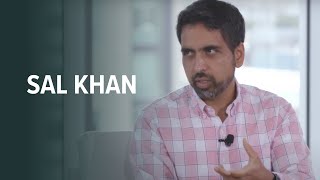
Sal Khan started Khan Academy in 2004 tutoring family members, then posted videos online. By 2009, 50,000 people used the site. He built it on approachable explanations and practice with feedback, and now 250,000 teachers use it, with plans to connect learning to real credentials and opportunities.
Questions this video answers
2004.
About 50,000 people.
About 250,000 teachers.
Clark County (Las Vegas), Long Beach (LA area), Louisville, plus several districts in Florida and California.
Chapters
Welcome, everybody. Sal, thank you so much for being here at Inbound and coming to the studio. I would love to start with you. Just sharing a little bit with us about how Khan Academy came to be.
Yeah, you know, it started actually back in 2004. Actually started here in Boston, not too far from here. I was an analyst at a hedge fund and I had just gotten married and my family was visiting me from New Orleans, and it just came out of conversation. One of my cousins was having trouble in math, so I offered to tutor her when she got back to New Orleans. One thing led to another. Word gets around my family. Free tutoring is going on. I soon find myself with 10, 15 cousins that I work with every day after work. And then I started writing some software for them that was the first Khan Academy. Because I saw a lot of them just had gaps in their knowledge. One thing led to another. A friend suggested that I make videos for my family to help scale my little family project. I thought it was not that good of an idea, but I gave it a shot and that kind of took a life of its own. And then by 2009, there were about 50,000 people who were using it. And so I felt like there's a real thing here. So that's when I set it up as a nonprofit and mission of free world class education for anyone anywhere.
Did you ever have a sense that it would turn into the expansive platform it is today?
I have a lot of delusional dreams. A lot of times my wife will tell you. So I think in the early days, every now and then I would say, hey, it's working for my family. Wow. It's not working for people who are not in my family. This could scale, whether you're talking about software videos. One day, maybe a million people, 2 million people. But when I got more realistic, I said, oh, well, Sal, those are just daydreams. Let's just focus on the people you're helping right now. But the simple answer is, I don't think I would have ever imagined it would have grown as big and as fast as it did.
Obviously, you know, you do a great job with the videos. You do a great job with the content that is being explained and taught. But what do you think? Like, why do you think videos and this style of teaching is working as well as it's working and is so expansive and used in so many classrooms?
Yeah, well, you know, the video aspect of Khan Academy, that's, I think, how a lot of people start using it. It's the easiest. You do a Web search, and a lot of people just stumble into it. And my gut sense of why that resonated with people early on, because I wasn't the first person to make online education lessons. I think it helped that it was for my family originally. So people can feel that tone of voice, that it feels very comfortable. It doesn't feel like it's coming from a corporation. And also, I think something that I had when I was, you know, I was really drawn to math and science, actually learning all subjects. And it was because I always put a little extra time focusing on, well, how do these things connect to each other and why is it interesting? And when you're explaining something, if that passion kind of comes out in your voice and I think the listener groks it, I think the other element of it, and this is where most of our resources at Khan Academy are put, is on the exercise aspect, on the practice and the feedback. The reason, I believe, and actually research backs it up. Why most kids struggle, especially in math and science classes, has nothing to do with their ability, has nothing to do with the subject matter, is because in a traditional model, they're pushed together to fix pace. And if we're in a class and let's say we're learning, I don't know, we're learning exponents, and we have a test, I get a 70% on that test. I. I didn't know 30% of the material. The whole class moves on to the next subject, and then those gaps keep accumulating. You get to an algebra class, you get to a trigonometer, you're like, wait, how does that exponent work? That's the issue. And no matter how incredible that teacher is, unless they have some type of tools, there's no way to address the needs of 30 kids. So the classroom usage of Khan Academy, I think, has really been powerful around being able to give students and teachers tools so that everyone can practice at their own time and pace, get immediate feedback, teachers know where they are, et cetera.
Going back to the tone of voice and your thoughts there, how have you retained that as Khan Academy has grown to be what it is today? And it's not just you recording these videos, and it's not just you recording them for your family, but you've been able to keep that as part of the brand and the product that you're delivering.
Yeah, it's interesting because now we happen to be based in Silicon Valley through random circumstances, but in a lot of Silicon Valley, people always think in terms of platform, and we are a Platform. But we're also a, in some weird way, I would have never thought about it when we were starting, but in some way we're kind of an education media company and we have a brand. And I tell the team, whether you're making a video, writing an article, writing a question or writing software, think about it, that you're doing it for your family. Even though your family is now 20 million, you know, it's millions of people. That's one another thing. I still am very close to the content. I still make content. I work with the team that's making the content. So, you know, that is one of the things that I care deeply about, that as we grow and as we scale that we don't lose that feeling like it's a bunch of people making it for their cousins.
You've made this incredible impact on education. Do you have hopes for the future of both Khan Academy but education in this country or even globally to see it progress?
Oh, yeah, no, that, I mean, that's why we're trying to do what we were doing. You know, we have three pillars to our mission. One is, hey, now with the Internet, there's no reason why you can't make education like accessible to everyone. The marginal cost of is close to zero. Another pillar is we should allow people to learn at their own time or pace. That was always the gold standard, but it was very hard with a teacher with 30 students. But now it supports or tools like Khan Academy. And the third piece, which we're just starting to explore, but I view as, you know, I want to see it happen in the next five to 10 years, is how does someone take that learning on Khan Academy and other places and connect it to opportunities. It could be in higher education or it could be jobs. So I hope in five or 10 years, not only are hundreds of millions of people able to learn, but they're also getting connected to opportunities and getting credentials or diplomas or whatever else.
Do you work directly with this, with in particular schools that are using Khan Academy in the classroom? Or is that like their choice? And you guys are sort of out of that conversation.
So for most of our history, we've kind of built stuff, built stuff for tool built tools for teachers. And we just had grassroots adoption. There's about 250,000 teachers using it in some way, shape or form. Recently we've started to say, hey, look, you know, the phase we're in, if we really want to move the dial for every child in America, we see efficacy studies. If kids are able to work on the platform, even 30 minutes a week, it's growing them 20, 30% faster than their peers. And so when we go to districts, they're saying, hey, we want support, we want training, we want integration with our rostering systems, a lot of these kind of enterprise level services. And so we are right now Clark county, that's Las Vegas, fifth largest school district in America. We're starting with them as we speak. Long beach in the LA area, Louisville, Kentucky, a couple other districts in Florida and in California. But yeah, that's the goal. So we have all this grassroots adoption, but now we're starting to work really deeply with, with districts and that's growing quite quickly.
You're about to head up to the spotlight stage to give a larger talk between your work with Khan Academy and the audience here. If you could leave everybody with one idea, if they took away one thing from everything that you shared with us right now and that you're about to share, what would your hope be there?
One thing. Well, I think there's just a lot more potential out there that there's a lot more potential out there and inside of people than most people appreciate. I mean, I get letters every day from people who said, I thought my whole life I was bad at X and now I realize I want to do X for a living. And it's really just about tapping into those gaps and having the right mindset.
Okay, we have one final question and we ask everybody, what does inbound mean mean to you?
Well, you know, I'll go deep with that one. You know, I've been meditating a lot.
I'm ready.
I'll go with the inner journey that we need to go on. And in a lot of ways, that's a much more important journey than the external one.
Couldn't agree more. Thank you so much for being here and stopping by the studio. And thank you for coming to Inbound. Hopefully everybody here is going to head up and see your talk as well. Thank you, Kal.
Thank you.
Thanks, everybody. Yeah, thank you so much.
Thank you.
More from Patrick



A NEW BREED OF PARTNER: The Partnership Ecosystem Model Journey of Patrick Biddiscombe, Part 1








Customer Success Workspace: Never Lose Sight Of What Matters Most | HubSpot Spotlight