Sallie Krawcheck on Helping Women Plan for Their Financial Future
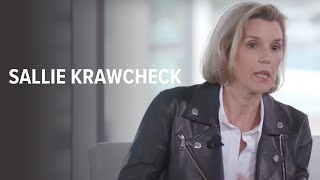
Sallie Krawcheck built Ellevest because gender-neutral investing products are actually male-tailored. Women invest less, earn less, live longer, and often lose control of their finances after major life events. Ellevest's platform and education aim to close the gap.
Chapters
Hi, everybody. Welcome to the inbound studio. Sally, thank you so much for being here with us.
Thank you for having me.
Before you head up to the spotlight stage, we wanted to sit down and chat a little bit. And I would love to just start off with, can you just give, like, the elevator pitch of what ellevest is and why it's so important that you started it?
Oh, I haven't given the elevator pitch in a while. Ellevest is an investing platform for women. I see quite a few women in the room, so maybe you won't say women don't need their own investing platform, which is what I heard a lot of when I was giving the elevator pitch. And in fact, I thought that for a period of time, women, we don't need our own thing. What is some remedial financial education for dumbed down for us ladies? But the research says that women invest less, in fact, much less than men do, not even accounting for the gender pay gap. And that this gender investing gap cost us hundreds of thousands, for some women, millions of dollars over the course of our lives. When I looked at businesses that I used to run, like Merrill lynch and Smith Barney, what we found when I dug through the old numbers is that in the year after their husband's death, women leave their joint financial advisor at a rate of 80 to 90%. And so there's a deep well of unhappiness, we could call it, but certainly a mismatch between what the investing industry, both the more traditional Merrells have been providing as well as some of the newer robo advisors. And so we set out to say, what if we throw away everything we think we know about women and investing, like we don't like to invest or we're a niche market, or we're not good at math and requestion those assumptions and build something 100% around what we're looking for.
I think something else that I've seen you talk about and you write about is that women's salaries tend to peak earlier in their career. And statistically, women live longer than men. And so therefore, by like, straight numbers, your financial investment strategy should just be different than, like the average financial investor.
Exactly right. So much as in the medical industry, where all the ret research is done on male heart attacks, and in the auto safety industry, where all the research is done so that they make the dummies, you know, the size of men. So, in fact, if you are investing on average, if you have a retirement plan that's average, given the fact that we tend to earn Less. Unfortunately, our salaries peak Sooner and that 80% of us die single. We live six to eight years longer than men. If we assume average, then you will not have enough money in your retirement. Right. And so this sort of gender neutral approach to investing as so many things that are supposedly gender neutral actually made for men, by the way, probably no big surprise in an industry in which 90% of traders are men, 86% of financial advisors are men, 90% of mutual fund managers are mentioned, 98% of money in the industry is managed by men. Sir. I love men. I do. I have been married to a couple of men myself. Personally, I think they're amazing creatures. But it's no wonder that an industry that's so overwhelmingly male, despite the research that tells you women are better investors, has done a better job for men.
It's my dad.
Hey, dad. Doing great, don't you?
I think another piece is, and you mentioned this a little bit, is just like financial literacy and understanding and maybe it's a gender thing, maybe it's not a gender thing, but what is ellevest doing to help, yes, create the platform for women to better invest their money but also understand what they're doing?
So we're doing a lot of it. But I do want to back up because that is one of the some of the chaff that's been thrown up about why women don't invest. Well, women need more financial education. We do. So do men. Right. And somehow it's this. Well, until we get the financial education, we can't invest. I think some of it is based on the fact that every one of us got A's in high school. I mean, I know you did. Right. And so we have that sense of I need to really know everything before I invest. That's actually the gender difference. It's not the amount of financial education, it's the fact that we've been socialized. As my friend Reshma Sajani says, girls are taught to be perfect, boys are taught to be brave. Right. We've been taught to get as. And so it's not that we understand less, it's that when we understand not as much as we think we should, then we tend to hold back as well. So to answer your question, we are not doing financial education in the old boring. You know, I bought the book, I promised myself, I'm going to read the book. But you know what's more interesting than old fashioned financial education? Everything, like doing the laundry is more interesting than old fashioned financial education. So what we're doing is Taking a very modern approach. You know, ask Sally on Instagram, money in 60 seconds on LinkedIn. You know, short burst of information that you can use, where you take it. And it's fun, it's approachable. It doesn't feel like hard, boring work.
I think one of the other things that stands out to me about your platform is that the interface itself is very approachable and easy to make your way through. It's sort of like a turbotax or something like that, where it carries you along. And I think when I log into even like Fidelity, I'm like, oh, God, please don't let me hit the wrong button. Like, what's going on here? I think I understand what I'm looking at. So what kind of work, like, thinking went into designing the route that people are going to take, that user experience.
Years of it, actually. So we've only at Ellevest, been launched for the past two and a half years, but there was two and a half years before that of intensive work, and it was intensive work, both understanding what she is looking for, which, by the way, she can't articulate. And so user testing, you know, having people come in. No focus groups. So, I mean, going at this issue in so many ways because, you know, I often get the question, well, you know, how come the banks haven't done this? Why haven't the big firms done this? Everybody tried. Everybody tried, and everybody spent tens of millions of dollars behind it. But what they did is they really looked at it as a marketing problem. How do we get women to change their behavior as opposed to an industry problem or a product problem? So we spent a lot of time working on the underlying product. What is it that we're looking for was about a zillion tiny little findings that together added up to something really meaningful.
And.
And then spend a tremendous amount of time on the design for what can help you get through, not with the least amount of friction, but with the right amount of friction. What information? What is the minimum amount of information we need from you? What's the amount of information you need from us? What makes it a fun experience? And to your point, we tried much more to be a Tory Burch of financial services than a Merrill Lynch 2.0 and are constantly, constantly, constantly refining it. I was on the shuttle on the way up this morning looking at some new user tests that we did literally yesterday afternoon, where we're now into the individual tweaks, but a lot of design, thinking a lot of design forward. But don't let that fool you. The Underlying finance is sophisticated and it has to be. It took me a year to find our chief investigation investment officer because I wanted to find someone who, like Sylvia Kwan, has got a PhD in engineering economic systems from Stanford and a computer science and applied math degree from Brown. And they're not. Who could think creatively, and there ain't a lot of those people around. And she also happens to be a woman.
Was that important to you to hire a woman?
Well, the research. So I'm a research gal. I just let the reality. My opinion is wonderful, but is not going to inform this business. I'm a research gal, and the research tells me that women are better money managers than men. So there you have it.
Love it.
There you have it. But we also aren't caught up. You know, somehow the industry seems to be caught up with their websites, at least their traditional industry. And this is how smart we are. Right? Let me give you another article and another article and another article. And rather than it being about us and how smart we are, what we did is we took the entire lens and turned it back to her. So it's about her, not about us. Which is a fundamentally different mindset shift.
When you were, I mean, leading a corporation like bank of America and starting a startup are two, like, entirely different leadership experiences. I would imagine A. When you were at bank of America or, you know, in your past life, previous to Ellevest, did you. Was startup. Was doing a startup on your roadmap, something you.
Absolutely not. No, no, no, no, no, no. I was the big company gal. And before bank of America was at Citi. And so I've had a series of big, complex managerial challenges. And so. But, you know, the part that you're too kind to share is also, you know, hold a world record, which is I'm the only woman who's been fired on the front page of the Wall Street Journal twice. And so, you know, there were days when I thought, you know, this big, complex company maybe isn't a perfect fit for me. And so after my second firing, you know, I sat back and thought, all right, what are the skill sets I have? What do I love doing? And then very importantly, what's important to me. And that wasn't a, you know, afternoon exercise or a weekend exercise that actually took me the better part of a year, and do I. And I had opportunities to go back to big companies. And I would sit there and think, I have the ability that not a lot of people have to manage big, complex, you know, global multivariate businesses. Would I be okay, giving that up. And for most people, the answer is absolutely not. Would I be okay writing the content at ellevest, right, and building the earnings models and going and beating with, you know, and asking for venture capital money and doing it from a position not of strength, but of, you know, like, please, I need some money. Would I be okay with that? What matters to me and what came to me over a period of time is in what. None of that stuff mattered. None of it mattered. Giving up the warm chocolate chip cookies they used to bring to my office at 3 o' clock in the afternoon sort of mattered, to be honest with you. But what really mattered was mission and affecting positive change. And if that doesn't matter to you, that's okay, but that really mattered to me. And as I began to, you know, people said to me, you start this investing platform for women. I'm like, that's dumb. That's dumb, that's dumb. And I had a morning when I had this recognition about how much money it cost us as women. And it's not just money. We all know that, because money is power. And every one of US knows the MeToo movement would not have to exist if women had as much money as men did. Every one of us knows there's not a woman on the planet or man who would sit in that room with Charlie Rose with his half open bathrobe if we had as much money as he did, right? You'd be like, you gotta be kidding me, Charlie. And you would have left. And so when I realized we had this thing about money that nobody was talking about, and when I googled it, nothing was there and that it cost us that much money? And then I said, well, that's unbelievable and the industry isn't going to solve it. Who can solve this problem? Like, who has got the finance experience, which you have to have, who can pull together a world class tech team who can raise the tens of millions, at least of venture capital dollars that are needed, who's got the patience, the analytical patience to actually build a product. And, you know, at the end of it, it came down to maybe three, five people. And I knew them and the other four weren't going to do them do it. And so I looked at this and said, look, if not me, I don't think anybody's gonna do it. And I honestly, having had the great privilege that I've had to work in these businesses and have the opportunities that I just was born into, and I don't do it, then shame on me, absolute shame on me. So it wasn't this, I've gotta be an entrepreneur. Because that's the cool thing to do. It really was. I just owe this back to the world, given the advantages I've had.
I mean, obviously we have a room full of many women. And my dad, hopefully the spotlight room that you're about to head up to does have a few more men in it as well. When you leave us here today at Inbound, what are you hoping that women and men take away from the work that you're doing?
If they, you know, I know we always want to bring the guys along. I know we do. And I'm, as mentioned, married to a man right now. I have a son. I'm just texting my dad. I'm texting my brother. I really do love men. We just can't wait for them. We've been waiting. We've been waiting so long, right? I mean, think about all. Think about the. So think about my industry. Think about all the research. Research piece after research piece after research piece, the diverse leadership teams. And by that I'm talking specifically gender diverse, but diverse in every way. Leadership teams don't just drive better performance, drive dramatically better performance. Right? Drives higher returns on equity by a lot. Lower risk, greater innovation, greater client engagement, greater employee engagement, all that stuff, right? What's one industry that would benefit from more diversity? Wall Street. Wall Street. An industry that is the lifeblood of our economy. The crisis brought the global economy to its knees. That industry would seem to me could benefit from some of those things I talked about. Well, Wall street, which went into the downturn, white male and middle age, came out whiter. Maler and middle ager. And my being fired, I promise you, wasn't because of bad business results. It was during the course of the crisis, standing outside of that crowd and being a different voice. And so Wall street, which is in all of our interest, should be more diverse, has gone backwards. Corporate America overall has gone sideways, despite the research. Compelling research. And so they're not bad folks, right? It's just. It's just this overwhelming drive to be with people like ourselves, to go to a zone of comfort. And so no one is going to take this more seriously than us. Gloria Steinem has said no group has ever willingly given up power. And so, guys, if we wait for them, we're going to be dead. Right? I mean, so right now, right now, the gender pay gap for women across all ethnicities and this country is 200 years away from closing. That's like Alexander Hamilton saying, we need to close the Gender pay gap and it closing today. Right. That's how long it is. So this ain't going to happen. So the guys aren't showing up for this. They never will. I'm not going to convince them. All I want to do is convince all of you to take financial control. I'm sure the women in this room have. But for our friends, for our daughters, maybe for some of you who haven't, to actually bust through the societal messages we've all gotten that essentially, money is for guys, investing is for guys. Right? We're all about budgeting and saving and being careful. And Carrie Bradshaw bought so many shoes, she couldn't afford our apartment. And, you know, it really is. Money and investing are the one place where it's still considered ladylike to be bad with money. Right. And can we break through this final taboo? You know, it wasn't so long ago being athletic was viewed as unlady. Like today, having a lot of money, bargaining for money, having money, important. Talking about money is taboo. We need to break through the fact that we women would talk, prefer to talk about literally anything than money, including our own death and certainly including sex. Right. And do our daughters and younger sisters the favor of making it ladylike, investing, asking for the raise so that we can even out the power structure in this country.
Well, thank you personally for doing the work that you're doing and leading us all in that charge. It's incredible. And I think that the platform that you created is something that we all need. And I'm so excited to hear what else you have to share with us. But thank you for stopping by the studio before your way up to that stage. Thank you, Sally.
Thank you.
More from Patrick



A NEW BREED OF PARTNER: The Partnership Ecosystem Model Journey of Patrick Biddiscombe, Part 1








Customer Success Workspace: Never Lose Sight Of What Matters Most | HubSpot Spotlight