Sarah Harden on the Importance of a Company Mission
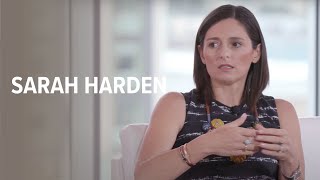
Transcript of a live interview where an interviewer (labeled SARAH HARDEN) speaks with a guest (Speaker B), the CEO of Hello Sunshine. The guest recounts her career from attending business school in Boston through roles at startups, Ascent Media, News Corp/Fox, international postings, and ultimately helping found and lead Hello Sunshine with Reese Witherspoon. The conversation covers the company mission to center women's stories, strategic choices (book club, social-first audience building, film/TV and kids' animation initiatives), leadership philosophy on career moves, and how the team integrates brand, creative work, and commercial strategy.
Chapters
Hi guys. We're nearly there. End of the day on Friday. Almost. You guys still having fun?
Woo hoo.
All right, so I need a really energetic audience for this.
Oh yeah. You guys with me?
All right, I want lots of claps, lots of encouragement. We're tired, I'm tired.
We're T minus three and a half hours to cocktails. Five o', clock, right? That's legit. Five o'. Clock. Oh, well done, girls. Actually, I support that.
Could we get a drink?
I support that. Yeah. This could go in a really different direction than we were all expecting.
All right. My favorite TV show is Graham Norton, Total Ben side note. And they always have drinks, so I feel like it's okay.
It's a very British Isles choice, which I understand.
Well, Sarah, thank you so much for being here. You don't know this, but I've been pretty much stalking every interview that you've done. So I may have very obscure references. That's why you guys need to just go with it. So thank you. I'm so excited that you're here. We are all excited about what you guys at Hollow Sunshine are doing. So you've just had a conversation with Jason Blum and the amazing Amy Emmerich on main stage, which was awesome, by the way.
Thank you.
So this is a little bit more about you and a little bit more about what you've been kind of doing leading up to hello Sunshine and then sort of what you guys are doing right now. So you're from Australia?
I am, I am.
Awesome.
Yeah.
And you're based in LA and we're obviously here in Boston. But this is not your first time here. You went to Harvard Business School, I believe.
I mean, it's kind of. I just went to my 20 year reunion. I actually 22 years ago arrived in Boston with two suitcases. And I always say Boston is like the best place for an Australian to like arrive in the US because our accent like car, car. But I came here 22 years ago on an Australian government scholarship to go to, go to business school. And I have. I told my parents I would come home in two to three years. I wanted to work on my visa. I could work for a couple of years. And I have never lived back in Australia since then. Well, I broke that up.
Maybe don't stress that too much because my parents. Did you like the snow though? In all seriousness, I loved it.
I loved, I loved. I mean, actually Boston's very similar to Melbourne where I grew up, or the big town near where I grew up. I grew up in a smaller town. But yeah, I loved being here and I love the seasons. I mean I kind of missed. I sort of miss it living in LA. I love 300 and something Days of Sunshine in LA. But no, I did. I really. And my experience here was like life changing from a. To come to school here with people from so many incredible backgrounds and like it set me on the course of everything I've done since then and I'm just, I'm incredibly grateful for it.
Amazing. So talk us through Harvard Business School, which is amazing. To CEO of hello Sunshine. How did you get there? What was that journey like?
Well, it's. I mean you. I wouldn't, I mean I laugh. I would never have thought that, that I would be here. But when I look back I was pretty intentional. I really. I was a huge media consumer and passionate about media, but I wasn't a creative person. And so I, but I, when I left business school it was like I wanted to be at sort of the intersection of tech and media. It was the whole dot com boom. I graduated in 99 and, and I actually moved to San Francisco for graduation with a couple of guys from my class and a couple of guys from MIT and we started a company and so that took me to San Francisco in the dot com era. We rode the dot com bubble up and all the way down and I had a series of moves since then and I think I look back on all looks like a plan in retrospect but the through line was really looking at again where entertainment and media was going and getting closer to the consumer every time. And so you know, I went from this startup, Ububu. I ended up going and working in a company called Ascent Media which was a roll up of a bunch of companies and for a CEO, I mean I got this job really weirdly and I loved it. And I worked internationally too and I've always sought that out and you know, I ended up from there. There's a few little things in there but I ended up from there going to Fox in 2006 I guess and that was incredible. And that really put me more. A little more consumer facing. It was in a business development role but it was, you know, I worked on the first business plan for Hulu with that team. I was in a, you know, working. It was like the era of MySpace and start of YouTube and it was an incredible experience and it was really all about creating new growth opportunities using the assets of Fox and News Corp. Very cable focused. And from there a bunch of things happened. I ended up moving to Hong Kong and I worked with News Corp and about managing our growth joint ventures in the region and looking for new growth opportunities mainly in the television business and that was amazing. I worked in sports. We set up a joint venture in the. We invested in a joint venture in the Middle east. We set up a media venture in China. The first sort of private equity Sponsored it was fun. It was so fun and I was ready for a learning curve. It's ironic, I look back now and when I left la I had my three kids in LA and I was like I am not an LA media executive. I'm internationally minded. I'm like I just, I'm just not cut out for that. So it's ironic here I am being never say never LA media executive but and then I got. I came back, I moved back from Hong Kong about six years ago to work for a man, Peter Chernin who I'd had the fortune to work for. I mean not directly I was like you know, 75 layers down but at News Corp. Who I just thought was the most brilliant media executive and I had had the opportunity on Hulu to work with pretty closely with him and private media company he'd left News Corp when I moved to Hong Kong and a private media company investing in the future of media. And when I started talking to him they were looking to acquire Hulu in the summer of 2013 and so I mean one thing led to another. They didn't acquire Hulu but I came back to work with him to really, really in an investment role but to an operating investment role to build next generation media brands under this venture Otter Media. And so when I met Rhys and so we had bought a company called Controlling Stake and a company called Crunchyroll an anime media brand full screen. We'd been an early investor in Gunpowder and Sky Rooster Teeth and I spent a lot of time doing that and we had a few investments where we owned controlling stakes and worked closely with the management teams to build a very entrepreneurially driven and during that time our companies especially roosted in Crunchyroll a bit mostly male leaning comedy gaming, anime. I just thought there was an opportunity to build a women's media brand and we could never find the right asset or the right and then so Reese came in to meet Peter and Jessie, the team at Shannon and then I ended up meeting with her and she had a vision for this company and it we were the so when I first met I was her investor and her only investor and when we met it was like one of those, like, oh my God. Oh my God. Like it was. I mean, she doesn't talk like that. I do. But there was such a. She said she had a vision and it was like, no, this is. There's such an opportunity and here's how we could go about it, here's who we could hire, here's that. And it was just the profile of a company that we had been building and that sort of. It just sometimes these things have a way of working out as they're meant to. And so as we started the company, I was still running Otter. We were in the process of. And I was trying to. We were working to hire a team and build the company and get office space and get the Internet connected and I mean all those things you do when you do a startup. But the company's really an outgrowth of Reese's long history as an actress and producer. So it wasn't really a standing start. And one thing led to another. We ended up in a process to sell Otter around that time. So we had about a year where I was sort of interim CEO and trying to find someone and we ended up, the timing worked out. We sold Otter to WarnerMedia AT&T who are now an investor in hello Sunshine and I stepped in as full time CEO. So for about a year I was kind of doing it undercover. And then I've been, you know, and, and really Reece's partner. And then Reece, we hired incredible executives. Lauren Levy Neustadter, our first exec team member was about two and a bit years ago and it's been heads down.
Sounds incredible company. It really does. That was not that short Harvard to hear. No, it's 20 years.
I'm pretty old.
So you've been busy.
Well, we have.
It sounds so amazing. And one of the things that struck me when I was reading and listening to interviews you've done in the past, prepping for this and listening to you now is just how intentional it comes across that it seems like you've been in your career and I love that. And I don't know if that was on purpose or if it just comes across to me in that way, but could you talk to us a little bit about how you think about finding opportunities and also sometimes just taking that.
Leap of faith, you know, it looks more intentional looking back, but there were some things. And I got some good early advice, I think too. And I think the couple of things and I've gotten better at seeing this as I got lucky early on. And I will say in an era around Especially building a company that's led by women and authored by women. Although it is very, very intersectional authorship and it includes men at every level in our company. I was really lucky to work with some incredible, incredible and have not just mentorship but real sponsorship from men at different steps in my career. And I think the two things I've looked at, one is a couple of bits of advice I got is like in chaos there's often opportunity. So you know, I've always thought about like going in where there was something clear that I knew I could do that you had a running start. And so I'll come back to the leap of faith bit. But you have to have enough of the job that you can get your feet under you and feel like you can be a little bit successful from the start but not be scared of a lot of chaos. You know, when I took the Ascent Media role, I was looking for a media role. I was interviewing places and I ended up with this great meeting this great executive, Bill Fitzgerald, who was at Liberty Media in Denver. And I didn't really want to live in Denver and there wasn't a job there. But they were like, we've rolled up all these companies, there's a new CEO. Go in and see what you can do. I mean literally it was like, like that and I was like, well I'll do business planning and stuff. And I went in and actually the CEO got fired six weeks after I went there and I was sort of like a mid level. They didn't know what to do with me. And then I quickly worked out, I found one that they were doing some big bid for a bit of business and I was like, I can help on that. And honestly it was really good advice. So there's, I've always. And then the piece that's coupled with that is really important is just thinking as much about who you're going to work for as the work you're going to do. And so I've been very thoughtful especially in the last 15 years of I'm like, we'll work out the role. And. And I got very lucky early on because you don't get, you don't have that right. You're trying to find a job like, you know, and I needed a job for a visa and I mean it was so not like you have that but you can within the role then gravitate to those people and work with those people that you are like, what can I learn from? And I'm still. And then I always chase learning. I moved to Hong Kong, because I thought my learning had plateaued a little bit on the lot. And I also, you know, I worked, I reported into Jan Koppen, who was James Murder. It was Yarn and James. And I just thought I had a lot to learn from them. Very international executives and very entrepreneurial. And so I think it's those things. And then the leap of faith part, I do have a personal philosophy around finding jobs and I talk about this a lot when I'm hiring people, which is, I think like 50 or 60% of any job should feel like, you walk in day one, you're like, nailed it. You're set up for success. You, you can get some early wins, you feel competent. You know, 20, 30% is like, ooh, that'll be interesting. I haven't done it that way. New team, new industry, slight stretching my skills. And then 10 to 20% should at least, should scare the hell out of you. It really should. That you wake the night before going, they're going to find out I'm a fraud and I don't know what I'm doing. And just the healthy amount of that, not a debilitating amount of that.
Not the imposter syndrome, not the imposter.
Syndrome amount of that. Just like this side of imposter syndrome syndrome. But, but I do think in a growth oriented role and so I've tried to, I think if you feel like you can nail a job walking in 100%, like, I don't think, I think it's just getting that right. And so the leap of faith, I think if it's 100% leap of faith, that can be really, really risky. And the leaps of faith for me are like, I'm always shocked by how little diligence some people do on who they're going to go work for. Oh, my goodness. Like, I have people who've called me after I took this job. I'm like, I wish you'd call me. Like, yeah, I wish you'd call me. And did you talk to anyone about what this person's like to work for? Did you look on LinkedIn who's ever worked for them before and give them a call? Because you have to do your diligence. I think doing more diligence on who you work for, don't take leaps of faith on that. But any job move is a lot leap of faith. And I think. But if you make the leap of faith, make it for the ambiguity and for the opportunity and for the growth and because it might be a bit chaotic as long as you're in an environment where, you know, where it's growing and you're not working for people who don't deserve you to be there.
Amazing. I love that. So you had an incredible career. It feels to me looking at it, you could kind of do a million things. And hello Sunshine is such a positive brand. And it's amazing. And I'm not even going to ask you in 2019 why it's important to have women at the center of their stories, but why is that important for you personally? Because it's such a huge part of what seems to come across in your brand.
You know what's funny? I feel like I've said it to. I mean, Reese and I have talked about this a lot when we first started working together. I do sort of feel like everything I've done in my career has brought me to this moment and to this time. And I look at everything Reece has done with such integrity and intention. What it is my moment. And it was the feeling when we started the company and we started the company before the me too in times up movement. And I think we started a part of it. It's born of equal. I'm frustrated all the time when I see opportunities and. And it's too hard to get to them. And I think this company was in part borne by frustration. So there's sort of the offense and the defense of for Reese as an actor going, why am I not being offered better parts? Women, we fuel the viewership economy, whether it's book buying or moviegoing. And same with people of color. Like, why does that not match the way content is authored? It's nuts. And so we look at it like this is crazy. And in that you see incredible opportunity. And I do think there's that feeling. And I think the thing I was so most deeply impressed with when I first met Reese was everything. When she talked about the vision for the company was not about her. It was born of frustration she felt. But it was all about how do we change this in a way that creates more opportunity for worthy storytellers? And that just felt. And I can't say it other than it just. It felt like there was nothing else I wanted to do. And then I think the feeling of like the skill sets and really creating the condition in the company, the culture, the people that, you know, we talk about, we're mission driven. And nothing is more important important in our mission. Not a single individual, not Reese, not me, not anyone in our company. We are all aligned around that. And so the fun part has been building that company and bringing others into that. And then as we do more and get more traction, bringing writers and creators and directors and it feels really creative from a business standpoint too. And I think that we're in a chaotic time in the media business with a ton of opportunity. And so I think it was both to me, the left brain and the right brain of the joy of like working and creating a company, trying to build a company that I would have also have loved to have worked in for the last. You know, I've never worked for a female boss. I was incredibly lucky, which is shocking. Incredibly. But it's not. When you look at the stats, it should be shocking. I know, but. But you know what? I couldn't have gotten here without incredible male sponsorship either. And I'm, I'm sorry. Grateful for that. And I've also had some really shitty experiences. But the motivation of saying, oh my God, I can take all of that learning and say, be able to sit and with our team and being really intentional about what type of company we create and recognizing for us to be successful, it's not about feeling good about, it's like integral to our success. Great talent, great people, great actors, great storytellers. They all have a choice of where they want to go. Great talent, workforce talent, have a choice of where they want to go. And also as a startup, I can't pay top salaries. I can't pay. I mean, we try and be, we are very competitive, but you have to have a. We can't be successful unless we have the right currencies for that. And so it's a competitive weapon to have and a recognition that actually how you do what you do in a company is as important as what you do. And so the opportunity to work with Reese and she is a one of a kind. I mean, she is truly a one of a kind. And to learn from her and then to bring in other people, like, it's just so fun.
Good.
And you know, and obviously our mission speaks for itself and we're very committed to it.
So I love that you brought up Reese Witherspoon because we couldn't talk about Hallow Sunshine without talking about her. So Reese posted a lovely Instagram picture of both of you recently.
I was gonna do that. I was like.
And I'm gonna read just a little bit of the caption and she said. This is Sarah Hardin, CEO of hello Sunshine. Sarah loves to discuss a three year projected business plan with an iced Americano at 10am on Wednesdays while we listen to Spotify playlists of 90s songs. So I've got three questions from that.
Yeah.
Number one, what's your favorite 90s song?
I don't know. 90s. I'm. Look, I am still like, I'm a big Madonna fan. I'm like a, I have a 15 year old daughter. So she, it's. I'm having that experience of driving. She's got really good taste in music but being in driving in the car with her and, and her like it's like my retro music of. My retro music of that. So I'm like a, I'm a big. There's a lot of Australian artists. There's an awesome artist, Tina Arena. Kylie.
Kylie Minogue. I love.
Yeah.
Really? Is that where you were going?
So I like all my power. The power women of the 90s and 2000s and today as current as well. Yeah.
So you talked a little bit about what it's like to work with Reese. How involved is she? Like how do you guys collaborate?
Oh, she's, I mean she's like the active hands on founder partner. I keep saying Reese, you should be the co CEO. She's, she's also a full time actress right now and so it sort of depends on whether she's shooting or not. But Lauren, who runs our film and television business is with Reese on set every day. We're shooting little fires everywhere right now. So on shoot days I'll catch her in hair and makeup and we'll be texting throughout the day and we might be on the phone at night when she's on her way home. Unless she wraps at 1am and then I'm like I'll catch you tomorrow. And then she's in the office with. When she's not there, she has a. I mean she sets the tone for the company at every level creatively and you know, again, this comes back to audiences. No authenticity when they see it. She really picks the books. I do not know how she reads all those books. We do have a team. We have a bookworm that allows us to consider more material for Reese's book club. But she's constantly reading. She's sending me like literally at Social Team she's sending them Instagrams and then I don't know. I honestly she is someone. I do not know where she, where she does it all but she's engaged at every, every level of the company and so you know, while she is continuing to be the incredible actress and producer on all of our stuff, I'm sort of making the trains run on time day to day. But it's, it's between all of our exec teams, you know, there's a team of five or six of us, we're intersecting and interacting, you know, all day long. Cool.
So three year projected business plan. Sounds exciting.
I was chuckling when I saw that because I was starting to run her through. We are doing some thinking through the next few years and we have like when we started the company, we have been intentional about how we wanted to build it. When you do a startup and you've got limited capital, your choice making is everything. It's not what you choose to do, it's as much what you choose not to do. And we, you know, I wish we could do more but you know, 99, we say no to 98% of that because we're about doing few things well and that's our position and what, you know, and we've got to sort of earn our way into, we've got to earn our way into that. And so, you know, I do think we've had to be very intentional about that. And so that as we've grown and scaled the company, part of my job is sort of set the conditions, hire the team, empower them that they can author the parts of the business that drive us forward as well. And so that frees me up to think, you know, a lot of the things we're doing now and next year were things that we've set up and thought about last year. And so we're doing a lot of things. We just announced a kids, we're building a kids in animation business which I'm super committed to and we've been thinking about that for 14 or 15 months. We've hired an incredible executive, Claire Curley, to do that. So we're taking out our first kids in animated projects in this next quarter. So I'm think we're just, you know, we're thinking through what's coming in the sort of what do we need to be doing now and what train tracks do we need to be laying. And as we look two and three years out and also trying to see where the media business is going as well.
So I love that laughing.
She was like, really? This morning when we sat there having our coffee and I guess our social editor took that shot, I'm like, yes, I need to talk to you about this.
We will never a better time. So I love all this intentionality. It's amazing. And I think we're getting like, okay, there's very intentional projects that you guys are picking and the things that you're putting out in the world and the, the content that you're producing, how does that translate for your team internally? Like you touched a little bit there on you creating conditions for them.
Yeah, I think, look, there's a tension around the brand and then, you know, the parts of our company you kind of think of it, you think of like one of Reese's motivations at the company was like, I want to be in a daily conversation with the audience. Like if I have great TV shows, they come out, you know, once a year, movies once a year. And so I really think, you know, our film and tv, big events. And Lauren has like pushed this part of the business forward so quickly. It's like, I would say one a year, but we have, you know, we have a lot more. We have a lot more. And that's really, you know, Reese and Lauren have just done a phenomenal job in building that. And so you look at those events, you look at our book club, we're doing monthly picks, we've got a podcast, we're doing Audible originals, you know, two or three of those a year down to the other end. You look at our daily socials, so Instagram, Twitter, Facebook, we're in a daily conversation. Our YouTube, we're doing experimenting with short form ideas. So there's intentionality about the brand, but you also have to have room to experiment and have a flywheel and bring your brand to life in a daily way. And those things are all linked. So we've built the capabilities, we've built the capability of the social team, we've got the capability to do great short form video, we've built those capabilities, a few things really well in each of those. And what you're seeing over the next few years is the integration of those so that when we are making a TV show, our short form team is on set shooting behind the scenes, shooting those things, because it's all part of the same conversation. And in the case where we make a TV show from a book club pic that we picked as a book club 18 months ago, we've been in that conversation anyway. And so it is, I think if you look at building a direct to consumer media brand, which was part of our strategy, where we have embedded a premium film and TV company where part of us is creating shows that we are distributing through other people's platforms, because these are big premium events and you know, and theatrical as well, we're still in that conversation. And so we're using our direct to consumer channels right now, which is, you know, on Social, where we are speaking to audiences. So we have a newsletter, you know, a small website. Yeah, that newsletter is like, it's been great. And you know, we just, for us, we're just making brand deposits with that audience. And I think what you'll see from us as we grow, we're still a young company but you'll see that integration, that integration tighten. And I think the other thing we've been looking to do as we build out those is just really get to work, work with a very diverse range of talent. We want both, you know, you know, both in front of the camera, behind the camera, you know, whether that's, you know, we have Joanna and Clea from the home edit, who we just love. They're entrepreneurs. You know, we. Reese spotted them on Instagram right at the same time we, you know, it was Molly Sims had told us. They organized Molly's house and she's like, I've got this incredible show. And she was working with them and we, we all came together and we did a master mess, a sort of premium 11 minute short film which we did on our hello Sunshine on Demand channel on directv. And we just announced that we're now shooting a new show with them for Netflix. And we've been working with Joanna and Clia now for a couple of years. Their book's amazing. They're a great example of in a category that women care about how I'm organising, but they're also entrepreneurs themselves and they do a great job. If you don't follow them on Insta Story, like talking about the ups and downs of running a business and being parents and so, you know, it's like building those relationships with different talent and finding ways to work with them across different parts of our company.
So how do you balance that? You know, I love that you guys are building an audience before you've been creating the content. You guys have 1.2 million million followers on book club on Instagram. How do you balance the sort of business aspect of that going, okay, there's got to be a commercial point to this with creative freedom.
Yeah. I think you've got to understand where you're going to extract the value in the company. And so for us, book club, it's a brand deposit. We are picking books every month, we're celebrating them is so in line with our mission because we are trying to spotlight an author that we believe they spot and nothing makes us more excited. Good. I it makes us the New York Times bestsellers. It's not generating revenue, but we are making that we are driving that author's royalties. We're helping them sell their next book. We love it. We love it when someone else makes the film and TV show from those titles. Our book club editorial selection process is completely separate to film and television. And so we just pick the best book club and we really look at what we think our community will love. And the community is built around what books Reese loves. And so we pick those books. So for us, I think we're really building out that membership proposition in the next year. And you'll see some things from us early next year around that. But it's just been clear about where you take the value in that. It doesn't matter to me to get an affiliate fee from Amazon about selling those books as a company. If we tent poll those books and 13 of our, I think 20 of our 27 picks have gone to the New York Times bestseller list and the last 13 have. And we've got some huge, huge books that have come to the market. And, you know, our research, we're bringing women back to reading. In certain ways, we hope we're helping grow the market. But for us, you know, ultimately, if it means that and building relationships with authors where when we do make film and TV shows, they trust us. And that's really on the back of Reese with Big Little Lies and Gone Girl and Wild. She's got a long history of doing that for us. If it means that we see one manuscript like earlier than others, or that when we're in a competitive situation, which we often are, to acquire the rights to a book, if they know, they see what we're doing in the ecosystem, that genuine support and love and it's on mission, it helps us. And so I think you just have to be really clear about why you're doing and what your overall economic model is. And so we manage it in a way and then very clear about putting what you put resources to, which is ultimately our exec team and Reese's decisions about where to put our resources and sequencing and timing. And so we try and be thoughtful about that. We understand the economics of our business. Every one of our exec teams does. I'm very transparent about the economics of our business to everyone in the company and where and how we make money and where we're. How we're building. We're making brand deposits and building love. And we need both of those long term.
Amazing.
Yeah.
So final question.
Yeah.
We ask everybody this.
Yes.
What does inbound mean to you?
Well, I honestly, I feel it's the life we're all living right, which is everything is coming at us all the time. Unhelpful advice, helpful advice, data. I mean, it is great. Articles, media, everything is coming at us. And I think as you look at that and as you're trying to carve, whether that's carve a path through the world personally or in business, that's just a very personal choice. And so as you look at it all coming in, it's like, what do you take in for yourself? What matters to you? What advice are you going to hold with what weight? What course are you going to set for yourself? And kind of the only one who can make those decisions is you, right? And I think it's both those things and that to me, in a world that is incredibly, incredibly noisy, and as you go through that, and I think as you go through your career, as careers and life, it's learning also to trust, as you integrate that within yourself and trust and say, what's my path forward? What does this mean to me? What am I going to let go of and what am I going to hold on to? And like, that's enough.
I think that's a perfect place to end it. Thank you so much for being here. Thank you.
Audience cocktail drinkers over there. I see you.
More from Patrick



A NEW BREED OF PARTNER: The Partnership Ecosystem Model Journey of Patrick Biddiscombe, Part 1








Customer Success Workspace: Never Lose Sight Of What Matters Most | HubSpot Spotlight