SEO Is Dead… 5 Ways To Save Your Business In 2024
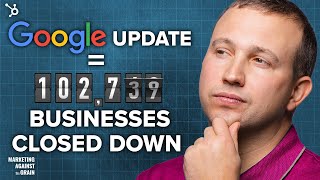
Kieran Flanagan and Kip Bodnar break down why Google's February and March 2024 algorithm updates crushed organic traffic for publishers and niche sites. They recommend updating ranking pages, investing in video and creator partnerships, ramping up sales efforts, and building audience before launch, framing this as a permanent shift toward creators and social platforms rather than a temporary dip.
Questions this video answers
April 11, 2024
February 2024 and March 2024 (March update referenced around March 8)
Episode 216
Chapters
Is Google search traffic in decline? That is the topic of today's show. We go through posts of businesses shutting down because of Google's latest update. We go through what we think are some potential replacements for search traffic. If you've been affected and if you're a company reliant on Google search today, just what should you do? We give you the answers. That's on today's marketing, against the grain. I'm Kieran Flanagan here as always with my co host, Kip Bodnar. Let's get into today's show.
On today's show, we are breaking down. What the hell is happening in SEO? Are you noticing your traffic from Google starting to go down? We're going to tell you why that's happening and what to do about it. There have been two updates. We're going to talk about those. I'm going to share just like the saddest Reddit page on the Internet as part of this discussion. And then we're going to talk about how you should think about evolving and what you should think about doing going forward. All right, so Kieran, there are two Google algorithm updates. The first one was in February and it was really to start fighting AI spam instead of link spam because Google was concerned that people are going to go out, create a lot of informational content with these large language models, build up hundreds and thousands of pages to try to attract traffic. Right. Which by the way is not, it was not a terrible strategy. But what's happened if you are have like blog articles and website pages that are basically basic long tail informational queries, which is just like a long like how to advice kind of thing. You're getting hit. Your ranking for those keywords went down in February. We have a lot of those pages at HubSpot. We, we saw our rankings go down. I've talked to everybody from big brands to media companies and everyone in between. They've all seen the same thing. It is universal and across the board.
Did you see a slight recovery in that afterwards? Like February was like a decline and then it didn't come back up to where it was, but it did recover a little bit. That's what I've heard a bunch of people say is they saw like a stark decline and then a little bit.
Of recovery, not a ton of recovery. Going forward we can talk about the recovery. The recovery is more from updating and improving articles that were not hit as hard, which we could talk about, but that it was a pretty hard hit. And then we had a second update in March and the March update, basically instead of deranking those informational sites more, didn't do that. But what it did is increased the ranking of community driven sites like Reddit and Quora, things that are very, very hard to replicate with large language models and artificial intelligence. And so while your informational article might have been amazing, if there's a really great Reddit thread on that, your informational article is moving down the search rankings and subsequently we know every place you move down the search rankings, less clicks, less traffic coming back to your website. So those two updates combined have sent the SEO industry and search is a channel for marketers really into kind of like a death spiral. Like I have seen. I haven't seen this much like sadness and despair in marketing in quite a while. Before we get back to today's show, here's a quick word from HubSpot. If you're a marketer, one thing I know for sure is you love data. And boy do we have data for you. The 2024 State of Marketing port is chock full of data and insights around the current trends that are shaping the marketing industry today. Things like art, artificial intelligence, you know, I love AI tools, personalization, influencer marketing, all of the topics that are key to getting a competitive advantage this year. It's going to make sure you're not stuck in old strategies and old tactics. So click that link in the description and go get your free copy of the 2024 State of Marketing report today. Now let's get back to today's show. Kieran I present to you my nomination for the saddest marketing page on the Internet. And five days ago in Reddit a Redditor started Is Google killing the SEO? Is Google killing the SEO industry? This is an R slash SEO the SEO Reddit and I've been in the industry for over a decade. I've always had long term high value clients for content writing. Recently 80% of my clients have either terminated the contract or revised it down significantly. And then you go on to read and it is just like comment after comment after about people close having to close their business, right? It's like oh, I have this media site. It's, it's I have to close. I have this niche I had to close. And you know, somebody even called out that the tech niche has been in decline since the Panda and Penguin updates which we we just talked about. But this is just you have an SEO person saying time to diversify into other niches. To be just an SEO guy is perhaps not broad enough.
Agreed there's another couple of things going on within this in that. So the point that you've pointed, the thing that you pointed out was Google are prioritizing large aggregators now. It's like community, community aggregators, but that, that those sites are doing much better than these kind of standalone content businesses. I've also seen a lot of people who, whose keywords have remained pretty static. Like they have not declined in ranking, but they have declined in traffic. And that's just a continuation of what we see Google wanting to do, which is if you go all the way back to the featured snippet box, that was really Google's first play on an AI chat like experience where they would.
Explain that more, explain what the snippet is and why Google wanted to do it.
So the featured snippet is people will remember when Google first launched this, it is the knowledge box on the search page. And what Google does is basically they try to kick this snippet most relevant to your search from a webpage and construct an answer on the first page of Google within this kind of knowledge box. Right. And I remember way back when we were doing this in HubSpot and we were looking to see how we could get into those feature snippets and starting to see we could actually get traffic from them. And it was like real hit or miss in terms of understanding how to get your content featured in this little box on the first page of Google. Now if you actually think about what Google were doing back then, they were like, well, there's some queries that a user has that probably can just be answered by the kind of AI engine because Google's search is like an AI engine, it's an AI algorithm and we don't need them to visit the publisher. So that was really the first like, you know, shot thrown by Google against publishers and that like, we will, we will take your content and we will take, we will determine what we think is the best part of that content and we'll just show it to the user on our site and they don't need to visit your site. And so there's a bunch of informational queries that could be answered on the first page of Google and you no longer needed to go to the publisher site even though they were using the publisher's content. Now that is a better user experience. Right? Like, and so this is Google's first step towards what we see happening now today, across all these AI chat experiences that you and I have talked about for over a year now. And that AI chat is a better experience because you can just get your answer there and then without having to throw through all these different links. Now there are times when it probably makes sense. You're doing like some thorough research. You want a bunch of different viewpoints and all of these different things. And you might have to go research a bunch of sites, but there's a lot of queries that you can just get the answer for and be on your way. And so that was the first time we started to see keywords start to decline in traffic. The study that we did way back when in HubSpot was if you had keywords appear on the first page along with a knowledge box or you know, a feature snippet, you actually would see a decline in organic traffic. And this is a continuation of that which I think Google is starting to see the future as a world where blue links are not the core way that people retrieve information and they're giving the users what they want up front and not needing to go to the publisher site. Now the thing that this breaks is this like incredible relationship that has existed in the Internet to date which has really helped small businesses, medium sized businesses, which is we will create really valuable content. I know there's a whole industry that creates very unvaluable content and tries and gets ranked in Google. But like we will create valuable content in return for you showing us showing the user that content on your page. Right. There's an equal exchange of value there. And what's really, what's going to be very like interesting to see how it plays out is this kind of breaks that relationship because why does a publisher create content if Google take that content to serve their user but no way serves the actual publisher.
I would pause it to you and this might sound hyperbolic, but it's not that what is happening in search and it's not just Google, it's the search industry overall. But Google just happens to be the far and wide player here is it is a form of modern day torture for marketers. And the reason for that is that it's not this like quick change and you like have to change overnight. It's like cool, let me just like break your toe today and like next month we'll like, we'll break your pinky and like all these little changes and little terrible things like will then add up. And the danger of that is if you're a marketer is you're like oh, okay, well it's just a little bit this month. That's okay. It's just a little bit this next month, that's okay. And you wake up in 12 to 24 months and it's all gone. Right. It's the old metaphor of like, if you put a frog in a pot of cold water and slowly turn up the heat, it'll boil because it won't know it's too hot to need to jump out. Right. And that's what's happening with search. It's not this, like, big boiling pot of water. It's like slowly getting turned up every month, every quarter. Right. And that is the big risk. And if you were listening to the show, I know that you were a progressive, pioneering type of marketer. And what I'm going to tell you is you have to take more aggressive changes in the future to diversify from organic search, because this is going to continue to happen. This is going to be like month after month. Like, we could probably do a monthly show on search. Kieran. And the changes in search. And the reason that it's going to happen and the reason behind all this, especially with Google, is that Google's core AdWord business is $250 billion. And they can't just do a hard pivot and completely change organic search. So what they're doing is they're slowly changing the search experience in a way to try to not kill the ads AdWords business.
Right. The thing I would say that is interesting about this update, and this is an example of a long list of things I have seen on X and Twitter, people posting their traffic screenshots, is that it's like a steady decline. And then that March 8th, like, we've just seen whole entire sites go away to the ground. Right. Like, usually you're right in that the Google updates are death by a thousand cuts. And, you know, there's this update to prioritize this. There's this update prior to. And smart marketers, smart SEO people kind of like navigate around those changes and there's. Sometimes you can't bring back the traffic, but you kind of like reach a steady state. But this one seems to have just annihilated. Like, that's the sites that. That's what you're a threat is people in that call that, which is like, I'm leaving the SEO industry.
Yeah. Like, I'm literally shutting down my site.
Or I'm leaving my site, shutting down my agency. All of our clients are kind of leaving us because their sites have tanked. So this one does seem, like, different in that it's much more live or die. Like, you know, the sites that have really been affected. It's not even. They reach a steady state. They're kind of just going out of business.
Well, first of all, don't think I didn't miss that Taylor Swift reference with Death by a Thousand.
You go, I'm actually a secret fan. No, no. All her music never listen to a single track. I should.
We'll change that for you, Karen. Well, what's interesting and one of the nuance as to why you're seeing some sites kind of completely go out of business and some sites take a smaller hit of traffic. And like, if you're watching today's show, you're probably like, well, why hasn't this just happened to everybody? And why, like, why is it kind of uneven? Because one of the things that Google is doing as it's protecting its AdWords business is that it's rolling out all these changes on low monetization keywords. So if you're a business and you have all of your product keywords, what you'll see is the traffic to those product keywords is likely unchanged. Maybe it's up, maybe it's down, just depending on how good your team is and where you've been focusing there. But those product keywords and what's in those, what are often called transactional keywords are not, have not been hit in the same way as these informational keywords. I think that's a very important distinction to make to everybody. Right?
Yeah. And the other interesting point about what's happening is, and maybe you can think of other examples, Google is like maybe the last of the open kind of, what's the right word? But like the open platforms where you can just go use it, you can go and click on something and go to another site. Like all these kind of other platforms like Meta X LinkedIn, all these other platforms don't want you leaving their website and they actually penalize you for promoting things on there that take people away from that platform. Whereas Google's entire job has always been to get you off the site. Like there's all, there's like metrics in there that actually help content rank, which is if you can get someone off the site, off Google, onto your page and you keep them there, you'll actually rank higher. Right. You don't have a high bounce rate because you create a value. People have stuck around and consumed that knowledge. So that must be a good result for that, that keyword. But Google was like the last kind of, hey, we have this kind of relationship with you all you give us things, we get people onto your site, right? Very, very much. One of the last people to do that. I think we might be going towards Google much more as a closed entity like those other platforms where they're going to try to get you on the site, they're going to try to like give you the information that you need and then like be able to do other things with you. And I wonder, have they looked at the likes of OpenAI and these other websites which have just basically said, not now. The hell would all this kind of give us your content and we'll give you traffic in exchange. We'll take your content and we'll just use it to make ourselves, you know, enrich ourselves. And maybe Google are like, maybe that's a better. That's a better model, right? We can just like take all your content and enrich ourselves. But again, I think the, the content that survives. Like you can imagine a world where there's only two types of web web. Like there's these kind of large aggregator platforms and then there's closed walled gardens or there's. And basically every individual website needs to be closed off to crawlers. Because if Google search doesn't exist, what is the benefit and actually allowing anyone to crawl your content there. There's no benefit in allowing anyone to call your content. So you might as well just create content for your own community or your own users or whatever it may be and not allow anyone else to provide it. And that does completely turn the Internet on its head.
I don't know. I don't know. Let's. Let's have a little debate for a second. I don't know if that's going to actually happen though. Like, are you going to not. Are you going to. Let's say you and I were running Acme Inc. And we had some business and we were out there. Would we block our content from all these LLMs to not show up as recommendations and other things in these LLMs? I don't think we would. I think that like symbiosis and the dependence on distribution is so great that even if it changed, people are still going to kind of get on board.
You would do it because you're like, kind of like a FOMO reason, because I want to appear in these alums if I can, but I don't. I think the, I guess I think the head, like the head and the long tail, right? There's always, there's always a small collection of companies who get most of the traction or most of the visibility across these sites. Even Google, right. There's a bunch of large aggregators and sites that dominate all the serps for their market. I think the, and that we call that the head and the long tail is like everyone else who gets some amount of traffic, the head in LLMs is going to be much smaller, much harder. So the, so the, the problem is if you're in that long tail, I guess you wouldn't block them to LLMs. But I wonder how much benefit you're going to get from the LLM in the first place. But you are right, you. But, but I think in the, in the Google like there's companies that have been successful building for the long tail, right. Building for these kind of very small amount of traffic searches, but they actually convert really highly and we create content just for those. Whereas it's harder to see why you would do those types of things when the LLM is going to be so much more different. Like you're just not going to search that way. You're not going to query that way. I feel it does. I can imagine a world without Google search and I don't think we're anywhere near that. I think we're like declining in traffic. We're not saying that Google search.
Yeah, yeah.
We're not billions of searches a day.
Yeah, but it does. You can see that we're on a slow march. Organic search not being the most dominant marketing channel or at least dominant marketing channel.
And I think it does change like if you're a content publisher, if you're a company. Right, let's go back to HubSpot. Right. Let's say HubSpot we started today and we, we are starting actually three year time. Two to three years time. And Google's traffic was the amount of search traffic you could get from Google was a half of what you could get today. You would probably have set the content team up differently. Like a smaller amount of time would have been on the blog and more amount of time would have been on video and audio. Right. So it does change this. I think it changes how you decide to build your content engine.
Let's, let's, let's talk about this for a little bit because I imagine if folks have been 15, 20 minutes in with us, they're probably like all right, jerks. Like what the hell do I actually do? Why are you stop making me depressing here?
Because I actually also am curious about what to do.
Thanks man.
I think we should start with this because I've been asked this time and time again by everyone in my network. What are you going to do about the Google thing, the search, what are you thinking about replacing it with? What have you heard other people doing? We should start with there is no replacement, as in a like for like with Google search. Google search is the best single best marketing channel we as marketers have had since the birth of the Internet because nothing scales like it, nothing is as predictable as it, and nothing converts like it from an organic channel. Right. I know paid can convert really well, but you have to, you're paying for that traffic, so you're optimizing it to certain things. And I think organic gives you the benefits of paid. But what I put by using your brains, not wallet. Right. Not that paid people, paid marketers are incredibly smart, incredibly intelligent. But you can compete as a small company with a little bit of money but a lot of brains and get a similar type of experience as paid where it's like scalable and predictable. Now, unless you have something that you're going to like, put out there as maybe a replacement. I haven't thought of a like for like replacement, but I'm not saying that there's not like things that you can do as search traffic potentially declines.
Yeah. So let's, let's talk about it. I think the answer is different, depending on the situation of the company. And so I want to kind of walk through some different situations and maybe give advice and hear your perspective on each of these. So let's first start at the start from the bottom. And now we're here with our founders and startups and I think, Kieran, we are entering an era where if you are considering starting a company, you need to be a creator in that market for 6 to 18 months prior to starting that company. This is like a very controversial take, I think, but it used to be, oh, cool, I'm gonna start this business and kind of in parallel, I'm gonna build this product. I'm gonna have myself or my co founders gonna start getting some friends and family type of customers. And I'm going to have one person, probably some freelancers, start creating some content and start getting some traffic and traction to my website. That is going to be harder and harder every month from here on out. The real advantage is going to be, hey, I am a creator. I have built a following with some type of media stack, YouTube, newsletters, podcasts, what have you. And I have some real authority and I have a, I have a sight line to grow this audience even more. But I have like some critical mass of audience. And a critical mass of audience, I would say is tens of Thousands of people that I can go and promote this new company to. I think if you're a founder and you are not doing that kind of creator led playbook that your then your product has to be so highly differentiated that it can almost distribute itself in the early days. Do you. So let's so, so give me your feedback for that. That's kind of the early stage startup small business just getting started. What do you think?
Okay. So seven months ago, Kieran Flanagan on LinkedIn where he's, he's, he's hot on LinkedIn. He's doing some cool things over there. Seven months ago, you know post, I did a post. You and I have talked about this. We talked about it at Invent back in September. B2B is going to have its creator moment. I think B2B is having its creator moment for that reason. Right. In that when I said that I had some comments back recently when I talked about this which is. What do you mean like marketing channels favor creators? Well, let's look at the channels that have been the kind of most foundational to most digital strategies which is like Google search and paid. Right. As in if you truly not Fortune 500 doing large enterprise deals. We can talk about that as an aside but I'm talking about but companies who really need to scale quantity of customers. Right. They're the two most scalable channels. Well paid is has become so well optimized by the platforms themselves that it is hard to compete away on anything else other than budget. Now there are some incredible paid marketers who you know the top 5% are still the top 5%. It can get you a.
But they're getting you marginal improvement. Not exponential improvement.
Yeah, not exponential.
Right like that. That's what I want to set up when it comes to of the world of paid marketing today.
Now Google search the best people get you exponential returns, right?
Correct.
Now those two things are being I think being commoditized away. The channels that are starting to become much more popular and where people spend much more of their time and I before we bought the Hustle we actually did a survey of the husband customer base to look to see where people were consuming content. It's like podcasts, like TikTok, like Instagram, like YouTube. Now all these channels that are growing have two, two things that are unique in terms of how we think about marketing in that they cause for the most part indirect conversions of customers. For B2B B2C it's much more convert like much more conversion orientated. You can sell things. I think TikTok's e comm is like catching up to Shopify. But for B2B, it's much more indirect, that you can influence the sale, but you can actually tie that sale all the way back to someone doing something on that platform. And the second one is they favor personalities, right? They don't. Brands going up there will. Our brand ethos is this and our product is this. They favor actual personalities. And if they are the channels that are growing and at the same time as the channels that we've grown to from date and digital for B2B are starting to be commoditized, then that is the reason I think that B2B creators become much more a core part of how we do marketing. And for the most part, it would help a founder. It would help a founder in two ways. Right. I actually talked to a founder when I was doing a bunch of investment calls for C stage companies and one founder really stood out in AI that they were already an influencer, they already had a huge audience and they've gone on to do really, really well. And they were a newsletter creator from the start and then they kind of pivoted into software. And I think that's a pretty good way because you actually learn a ton about your customer. What better way to learn about your customer? Serve them through content. But I truly believe in this. I actually just made an investment in a company who's going to help B2B companies do this much easier because I believe it's going to be probably like what, like 20% of all paid advertising budgets go to creators over the next couple years. And that is a sizable.
I'll take the over. I'll take the over.
Yeah, like 30.
I think that's the right point. And the right point for everybody to understand is that in the first era of the Internet, brands could come out, publish directly and tell people what to think. Now we're flooded with brands doing that. So brands have. Have much lower resonance. Right Then we're about to get flooded with AI information, AI content that's going to make that even harder to decipher. So what people are going to trust is other people. And you are going to see creators rise to a level that might seem silly today. Right? Like it's, it's not going like 1x from where it is today. It's going to go 10 to 100x from where it is today. And the point I would press upon you, it's like, it's one thing to like consume all this content and listen to what People tell you to do, it's a whole different thing to watch how they actually spend their time. And Kieran, we are recording episode 216 of the podcast right now. Episode 216. We could have done anything else with that. Probably thousands of hours that it spent us to record 216 episodes. We did this and we did this because we believe it is critical to the next 10 to 15 years of our lives in our career. Right? Full stop. Like that is why we're doing it. We're doing it because it's important. We do not do things that are not important that do not matter.
I think what actually happens is there's a loop that gets created here, right? And so what happens is if we actually hit my number 20% or hit your number 30%, then there's much more money going to people who want to create niche newsletters, niche podcasts to serve certain markets within B2B that may not, may not make sense today because they can't make that money. But when there's actually more money to spend on creators and B2B it actually gives them more reasons to create that content which actually pulls more creator what pulls more people into that space. I know within my own network I've seen an explosion in people who used to have C suite roles, like exec roles start to create newsletters. Podcasts like want to get into creating content for their space. And I think that's just going to become more and more common as you start to see more of these kind of marketing budgets go from not pivot completely from paid marketing but actually have a core part of it go to these kind of influencers, creators for B2B.
Well, let's walk through a little exercise Kieran, to kind of demonstrate that. Kieran, do you think it's possible in the Next, call it 24 months that with all the AI disruption, the change to Google search, that Google could see some slight decline in search markets market share. Do you think that's possible?
So I think that it's. It's possible. I think it's percentage points. It's possible. The reason I do, you know, the reason I'm hesitating is because the AI chats don't get Canada as a search engine. And so I wonder if overall search, the number of searches I think might decline in traditional search engines but Google maintain its market share. But actually the thing I'm paying attention to is number of searches done each and every day by humans because they, because what I expect to see over time is to see Those things get cannibalized by the AI chats. And so the number of, like, searches in traditional engines go down, but Google probably maintain their market share.
So you would say if both searches potentially might go down, and you're saying some of those searches might be done by AI, which you can't monetize from a traditional advertising model. Right. You following me here? And so do you think it's possible in the realm of possibility that Google could maybe lose like, 5% of its advertising business?
Oh, yeah. Oh, 100%.
Okay.
Very possible. I think they know that as well.
So if Google lost 5% of its advertising business, that'd be 12 and a half billion dollars that has to be spent on marketing still. Right. Those are still companies out there who have to do marketing. I would positute that the majority of that's going to the creator.
Oh, I like that. Actually.
I like that. So if you, if you want to think about the future scale of that creator market, it's like, oh, is it possible between Google and Meta and other channels that like, $20 billion goes to the creator market in the next two to three years?
Very possible. Very possible.
Highly possible. Right. I'm not, I'm not going to the point yet to where I'd say probable, but very, very possible. And so if you are a creator, great. If you're a company, you're not working with creators, that's a real concern. If you're a company not employing creators, that's a real concern. Right. And so we need to shift as we close out the show to talk about, like, what if you're an established company, you've got real search traffic, you're seeing that decline. What do you actually do?
What you're gonna do is friend of the show, Cody Sanchez, sign up to her newsletter and start looking at these offline businesses. Buy a car wash, get off the Internet.
You could be like, oh, they got to drive by this car wash. I'm gonna buy it, baby. No, look, I'm still long the Internet. I'm here on the Internet.
And it's related to this is like, what is the lifecycle of the marketing strategy? Right. And B2B. Specifically B2B. Right. So it is. Oh, do unscalable things. And most unscalable things are like these kind of tactical, outbound things, and maybe a little bit of online webinars, things like that, but they're very tactical, outbound things. And then for the Most part, most B2B, if you're not a PLG company, a product led company and you're not doing like touch lists. If you actually have a real product to sell. You kind of start at outbound sales, right? You start to build your outbound sales model and you're like, okay, we need to improve our unit economics. We need to get churned better, all of those things as well. We move up more as we continue to scale. And then you start to build on digital and you start to like make digital your primary marketing channel. Right. And I Ibound as part of it, but digital becomes your primary marketing channel. The thing I do wonder about is like, are we going to see a boom for the for a period of time in outbound? In that you're gonna have to do outbound much better and much longer and a bigger percentage of your sales are gonna have to come from outbound because you don't have this predictability in digital.
Here's my take on that. Yes, you're going to see a boom in outbound. That outbound boom has started from all the people I've talked to and the data that I've seen. I think it's going to continue for the next three to five years while the Internet kind of gets reborn and new inbound channels get reborn. It's going to be that outbound is going to kind of be a bridge for the next three to five years. If you're a company and you're an established company, you're getting hit on search. What do you do? One, you're going to consider some outbound work if you have a sales team. Like you're going to consider ramping up your outbound prospecting. Because one of the things we know about AI is it has the potential to make outbound prospecting more efficient. Kieran, I think you invested in like a thousand companies working on AI prospecting.
I have just invested in A1 today as well. There will be no Kieran is like.
Whatever the AI outbound market is, I will own some portion of it.
Imagine it's like I've invested in every single one and then the one that makes it is like the one that I pass on.
It'd be hilarious actually. So that's for sure happening. The next thing you're going to do is in the short term you are going to double down on the updating and maximizing the performance of the pages that are ranking and that's going to work for probably one to two years and that's going to be much higher turn cycles of optimizing content on page, increasing the conversion rate on page Keeping that content fresh so you hold rankings, all of those things. You're going to go heavy into video because video is much harder for AI to disrupt. YouTube is the second biggest search engine if you just take those same keywords. We should do this as a follow up show actually. What if we look at search traffic for like random a hundred informational keywords on Google and then on YouTube and compare the trending on them.
Right.
Wouldn't that be cool?
I do think YouTube is the place where a lot of investment goes because it's harder to do, far harder to replicate, and much more defensible from AI.
Well, right. What you just said should be everyone's mantra. If I want leverage, I have to do the harder thing. And what are the harder things? The harder things are video. Because video is harder, takes, takes more time, takes more money. Video is harder. That's why YouTube and short form video are going to continue to be huge. The other thing that's hard, working directly with creators. So you go and do really custom partnership media buys, sponsorship deals with creators individually versus playing on the big ad networks. It takes a lot more time, it's a lot more manual work. But you know what you'll get, you'll get arbitrage in your costs, right? Your cost per leads will end up being lower and not a little lower, most likely a lot lower. Right? Because you are doing the hard thing. If you are ever through the next couple years going through this transition saying, why is the thing I'm doing not working? It's because you're doing the easy thing and the easy thing gets commoditized and it's going to get commoditized faster. You're going to have to do the harder, more expensive, takes longer thing. But once you crest those things and get past them, you get a huge amount of success on the other side.
Right? We said this at in Ben and I've said it on a separate episode that AI is the grim reaper for lazy marketers. Like if you're a laser marketer doing the lazy thing, you're, it's over for you unfortunately. Like you, you're gonna have to start to do the hard thing and really learn, learn a skill because the, the, the lazy things are being commoditized. The other thing I think about, if I was a founder and I was building a product and my product was like starting as a low, low ACV product average contract value, which means like it's a low cost product and you have to do mass amounts of customers. I don't Think I would launch anything that doesn't have some sort of inbuilt virality, whether that's like virality in the sector that I'm going into virality and the features that I create, if I was just going in there reliant on these, like to do a bunch of digital marketing to try to like scale that, and Google is one of those channels, I wouldn't be as confident about its ability to succeed. And I think I would probably start with how does this product sustain its own growth and launch a product like that?
Well, that's a lead into my last point. Like last week on Friday, I caught up with our friend David Senra over from the founders pod, Kieran and I was talking to him about a whole, whole host of things. You know, we always got ideas. And one of the things, it kind of became a little mini founders pod where we're talking about some of the books and some of the lessons and you know, David reiterated to me, which is the number one quote that I found, have found valuable from his podcast, founders podcast, is that every hundred episodes he's going to redo the James Dyson biography because he thinks that is the most impactful book that he's done. And the most impactful lesson from that book is different in every way. Different for the sake of it. That is the James Dyson lesson.
Intentionally different.
Yeah. So like, and how that, how does that show up? It's like if you walk into a store and you're going to buy a Dyson, it's way more expensive. It looks completely different. Right. Like it is, like it works completely different. Everything about that sucker is different. And if you line it up against everything else in the category, you may not pick it, but it's clear that it's going to be different. Right. And if you're a marketer, the thing you have to bang on to your CEO, to your head of product, to everybody else in your company is ever differentiated. We are, it needs to be 10x more differentiated. Like, we have to take the differentiation up to another level because differentiation is going to be one of the core trademarks of companies over the next five to 10 years. It's one of those same as ever things. It's always been important. It's just going to happen. It's just going to become even more important.
Right. One thing to end on actually is put on your, Take your crystal ball because I've done a lot.
Polish it up.
Yeah. And what would you bet? So we talked about Google search, because if I, if I'M listening. The last thing I'm thinking through is, okay, cool. But you know, Kieran said this channel is the most scalable, predictable and convertible. Like actually converts into real customers. And you can track that. Do you have any prediction for if Google just be. If Google Search just becomes another channel? Like 20, like the max you can really do is like 20% of your overall customers come from organic. Like in really great companies, it's actually above 50. What do you think could be a potential channel that may not even exist today? Like, do you have any theories on what could be a thing that takes Google searches place? Like, are you a AI chat? Could be it. Are you a. It's not been invented yet. Are you are? Well, YouTube could be it because it gets a bunch more traction in B2B and people start gravitating towards that, like customers to like do their research, I think.
So what you're, what you're basically asking me is like, hey, if Google became like 70% smaller as a channel, like really materially smaller, like what is what would fill that gap in for marketers, plus maybe even grow above that gap? Here are my guesses. I don't know, I'm, I'm just a mere mortal like everybody else. My guesses are YouTube becomes incredibly dominant and I still believe YouTube has a 10 to 20 year run ahead of it as like the core fixture of culture in our world. And I see a world where YouTube maybe becomes Google's core business long term. That is. Is something I see. I see social media actually exploding if AI explodes the need for personal, truly personal connections. So whether it be what I don't know is how is it niche social networks?
Is it communities?
What, Like, I don't, Is it something that hasn't been invented yet? Likely, but there's something that's happening there. And then the, the third thing is probably representation in kind of point of sale, what I'll call point of sale LLMs because I don't have a better name for this. So I have the Meta Ray Ban glasses. Do you have those, Kieran?
No, I have to get those actually. You told me to get them. I'm actually gonna send myself a note.
They're. They're, they're awesome. And Facebook and Meta is slowly rolling out AI features to them where I don't have them yet, but I've seen all the demos and I think I hear they're rolling out in the US over the next couple of months where like you can look at something and be like, hey, what's the name of that mountain. Or like, hey, what's this? So it's like, oh, hey, what do I need to fix this thing in my car? Or hey, what do I. You know, there will be AI recommendations because of multimodal and like, wearables where it will just be in the moment of problems where instead of like, hey, oh yeah, like this thing in my car is broke. I got to remember to like go look up and do some research and everything. It'll just be like, hey, yeah, I want this. What do I need? Oh, I need this thing. Okay, just order it for me and send it to me. And I think that will probably change, especially in E commerce, how a lot of things happen. But I think there will be some B2B use cases as well.
I think that I agree with those. I think maybe other things might be freemium. Like, I do think freemium is being a little bit commoditized as well, so you have to get smart with it. But maybe freemium versions of apps and software, like really replacing league magnets with user magnets and trying to figure out how to accelerate growth.
I think those are a good short term solution for technology companies. I don't think they're a long term mass market solution. No, no, that's what I. That's what I believe. Wow. This was like. This was a little bit of a therapy session.
Would explode as people want more interaction with other.
Yeah, I think that's right. So today's show has been part therapy session, part real bummer because we love SEO, part look into the future. Some real advice around what we think you should go and do. If you have questions, if you want other advice, if you think there's anything we missed, leave us a comment on YouTube, hit like and subscribe, please. And we'll see you very soon on marketing Instagram. This data is wrong every freaking time.
Have you heard of HubSpot?
HubSpot is a CRM platform where everything is fully integrated.
Whoa.
I can see the client's whole history. Calls, support tickets, emails.
And here's a task from three days ago. I totally missed HubSpot Grow better.
More from Patrick



A NEW BREED OF PARTNER: The Partnership Ecosystem Model Journey of Patrick Biddiscombe, Part 1








Customer Success Workspace: Never Lose Sight Of What Matters Most | HubSpot Spotlight