Speaking to an Ai Avatar Ready to Take Your Sales Job ft 1mind CEO
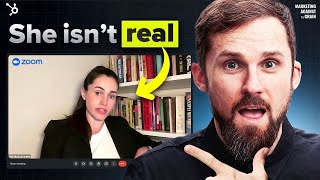
Amanda Kahlo, CEO of OneMind, demonstrates Mindy, an AI avatar that handles sales calls with real-time industry knowledge and screen sharing. The avatar remembers conversations and works across sales and customer success, though adoption requires customers ready for AI-led interactions.
Chapters
Hey, everyone. We just talked with Amanda Kahlo and she's the founder of this crazy avatar company. It's called One Mind, and they give you virtual sellers and CS people, basically avatars to help you grow your business. We're going to do a real life demo. We're going to ask it some tough questions, we're going to see how it answers them, and then we're going to talk about the future of AI and how you use all of this to actually grow your business. Let's get to today's show.
Amanda, thanks so much for coming on the show. We super appreciate it. You are the CEO founder at OneMind. Previous the CEO founder at Six Sense and on this episode, this really is the episode. If people want to understand how to integrate AI into Go to Market today and where we are going to integrate AI into go to market in the future. And one of those places that we want to talk to you about, Amanda, is avatars.
I'd like to call them superhumans. Kiran, but thanks for the intro. Yeah, super excited to be here today to share my journey and experience and what I think the future of Go to Market AI looks like.
So we definitely want to kind of get the background, get into the why One Mind, when you were kind of really successful at six Sense and you were trying to look for your next thing. But we do have a special guest to bring onto the show. We do have an avatar. You've brought Mindy with you, and so maybe we can introduce Mindy to give people, you know, an example of what we even mean by AI avatars and how they might work.
Sounds good. Let's bring Mindy to the stage and Mindy and I are going to do a little role play.
Hey there. Thanks for chatting with me today. Should we start with some quick intros? Then we can take the conversation any way you like.
Sure, sounds good. My name is Pam and I am the CRO of Dunder Mifflin.
Nice to meet you, Pam. Dunder Mifflin, huh? That's awesome. So as the CRO, you're all about driving revenue and growth, right? What are some of the key challenges you're facing in your role?
Well, I'm trying to grow and cut costs and I've got a human resource problem. I just can't hire enough people fast enough to meet our growth challenges. What can you do to help me?
We can help you tackle those human resource challenges by augmenting your team with superhuman AIs.
Tell me more.
At OneMind, we create superhumans who make the Experience joyful for buyers and profitable for businesses. These AI superhumans are like me. They have a face, voice and a go to market brain. Each AI has their own AI optimized secure virtual desktops that allow them to do anything a human can do on their computer. We can join video calls, give presentations, demo software and communicate across any channel.
Wait, I'm going to interrupt you there. Can you just give me your pricing? I need to know how much this is. This just looks way too awesome.
I don't have pricing details. I can check if someone is available to chat with you on a quick Zoom. Would you like me to do that?
Yeah, that sounds great. You have somebody available now that you can connect me to?
It looks like Kirk is available. If you hop on this Zoom, he can help you out. Here's Kirk's Zoom link.
Okay, great. I'm clicking on the link and I guess I'll see Kirk there. Wow. Hi, I'm Pam from Dunder Mifflin. I was just on your website talking to your superhuman and she sent me the zoom link.
I'm Kirk. I'm an account executive here at One Mind. So super excited to meet you and Pam. Kirk, Michael Scott. I had some technical questions. I'm, I'm thinking of buying, but I need these answered. We need to answer these before we can actually, actually buy. So can we do that? I'm not the most technical, so I'll pass it over. So. Hey Mindy, can you go into active mode and answer Michael Scott's questions for us please?
Great. I'm now in active mode. Michael, feel free to fire away with your technical questions and I'll do my best to help you out.
All right, Mindy, my first question is one mind. Superhumans. How do they understand industry specific knowled on sales calls in real time?
Our superhuman brains are all knowing thanks to their ability to process various input data sources like websites. This allows them to create detailed buyer profiles and understand industry specific terms in real time. What kind of data would you want your superhuman to take in?
But how do you ensure data privacy and security?
We take data privacy and security very seriously. Our AI solutions ensure data is securely stored and enemized with strict access controls. Does that help address your concerns?
It does. Can we talk about memory and cognition? How do superhumans have memory during and after calls? And what's their cognition ability?
Our superhumans have advanced memory and cognition capabilities. They can recall past interactions, learn from conversations, and apply conditional reasoning. This allows them to engage intelligently and adaptively.
You know, this is all great Mindy, but I really want to give Kip and Kiran the opportunity to ask you some questions because I'm sure people think this was all scripted and I want to show them that we can actually naturally flow and you can handle the tough questions. Kip and Kieran, over to you.
I would love to know what is the best knowledge we can give you so you can do a great job.
Training me to be an incredible salesperson involves feeding me a mix of company specific data and general sales knowledge. This can include your product details, sales scripts, customer interactions and industry insights. The more tailored and comprehensive the information, the better I can represent your brand and engage with prospects. What specific data would you prioritize for training?
So, Mindy, just for everybody watching, to be clear, you were sharing slides, I believe. How do you know which slides to show?
I choose slides based on the flow of our conversation and the topics we're discussing. Each slide is designed to address specific aspects of one mind's capabilities, pain points we solve and the value we bring. I aim to make our chat as informative and engaging as possible.
Look, I thought her ability to screen share and screen share contextually was really, really good. I think you and everyone else in the avatar space have a couple of challenges, the biggest one being latency still, right? One of the questions I was wondering for you is like, where are we at with latency and when do you think we'll get to a point where we're closer at traditional human conversation latency?
As you noticed, probably the avatar version was a lot faster than the photoreal. So the photoreal is basically spinning up an H100 in the cloud. There's a lot of compute and resources that go behind that. I think we'll get to the point where you see the avatar's latency in the photoreal version in the next couple months. We're not far off from it. We actually know what we need to do. We're very early stage company. We've been building towards the functionality. I think by the time we go live in the next like three months with a few of our other customers, we'll be there where you actually don't notice it anymore. So it is the number one thing we're building towards.
You know, you have a ton of experience in go to market. You built six Sense that was a really successful company is like foundational to how a lot of B2B companies even do go to market. And something pulled you into one mind, right? I'm sure you had a ton of things you could spend your time doing and you're back being CEO, founder of this company. What kind of sparked, you know, that want to get back or that desire to want to get back into this work from what you had seen in one mind? So what I saw is like, wow, this could be pretty transformational to how you just interact with B2B companies through chat. It's pretty transformational potentially to how you interact with companies through their sales motion. But what was the initial spark that went off in your head and you were like, wow, this is a. This could be a pretty big deal.
If you looked at my LinkedIn even a year ago, right before I took this opportunity, it said I was permanently on the bench. I was. I love that there's a couple things behind that, actually. So I'm a very open, vulnerable, transparent person. So you're going to get it all here. I took time off and I left six sense to have some babies. So I went and had kids. And for those of you who have kids, the number one thing that will bring you back to work is kids. So I say, I like to out that job. That is the single hardest job in.
The planet for sure.
I was like, oh my God, this is way harder than I thought. I need to go back to being a CEO. So all jokes aside, I really wasn't looking. I think this opportunity found me. The company had been building the technology, so we were built out of an AI labs company called AI foundation. And they've been working on this for five years. And they came to me and said, we need to find our vertical home. We can use this for patient concierge. It can be used for all kinds of different industries and verticals. And immediately I said, if I were going to take this opportunity, it had to align to the world that I know well, which is B2B sales and marketing and go to market. Right? So customer success, marketing, sales. And that's where I have my network. That's what I know, that's what I'm passionate about. And it also had to be. I was not looking to do another to do a point solution. So I was not looking to make to. To start a company that had efficiency gains. So I think there's a lot that we see in AI today that's all about workflow. The better mousetrap, Right? So let's. How can I summarize your calls? How can I create the better battle card, give you the information in real time. But for me, those are all just like siloed pieces of puzzle. And I see this as being completely game Changing. So this is something that can create, like literally create a category as Mike Maple says from Floodgate. He talks about the concept of backcasting. Can we look to the future? What does the future look like? Right. So, and in the future, in this world, for me it was not about making things better for sales or for marketers. It was about how do we grow and how do we cut costs. What other solutions are on the market that I actually can say I'm going to help you grow because she's going to sell and I'm also going to help you cut costs because she's going to cut down the number of resources you need to implement her to bring you forward. So, you know, it was a big challenge, it's a big problem. But I didn't want to do anything small. I wanted to play big. And I actually personally this time I want to ring the bell. So I want something that is big enough that can take me all the.
Way for that mission. Then do you invit, what did you envision then? Do you envision the kind of avatar being the platform? You know what I mean? Like the, the fact that now everything is kind of somewhat multimodal and that your first interaction with anything, chat anything is kind of through this AI avatar type experience. Like what did you envision that was like the platform piece, the transformational piece.
Yeah. So I think it actually shifts the way that we buyers buy and sellers sell. So it all becomes. And it's not right now I am selling this as okay, she's your inbound website AI or she's your right along sales engineer or solutions engineer. But the shift for me and where this is really going is there are no more roles like that. Right. So she does it all, she takes all the information in, she knows everything. She links into your CRM, she links into HubSpot, she knows everything about the account and the opportunity and the lead and she remembers humans have capacity limitations. Right. And so she can do the job from first touch to qualify. She can close. She can then go be your onboard as you as she started to go with the customer success clay where she onboards and she shows you how to use the product. Right. So she's responsible for sales. She was responsible for upsell all the way across and can do everything across your organization. That to me was fundamental shift and that yes, we'll still have people to support the process and we'll still, people still will be in the, you know, creating the relationships. We're not there yet with AGI. Maybe one day we don't have people. I'm not suggesting that we're there in any short order of future, but I do believe that it is as soon as she's in the conversation. Our thesis is buying and selling happens in the conversation, not around the conversation. So she is carrying on the conversation, she's answering the questions, she's driving the sale. And then all those other workflow tasks like automating, you know, updating your CRM, updating HubSpot, updating, sending the records in, putting the, creating the battle battle card, that all happens easily because of AI. AI makes this all very easy to create those other efficiency gains around the conversation.
I want to follow up on that because in turn the other side, let's say you all have a magic wand, you execute really well, the product delivers on the promise. What's going to stop the humans from adopting it and it working for the average company? What are the things that you think are going to be kind of the friction with buyers out there adopting this type of technology?
Our goal is not to make this, that you force buyers to use this. It's an option. And so when it's an option for buyers, it's on your website if you want immediate, accurate, always on, don't schedule, don't have to worry about a personality of your salesperson answers, talk to the AI. If you want to schedule and wait and have a conversation and maybe get half the answer, not the full answer because that person hasn't been trained with the hard technical questions that you have, you'll talk to a human. So I think it's just an inevitability that humans will want this, buyers will want this, because it's giving them always on, efficient, accurate answers. But I think there's a continuum. Just like every technology, we have early adopters and we have laggards, right? So there are people, there will always be people that say, I want to talk to a person. Great, you still have that option, but as an organization you can do it for 1/100th of the cost. For those that do choose to talk.
To the AI, I think that is an interesting place in terms of where we are with AI in that one of the biggest problems for a lot of companies to increase their support deflection rate, for example, is actually not the technology, it's the fact that humans default to want to talk to other humans, even if the AI experience is objectively better. And for the average consumer, even for the avatar, you can look at the avatar and you could say, I made this point in a Talk I gave recently where when you look at some of these AI experiences, you have to remember this is still the Ask Jeeves moment for AI. If you kind of correlate to search engines, right? Like it is the worst it is ever going to be. This is the worst this technology will ever be. And so you have to be in that kind of frame of mind. And so if you look at the avatar, you could say, wow, like, yeah, look, it's, it's, there's too much latency. It doesn't feel like it's a human to human experience, but it's an objectively better experience if all you want to do is get knowledge, right? Like it has much more knowledge, it can show you the right visual parent. But for the people that I have talked to, like consumers, I walked around our inbound event and I talked to a bunch of consumers. Everyone kind of just says, well, the avatar is just weird. And they, and that's the word they use is like, oh, it's weird. It kind of freaks me out. I don't want to do that. I want to talk to a person. So how do you navigate that part, which is the technology, like the tech. The evolution of technology versus the evolution of consumer behavior. Like, and how do those two things end up at the same points?
Yeah, yeah. I definitely think there are people who are going to feel that it's weird and it's going to take time. Right. So. And there are people who really love it. So I'll tell you who loves it. Developers, engineers. They don't want to talk to a salesperson. When does the developer ever really want to talk to their sales rep? Like never said, never anyone ever. For an engineer or developer to talk to a salesperson, right. So we're going after. And then the other place that we're showing value and like jumping right in is where you wouldn't put a human. So think about your SMB motion or your PLG motions, right? So your long tail, you have tens if not hundreds of thousands. For some of the companies I'm talking to, where people are filling out forms and they want to have a conversation, but you as a company will not send a person onto that call because it's too expensive. When it's 150, $60 a call for an SDR, BDR or an AE to get on the call and the deal is only 200 or $1,000, it's not happening. It doesn't make economic sense for us to put a human. So for PLG companies who have that long tail it makes a lot of sense and I think it's just going to take time for people to see, well, would I rather have that human touch or would I rather have weird? But it's efficient. I can get my answer right now. My kids can jump on my lap. I don't have to worry about navigating a relationship and not telling them how I really feel. What's really interesting is that people get super transparent with the AI. They don't worry about hurting somebody's feelings. Like when I'm talking about, you lie. You lie to salespeople. Buyers lie because they don't want to hurt your feelings and they want to like, oh, well, no shit, I'm not going to buy this shit. You know, and so they say that to an AI, right? So they're like, I'm not going to buy this, like, it's not going to work. It's been amazing. When I was out fundraising for a round of funding, I sent my AI, which was a clone of me. We don't believe in cloning. We're not in the business of cloning in this world and go to market. However, I thought it would be kind of fun and clever to send a cloned AI of Amanda to go pitch investors. And you should see the transcripts of what some of these investors would say to the AI. I actually found that had so much fun at night going home and reading the transcripts because they just let their guard down. They say exactly what they're thinking and guess what? I know who I need to follow up with and I know who's not ready to give me their money. So it cut to the chase a lot faster than if I actually were on the phone. They're like, well, we're going to do our diligence and take our next step. And you don't know where they are. And you know, we all know with VCs, they're not the quickest to tell you no, Right? So they always are. A maybe because they might want to open the door again. They never give you the full truth, but for some reason they gave my AI their honest opinion.
People feel like they're AI is nonjudgmental.
Yeah, yeah.
Here's the reality. Integrating AI into your strategy can feel like a big step, but it's exactly what sets high growth companies apart from the regular companies at HubSpot. We started with AI a while ago and we deployed it on our website and support and it's been revolutionary for helping us better serve our customers. Leveraging data and AI has been a game changer for us. Our new report shows it's fueling growth for other companies, too. We spoke with nearly 2,000 global marketing leaders to find out how they were strategically using AI, AI data, their CRM, all together to stand out from the competition. So if you want in, you can grab it at the link in the description below. Now back to the show. Amanda, let's say there are companies out there watching this, and they're gonna. They're thinking, like, you know, pretty soon I'll be ready to adopt a technology like this for my customers, for my market. Like, what's your advice for what that company needs to have to help make the AI the best? We'll call Avatar, super rep, whatever you want to call them possible. We've seen this a lot already where it's like, oh, do we have the documentation we need? Do we have all the data we need? Do we have the case studies? Do we have all those things? What's the groundwork that needs to happen to make the best use of a technology like this?
What's interesting, it's counterintuitive. So one might think that you need all the information in the world. But, you know, if I think, like, for one mind, we have one pitch deck, right? We have a webpage that's one page, and she's pretty damn good, right? So she can take that information and she can sell. She can sell better than I can her answers. Sometimes I'm like, oh, wow, I need to learn from the AI of what she's saying. But on the flip side of it, you know, working with big companies, you know, like new relics of the world who have tons of content, right? So they have thousands, tens of thousands of documents. She doesn't have capacity limitations. So she can take it all in, have all that information in the corpus of her brain, and then you just prioritize for her. So we have an ability to say, okay, here's her flow. This is her end goal. So she's not set with a deterministic flow. She's set with an end goal. Your goal is to convert pay as you go to committed contracts. And as you do that, do whatever you need to do with the content that you have to get us to this point and learn as you go. So it's really hard for us to get our human heads around that because we're used to setting things up in a very deterministic, if then kind of way. And with the AI, it's just not that way. Right? So you just give her the freedom to do what she needs to do to get her job done the most effectively and learn as she goes.
If you read anything about OpenAI's new Zero1 model in terms of how it does reason and what it's really just doing is looking at all the potential options to get that outcome and then stack ranking them and trying to choose what is the best option and then iterate through those ones and learn as it goes. And so the fact that you can start to update these models and the avatar platform would have all of the unstructured data and be able to learn much, much quicker than a human and then stack rank them, the stack ranking of those things will get much better once you've predetermined that goal. There seems like no, no way that that wouldn't be additive to like go to market pretty, pretty rapidly. And then the other thing that I think a lot about is like the future of websites because like even your avatar can basically just ingest all of the website and then bring up the right page for the right talking points. So for a lot of people that's a better experience than having to click around the website. But the thing I wanted to ask is one of the hard things about AI for sales is actually AI for the most part, not for the most part, but AI wants to do a good job. And so a lot of the things that we've kind of experienced on the demo is like we ask a question and the AI is incredible at bringing up the right visual and answering that question. But sales is about being able to thread the needle between answering that question and trying to figure out what that person really wants. Even sometimes that person doesn't know what they want. And incredible salespeople can kind of tease it out with open ended questions and find that kind of human nuance to thread the needle to a sales call. How do you approach that? How do you even figure out that problem?
Well, the first thing is people always ask me, do your AIs hallucinate? Right. And to what you were just saying, I always say, well, do your reps hallucinate? So making things up as they go to get the right answer. So those questions, those are traditional sales methodology. So you're talking like the challenger method or a med pick, right? Et cetera. And knowing how to use that information that I collect and what your pain is and five turns later, use it to sell. How often do salespeople actually do that? Even your best, they might do it really well in their follow up email because they're taking good notes and they say, oh, I heard you say this, you were having a pain in this piece of your industry, or you're trying to grow and expand in this way, and here's how we can solve that. But in the same conversation, they actually fall pretty short. Humans. One of the things I think is so impactful with the AI is that when she asks you what your pain points are and what markets you're trying to sell into and where you're growing and how you're doing it, five turns later, she's going to use that information to sell to you with the features and the products that we offer. Right. So that to me, she is superseding the limitations of human capacity. Humans have. They have all the best intentions. I have a EVP I'm working with at a very large HR software company and he says he's EVP of global sales. And he said, my reps are like dump trucks, they're the smartest in the industry, but here's their brain. And there's only so much. Once you put something else in, we buy another product or another company because they're growing. That's how they grow. We put something in, we got to take something out. Right. So they only can take in so much and they're not using that in the same term. So, you know, does she have the ability to create the relationship and have the nuance details?
No.
But is she 99% better in answering the questions and using information? She discovers that discovery process in the response.
Yes.
So she's not perfect. And there are places where humans are definitely excel over a superhuman, but it's a balance, right? So imagine having her on the call and calling on Mindy when you want to use her. And as the rep it gives the rep, I think the sellers, more than anything, they want this. So we have to build an experience, one first for the buyer. The buyer has to want this. This has to be a delightful, joyful, always on, accurate, easy experience for the buyer. The second audience that we're building for is the seller. So it's not for our customers, it's for the seller. We need to make sure the seller feels like they're empowered. They now have the answers to any question that comes up. They don't have to do follow up. They don't have to go ask somebody, well, what are our APIs and how do we integrate and what can we do in this specific scenario? The AI can jump in and give them that knowledge in real time. So those are the two things that we're really driving towards is an amazing buyer experience, amazing seller experience and all the rest will come as a result.
I like the apply AI where you would not apply human capital because it's too expensive. There was a great quote from Kevin Weil, the OpenAI CPO, where he talked about the fact that OpenAI's One model can actually do the job as, as like really well trained lawyers. And so he kind of had this really cool line where he says, you know, the equivalent of $8,000 of work cannot be done through five minutes through a $3 API, which is like you now have these APIs and AI experiences that can give you expertise for a fraction of the cost. And one of the examples I think is a really good example is when you're selling into small companies, you still may have a sophisticated product, but you cannot afford to pay for a pre sales team, like a sales engineer team. And now you have this AI expert who is trained and is a real expert on your product and you can have that experience across all segments. The quick question I had was your avatar in terms of Mindy, is she trained on the client's sales methodology and do you help build that methodology or do you like have some out of the box methodologies that can come. That she can come pre trained on?
Yeah, she's pre trained on all of the best sales methodologies. So she's pre trained on Challenger method and medic and med pick and what all of them you can say I want her to use this specific methodology. And here's our, here's all of our content for our methodology. Right. So we have some really big enterprise companies that are. No, she has to use our methodology. My thesis is you want to apply the best methodology at the right place in the right time. Right. So there are certain times that the Challenger method works really well and there's other times you want to use other methods. Right. So allow her to know the right method. Why do we only train our reps on one method? Again, humans have capacity limitations. They can't learn 10 methods, but the AI can. So why not let her just use whatever tactics she needs to get to her end goal versus trying to force her into a box and into a peg. Because that's what we're doing with humans and I think that's why people are getting this wrong. It's not, you're not going to have her replace what you're doing today with humans where you're going to let her have the grace to figure out what the right next step is in that process to drive the Deal forward.
Yeah, I think a lot of people watching today's show, especially if they're working at bigger companies or they're more advanced, they might. To me the opportunity with these technologies are a little bit less like hey, I'm going to automate like the core sales reps. It comes back to what kind of Kieran, what you were saying, it's like it's actually all the overlay, complicated sales process crap, for lack of a better term of like I gotta have these product specialists or these sales engineers who know the very deep details of this certain product. It seems like your ability to have way fewer humans and way more AI in solving those kind of edge cases for your customers and your sellers, it's just like it's going to be transformative to how efficient companies are going to be over the next few years. Do you buy that and Is that right?
100%? Yeah, 100% buy that. I think it's the places where you're not going to put a human. It's the long tail that you have. I mean if you are lucky to be a PLG company, right, and have product led growth and you have so many people leaning in to try your product, but ideally in an ideal world, take money out of the equation, you would put a human on every one of those, but you can't, right? So it's those and the efficiencies of imagine having a superhuman on your BDR calls with them. So if you want to keep your BDR it's fine, but allow the superhuman to be there to answer the hard questions or on all your commercial calls. So when you get on the line with one of your commercial reps who is more junior and haven't worked their way up to being a strategic AE that they can have an AI as well on the call. And I think those are the low hanging fruit. And then as people start to adopt and trust the AI, then you start putting the AI. Okay, let's put it on our enterprise AES as the sales engineer. What do we have now like a 1 to 10 or 1 to 8 ratio of AE to Solutions or Sales Engineers. What if it's 1 to 1? What if the AI could be on every single call to just provide that support? Even on your most strategic and your highest value calls, but the human still owns the relationship in that case.
I definitely think that that's part of how consumers get used to AI, which is the initial interaction is through a human call, but the AI is part of that call or the initial interaction is through Something they know. But AI is now part of that and makes it much, much better. And I totally agree with Kip, like what I think this technology is going to be great for is actually getting people back to the doing the craft that they're meant to do and having like real return on that. So like a salesperson can actually go back to like potentially a lot. Most of their time spent selling into like complex deals. Because AI is able to do the admin, AI is able to do the overlay, AI can actually join and take do the sales engineer role. And so you should have less humans and those humans should actually be more valuable because they aren't having to do all of the crud that comes with doing the thing they want to do. I think one of the things we would love to because I know we're going to get up in time here, so maybe we can end with where we're going to be by the end of 2025. And I actually don't like doing AI predictions. We don't like doing a predictions because it's really hard to tell. But let's just do one for fun because I think we know. I don't want to speak for you, but we've covered some use cases that are really practical today, like incorporating the AI avatar into the chat. I think the pre sales one is a really great one and anywhere you need these kind of knowledgeable avatars to be part of your calls. But is there any kind of hidden use case or use case that you think about that people are not even considering for go to market today that you think will be part of the AI go to market playbook at some point next year?
Just think of the evolution of technology and where we were. So in 2008 we had marketing automation solutions come into the scene, right? You had the Eloquas and marketos and hubspots come on and they're automating marketing touch points. And then in 2010-2013 15 you had the outreaches and six senses of the world coming in. They're orchestrating sales, touchpoints and plays, et cetera. And then we got hit with the pandemic. So the pandemic brought everybody at home. So it said, okay, now everyone's at home and everyone's doing digital interactions. And then we went to plg, right? So then the world became all right, this is all product led growth. I think the future is AI lg, AI LED growth, right, where the AI does everything. I think that's going to be a standard term and I Can't take credit for that. So I give that credit to Jacko from Winning by Design. He and I were spitballing last week and he came up with the idea of AI lg. But AI lg, AI LED Growth is a world where the AI is not just doing one job in one role, but doing the job across all the different functions of your organizations. And those organizations that adopt AI for their go to market efficiency are the ones that are going to win today. And if you don't, you're going to be stuck behind because you're in this linear growth pattern of humans. Humans can only grow. We have to train them, we have to onboard them, we have to go through recruiting and then guess what? When they're good, they're gone. They take another job. Right? So humans have limitations in our organization for our growth strategy as well. And AI, once you get it good, you might take, like you was asking me before, how long does it take and what content do you need? Let's even say it takes a while. I don't think it does. I actually think we can get a really good AI up and running in a short amount of time. That said, let's say it even takes six months. Let's like do the far edge case. If I get this AI performing in the job in six months, she doesn't ever quit on you, right? She only gets smarter. She only, like you said, this is the worst it's ever going to be. She only gets better. And this is where we start to see exponential growth, not linear growth that humans keep us limited to through the capacity limitations of humans and how we're growing today. So it's moving from PLG to AI lg and those companies that adopt are going to stay ahead and those that don't like going back to the perpetual SaaS models that we used to be. And then we had SaaS, we have perpetual licenses. What companies still live around today in the early 2000s and we had to move to SaaS. If you didn't move to SaaS, you were gone. And I think we're in a similar era right now. If you don't move to AI and start looking at the efficiencies that you can gain, your competitors will and their to gain the competitive advantage.
I don't think there's ever, there's ever been a more important time to be a first mover. I think this is like the technology shift that you actually have to be a first mover because I think there's going to be a ton of disruption in digital and go to market. And I think if you are late to the party, it's going to be really hard because you're going to get the tail end of all those results, right? The results are going to saturate and start to level off at some sort of baseline. But in that early moment, there's going to be a ton of gains for people. And I think if you're in that tail end, you're in a lot of trouble. And so the thing I tell companies is you should have some AI use cases you're building for today, but some AI use cases you're experimenting for where you believe the technology will be in like six to nine months, right. Voice was not. I kept telling people at the start of the year, you should start playing with Voice now, because at the end of the year, Voice is going to be in an incredible place, right? And then you have the infrastructure built. You've actually figured out, like, where in your go to market to build it. And so I do think you actually really have to start to integrate this stuff into your go to market pretty rapidly.
Couldn't agree with you more. And like to Kip's first question about where we are in latency, like, this is the worst it's ever going to be. And if it's going to, you know, you take the time to build the model and then that latency, that lag goes away. Like her Bar and AIs Bar. Here's humans. The AI has to be here in order for us to accept and adopt it. Even though she's 1 100th of the cost, right? So even though she costs a fraction less, she cannot just perform. Like, think of my delay or the delay of. You're talking to a slower salesperson. The AI just has to be on it, right? And on their best game, but they will, and we know that. I mean, think of all the money going into AI right now, right into these organizations. Like, we know it's going to get better and it's just a matter of time. And I think we're months away, not years away from being negligible. You won't even notice the latency.
Agreed.
This was an exciting time to be an AI. Kieran.
Yeah, this is a great time to be an AI. You are listening to the right show if you want to be an AI. We are continuing to bring you incredible demos like this. Incredible companies, people doing incredible stuff in AI. So, Amanda, we wanted to say a huge thanks for coming on the show, introducing us to Mindy, and getting us to like, look at the future with you and get people thinking about how to start to incorporate these things into the go to market.
Thank you for having me. It was an absolute pleasure. You guys are awesome. Keep spreading the word. This data is wrong every freaking time. Have you heard of HubSpot? HubSpot is a CRM platform where everything is fully integrated.
Whoa.
I can see the client's whole history. Calls, support tickets, emails.
And here's a task from three days ago. I totally missed HubSpot Grow better.
More from Patrick



A NEW BREED OF PARTNER: The Partnership Ecosystem Model Journey of Patrick Biddiscombe, Part 1








Customer Success Workspace: Never Lose Sight Of What Matters Most | HubSpot Spotlight