Story of Joe De Sena, creator of the Spartan race
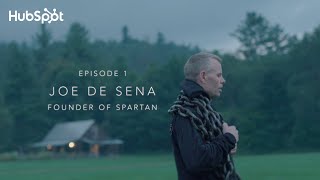
This is a transcript of a YouTube interview with Joe De Sena (creator of the Spartan Race) describing his personal and entrepreneurial journey: growing up in Queens, early pool/construction business, a stint on Wall Street, discovering adventure racing, and founding/scaling Spartan while enduring long periods of losses. The speaker emphasizes long-term thinking, being "on the hook" financially, building community through races, and a philosophy that hard work and extreme experiences build discipline and meaning.
Chapters
When I describe this overnight success of Spartan that's taken 18 years, 15 of which we were losing money. Anybody with half a brain would have quit three years in, four years in, five years in, 10 years in. But I take a really, really long view in everything I do, never looking for the quick win. And I think the payoff that comes later is just much bigger and tastes better.
Wonder where he could be.
I think this is the right house on property. I don't see him.
Not in here.
In there.
Let me text him.
Oh.
Looks like we found him.
Paul.
Yeah.
Daisy.
Daisy, thanks for having us. No problem. You guys ready to roll?
Yeah, let's do it.
I think if I didn't grow up in Queens and see what I saw grow growing up, I might not have been chasing this. I'm glad I did. Not a lot of people find this. I don't know if you guys agree, but it doesn't get better than this. We got a rock. We got a couple of logs and a chain. What else do you need?
Let's go back.
You're so you. It makes me feel like I'm on a couch in a psychologist's office.
You might be so.
My father was doing really well when I was Kathryn's age, when I was 6, 7, 8 years old, I mean, he was a hustler and 87. Stock market crash hits and he starts to go broke and he starts losing a ton of real estate he had accumulated over the years. And so I go from a bratty young kid who doesn't really want to get a job or go to college to someone that's watching my mother go buy a Chevrolet that she can't pay for because now they're divorced. And I'm thinking, like, how the hell am I gonna get back to where we were? And my mother says, oh, it's really simple. You just gotta work. And then it just so happens, serendipity that my neighbor needs somebody to clean the pool. Or maybe he was just looking out for me. And he brings me over and I do a good job, and then he recommends another boss and another boss, and before you know it, I got 700 customers. And I'm cleaning pools and cleaning lawn furniture. And then they're saying, oh, can you do brickwork? Because I was a worker, right? I'd show up at Saturday night, 11 o' clock at night, because that's all the time that was left. And I know they want the job done by next week, and I'm crushing it within a few years.
What are some lessons that you took with you from growing your pool and construction business.
If you don't have money in the game where you're on the hook and you told all your friends and your family you're going to do this and you're mortgaged up to your neck, then what happens? You pull the plug when the going gets tough. And guess what? There's no business where the going doesn't get. Everything that can go wrong does go wrong. So if you're not on the hook, like I would have never been successful in any business I've done if I had an escape. If I could escape. But you can't escape. You're on the hook. You got payroll, you've got employees to take care of. You can't leave. So like when you get bad news, which comes every single day, so what? That's the deal.
You grew up in Queens and then you don't just walk onto Wall street and get a job. So what, what was the moment that created an opportunity for that?
It turns out I have a cousin who's a recruiter down there and he gets me a meeting with a guy who just happened to have an open mind that day. And I get a job on Wall street at the. You couldn't get any lower because they didn't even have a position for what I. They didn't even know what to do with me. Yeah. So I end up on the floor of the New York Stock Exchange and I am getting yelled at for 30 grand. I was making $200,000 a year with my business. I'm now getting paid 30 and I'm getting screamed at. I can't do the math quick enough. I can't answer six phones at once. Like, I'm not, I'm not talented at this because I never did it. And I literally, I start crying one day. What am I doing? Why would you immediately go back to where you were, the big guy. Right. And I don't know, I decided to stick with it. The guy that pushed me to go on Wall street said, you're going to have an issue if you are lucky enough to get a job here. I said, what's the issue? He said, you're going to have something they refer to as golden handcuffs. And I said, what is that? Because where I'd come from, everybody got silver handcuffs. And I went to jail. And he said, you're going to be making so much money that you can't leave. And I mean, we were doing 3, 4, $500,000 a day. We had multi million dollar days. It was unbelievable. And I understood then what he was talking about. Like, how do you leave this? But I knew it wasn't forever. Like, I didn't want to sit in front of a computer my whole life. I didn't want to. I wanted to get out and live.
Is there sort of a crystalline moment when you really executed in your mind the decision to make that pivot?
I find myself on Wall street achieving what I'm hoping to achieve, which is financial success. And I stumbled upon adventure racing. Felt like I was pouring cement again and laying bricks. But it was competitive. It was even better than that. And we were kayaking and biking and running. And I go, this is unbelievable. What's the next level? I gotta do something harder. You have a race. That's impossible. I want in. I gotta do this as a business because I'm a natural entrepreneur. Everything I see, I want to do as a business. Maybe 50,000 lunatics to together online and get their emails, build this cool website where they climb mountains, they ride bikes across the country, they swim across the English Channel, and. And I'll put on some races to promote it, and I'll sponsor some teams. And so from 2000, 2001 to, like, 2010, I am messing around with peak.com and trying to get this to work.
And that's like, you're trying to build a community, and the races are a vehicle to get that community going. Is that right?
I'm just thinking, look, there's probably only 50,000 people globally that would do this stuff, but those 50,000 people would inspire the world if we had a platform where we could showcase what's possible. Everything that could go wrong went wrong for about a decade. Just lost an insane amount of money. I had no business being in this business. I couldn't.
You're still running your other business?
Still running my other business. This is like a hobby. Guy said to me the other day, if you're gonna punch, it better be a knockout.
Right?
Right. You don't. You don't. You don't punch and, like, not affect the person you're punching because it's coming back at you. We get this name, Spartan. 700 people show up from. From the start of the race to him, which is only like 90 minutes max. People are transforming. And that was like, all right, we got to put more money into this. So open a second race and a third race. And then it was just like. Then it even went further downhill because then I lost insane amounts of money. But I had no choice, because then you're on the hook. Once I announce a race, I'm spending $600,000. Whether one person shows up or 5,000 people show up. As crazy as it was to go from Vermont to New York to Montreal to. To UK To Slovakia, eventually the world became aware that this thing was awesome, and it was transformative. And then it just started working. Right. It's like the old shampoo commercial. Like, you tell two people, and they tell two people. And it just happened one day because we started with a situation where we didn't have a lot of capital, and I was constantly trying to just keep the machine going. The people that came to work for us were very passionate. I had to. I had to do a global call one day because we were out of money again. And I said, look, here's the deal. I said, the only thing we could afford is $2,000 a month. Everybody's gonna get paid the same. $2,000 a month. And so 49 people stayed on. And so those people really do reflect the values of what this brand is.
So platforming from today at 5 million people to getting to 100 million, I.
Got 95 million to go. I'm selling something that's a really tough sell. And it's getting harder, right? Because young, young kids. Used to. We'd see kids running around 20 years ago right now, but kids are playing video games, including mine. And so I'm selling, like, discipline and hard work and commitment, and put down the glass of wine and the coffee and the cigarette, and that's a tough sell. And will it fall out of favor? It's already somewhat out of favor. I don't know.
You know, talking about, like, your kids, what are your goals for them as a father?
Well, first and foremost, I'm just focused on the kids. Right. I'm not saying if I do this, it's gonna help other people. I'm like, how could we do the best for our children? Number one goal, right?
Right.
And so I'm just a believer. I don't know if I'm right or wrong. I haven't. I was not a father before, but the hard work is always better than not. I made them start their own businesses. What is it? What other businesses? Hachi Dragon is someday gonna be a sushi restaurant. And bonfire. Charlie starts bonfires on the beach.
That's really fun.
I haven't been up here in a while, and we. That's not the girls. The girls are over here.
Do your kids feel like this stuff is like they're starting businesses and working out in the morning? How Much of it do they engage in it as play versus, like, things they have to do.
You know, Jack is going to be 13, and I thought, you know, at 13, maybe I say to him, hey, you're on your own now. You decide if you want to join us. Like, from 4 to 13, this is the program. Like, brushing your teeth. After that, you decide. I don't think it would be unreasonable to. For anybody, any partner to say what she says, which is like, when. When is time for us? When are we gonna smell the roses? When are we gonna relax? You're always on. She goes like, people come up to me if we go to a race, right? Oh, my God, Joe. Let's get a picture. Let's hang out. You're unbelievable. And she's like, yeah, you're unbelievable. For about three days. They don't have to live with you, right? Because, like, the point that she's making is like, I don't stop. It's every single morning, seven days a week. It's like, I don't. But that's just the way I'm wired, like. And that's what I believe in. You can't just go to the gym for a week and all of a sudden you're fit. It's like the rest of your life.
It's a practice.
It's a practice. Everything, it's just over and over and over every day. And so. So, yeah, she gets. She. I think anybody would get frustrated. Just relentless. It just doesn't. It never ends.
Is it fair to say that you don't like stillness?
Well, I mean, a lot of people say, joe, stop and smell the roses. My response to that is, well, who the fuck waters them, trims them and fertilizes them? There's a reason there's roses to smell. So we gotta do the work. I want to do three lives in one. Like, you don't get it. You don't put another quarter in. Like, I just. So I want to get it all in. And I guess. And I saw my mother die at a young age. I saw people go to jail at young. Like, they just disappear. They're gone. You just want to get it all in. You want to. Like, you don't want to waste any time. It's such a gift.
Does that relate to why you gear yourself towards very extreme experiences when you.
Do extreme stuff, like, you know, you feel alive. When's the last time somebody came up to you and said, oh, I wish I stayed on the couch longer last night. I wish I had a little more ice cream like this doesn't happen, right? But you do say, man, as tough as that thing was when we snowshoed those 80 miles like you talk about the rest of your life, it was amazing. You sat down after we hiked yesterday and you were, like, elated. But what that means is the accomplishment, the medal, it means so much, so you earned it.
Browser.
More from Patrick



A NEW BREED OF PARTNER: The Partnership Ecosystem Model Journey of Patrick Biddiscombe, Part 1








Customer Success Workspace: Never Lose Sight Of What Matters Most | HubSpot Spotlight