Tarana Burke & Emily Chang on Empowering Yourself
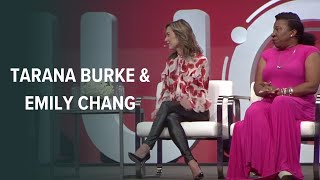
A recorded panel at Inbound (Sept 14, 2018) featuring Tarana Burke and Emily Chang discussing the MeToo movement — its origins as grassroots survivor support beginning in 2006, how the hashtag went viral and opened wider public attention, and the distinction between media attention and sustained movement-building. The conversation also covers sexual violence as a spectrum (harassment to assault), the role of workplaces—especially tech/Silicon Valley—in enabling abuse, the importance of culture and numbers for change, bystander intervention, and the need to fund and support community-based survivor services.
Questions this video answers
2006 (with a small group of girls in Selma, Alabama).
12 million people.
September 14, 2018.
Chapters
Excellent. Welcome. Thank you guys for being here at Inbound.
Thank you for having us.
Got some excited people in the crowd, so let's.
I can't believe I'm sitting on stage with Tarana Burke.
Tarana, let's start with you. We'll dive right in. You know the MeToo movement. The MeToo became pretty well known in the fall of last year, but it's something that you created and started and have been deeply involved with for quite a bit longer than that. Can you just sort of give an intro as to what the movement really is all about?
Yeah, the movement is about what it's always been about, which is supporting survivors of sexual violence and making sure that they have the resources that we need to start a healing journey or continue a healing journey. And it's also about making sure people are active in the fight to end sexual violence. And so that started in 2006 with a small group of girls in Selma, Alabama, because initially I was trying to find some solutions in my community to the little girls who looked like me, who had survived sexual violence. And I was in a space where I was very active politically. I was a community organizer, and I was doing youth work and youth leadership work and was having repeated experiences of. Of these children who were telling me about how sexual violence had impacted their life. And I would relay those stories to other people in the community. And it was always. It never rose to the level of a social justice issue. It was always like, oh, we need more guidance counselors in the school, or, oh, we need more services. Which was true. But at the same time, if you have a large group of young people in your community who all have the same experience, then you have a community problem that needs to be addressed as such. And so me, too, really started as a way to fill in the gap. There was a deficit. There was nobody speaking. It was like, you know, we all remember in the early 2000s, we all kind of went through our, like, mindfulness period, and we was. Everybody was reading the Secret and, like, doing all. I mean, it was good. I'm not really making fun of it. I did it, too. And we were, like, doing our positive affirmations and finding ways to make our lives better. And it was a period of time. It was so much talk about being connected to who you are and not being the sum of the experiences that you had and all these great things that nobody spoke into our community. Nobody spoke hope into our community. Nobody spoke possibility into our community. And I wanted to bring some of the experiences I was having that was Helping me become whole again to these young people who were broken in a lot of ways and thought they had to remain broken. And then this miraculous thing happened, which was, I call it our first viral moment. We created a MySpace page. Shout out to MySpace. And it was, you know, MySpace was sort of our first introduction to being connected to people around the world outside of those, like, weird chat rooms we had in AOL days, you know, being connected to people in a social way. And when we created the MySpace page, women initially started reaching out to us, saying, oh, my God, thank you for starting this, and how can we bring this to our community? And then it dawned on me as, like, oh, I'm a survivor of sexual violence. The two women who helped me do this work will also, of course, adults need this. We thought it was just going to be a youth thing, and it immediately pivoted within a year to us supporting grown women. And it was clear that those grown women needed exactly what the young people needed. They needed somebody to speak hope into their life. They needed somebody to say that if you can get on a healing journey, what also is healing is doing the work to make sure other people don't experience this. And they needed somebody who had vision for what it looks like to be a survivor in the world and not let your life be consumed by trauma.
So where did the words metoo come.
From that came from? So I had this experience well before we started. I used to run a youth leadership camp, and it was quickly enough. There's a girl in the program who I got really close to, and in the course of our relationship, she disclosed to me that she had been sexually abused by her stepfather. And I was 21, which I always feel like I have to preface it by saying I was a kid, but. But, you know, in those moments, you don't feel I was an adult counselor. Anyway, when she came to me, she cornered me and was just like, Ms. Tarana. You know, she just started pouring out what had happened to her. And I was like a deer in headlights. I was just like. I didn't know what to say. In my mind, I was thinking, you know, I'm not a social worker. I'm not a therapist. I'm not a counselor. I don't know what to say. And, you know, if you work with kids or you've been around kids, the number one thing you don't want to do is mess them up, right? You don't want to say the thing, and it's going to have them, like, on a corner with a cup, like, Ms. Tarana, if you'd have just told me the right way, I was just always scared that I was going to do the wrong thing. And so when she was saying this, literally in the moment when she was saying. And I was just like, I don't know what to say, but in the back of my mind, what I was saying, what my heart was saying is that this happened to me too. And it just didn't feel like enough. It didn't feel like enough to give her that was going to do anything. But the more I thought about it after she left was like, what would have been one thing that somebody could have said to me at that age where I was also dealing with being a survivor that could have changed the trajectory of my life? And it would have been that you're not alone, that you're not the only one this happened to, that this happens to so many people that there's nothing wrong with you. Right. And it would have changed my life to be seen and to be heard and to be believed. And oddly enough, I just want to add this, that, you know, I tell that story a lot because it's really where those literal words came from. Because I felt haunted by saying I just wanted to be like, yeah, me too. But I'm in touch with a lot of the young people I've worked with. When Me Too went viral and I was telling this story on TV and I was crying, one of my kids reached out to me and said, Ms. T. Because these are, you know, the loving ways that they address me. She's like, Ms. T, why you always cryin on TV? And I said, it was just one time. But she said, you know, I hear you telling this story. I called a girl heaven publicly. I hear you telling this story about heaven and how you keep calling yourself a failure because you didn't know what to say to her. And so I met. That incident happened in 96. This child I'm talking about, I met in 98. And she said, when I met you, you were the second person I ever told what happened to me, but you were the first person to believe me. And she was like, that's why I'm still here. That's why I'm still around. That's why you can't get rid of me. Because the moment you believe me, it changed my whole life around. So stop talking about the failure and talk about the success. So that's where the words came from.
Yeah. I mean, you talk about not wanting to mess somebody up, but the reason we're here is because we've not done enough to not create messed up people. Which kind of leads me, Emily, to your book and part of the reason that you're here, which is, you know, we Talked about the MeToo movement becoming so prominent in the fall, despite all the work that Tarana had done previously. And that sort of accelerated the publication of your book, which talks about some of these similar topics in the tech industry in Silicon Valley in particular. So can you just talk a little bit about why and how that came to be in your experience reporting the book the way that you did?
Yeah. So I started writing the book before I knew Me Too existed. Before Trump got elected, before Harvey Weinstein. And the genesis of the story I was trying to tell was the fact that women are completely underrepresented in technology, which is this world changing industry that touches all of our lives. And no one was talking about it. And I had heard some stories here and there, but women weren't coming forward and telling them. I'm a journalist, and so I'd hear a lot of things off the record, but nobody ever wanted to share their stories on the record. And at the end of 2015, I was interviewing a particular investor, Chapter 5. And this is a firm that had no women partners at the time. And I said, what do you think your responsibility is there to hire more women? And he said, oh, we're looking very hard, but we're not prepared to lower our standards on television. There's a clip, you can go find it. And honestly, I actually felt for a moment someone had told me the truth of what the problem really was. People, and many men believe they have to lower their standards to hire talented women. And so for me, that was kind of the spark that lit the fire that got me to write the book. And as I started talking to people, you know, I'm not used to interviewing people on camera. And so I was having all of these off camera conversations and hearing these stories that just made my jaw fall on the floor. And I was like, how come nobody is talking about this? But the reporting of it was really, really difficult. There was no sort of structure, there was no sort of set way that you do this. And women just didn't come forward like that. And they certainly didn't attach their name to the stories. And then about a year into my reporting process is when Susan Fowler, who's an engineer at the time, she was an engineer at Uber, published this long missive about sexual harassment that she experienced.
And.
It was the first domino in Silicon Valley to fall. And I had you know, I was in the middle of writing this book, and I had 12 women engineers over at my home for dinner, and none of them were surprised. You know, they all had their stories. And what Susan did was give other women the courage to come forward and share those stories. And I think a lot of people actually don't know that there were women coming forward in Silicon Valley before Harvey Weinstein. There were several investors who were exposed in that summer. And then you had Harvey Weinstein, and the MeToo movement just took off. And my editor said to me, we need your book, like, tomorrow. And I, you know, I've never written a book before. And I was just, no, I mean, how can I do that? But we really just kicked into overdrive, and it was like, keeping up with. I mean, the train was just moving so fast. There was story after story after story after story. And I think they, like, ran the script, the manuscript, to the printing press as soon as I gave it to them, because they, you know, I said, but the story's happening now. They're like, but people want to read it now. And so we moved it up about five or six months.
Wow.
Yeah.
Well done. A couple questions. I guess I would love both of your opinions on just sort of like, why now? Like, why did the. The Harvey Weinstein story really break the door open in the sense that it became such a flood of conversation? And then I'll follow up after that.
I mean, I get this question all the time. I think that we've seen a momentum building, right? And I think it always bothers me when people say 2017 and 2018 is the year that women found their voices. And I'm like, we've been talking. Yeah, women. Women have had voices forever, right? It's actually. I think what happened in these last two years is that people have finally found a frequency that they can hear us, because there's been no shortage of women standing up. There's been no shortage of women coming forward. The difference is they weren't believed. They weren't investigated. It wasn't interrogated before. And so I think between the election and then the Women's March happening and all the momentum of that, there was a growing sense of power and possibility. I know I talk about possibility a lot, but possibility is so important. The Weinstein story breaking, or even if you go back to Gretchen Carlson and then the Uber story, and then there was, like, a series of stories that broke, and they didn't get treated like the Cosby story. Right. Remember, the Cosby story got a wave of Pushback from all different directions. Even with though there were like 60 women. So these stories were coming up and it was a building momentum. And I think as women in particular, of course, it was more than just women saw that, oh, wait a minute, this person wasn't like excoriated for coming out with this story. More people came out and more people came out. And then the Weinstein story coming out in two major legacy publications back to back with credible people from Hollywood. Like I get asked a lot about, do I get upset about the white women in Hollywood? I'm not mad at that because nobody was going to listen to a 44 year old black woman from the Bronx screaming about sexual violence. I have evidence they have not listened. Right. But what happened is that because you had a list actresses and we are so invested in the lives of celebrity, right? We want to know what they're wearing, what they're dressing, who they're marrying, who they're cheating with. We want to know everything about their lives. These stories came forward and it was like salacious on the one hand, it was intriguing on the other hand, and it was familiar. And I think that's what opened the floodgates of people being like, okay, this is a moment and sometimes you just don't know. You don't know the place or the time. And so me too, going viral was really, I think, people trying to find an entry point to saying, I recognize this behavior, I've recognized it all along and now I have a way to express it.
I think the Weinstein story too, in particular was the egregiousness of the COVID up, the enablers, the ignoring, the denying. And there's so many people that were involved in just not allowing this to be exposed. You know, there have been so many incredible, brave journalists. Ronan Farrow is not here, but he is one of them. But there were many journalists who decided not to cover the Bill Cosby sexual assaults. And so I think, you know, the media has a big role to play. I mean, I also think, you know, politics aside, President Trump was elected just weeks after a tape leaked about him bragging about sexually assaulting women.
Yes. And I think that was a bridge too far too.
I think women were furious, quite frankly. And many women voted for Donald Trump. This is not about who you voted for.
Yes, it is.
But that led to the.
Sorry, sorry. Keep going, keep going.
I'm a journalist.
Yes, I forgot, I'm a journalist.
I'm not, but go ahead.
You're right, but women were furious and emboldened and that's why you had women marching in the streets for the first time since the actual women's movement. You know, why did it take so long?
Yeah.
And so I think it almost took that to get the floodgates.
That's what I mean. It was like a perfect storm. You had all of these things happening one behind another. I do think, though, that the Trump, the tapes coming out, and the election happening after that was just. It just felt like. And you could feel it in the air. It was like a bridge too far. Like, really, we gonna let this happen as well? This man is literally talking about how he commits sexual crimes and sexual violence, and we're just like, okay. But then again, this is the person who said he could shoot somebody in the middle of Fifth Avenue and still get elected. So.
Well, and it's a perfect example of this is a problem that has not been solved.
Correct.
There are still no consequences for many, many people. And I have a pile of tips on my desk that, you know, I'll never get through. I mean, the investors that I've been involved in exposing, I mean, those stories took months. You're talking about someone's life, someone's career. We don't take that lightly. Ronan Farrow's been working on a huge story for months. He's always working on a huge story. It takes a really long time to expose one person, because every single. And I've experienced with talking to these women, they have their stories, and they don't want to come forward because there's still risk involved. And, you know, in the one particular story that I did, there were six women involved. And, you know, it was back and forth. Texts, dinners, phone calls, having them talk to each other. And there were so many times where I was like, I'm never going to be able to do this story, because it really depends on them finding the collective courage to do so.
Yeah, there's a couple common denominators. Like, there's, you know, you've both talked about, like, oh, no one's talking about it. Yes, they really are. Like, that's just not true. Like, that's. That's become very clear now. And I think the MeToo movement, but almost in particular, the MeToo hashtag, and the ability to do that on social media has created a very clear visual space that it's like, this is happening and this is happening everywhere. So rather than sit here and just, like, belabor that point, like, what can we do about it? Let's talk a little bit about that. And, like, from both of your perspectives, it was like, what needs to be done now that it is obviously a problem. And that's pretty hard to fight back at, that the problem exists. How do we start making motion forward to correct some of that, all of that?
So the challenge for me is that I think that it has been. People know that there's a problem, but I'm not sure that they're really actually identifying the problem. There's a spectrum of sexual violence, and the focus has been largely on sexual harassment in the workplace. And one of the things that I'm very much of the school of call a thing a thing. And so, you know, in the Harvey Weinstein case, to read those cases story after story after story and to come away with sexual harassment in the workplace is problematic to me. These are stories of sexual assault. These are stories of him in hotel rooms kicking in people's apartment doors. We have to call it what it is. Because what I feel like has happened is that a lot of the attention has. And it should be. It should be on sexual harassment in the workplace, but it should also be on sexual harassment walking down your street. It should be on sexual harassment in churches and in schools. Sexual harassment creates the culture for sexual violence to happen.
Yep.
And so the challenge that I feel like we're faced with right now is that we have to really step back for a second. This is my personal take on it, but I'm really frustrated at the fact that what people are calling the Me Too Movement is not actually a movement. Movements aren't built in the media. And what people are calling the Me Too movement is what the media created. Right. There was a series of events that happened. You had Weinstein, you had the viral hashtag. You had the media going, oh, my God, look at all the people saying, me too. And then immediately pivot away and not talk about those people. And so really, what happened is a year ago, millions of people around the world raised their hand and said, you know what? I identify with that. I was abused as a child. I was raped in college. I was. Whatever your circumstance was, this happened to me too. And the volume of people that said that elevated this to an international issue. And yet we still just talk about one piece of it. And so those of us who do this work are left to support the survivors and try to figure out what they need. And so at this point, really, what people are doing are trading on the labor of people who survive sexual violence. It's labor to come forward and say that this thing happened to you. It took labor for people to even write A hashtag. And that's being ignored. It's largely being ignored. You don't see stories in the media about everyday people who are dealing with the variety of sexual violence. So what has to happen, number one, is that we have to shift the narrative. We have to shift the narrative away from. This is a movement about who's going to be next, who's going to get Me too'd and who's the Me too movement. That's nonsense. And it's so distracting and it's so damaging when actually there are people who are harmed and who are being harmed currently or who have been harmed and who are holding pain inside the pit of their stomach. And nobody's talking about that. Nobody's addressing it. And although I have a lot of visibility, the work that we're doing is still relatively isolated from this larger sort of circus. So if you leave here with anything today in terms of what you can do, you can talk about this movement differently. Talk about the reality of the MeToo movement, which is the millions of people who said, me too, who were not talking about being chased around their desk, who are not talking about rude jokes at work, who are not talking about just policies that do need to be changed. We need to look at the breadth of sexual violence and how pervasive it is in this country. And it affects the workplace, and it affects how we work and interact with each other. But it's really. This is about people's human dignity, and we are talking about all this other stuff. It's really. It's depressing to see. It's so challenging for me to every day to be like, okay, I'm going to answer these dumb questions, but I want to talk about something else, not yours. Your question. I didn't mean. I mean, like in.
I got you. Not like, yeah, I might ask a dumb one.
We'll see. No, no.
I mean, I think what people can do is listen and don't be a bystander. Like, if you see something, whether it's at work or at home or in somebody else, you know, do something. So many people, we like, we can't. We all know this is a problem now. You know, ignorance at this point can only be willful. But so many people think that they are not part of the problem. And I think there really has to be kind of a reckoning there. I mean, we all have bias. We all have our own life perspective, and we all.
Misogyny, patriarchy. Women and men both suffer under that. Women and men are both. I get as many complaints from women about how the Me Too movement is unfair, as I do from men. And so there's an unlearning that has to happen about the realities of what creates these situations. Right. There's an unlearning that we have to do about. We've all been socialized to believe certain things and to, you know, our understandings of how men and women should interact. And all of that is really, really, really steeped in patriarchy, and that has to be undone. And that's a big job.
Yes, it is. Yes, it is. But Tarana and I were actually talking about this a little bit backstage. Emily, I would love your thoughts. Two is, you know, I think sometimes this conversation comes up and there's people that are like, let's talk about it. I'm ready. Like, how do we fix it? Yes, yes, yes. And then there's people who are like, what are you talking about? This doesn't exist. You know, they're very defensive. And I think sometimes these words come up. You know, feminist comes up, and it's like, ears shut.
Like, it's a curse.
Ears, eyes, everything. It's like, nope, I'm not going to talk about this. Even sexual abuse or sexual assault or sexual harassment. It's like, I'm not going to talk about this. You know, do you have thoughts on how we can adjust or rethink sometimes the way we're having the conversation and even the words that we're using or the language around it that makes it more open and welcoming to people to be a part of. For them to listen and be open to the idea of having the conversation.
So who's a feminist? I mean, this is, like, not a bad word. Okay. I mean, I think we need to. I do think we need to create safe spaces where people can talk about this. And sometimes it's hard to talk about without saying something that makes someone feel a little uncomfortable. And I think we need to be a little flexible as we're trying to find the language with which we can have these conversations. But I actually think the discomfort is a good thing. I mean, all of this has been bottled up for centuries for a very, very long time. And in my view, and I'm optimistic about this because I don't think I could keep doing this if I wasn't. But we're gonna come out of this in a better place. But in the meantime, it's gonna feel a little bit uncomfortable.
It has to. It's uncomfortable for everybody. One of the things we were talking about backstage is that I, over the Years have figured out how to be strategic about having these conversations. I think you really have to go with strategy. And so one of the things I do, particularly when I talk to men, is instead of talking about sexual violence and the spectrum of sexual violence and patriarchy and privilege, I talk about dignity, right? And when you're talking about harassment or assault or abuse, I talk about dignity. I talk about humanity. Because really, what it is, take away the sexual part of it, it's about power and overpowering people, and it's about chipping away at somebody's humanity, dehumanizing them. It's about diminishing their dignity. Nobody wants that. Nobody of any gender, however you identify, wants to feel less human, wants to have somebody else make them take away from their humanity. Nobody wants to have their dignity chipped away at. And so if you can hone in on that and understand that what happens. And it is about conversations. I think we do have to have open conversations where men listen and women listen. I think men have to hear the reality of holding the weight of being a woman. I had a session one time with young people, teenagers in high school, where the girls describe in detail what it was like coming to school and the decisions they make, starting with getting dressed in the morning. What day is it today? Oh, this is the day that we have gym. And so all the boys are going to be lined up down at the locker room. I better not wear this. Oh, should I go this way, down the hall or that way? Down the hall, because this is what, you know. And I made them listen to what the girls, all the different decisions, and even the girls themselves had to pull out from them. Like, talk about what decision you made when you turned that corner? What decision are you making when you go home from school? Should you ride this bus? Should you go this way? Women have to think of, so make all these decisions about our protection in the course of a day that men never think about. And why would they, right? That's not their life. So sometimes they have to hear that. Conversely, I think men have to hear. I mean, women have to hear the fear that men have. Men don't have space to be fearful. They don't have space to express vulnerability. They don't have space to be like, I don't know what the fuck I'm doing. I'm just out here and I'm hoping that. I kind of want to touch a titty, but I feel like, you know, like, it's crude and I'm sorry to be. I hope there's no children in here anyway, Right. Hope you don't bring your children. But, I mean, I think it sounds. We get frustrated because we hear that kind of thing and we're like, oh, my God, you Neanderthal, you dummy, you. That. And it's like, no, let them get it out. Let them get it out. Sometimes they have to hear themselves say this nonsense right out loud and be like, oh, yeah, that does sound kind of crazy. And when I talk to, like, in the terms of companies, in terms of, like, I didn't want to do anything around HR or talk to any corporate people when I first started, I was like, I'm an activist. This is not my world. And then I got convinced to do this conference with a bunch of HR professionals, and I listened to them talk about the ways that they're approaching things after the MeToo movement. And I was like, a question. And my question was, you all are thinking about how you change policies now that MeToo has gone viral. You're trying to think about how you shift culture inside. And I'm like, has anybody thought about how you bring people in the company? Like, what about your company? And the way it's set up makes people feel comfortable to come in and behave this way. So you gotta start at the root. You gotta start at where this is a. What's the culture that exists there? And I think I'm probably way off the topic now, but I think that's the same thing about the way we interact with each other. We gotta start at the root causes of these things. How we're raising our boys and how we're raising our girls and how we talk about interactions and social. You know, all of this kind of stuff, you got to kind of chip away at it, but it's going to take time. You have to be comfortable with being uncomfortable. You have to get into the nuances. You got to really, like. I have a friend, excuse me for cursing again, who always says, you got to fuck with the grays. And it's one of my favorite things that he says, because the gray area is where most of us live.
Yeah, you know, I. You know, and I think so much of this can be done in workplaces and should be. But also, these are conversations we are all having with each other, whether it's your husband or your partner or your boyfriend or your kids. I have three boys. I have three sons. You know, I think their lives will be better if we can figure this out, if we all live in a more equal world. But I've had, you know, when I heard first first heard the stories of. Now, men are scared. They don't want to be working alone with women or traveling with women. And I'm just. And I was so angry, and I just kind of had to, like, let that go because, you know, there are a lot of good guys. I mean, my husband even said to me, you know, I don't know, sometimes I don't know, like, can I give this person a hug? Can I say they look nice? Is that okay?
It's so. I get it. I get the fear. I try to get it at least. But also, I'm always like, what were you doing in September of 2017? What. How are you dating? Like, I don't know. That guy, the actor who was like, I don't know if I can date now because I might be accused of Me. Come on. Was anybody accusing you of rape before?
I do think, in general, it's just.
It's just not.
I mean, people know where the line is.
They know where the line is.
They know where the line is. But I think that we do have to be a little bit more forgiving in these conversations. No, I mean, that's what I'm used to talking about.
Yes, it is. That's what I'm saying. But it also. I mean, I get both sides. There's a frustration around. First of all, I want to tell men, calm down, calm down. Right? Let's just take a deep breath. Look around. Talk to the women around you. Talk to your friends and your colleagues and your family. Most women. Most women have a really common sense approach to this. Most women are like, I just want to be able to exist in the world without somebody randomly touching me. I want you to ask consent before you decide to enter my body. I want you to, like, these are really basic things that we're asking. If you stop acting scared and just hear what the. What the. Listen to the stories and hear what it is people are asking for. Again, it goes back to, I want to be able to walk with my own. With my dignity. I want to exist as a human being and not have my humanity intact. You want the same things. These men and women and trans people and people who, however you identify, we all basically want as a. As a really, really basic level. We want the same things. If we stop getting like, I'm not. I would never touch a woman. I would never. I'm not that kind of guy. Okay, how many rape jokes have you laughed at? How many guys. How many stories have you listened to about a guy talking about some horribly crude thing that they did. And you kind of chuckled, even if you cringed inside. Right. So we can pull back the layers and we can listen, but at some point it's going to have to be some courageous that gets introduced in the end. You gotta make the first step to be like, I gotta be different.
And that's what I say about, you know, don't be a bystander. You know, do something. Like when you see someone getting interrupted or if you hear one of these crude jokes, call it out. And it doesn't have to be mean, but even a little small, you know, all right, all right, that's not cool. Or I wanna actually, I wanna finish hearing what she has to say. Like, that actually goes a really long way. And that is something that we all can do. Yeah.
And it's nice when men do it too. And don't even the only woman in the room to have to say like, please don't do that.
And.
Exactly. It's a lot easier for the person who is not the victim or the person who is not in the minority to be the one to speak up.
Yeah.
But I was with a CEO of a company at this event and he was so impressed by telling me that he is doing all this work. I'm just really trying to get as many women and minorities in the positions as possible. I'm getting, I'm just shoving, getting them in the door. And I was like, yeah. And I was like, that's not a good idea. And so I'm not accountable. You know, again, I'm just activists and I'm just invited to this thing. Right? Because everybody's like, ooh, the MeToo lady. And I was literally sitting on a boat listening to these corporate people. And he was very impressed with herself. We're cool now. Because we had to have this conversation. And he said, he was like, what do you mean? It's about diversity. And I was like, what's the culture in your company? Yeah. What are the principles and values that your company actually upholds? Do you know, just because you put a woman in place does not mean that that's a woman who's going to open doors for other women. Just because you put a person of color in it doesn't mean that they believe in bringing other people up. Right. So that's not a solution. And I think what's happening in this moment is everybody's so heavy handed. Right? It's like, did you get an accusation? Fire them. Get rid of them. Look, we don't have any me too issues. Look at us. Or look, we have 100 women in place, and half of those women could be like women who climb the ladder and close the door behind them. So it's really about establishing what your values are, what you. Who is. If you're a company that values diversity and you really value diversity, that means you are going to take your time to make sure that every person that you bring in mirrors those values, regardless of what they look like. And you got to balance it out. You got to have the women and the men and the gays and all of the. That's probably not politically correct, but you know what I mean? They have to have a little bit of everybody, but you have to do that. It's like what you were saying about the men saying they have to lower their standards to bring women in. You don't have to lower your standards. There are people who share your values. There are people who share your values and have the skills to do the job well. You just gotta take the time to look for them.
1,000%. Yeah, 1,000%. And I think I got this corporate thing down, y'.
All. I got it down.
The CEO of the beautiful movement here, call me. But the earlier that you talk about your values, write them down, those things get forged into the culture of your company. And it is so much easier to do that when you're small than when you're big. It's really hard to turn around an aircraft carrier. It is so hard. And so the earlier on that you are explicit about it, there are people who don't look like you who share your values all over the world.
Yep.
And if you take the time and in investing in finding the right people early on, you're going to save time down the line.
That makes sense.
You're going to be able to move more quickly because you do have a diverse team. You don't have blind spots. You do have a strong culture and a strong foundation.
What struck me when you guys were both talking was like, it's sort of this idea that it's like, it's not an advertising campaign. It's like, it has to be real. What also kind of struck me is for better or for worse, like, this is a conversation that we're having right now and we've been having for a little while, but, like, there is sometimes this feeling of, like, what's the shelf life? Like, how do we keep this conversation alive and well and continued before the next thing comes along that we're all talking about and it sort of falls a little bit by the wayside? What are your thoughts on like, you know, in particular MeToo, but also just the general idea of like gender parity and gender equality and just overall inclusion and representation in everything that we do and not letting that go away in terms of conversation that we're all having.
Yeah. So again, I get this question a lot and I think I'm okay with me to. I have every expectation that people are going to talk about it less and less and it's going to be in the media less and less. Right. Because that's how media and that's how pop culture works. What I hope is that people will invest in it now. I hope that we are. One of the things I like to say to people is that we cannot be validated by what the media has for us. This movement is not a movement because of media. This movement is. Movements happen in, you know, in pieces. And so for me, this is a blip on the map. This is a moment in a long standing movement. And not just the work I did over 12 years. I'm talking about the longstanding movement to end sexual violence. It has been going on for decades. And so I had an entry in 2005 in that movement with me too, in doing this work. There are dozens and hundreds of people who are doing this work this moment. We're able to galvanize and we're able to take advantage of and we're able to build upon and hopefully move some resources, which is not happening. But we'll talk about that. But we're able to. What's the word? Leverage this moment to do more work. My hope is that the people who have seen it now, like you said, you can't unsee it, you can't unknow it. So when it's out of the media and when it's not on the news every night, and when it's not about who's the next person taken down and you hear about it and you see it in your community and you see it around you, you need to be ready to be active about it and to be proactive in working to end sexual violence and support survivors without it being undergirded by something that's in the news. And so I think it's okay. I'm actually ready for that to happen. I think that's okay. There'll be a time when I can't talk to a room of however many thousands of people, but if I can even still talk to 100 people, and those hundred people talk to 100 people, that's how movements grow. If I was to invest in this moment to be how we're going to ride the movement for the rest, it would not be a movement. This, what's happening right now is not sustainable. It's not a sustainable model. To be like on tonight's Heart, you know, news in the MeToo movement, this person happened and that's not sustainable. That will die. It's no way for it not to. That will go away, that will move on. This work will not die. This work will not end. And what has happened because MeToo went viral is that the field has been woken up, people have been woken up and they're looking. I just think about it as like people walking around in the dark, like, okay, you opened me up, I've told my truth, I've come forward, it's safe. Now what now we are doing the work of the what now? The rest of it will go away and that's fine.
I think it needs to become part of our DNA and our reflexive response that A, we don't tolerate this and B, we believe, you know, and it's the burden's on the other person to prove that that did not happen. But at the same time, and my focus is the workplace, I don't think culture is fundamentally going to change until numbers change and numbers change. And so, like, if you have 10 men around a dinner table, the conversation is a certain way. You hear more of those crude jokes, you add in one woman and it changes a little maybe, but it. If it's half and half, it's a completely different conversation. And in my mind, that's where we need to work towards that, because until our companies are more diverse, we are not going to have that real culture shift. I mean, in Silicon Valley in particular, so many of these things are problems because our women are in the minority over and over and over again. They're the only woman in the room, the only woman at the bar, the only woman at the off site. They're getting these sexual advances 24 7. And you know, that can lead to very bad things, as we've seen. And so, I mean, I think there's a lot of things that need to happen. It's not going to happen overnight. It's going to take work. But until we have a greater diversity of the teams and the companies that we work in, in the workplace, we're not going to see men and women on equal footing.
In terms of the, like right now, like, we've got an audience full of people here, they're going to walk out the door. If there's one thing to say you're going to take away from this discussion, but also, like, I'm going to go do this one thing to help create some amount of change. What do you think? Top of that list.
I would say don't settle for the status quo. Like, it doesn't have to be this way, but it's not going to change unless we're all involved, men and women. We all need to be part of this conversation. But it doesn't have to be this way. It can be so much better.
I would say look for the gaps. I tell people this all the time, and part of the work that we're building is to help people do that. But there are. I started doing this work because there was a deficit in my community. There were huge gaps, and those gaps are everywhere. There's no one organization, there's no silver bullet. There's no one person that's going to be able to tie this all up. But look around you. Everybody does have a role. Everybody can play a part, even if it's. If you work at a company, how many of you know the sexual harassment policy of your company? When's the last time you read it all the way through? Maybe get a couple of people together, sit around and get some coffee or some vodka, whatever you like, and read that policy.
Make sure you have a policy.
Yeah, write it down. Right. But then think about that versus your lived experience in that space, wherever it is, whether it's your job or church, wherever it is, think about your lived experience and what policies are in place that would cover you if something happened, would it cover what you've experienced? Like, that's a way to fill in the gaps. If you're a parent, think about the number of people that your child interacts with from the time they leave your house to the time they come home. What are the protections really? This work is about making our communities less and less and less vulnerable to sexual violence. We all can play some role in that. So look for gaps. Look for them around you. In terms of our work, I'm going to just say this because we only got two minutes left. In terms of our work, the MeToo movement, metoomvmt.org that's our work. The work that has been going on since you 2005. What has happened since MeToo went viral is that we've been conflated with a lot of things, right? We get conflated with Time's up, which is a great organization, but it's not our work. It is something separate. And they raised a Ton of money in a short period of time because they have access to people with Money. And because MeToo went viral, the people who are on the ground doing work have been flooded with rape crisis centers. Their numbers have gone up, like, 400%. People who are doing community work to end sexual violence cannot literally handle the volume of work that's happening. So we've created this MeToo movement fund. Yeah, I'm going to go here. We've created this MeToo movement fund with the New York Women's foundation so that we can raise money to support our work, but also to make sure that the people on the ground get money. So we have our first round of grantees that we. We've only raised a million dollars. Our goal is 25 million. And I'm actually bringing this up because the.
She takes cash or checks.
I do. What's his name? Who was out here?
Scott Harrison.
Scott Harrison was out here. And I was backstage listening to him, and he talked about how somebody called him up and gave him a million dollars. And I was like, somebody call me up and give me a million dollars, please. I promise you I'm gonna take care of your money.
I also think it's about finding your allies and finding your team. And, you know, it's so much easier to do this together than it is to do alone. And you can find the people in your organization or all around you who want to help, who care about this, too. And we're so much stronger together than we are alone.
And I must end on this note. In terms of the MeToo movement, when you leave here, when you hear somebody say, oh, that's not about me. Oh, that's not for us. Oh, that's a witch hunt. I need you to say, that's not true. That's not true. I need you to tell them. Think about the millions of people. Do you know that 12 million people engaged with the MeToo hashtag in 24 hours on Facebook, in the first 24 hours, 12 million people around the world. And if it had been anything else, if 12 million people said, if we woke up tomorrow and 12 million people caught some communicable disease, and it was like outbreak, like the movie, and, you know, it was everywhere. The whole world would stop, and everybody. Our focus would be on how did this happen? How do we stop it, and how do we make sure it doesn't happen again? And we have millions of people who raised their hand last year to say, me, too, and their hands are still raised because nobody's paying attention to them. We have a pandemic of sexual violence in this world, from sexual harassment to murder. It is really that bad and that dramatic. And so when you go out in the world and you talk about the MeToo movement as some kind of witch hunt or anything else besides what I've described here today, you are doing a disservice to every single one of those. Every hashtag is a human being. And you have to leave here and remember that these are people's lives that we're talking about, so people's human dignity that we're talking about. So that's what I would implore you. I know our little time is out, but I want to say that when you leave here, talk about this differently. Thank you.
I just want to thank you both for being here. Thank you. But we still have a lot of work to do, obviously. But thank you both for the work that you both have done to contribute to even having this conversation. And thank you so much for being at Inbound to bring it to this audience.
Thank you.
Thank you, everybody.
Great.
More from Patrick



A NEW BREED OF PARTNER: The Partnership Ecosystem Model Journey of Patrick Biddiscombe, Part 1








Customer Success Workspace: Never Lose Sight Of What Matters Most | HubSpot Spotlight