The Art of Finding Talent | Arlan Hamilton
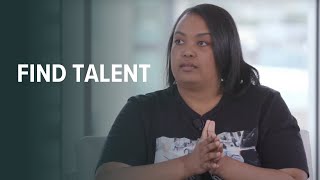
Interview transcript of Arlan Hamilton, founder of Backstage Capital, describing the fund's mission to invest in underestimated founders (women, people of color, and LGBT founders), her journey from the touring world to venture capital, and the experiences that motivated her to start the firm. She summarizes portfolio scale (130 companies across ~4 years), gives an example portfolio company (Mommy / MAHMEE) and notable co-investors (Serena Williams, Mark Cuban), discusses resilience, networking preferences, being based in Los Angeles rather than Silicon Valley, public outreach for impact, handling criticism, and personal hobbies (photography, podcasts, watching General Hospital). The tone is candid, motivational, and impact-focused.
Chapters
So I'm going to dive right in. So Arlen is the founder of Backstage Capital. Could you share a little bit with us about what is Backstage Capital?
Yes. So we are a boutique venture capital fund. So we make investments and we invest in the underestimated, in our view, that is women, people of color, and LGBT founders. So we make investments into tech companies.
Awesome. So talk me through a little bit. You have founded this fund. It's incredible. It's very important. What was that one moment in your life or that one scenario that you happened upon that you said, you know what? This is what I'm going to go do? Because you were a tour manager before, right? Yeah, I was working in very different.
Different parts of the touring world. Yeah. It wasn't one moment. It was a few moments, kind of dots that kind of made a line. And it was just seeing, mostly seeing the underrepresented kind of get overlooked and ignored for too long and just really seeing that over and over again. These great companies that people were just not interested in talking to. And I would send them deals. And then actually, something I don't talk about very often is that there was a deal that had a traditional founder, whoever that means, But I actually connected them to a major fund and the fund passed. And then two months later, I saw that that fund actually led a big round for them. And I thought, well, I must be good at this if I'm putting that together. And I didn't get the credit for it, but I must be good at it. And I don't want to be on the sidelines anymore. Just like founders were being overlooked, I was being overlooked as an investor.
Well, that sucks.
It does, but it created this, so I have to be happy about it.
Okay, awesome. So you work with some awesome startups, some awesome founders now who have some real grit and determination. Could you give us a little bit of a flavor about what are some of those businesses? Who are some of those founders? What are they up to?
Well, we've invested across two different. So I've invested across two different funds, mainly at Backstage Capital, and in this year, an additional 10 or so companies in my own fund. And so it's 130 companies in four years. So it's a lot to pull from. So we invest agnostically, which means that we can look at everything, really, as long as the founders are underrepresented and underestimated. And, you know, since there's 130, you can pull, maybe one recent one is called Mommy. And they are. They kind of. They Link the parents and the care providers during birth and then after birth so that they can kind of track how they're doing. And in some cases it saved lives because while you're, you know, you're not really given a big blueprint when you leave the hospital after you have a child, no matter how many you've had, you kind of have your team and that's great. And you have these follow up calls, but you don't necessarily have someone tracking you day by day, minute by minute. And so they have saved lives by noticing someone who had really severe postpartum depression and catching them before they even knew it and things like that. So Mommy. And it was. I actually led that deal. And Serena Williams and Mark Cuban are in the deal with us as well.
That's so exciting. We had Alexis Ohanian here with us yesterday. She was talking about the importance of paid parental leave.
Yes.
So it's definitely a hot topic right now and it should be. Yeah, that's so exciting. Where can we buy it?
Well, you go to mommy. M A H M E E and you can sign up and you can either you're a parent that's, you know, going to have a child or newly had a child or you can be a provider, you can be in the health industry and take a look at it too.
Awesome. So switching gears a little bit. So we talked about some of your founders have crazy resilience and grit and you're obviously helping them. You yourself were. My understanding is you were living in Texas.
Yes.
And you bought a one way ticket to San Francisco. And you're like, that's it, I'm just gonna make this happen. And you were pretty much sleeping. We're in the airport for a little bit. I read that's incredible. Like what was your plan B if this didn't work out? Plan B.
So I actually have never been asked that question before about this particular thing. Plan B. I used to say that plan B was like planning for failure and I didn't really like it. I think I saw that on Arsenio once. I don't know if anybody in this place knows who's Arsenio, but I think I. So I kind of had it in my mind. My plan B really was that my plan was I was going to give this everything I had and I was not going to stop unless I was doing harm. You know, I think you should take no's and use them as fuel. You don't take no's over and over from the same person because that's abuse you don't say, I'm going to ask you over and over again because they've told you what they want, but you take their. No, you go to the next. You go to the next and go to the next. And I knew that I would do that. To be quite honest with you. I can't remember a time where I thought not. This isn't going to happen. My thing was more like, this could take 10 years, this could take 20 years, but I'm going to do it right.
So I did some research for this interview, and everything I read about you as part of that story was that resilience that, like, hey, the thing that I love so much about Arlyn is that you can see that she's just not going to give up. I believe her. I believe in her. That's incredible.
That's very sweet. Thank you.
It was awesome. And my question to you is, like, who inspires you? Like, who do you admire? Like, who do you look up to get those moments?
Mother. First. My mother, Earlene Sims, because she just has that. She just has that resilience. I mean, I've seen it over 70 years. I've seen half of that of her 70 years. And just a wonderful example. And. And then, like, you know, there are people, like, growing up and then into my 20s and 30s. Richard Branson was a big one because the judge told him he was either gonna go to prison or be a millionaire, you know, and two, very distinctive, because he could see that. Like, the judge could see that. And so he just has a really interesting life. And I kind of have a kinship to it. And then people like Janet Jackson, people like Oprah, like, I just listened to her. The making of Oprah podcast just yesterday. Yeah, you should all check. Making Oprah. Making Oprah podcast from 2016. And I was just like, how you. I mean, just fell in love all over again. Because she's just. She's a movement. She's just completely force of nature. And it's just people who just against all odds, kind of, you know, never. Nevertheless, they persist. That sort of thing. That, to me, that's really inspiring. And because it doesn't have to be huge. It doesn't have to be that you are famous or you. You're rich from it. Like, I find a lot of inspiration from people who just do their jobs really well. Like, honestly, like, there was. I went into it like a CVS and. Or Walgreens, one of the. One of those. And I. There is a woman there who just kn. Where everything was from. Like, Top to bottom in that store. And I was just like, can I study with you? Because I just love that you care so much and that you study so much and that you know your purpose so much. It was just really cool.
That's awesome. So Silicon Valley is very synonymous with investing, especially in tech startups, funds. You're based in la, correct?
Yes.
So why build a fund, an investment firm, a startup outside of Silicon Valley?
I mean, I never was part of that whole thing. I didn't have any reverence for it. I didn't think it was the promised land. It was a great place for finding talent. Yes. But I had been to other cities in the country and I knew that talent existed outside of Silicon Valley. And I wasn't necessarily trying to. Like, to me, the biggest goal wasn't let me be the next insert older white man investor here. Like, that's not exciting to me. So I wasn't like, I have to be there and I have to emulate what they're doing and I have to be in that crowd. And I really don't like networking. Like, I like to meet people and talk to people and understand people, but I don't like small talk. And so. And I. And probably surprising to most people, but I am very introverted. So the whole thing of, like, going and playing this game and trying to be cool, and I just. It didn't appeal to me. So I thought I'd go to someplace that was more grounded. Los Angeles.
Amazing. So networking. Yeah. Uncomfortable. We had a bit about it on stage earlier this week.
Yeah. Yeah.
I think that's why everyone left.
Yeah.
So why do you come to events like this? You know, you're here. We're very thankful you're here. Thank you for coming.
Thank you.
And, you know, you were on the COVID of an incredible magazine. You did an amazing interview with Emily Chang recently. Like, you're very vocal on Twitter, for example. That's how we got connected, which was incredible.
Yes.
So talk to me about why that's important for you to be out there, especially if you are, like, more introverted, potentially. And not that those two things.
I mean, it's about everything that I do that I think about is about impact. And so there's impact one on one, and then there's impact where, you know, you can kind of reach more people. And so, like a really well done event, you know, can get out to a lot of people. And also I feel like there are a lot of things that I didn't know up until very recently and still plenty that I don't know, but there are a lot of things I didn't know that would have helped me save time. And so if I can kind of pass that on to somebody else in this kind of environment, I love that, too. So it's all about, like, impact and purpose.
Cool. I love how focused that is.
Yeah, it's all day.
So inevitably, when you're doing something a little bit different or just that shaken it up, that hasn't been done before. Especially as women, we get a lot of pushback sometimes, like, can you talk to me about how you handle that or how you think about it?
I tweet, yell, good. I call people out. I make up little names for them. So you mean, like, when people are just being jerks because you are something, because you're a woman, because you're different.
Because you're trying to push on any type of stereotype?
I mean, I wish better for them. You know, I feel pretty bad for that part of themselves that has to kind of put that on other people. I wonder what that comes. That stems from being in, like, first grade, I used to sit on the playground and just watch everybody and wonder how they were feeling and wonder what they were thinking. Like, that's why I got this bowler's body, because I never was athletic, but I was always thinking and focused there. So I think about the. Like, why. Why are they doing that? But, you know, beyond that, especially if it's a repeat offender, I try to think about how many. I mean, honestly, I think about how many people who don't. How many people don't have the privilege that I have of having a voice or being as, like. As bold as I can be. Because some people think it and feel it, and they feel that, but they can't say it out loud. Or if they did say it out loud, not a lot of people would get to hear it. So I think about that, and I'm like, you know what? If people can handle this in the shadows, I can certainly handle it with a bunch of people having my back, too. And it's their bad. It's like, you know, I'll look at the trolls when they. When they respond to me on Twitter, and I'll just. I'll read it like, oh, that's your bad. Like, that's your bad that you said. Because that's not me.
You know, like, don't internalize it.
It's not me they're not talking about. I mean, I. Do you know that Whitney Gif that She's, like, looking around like, that's me all. I'm like, who are you talking to? You're not talking to me.
I love it.
That is not me, because. And it's the same thing, honestly. When someone heaps a lot of praise on me, I can step outside of that and say they're saying that about some things that I've done, and that's really awesome. But I'm not going to take that on either. So I don't take on a lot of praise and I don't take on a lot of negativity. I try to stay as centered as possible.
Amazing. So we talked a little bit this morning about not necessarily the cliche term of work life balance, but give us a little bit of insight. What do you like to do outside of backstage capital? What do you do to sort of keep yourself inspired?
Yeah. Well, very recently, I started getting back into photography, and I don't know who your sponsors are, but iPhone. If you have one. If you don't have one, get one. If you have one, go to that portrait mode and start playing around. Because I have some beautiful photos that I've blown up, and they're just gorgeous. And, like, photography inspires me so much because you're kind of having a conversation with the person without speaking, and it kind of. It's just another, like, layer to what I. What I enjoy about life in general. So that's a lot of fun. There's very low, low pressure. You know, you take a bad picture, you don't show it. Anybody that didn't have. It's all good. So I like that because there's a lot of high stakes in the world that I'm in every day and high expectations and all sorts of things and 130 companies and all sorts of things happening, but a photograph that's you, that's something that's yours. I also really like. I mean, I love General Hospital, and I've loved it for decades. And I'll watch that. I still watch every episode, so I'll continue to watch that. That's amazing podcast. The podcast helps me a lot because it's on a. I'm on a journey. Yeah, it's called your first million, and I'm. I'm on a journey in this podcast. And so that's like, again, low stakes.
Love it. So you're going to be heading up to the ballroom here at Inbound pretty soon. What do you hope to leave the Inbound audience with today?
I hope that if anyone is in that audience who feels like before I speak, feels like they're not supposed to be in the room or they're not allowed, or this room or another room, or they feel like they can't start something or they're holding on to that. I hope that they feel, like, empowered by themselves to do it.
Me, too.
Yeah.
So, last question. We ask everyone this on the inbound studio. What does inbound mean to you?
What does inbound mean? Wow, that's tough. Okay. In the word or the construct open to your introduction. Okay. What does inbound mean? It means that you have the attention of people. Cool.
Well, thank you so much for joining us. I'm sure everybody here would like to say thank you as well. I'm looking forward to seeing you in the ballroom in just a little bit.
All right.
Thank you.
More from Patrick



A NEW BREED OF PARTNER: The Partnership Ecosystem Model Journey of Patrick Biddiscombe, Part 1








Customer Success Workspace: Never Lose Sight Of What Matters Most | HubSpot Spotlight