The Best & Worst GPTs + How To Make Your Own
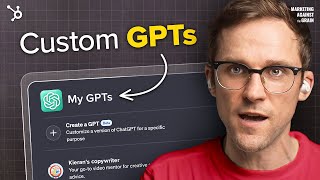
Conversation between Kip Bodnar (HubSpot CMO) and Kieran Flanagan (Zapier CMO) reviewing early real-world uses, strengths, and limitations of GPTs shortly after OpenAI’s GPT store launch. They demo fine-tuning on personal content, multimodal web/page generation, API integrations, and proprietary-data use cases, and discuss marketplace quality, friction in fine-tuning, and where GPTs add value for businesses.
Chapters
On today's show, we are doing a check in on GPTs. We're a couple weeks after the big OpenAI announcement. We're walking through some of the best GPT examples and what's actually happened once this technology has been live to everyone and how you can use it in your business. I'm your co host, Kip Bodnar, CMO at HubSpot. I'm joined by my co host, Kieran Flanagan, who's the CMO over at Zapier. And this is marketing against the grain. Let's get into today's show. Kieran, we are in the post GPT era and I wanted to start out with something, my friend. I don't know if GPTs are a success for users yet, but clearly, clearly they are a success for OpenAI.
I think they were a big success. I think they have opened up people's creativity to, like, how to use AI.
You gotta think that Sam and Satya are calling up the Nvidia CEO, being like, hey, man, I, I know we had these orders for GPUs and I need to, I need to bring those up higher.
Double the amount of orders.
Yeah, can I double my order and can I get them twice as fast?
So there's a, there's a couple that.
Yeah, let's go.
All right, so let's go into Linus. And so there's some, like, pretty good examples here. One of the examples is how you fine tune the GBT with your own data. So this is an example of someone called Trey Ratcliffe training it with 5,000 blog posts. What he does is he critiques photos. And so he built a GPT that allows someone to upload a photo and then they'll critique it using his style. This is an example of where I thought GPTs would really excel. Like if you actually upload your content and actually be able to like customize it on that stuff to be able to give that output. I am now starting to think that if this content had existed on the Internet, ChatGPT is already trained on it. And even though you're fine tuning it through GPT, I haven't found it to be as good as. So, like, let me give you an example. This is, this is me, right? This is a LinkedIn post a generation.
Oh, you made a little, little GPT to write your LinkedIn posts you love.
Yeah, well, I just uploaded my style, like all of my posts and then I uploaded like instructions like how I format the LinkedIn post. So let's see if I do okay, like write Me a post on why the GPT store will fail because there will be too much volume and will.
Fail because not enough quality GPT.
There is not enough friction to create an A GPT which means the quality will be per for most.
I like how you say poor like a purr, like it's a cat.
It makes.
Makes me happy. I would say to everybody watching as Kieran is working on this GPT. Kieran and I are, I think on a fuel level of empty. We're punchy, we're tired. We have gone through the Q4 budgeting process and planning process for next year and that is always an exhausting process if you're a marketer and you want us like we were debating whether we should do a show on how to actually survive and do the budgeting and strategy planning for next year. Right. So leave us a comment if you want us to do a little deep dive on what we've just been through or if you're like, nah, that's too niche. We want that out of there.
So.
So leave us a comment on YouTube if you want that show. All right, Kieran, you just prompted your GPT.
Let me actually show you a cool thing, right? So let me do.
I love cool things.
Let's do an A B test in real time. Write me a LinkedIn post. I'll just change it.
Oh, oh, I see what you're doing and I like this. So for those who are not. Hold on. For those who are not on the YouTubes right now, you have created.
Oh yeah, let me just.
With the prompt to write a LinkedIn post. And you also went into Chat GPT, which is not your custom Kieran LinkedIn post trained model to ask it to create a LinkedIn post about the same thing. We're going to compare the results, right?
Okay. So this is like the bot fine tuned on probably like 50 LinkedIn posts. 52. Okay. Yeah, 50 plus LinkedIn posts. Like it's got enough all in a single doc. And I actually give it the some instructions to say, you know, the first sentence should be really punchy. It should be a setup. It should get something that resonates with marketers, a problem or an opportunity. And it should make people curious to want to learn more. It should be short punch. The body should be short punchy. Reiterate the problem, reiterate the opportunity and then provide some points on why you can either solve that problem or go after that opportunity. Now, off the bat you could see this isn't good because it's not even formatted for LinkedIn. Right? It doesn't even look like a LinkedIn post. Looks like a blog post. But even if you just read the.
Start, it doesn't even look like a good blog post. It's just paragraph after paragraph.
You say like one, one or two sentences. I like I'm. The format should be one or two sentences to begin with. So this is, it has this weird like style of writing as well. Whenever I use it it's like it has this kind of weird like it's like walking in a candy shop and instead of sweets it's filled with AI driven GPTs each or your creative muse. It's like some sort of 18th century.
It's like it's trying a little too hard. Right?
It's trying too hard. So like this is the one that's fine tuned on my data then this is the one that is okay. So this is actually even worse. This is the one where it's just ChatGPT doing that. Now I could obviously iterate and refine this, but this is my problem is like it actually doesn't do a great job of fine tuning when I provided the, the content. So one of the things that I found is the reason I brought that up is because Linus's example is one of the ones that I've tried a lot actually is like give it some sort of content that you've created or something that you've created and fine tune it to be a version of yourself. And even I read through this and it's still pretty generic. Maybe his posts are generic, but I bet you they're not as generic as this.
Maybe his posts are generic. Shots fired.
Yeah, well, I don't, I don't know. I've never read this guy's post.
But like it's just hilarious.
And so like LinuxIC thought this was good, but I do think people are over hyping hypen, right? And I actually think writing is very underwhelming. There's another one here that I wanted to quickly get into. So this one here is like interesting. So this is a Designer GPT. This is actually someone who allows you to create a web page inside of GPT itself.
Before we go on to Designer GPT on the Kirin LinkedIn post generator. Kieran, I just want to clarify some stuff for everybody listening. You fed it about 50 of your own LinkedIn posts, right? To kind of teach its style. Did you give it any performance data or any data that helps it understand which performed better than others? What was good? What good looks like Anything there?
I didn't, but I don't think you should need to because in my instructions I said this is the style that works, this file that I've uploaded to you. So base your LinkedIn post on this style, on this format. And actually my LinkedIn posts are pretty consistent in terms of structure, in terms of how I word things and write things. And so I didn't say like this one performs better than the other because the stuff that I give it is the stuff that I wanted to replicate or, or like use as inspiration so you can iterate. I just feel that it's not super impressive when you fine tune it with like content.
I want to come at you with a spicy take here, Kieran. Have a little debate before we go into design. GPT which is isn't the new GPT builder by OpenAI. Isn't it exactly what we knew it would be? And just how the API has been working. And the reason I say that is because I'm looking at my own team at HubSpot. Our work with the API, like the GPT4 API over the last few months, for example, what we have found is that yes, it is super low friction to create something. You can prompt that API and you can set up some basic formatting and everything and you can get a result and that is super easy, super low friction. However, all the work is in the elongation of the fine tuning which we have found. It normally takes 4 to 12 weeks of iteration to train the model, train and train that work so that it actually gives you the quality of output you're looking for. And so like I think I would make the argument that just uploading 50, like yeah, I get enough. And so there is a barrier of friction here to this the GPT process. It's the GPTs that are trained and fine tuned over a long period of time that I think will be really successful.
I don't think my use case is actually the most interesting use case, but it's the easiest use case to get started with. I think that was because I do think GPTs are super cool in some places. This one here is like kind of interesting, right? Like, so I have a ton of things saved to go over the weekend to start to build some good ones. It starts to show you how you can build apps through natural language. So if I say create a drip campaign campaign for this LinkedIn contact and then I give it your LinkedIn record, it should actually figure out, oh, okay, so like this is kind of cool, right? So I set it up So I set it up. So we're gonna, we're gonna set up HubSpot. We're gonna set up job of the role. Could you specify Kip's current role? So we're gonna specify your cmo. Interesting fact, Kip has a photographic brain and likes tomato sauce. Ketchup.
I do like ketchup a lot.
So let's see. Okay, let's see what how this one actually I think is getting better. This because it creates this it can actually pull. So it pulls in your details. First of all, like it. You can start to feed it URLs like in the, in the way that you could on the web app. And then it starts to build this kind of drip campaign. So it will build the first email, then it will realize that you haven't replied and then build a second email two days later.
That's cool.
And actually the. Let's see how it's. Let's see how it's personalized. It couldn't help but admire your ability to recall intricate details. A photographic memory is quite a superior market where speaking of details, I thought let's see. Picked up and catch up. Did it. Would you be interested?
I think it did in the first one. Kieran, that's the second email you're looking.
This is the first one here.
Oh, that is the first.
So unlocking the world Beyond CRM with HubSpot. Second one, a quick follow up. HubSpot's customizable dashboard. Just trying to sell you HubSpot. I understand you're driving a lot. Blah blah blah, blah, like a certain condiment preference. And then the third one, like here's my final nudge. Promise it to the light. It's. It's as light as choosing ketchup for your fries. I just wanted to ensure you didn't miss out on a chance to make your markings. And therefore that's satisfying as the perfect condiment choice. And on and on. So those ones are kind of cool. But this one is. This one is interesting. Like we should get into this because this is when it starts. Like you can actually start building real apps. So first of all, I hadn't seen this before, so that's why you can actually Data is being sent somewhere. So I hadn't seen that.
Oh, that's cool.
Okay, so for our listeners, the first use cases we've gone through are really like use, use fine tune examples to create content. Right. I did that for my LinkedIn. That was the example from Linus. That was the example I kind of did for the Drip campaign. I ingested data from LinkedIn and actually created this kind of drip campaign. This one here uses GPT4 Vision to create a webpage. And so I said we wanted to create. What's this? I'm actually getting surprised here.
Daily Breathwork.
I like. So this is. I like this. Yeah. So you can basically create a webpage. We can start to. We can start to, I think customize this. And you add a photo of a person breathe in and feel unhappy.
But it gave you the whole. They gave you the live webpage.
It did give you the live web page. I was expecting that.
You kind of buried the lead here. You, like, prompted this to build a web page and bill you a web page. And it clicked. And you clicked the link and you went to that website.
Because I was like, wait, what the fuck is going on here?
I was like, this seems pretty good.
Okay, that is. Yeah, that. Okay, so like, you can. You can actually just build the webpage. So this is when it starts to get, like, better. Like again, I've always said that I think content write in is the least impressive use case for AI. It's still a good insistent there, but some of the other use cases I've been looking at are much better. All right, so we're still editing. Okay. We've edited the web page. Yep. I don't know if they're actually. I suppose they are breathing. I didn't really specify.
I just said what breathing looks like.
Yeah. Focus.
Gotta give a good instructions, man.
Breathe in and feel happy. It just shows you when you give bad instructions, you get bad. So that's pretty cool. You can start to actually design a webpage in natural language. In natural language, GPT. All right, so when are GPTs truly incredible valuable? I think they're incredible in two ways. When they're plugged into the multimodal vision and when they actually have propriety data. The data is not. That's not available on the Internet. That's not already part of the training model. And when you actually. So, like, our Rev Ops team have been using GPTs to do a bunch of data analysis, but they're using propriety data, like data no one else would have access to. And it's actually really good. Like, it's able to find correlations, causations in the data. It's able to visualize the data. There's a bunch of, like, cool things when you use propriety data. So one of the things that we said in our original show when we talked about GPTs is this is a gold Rush for people with data sets that are currently under monetized and you can actually build GPTs to monetize them in like really clever ways. So I think they're the two ones that I've seen be really interesting is like multimodal and the propriety data.
Yeah, but that, that is true. But I think even if you go back to your example, Kieran, of your LinkedIn post generator GPT, right. Like it is still what you have built and like you'll still train it and everything is still better than ChatGPT.
Right? Right.
And so if you are just a person who has some reoccurring tasks that it does and you find valuable, it's worth creating a GPT custom and even somewhat trained to do that because it would be better than most out of the box AI tools.
Right.
Like, like I think if you're, I think if you're watching today's show, one of the things you would say is like take the two to three things you do a ton, spend a lot of time and effort on and try to create a few GPTs that basically you can train over the period of months to help you do those really, really well. They might not be able to do them for you, but they might be able to do like 70% for you. Right. And like that is like pretty meaningful because I think one of the misnomers with GPTs is that oh, you can. The average time to create a GPT, it's been reported as about 16 minutes. Well that's to create it, you need months to tune it and after a couple months you're going to have and continue to use a GPT. It's going to get very, very good. This is not stagnant technology like a lot of like the SaaS applications that we're used to. It's going to keep learning and getting better as you use it and as you keep providing more trading information.
This was a really good example of the one that I said was really valuable where Peter Levels.
Peter Levels?
Yeah, Peter Levels. He actually downloaded all of the data he has from his Nomad list. He has a huge site in terms of like all of the best places to do remote work. And he downloaded it all again. Unique data set that only he has access to. And he created this Nomad bot that allows you to figure out the best places to work and live remotely. And that was really good. I think it's not a. I think he realized, I think he turned it down cause I was following one of his threads that actually the data you put into the GPTs. I don't know if you've seen this is accessible, you can ask it to give you the JSON file. So if you're, if you upload, it's not that cool because if you upload data and you don't want anyone else to see that data, I can get that data from your GPT. So I don't know that's why he took it down. It's. It doesn't seem to be available anymore. But this was a really good example of one where he had propriety data and created a GPT around that. So you can see like if you ask for the largest developer community in Bali, it gives you some really good information. Okay, so like we kind of recap because this is somewhat of a live demo but we're recap a little bit the kind of use cases we've gone through. So we went through like one of the ones that's really easy to create which is me fine tuning based upon data that I find. So I created another one based on Steve Jobs youtubes. So like any, any videos in YouTube's where he talked about marketing, I grabbed the transcript and put it into the GPT and it could give you marketing advice based upon Steve Job. I got all of David Ogilvy's books in PDF format. I don't know if I meant to do that or why they were available in PDF format if that's allowed. I didn't really do that, but if I did do that I created, I would have created this.
You would have created a no co VGPT had you done that.
So I created this thing where you can have like a five day email course, right? So you actually say, you know, you can give it your email address and then it will create you a 5 day email course based on the lessons of David Ogilvy's books. So they're all ones that are trained on data. So then the next thing we actually talked about was this kind of this multimodal one. So actually people being able to like iterate and create things on the fly through GPTs, whether they're logos, whether the websites, there's a bunch of different ones where people have been able to like I. There's another one where someone actually recreated mid journey within a GPT because they took all the mid journey prompts and trained it on the mid journey prompts and then you could just use it like mid journey. So this one here is like the one that we showed. It's really cool. Then you have propriety Data. Then we brought back then. Then we had Nomad gbt, which is proprietary data under monetized data sets are going to be huge. This one here is another example of propriety data. So this is Spotify.
Oh, cool.
So let's grab this one. So give me 10 so that you can actually drop a Spotify link to a song, playlist, user, artist and explore that, but you can actually explore insights around it. So let me. Oh, this is actually. I hadn't thought about this. Providing.
What task can you do?
Yeah, start to think about building it like an app actually. So you can actually show the functionality. And so this one is really cool because it's telling you the actual functionality it has and what you can actually do. So let me just see what we can do here. Oh, let's do random song selection.
Can I do. I wonder if we could do something around our podcast on Spotify.
Convert it.
But you need music.
Yeah, if you have a YouTube link. Song I can find. Oh, that's cool. If you have a YouTube. If you have a YouTube link to a song, let's do like random song selection. It gives us a Spotify link. So this is hooked into the Spotify API. So that's the next part I was going to go on to is this gets really good, is when you can start to plug it into APIs, which is when you can get it to use your apps, retrieve information from apps, do things with apps. Okay, get the random song. Give us a random song from Spotify.
It picked Bruno Mars. Bruno Mars to listen to.
There you go.
Featuring Cardi B.
So the next part really is the API part. Now I haven't got to the API part. I think we should come back and do an API part. But the thing I wanted to quickly touch on next was because it actually speaks to something I've been thinking through in terms of the UX experience for AI. So like just the creation of these things, right? You can create them in two ways. You can create through natural language or you can go to configure, right. I can start to say, hey, I want to create a GPT bot to do teach a founder how to acquire their first a hundred customers. So I can and it will start to like build the bot with me. Now what's interesting about that is this is kind of the point of view that I would have had that there is. There's going to be this natural language layer on top of software. And that natural language layer is just easier to use and better to use. And then the more I created bots, the more I find myself actually going into the configure screen. So you can see here that it itself is configuring itself. It's given itself instructions, instructions. And what I did was I would go in and start to just give it the instructions myself. I found it easier. And so I do think when you go through this, this is a great way to compare and contrast. Like the old way that we've done things, which is we went in and set things up and clicked around and done things and the new way, which is like we just had a natural language interface that there really is a place though for the click, click, click, set things up yourself. There's a. It's faster in a lot of cases. It's easier to do in a lot of cases. And I think actually more advanced users might not want to go through a AI interface and go back and forth, go back and forth. They just want to do it themselves. Like a developer would probably just want to code things up themselves. Someone who's really advanced just wants to go up and set it up themselves. And so even just the configuration of these is actually a really good like comparable in terms of how it feels like to set up a new product through natural language and how it feels like to set up a product in the old kind of configuration way that we would have done in software.
I think you're totally right that how we build software is changing how we think about software. Because you can have such micro use cases with these GPTs. And I think that's something I want everybody watching today's show to understand that these GPTs aren't meant to cover like the surface area of a big heavy web app. They're meant to cover the surface area of like a very small refined personal use case like Kieran. How far away from you are you having like a LinkedIn and email autoresponder with like your own GPT for a lot of the common questions people reach out to you.
This is API. So this is when I. So like they've added actions. Right. So you can actually hook GPTs into any software apps. Zapier AI actions obviously allowed you to expediate that and actually hook into plug zapier. Yeah, but it's. I get, I'm getting asked about that a lot from people is like how.
Do I know you are. I am too. Yeah.
So I think, I think again very cool for fine tuning on your own data. Gives you something a really cool plugged into multimodal like iterated on the website page. In the actual GPT. Really cool for propriety data, really cool for some other use cases. But when you start to plug it into the APIs, that to me is like going to be really interested. And I've started to see some people who have built things. I don't know if you saw this. I have to show this because it's my favorite thing that is anyone's done on one of these things. So this guy here.
And now as I move around he. Here we have a remarkable specimen of Homo sapiens, distinguished by his silver circular spectacles and a mane of tousled curly locks. He is wearing what appears to be a blue fabric covering which can only be assumed to be part of his mating display. Look closely at the subtle arch of his eyebrow.
So basically this guy, what he did was. I'll just describe what he did. So what he did was he hooked up his webcam to GPT4 Vision and then he used 11 labs to have a David Attenborough's voice narrate his every movement. And so as he moves on the camera, it's David Attenborough. Attenborough narrated his life and it's absolutely hilarious. So the last thing I wanted to leave everyone with. Right, so we've kind of covered the GPTs. We'll do an update, I think, with API access. The thing I wanted to just cover on was the GPT store. There's a little hack we can give our YouTube listeners and how to find all the GPTs.
Kieran, I had something to show on this. So Rohan over at the rundown, he built a GPT to find the best GPTs. Oh, did you see this? So he built a GPT that we can all use links right here. We can leave it in the show note. But you basically use this GPT to explain your use case and it will then surface the best GPT you should go and use to solve that problem.
Oh, that's cool.
Okay, so that's like a GPT that recommends other GPTs, which is pretty awesome.
Yeah. The other way you can do it is you can actually search for. If I just show you this. So you can actually search OpenAI's website. So, like they're all in this GG folder. So if you do site colon chat.OpenAI.com GG you start to see, I think, I don't know this, there's about 6,970 here. But it starts to pick up a bunch of the ones that you can look at.
And look, you can add different. And you could add different Search queries at the end of that. And you know, if you want just the marketing ones, for example, I could.
Put market in here so I can find all the marketing ones. I can put stock, so there's like 45 stock GPTs. I can put sales, so there's 21 sales. So how many marketing are there? That's pretty interesting actually. So marketing people have built 94, 94 marketing, 205 design. So there's, so there's a, there's a bunch here, right? So there's already like 7,8000. So if you imagine the app store when it first went out from I, from the iPhone, I bet you there wasn't 7,8000 apps the week after. So actually what does this speak to? It actually speaks to a problem the store has. GPT Store has to be valuable. Not just the name, the name sucks, but actually I guess it's branded for them. But the low barrier to creating a GPT is problematic for the store. The fact that there's no friction means that it's going to be overwhelmed with low quality, just GPTs with very little value. And you're going to be, you're going to have an app store or a GPT store probably in a month's time, too much time with maybe a hundred thousand and ninety nine percent of them are going to be the. Some of the ones that we show which are like cool but not that valuable. And that is where I think they're going to have some problems and how they actually surface ones that are really valuable. We'll get ongoing usage. So it's kind of cool to where they're in your sidebar. But I've added a bunch and I haven't found myself going back to them. I just go back to cheap ChatGPT and so they're going to have to really solve this use case problem. I don't know if they really care. I think again, this could just be a cool thing to release. They get a ton of traction, a ton of publicity. It's not the, it's not the core thing that it's not the most important release in their dev day. It's the coolest one and so maybe they're fine with that. But it has some similarities to the Plugin store where Plugin store did have more friction, but it just, it doesn't make you want to go back and use these things day in, day out like you're, you just gravitate towards ChatGPT. There's the experience between one of these and ChatGPT in a lot of cases it's just not high enough to pull you over to continue to use that ugbt.
Well, Kieran, it's friction overall. Right? Like what OpenAI is taking, they're taking the Android approach, not the Apple approach. Right. The Apple approach was you have to submit your app to us and we will approve whether this app is good enough to get in this App Store. The Android approach is, yeah, build an app, put it in the store and if it's good, people will use it. Right. Which just means there's a lot more noise.
But the friction to create an app is higher than me uploading the document.
That's what I'm saying. It's the Android Store philosophy, but with even lower friction, which is even lower friction. Right. And I think what could happen is you have a ton of noise and then you have to figure out and you have to give the right search and marketplace layer to help people truly find the good stuff. Which I don't think OpenAI is in a hurry to do because I don't think this is, like you said, the top priority for them. So I think in the short term it's going to be a lot about us making GPTs for us to use ourselves versus maybe going and finding a GPT that we're going to go and use every day. Right. I think those GPTs that we're going to use every day come back to what Kieran said is that the secret sauce to GPT is the data, proprietary data, and how they access and leverage APIs to actually go and do tasks for you. Like the website generation example that you showed Kira, where it's like, oh, you're actually like going to go and actually make a webpage that I can go look at. Like that is really meaningful and as that gets better and I could maybe just go ahead and host and publish that website. Like that becomes very, very interesting, Right?
Yes. So I think next one we do a check in and we build some, I will have some stuff built through APIs and we will see then what.
Worldly things check ins every month or two we'll check in, see how, see how it's going. Because it's technology that as it gets better is going to have a big impact. But we're definitely super early on some cool use cases right now. Some interesting ways to go and find GPTs that might be useful to the work that you're doing day to day. Kieran, I thought you did a great job just walking through some of the examples and kind of where we're at in the current state of GPTs today.
Yes, I did do. Considering I'm mostly asleep right now.
Kieran is borderline comatose right now. You're showing up for the viewers. He is showing up for the viewers and that's about it. Because if it wasn't for you all, Kieran I think would be asleep curled up in a little ball on his floor.
Exactly.
With his dog coming to like lick him and wake him up.
Oh, yeah, both of them. I would love that. Let's go.
All right, we will see you very soon. On the next episode of Mark against the Gray. This data is wrong every freaking time. Have you heard of HubSpot? HubSpot is a CRM platform where everything is fully integrated.
Whoa. I can see the client's whole history. Calls, support tickets, emails. And here's a task from three days ago I totally missed HubSpot.
Grow better.
More from Patrick



A NEW BREED OF PARTNER: The Partnership Ecosystem Model Journey of Patrick Biddiscombe, Part 1








Customer Success Workspace: Never Lose Sight Of What Matters Most | HubSpot Spotlight