The Future Of Technology And Wellness With Will Ahmed And Brian Halligan | INBOUND 2024
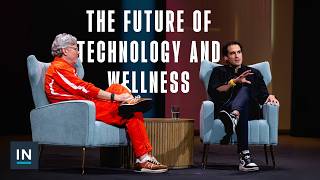
Will Ahmed, founder of WHOOP, discusses the wearable's metrics for measuring recovery and optimizing training. He explains why slow wave and REM sleep matter, how heart rate variability tracks stress, and shares practical tips: breathing techniques, less alcohol, weight training. WHOOP is integrating with OpenAI for personalized insights and working toward predictive health alerts within three years.
Questions this video answers
2012
13 years old
Six hours
98
About 6% per drink
Chapters
Welcome to Inbound.
Thanks, man. What an event you got here.
Yeah, it's awesome. How'd you sleep last night?
Six hours of sleep, but green recovery, so I would say positive.
Okay. I had one of the best night's sleep of my life. 98.
Wow.
I don't know what I did. I'm very happy about that.
Before we start, can we explain the outfit? I need a little detail, a little.
Context on the outfit. What do you think?
Look at this guy.
Back in 2008, my co founder, Dharmesh and I sponsored another conference that maybe people have heard of. It's called Dreamforce by Zaleforce.com and we spent a million dollars on the conference big booth. And the million dollars included the booth and all the travel and the tracksuits. Dharmesh and I got some tracksuits. And I remember at the end of the conference, we got like three leads and Dharmesh said, you know, if we took that million dollars and built our own conference, it might just work out. All right.
Here we are.
Yes. Okay. A long time. Happy whoop, customer. How did this thing come to be?
Well, I was always into sports and exercise growing up. I was a college athlete. I was playing squash at Harvard, and I just felt like I didn't know what I was doing to my body while I was training. And that sort of simple question of, how can you train optimally? What does it mean to recover properly? How do you peak on a given day? These were questions that I was asking myself as a student, and I felt like I had no idea what the answers were. And I also felt like there wasn't technology out there to answer them. And so I did a ton of physiology research while I was a student, and I founded the company in 2012. And we've since built what we consider to be the most accurate wearable in the market for deeply understanding your health and your performance. It's gone from being used by many of the best athletes in the world to now a global consumer base. Yeah.
And I love it. It tracks all kinds of metrics. First thing I check in the morning are my stats. There's so many metrics out there and so many health gurus talking about so much stuff. What are the metrics that we as Homo sapiens are over indexing on that we shouldn't worry too much about in the metrics that we're under indexing on that are the really most important thing correlated with the best things in our life?
Yeah, I think. I mean, first and foremost, measuring your sleep is pretty Foundational, you know, we like to say you can only manage what you measure. And if you're not measuring your sleep, you really have no idea what's happening for like a third to a quarter of your life, which is kind of a crazy concept. Like, you're gonna spend like a third of your life. You're gonna have no idea what happens during that third of your life. And it turns out that you can really measure it. And once you measure it, you can start making minor adjustments to your behavior, your routine, and all of a sudden get a lot more bang for your buck. And. And so sleep, I would say, is probably the most foundational area to start measuring. Recovery is a big theme for WHOOP that we think is critical. So understanding every day, you know, 0 to 100%, red, yellow, green, how ready are you to go? And if you're peaking, like, let's get a lot out of that day. Let's take it on, let's work out, let's do more. And if you're run down, let's give yourself a little bit of a break. Let's find some breath, work throughout the day. Let's slow things down when appropriate, so finding that appropriate balance based on the state of your body. I also think increasingly, health alerts are quite a powerful tool that is accessible. You know, we're able to notify people when their respiratory rates are really elevated, for example. So during the COVID pandemic, many WHOOP members were discovering they had Covid just from looking at their data. And it was just because we would flag one thing being elevated that otherwise they couldn't feel.
Got it.
So these are some of the things that I think are really powerful about where we are today from a technology standpoint.
Yeah. One of the things about this software, I think it's a bug. Just with my software, if I go drinking the night before, my numbers just aren't very good. Do you think you could fix that bug for me?
I will say it is one of the strongest areas of behavior change.
Super irritating.
That we hear about. It's a bummer for sure. But it does turn out alcohol is not great for you. And what's powerful now is because we built an integration with OpenAI, you can actually see specifically how bad it is for you. So you can ask, woop, dude. What is the effect of every drink of alcohol I have on my body? And those of you who are on whoop, I'd encourage you to try doing this right now. But you can actually see, like, I think for me, it's like, every drink I have is like 6% recovery drop the next day. So, you know, you have a few drinks, you're like, automatically, you've gone down a whole color, so to speak.
Okay, so last night we had like, big party. David Spade did the thing. There's lots of alcohol. My family went out and I was like, while I'm interviewing the whoop guy tomorrow, I really better take it easy. Casey checks my stats.
There you go. Yeah, exactly.
Okay. So, so many stats, though. The one that is kind of front and center in your app that all the gurus are talking about, that I really don't understand is this heart rate variability thing. What is it and why is it front and center and so important?
So heart rate variability, I think, is fascinating. It's really probably the single statistic that inspired me to found whoop. I was reading about heart rate variability and I was seeing medical research on it dating back to the 80s where you had world class cyclists, world class power lifters, and they were using this weird statistic called heart rate variability to figure out what they should do to their bodies. So they would wake up in the morning, they would measure their heart rate variability with electrocardiograms, which is a pretty expensive piece of technology, by the way. And then based on their reading, that would tell them how hard they should work. I also was reading about how it was being used for lie detection tests by the CIA, how cardiologists were using it to predict heart failure for former heart failure patients. So I said, wow, this is a very powerful statistic. If only we could measure it continuously. Now, what is heart rate variability? So it often goes by hrv. Heart rate variability is quite literally the measurement of time between successive beats of the heart. So if your heart's beating at 60 beats per minute, it's actually not beating every second. So it's a little counterintuitive. But it might be beating at, say, 0.8 seconds and then 1.2 seconds and then 0.7 seconds and then 1.3 seconds and so forth. And it turns out that that variability of time between successive beats of the heart is a good thing. It's a sign that your body is adapting to its environment. Heart rate variability is this lens into your autonomic nervous system. Your autonomic nervous system is essentially governing your body. And it consists of sympathetic and parasympathetic activity. Now, sympathetic is activation. So that's heart rate up, blood pressure up, respiration up, when you inhale, that's sympathetic. Okay. Parasympathetics all the opposite. It's heart rate down, blood pressure down, respiration down. This is what helps you fall asleep. So when you exhale, that's parasympathetic and you want for every sympathetic to have a parasympathetic response. That's a sign that your body is balanced. And so when your body's balanced, your heart rate variability is higher. And when your body is, let's say, more stressed or hungover or getting sick or under pressure, you will be sympathetic dominant. And so it'll make your heart rate variability go down because you're not going to be able to govern your body as well. And so we measure the statistic heart rate variability at WHOOP 24 7. We use it to understand stress, we use it to understand recovery. And it's just an incredibly powerful statistic.
I love that. Last year I interviewed same stage Andrew Huberman and he gave us all kinds of interesting tips on sleep on all kinds of get daylight in your eyes early in the morning, all kinds of really interesting stuff. What are, if you're a 30 year old male like me and you want to live to be 100, what should we, what are the counterintuitive things we should all be doing? What are the obvious things and the unobvious things we should be doing?
Well, I do think first and foremost figuring out how well you sleep and getting better at sleeping. So within sleep, understanding how much time you spend in restorative sleep is so foundational to your life. You know, often when I talk to people about sleep, they're like, well, I know whether or not I got a good night's sleep and I don't have that much time for sleep. But the reality is, if you just think about the amount of time you spend in bed, let's say you go to bed at 10, you wake up at 5. Okay, you spent seven hours in bed, you got seven hours of sleep. Well, actually you didn't get seven hours of sleep, right? Over the course of that seven hours, you spent time awake, you spent time in light sleep, you spent time in slow wave sleep, and you spent time in REM sleep. And it turns out light and awake have very little impact on your body. Essentially you get no credit for those. But slow wave sleep and REM sleep, that's where all the magic happens. Slow wave sleep is when you produce about 95% of your body's human growth hormone. So people who say they want to get stronger, they're going to the gym. You actually break down muscles in the gym, but you repair Those muscles during slow wave sleep, if you're recovering from an injury, if you've got back pain, slow wave sleep, that's your solution. REM sleep is when.
Let me interpret. How do you get better and more slow wave sleep?
So this goes back to measuring it, right? Because of the person who spent seven hours in bed.
You.
You might be someone who gets 30 minutes of REM and slow wave sleep total. You might be someone who gets five hours. And I can promise you, the person who's getting 30 minutes has a whole host of problems in their life. And the person who's getting five hours is doing great. And your chances are every one of us in this room is somewhere between those two extremes. And so what you need to figure out are what are all the things I can do just to get more restorative sleep for the time that I'm already spending in bed? And some of this will be your environment. So darker room, colder room. You know, how well do you sleep with a partner or with, you know, with a pet in your bed versus no one, you know, going to bed and waking up at consistent times. So if you always spent seven hours in bed, but you went to bed at 10 and always woke up at 5, that in itself is going to boost your restorative sleep because your body's on a more traditional circadian rhythm. You know, reducing alcohol, increasing hydration, trying not to eat within three hours of when you went to bed. Depends on the individual. But when you last had a cup of coffee or when you last had caffeine, for most people, if you have caffeine after noon, it'll start to affect your sleep. And so, but again, some of the things I just mentioned are highly personal, which is where it goes back to, like, let's figure out what that recipe is for you so that you're increasing the amount of restorative sleep that you get.
Okay, what other. So sleep. Got it. Other things that all of us mere mortals should be doing more of and less of if we want to live to a long, healthy, energetic life.
Well, one thing that I do feel, which is maybe a little counterintuitive, is you want to figure out how you can take on more stress. So pop culture right now is big on saying, less stress, less stress, less stress. If you're feeling stress, take on less stress. And I actually don't think that's all that productive, nor is it a way to really aspire to what you want to accomplish in life. The key is figuring out how you get your body to a place where it can take on more stress. And this goes back to figuring out lifestyle decisions, behaviors, so that you kind of steadily have higher recoveries. And then when you have higher recoveries, it's taking it on. It's taking on more stress, it's taking on more strain, it's working out, it's trying to crush your body, but then to recover from it. Right. And so, you know, strength training, great. Cardiovascular exercise, great. But being able to manage stress, I think is probably one of the most important things that we'll see over the next 10, 20, 30 years for humans.
Okay.
The people who figure that out are going to live much longer than the people who don't.
What have you learned about managing stress and being able to take on more of it?
Well, one big component for me personally has been learning how to breathe more effectively. So there's different techniques you can do to breathe more effectively. It's something that we all control. Right. Like, you can literally change how you breathe like this. And let's do it. So, okay, so if you want to. If you want to feel more relaxed.
I do.
You want to have more parasympathetic activity than sympathetic. Remember how we talked before about those two levels? So sympathetic is inhale. Right. So let's do something where we inhale for four seconds and then we exhale for eight seconds. Okay, ready?
Everybody ready?
All right, we're going to start now. Two more times.
I feel more relaxed.
Feel more relaxed. Right. And that was just three breaths. Now, what can you do over the course of a minute? Over the course of 20 minutes? And by the way, there's an opposite version of that. If you need to get yourself going, maybe you have to do a late night, you know, a late night drive or you're feeling tired before a presentation. That's important. You can actually inhale for longer and then exhale short, and that'll get you amped up.
So should we do it?
Let's do it.
Let's do it. All right. Okay. What are we doing?
So let's do. We're going to inhale for four seconds, and then we're going to exhale for two.
Okay. Okay.
And we're going to do it five times.
Great.
All right, ready?
Feeling amped, Feeling more activated.
All right, round of applause, everyone.
Great job. Nice job, everybody. Well breathed. Well done. All right, so.
And that can also make you warmer, by the way. So people who are. Who get comfortable in the cold. So I like doing cold plunges. That's another way to test whether you're getting Effective at these types of breathing techniques.
Okay, okay. Other tips. So the gurus. Huberman. I used to do a lot of cardio. They're like much more weight training. Do more weight training. How much weight training is too much, how much should be focused on why are people, why should be people doing a lot more weight, maybe even a little less cardio. And do you buy that?
I do buy that. I mean, I think that from a longevity standpoint, grip strength and muscle are two of the biggest predictors of how long you're going to live. And I think a lot of that comes back to your body's ability in latter years to be able to carry its own weight, essentially. And it doesn't have to be a huge change in your life. Like, if you're someone who has no weightlifting today, just starting to do bodyweight exercises, squats and push ups and pull ups. I mean, you'll get a lot from that. I mean, I've personally found weightlifting really positive in my own life because it's something that you can get better at. And there's a lot of things that as you get older are hard to get better at. And so if you can commit to having some kind of a regular weightlifting routine, you will get better at it over time. And there's something to be said for as you get older, finding things that you keep getting better at.
That is nice thing. Okay. Food. The gurus all seem to be saying we should be eating like an immense amount of protein. 3, 4 eggs for breakfast, you know, just wolfing the protein. That seems kind of new. You buy it. Any tips on diet?
I think diet is highly personal.
Okay.
I think that what works for one person might be very different for someone else. I think there's a reason there's 10,000 diets.
Yeah, right.
It's because we haven't quite cracked the code, so to speak. You know, I think generally speaking, more protein is better. I think generally speaking, a lot of stuff in a supermarket that's like, you know, not in the outer ring but sort of in the aisles, like most of that stuff is crap. But I think you need to figure out what's right for you. And good ways to figure that out are, one, measure your body, you know, see how what you're eating is affecting your physiology. Be more mindful about how it's making you feel. You know, do you feel energetic after you eat or do you feel super sluggish?
Yeah.
And then tracking your weight, tracking percent body fat. I mean, these are just very simple indicators for is what you're putting in your body actually having a positive effect or not.
Yeah. What'd you have for breakfast?
I had four scrambled eggs, bacon, avocado.
Yeah, I had a feeling you're gonna say something like that. How do you feel after four eggs?
Great.
Great.
I mean, yeah, I would say my carbs have decreased a little bit as I've gotten older, but I want to switch gears.
Like, there's a lot of marketers in the audience, and there's some hand wringing. The marketing seems to be getting harder and harder. You're making it look easy. You seem to be mastering Social. I love that you've signed up Cristiano Ronaldo and Michael Phelps and Patrick Mahomes. Like, tell us about how you see the world of marketing and what's working for you.
You know, from the. From the company's earliest days, we always wanted to build an authentic brand, and authenticity means that you're telling stories that are true. And so we've always looked for professional athletes or partners that authentically love our product and love what we do. And in the case of, let's say, Cristiano Ronaldo, who's now a WHOOP partner and an investor, he was someone who was wearing WHOOP for two years before I ever met him, before there was any affiliation with the company.
Nice.
And by the way, if we hadn't had any relationship with him, he'd still be wearing the product. And so, you know, I got to spend some time with him at his home in Saudi Arabia, and we talked about his data and this and that, and he had a really deep understanding of his body. And it was a story that I felt like hadn't been told. You know, I had seen the amazing highlights of this guy scoring goals. I had seen him ripped with his shirt off, you know, international playboy. But I'd never heard him talk like a sports scientist. And so hearing him talk about his data and all the things that he measured, and I was saying to myself, okay, well, here's a story that we could tell together. And it's not us feeding him notes. It's him just saying how he feels and what he's doing with woop and these sorts of things. And so for me, that's always been. That's always been marketing, first and foremost, is telling authentic stories. I mean, it's never been easier to distribute content. It's never been harder for content to resonate. You just have such a short amount of time to get a message across. So I think being really consistent, continuing to come at something from the same point of view. I mean, Whoop has been controversial a little bit in the space in the sense that we look at it through a performance lens. We're not pretending to be for everybody. You know, we want people who are aspirational, who are motivated in some way in their life. We're not the product that's going to just give you a little nudge and try to get you off the couch. We're the product that wants to take someone who's motivated and make you great or help you get, you know, achieve whatever you're hoping to achieve. And that's just authentically who we are. So at times, we've had different people come to us and say, oh, you know, you should have a softer message. You should try to be more accessible. You know, it's like, well, that's just not who we are. And so I think also marketing is being clear about what you stand for and what you don't stand for.
So you spend a bunch of time by watching social. Must be pretty cool. Spending time at Ronaldo's home is pretty cool. As you spend time with Michael Phelps and Mahomes, what do they have in common? You've interviewed them on your podcast. Is there a common thread amongst these folks that you think makes them special?
They have an insane. They have an insane drive to be better. You know, they're. They're really not satisfied with the last thing they won where they are today. It's a growth mindset on a level that's like a sickness.
Yeah.
You know, but that's how you achieve this insane outlier level of performance talents. It's not just that they're very talented. It's just. It's. They have a relentless commitment to growth, and with that growth being paramount, they're willing to sacrifice almost everything else. Like, you wouldn't believe the amount of time it takes to be that good and to be that competitive. You know, there's a spotlight on when they compete, but you don't see the six hours before that and the 12 hours after that. That was all about that moment. And it's pretty exhausting. But it goes back to the theme we were talking about earlier, like being able to embrace stress and take it on, versus to shy away from it. These are individuals who have constantly gotten to a comfort zone under enormous stress and then said, okay, now I need more stress, because they want to keep going outside of their comfort zone to then find that comfort again.
Yeah. I've been wondering something. When watching your videos, it's kind of It's a personal question, but if Michael Phelps and Cristiano Ronaldo and Patrick Mahomes had a potato sack race, who do you think would win?
I feel like Ronaldo's probably the fastest of the three, so I'm gonna.
Yeah. I think it was longer, though. Phelps would have a shot. He's got really good endurance.
That's just an interesting.
And I have a suggestion for you of another not quite as good an athlete, but Whoopi Goldberg. I think it'd be really good.
Well, we do share something in common.
Okay. I want to congratulate you because you and your wife have a baby coming along the way. Well done.
Very exciting. Thank you.
Yes. What do you think is the earliest that you could put a whoop on an individual?
Well, I've certainly had social media. Like, I've had people send me photos of them putting a whoop on their. On their little baby. I mean, I think the official stance for. For whoop is that you need to be above 13 years old.
Oh, that's.
There isn't a for privacy service.
Have you had any requests? I have a dog, Romeo, and concerned about his longevity. Anyone requested whoop from for dogs?
We've heard whoop for dogs. We've also heard whoop for horses amongst the. The folks that race horses.
I can see that.
I can see that we're focused on humans right now. Yeah.
Okay. Looking forward, what you tracks. Amazing. I love it. If you had a magic wand 10 years from now, what kind of things do you think would be awesome to track with a device like this? Like, what do you want to track?
Well, I think the. If you think about, like a pyramid of sort of difficulty of anything in the. In the health and performance space, the ground floor is kind of tracking stuff. The higher you go up the pyramid, though, it's all about outcomes and alerts. So outcomes being you put a whoop on and we can guarantee you in six months that you're healthier. You know, it's going to change your behavior and it's going to make you sleep more and you're going to lose weight and, you know, sort of fill in the blank. Boom, boom, boom. And we're seeing signs of this, but to the point where, you know, a wearable actually can definitively make you live longer based on what you're seeing in your data. To me, that's a profound moment. Right. And then the second. And coaching being a big part of that. Right. It's able to coach you towards that. And then the second is. Is alerting so instead of going to the doctor on some random day of the year, you're being told you're going to have a heart attack in 30 minutes. Go to the ER.
Yeah.
You know, am I sick? Am I not sick? Oh, no, you have Covid, you have blank. You've got this illness, you've got this disease, you've got this fill in the blank. And just having it be so much more predictive and preventative, to me, that's the potential of health monitoring. And by the way, I don't think this is 10 years away. I think this is three years away.
Yeah. Yeah. I think it's been fantastic. I appreciate what you've created. I feel like you've taxed some months onto my life and maybe years at some point, and I can't wait to see what comes next. Well done. Congratulations. Thank you. Brian.
More from Patrick



A NEW BREED OF PARTNER: The Partnership Ecosystem Model Journey of Patrick Biddiscombe, Part 1








Customer Success Workspace: Never Lose Sight Of What Matters Most | HubSpot Spotlight