The Growth Strategy That Grew Hubspot To +$30 Billion
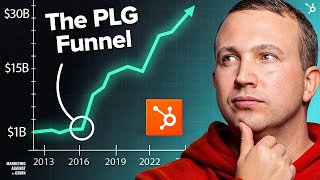
Podcast episode (Kip Bodnar, HubSpot CMO, with Kieran Flanagan, Zapier CMO) discussing fundamentals of demand generation: funnel structure (visits → prospects → leads → signups → qualified leads/PQLs → SQLs → customers), distinctions between sales-led and product-led growth (PLG), lead scoring (fit + intent), rep quotas mix (inbound vs outbound), Hinkles (high-intent segments), and AI-driven personalization for first-touch emails. Includes anecdotes and operational lessons from HubSpot and Zapier.
Chapters
We are coming in hot today. We're talking the basics of demand gen. We're going to talk about how you set up your funnel, how you optimize it, how you do lead scoring and how you do all that with your sales team. And we're going to talk to you about how AI is going to transform the efficiency of your marketing demand funnel. That is a heck of a deep dive. This is backed by popular requests from a ton of YouTube comments. Let's get straight into today's show. I'm Kip Bodnar, the chief marketing officer at HubSpot. I'm joined by my co host, Kieran Flanagan, who's a CMO over at Zapier. This is marketing against the grain. Let's get into today's show. All right, on today's show, we are breaking down the fundamentals of how you drive demand and grow your business. We're pulling out the history book. We're sharing some of the biggest lessons we learned from building a demand engine at HubSpot and Zapier. And it is going to be awesome. Let's get to today's show. Kieran, you might be on parental leave. You're taking a little bit of a break from your daughter to join us on the pod today. And we've got a show that was requested really by a ton of listeners Both in the YouTube comments and emails. I heard a ton about our last episode where we broke down how to build a modern demand generation motion and we wanted to come back and really talk about the fundamentals today. My favorite comment on our last show about demand generation was like, I'm glad you let Kieran cook, which I think is code for like you just went off on all things demand on YouTube for a while. It was pretty awesome.
Pent up energy went pandemic. Yeah, I think, I think people really want to know the, you know, the A to Z of what we've done in terms of our careers building managed engines. A lot of companies, series ABC are trying to build that demand engine right the first time. So I think that's a, this is a good place to start from for anyone who is hoping to do that.
I think that's the big point. You're gonna wanna watch today's show because we're gonna save you a lot of missteps and a lot of mistakes and we're gonna get you to where you're trying to get to much faster. That's why you should be listening to today's show.
Where do we wanna start? There's so many places we start, there's so much.
I think we really do need to start with the fundamentals. If you're a business and you've got, you know, you're in the early days, you're trying to figure out how to actually generate demand either for E commerce or why don't you break down for us like a basic funnel structure? Kind of how we thought about it when we were building it out at HubSpot and how maybe your thoughts around that might have changed or how it might apply differently to a couple of different depending on the type of business you're running.
Yeah, I think we can cover all the bases because what we can do is start with the first iteration of this at HubSpot. Then HubSpot added PLG and we combine those two things together and then Zapier is pure PLG and so we can go through that's really all most of the models in B2B. And so at HubSpot, really at the early days, we had a traditional kind of like sales LED funnel, right. We had web traffic prospects which were two form fields like email and first name. We had qualified contacts which were eight fields. Eight form fields. We captured enough data in that form field to say this is a qualified lead. Because we had a region territory, we could rotate that to the right sales team. We had MQL and I can come back to mql but traditionally that's like demo trial, contact sales. Then you have your SQL opportunity and customer. The thing that was like cool at HubSpot like back in those days, I'm sure you remember, is like we really experimented a lot on the MQL side of things. Right. Like any B2B company, it's usually like marketing. Qualified lead is a demo or free trial contact sale, something like that. And we were trying to figure out like is there any other things that are as qualified like that would close at similar rates. And so we had these kind of high value webinars. We had these kind of templates that were really high value and like very close to the products. One of the best offers HubSpot ever did was done by a woman called a normal. I think she's over in refresh now. She did these, remember the landing pages she did that were built into the product and that was before that became ubiquitous across most PLG companies. And that was. We kind of treated that as an MQL to see if they closed at the same rates. But that's kind of the first iteration. Anything you think I've missed on that.
Yeah, I want to go back and cover, I want to go back and cover a couple of things there. So we looked at web visits because I want to make sure people really grock this web visits. We tracked Web visits in HubSpot and Google Analytics at the time. And that's just both visits and unique visitors. We kind of looked at that, right? And then we had what we called prospects, which is like your name and your email address basically. And the reason we actually had prospects was because of our tool. Website Creator. Website Grader is this great kind of viral free tool that a lot of people use and we got a lot of email addresses and we try to nurture those email addresses and turn them into full on leads. So the reason I bring this up is sometimes you're going to have something unique about how you drive demand that will, will influence like what a stage in your funnel should be. Right. That's not why, that's why it's not the same for everybody. And so if you have a special flow product sign up, free product, whatever, it might be its own unique stage in the, in the funnel then we had our leads. And just as you said, there were eight form fields and it wasn't just for routing, it was also like how do we set up the sales team for success? Before it was eight form fields, it was actually like 10. And remember there was a question like what is your biggest marketing challenge? And what we were trying to do was understand what is the problem they're trying to solve so that when a sales rep called them, they could frame that call specifically in the challenge that customer has. Now we have a bunch of better data and we can kind of get at that without having to have a free text form field. But that was incredibly, incredibly important then. I loved your point on marketing qualified leads. I think one of the core things that you should look at is not just hey, here's a demo, a free trial. Like certain conversion events, what we looked at is the close rate of different events and if it had that event had basically like a 3x or more close rate over like that basic form of lead we just talked about. Then it was a qualified lead, right? Didn't matter what that was. It was a function of close rate, not a function of the action that people took. And Kieran, we even had. Do you know, do you what we have at HubSpot now? We have Hinkles.
Yeah, yeah.
We have high intent non qls which is like the highest converting of those regular leads. So even among the leads now we have Segmented them to say, like, oh, some of those close at a much higher rate than others, and we want to prioritize those better. And so as you scale you, you get more granularity there.
Yeah, I have that in my thing. Just so you know. Kip, I don't know if you know this, but Hinkles came from my team in HubSpot, Rachel, when she was on my team.
Rachel Lies. Yeah. Rachel Lies invented Hinkles.
Yeah.
I don't know how good your memory is. I didn't know if you'd forgotten that.
No, no, no. I, I. We think I will go through. I actually have Hinkles and why they're. They're a pretty great savior for companies that are trying to grow really fast. The thing that's really putting me off right now is I really hate the sweater I'm wearing. I keep looking at myself. It's the first time I wore it. I freaking hate it. I actually hate it.
You look like you're about to go to, like, a cabana in the French Riviera right now.
No, no, no, we're going to keep. We're going to keep it here to see what the audience think. But I, I drop a comment on YouTube.
If you like or dislike Kieran sweater, we're taking a vote now.
Take a swap. I think it's going to go.
He should keep it in the rotation.
It's going to probably go in the bin. So unless you all want me.
I was going to say, Kieran, I was pretty impressed. You were wearing a sweater around a newborn who was going to likely vomit all over.
Said, oh, I've changed for the po. Oh, I've already got that done. I've already got, like, vomit on me clothes. And, like, don't vomit on me clothes. I already have to do this with my dogs because both dogs shed. So I have to, like, have dog in the house. Dog clothes and out of the house. Other humans being respectable clothes.
Kieran, you also told me off mic, before we get back into the funnel that you had, you had a big realization with your daughter and you've been wrong about something for a long time now.
Yes, I have a. I will tell the full story in the next segment. But this story, people may know that I ended up the week of my daughter's birth, I ended up in hospital for three days, Three full days. And I'll tell the full story in a little bit. And I was like, what? You know, what should I do the pass the time? Right. I was reading. I was still tweeting and doing LinkedIn posts for some stupid reason because it was pretty. I was in a pretty serious situation. I was like, I needed something a little light hearted, like boost. I know, like sitting there with one arm the size of the other and my doctor's like, you, this is really bad. And I'm like, oh, I can do a LinkedIn post. But I was like, no, I need something that will lift my spirits, right? And so I needed a comedy, right? I love comedies, but it's really hard to find a good one. And so I did something that I thought I would never do, right? And this show, I've said this to you throughout our friendship.
I've said countless times, you have dogged on this show more than any other show that I'm aware of.
The UK Office is a work of art, right? It is like one of the best comedies of all time. The US Office I refuse to watch because I think it is going to be too Americanized, right? Slapstick comedy, canned laughter, all of that. So I watched a couple of episodes and I love it. I love all of the characters. They're all awesome. They've kept the subtle comedy. Like it's very subtle. It's not very slapstick in the way that some American comedies are. And they kind of kept true, a little bit true to the UK version. So that, that got me through three and a half days of being hooked up to an iv. So I was, I was wrong to delve back into the HubSpot funnels.
Yeah.
So we. One, one of the unique things about HubSpot is it had two very separate funnels. You know, from 2016 onwards we, we had PLG and so we had the one that we just went through and then we had a traditional PLG funnel which is like how do you map out a PLG funnel where you do web traffic, you do. Your contacts are really user signups. We have things called hand raisers which are PQL's, product qualified leads. Right. There are people raising their hand within the product to actually contact sales. And so the way HubSpot did that was they limited the amount of a feature you could get or they gated a feature behind a paywall and you'd have to actually click on something and contact sales and then you have your traditional SQL customer. You also have like a touch the sale which doesn't exist in a sales of that business. And then within that you have your kind of traditional growth metrics as well, which is like you want to see active users. Active users means they come in their first interaction was really good. And they ended up doing something meaningful within that product. And you want to see your number of active users grow over time because active users correlate to revenue. And then you usually have a frequency metric. Like, we had weekly active teams, because weekly active teams, which is two or more. Two or more people in the portal doing something meaningful, we could see that correlated to more revenue. Right. And so we, you know, in a PLG business, you could actually look at your North Star metric, which is like weekly active teams, and you would just see if that goes up, then everything else goes up. Now there's some more complexity in HubSpot's funnel, but that's where we ended up in, like, we had two very kind of separate businesses, which is pretty. Again, the HubSpot story and how it did PLG not as unique today. Cause I think a lot of people carbon copied HubSpot, but was very, very unique in 2016. Like, not. I think I can't think of another example of a company that probably did that.
Yeah, one story I want to tell about that because you talked about, like, the contact sales part of this. And I don't know if you remember, Kieran, I don't know if you were at HubSpot yet or if it was right before you got to HubSpot. Like, Rebecca Corless, who used to work with us, shout out Repcor came to me one day and was like, you know, we should have a way for somebody to contact our sales team on the website. And I was like, yeah, that's probably a good idea. And because we were so content heavy and content focused, we did not even have a content sale, contact sales landing page for somebody to just go, contact sales. And so, like, if you're listening to this and you're like, oh, gosh, I have to go and get this funnel perfectly right. That's not the case. Like, you're gonna make lots of mistakes and you're gonna find unique opportunities to just do obvious things that you probably should have done a year, two, three before. And that's okay. Don't beat yourself over up over them. Just do it and move forward and it's. It's gonna be okay.
Yeah. The unique thing about HubSpot in that case, right, that. That's a probably a thing that happens in, like, PLG companies actually in Zapier, like, that's a. That was a. The first way we created demand for the sales team is because we didn't ever need Zapier, never needed a contact sales company. Contact sales because there was no sales. Right. It's like purely touchless plg. All the demand is coming in through these channels and upgrading itself. And then you add a sales team like oh well, we should give people a way to contact sales. Whereas HubSpot is, this is like the story of that makes HubSpot pretty unique in that contact sales is likely the very first thing you would have if you were a sales led business. But because HubSpot did market in an entirely different way, they were, we were generating demand in a multitude of different places. And then the good thing for us was we didn't start doing the kind of ABC of traditional B2B sales that marketing until much later. Like one of the examples we gave before was you were like, hey, should we just have someone answer the phones? Right. Should we just put contact sales on the website? Right, like and so I think that was advantageous because the hard stuff first and then you can kind of layer on like the more simplistic things. So the, the next thing is I just wanted to kind of touch on okay, like what did we end up in. Because we had to combine these two things together. It might be interesting for, for people and really how that evolved is you actually can fill this in because I haven't been in HubSpot for a little bit of time but I think it's like still like kind of the web traffic still contacts, qualified contacts and then hand raisers and hand raisers are anyone who is raising their hand to talk to sales, whether that's outside of the app demo trial, contact sales inside of the app. They can do a trial, they can hit these kind of gates and reach out to sales to, to have a call and then you have your opportunities and customers and I, I, I'm sure you don't want to get specifics but a reps quota is made up of and this is like a direct rep, not a partner rep. This is a reps quota is made up of X percent of their quota comes from hand raisers and you forecast how much over time will come from hand raisers. So you can say, oh, we can hire X men or reps because we know that we have X amount of hand raisers and that will generate X amount of revenue for them. And then the majority of the rest comes from them working the qualified contact database in their territory which market and help them, you know, sifle out the best kind of qualified contacts in there. Is that somewhat similar to how it works?
Yeah, it's close. So if you think about like the Modern day funnel, what we're running is like visits. And then you have those leads and you have signups. And the core distinction there is somebody's a sign up if they're, if they have a username and password for a product experience. If you're a lead, you've shared information, you've expressed interest, but you've not begun using any parts of our free products. Right. And then we have qualified leads and we have product qualified leads. And so you're going to have those actions inside the product. If you have that sign up access or if you don't, you're going to be a qualified lead because you're going to be nurtured or you're going to have a secondary experience with us that's going to drive more interest, maybe you're chatting with us on the website, things of that nature, then you're going to come in. And then the other thing I would add, because you were right all the way through and on the rep quota side of things, I'm going to say something that is very obvious to me, not obvious to most people, okay. That an average reps quota is going to be made up of some amount of inbound demand, some amount of prospecting, outbound demand. And that prospecting might be people in your database who are older and more dormant and you haven't engaged with or might be people who aren't in your database, your CRM, but the rep, they're in the rep's territory and they've met them at an event, they've done some outreach, they've been introduced in some way there. And the totality that's going to make up a rep's quota. The thing you need to understand when making up that quota is that the inbound demand is going to have a higher close rate but a lower average sale price or annual contract value. The outbound demand is going to have a lower close rate but a higher average average sale price or annual contract value. Simply because when a reps prospecting, they're going and finding the best fits, who can pay more, who might be able to use a broader part of the product offering. Right. Where the inbound lead might come in and say like, oh, I'm looking for this specific thing and I need to buy it right away. And so there are two different buying motions. And I've seen too often quota assumptions be made like they're the same thing when they're actually kind of complementary parts of what the rep does.
Yeah, I think that's actually a really good point. That people probably don't think through when they're kind of trying to build out their their funnel and how reps are going to get their entire quota met.
I think that is kind of the core funnel breakdown and kind of what a modern marketing and sales funnel at its core basic level is going to look like today. Where do you want to go next?
And I think this is where the Hinkle, it's good just to mention those Hinkles again. So the Hinkles originated from the fact that Rachel who managed the growth and demand gen team on the PLG side at the time so we very similar. I think the HubSpot is such a well oiled machine because we always had reps reliant on market and source demand and so we would have to forecast how we would hit a certain number of reps quotas each and every month. And as you continue to scale like your pql, which is your product qualified lead, which is your hand raiser, like just people reaching out to contact sales is never going to be 100% of a reps quota, right? It might be for a certain period of time where you have a certain number of reps but as you scale and add more reps you're going to need to have a different type of mix. And so Rachel and team came up with this thing called Hinkle. So Hinkle started as in pql we would do regression analysis and we would look at what are the similarities of people who upgraded in terms of their engagement within the product and then they would go on to hand raise so we could say hey, like all these people hand raised and then they went on, they went on to upgrade and we do regression analysis and say well if we can get them to use these features that's they have commonalities to the people, people who kind of reach out and actually upgrade and but not all of them would raise their hands. And so Hinkel's originated from the fact that we would say okay, well they've exhibited the behaviors but they haven't asked to talk to a rep. So the rep can actually reach out and see if they can work those leads as well. And that's one way that you can actually start to help reps work that kind of qualified contact database in Zapier. One thing I want to kind of come back to, to end this portion of it is kind of lead score and get your thoughts on that. At Zapier it's that's much more of a traditional type of PLG company Where we look at the number of user signups, we look at how many of them are activated. An active user for Zapier is someone who completes one zap, runs one zap, then we look to see how many of those people upgrade. And then we look to see how many of those we can expand their task usage, which is do more zaps, because that correlates to people upgrading to the higher tech plans. And then for sales, we kind of work the user database to find good fit leads for sales for our teams and company plans. And so it's quite similar to HubSpot, but we don't have like the traditional kind of sales led. It's always originated from plg. Now I think every PLG company as it moves up market will probably at some point have some sort of outbound motion along with that kind of inbound, you know, mine the user base for the very reason that you said, which is a really good point, because the outband allows you to target much larger companies who may not come in touch this or may not use the product in a way that, you know, in the way that you, you want them to. And so you can kind of target the right person in the right company. But we do, we do categorize leads. Part of it is because the amount of volume we generate, right, in terms of signups and we, what we try to generate for the sales reps are book meetings and, and there's just so much demand because Zapier is a very horizontal viral product. And so we do categorize leads mostly done by the company size, the seniority of the role, because we know there's certain role seniority equates to us being able to sell you bigger plans. And then like the conversion event, right? Like kind of very similar contact sales, like these kind of high, highly qualified conversion events. Now there's a HubSpot when had a whole like back and forth and lead scoring for years because reps have their own secret sauce and they don't want you to score their leads for the most part. What are your thoughts on that and where are you all at now?
Yeah, there's a few things I feel like sometimes the point of our show is to give everybody some peace of mind and help you not feel alone. And the first thing I want to tell you is that nobody I've ever met is happy with lead scoring or reporting ever.
100%.
They're never, ever happy with it. And so if you're like, oh, I'm having this huge fight about lead scoring or reporting not surprising. Literally no one is ever happy about it. And you just have to consider it as a work in progress and for this year and how our business works today. This is what we need to do to get to the next stage. And it is imperfect, but it's going to get us there. You know, in the early days of HubSpot we were obsessed about fit based scoring. Do we have companies in our right segment, in the right territories, etc. And then as we've evolved, we essentially now have a fit plus intent model, which is what most companies have. But fit is, or excuse me, fit is hard to get accurate data all the time, right? You have self reported data, you're trying to append data. So fit is never perfect. And then intent, which is like how interested is somebody is also very subjective, right? You're trying to find either intent data from third parties. You are trying to correlate actions that people take with you to be high intent actions that would be like something like if somebody is a marketing qualified lead that's normally associated with they have high intent, right. And so by default, most marketing qualified leads are high intent leads in most marketing funnels that I've seen. Right. But you will have some version of a fit and intent score likely. And then the last part of it, Kieran, that I thought you brought up was really, really important. That the challenge you have with a lead score is that it's never perfect and you have to get adopted by humans if you have a sales team and those humans, they have their own internal algorithm in their head that they think is better than whatever you have come up with, right? And so you either have to prove to them that yours is better or you have to be okay with the fact that yours is the backup algorithm to whenever they are kind of out and have hit the limits of their own, right? And there are some things where you will kill yourself trying to be perfect on this stuff where you actually just could come to peace with some of these things. Do you agree?
Yeah, I think that's it. All reps for the most part are running their own customized lead score and model that they've invented for themselves. And then the problem is you give this one to many lead scoring model that has to be used by all reps and reps think they lose their advantage, right? Like I actually am a really great rep. I know the signals to look for. I can do it really quickly and I'm not going to use yours because I trust me more than I trust your score. And I think reps for the most part they are trying to make their number each and every month. And you know, if they don't do that, there's like pips and all these different things. And so they want to feel in control and I actually get that. Right. Like I want to be in control of my own destiny. Sure, you can support me, but actually if I know the signals to look for myself, I'm just going to go use them. And so that was like the continuous up and down reps of trying to like get them to use the lead scoring model.
Well, but, but Kieran, I'm going to share with you what I think is the secret sauce of lead scoring and where I think most people get it wrong. You ready? And I've learned, I feel like I've learned a lot of this actually since you and I have worked together last. So I think this is some new learning which is basically the reason lead scoring in a vacuum is fairly worthless. Like just having a score and thinking a rep will use it just as we were talking about is a hard thing. What you need to do is say, hey, I'm running this campaign with my sales team and I'm doing segments of our database or of our territory or whatever. And here are these specific people and I've kind of ranked them by a score. Here is the emails to send those people, the content to engage the people, the deck, the call script, everything. And if you package it all up as a full like campaign or program for a rep, they're like great. You have done the totality of the work for me because a big input to that rep algorithm that's in their head is like, what are the materials I already have that I go to that I trust that I'm going to go and share with those people. So if you give them the whole flow that is good, it is going to work and work really well.
Yeah, I think that's this is like the cool thing when I don't. You work in HubSpot and it was really small in the US office. I worked in HubSpot when we were 17 people building at the international office and like that size. The cool thing is you can run a campaign and then shout over to like the reps and say was that any good? Like they're like that suck, like do this, that and you're just like instant feedback. And so like even if you scale and get to become a larger company, the reps, you need to have great relationships with the reps. All of my best feedback has come from reps and the kind of sales directors and things like that you're actually working with because they can just tell you so quickly why something is going to work or not, or like how that worked for their, for their team. I think that's one of the things you have to instrument is those feedback loops.
Yeah, I think I was just thinking about this as we're doing the show, Karen. I think, I think I wanted, I think I want to do an official bring back like an official rep council where I have like 12 reps that I talk to every month and are like, hey, because I feel like we've gotten a little bit away from that. And I think that's, that's on my list for the, for Q2, I think is like, bring that, bring that baby back.
And the thing I really expediated my learning in Zapier was just joining demo calls or like we record all the demo calls. You can just hear the way that reps, you know, talk about the product, the way the customers talk about the product. The next segment I thought we could go on to is this thing I've been thinking through, which is because it's combined a little bit with AI, so it makes it a little bit different than what we've been able to do in the past, which is kind of these first interactions, right? Like why first interaction is such a pivotal part of Dimension Engine. And, and so I'll give a couple of things here. So first thing you want to do if you're building a demand engine or you already have one and you're trying to figure out how do I make it better, is like map out all the touch points and then within a given month see how many people reach that touch point, what is the conversion rate on that touch point? And then you can start to get an idea of like, where should I spend my time now if you go all the way back to first interactions, which is the first thing you do after someone becomes a new user or becomes a new lead, right? That you have the least amount of data about that person and you have the least amount of knowledge of, like, what should I give that person so they can go on to the next.
So you're always going to have the hardest marketing problem out there.
The conversion rate is always going to be worse the further you go back, right? Like, the more data you get, the least, the smaller the number of people who reach that touch point is, but the higher conversion rates to be more qualified. And so the first interaction is the thing I spent a little bit of time in the hospital Thinking about. And I can tell you why, because I was thinking about AI. And so you and I have talked, I think we talked about in the podcast, which I was like, maybe AI is actually the death of personalization. Right. Because if everyone knows that this stuff is really good, but it's done by AI, does it lose its kind of human to human connection? And going all the way back to my experience in hospital. So the Wednesday before Hope, our daughter, is born. Born.
I.
What do I do? I decide to fall down my stairs, right? So I fall down my stairs. I don't think that much of it, right. So it's like my, my elbow here, which has a little patch, like just kind of swells because there's a thing called burstitis. I don't think, I don't think much of it, right. It's tiny little cut. You wouldn't, you wouldn't even notice this thing. Tiny little cut. Sunday, but before Hope was born. She's born on Monday morning. We were going in. We knew she was going to be born because we had to do a C section for some other medical complications. So we knew we had that arranged. Sunday, I walk the dogs. I get back and like, why am I. My elbow is. Feels weird, right? It was like kind of fluid is never good. Yeah. Like all this kind of fluid was gathered and I was like, probably fine. Go to a pharmacist. Pharmacist says, strap it up. Like, it's probably fine. Non infected. Strap it up, right? And so. So Hope is born. Monday. I forget all about everything. Monday, Tuesday in the hospital. Tuesday as one. I get back to the house around 2:30am because I have to pick up some things for Emory and Hope. Wednesday, I come down to have breakfast with my parents because they're looking after the dogs. I take my strap off and I'm having breakfast. And my mom goes, your arm is a very funny color. And she's trying to, like, tell me I'm in big trouble. Would I? Tell me I'm in big trouble. And so I look at my arm.
Trying to not freak you out.
Yeah, the first. And so basically, you know, I will tell. I'll give the. I'll give what you should do if you ever have a small cut. But I learned a lot. And so I look at my arm and I'm like, you know, you have a revelation. Like something is there all the time, but because you're not focused on it, you don't see it. And then you look at it and you go, oh, my God, my arm is A weird color, and it's two times the size as my other arm, right? And. And so I go to the. I get an emergency appointment. The doc. A doctor now in Ireland, it's so bad here, if. If I wanted to get a normal appointment with a doctor, it would take me a week. That's how bad it is. And. And because it was emergency, they saw me that day, and I walk into the doctors, and the doctor just. You never want this to be your first conversation. The first thing the doctor says, which is like, oh, boy, Kieran, that is terrible.
That's literally the last thing you had.
A doctor, like, oh. And so I go to A and E. It's pretty bad. And so it's, like, spread all the way down my arm, spreading up to my lymph node. You don't. Don't want to get an infection in your lymph node because you get sepsis and you're in big trouble anyway. So it's like, Wednesday, I get admitted. Anne Marie and hope are 10 minutes down in another hospital. And so I'm in the hospital here, they're in the hospital down there. They really need my help. And so I'm ferrying myself between my hospital bed, where I've got an IV treatment and antibiotics, to Amri's. And so what's the point of the story? So, like, I'm in a pretty bad place Wednesday, Thursday, Friday, right? My. My daughter has just been born, is down there. They both need me, and I'm stuck here in hospital. And so I'm on the chat, CBT all the time, right? I'm asking it about the treatment they're giving me. I'm asking it, is this the right treatment? I'm asking it to tell me positive stories about people who have recovered from infections like this. I'm asking it to, like, not let my brain run away with me.
If you look at the positive stories, that's the dark place.
But, yeah, but it's like. And I'm like, you know. You know, I'm like, I'm just going to amputate. I'm like, to the AI, I'm just going to amputate my arm. I'm sick of this. I need to go and see my daughter. And they're like, don't. Don't piece the lake you're in. No one would ever need to. You've caught in time, like. And so it's keeping me, like, on a really even keel. And it's given me an incredible amount of knowledge. My takeaway is I Was like, I know this is a robot, like a large language model, guessing the words it should say to me based upon like everything. And it's learned, right? It has no feelings, doesn't really give a shit about my arm, none of that stuff. But to me it felt like someone actually really cared. Right? And you can kind of offload all of these dark thoughts you're having when you're going through something really hard. And so to come all the way back, right? I actually think AI is going to be incredible for personalization and demand gen funnels because I actually don't think it matters. I don't think you, you, when you find, when you get a really truly personal experience, you think to yourself, oh, well, AI did that. You don't think that you think, no, this seems, this is really incredible and thoughtful to me. And so that first interaction piece is. That's where I think AI has a ton of upside because.
Oh, Kieran, Kieran, you have examples. Do you want some scoop? You want some scoop?
Give the scoop because I know you have some examples of this.
You were out and you were, you know, you were with Baby Hope and I planned a show and the show that we're going to record, I think in March. Emmy, who you and I both know really well, who works with me at HubSpot, she and her team have been doing awesome work on just this problem. And one of the things they have figured out is how to basically you train the OpenAI API GPT4 to create one of one personalized emails for that first email you ever get from us. And the conversion rate for that email, just for everybody listening, just so you know, has stayed constant for years, maybe a decade, like a long, long time. They have taken that conversion rate up right now somewhere 2 to 3x depending on the day, from that baseline. So like a huge, huge step up through just much, much better personalization. I've read a lot of these emails, like they're very, very good. And so Emmy's gonna come on in the future and actually show examples. Talk about specifically like how you can go and do this. So that is gonna be. That is gonna be a sick show. This is a little teaser for that show, but it's also validation of the point you're making, Kieran. That AI from a personalization standpoint is huge. One of the bets we made this year at HubSpot is that we would see large scale conversion rate increases from AI. And so far we're like almost two months into the year. That has proven out to be very Very true.
Right, right. I think that validates the kind of point of this part of the Dimension engine, which is if I was helping someone to build or doing some advisory around how to improve it, the first thing I would do is map out the different touch points that someone goes through. Right. And I think that is a pretty probably large figma file. And then map out those conversion rates and start to figure out, like, where you can apply AI to make that much more personal, to make that much more valuable. Because I think there's a ton of upside there and I think over time I actually. I'm on. I think that over time it really improves the customer experience and that's what the customer cares about. They don't care who's delivering that experience. They care about that experience is really great. But there's a window now, right? Like, like again, HubSpot are.
This is the point.
Yeah, this. There's a window where you can be ahead, right? You've already done some things. Zapier. I kind of shared in a previous episode how the team had done some cool things with AI around emails and got people emailing back saying, this is the best email I ever got. That feeling where it's like really unique will go away because it will just become the standard and so everyone will be like, oh, it's like humans, right? Like, get the thing. You have the thing for a couple of days and then you're like, you're like, it's fine, I want the new thing. It's fine. Like everyone, everyone has this thing now. It's just like, whatever, I want the new thing. Right?
And so by the way, Kieran, I'm not sure if that's humans or just you and I, by the way.
Yeah. I really hope it's not just. I really hope it's human, Skip. I really hope this isn't another thing.
Some people are better at this than you and I, to be really honest, terrible at it.
Like, I instantly. So bad I get something and I instantly go whatever.
The what's next mentality is a little tricky sometimes. And I totally agree with you.
Super tricky. All right, so like, that's. That. That's my kind of like, that's my next thing I would probably do on the. On the build and mansion engine is there. We've done a lot here. What anywhere else that we should. We should go that we think people would be. Would find valuable.
I think the biggest thing that we'd love to hear is any comments on from our YouTube audience around. Do you want to keep us to keep doing these type of demand deep dives. We have a lot we could cover here. We could make this an ongoing thing. So let us know in the comments if you want this to be an ongoing thing. Today was all about how you set up a funnel, how you think about opting, optimizing a funnel, how you think about lead scoring and working with your sales team, and then the role of AI to actually make all of that way more effective and efficient. I think that is plenty for today. We'll be back with everybody real soon. Another episode marking Instagram. This data is wrong. Every freaking time.
Have you heard of HubSpot?
HubSpot is a CRM platform where everything is fully integrated.
Whoa. I can see the client's whole history.
Calls, support tickets, emails.
And here's a task from three days ago. I totally missed HubSpot.
Grow better.
More from Patrick



A NEW BREED OF PARTNER: The Partnership Ecosystem Model Journey of Patrick Biddiscombe, Part 1








Customer Success Workspace: Never Lose Sight Of What Matters Most | HubSpot Spotlight