The Importance of a Cohesive Intelligence Strategy | INBOUND 2024
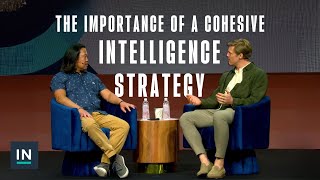
Two executives discuss building a data strategy that combines first-party product usage with third-party enrichment from Clearbit. They cover shortening forms to boost conversions, creating intent signals for scoring, and managing costs when enriching large datasets across tools like HubSpot and Salesforce.
Chapters
Hello.
Hello. Let's talk about some data. How's it going Sam?
Doing well, how are you doing?
I'm great, man. Do you want to start by introducing yourself, tell us a little bit about yourself, your company and etc.
Yeah. So I have the pleasure of serving a marketing team at Bit Ly. I'm the VP of acquisition there. I've also have the privilege of a pretty long tech career. I've been working in tech for about almost 20 years now, which ages me a little bit. But in that time I've worked a lot in different systems a lot. Working with sales teams and driving pipeline and revenue.
Awesome.
And for those of you that don't know me, my name is Matt. I am the GM of Breeze Intelligence, HubSpot's latest product that we launched today and that's a buyer intent and data enrichment product. And our conversation today, we're going to talk all about about data and having a data strategy and we're going to learn a lot from Sam here on how they use data at Bitly and how they think about their kind of like comprehensive or cohesive data strategy. Maybe we can kick off what's one sentence of like the most important way.
That you use data today in go to market?
Yeah, I think the most important way we use data today is to learn more about who our users are. So being able to build a profile of who's coming to our website, who's connecting with sales and more importantly, who's actually buying our software.
Awesome.
So is that mostly data enrichment, like.
Taking the inbound data that you have and adding more data to it?
It's a combination. So I think one of the things that is kind of misleading is data enrichment is only pulling from third party sources. There are a lot of ways to enrich your data. Third party is just one of those. So as you're thinking about your own strategies, like think about how can you pull in data from third party sources but also pulling in data from first party and your own way of collecting data. So how are you doing that and how are you then enriching the record? Because you don't want to ask the user to fill out a 30 question questionnaire, you want to collect that information up front.
So how do you do that at Bitly? How do you from first party data making sure you have everything you need. Like how do you get it from customers without making them fill out a 30 question form?
Yeah. So at Bit Ly we do it a really interesting way. So we do leverage a third party data tool and that goes through our sales funnel. So today our sales funnel, as we're collecting a little bit information, we do enrich it with Clearbit actually, and using the third party data from Clearbit, but our first party data actually comes from our product itself. So we're leveraging the product data to understand how users are using our product and then using that data to then actually personalize our campaigns.
And what are the top couple attributes.
Or properties that you're pulling from the product.
So from the product we're really looking at usage data, understanding how much a user is using our product, if they're using it on a repeated basis, and then the frequency of the use. And so depending on very specific actions that we're measuring for, we'll actually change the onboarding campaign that they're getting so that we understand, oh, you've already taken this action, now let's push you to the next action that gets you deeper into our product.
Awesome.
So to repeat back, it's, you're like.
Counting, you're creating a usage score, you're.
Using that to drive engagement or personalized like onboarding campaigns or outreach campaigns or upgrade campaigns.
Is that right?
Yeah, I would say score is probably over what we've got today. I mean, we're being really scrappy today, but like the intent is eventually to, yes, build it into a score.
I think you can call it a score.
It's all right. Account equals a score.
Yeah.
Maybe let's take a little bit of a step back. We've been using this word intelligence a lot. Can you define what you think of, like what intelligence means to you?
So intelligence to me is really getting some insight into the users that's coming to your website. So, you know, when we all think about our marketing, our sales efforts, it's really about gaining a little bit of an advantage. And so the more you know about the user, even their interests, what they're coming to, how much of the organization is coming to your website, that just gives you a little bit of an advantage. So as you think about, like, intelligence to me is getting that little bit of advantage and that comes in the form of data. So do you know about their industry? Do you know what the pain points of those industries are? And then can you start to customize your communication to align to that?
One of the problems or challenges that seems to come up when people talk.
About data is volume.
How is that? Is that a problem you guys face or just like raw amount of signal that you have to sort through to like.
Yes, just noise?
Yeah. So Bitly we operate two brands. Our volume is so large, we drive almost, we drive actually over a million users a month to both of our platforms. And so when you're trying to figure out how to append that data, one of the biggest challenges we run into is just cost prohibitive. Like you cannot run data append on over a million records without spending a lot on that. So one of the challenges we have and something that we've been thinking through is how do we start building rules on top of our acquisition strategy that allows us to parse out certain records and say these are records that we want to send to data append in enrichment and these are records that we may just want to send down the onboarding flow. And so we're actually actively working on how we're going to build that system here in the next six months or so.
Right.
So it's like how do I decide.
What to selectively spend additional resources on finding more data for? Like how do I find signal and then double down on that signal and do my enrich there and append there?
Is that right?
That's correct.
Cool. And how, what's like what, how do.
You choose which records to selectively enrich today? Like what does that flow look like?
Yeah, today it's actually a very simple flow. We only are enriching the data of the hand raisers. So users are coming in and saying I want to speak to sales are the ones being enriched today. What we're looking to build in the future is a way to identify potentially opportunities for our sales team and making sure we only enrich those records. And then for, you know, the vast majority of our users who happen to be consumers, we also know we can't enrich them. So when we think about like the number of new users in our database that are using non business email addresses, it's actually quite large percent.
Yeah.
And so that limits our ability to enrich. So some of it is not our choice. But we are trying to identify ways of enriching in a more intelligent way so that we are only enriching the data that we want to send to sales and then for any personalization within our marketing flows.
And maybe this is an obvious question, but why are you enriching hand raisers? What do you do with that data?
Yeah, so part of it is the friction of the form. We there's a lot more information that we'd like to know about every single prospect that comes to our website, but we don't want to ask them all the questions in one giant form and basically give them a gauntlet of questions to go through. So we use enrichment because it's a great way to kind of shortcut it. We can ask a handful of questions, three or four questions, get the user into our sales funnel, allow enrichment to add the additional data around company size, industry, even some things around their tech stack. And then that allows our SDR team to even get deeper into the conversation. So now they can send a, you know, personalized message reaching out, saying, hey, I noticed you're in this industry and this is a common problem that we solve in this industry and we can solve that for you. So it's our way of shortcutting the amount of questions that our SDRs need to collect, but also allowing our marketing to be more effective by not asking so many questions on the form and.
Not asking so many questions in the form. Are you using form shortening at all there where you like dynamically shorten, or is it more we're going to trust.
The enrichment data and just ask the things that we can't get from enrichment on the form?
Yeah. So we are not using form shortening at Bitly, but I have used form shortening in my past at a previous role. Lessonly, we actually used form shortening where we were leveraging Clearbit based on the email address. Actually fill in the rest of the form automatically. And so one of the nice things about that is like we were able to show that a 30% increase to our conversion rate on the form by just adding that level of enrichment where we weren't asking you for more than your email address and we could actually create a complete lead with just the email.
Yeah, that's awesome.
I'll break the fourth wall here for a second form shortening. Live in HubSpot today. Like obvious value from.
For anyone with a B2B form.
That's what we're talking about here. They increase their conversion rates by 30% by shortening their forms like, no brainer.
Go do it.
All right, back to our regularly scheduled program. That's really cool. So you mentioned the data attributes that.
You care about, the SDRs care about technology, industry, et cetera.
What's your ICP? Is all of this trying to score and tell your reps what to focus on?
Yeah. So the way we think about our ICP is actually more based on the use case as opposed to the person.
Okay.
One thing that's been very interesting about Bitly as I joined the organization and learned more about it, is that Bitly is being used for a million different Use cases in a million different industries. And really what we're focusing on is how we solve the problem. So when it comes to our sales team, what we're looking for are those high volume use cases where a brand might be looking to use a lot of short links, a lot of QR codes as a way to engage their audience and kind of deliver a digital experience through even like a physical digital experience.
Super interesting.
So the ICP is really about job to be done in use case, not about like firmographics. How do you use enrichment data to help you identify those use cases?
So that's been a little bit tricky and really it's about how we identify the right kind of users. So today what we've been really leaning into are where are the use cases that we have? Like what are the industries that align to our use cases? So we in our business, we have a pretty strong use case with the retail industry where we know the retail industry has a high volume usage of Bitly and the way they communicate out to customers. So the way we're leveraging enrichment is allows us to identify, oh, this is a retailer that maybe we don't recognize the name but we do understand that they're a retailer and that they want to. There's probably a communication there that's using SMS technology. And so for us that allows us just to kind of infer and use that as a, as a way to get in the door.
And then are you using, I'm assuming, but your product data on top of that to identify use case.
So someone comes in from a PLG.
And they start using the product. Are you able to identify what use case they're using the product for?
No, that's some of the additional work that we would love to build in. But we work with our engineering team, we work with our data team and also thinking about just how our tech stack works and then identifying what's the best way to pass this data into HubSpot. So that's still all a work in progress right now, but it is where.
We would like to totally.
One of the things that comes up.
In a lot of these sessions is like tech stack.
I think a lot of people are interested in tech stacks and what those look like. I know you have a pretty, pretty solid stack. It's like simple but powerful. I don't know if simple is the right answer. It's powerful. Do you want to take us through your tech stack and any areas of new investment for you this year?
Yeah, so we have a pretty large tech stack one Thing I always felt like at Bitly is if you. You can name the product, we probably have it somewhere in our company. But thinking about from start to finish, our tech stack, we use Zora for all of our subscription management that flows into our data warehouse. Then from our data warehouse, we're then leveraging an integration through Census to push some of the user data into HubSpot. So the nice thing about pushing everything into our data warehouse and then into HubSpot is then we can append all the additional pieces of the data that we want to and then we can start to build a better user profile. Coming out of HubSpot, though, we do leverage tools like Salesforce, Sales Law for outreach and then Gainsight as well for our CSM teams.
Nice. And for data into Gainsight, is that also coming through like Census and the data warehouse, or how are you moving that data around?
Yeah. So what we're doing right now is we're using our data warehouse as our central hub.
Yep.
That's collecting all this information and then passing it out. But what's interesting is with enrichment, we're actually only doing enrichment right now in Salesforce. And so we also have the HubSpot Salesforce integration that's allowing us to pull that data back in.
Very cool. So, like, the flow is it's starting on the website, going into the data warehouse, data warehouse, feeding into HubSpot. HubSpot's feeding into Salesforce.
Does the data warehouse feed into Salesforce?
It does as well. So yeah. So it's one of those challenges, I think, of any kind of business is as you're kind of building up your tech stack and you're thinking about your data flow. Definitely a challenge that we have is that we don't really have a single source of truth because we're kind of like merging a single source of truth together. And that's a pretty common challenge in a lot of businesses.
Yeah, I think that's very common. I'm sure many people here are facing something similar.
What has been in that stack? It sounds reasonably well set up and configured.
What have been the biggest challenges? What are you still struggling with or where are you trying to invest now?
Yeah, so one of the biggest challenges we're actually facing is identifying our sources of truth. And so we're actually working right now with our HubSpot team to build a process where we identify. Here are all the fields that contain, like, information. And then through workflows inside of HubSpot, we're actually going to start to merge them all into a Single source of truth. So it's our way of taking all these disparate systems and kind of turning HubSpot into a single source of truth just for these fields that we're going through and cleaning up. But we're going through a process right now of actually like force ranking our fields and saying, this is the source of truth. If that is empty, then fill in this next piece with this other field that is empty, and so on and so on. So that is something that we are actively working on right now. And it's really important not only for our sales team, but also our marketing team as they're thinking about segmentation personalization that they have a single field to decision off of, as opposed to like multiple fields that they're trying to check through.
Yeah, I mean, I think that's a common theme that I'm hearing from you is like segmentation personalization. You are selling based on jobs we've done in use case. And so you need to understand what those use cases are so that you can personalize campaigns, segment the underlying data set so that you have those segments.
To go personalize to. Maybe can you get specific about what those fields are that you want to segment and personalize on?
Yeah. So right now, some of the fields that we're working on are even like industry. And the story I can kind of share around industry is we have multiple fields for industry. We have the HubSpot industry field off the company data. We have the Clearbit industry field that we get from Salesforce, and then we have our internal Salesforce industry field that our SDR and sales team has collected over the years.
Yep.
And what we're finding is that they may be similar, but they don't perfectly align. Which means, like, for our team, as they think about building their own target list or segmentation, they have to remember, oh, when I pull from this field, this is the values that I need to enter for retail. Instead of just being able to say, oh, from industry field, just give me retail. So that's the mapping exercise that we're going through currently as we think about how we bring our data together and then also clean it up.
Yeah.
All right, so let's follow that use.
Case all the way through. So fast forward two days and you.
Have perfect industry data.
You can identify every single retail lead in the database. How do you personalize to that segment? Like, what do the next couple steps look like?
Yeah. So ideally, what we'd be able to do from there is start to change the way we communicate to the those users so even in the onboarding, leaning more into those retail use cases that we know are really powerful and being able to share. Because I think a lot of what we're learning at Bitly is that we still have a lot of education to do where a lot of users think of Bitly as just this URL shortener that you use on social media. But that's not everything we do and that's not how we serve the majority of our customers. So as we start to think about even how we personalize, it's more about being able to educate and educate as a way to show the value of our product.
Got it. So we create our segment and we've identified that these are retail users are.
Using us for URL shortening.
We want to expose them, to cross.
Sell them and upsell them to all.
These other features and functionality that we have that allows us to put them into personalized education campaigns.
Yeah.
Cool.
And are you doing those campaigns through HubSpot?
Say that again.
Are you running those campaigns through HubSpot?
We are. So ideally we would want to run all those campaigns through HubSpot. And so part of what we're also working on is how do we scale this in a way that our small team can manage it. And one of the challenges is you look at a campaign like that and you think, oh, we now need to set up separate campaigns. What we're pushing to and what we're striving for is actually to set up a single campaign and then use personalization and content blocks to actually replace the content. But once again, we're leveraging the enrichment data, the first party data to do all that personalization.
Super cool.
Are you doing any website personalization?
Not yet. It's something that we've talked about when we've started to investigate. We've looked at a couple software products that can help us with website personalization and we're starting to think about how we can even do it in a more testing methodology first and then think about how we can do that at scale. It's something that we thought about, but we haven't invested or prioritized yet.
Makes sense.
Maybe our last topic here and then.
We can open it up for a.
Couple of questions if anyone has them. Let's talk about buying intent. I know you've relatively up to date on all the different buying intent data types out there. Is there anything you're using today or anything you're excited about using?
Yeah. So we're actually in the beta for Breeze.
Oh yeah.
And I'm really excited about intent. Like, especially when you think about the way our users come in and the amount of data that we have, we actually find that a lot of users are coming in and they're using their personal email address even though they work for a business.
Yep.
And so intent is really exciting to us and our sales team. As we think about how do we start to identify those organizations that are showing interest in our website where maybe they're not making themselves known, but they are making themselves known by visiting our website. So by leveraging intent, understanding which organizations are interested in our business, we can now go out and be smarter with our outbound efforts. We can be smarter with our ABM efforts. As we think about how do we target those companies that are showing interest with a very different message than maybe those audiences or those companies that are just kind of like visiting here and there. The other thing that I'm excited about with Integrity Intent is our ability to leverage it for our CSM team. So if we see that one of our customers is visiting our pricing page at a high velocity and there's a lot of people visiting our pricing page, that probably is a signal that they're going to do one of two things. They're either shopping us around to get an idea of who might have better pricing, or they're thinking about downgrading and maybe moving down to a lower tier plan and they're checking the pricing page to see what their options are.
Yeah, I think that's really interesting. I think a lot of people think about buying intent just as like new pipeline or indication of first time buying, but it's actually very valuable for like.
Win back campaigns, existing customer retention campaigns.
And yeah, the pricing page always, always, always comes up as like one of the highest intent areas. Are there pages that in the Bitly site that you like discount, you're like, I don't care about the intent on these pages.
We haven't gotten that deep yet. Really what we've looked at is more the positive side of things. So these are the pages that users are visiting that are showing intent. So we use our pricing page. We have a signup page. And then definitely anybody who comes to our quote page, just identifying those first. And then ideally over time we'd be able to optimize and really figure out what's working and what's not and start to figure out those pages that we give value to. And then what are the pages that maybe we take value away from? To your point?
Yeah. Very, very cool.
All right, we're going to open it.
Up for some questions.
But before we do, got a couple slides here. So we launched Breeze Intelligence today. There's a demo station behind us. Go check it out. Sam has been kind enough to be a beta participant in that product. He can answer some of your questions as well. And yep, there's this comes with buyer intent and data enrichment. So hundreds of millions of profiles all at your fingertips available today. All right, questions? I've got a mic there and a mic there. So if you have a question, come to one of those mics and we'll do it. I saw a couple. Do you mind going to the microphone?
Sorry.
Hey, thanks for the session. So in the beginning you guys mentioned form shortening is the way to go.
Yeah.
But a quick question, doesn't that reduce the quality of the lead or the intent of the lead?
It's a really good question. So I'll repeat back. Form shortening. Does shortening the form reduce the intent and like the thinking there would be if they didn't have the motivation to fill out all the fields, Are they.
A lower intent lead? Maybe.
I think it would be an interesting thing to run on like a case by case basis for your business. But what we have found is every single field that you're able to remove past three or four fields. So like a three or four field form, pretty solid. But every field past that that you're able to remove, you see a 1 to 5% increase in conversion rate. So if you have a 7 field form and you've removed just a couple fields, you can see things like 30%.
Increase in your conversion rate.
And I would posit that that is not a massive difference in intent between.
Filling out four fields and filling out seven.
Hi Sam, I got a question for you. When you're doing your data cleanup in your pipeline, are you doing it in the data warehouse by ETL or are you doing it with Ops Hub workflows in HubSpot?
So today we are doing that. Where we're planning on building it today is going to be inside of OPS Hub. And so we're thinking about how we can. Right now we're mapping the fields and then we're going to build a series of workflows that basically evaluate each field and then put that into HubSpot and then from HubSpot, obviously we can then push that data back out. But for right now we're building it for the marketing team and then we'll figure out the rest from there.
Thanks for the question. I don't see any more. So we're going to call it. Sam and I will be just backstage if anyone wants to come for individual questions. Thank you all for your time.
Thank you.
More from Patrick



A NEW BREED OF PARTNER: The Partnership Ecosystem Model Journey of Patrick Biddiscombe, Part 1








Customer Success Workspace: Never Lose Sight Of What Matters Most | HubSpot Spotlight