The Science of Copywriting: Psychological Principles that Drive Conversions
YouTube video transcript explaining how to write persuasive copy that drives conversions. The speaker outlines practical, psychology-based tactics — e.g., poke the pain, use social proof, get small early commitments, employ priming and cognitive fluency, distinguish features from benefits, use scarcity, and personalize messaging — and gives business examples (vacuum product) plus CTAs to templates and related videos. Tone is instructional and marketing-focused with actionable tips and testing advice.
Chapters
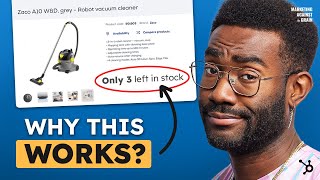
How can you make your copy more persuasive? After all, dry, dull writing can cost you conversions and cash. But good copy is like the best salesperson you could ever imagine. They never sleep, they never take time off, and they never have a bad day. Good copy doesn't just sound appealing or feel nice to read. Copy is designed to elicit action, and the best copy maximizes the chances of that happening every time. So here are some tips, plus a few business examples to help you nail your copy. Number one Poke the pain People tend to buy things for one of two reasons to either make something good get better or make something bad go away. And we as humans dislike negative emotions more than we enjoy pleasant emotions. Think about the last time you found a $10 bill on the ground. Felt like a nice surprise, I'm sure. Now think about a time you realized that you lost $10. I bet you weren't too happy about that. In fact, I bet you were way madder than you were happy when you found the money. Humans are more mot to remove negativity than they are to enhance things that are already good. Copy needs to target a pain point that's specific to your reader. It needs to illustrate the pain in vivid detail and show that you relate to it. Most importantly, your copy needs to prove that only your product can solve that specific problem. Say you sell homework cleaning products. Now, of course, you'll want to talk about the features and the benefits of each product. And don't worry, we'll get into that later. But you also want to make the reader imagine life without your product. Get specific. Share real emotions and pain if you want to sell your all new ultra powerful vacuum Strong copy would focus on the unique problem it solves, say, removing every bit of dirt from your floors. It could sound like no crunchy crumbs left for you to tread on. Hit fast forward on your cleaning routine with our most advanced vacuum cleaner yet. It's not just that your product or service will make the buyer's life easier, it's that it'll remove a bunch of unwanted problems as well. That's what ends up selling. Make that pain a common enemy, a common cause to rally around. When you tap into those pains, it makes the audience feel more connected to you and what you're selling. People need coherence to belong to a group that sees the world in the same way, which is why you should always avoid being too universal or mainstream. When you try to appeal to everyone, you appeal to no one. Okay, so we've seen why we want copy that causes people to imagine how their lives would change by using your product or service. But your reader has also probably gotten pretty good at seeing through the allure of copyright, which is why you need to make sure your copy is backed up with Number two Social Proof Remember how people want to belong to a group. We trust others opinions, particularly those we feel are familiar to us. Social proof is what people use to validate their emotional decision to make a purchase. In fact, the average consumer reads 10 online reviews before making a buying decision, so make sure your copy is supported by rave reviews, ideally from credible people or brands. It's a good idea to have social proof on the homepage of your website. It immediately lets the reader know that you're credible, have standing in your market, and have customers confident enough to recommend you to others. That social proof can include things like a customer evangelizing the value of an e book, a homepage testimonial singing your praises, or a case study that goes deep on the nuanced response to a tough challenge. People are also far more likely to buy into things when they're endorsed by an authority. It's why companies pay millions to celebrities to plug their product or service. It's if you can use specific numbers and statistics for credibility people are wary of over exaggerated marketing numbers will help you quantify your value. Now let's talk about how your copy can encourage your readers to move towards clicking that buy button and that's to get a yes early. This is something all sales folks use, and your copy should too. Getting your reader to nod along or agree to something tiny. What we call a micro commitment is the first step to getting them to agree to something bigger and then scale up the level of commitment as you go. Encourage prospects to make tiny commitments that gradually increase in scale so by the time they arrive at the point of purchase, you've allowed them to build up their own momentum towards making a sale. It's why quizzes work so well. We have an inherent need to finish things we've started. If you really want to get all psychological and scientific here, you can also experiment with priming. Priming is the idea that exposing someone to a certain stimulus can subconsciously influence their response to a subsequent stimulus. For example, you could ask visitors that arrive on your website whether they live in a small flat or medium sized house. Whatever the answer, when they arrive on products designed for those kinds of homes a small cordless vacuum for flats, a heavy duty vacuum for larger spaces, they've already tacitly acknowledged what they need and are more likely to buy. Another really powerful way to increase your odds of getting that yes is by making sure your copy uses cognitive fluency. All that really means is making sure your copy is easy to read and understand what to Do Next Remember, we're in the business of persuasion. We want the reader to flow down the page towards an end goal, so have a simple font that's easy to read. Break up your copy with clear and descriptive headings and subheadings. Make sure that if a reader skims the page that all those headings form a coherent narrative. That makes sense. It sounds basic, but fluency subconsciously guides our thinking in situations where we have no idea it's at work. How easy or hard we find it to process information impacts our likelihood to engage further, so make sure your copy is easy to read and easy to follow. We recommend the Hemingway app as a way to check how readable your content is. It's completely free and will help you catch any copywriting fluency. Boo boos. Ouchy. Next, we need to make sure our copy avoids falling into a classic mistake confusing features with benefits. Here's the difference. We know that humans make emotional decisions first, then justify with logic afterwards. Admit it, that expensive shirt that you really wanted but also really didn't need to buy? Well, I guess it is your partner's birthday in 11 months, so maybe you can wear it then. Yeah, we've all been there. And it's the same for lots of other purchasing decisions as well. Features are what allows the buyers to rationalize their purchase after the decision. Let's say you're writing copy for your top of the line vacuum cleaner. An example feature would be Our new Succomatic has a larger bag that's disguised by our slick design. Benefits tap into emotion, AKA the impact this can have on you. For example, this vacuum lets you clean for way longer without having to pause and empty the vacuum, which means you get the housework done faster and you can get back to actual fun stuff. Both features and benefits are crucial to include in your copy. Too much of one, your copy becomes dry and lifeless. Too much of the other, and it sounds like marketing fluff. And nobody wants that. A simple way to make sure your features and benefits are tallying together is to ask some questions of each of your products or services. Why is this feature important? What problem does it solve? What's the pain caused by this problem? Why does your customer need this? Another key part of persuasive copy is scarcity. Or to put it another way, scarcity equals value. That's why you've got to dial up the urgency when your offering appears finite and coveted, it becomes more valuable. If you know there's an unlimited amount of the thing you want to buy, why rush? Maybe the price will go down. Persuasive copy doesn't let prospects fall into that mode of thinking. Make it clear that your product is in short supply, doesn't need to be pushy. Otherwise your reader will feel like you're giving them the hard sell and potentially pull out of the transaction. Some simple examples that you've probably seen Five people are looking at this product right now. Only three left in stock. Want it tomorrow? Order in the next hour. Don't mislead your customer if you use scarcity tactics. Make sure all your statements are true. Give the reader more information about the state of the item they're considering buying and and urge them to make a decision soon to seal the deal. Finally, your copy needs to do everything it can to get personal. People want relevant content all the time and have a really low tolerance for anything superfluous. Remember what we said about avoiding being too mainstream? Speak to their needs. Your copy should speak to audiences based on their actions and preferences. Back to our favorite Hoover. You could say get your house clean quickly. But a more specific example make every floor surface spotless and do it speedy. By including these simple additions, you've dialed up the specificity to suit a targeted buyer, someone who wants to clean every surface in their home as fast as possible. If you want to dive deeper into that, check out our video on Personas here. Use first names in sales pages, email headers, and subject lines. Personalized emails are 26% more likely to be opened, according to Campaign Monitor. Offer personalized reports. Let users create their own profiles. This gives them a sense of agency and and belonging in your little corner of the world. This isn't an exact science, so test what works. Test your hooks and headlines, ads and emails. Find out what resonates with your audience and get rid of what doesn't. Run paid ads with different hooks and see which gets the best click through rate. Remember that copy, like all good marketing, is about reciprocity. You're offering a value exchange that both parties are happy to be a part of. Whether that's offering a really helpful piece of content or discount if they sign up to your newsletter. Use your copy to demonstrate early that you're a business of substance and value, and you'll earn the most precious of commodities, your customer's trust. And the nice thing is that after you've paid someone with an act of kindness, they're usually inclined to repay you with something in return. So incentivize prospects to take action by giving them something of value first. If you're feeling ready to craft beautiful content packed with copy that absolutely sings, check out our collection of content creation templates. It'll help you get started quickly so you can focus on getting your copy just right, like baby bear's porridge. You can check it out in the description below. And don't forget to subscribe so you're the first to catch up on every new release here on the channel. Now if you'll excuse me, I've got some copy to craft. I'll see you in the next one. I can't find this client info.
Have you heard of HubSpot? HubSpot is a CRM platform so it shares its data across every application. Every team can stay aligned. No out of sync spreadsheets or dueling databases. HubSpot grow better.
More from Patrick



A NEW BREED OF PARTNER: The Partnership Ecosystem Model Journey of Patrick Biddiscombe, Part 1








Customer Success Workspace: Never Lose Sight Of What Matters Most | HubSpot Spotlight