The Ultimate Guide to Using Claude AI for Work
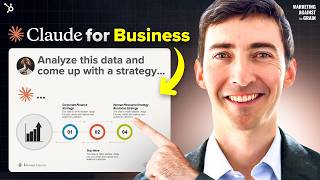
A podcast interview (Marketing Against the Grain) featuring Patrick Biddiscombe and Scott White about using Claude AI at work. They discuss Claude as a ‘virtual collaborator,’ daily personal and professional use cases, how persistent chat context and Projects increase value, and enterprise-focused features and integrations for deploying Claude across organizations. The conversation also covers prompting, writing styles/artifacts, and how AI blurs traditional job-function boundaries.
Chapters
This is one of my favorite episodes of the year because it's an entire episode about my favorite product in 2024, that is Claude AI. This is an episode with Scott White. He is the product leader for Claude. And we get into my daily usage of Claude. I go through all of my use cases. You can steal everything that I do with Claude in this episode. Then we get into, if I'm an enterprise worker, I work in B2B. What are some of the cool things that I can do to integrate it into my work to be way more impactful? And then we talk about how Scott and Clau want to get more people using the product. What are some of the ways that you can start to use Claude? Start to use AI if you haven't touched it this entire year. Let's get into today's episode of Marketing against the Grain. Okay. We're here with Scott White, the product leader for Claude AI, probably my most used product of all time. I was actually. It's your favorite AI product of all time.
Let's get it.
My favorite product of all time. I use Claude more, more than any other that I think I've ever used outside of HubSpot, of course.
How many hours a day you think you're using Claude?
It's just my daily existence. It's just my go to thing. Like, I just like, I'm like, oh, I have to do something. I'll go and talk to Claude and then figure out what I want to do. So good job, Scott. You're all building a great product over there.
Yeah, thank you. I think about this a little bit as similarly, Claude to me is a virtual collaborator. That's how I've sort of talked about it internally. And it is spiky at times. Like, it is something that I use every day and feels indispensable for me for small things like even at home trying to decide movies that I want to watch and getting movie recommendations based on things that I previously liked. Similarly, I do my personal finances and that's like a spiky thing that happens every once in a while and doesn't. And then there are also things that just really important crucible moments where I need to do a ton of work. And historically it would have been something that would take me weeks of figuring out my strategy or my pitch for something. But now Claude having access to all of my content, I can sit down and actually get something that would have taken me a week to do before done in a day. And it's so flexible in that. But I think this, like, concept of a collaborator or virtual collaborator sort of spans the entire thing from something that I just want to have in the background that I can reach out to really easily to answer questions or make progress on something and get unblocked. But also the thing that I typically would have had to get a group of people into a conference room and whiteboard something for a week. It's also that depth of collaboration.
What people fail to realize is the more context you give it over a longer period of time, the way more impressive it is. And so maybe the first time you ask CLAUDE for something and give it, like, one document, it's fine. But then if you continue to use that chat window for a very specific task and just continue like, I basically have many different CLAUDE instances that are singular tasks, and every time I go back to that task, I just go back to that singular chat and give it more context. And give it more context. And so you're, you're. I think your opinion of AI changes drastically based upon how long you've used that kind of chat window to actually do that singular task and given it more context, because the results are, like, pretty, pretty huge in range. And I don't know if that's something you kind of agree with and see as well in terms of how people use AI.
Yeah, absolutely. I think, to me, if I break down this concept of a virtual collaborator, it kind of goes into three segments, I think. One is what CLAUDE understands about you, about the world, about the situation around what you're trying to do, how CLAUDE communicates with you, and how it understands your preferences, understands how you like to receive information and your outputs. Like, actually, what can it display to you and in what novel ways can it communicate around information to you? And the third is, what is it actually capable of when I want to do something? And can it write a document for me? Can it go and do something in the world for me? Not yet, but who knows in the future? What is it actually capable of in terms of taking something that I would have historically had to do off my plate and doing it itself? And I think right now, to me, there's so much opportunity in Claude just understanding more. Obviously, it's a really smart model that has been trained on a lot of information, but like you said, giving it access to more information, increasing its knowledge base about things that are important to you, makes it move from just something that can answer questions to being an indispensable sort of collaborator in your world. And I think, like, right now, you have to go back to these Chats I like, use a project, but I also sometimes use chats. I'd actually argue it's still a little too hard to do that. You have to have this mental overhead of the remembering that you have various tasks where you go to various places to do these various things. In the future, I'd love Claude to just understand that stuff globally. You don't have to think about the cognitive load of navigating our product and our architecture to figure out where and how you interact with Claude and what it should understand based on what you're trying to do. I would love to move to a world where no matter where and how you're interacting with Claude, it sort of understands the task, specifically knowledge that it needs to invoke to do what you want it to do.
One of the things we're actually telling everybody listening and watching today is either through chats or through a feature like Projects in Claude. Just outline a handful of use cases that you want to just use that assistant in AI for, label them like that from the start and come back to them anytime you have that use case. It sounds very simple, but people don't really talk about doing that. And that way it's kind of just like a forcing function for you. Like, oh, you can easily say, oh, I use Claude for these five things.
Anytime I'm doing one of these five.
Things, I go back and use Claude. And it builds that habit in a very powerful way.
Yeah, you can imagine Claude. I guess the thing you're kind of moving towards, Scott, is like there would be an orchestration layer. So maybe Claude is dividing all of those tasks into subtasks, but you actually don't see it calling those subtasks because there's like a orchestration layer. So you're always interfacing with Claude and it's doing all of the thing that I do in the background, which is I'm, oh, I click on this historical chat. I click on this historical chat for that task. But, like, eventually Claude will be able to do that part myself. But the, the thing I wanted to kind of maybe pivot into is because I create so much content in Claude, like, there's two questions I continue to get asked all the time, which is, you should get an affiliate commission for Claude. So I just want to, like, put it out there, Scott, that people do say that about me. And then the second one is, I.
Want to make a money carrying.
Nice work.
Yeah, I have to always try to make money. The second one is actually, why is Claude so good? Why do you like it and that one is a hard one for me to answer. So I've like been trying to figure out, like, you know, because I can look at the benchmarks and I can see how well it performs and how great it is, all these different tasks. But it's kind of weird, like that's that, you know, I don't think about the benchmarks, I just think about my experience with cloud and it's hard for me to articulate why I just gravitate towards Claude all of the time. What I would love to hear and maybe start with is you're in a pretty competitive market like Claude, Google, OpenAI, Groq, when Elon gets his 100k cluster trained and has Grok 3 coming out. And I think everyone is kind of moving in a somewhat similar direction where there's going to be a personal assistant for your life and a personal coworker or like a knowledge coworker within the enterprise. And so I would just love to hear maybe your perspective on building the product. How do you think about differentiation or how Claude separates itself from what all of the other companies are doing? And I would like to flag that. I think you have separated yourself enough that OpenAI have copied you a bunch of times. So I think that's a testament to how great at work that you're doing.
Awesome. Well, as we spin up our influencer marketing motion, I'll make sure to contact you first about that affiliate, about that affiliate fee. That's amazing. It's a great question. And I think I would go first to the highest level mission of what we're trying to do, which is make safe AI systems the standard and accessible to as many people on the planet as possible. And that's supported in actually a number of different ways within our business. Like we have an API that people can use to implement our models within the software that they're delivering directly to their customers. And that is one way that we are distributing these safe AI models that make it standard within the world. But it's really important that Claude that can also be that, because it is the billboard for safe AI, right? It is the way that people think about what this system looks like, how they interact with it, what anthropic is what Claude is. And it gives sort of a face and a name to what AI systems that are safe look like in the world to people that can adopt them themselves without having to be a developer. So it's a really important lever for us getting these systems out to as many people as possible and making them a meaningful part of their lives. So I'll talk about those two things I think are important when I think about Claude being distributed widely and meaningful. One of the key areas that I think about is how it can advance professional development for people. And that's an area where I think we really, really want to focus is how can Claude be that capable collaborator that I was talking about, especially in a workplace context? And how does it, along the dimensions of what I talked about earlier, what does it need to understand? How can it communicate with you and what can it actually do for you in the context of your work and what you are trying to do? We want to be at the frontier and excellent at those things. So if I think about advancing on the dimensions of Claude understanding for you and helping you in your job or your role in your professional advancements, you can look at things like the integrations that we've shipped with Google Drive and GitHub, and accessing organizational context, allowing for multimodal PDFs and analysis of that content, the model context protocol, which allows you to build flexible ingestion of knowledge into your repositories to then work with. These are all ways that we're very excited for Claude to understand more of the context in your world, especially in the professional environment, to advance and be a better collaborator. And then you can also look at previous things that we've done, like artifacts helping people create the most meaningful work product outputs, not just answering questions, but actually getting things done that exist in the context of what your role is. And so that is an area that we're very excited about, is advancing professional development through being a better virtual collaborator for those use cases. And I think that there is then like a more mercurial component of this, which is something that you said, like, you don't always know why you want to go back to Claude. And it can be amazing for a use case like content generation, because you've put a lot of your content in there historically and we're uniquely good at content content generation with our model. But there is something more mercurial about Claude, the model, in the sense that it is collaborative, it is a virtual collaborator, and it feels that way. And it's like saying, why do I want to go and get a drink with a particular friend? Like, is it because they have, you know, a specific job, or I've known them for a specific number of years, or, you know, they are someone I look up to because of their professional advancement? No, it's because they're my friend and I like them. There's something to be said about people like Claude. And Claude ultimately is, is a model that people like spending time with. And being a model that you like spending time with means that you will give it more information, it will be more proactive in working with you and it will feel more like that collaborative force that you end up doing more meaningful things with. And so that is a component that is harder to see in terms of features that you build, but is a lived experience of how people think about working with the product. That's really important to us.
That's actually two good points. So when I think about it, actually my experience with Claude, because I was obviously like a lot of people originally, pretty heavy user on ChatGPT and what pulled me over to Claude initially was the content creation. It was just much, much better, was far better writing assistant. Then the thing that you mentioned, which is it was just a better collaborator. Like I, like I felt it was just like a better fit for me in the way I wanted to kind of go back and forth. And it's interesting. The tool, like an AI assistant can be sticky for those reasons because there's no other product in software. You're like, well, you know, I just kind of like feel it's a better fit for me. Like my, you know, my personality, I work really well with it. Where most software products, the way you decide to use them is quite binary. Like it has the feature set that I want. Whereas because Claude and AI itself is such a broad usage, right. Like you can't distill it into has this feature, that feature. Although I think artifacts was another one of the reasons I stuck around for like really got me sticky. I love that feature. And so if you actually had said to me like well how do you think we're differentiation? I would have said it's pretty obvious you're building for enterprise. Like I, I feel like the features are building for enterprise. We have a pretty large squad in HubSpot building AI across all of our go to market teams.
And I'm.
That's one of the pods that I lead. So I spend a bunch of time with other companies just learning about specifically how they're applying it to go to market, not how they're applying it to like product. Because I think that's a pretty common thing for most companies and it may be a slightly separate thing. And I would still say like the majority of companies are not even at the kind of getting started stage. They're still at the like what do I even do here? They're doing the Prospecting, they're doing the cold outreach. And so what do you think are some meaningful use cases either now or even you think ahead to next year, that you think, like enterprise companies should seriously consider Claude and AI for?
I think about this on almost two parallel tracks that I've seen. I think there are use cases that exist where Claude is and will continue making people dramatically better and operating faster than they have historically for tasks that are sort of still being done today within these roles. And so here I think about things like content creation. What you were saying before, I've seen a lot of repeatability in marketing teams centralizing a lot of their content around their style guide, their Personas, their audiences, and merging that also with product documentation, what they actually support internally, what their products are, the specs that they're writing about, things that they want to launch in the future, and merging these things into the actual messaging that you're writing about that product for these various audiences, often internationalized in different countries. Like, these are things that maybe you would have done always or you wouldn't have done them as well because doing that would be really challenging and require a large marketing team that you now can do way faster with way higher quality, with centralized information. And so there are use cases like that that also exists for things like sales teams. I've actually, I did a bunch of user research last week with our sales team. One thing that was really compelling to me was one of our better account executives, one of the best account executives I've worked with. I've actually worked with him at multiple companies. He said, in my old role, I would have made one really good account plan, like strategic account plan, to drive a strategy for winning or expanding an account in a quarter. Like, I would try to have each one of my account executives create one of those that really could be strategic and hit it out of the park. He's now like, I do 2020 with Cloud. Like, I've 20x the output of like actual strategic account plans that I can prepare for executives to increase their leverage and engagement in my deals. And that's something that I was not able to do historically. I think this also exists in software development, how people are writing code and like Claude, writing a lot of the code, understanding a lot of context about your existing code base so that it can help you write that code and also merge it with internal documentation around what you're building. Specific features like these are things that might not exist in a point solution externally that you're using specifically for coding, like in your ide. But it's actually important to have that context around what you're actually trying to build. So these are a few of the use cases that exist sort of today. The thing that's also parallel to this though is it's not just about jobs that are evolving because they have access to this new tool or capability that changes the way they think about it. It's also people expanding their scope at the same time into other job functions and the lines becoming blurrier between how job functions are structured because people now have expanded sets of capabilities. So I see things like designers internally writing a lot more code than they typically would have or they would never have written code before. But now the delta between them being able to push the things that they have in their brain into production is so much smaller. They can now do that. You know, salespeople helping think about our marketing campaigns and our marketing strategy based on what they're hearing in the field, or synthesizing product feedback from the field that they give into the product team. That traditionally wouldn't have really happened or would have needed specific people to exist in the organization to cross that bridge. But now that bridge is just cross between those two people. Engineers creating low fidelity mocks, using artifacts to communicate to other people what they want to build and then actually get it prioritized and built. So the thing that's interesting to me also is how these job functions will sort of overlap in Venn Diagram circles. And I think we're going to start to see a lot more of that next year as things become more connected and more capable. But I think to also talk about the enterprise thing, I think you're right. Deploying this for professional development means deploying this within businesses. And doing that well also requires like solving for the unique needs of these large businesses where you can't just now give like everyone access to every tool. You need to be cognizant of security and compliance and administration and permissions and role based access control as you do these things. So as you're progressing towards this future where job functions look more Venn Diagram overlapping, it's actually really important to partner with the enterprises where this change management is going to happen so that you can also build the foundation underneath it to support gracefully moving between those two basis.
Right, Right. I have so many follow ups and I'm gonna try and stack rank them here in my head because I want to kind of go back to the marketing use case and maybe just show an example of that in action with Claude so people can really understand the value the thing that you said is that because I'm like looking across the entire go to market as AI has been integrated into a bunch of places. And the thing you said about AI actually changes functions like the roles. It really does because if you break rules down into a series of tasks and AI can start to do a bunch of those tasks, then a person can actually do a multitude of different roles if they actually understand how to do AI. And then I would love to kind of get into maybe the other thing you said which is like getting started into the enterprise can be much more complex. And I think part of the problem is this cold start problem and I wanted to kind of riff on that with you.
Hey everyone, I want to talk about prompting with you today. Being great at prompting is like gives you superpowers. It changes how you can build and work and do everything with AI. And because of that we wanted to make a special guide just for you around how to get better at prompting framework for how you actually build prompts. And so we've got this baseline framework that you can then go and build and customize any prompts that you want to. You can check it out in the link of the description below. And right now we're going to get.
Back to today's show going all the way back to the marketing portion here. So we kind of had talked previously before and I give you a little tee up to. One of the things I started with Claude was these kind of writing styles, right? Like I would create these different writing styles and I truly believe that in the future you won't look at like this email or that email or this blog post or this piece of content. You'll just look at like the performance of different writing styles across your go to market. And you know what kind of performance did this writing style have versus this writing style And Claude actually have that feature. I actually did a video. People loved it that Claude now have that feature built in. My only tight. If you don't mind my only tiny piece of feedback from someone who obsesses over writing style guides. I think they could be a little more comprehensive for, for. For an enterprise use case. Like they're, they're too short basically but I still love them because I love being able to. Again what I love about Cloud is I can I flick between them, right? I was going through uploading this PDF right And this I'll try a different PDF now I can literally just flick between them. So I added them myself and put them in. So that's our audience know that one. So that's why I'm kind of going over. We've taught that one a lot and taught them how to do this. Claude, the other one that I want to maybe just riff with you on, because it's another example of Claude doing the thing that you said, which is like ingesting data and then being able to do something for enterprises. And when you have writing styles, the other thing that an enterprise would really love is like audience segments, like these kind of audience style guides. And so what it would be able to do is take all of your unstructured data and then be able to say, well, this is your ideal customer profile. This is the kind of way that you can consume content at the top of the funnel, middle of the funnel, bottom of funnel. And I can just. And the cool thing about Claude is it can basically take the unstructured data, create a first pass for you, and again, just allow you to select now the writing style and the, the audience style style guide. And I'm just curious, like, how do you even start to figure out what one you should focus on? Because there's so much, so many different use cases. Like I give you an example of one that may or may not be interesting, but, like, how do you decide? Like, ride and styles is the thing we should integrate. This is the thing we should integrate. Because enterprise has such a plethora of different use cases across so many different functions.
It's a big challenge for an organization that's building something that's so broadly applicable, and we want it to be so broadly applicable to hit our vision. But it's also important to offer specificity to companies so that they understand and have a mental model for how they should adopt and use something. So this is something I think about a lot. And I previously worked at a company called Airtable and that was very similar where we were building a very flexible application building platform. And we saw this too. To me, there is this balance that exists where if you look at use cases, ultimately a lot of them share some fundamental building blocks. And you can sort of think about this as like we are building a LEGO kit and this LEGO kit has like a combination of, you know, one of the Legos is sort of like the knowledge that Claude has. One of the LEGO kits is like its ability to augment or like the prompt around the outputs that it has. One of them is like the specific form factor of the output that you are getting. There are all of these LEGO blocks that enterprises though are ultimately looking for the Millennium Falcon, right? And there might be, you Know the Eiffel Tower or the Millennium Falcon or particular like LEGO kit. And we need to provide to people good jumping off points to understand how you can pull these primitives together to actually accomplish the specific thing that you're trying to do, like achieve the Millennium Falcon. And in many instances, it also might require building like the piece that is also specific to the Millennium Falcon kit. Right, right. So if you're an engineer, like, you can't just have a generic integration that the document repository might be necessary but insufficient for you to write a lot of code. You also might need the GitHub integration. And that is a primitive that is largely just ingesting context, but it's doing it specifically for engineers. And that looks more like the Chewbacca LEGO piece that's going in the Millennium Falcon LEGO kit. So I think for us it is going to be about making sure that we're building the right primitives that we think are horizontally applicable, that can be applied to a lot of use cases, but making them composable enough to bundle them together to be really meaningful for specific audiences. And we only understand which audiences we should be really solving for based on feedback with customers. And that's why partnering with enterprise is so important, because you have this direct line of feedback. I am in shared Slack channels with these people where I can answer their questions and see what they're trying to do. And then that shortens the loop from me being like, okay, this is how we need to bundle this. This is what templates we should provide, this is what specific integrations we should provide, or specific flavors of building blocks that we should provide to people to then get them to solve a very specific use case. So that's a little bit of how I think about it. I still think we're a long way to go though, on pulling these things together into a connected experience with better starting points that can address the cold start problem that you were talking about. I think right now we've done a pretty good job, in my opinion, of starting to build the right layer, the right foundational layer, but we have not done a good enough job.
More from Patrick



A NEW BREED OF PARTNER: The Partnership Ecosystem Model Journey of Patrick Biddiscombe, Part 1








Customer Success Workspace: Never Lose Sight Of What Matters Most | HubSpot Spotlight