This AI App Shows Exactly What Your Audience Wants (With Proof)
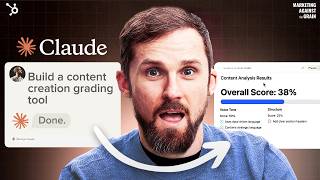
Kieran and Karen demo an AI workflow that builds style guides from customer data, then grades content against them. They use Gemini to extract profiles from Google Docs and Claude to write guides, then show a web app that scores how well content matches your audience. The system scales by running agent interviews to deepen what you know about who you're writing for.
Chapters
On today's show, we built an app and a document that is going to 10x. How people engage with the content that you make it is transformational and quite frankly, blew our minds how good it was and how fast we were able to put it together. We're going to show you exactly what we did, walk through how we did it, so that you can do it at home yourself. Let's get to today's show. Okay. We did a show recently where we talked about the new Claude writing styles. And in that show we talked about we learned something very interesting and important, right? Which was the more information we gave Claude or chatgpt about the audience itself, the better the output was. So, like the writing style mattered, but we needed to apply that writing style to the details of the audience and who it was being written for. And on that show we said, hey, we should do a follow up all around, like helping our viewers create a great writing style. And we want to do that in Claude AI. And you and I both played around with this and we're going to do a show today. So I know you spent some time building one. I spent some time building one. Tell me what your thoughts are.
The thing we had built was we built like these writing styles and writing styles have become part and parcel of how just people use. I think it's become pretty ubiquitous across what people do now with these kind of AI tools. In the last episode we talked about these writing styles. And so writing styles are here you can go, you can create a style and then you can have your own set of styles to figure out. Whenever you want to write something, you can choose your style. And we kind of went through. I had did this via PDFs, so I had created large writing styles via PDFs and I would upload them and then I would have Claude create content in that style. And now they've integrated it into the platform itself. So you can just add or write an example and it will replicate that style. And what we did during that video is we created content and we thought it was good on Claude, kind of not so great on OpenAI's ChatGPT. But then when we really were specific about the audience, it was much, much better. And we said, wow, you should actually have a writing style guide and an audience template, a template of like or like an. A description of the audience that you want to create that content from. And so that's what you and I have done now is created this kind of audience guide style guide for an AI assistant. I, I want to kind of just start with one quick thing of like how I went about building this. Now I think if you had the ability to get all of your unstructured data across calls, emails and your kind of comms, which we are looking into doing, it would take a little bit more time. That would be like a great, you would get a really great representation of your audience. But even if you don't have that, which most people are not going to have that, there's like some cool ways you can start to build this for yourself. And I wanted to quickly show this because I thought this was super cool. So like Gemini is now in available in Google Docs, right? And so what I, I have a ton of research in here about our customers like we've done over the years. It would take me forever to go in and find that from all of that docs. And so what I did was basically said, can you build a profile of HubSpot's ideal customer based on all of the research you can find about customer in my docs, right.
I, this is a great Gemini use case by the way. People are sleeping on Gemini for this particular use case, right?
This is, I, I think this is my like my number one.
This would have taken you 45 minutes before.
I wouldn't have done it. I would have just give up. What actually really happens is you slack everyone and say, oh, what docs is this? What doc do we have this in? Yeah, kind of like.
Or you do a search and you find one doc and you pull some stuff from that one doc and that's it, right?
So it pulls it. It does the same thing like a search engine does, right? It, it actually builds you a actual one pager of husband's customer and then it kind of shows you all of the different sources.
Hey guys, real quick. You know we love building custom GPTs on the show and we love sharing it with all of you. Well, we wanted to kick that up a notch. We just developed this free guide that teaches you how to build your own custom GPT on, on ChatGPT. We've taken the guesswork out of it. We've got templates, we've got a step by step guide to design and implement custom models. So you can focus on the part that's actually fun, the part we love actually building it. And if you want it, you can grab a link in the description below and go check it out now. Now back to today's show.
And so what you end up with is actually this. This is how I started creating an audience. I went into Claude and I was like here's, here's a description of the kind of audience that we're trying to reach. Basically I give it some cues on how to build a style guide around, around this audience. When we say style guide, it's maybe not a style guide. It's basically like the. How, how do you actually describe the audience under a ton of different headings. And so basically we took a, we, we built a customer profile using Gemini and Google Docs and so it went through hundreds if not thousands of docs. It built this one pager give some really good like quick snappy overview of HubSpot's core customer. We have Growth Gabby had a pretty good description of her, talked about demographics, talked about characteristics and basically had a good like overview of who that person is. And then I asked Claude to create a audience guide around that person. I tell it like this is the kind of person that we want to create content for. We want to attract, we want to engage. So this one's really good. So it's like this audience style guide. It has a reader profile to start with. So it kind of talks about who the, who the person is the talks about the fact that they're in leadership roles. CRO Rev Ops has like pretty, pretty accurate here. Then it has tone and voice. So it talks about the core voice attributes. It got really specific again like language style. Really good in terms of like what your language style is, what your writing don'ts are got into the content structure. So the exact format and the exact length. You can see that it's not just it like text based, it actually talks about executive summaries, should be two to three sentences. Talks about the length of blog posts. It really thinks that Growth Gabby wants practical thought leadership content but with practical takeaways integrated into it.
Practical to the point.
Yeah, yeah. Case studies, how to guides video content, talks about essential elements, the engagement patterns. So I talked about like how do you, how do you create a hook? And I want to show you an example of the kind of content it created, of how it integrated. So like how do you create attention hooks? How do you actually get growth Gabby hooked into the content, efficiency gains, data driven insights, talked about content angles, talked about trust signals, things that will actually make Gabby trust this content. And so it goes on and on, had power words, key phrases like pretty extensive and it's actually really good. So I was like oh this is pretty great. I uploaded this PDF that was for HubSpot, was for Growth Cabbie and then had it grade it and it done A whole extensive grade on how it can be made better. But I want to show you like just one of the examples where it really nailed it right. So it basically said on the introduction, so remember in the introduction it's, it said one of the hooks was growth gap. He wanted data and efficiency gains. And so the first, the introduction to this PDF says 8 in 10 marketers say they plan to create more content next year. So that was the opener to this PDF. This was about how to integrate AI into your go to market. And you can see there if it's following our audience style guide, it's missing the core hook. It doesn't actually have a hook, it doesn't talk about date, doesn't have any data, it doesn't talk about efficiency gains. So it changed it and it took this data from this data is in the PDF. It's just later on and we mention it and so it said revenue operational leaders face a 43% increase in content demands while managing limited resources. So straight away it's hooked you with the problem using data really spoke to the person which is the growth Gabby leading organizations are leveraging AI to achieve 3x content output. So again has some data talks about efficiency gains with existing teams delivering 2.1 million average annual cost savings. So again it actually took the PDF all the data and reverted to like the style, the audience style guide. And then it goes into all of the other improvements I could make here to actually improve that and then it will actually basically rewrite it for you. So here, here's it rewrite. So it rewrite the rewrote the post and followed the audience style guide and actually is much more geared towards who we believe growth Gabby is and what we believe she would like. So for people who are listening along it's created a post with an executive summary which is the two to three lines. It incorporates data, incorporates efficiency gains and then it has like some thought leadership and then some real practical implementation. So it basically gives you a 90 day plan of how to implement AI across your go to market, gives you some key performance indicators. So it is a sizable difference when you actually go to the trouble of creating that audience style guide for your write in and not only will it create content for you but will grade your existing writing. So if you actually have that and you write content you can actually upload it to Claude first and have it grade it and talk about what improvements you can make to be much more suited to your audience.
I've got a bunch of questions but I think a question somebody watching this might have. Karen is cool. Let's say I get a really great audience guide and I want to do this type of critique, but I want, like, I got five people on my team and I want everybody to do that. Do I just send them the doc and then have them do it in their personal Claude, or should I build some app? Like, what agent? What do I do? What would you recommend?
The easiest thing to do is what I did with writing styles. And I will tell you that the writing style PDFs are the number one request in my entire career that I've had from every singular person. I stopped answering LinkedIn DMs some time ago because it's all people asking for my writing styles. Because it's super easy. Like you just get the PDF and you ask your team to upload it anytime you want to write something to check against. The easier thing to do would be again, if click Claude want to steal this, they can integrate. It would actually make a lot of sense for them to do where they would not just have integrated into it, they would integrate the audience style into it. It's a great knowledge, it's a great enterprise use case, actually, that you would have your write in example here and then you would select the audience that it's for. I think at some point you would select what part of the customer journey it's for awareness, engagement, conversion. That would actually be even better. But for now, I think PDF is really good. You could easily create an app for this, right? Like if you actually wanted to code in Claude, you could create a lightweight app where you integrate your audience style and then just cut and paste your content in there and just. You could create a grader, right? You could create like a grader pretty easily.
Yeah. One of the things you would also do, right, is take that PDF, upload it to Google Docs and then have that stored and do it with Gemini too, right? Where, you know, anytime you are creating something in Google Docs, have it refer to that and do a rewrite. But the other thing with Gemini, Karen, you could do a lot of remixing, right? Because you have a bunch of content in your Google Drive already and you can say, hey, here's a style guide. Pull from these documents. I want to create a new document about, you know, AI in content creation and use the audience style guide to create it. And it will pull all that together. And then if you want to rewrite it, you can always paste it to Claude and rewrite it in Claude if you want to. But it'll give you A good first draft of Gemini, right?
Yeah. You can upload it to Gemini. I will say maybe this is just a bias in me. I. I am not a fan of. I. I can only use Claude for any type of writing tasks.
I think that's what I'm saying is like, draft in Gemini and then go and move it back to Claude for writing.
If Claude was really good, you didn't have. You wouldn't have to do any of this because you just. You just connect Google Drive to Gemini and Gemini can do all this for you. Because it's in there as PDFs.
Correct? Exactly. So the integration side of it.
Yeah, But I think. I think for small teams PDFs, everyone has a PDF, they upload it. Or you could do this there. We have. We built the app. How ridiculous is this? Like, okay, let's see this.
This is awesome, isn't it?
Should we see how well. Well, this actually works? Yeah, let's go and get our style guide.
You want to do like a product page or something?
Yeah, I'm gonna get a product page because our. I don't know if you know this. We can cut this, but I. But our blog doesn't allow you to.
Copy and paste for copyright reasons because everybody was scraping it.
Yeah. Yeah, this works. Okay. Create content. Oh, we haven't. Oh. Oh, Jesus. It's built a content creator.
You're like, oh, wait, it built way more than I thought it was going to. All right.
Is this not actually freaking insane?
This is so insane.
Dude, look at this voice tone. I can, like, make this way better, but I should just go do this. Okay, well, there you go. I'll just build a grader and give it to our listeners. How about that? Yeah, I just want to make sure, as our listeners, like, if you're not watching YouTube, you haven't seen this. I basically just built a content creator. It's basically given us a grade of 38%. It's graded US against voice tone that was in the audience template. It's graded us against structure. And it's correct because I did not have clear section headers because I just copied and pasted a web page. It's got engagement, so sufficient content depth, addresses readers concerns. It has technical add specific metrics and percentages, contains business metrics, so grades. I could play around with this pretty good and make a pretty great content creator. I can't believe that actually it did that because, like, let me just be really clear what I asked it.
What was your prompt to make it incredible?
Can you turn this Into a web app, an audience creator. The functionality is simply. If I misspell simple, we add our audience style guide and then be able to paste in text based on content to grade against the audience style guide. Let's just be clear what happened here. You were talking to me and at the same time you were talking to me, I was like, I'll just see if I can build a web app. And they just built the web app.
Oh my gosh, the world is awesome.
You know what, when we do these.
Shows, like, I instantly get like pounding anxiety around how behind. Yeah, I just feel like, do you feel this way where I'm just like, oh Jesus Christ. Like I have to go and like change a few people's jobs of like what they actually spend time on.
Like right now I think to myself, when I am doing something during the day, is this really worth my time or should I just be trying to do more stuff in AI? Like I think about that I'm in a meeting and I'm like, this is not anywhere near as important as me doing more stuff with AI. And it's true.
Like it's just like it couldn't be more true.
I'm actually going to turn the. I just realized I'm actually going to turn the financial analyst into, into an app as well. Like this is the personalized software. We can nearly end on this part like this. What, what have we done here? I like, we're. It is so easy to create personalized one to one software. Like I will have my own financial portfolio app stood up this week. I will likely stand this up this week to actually grade my own content. Just mine. Right. I can build it for myself. I'm sure at some point we might release this actually in HubSpot if we make it dope.
Oh, I think one of the things we're doing is we're going to do this for all HubSpot or HubSpot marketers for sure.
The thing that is just again I come back to when I keep talking to people about AI is the accelerated learning and going from idea to fully functioning, minimal viable version. So idea was we did the show last week. You whatsapped me yesterday and said, oh, I built first version. I was like, oh, I'm going to.
You're like, I'm gonna build a better version.
I was like, I'm gonna mess about with it this morning when I woke up and then you and I are on a podcast doing it live and then turn it into web app. Right. So like what? That's less than 24 hours we've gone from wild WhatsApp to minimal viable version of web app and people can say, well, it's pretty minimal viable version. Yeah, but like prior to AI, I wouldn't even got. I would have just, we would have just stopped talking about it because we wouldn't have had the time to do this.
Well, also it's, it's take something that was impossible and makes it possible. It was previously impossible to say, hey, I want a guide for all of my audience and have an automatic critique of everything we write. No, you would have created this PDF and people would have looked at this PDF and they would done some writing and that would have been that. But now it's like, no, no, you have an independent editor that is now checking all this stuff.
The right way to do this if you're a larger company is actually when you pub, you publish to the agent and the agent publishes to your cms.
Correct.
And so your agent becomes the editor and has to like send you back and it doesn't post until you've corrected the errors or.
Yeah, you just build it. You fed it to the CMS workflow.
Yeah, yeah. Again, we were on with Dan.
The HubSpot Content Hub feature needs to be.
Yeah, this is, this is another aha Moment from the conversation the podcast we have with Dan this week. We talk a lot about this. This is another like the impact on content. Like I think that the ability to integrate AI across your entire media landscape is just like huge. It's huge.
One follow up question I did have before we close out, Kieran, is you just gave the overview of like I was messing around with this yesterday. You took what I had messed around with and customized it and got some feedback from Google Docs if we were.
Going to be serious.
And we are going to be serious. So we're going to take this and scale, scale it up over the next few weeks. What other information we want and would we want to add to make our audience profile as complete as possible? Right now we've taken internal data and content and given it to Claude. What else would we do?
I actually think there's a couple of things that we would really want to do here. So I think we would want.
I do too. That's why I want to talk about it.
So there's three buckets right there. I would categorize them this way. There's your unstructured bucket which we talked about, which is I would take all of the customer, all of the comms, specifically. Actually just you're not, not all of the comms, the discovery portion. When someone first comes in, you can actually glean a lot about why they came into your business. What were their pain points? I think that is really important. So I think there's that you can get in some of the emails, you can get in some of the calls. And I think more and more what's going to happen is we are going to change our customer path to extract more information that we can use in AI. So when I look across the customer journey, I'm like, well, am I getting the information I need to be able to feed that to AI? So that's the first one. So we, we, we would do that. We are doing that. We have some people looking into this. The second one is just all of the collateral you have, right? Product marketing collateral, sales decks, all of these things that are research and customers. The third one is the most interesting one.
Right.
Wouldn't you actually have an AI agent that stood up like an avatar and actually can go do a bunch of real interviews where you don't have, like, you can just basically send it to a bunch of your target Personas and the avatar would do the interview and actually would bring back the information and that unstructured data would be used to actually integrate into this as well. So we could say, well, there's a hundred people that are like the kind of people we're trying to get content for and we build a little agent that can go do the interviews. And there's like, if it's stood up through OpenAI's voice assistant, I don't know if you've seen some of the stuff through that voice, it can guide the whole conversation itself, right? As long as you give it where you're trying to get to. Hey, we want to figure out how to build content that can really engage and attract this person. It will actually do the whole conversation itself. You take all of that research and then you add that to the other two buckets.
I think there's a couple of things that I would add there. One, on those interviews, I think you want people to walk through your content and product detail, like on a video, on screen, not just have a conversation. So the agent can capture all of that and at a more granular level, be like, oh, these words don't make sense to our customers, or these stats don't resonate, or this is how they use this page. This is how we need to format and break down content for this page. Right. Like, that, I think, would be a prime use case. The other thing like, don't you want to use more publicly available data too? Like, wouldn't you go and ask Grok for a summary for all things about the HubSpot audience on X? Wouldn't you just go everything that's in the models? Like, wouldn't you go and scrape what's out there? Reddit, Grok, OpenAI. Yeah, I like consolidate everything that's on the models. Right.
Yeah. I think wherever your customers hang out, if you can go, pull that information because again, that's all unstructured data you can add into the repository and have AI make sense of it. It a super good use case actually. It works really well and that's from like you and I messing about without any.
I know if you and I just went back and forth for this week, we would have. And we like literally line by line, the audience profile and we're just like, oh, this isn't good enough, this isn't good enough. And we got it.
Great.
Like it would be unbelievable.
Yeah. And someone pulled us the data.
Yeah. And we were just like, oh, this specific thing is not clear enough. Let's go get a bunch of data around this topic and tell it to just apply everything to this particular part of the audience outline. Do that for a bunch of revs and it's in a pretty cool, cool spot.
Right. You know, the other thing is, I wonder how I think long term X with Grok is going to be a pretty great place to find products. I'm actually just using Grok now as a, you know, the top X product for X audience because it's so live in real time and based upon user data. I was just using it for. I was just randomly going to use it for software and then I thought, no, I'm going to use it for Yeezys. Pretty cool recommendations for Yeezys actually.
I definitely think the product discovery will be transformed. The other thing just like completely aside, isn't this just going to be a fascinating watch between like the X, all of our data is open and accessible via AI and like LinkedIn, all of our data is closed and completely inaccessible by AI and like who wins? And like what approach is better?
Elon. That's the thing that we might as well just, you know, that's the thing that we're also. What do you think about Elon? Whatever he.
I would never better get against whatever.
Version he's doing ever. That is the version that will win. So I just like haven't come to the conclusion that he, he's right. He'll figure because He'll. He'll make it right? And so I bet on him.
Can I tell you, I've never been more excited for a product than I am for the Cyber Taxi.
The Cyber Taxi.
Have you seen it?
I've seen. I saw him. He was and up this weekend. Is that the videos that he was showing?
Would you. But you know, the whole thing. You buy this Cyber Taxi, it has no steering wheel, it's fully autonomous. It takes you wherever you want without having to drive. And then when you're at home, it turns into an Uber and makes money for you and goes and picks everybody up and takes everybody around. That's part of Tesla.
Okay, we should end it. We should end on this. Which I thought was one of the best tweets I've ever seen. This woman tweeted that Elon has definitely been through this once before because he has all of this, like, short codes, which basically means, how can one person run this many companies, play video games, be a core part of the now American government without.
Hold on. It's not playing video games. He is the number five Diablo player in the world from Shopify. Posted. He was like, none of you understand how hard this is. He's like. Toby's like a hardcore gamer, and he's like, this is impossible for anyone. If somebody. If this was the only thing somebody did in their whole life, I would think this is incredible.
Yeah. Her point was that Elon. It's a simulation, and he's been through the simulation a bunch of times, so he knows what to do, and so he's able to do way more. And I was like, you know, it's actually maybe makes more sense than what I've actually had happening. Like, because I don't know how he. Like the fact that he has all these unbelievable businesses, like, and they're not. None of them are just, like. They're all transformational. Right. They're all futuristic. It's incredible to watch.
Yeah, I would. I would bet. I don't know what the odds are, like, on Poly Market. I. We should look of what. What the odds are of Elon becoming a trillionaire, and we should. We should put some money on it right now.
That's. It's.
You think if I'm getting. If I'm getting any decent odds on that at all, I want to go put some cash on that right now.
I already think that's. That's a given. And. Yeah, it's a given.
All right. Well, these were audience styles, which we think are a critical companion to the writing styles featuring Claude. We don't think you should do one without the other because the audience styles give you such great, great output. When you have audience clarity and we, Karen, you build a little greater. You're contemplating maybe finishing it and releasing it. When we release the show, if so, we'll. We'll drop it in the comments or if we do it after, whenever it's done, we'll drop in the comments for people watching this video and they can go and check it out.
Go get graded.
All right, thanks, everybody. We'll see you real soon. I'm working against the grain. This data is wrong every freaking time. Have you heard of HubSpot? HubSpot is a CRM platform where everything is fully integrated. Well, I can see the client's whole history. Calls, support tickets, emails.
And here's a task from three days ago I totally missed HubSpot Grow better.
More from Patrick



A NEW BREED OF PARTNER: The Partnership Ecosystem Model Journey of Patrick Biddiscombe, Part 1








Customer Success Workspace: Never Lose Sight Of What Matters Most | HubSpot Spotlight