This AI Prompt Gets You Customer Insights in 5 Minutes (Free Tool)
Kieran Flanagan and Kip Bodner talk with prompt-engineering author Mike Taylor about using AI to simulate focus groups in minutes instead of weeks. A prompt that role-plays buyer personas can replace traditional market research that costs $8-12K and takes months, and the approach works with NotebookLM to combine internal data and external sources for faster product and marketing decisions.
Chapters
On this episode, we're going to show you how one simple AI prompt can replace an entire industry. And that industry is worth $84 billion. But we're not going to stop at that. We're going to give you the ideas of apps to build around this prompt that can make you real money. And we're going to build upon that prompt and show you a bunch of different use cases. And we are going to tell you why you have to start to use Google Deep Research and how to use it today. All of that and more on this episode of Marketing Gets It Green. I'm Kieran Flanagan, your co host as always, joined by Kip Bodmer. Let's get into today's okay. In this episode we are going to show you how AI can replace a $84 billion industry. That is the industry of market research. With Mike Taylor, who is an expert in all things prompt engineering, actually has wrote the book on prompt engineering. That's prompt engineering for generative AI. Mike, welcome to the show.
Yeah, great to be here.
What we're going to show everybody today is what would normally cost the average company probably 8 to $12,000 to run a really in depth focus group process to get feedback on a product or positioning. And that isn't quick either. That's like weeks if you're hurrying and more like a month or two at normal pace. And what we're going to show you is all going to happen in real time on the show. So it's taking weeks and months and condensing that same feedback to minutes for free versus that 8 to 12 grand.
Yeah, exactly. It's not even about the cost of the focus group or the AB test that you're running on Facebook ads or whatever it is you're doing. It's also just the speed, right? Like if you can test something quicker and you know, you can get some feedback on whether it's a good direction to go in, then you can, you know, roll things out much faster.
We should get into the prompt because one thing I'm also curious about is if you have, if we've had any button entrepreneurs on the show and we have a lot because they email me all the time when I suggest ideas. There is an app to be built around your prompt that would be pretty simplistic that would act people would real pay, you know, you know, $20 per report. And so I don't know if you're, we should, we should leave that to the second part after you've showed the prompt. But I think the, it's it's another example how quickly it is, how quickly you can stand up businesses around.
I don't think there's an app, Kieran. I think there's like a hundred, to be honest. Like, it's not just like one, there's like. I mean, I just think, I think I just thought of like 12, like right now that you could do it with. So let's, let's get into it. Let's have Mike walk us through so we can talk talk about it.
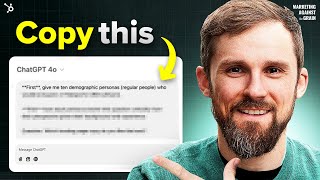
So I'm just going to show you what, you know, the simplest possible kind of implementation of this. But you know, like, you can take this one way of doing things and you can think about a hundred different ways to make money with it, right? So the general idea is rather than asking ChatGPT or Claude or whichever AI you're using to give you an answer, which gives you the stock answer, kind of the average of the Internet, right. Like it's is trying to just kind of give you a reasonable answer, but it's not very creative, you know. So what I found is instead if you ask it to think of a bunch of Personas to role play as first, then you know, you get the individual responses from those Personas and then you combine that together into a final answer. So I'll break down the prompt individually. So first you want to set the scene and say, give me 10 demographic Personas, just like regular people who would be buyers of your product. Right? So in this case I just put in HubSpot spot. Then you want them to answer this question critically from their experience, given their background. Right. So the, the key here is that you get lots of individual responses and the responses are different for each one of these Personas. So it's just like when you role play in prompt engineering, you say like, you know, as a product manager with experience in this field, I want you to answer this question instead. You're just doing that like say five or ten times with different Personas all at once. Then the key part here is the question, so what it is it, you know, what is it that you want feedback on in this case? I use this a lot for landing page copy or copy for ads or different ways of explaining things. So here I just said, what landing page copy do you like the best? Grow better with HubSpot, which is what's currently on the landing page, or grow without the guesswork, which is actually what I used for my agency. And then the key thing here is, you know, you're going to get a bunch of individual responses from the Personas, you don't have to necessarily read all of them, but what you want is it to combine all of those Personas back into a single paragraph answer. And then the key part of this is you said, you know, as if these people had collaborated in writing a joint anonymous answer. So you get, like, the final answer that you would kind of get from ChatGPT, except it's got this more rich kind of background and experience and Personas backing it up. So I'll show you what this looks like. Cool. So if we look at the results, it's pulled from all the training data on the Internet, like, it has a good idea of who HubSpot is. Right. If your product isn't as well known, then you might need to describe what type of product you are. Like, what's the product category? Because then it can, you know, because it's been trained on the entire Internet, it can know that, you know, small business owners quite often buy CRMs, or, you know, marketing managers quite often buy CRM. So whatever your product category is, so it's pulling all that information kind of has a good understanding of what are the types of people who would buy. And actually the. I find this part useful as well, because sometimes it comes up with ideas that I hadn't thought of. Like, I come up with new targeting options based on this because I'm like, oh, okay. I didn't really think about, you know, nonprofits, for example, nonprofit directors, they also need to buy CRMs. That makes sense now. So it's quite insightful. And then it writes individual percent responses because it knows a lot about these types of people. Like, there's a lot of information online about how startup founders think or how they talk. Right. So it can give you an answer as if that person had answered. In this case, the startup founder likes Grow without the guesswork, you know, but the marketing manager likes grow better with HubSpot. And they give specific reasons. So what you can do is aggregate all of those reasons together at the end into the combined response. My headline won, which I'm pretty happy about. But it was. It was actually, you know, 60, 40, something like that. We found Grow without the guesswork to be a more compelling tagline overall, because it speaks directly to the need for clarity, ease, and actionable insights across different professional contexts. So you guys are free to, like, steal that if you want to take it and use that copy. I'm not working the agency anymore.
I appreciate the licensing of that copywriting. We like that. Thank you so much.
But, you know, and I would love to see if you ab tested it if it did actually perform better. Quite often these things are directionally correct because AI has such a deep understanding of, you know, all the different copy on the Internet.
Thing I've learned about AI is that.
It works best when you treat it like a collaborator, not just a tool. It's there to help you get moving, it sparks ideas and it makes starting just about anything 100 times easier. Now to help you tap into the potential of AI, we've worked with our friends at Mindstream, an amazing AI newsletter. We've teamed up with them to release 1000 expert level AI prompts for everything marketing you might ever imagine. When you need some fresh ideas, when you need to adjust your strategies, content creation, inspiration. These prompts are designed to make starting and staying creative a whole lot easier. Get it right now at the link in the description below.
Now back to today's show. That is really one of the core points to take away when people are going through this is like traditionally what marketing teams have to do is get these like little survey groups and there are a thousand people. Maybe that's your aided and unaided awareness study or your focus group study and you have to like depend on these like a thousand people across a hundred, maybe thousands or a hundred thousands that those things were inconsistent. Whereas like AI is able to just distill all that information because it has every, all of the information and so you can get much, much quicker results and they are actually quite accurate. Like we, we built a tool, the team build a tool, this AI search creator and basically what it does is it shows you how visible you are in the training set versus other brands which like one of the better brand tools you can actually get. I actually would argue that it might be better than unaided, unaided awareness.
You remember, you remember when we did this, Kieran? It's within a margin of error of the survey data for like HubSpot. Like the data I know like it's, it's pretty accurate.
So you can basically look at like it's basically how many times are HubSpot mentioned in relation for, for this kind of category of business versus any of our competitors? And it's so much quicker than going and running these kind of focus groups or these studies that the, the other thing is this is doing it without any of your, your own data. So I just, I assume like you could actually have a version of this that's a little app and if you want to you could actually upload documents that would have research that you've done on your Personas as well. So it would have that additional data that I can pair it compare with, like the external data. Like, have you. Have you done any. Have you done any of that yourself? Like extended it into external and internal data?
Yeah, exactly. Yeah. What I found is the deeper the Persona information you give it, then the better, the more accurate the responses. And this is especially important when you have a business that's relatively niche or there's not that much information online. So I actually have an example I could share there as well.
We love examples.
Yeah, I know. And I also. I know that you love Google Notebook LM as well. So I have like a relatively small, like, lifestyle business. It's education for marketing. It's kind of stalled. Like, you know, we grew for a while. We got to like a few hundred subscribers, but I'm not really sure where to take it next. So one of the things I did was I did a bunch of customer interviews. So I uploaded all of those transcripts here. Each one is called I just record it with grain. But you can use any of the others, like granola or Zoom, etc. And you know, all of those transcripts got recorded in here. And then you have basically a way to chat with those transcripts. So, you know, you can ask it questions about user insights. You know, it actually summarizes them as well. But we can use the same like, Personas prompt here as well. Because what we can say is, you know, role play as each of my customers and tell me, would they be happy to see a new course on, say, like marketing mix modeling or customer retention. And then I'm just going to submit that. And then because it has all this context of the different individual transcripts, it can then role play as those customers.
I will say why. It's why it's thinking if you're watching the show and you aren't recording all of your conversations start. I don't know how to say that in a more direct and simple way, but it's like you just have to record everything because there's so much value in all of these conversations that AI can now unlock.
Yeah, I mean, this is great. Like, yeah, I mean, that was actually one of the key things we used to think of in our agency. We grew a lot through our blog and I used to, like, write down notes from my calls and then they would become blog posts when I was training the team. And now you can basically do this automatically with AI, right? Like, we didn't have AI in, you know, in that time. But today the way I would set it up is I'd have all my calls recorded. Each one of those calls could become a blog post or it could become a series of social posts just for.
The audience to make sure they're following along. Google LLM Notebook is a free app that you can use. You can basically easily add documentation that you have from Google Drive. You can easily add. They've added like additional features. I know Kep has been playing around with it, but they've added the ability to just easily add any kind of YouTube URLs, which I think is pretty awesome because I like, I'll give away a little secret here just for our listeners, but the treasure trove right now for content creators and how they use AI is data that is non text. Because non text data is in the training model, right? So if you are saying create me a blog post on X and you're trying to take text content from certain places to fine tune your output. So basically you know, you go to Claude and you say hey, I want to create a blog post around this topic and here's a bunch of like similar posts that I want you to be inspired by. Well, for the most part it's already has that stuff in the training model but it doesn't have like YouTube or it doesn't have podcasts. So you can actually go and take those transcripts and you can basically say create me a post from this transcript. Like if you go to a go to grab a popular video, take the transcript and that, that is like actual content you can repurpose into text based content. And so the Google LL notebook is really cool because you can basically add a bunch of YouTube videos on a topic and then ask it to craft or to pull out the most interesting points. But in your case what you're doing is you're putting up your call transcripts that anyone can do. As Kip said is like the, the, the real gold of AI is start to capture all of your unstructured data, record everything, everything is now a piece of data to be used by AI. And then you're able to set up these kind of role playing interactions where someone can actually be your voice of customers. So in large companies like HubSpot, you actually have voice of customer teams and they own all of the customer research and they own like how what your customers will think about any change you're making as a business. What you're basically showcasing is if you use the LM notebook, if you have all this kind of calls being recorded and you Upload that you can, every company can have a voice of the customer team because now you can just access your customer whenever you want.
Yeah, exactly. And I think the key with this type of approach is having an answer that other people don't have. Right? Because it used to be that if you were using AI, you could pump out content faster than people who weren't using AI. But like, pretty soon it's going to be a case of if you're just using the stock answer from ChatGPT or from Claude, you don't have any real differentiator over anyone else who's using the same tool. Right? So, so like, why would Google rank you over someone else? Or, you know, why would your customers be interested in what you had to say if there's no secret sauce there? So, so that's why I like to do, you know, things like this where all I had to do is hustle to do, you know, 10, 15 interviews. And then some of this stuff is gold. And, you know, not only can I get insights from the transcripts, but then I can also just ask those people questions without having to bother them again. Right? Because, you know, it might be not, might not be perfectly correct all of the time, but it at least gives me a bit of conv so that, you know, I know I'm not asking them a stupid question. You know, I know that like, when I go back to them that they're going to be primed to really like the ideas that I pitch to them because I've already kind of sense checked it with the virtual version of their customer.
And I think what's interesting for everybody watching Mike there is, there's kind of two parts to this. We just did part one, which is like, hey, I go and spend eight to $12,000 a year on focus groups. I did research with Gemini and it says the average company does about two focus groups a year. So they're spending real, real money on these focus groups. And that gets you feedback on a message that you share to everybody, right? And that's valuable, like if you're doing a billboard or if you're doing low targeted marketing. Now if you're doing something like personalized email and you can craft a very specific message, the next part of this. And Mike, maybe you could even do this in NotebookLM for us. It's like, I wonder if we did a prompt of like, what would be the specific message for each of these people in your transcripts and why. Right? Because that would be the next step to all of this is if you have this data in terms of transcripts and whether you have actual people or the Persona example that we saw from Chat GPT earlier, you can then say, hey, I've got this top level message. But what is the best, single best way to position it for each individual person or at minimum like group of people, which is like very, very powerful.
Yeah, exactly. So I just asked it to, you know, write a personalized email to Chris telling him about the new MM course. You know, it comes up with. It's pretty long email here, but what I try and do is I use this more for insights in general kind of sense. And then, and then once I understand the angle of attack, you know, the approach, then then I'll kind of write it myself quite often. But I mean you can also do this via API, right? Like Google, like if you know how to code or if you have an engineer in your team, you can also ask them to kind of spin something up.
The thing I would do there is, I think Google is pretty good. It will extract bullet points and insights and then I would take those and give it to Claude to write anything. Like that's what I really like. But like Gemini being connected into your G suite is I, I kind of created this one pager of who HubSpot's core audience is and Gemini was able to do a pretty good job because I have like 10 years worth of documentation to pull from and it's connected to all of that documentation and then I can give that one pager to Claude and Claude can actually figure out how to use that to create content around his cloud is just much whatever they've done, it's just tuned much better to actually create content. But isn't the app to build here, I'm just trying to think through this is like you would still take some of that focus and to be clear here, if someone wants to build us, please do reach out to me. I say this all the time. I actually have. We. I've had a bunch of people reach out to me and build apps, but I've actually agreed to do one seed Ryan. So like it does, it does happen. But the app to build here is you would basically build this app. You would, you would, you would ask people so that that budget still exists, right? Like there's 84 billion of money up for grab and I suspect one way they would want to pivot their spend is you could go to an app like this and you could pay people to do calls with an avatar. Right? So instead of spending the money to do a focus group. You could actually have a budget and you would give it to the app and the app would recruit people to do calls with the avatar and then you would have the internal data paired with the external data.
Well, well, Kieran, on that topic, uh, just real quick, I was actually gonna have Mike do that, but Mike, you're in the uk, so I don't think you're. You don't have the new beta version of the audio overview in NotebookLM, where you can have the conversation with the, like the transcription and the people. Because you can kind of do that even in NotebookLM, even without an app. Not as good as the app you're talking about, Kieran. But if, if you wanted to just take some calls, Summarize them in NotebookLM and then ask questions, you can do that in this, in this app.
Yeah, we're second class citizens over here in the uk. We get all the AI goodies. Like a few months later.
I just, I wanted to make sure that people out there knew that you could do that. Kieran, I thought you were going to go a different way. I would make a bunch of very verticalized apps for, for product or business creation. So like, hey, if I wanted to be an Amazon seller, or if I wanted to have a Shopify store, or I wanted to have a small like lifestyle education business, I would say, hey, I know this market really well. Let's say it's the fitness market. I know the fitness market really well.
Can you.
And then I would use Mike's prompt to basically say, can you give me feedback on what is missing in the market in terms of a product that has latent demand? And then I would ask it, great, how do I make this product? Then I'd ask those same people, how do I position this product? And I would stand it up and maybe we'll just do this for a show, do all this. And then I would probably use Glambase to create a fake influencer to promote it. And like, I bet you if we did this, you bet we could get from like $0 to 10 grand in like 30 to 60 days.
Yes, you're saying basically. So I think this is actually, we should go back into your prompt because I just want to extract some of the points you made that are useful for people to know. So, like, what one of the core things it would need to be able to do to do to be able to be good there. And what I wanted to come back with, because it's related to what Kip just said, is it did a really good job of pulling out Personas. Right. When I look at these Personas, these are like a great match for HubSpot Personas. And to your point, Kip, if you were trying to fill latent demand, you would have to have the ability to pull out the core Personas in that market and who to serve. How does it do such a good job there? Like, how is it managing to, like that even just that takeaway for the audience is like, it has a pretty great. It's pretty great at like, telling you who your buyers are.
Yeah. It can go even deeper, actually. Like, we can ask it to be more detailed and give more comprehensive background for each person.
Maybe.
Should we try that?
We should try the. We should do a kipset, which is for the small business owner. Well, like, it's a variation of that. Which is what for the small business owner? What are the most pressing problems?
Yeah, you want. What we're talking about is a prompt to try to identify latent demand that, hey, there's a problem, people. There's real demand to solve this problem. What is it? And then what are some possible ways I could go and solve it and make money by solving that?
Yeah. And, you know, it's doing a good job already. I can see, like, financial management running an agency, definitely. Cash flow is king. That was constantly something we had to worry about. But yeah, I mean, the reason why it's good at this, by the way, is just that everything that's ever been written publicly on the Internet has gone into the training data. Right. So you can kind of think of the training data as like, just a big snapshot of the Internet, you know, things that you wouldn't even think about. Like, you know, forums on QuickBooks. Right. Like people complaining about cash flow. Like, oh, I'm not going to be able to make payroll this month. What can I do? You know, so it's ingested all of that and it's able. Then, you know, it can kind of infer that small business owners are always talking about cash flow issues. Right. And that's why that kind of made it into here.
Yeah. So you. So right now it's identifying all these issues. And then what we would do and what we can do is we would take one of them.
Right.
That we thought was super interesting. Maybe it's like adopting new tools or task prioritization, whatever. And we would ask, like it to go deeper on that specific one. Right, Mike, where it's like, what are the real specific set of problems and what are possible products that would help address these problems? And then that's where you can start getting to understand, oh, maybe there's a, maybe there is a potential real business here. It has never been easier to figure out and start a business that can make some money.
Yeah. And the reason I think you want to use all AI assistants, when I talk about AI assistance, I mean, Claude OpenAI, Google and Perplexity are the four. It's because they do offer different things. So like what I would do here on that Kip is I would take that research and I would give it to Google Deep research to actually do that. And the other one thing I actually just will add to this and then I'll head it back over to you. Mike. Is one thing I would add to this is one thing I do when I'm doing this kind of customer user research in ChatGPT. I do ask it to pull from certain sources. So I might say, I might run the prompt and say, can you pull specifically from user review sites? So in that way you can start to like ask it to like pull from certain sources.
This is something I do quite a bit because I know how to code. I'll like go and scrape a lot of those user reviews specifically and then, and then like dump that big CSV or you know, dump a big kind of data block into, into my prompt and then say, can you summarize like what are the main issues here?
I, I, I, I still don't think people get, maybe we'll do a separate show on this. But I still don't think people get how insane Google Deep researchers. It's when I look at the, when.
I look at, we should do like a top five use cases for Google Deep research episode.
Like let's do that in the next.
Like week or so.
And what's not to take this on My favorite tangent on like Google having to destroy it. So it destroyed some search engine. But it also is like the best search. If you just want a visual of Google destroying its own search engine in real time, it's actually just looking at what Google research does. Because what it's basically doing is like I'm, I, I just started to run it. Now it's like I'm researching for 27 websites. Now I'm researching from 41 websites. Now I'm looking over like a hundred websites to pull together all of the research. Like humans had to usually do that. That, that's a hundred different searches. And that's if you, if you said you probably hit like three blue links every search because you're like traversing information. That's 300 websites you visited.
Look, now I visit.
Now I. Now I visit none. No one's.
I asked it at the start of the show, what does the average B2B company spend on focus groups each year? Terrible prompt. It came up with the research plan. I started the plan. It went through 29 different websites, told me its methodology, but had a sick table that I could then export to sheets of exactly the breakdown of the. Of what people are spending here, on what each participant gets paid, the moderator, you have to rent a facility, recruiting costs, all of these things. And then even did a formula to estimate the annual spending.
Google had an update.
It did this in like 7 minutes.
Google had an update a year ago. And I don't think it's always easy, easy, easy to piece these things together because they're done in isolation. But it had an update a year ago which was the ability to dynamically change the interface based upon what their search was and kind of build you a custom search page. And everyone was like, that never really went anywhere. But it's actually in deep research.
It's in this and Google learn about which is one of my other favorite tools.
All these things are going event like eventually like what actually will happen is because. Well, I don't want to get into the technicalities here because we're just going to on a certain tangent, but I'll just, I'll finish this thing out. It's like when you go so fired up when you go to Google Gemini today, right? You can pick any model. And so you're kind of picking this model to a task, you're picking this model to do a task, you're picking this model to a task. Now anyone who's actually building agents to do real stuff in company are doing the same thing. Like I'm building a customer support bot, I'm building a sales bot, I'm building a marketing bot. And you're like, well, I need the marketing bot to go here. Sales bot go here. Customer support bot go here. What's eventually going to happen is you won't have to worry about that because it will just orchestrate all of that thing for you. So eventually you will go to Google, I believe you'll go to Google, you'll do a search and Google will actually decide if it's going to give you the blue links, if it's going to run deep research, if it's going to run Gemini and you will just get whatever version of the thing is that you need and you won't, you won't care about the model, you won't care about anything. That's what the average user is. But the, the like, what we are kind of showing here is the value of AI in research. Because AI has the entirety of the Internet to access. And also we want. What we showed is the ability to upload external data to parrot and personalize it to your needs. Just use an AI for research. Like if you have not used AI in any meaningful way and you can't, you can't really get it into your workflow because like one of the things people struggle with is I have to remember to use AI and then I just go back to my normal workflow. Just use it for research. Yeah, just stop using. That's it for the next month. If you want to do one thing, stop using Google and use AI to do your research. Inclusive of like Google Blue links. Right. Inclusive of Google's AI products because they're fantastic. And just see how much different it is. I cannot remember the last time I used Google Blue links. It's bananas. Like if you had told me two years ago, your primary use on the Internet is not no longer gonna be Google. I thought that was laughable.
Yeah.
But here we are.
I think I owe my career to Google. You know, like I remember all of us. I used to just. I became known as the Google Analytics guy internally at the first company I worked at in the travel space. And, and it was just because anytime anyone would ask a question about Google Analytics, I would just go and Google that question. And people aren't using Google very often.
Yeah.
And it got so out of hand that at one point I was doing like the compiling all the data for board meetings for the CEO because I just kept googling. I feel like there are people inside companies right now doing the same thing with ChatGPT or deep research.
Oh. If you, if you.
A hundred percent.
I guarantee you, if you look at the top performers across a sample set of companies, the one thing that they will most have in common is that they all are heavy. Heavy use of AI.
Yeah. Yeah.
I feel like it's an unfair advantage.
Yeah. I feel like with research, it's something that people can't really object to as much as. Well. Right. There are no ethical concerns necessarily. I can completely understand if someone has the viewpoint from a legal or moral perspective that you shouldn't use AI generated images in your marketing or you shouldn't publish a blog post without a human reading it. I get, I think there's an argument to be made there, but why wouldn't you use it for research? It's just giving you a direction and you can go and validate that yourself with, you know, doing everything by the book. Like you can go actually run that focus group eventually. But there are always like, there are always like 100 times more questions that you have than you can afford to answer. And if you can use AI to answer those other 99 questions you otherwise wouldn't have been able to ask, then you can really direct your research budget, like what's remaining and say, okay, I'm actually going to go do some customer interviews. And then that can feed back into the AI research process as well to make that more accurate. So I think there's a, it's a no brainer.
Yeah, research is the single best use case to get started because it's easy to get started. Like the time to get started is zero. It's the, also the best example, one of the best examples right now. If you are not using research versus the person who is using research, you are at a 10, 100x disadvantage. Well, just like the best, best version of like what the future looks like because it's like you are just so inferior to someone who's actually using AI.
The last thing I'll say as we, as we finish up the show is yes, you both are right about research, but everybody has to rethink how they're doing research. And that's what Mike did today.
Right?
Like if you use LLMs just like you were using traditional Google search, you're only going to capture small bits of the power of these LLMs if you are trying to use them for, to get samples of your brand awareness to run focus groups to test what is, what matters to your core Persona. Like those things are not something you would do with traditional Google search that you can do in ChatGPT and Gemini and Claude and I think Mike gave us a great blueprint today for how to do that. And that single prompt that you went through, Mike can be adjusted hundreds of ways depending on the project that somebody's working on.
On I think yeah, it makes perfect sense. It's. Yeah, there's a, once you see it, you see it everywhere. And like to the point where I sometimes if I'm worried about how should I say this to one of my friends, you know, I'll like, I'll dump in a bunch of information about my friend and what they do and who they are and then I'll like kind of sense check what I'm going to say to my virtual friend before I say to my real friend, like, I'm taking it pretty, pretty far, but. But I feel like, you know, there's. There's ample opportunities for people just to, like, try it out and. And they'll see. They'll see the results themselves.
I find it very admirable that you have real friends. I don't know. I could say the same thing.
Well, I had a lot of. I had a life before I got into AI, you know, So I feel like I don't know what would happen if I had grown up with AI. Maybe I would have. Maybe I would just be talking to Kieran.
Anything else before we end today's show?
No. I think we give users all the things. Easy prop to get started with, an app to make money and go build, and then a bunch of different ways that you can actually build upon the prompt we gave you.
Awesome. This has been an awesome show. While we were on it, I ordered Mike's book prompting the generative AI comes tomorrow. It's gonna be the best $58 I spend this week. So thank you in advance for that, Mike. Appreciate it. And thanks for joining us on today's show.
All right, thanks so much for having me. This data is wrong every freaking time.
Have you heard of HubSpot?
HubSpot is a CRM platform where everything is fully integrated. Whoa.
I can see the client's whole history. Calls, support tickets, emails. And here's a task from three days ago. I totally missed HubSpot grow better.
More from Patrick



A NEW BREED OF PARTNER: The Partnership Ecosystem Model Journey of Patrick Biddiscombe, Part 1








Customer Success Workspace: Never Lose Sight Of What Matters Most | HubSpot Spotlight