Tommy & Codie Oliver Discuss Their Series 'Black Love'
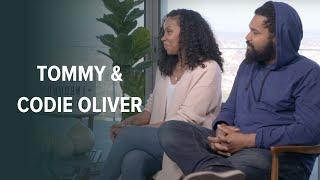
Interview with Codie and Tommy Oliver about their docu-series Black Love. They describe the series' origin (idea ~10 years prior; began shooting ~2014), mission (to showcase positive, diverse Black relationship stories and make those experiences feel universal), and production choices (shifted from feature documentary to docu-series because they had ~45 interviews and too much footage for 90 minutes). The conversation covers challenges of working and living together, lessons learned from couples (e.g., 'marriage as self-love for two'; commitment to being committed), editorial differences from reality TV (focus on process and resolution rather than salacious clips), and company goals (one-third unscripted, one-third scripted, one-third features).
Chapters
Welcome to the Inbound Studio. Today we're talking to Tommy and Cody Oliver, co creators of the hit docu series Black Love on own. Cody, you were director of the series and produced by Confluential Films, which Tommy, you are founder of. Correct. And a couple in real life as part of all of this.
This is true.
Cool.
So I actually want to start with Confluential Films because I feel like one of the descriptions that I found in all of this was championing projects that are inclusive and celebrate the human experience. And I just want to understand, like, why? How did you land upon that mission? And what does that mean for you?
It means telling stories that oftentimes don't get told and helping people to tell those stories who don't often get enough opportunities to tell those stories. And so for me, it's all about just working with good people and using the platform that we are fortunate enough to have to actually make the world a little bit better.
And how are you finding those stories?
It depends. Part of it is working with good people and finding the stories that they're passionate about. Sometimes it's an inspiration of where we've grown up or what we're doing or what's happening in the world. So it's really just about the things that sort of define this as humans and digging into that experience and sort of showing that shared sense of humanity.
And how did, like, what was the impetus for black love? And how did that come about in all of this?
Sure. So black love started as, like, just a nugget of an idea that I had, like, 10 years ago. Single. And there was this narrative in the media of a black marriage crisis that black people weren't getting married as often or staying married as long as other ethnicities, and that black women are the least desirable. It was just a lot. Right. And especially as a single woman. My parents were divorced. They tell you if your parents are divorced, you're more likely to get divorced. I mean, it's just like, what's the point? And so then, at the same time, the Obamas were elected into office. I mean, this was that long ago, and everyone's going, oh, my God, they're beautiful. They're black. And their marriage goals, all of that. And it was obvious that we just needed a place to look. We just needed to see positive stories. And so when we met, we immediately talked about the idea, and he liked it as well and also as us dating. So we dated very briefly, got engaged very quickly, and then got married. So in that short period, he hadn't you know, well, growing up, he hadn't seen his parents together. My parents were divorced, so. So it was clear that for us talking to married couples would be beneficial. Not just to capture love stories, which has its own purpose, but just us embarking on this journey together. Really just asking people like, what does it take? What do you do when that person gets on your nerves? The most basic questions to some of the bigger ones. It just was gonna be really important for us.
But that has to be intimidating to do that while working together, freshly married, to like create like that's a lot of new happening all at once. So I mean, how do you navigate? I am one of those people that's like, I don't think I could work with a significant other. Like, that's just too much. So how, how do you like navigate that relationship in the context of like telling relationship stories?
I'll say this, I'll say for one, I don't know that the navigating even start started till like a month ago. We started doing it while we were engaged. Right. So we, it was more of like just the need and the desire to do it, to tell the stories to and what that benefit would be for us personally, for our relationship, for the greater audience of whoever watches it. So we didn't ever like realistically say like can we handle working together and being together. I don't remember really having that conversation.
Sort of before you quit your job, you were worried about whether or not we could.
Yeah. And then what happened?
And then you quit your job and then we were okay for a bit. And then we were less okay for a bit. And then we were okay for a bit.
Right. It's like the highs and lows of.
And then we fought today and we'll be okay tomorrow.
Uh huh. Yeah. I mean it's, it's, it's hard. It's hard for us, for me. No, it's not. He doesn't think it's hard.
What in all of this it's about, you know, like you're, you're learning something about your own relationship with each other. You're talking about like couples and these like romantic relationships. But did you learn anything unexpected? Maybe just about relate like human being relationships and relationships with just like one person to another that you maybe was a surprising revelation.
I mean, I will say this. We're constantly learning like every couple is different. Each individual within that couple is different. So you know, and I always say this like we don't judge our couples because their, their life experience leading them to that moment is so different from person to person and then from us that it's like there's always something to learn. So that's just the state of things. And if there wasn't, then I don't think we'd have a show. But lessons, we've both taken lessons from couples that aren't necessarily the same because it's whatever we need. Right. And also what I know he needs for me to learn. Right. And vice versa. And so one perspective that I found interesting was a couple that's been married eight years and the wife described marriage as self love for two. I make a cup of coffee. I make you a cup of coffee. And that's like a very small example. But I know it's very important to him that I look at our marriage that way. And so that stuck with me to just look at it that way.
Did you learn surprising things about your business relationship with each other that were maybe you hoped to learn or were unexpected to learn?
I would argue no, but mostly because we don't really talk to a lot of couples that work together.
Well, I think we learned about our business relationship through doing business together. Right, right through the doing, learning from the couples. And so we've been shooting these interviews for the majority of the time we've known each other. We've been shooting these interviews from when we're engaged, through being newlyweds now less so. And it's been, what, three out of our four years together. And so we've learned how to deal with each other at every stage. And our lives have changed over those four years from being single then married, to having a kid, to growing a company, to all these different things. And so we need to constantly adapt and learn and figure out how to support the other person and figure out how to just help each other in the ways in which they want to be helped, which is difficult sometimes because. And a lot of times we help people in the ways that we want to be helped, which isn't oftentimes the right way for other people.
I feel like work life balance is like a buzz term in general, but probably takes on an even different meaning when you are working together 247 and living together and living life together and all these things. So what does that look like for you? Like, do you have like on switches and off switches for talking about work or not talking about work or talking about your relationship with, you know, your marriage, relationship with each other. And then when you're at work, you don't talk like, you know, what does that look like, for you guys. And is it the same for both of you?
It's not the same for both of us, I think. I mean, at this point, my life is 98% work and family, and that's it. And so it's work, my wife, my kid, and our kid.
That's the other two.
You know, the infrequent thing, like maybe a drink here or there or a lunch or whatever it may be, but it's really just those things, just work and family. And I think for me, I try to, like, once we're at home, particularly once it gets late, is like, well, I don't want to talk about business. And so which is like, I always think about business. I'm very much sort of business, business, business. But for me, my relationship, my wife and my kid, they're more important than business, and they're more important in the company. They're more important than sort of everything else. And so I try to nurture that time and try to be. What?
Nothing.
Okay. It doesn't always work because it takes two to sort of have a space where you're not talking about stuff. Mm.
Did you just throw me under the bus slightly? I mean, that's true. So I would also say, personality wise, he's much easier for him to, like, separate things, just be like, this time has passed. Da, da, da, da. I mean, I would say we definitely need that, or I need to do that more. And the reality is, you know, you're talking to us at a point where, like, we're growing so many things this second.
Right?
You know, the. You know, the show we started shooting, you know, a year after we met. Literally, like one year after we met, which was 2014, and we've been shooting it ever since. And we, you know, licensed it to own in 2016, and it aired in 2017, and things have just been growing, growing, growing from then. And then we had a baby in the middle of that, and you're going him, Right? And so it's like we're constantly in flux, and it's hard sometimes to turn it off. And not. Because it's like, all I want to do is talk about work. It's like there's so many things moving and happening that it's like, hey, you didn't answer this question at noon, and now it's 9pm And I don't. I need an answer, you know, So.
I think, well, you should have asked me at 5 or 6. And so that's what I'm saying.
So our approach is just different.
Oh, Well, I didn't ask you earlier. So it's nine o' clock and we're here now so we can talk about it. And I'm like, no, or I'll get.
Mad because you actually asked me, which isn't helpful either, because then it doesn't get. Then it still doesn't get answered. Right.
Well, ask me tomorrow at 10am or remember to ask me at 5pm the day of.
So it's just like anybody else's working relationships with each other. Sometimes you get an email at midnight.
You're like, I'm going to answer when I wake up. Maybe that's what I should do. I won't bring it up. I'll just write an email.
There you go. That's what.
That's perfect.
Does that help?
Absolutely.
All right, I'll. But will you answer it? Because I don't think you'll answer. It'll be the next day.
Absolutely.
No, no, no.
General.
You ignore a lot of emails, Fred.
I get a lot of emails.
All right, you heard it here. He's not. This isn't changing.
Let's circle back a little bit to the show and perhaps the growth and everything that you talked about when you first set out to do this. I believe the idea was a documentary film. Correct. And then it turned into a series, and now it's turning into a second season of that series. So. And more and more, have your. What were your initial goals and, you know, have they changed throughout this process for the, you know, the output and the goals for, like, what you want the audience to take away?
I would say our initial goals remain the same.
The.
The reason we switched from documentary to docu series was simply because we had so much footage and so many robust stories that it was like, there's no way we can do any of it justice in 90 minutes. Like, what are we even trying to say?
And so we looked up and we had 45 interviews. And so to try to compress that.
Into 90 minutes was like, what is that?
Yeah.
And so our goals didn't change in that our goal was to, I guess, first and foremost, like, create a place where black love stories lived. Because there was enough out in the media that was saying that they don't exist. Right. So that was sort of the underlying mission. And then to just really talk about what it takes to make a relationship work for the long haul and show diverse perspectives on that. And, I mean, that's the goal throughout and for ultimately it to be universal. The stories are about marriage. You know what I mean? At different ages and different careers in different parts of the country. But, like, it doesn't have to be. You don't have to be black to enjoy it. Right. And so that was really important to us too, is that, you know, that we do show that we do tell these stories through a community that doesn't get to see themselves in that way, but. But also that we're able to show the world how universal all of it is, you know?
Cause I think that's like, that balance of, like, diverse stories. But then the universal nature of anyone being able to appreciate them is, like, important across, like, pick anything. Like, that's so important. And it's sometimes hard to see the other side or hard to bridge those gaps. So are there nuances to your storytelling or your interview style that help you get at the heart of both of those things in a way that works?
That's a good question.
I would argue that for us, it's always been about answering the questions that we have about relationships. And if we're doing that from an authentic place, as you know, I guess We've been 30 in this process. 30 plus in this process. But like, as 30 something people, 30 something woman, 30 something man. Like, as long as we make sure that we as individuals are represented when we're asking these questions and when we're talking to couples, then we'll always get responses and conversation that are relatable to people on that journey at any point in that journey, ideally. But people on that journey.
I agree. I also think that there are probably two things that maybe three things that help us. One, the ways in which we interview. So every single interview we've done thus far has been four people in the room. And so that's it.
There's more people in this room right now than when we sit down.
Black love interview by far.
And so it's literally the two of us on one side and then the couple on the other side. And so she's asking questions and I DP and cam up and AC and staffer sound, all that. And so part of it is just so that it's an intimate setting. And so it's really, hey, you've been married for 10 years, 20 years, 30 years. How do we get to where you are? How do we avoid some of the pitfalls that you've fallen into or that you've experienced, or how do we get.
Through them when they come correct?
And then I also think Cody's just really good at asking those questions and really good at sort of digging into it and making People feel comfortable and helping them understand sort of the, the reason for why they're doing it.
I'm curious, and this is probably a little bit of just like my own genuine personal curiosity between the difference of, like, docu series and these are real, you know, you're real people. These are real people you're talking to. And like, reality television and relationships and really, you know, diverse communities get like a bad rap through reality tv. And so, like, how's it different? And like, how do you combat that? And the, like, sort of like the curiosity and the obvious, like, appetite for, like, that type of reality television in a way that's. There's an appetite for this as well.
Sure.
So for like, we're uninterested in reality tv, we're uninterested in salacious or just any of those sort of things. And so there are. There are plenty of people who do it and do it well, and there's obviously an appetite for it. And so more power to them. That's not what we want to do. And so I think there is just as much of an appetite to see people, to see real people sort of in ways that we haven't seen them. And so like you mentioned with sort of in the media, so oftentimes people are. Relationships are misrepresented or poorly rendered. And so we see the highs, we see the lows, we miss all of what's in the middle. We see just the, the, the craziness. And so we never really understand what it takes to, to make it work or we don't see those positive images. You know, we see the, the divorce party. You know, we see that sort of whatever it may be. And so for us, like Cody said, sort of seeing is believing. And we just want to capture and share those images. And so that's just, that's what we're doing. And so it's not even about, hey, here's our message. No, no, it's just, this is what it is. This is just merely sort of capturing what's there. There are couples that make it work. There are couples that have made it work for a long time, and they are committed to being committed. And so here it is for your observation, take from it what you will.
And also the story that we try to tell at the end of the day is about relationships. Right. How to heal them, how to make them better, how to make them happy. And when you mention reality tv, for example, like, a lot of the times you're seeing the drama.
Yep.
And then maybe the resolution. Right. Or the Resolution, at least for TV's sake. Right. The beginning, middle, and end of the story. But like that very same drama that we may hear a couple meant, you know, we were fighting or whatever crazy thing that they tell us. We then go, what did you say to him that made him say that to you? And then, you know, and then what happened? You know, because we have a couple that we shot that we, you know, we all keep watching our show and you will see them, but that is on reality tv. And it was really fun and exciting to do that interview to me, because you do see these, the salacious parts, and to sit a couple down and really get the story of how they met. And in some cases, they were talking about their experience on the show, but, like, really get the story of how they met and what their love looks like. And the, and the argument, the things that they argue about and the hurdles that they had. You're getting to see the human part of them and relating to that. And I just find that to be that that sort of defines the difference between reality TV and us. We really spend time talking about, like, what makes your relationship work.
Also, you talked about how there's a beginning, middle and end in reality. There's a beginning, a middle, and there's a long time between the middle and the end. But in reality tv, or on just TV or film or whatever, it's super fast.
Right.
Right. Super fast. And so you don't actually dig into the process to that resolution. You don't dig into the process of understanding what happened and then figuring out how you can get past it. And so for us, that's a lot of where we like to live in. And so it's like, okay, something went wrong, and then you got through it. How did you get through it? And sort of just. She's reinforcing that.
Erica and Warren Campbell in season one, they were a couple that he, you know, a line that was of course used in commercial was when he said, I ended up hanging out with they're married. And he's like, I ended up spending a lot of time with this other girl. That girl gets pregnant. Of course, that cliffhanger moment of like, oh, my God, what happened? You know, we spent so much more time talking about, like, so what did Erica say when you told her? And how did you all get from a place of, oh, my God, this is crazy. You're about to, you know, you've got someone pregnant to staying married and feeling like you're happy and healthy and whole. You're not just married for the sake of it and resenting each other, you know, that's the time that we spend with them.
Yeah.
In addition to understanding how it happened in the first place.
Right, that too. That too. How. How'd you get there? Why? What were you thinking? How did you, you know, you love your wife? Why were you with this woman? And so we spend a lot more time with that than that one moment that I think would be the highlight of a reality TV show.
That is a skill. Like everything you've just talked about in terms of having those conversations, people and getting there and getting that in depth. Like, that is. Not everybody can do that. Not everybody can sit across the table from somebody and have that type of conversation. Some of it, I'm sure is just natural. Like either you have it or you don't. But how have you sort of developed that and learned that? And I guess even like, what role does like mentorship or other people play in your growth as a filmmaker, an interviewer, a business person?
So one thing that entertains me is that I went to undergrad for broadcast journalism and I worked at a 24 hour news network and I hated it. I really just hated the news cycle. And then I went to film school and so it is. And I had never intended to make anything documentary, docu series, it was always feature films, which is clearly not what's happening right now. And so what tickles me though, that now I'm like using both of my degrees. But so I'll say that's a part of it like that, you know, broadcast journalism. I mean, I spent four years studying like interviewing people and telling stories in that way. But so I would say that is a part of it for me. But also, honestly, just genuinely wanting to know the information. And like Tommy said, I think us creating an intimate environment for the interview helps a lot. And being able to look at another couple and say, no, seriously, I want to know how you got through that. Because I don't know how we would get through it, but I want to, I want to know that we can. So they, they want to help. And one of the things I always try to, you know, just tell the world is that everybody in season one, all of those couples, they did that without us having any sort of distribution or anything.
Right.
You know, they just did that because they wanted to help, told their stories, bare their souls. Viola Davis told us she had bad credit, you know what I mean? Just because they wanted to be able to help other people, people. And so I think it's about choosing the couples and then I think it's about us, you know, making them feel comfortable. And like, you know, you're looking into the eyes of two people who want your guidance, want your experiences.
I think a big part of it as well is the conversational nature of it. And so it's less about walking in with a checklist or walking in with a list of questions, and it's really about having a conversation. I'm sure you can have questions if you need to look to them, but it's really about listening to what they're saying and then responding and reacting to that in the moment. And so versus, you're going in with a preconceived notion of what they should say or where you want the conversation to go. And then you wind up missing the. The real gems because he, he missed the follow up question. That was obvious because you were so focused on that next thing on your list.
Yeah.
So I think you do that.
Well, thank you. Did you say me or her?
I'll ask the next question on my list. But I mean, I guess a little bit to that point. And some of the other stuff that we talked about before, like, because of the nature of the, you know, the relationships that you're talking to and the couples and everything, like, for the, for the larger audience, for the world and anybody paying attention and even in other contexts outside of marriage, like, do you have takeaways of what can, what can we all learn about the differences that exist within each other? Because I think, you know, a lot of what you're talking about is like, these are two people who are in a committed relationship, but there are inherent differences between you. No matter how much you love each other, no matter what, you know, how much you've been through. And what can we all sort of take away from being better friends, better co workers, better anything by, like, understanding and learning more about that aspect of relationships you want.
Okay. I mean, I think that marriage kind of is like a microcosm for, like, the relationships with people that we love. Right. I think that what people who are married articulate, you know, in general, but also through our show is, as Tommy often puts it, the commitment to being committed. Right. You've made a choice to commit to this person for life. And so a lot of the times you're not happy with them or whatever it is. And so you have to, if you're committed, you have to figure out how to get to the next day. You have to figure out how to get through that argument, get past whatever is irritating you, big or small. And in relationships with people that we love, we have to do the same thing. Actually, what's funny is that over the course of our marriage, personal story, I had two good friends of mine that we were bickering. And the personality of these two friends was to just be like, if it's bothering me, I don't want to deal with it, I'm gonna put it off. And I'm like, I'm married, right? I ain't got time to be putting off things that irritate me. We're gonna talk about it, we're gonna get through it, and we're gonna move on because we love each other. When you, to me, when you love each other, that's what you do. And, and to me that's a experiencing that with my friends who aren't married, so maybe that lesson hasn't gotten to them yet, but experiencing that with my friends and comparing it to the fights that I may have with him. When you love something, to me, when you love someone, you fix it, you figure it out. And sometimes that means you're going, I'm really sorry for that thing that you don't really feel like it was your fault, but that's what you do because you love that person. And sometimes it's something else. But I think that that's really important. And yeah, so to me, that's what the marriage example can teach us about the relationships that we have outside of marriage.
I think one of the best things you can do for relationships, both friendly and romantic, is to work on yourself. And so the better, the better you you bring to either of those things, the better the relationship will be. And so the more self aware you are, the more, the happier you are. The more you practice self love, the hopefully the better those relationships will operate. And I think it's something that people oftentimes they ignore in both again, regular relationships and romantic ones. And so they expect somebody else to bring their happiness or they expect somebody else to all these sorts of things that it's not anybody else's responsibility and so they can contribute to it, but it's still on you to the onus for who you are, for how you are, for how you operate. And the better person that you are, the better that relationship will be.
And there's a lot of people we've seen, not couples we've interviewed, we have a lot of conversations about relationships, a lot. Right. There's a lot of people that don't believe that, that don't believe you're responsible for your happiness. Yes, they believe if you're in a relationship, that person should make you happy.
Yes.
And that's just.
That's dangerous is what it is.
Good word.
That that person can and should be bring you joy and they should care about your happiness.
Right.
But your happiness is ultimately yours.
Right? Right.
And yeah, it's yours.
Alright.
I want to ask a few like a little snappier.
Okay.
You can take as long as you want to answer, but they can also just be quicker. What inspires you? What is the like what drives you, what inspires you?
Connecting people.
Challenges really. So I just like to figure out how to conquer stuff, figure out how to navigate whatever it may be, however big the mountain may be and then you realize that oh, that's actually a really small hill. But that's what I like.
What advice would you give to your 15 year old self?
Oof. Okay, that one made me. You want to go first.
So there's.
I.
When I was 16 years old, sure. I was on the COVID of the Philadelphia Inquirer and so there was this three page article and one of the things that I said at the time was that failure was one day realizing you're not the person you could have become. And it. I stand by that.
So your advice is.
You're right, is that I was a real smart 16 year old.
It's a metaphor for a lot of things right now. Okay. Oh man.
What it really is, is you are accountable for your success and your happiness and it's really that simple. And so it's not your parents, it's not your friends, it's not society, it's not the market, it's not anything. You are fully accountable for your success or failure.
Okay. Seriously. So mine's a little bit more like emotional, personal. I would probably tell my 15 year old self that my parents. Divorce was a good thing.
Do you want to say anything more about that?
I mean, I would just say it's certainly a defining moment in my life, but at that time I was probably trying to figure out too many things about how to like get them back together or like why do we have to have this separate family, you know, our separation within our family. And ultimately it allowed me such a personal and deep relationship with each of my parents that I don't know that I would have ever. No, I don't know that I would have. I wouldn't have gotten it at that point in life. I think most people get that when they're adults and they're seeing their parents as adults. When I was like 12, I saw my parents as like a man and a woman, not my mama and my daddy. Yeah. And that I think is a good thing for me. Yeah. Not for everybody.
Oh, you tell your 15 year old self me.
I don't know.
I'm asking you the question. If you weren't doing this, making films, what would you be doing?
I figured you had an answer.
Of course I do.
Oh. What is it?
What? What do you think?
Tech.
Yeah. Something tech and tech. Business or something entrepreneurial?
What kind of tech?
It depends. Depends on when I'm not doing it. Am I not doing it currently? Am I not doing it five years ago? Am I not doing it five years from now? Really depends. But I'm most certainly a techie at heart and I like the tech industry and like being around really smart people. And I like what the best tech allows for, which is oftentimes connectivity and just like being around cutting edge stuff.
Is there tech in your future?
There is. There's tech and there are present.
Mm. I have no idea what I would be doing. Like, I can't even. I really don't know. Maybe. Maybe I would be like a therapist. I certainly thought about it. Right.
You kind of are slightly obvious.
I don't know. I don't know.
I mean, tech might be the answer to this, but do you have anything that's on your career bucket list?
So quiet. To keep making the sort of shit I want to make.
Fair enough.
Yeah. I have to agree. I always say I want to do what makes me happy till it doesn't anymore. Like, I just don't want to be in a position where I'm doing things that. Because you have to. Because I have to. Right. And I also never thought I would be making a docu series, let alone a docu series about this thing that I'm so passionate about. So I kind of feel like that might be.
Yeah.
The bucket list and everything else is just icing on the cake, even if those metaphors don't go together. Yeah.
But, you know, is a feature film still on your sort of plate?
Definitely.
Plenty.
Yeah.
So our company is one third unscripted, one third scripted, one third features, and so lots of stuff coming up.
Amazing. All right, final question. What does Inbound mean to you?
Thomas, Ladies first. Oh, really?
Where you get the Rebecca and ask her what it means to her.
Yeah, let's start there.
Oh, no, that's not fair.
You gotta. It's tough.
It can be whatever comes to mind.
Okay, this might be a terrible. Like a weird analogy. Right. But the first thing I thought of. I used to play basketball.
Mm.
So, I mean, I guess it. And I. And I immediately thought of, like, you know, the boundaries inbound. Right. And I just thought, you know, taking the skills that I have to make an impact. Right. Because within on the court, that's what you're doing. You're using your skills and, you know, but to make an impact. So that's. That's what I.
That's a great answer.
It's a perfect answer.
You want to borrow it? You can borrow it.
You can't improve on perfection. You said it was perfect.
There you go. We'll end it there. It was. Perfect answer. Thank you so much for sitting down with us and chatting. I really enjoyed it. I hope you did, too. And thanks for being here.
Thank you so much for having us.
Thanks.
More from Patrick



A NEW BREED OF PARTNER: The Partnership Ecosystem Model Journey of Patrick Biddiscombe, Part 1








Customer Success Workspace: Never Lose Sight Of What Matters Most | HubSpot Spotlight