Transforming Email Marketing: Journey To 2.5M Subscribers | INBOUND 2025
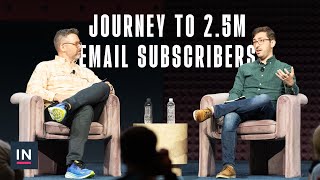
Panel discussion (INBOUND 2025) between Tom Monaghan (HubSpot email product) and Ben Berkley (managing editor, The Hustle) about The Hustle's growth to ~2.5M subscribers and what makes its newsletter successful. Key points: the newsletter began from an audience collected at events (founder Sam Parr), evolved into a six-times-per-week product with a strong, comedic voice, and was acquired by HubSpot in 2021. Success factors highlighted: audience-first approach, curated/curiosity-driven editorial (finding unusual details), frequent surveying to learn readers' needs, prioritizing giving over asking, treating the inbox as a personal space, and actively removing unengaged subscribers to improve list quality. Practical takeaways for other newsletters include defining voice/audience, curating content (including external sources), and focusing on value and retention rather than raw subscriber counts.
Chapters
Happy to see you all. My name is Tom Monaghan. I am the director of product here at HubSpot for email. I've been doing this for kind of a long time, and before I did that, I had a startup that was really cool and made word games before they were profitable or hotness. So my timing is bad. But I'm super happy to see you all here and hopefully we'll have a entertaining conversation about email. Ben?
Yes, My name is Ben Berkley. I'm managing editor of the Hustle. Apparently, if you can see wherever the screen is. I have also had a very strange career, also in very unprofitable spaces, media, and specifically satire. Before this, primarily, I was managing editor of the Onion, which is a weird job. And so that has led me here to. To all of you. And so it was all worth it. And I'm excited to talk about email, which is a sentence nobody has ever said before, but we'll go with it.
Yeah, let's go with it. Okay. Millions of emails. Obviously that's the reason that I think most people are here, because, wow, what a brand. But what if some of these people don't know what the Hustle is? What's the Hustle?
Well, let's just start off just so we know how familiar, how many people are subscribers to the Hustle. Ooh, okay. After 30 minutes, how more people are going to be subscribers to the Hustle. Yeah, that's polite. I'll take it. Thank you. So what the Hustle is, is at its core, we were just talking about, I mean, ultimately a multimedia business media empire. We are across podcast, YouTube, but at the core of it is a six time a week newsletter, which is not just kind of like the best in class business and tech newsletter, but just generally speaking, known as one of the premier newsletters in the world of media. So we are very, very fortunate. We have a great team of journalists who are doing their jobs right now because I'm here not doing mine. So thank you to them. And they can't hear this because again, they're just doing their jobs right now.
So show of hands, who wants to produce a new email six times a week? Yeah, no hands. Nobody. Does that sound awful? I think that sounds really hard. How about a little bit of the origin story though? Like, tell us about the Hustle. How did it get here? So huge subscriber base, six times a week, people who love you. How'd you get here?
Yeah, that's such a great question for not me, because I was. I've been here A year and a half. So the growth of the Hustle I can speak about, but was not there, but it grew to millions. It was started by a man named Sam Parr, who is much taller than me and looks very nice in a sport coat. He is a serial entrepreneur who started really at age 15. I think he had like a hot dog stand that ultimately threw just a sear, as entrepreneurs do, just a series of wild meetings. Ended up in a group that was starting something called hustlecon, which effectively TED talks, but for entrepreneurs. And they were collecting emails to put on this event. And it was not, to my understanding, meant to become a large media enterprise, but sometimes it just kind of happens.
You know, happy accidents.
I would say. So, yes. So it was one of those things that just like organically grew through just this very strong voice. This very. It was just doing something different. You know, it's like entrepreneurs speaking to entrepreneurs rather than journalists speaking to entrepreneurs, just kind of guessing what their whole thing is. And so, you know, it grew organically up into the millions of followers and then it was able to then invest in growing less organically and just in the way that I assume many people here know how to grow emails. And if not, I guess we'll get to that at some point in the next 25 minutes.
All right, so that's the start. But what was first? Like literally, which came first, the chicken or the egg? Was it the audience or the email?
It was, it was the audience. And I mean, I think that that's very fortuitous, actually, because then it was able to really know what it was, which is not what you can. A lot of emails can say, a lot of emails, you just kind of do it because you're trying to solve a problem and you know that people are going to go to their inbox a couple times a day. This was very purpose built. Once they had that audience, they knew who they were. They knew these are entrepreneurs and we know what they want to learn about which entrepreneurship, obviously, if you're an entrepreneur.
All right, so the email part, how did that get to be the way. So you've collected all these people. You had a conference, we're at a conference. But how did it become about email? What was the trigger that made it worth it?
I think that really what happened was, was they recognized that email was this untapped media. And still it's like we're catching up right now in media, just media as an industry suddenly realizing the power of newsletters. They are very powerful. And I think what happened that Maybe wasn't even that organic of a discovery that newsletters were powerful. It was because everything else started to really suck in media. So. So you're relying on Facebook to drive traffic and then the algorithm changes and now you don't have an audience. And this is. Email is an enduring medium. It's a really good long term investment. You know, people are going to always live there. They have to. You can't like sign up to pay your utility bill without having an email. I think you enter it at the dmv. Like everything goes through the inbox and so it's going to be there. And people were starting to get wise to the fact that, oh, this is a very valuable space to provide value beyond just spamming people.
So it was about that reach and it was about finding an audience that would actually engage with advertisers, with content.
Yeah, I mean, it became a business very transparently. I don't know if anyone's heard of a company called HubSpot, but it purchased the hustle in 2021. And so, you know, it is a brand that has changed because it was this very scrappy upstart that suddenly in the, like a leading lane in changing media as a whole. And now it is a part of a very large company which, you know, both have, both are great in different ways, just kind of changes some of the approach. At least just the business model is different.
So what has stayed the same? So when we talk about the fact that, you know, you came over to HubSpot, this is something that grew actually organically, can you imagine, organically to 2.5 million? Like, seriously, so what stayed the same? What are the things that you hold dear?
I mean, I think it's the voice. At the end of the day, it's not medicine, which is, it's a good time. I think if we really boil it down to what the core of the Hustle is, we inform people, we delight people, or at least we try very, very, very hard to. And we try to connect with people. We try to find ultimately we really try to understand our audience. We try to understand what they're trying to get from us. Most often it's to be conversant on the news of the day in the fields of business and tech. And it is to find just some like weird gems from the Internet and kind of just become more interesting through having read us. You know, I think that the win for us is when, when someone comes to us and says, well, one, they had a good time, but they also, they have that moment where they sound cool in a bar and they're like, oh, I learned this on the Hustle. That's something that really, really works great for us.
So I want to pull this thread. So this is something that I talk about a lot with our customers and with. I'm going to say it, kind of regular email marketers, right. That having this voice and really making a connection with your user and being intentional is hard, but it's something that we all have to do. If you want people to care about stuff you're putting in their inbox, if you're not genuine, they will not care. If you don't care, they won't care. It seems like you all really lean into that.
Yeah, we care probably too much. Which that actually usually works pretty well because we're exceedingly thoughtful about. I mean, almost to the word, which is a lot of work, but it pays off. It's something that we know we're going to connect with people because we're thinking about everything that we're putting in there and making sure that we are being thoughtful of our audience's time. And that's the thing with email, where. And we can start to broaden out beyond the Hustle. And what is valuable, valuable about email. This is a very personal space. That's what makes it valuable. That's what you need to think about anytime you are going into that space. It makes its value, but it also makes it really tenuous. Like, you can't spam somebody's house and still be their friend. And so I think that that's something that we think about so much, where we really try to be funny. They, I mean, hired someone who worked in comedy to run editorials. So that's clearly a very big focus. Or else maybe it was a mistake, a clerical error, and I don't actually have a job. I should check my bank account.
You totally still work here. I checked before we went on stage.
Okay. Yeah.
So when you talk about kind of really respecting this relationship that you have with your readers and their inbox and their time, is it something that you're just able to do because it's a niche, because you, like, kind of know your audience? Like, let's kind of unpack that, because.
Yeah, we talk to our audience a lot. Not enough people. People here are subscribers yet. But when you do, you'll notice we survey pretty frequently, try to get a sense of what's actually valuable to our audience. What they're missing, who they are, what fields they work in, adjust our content to speak to those Things in order to drive value, which you have to do in this space to maintain your space in this inbox. There's a lot of competition for it and not a lot of tolerance for things that aren't going to move any needles for you. It's like, it's a lot of time to read emails that aren't doing anything. For you to know how to give value to someone, you need to know who that person is and you need to know what they want. And so that's something that we focus on quite a bit. And then we focus so hard again on just driving that and value over everything else. It's a relationship medium. Like, it is about maintaining a relationship with. Not enough people wrote that down. That was like a cool line that came out of here. I was really proud of that in the moment. But I think that you need to kind of always be thinking about the ratio between what you are asking and what you're giving. I think why the Hustle has been successful is it does a lot more giving than asking.
Do you think that that's something that, like, regular folks can do? Like, is it just because, you know, entrepreneurs, Like, I hear that and I'm like, yeah, like, let's do it. But how does a plumber from Duluth do that?
I would love to know that.
I'll hire you if you do.
Oh, boy. Okay, I'll work on that one. But I think that what I'm kind of saying here is that the Hustle works as email marketing because we don't view ourselves as email marketing. You know, we make it enjoyable. We recognize our competition as the, like, entire trash heap that is the Internet. And how do we make. Make something that is actually worth your time and know that we're also not asking for time, a lot of time. We want it to be a five minute read. We want you to be in there and out, you know, what you need to know. Again, like I was saying, inform, delight, connect was the third thing. Sounds right in my head. And so I think that's something that anyone can do. It's not like a secret. We have not yet put any sort of patent on it, which maybe we should. This seems like we could make a lot of money on that, actually. So I'm going to get back to you after this. All right, perfect.
So when we talk about niche, like, this is a niche, although 2.5 million seems like a huge niche. This is a niche newsletter. Like, should we all be running out and starting our own? Like, is this a market we can get into? Or should we just approach our own work the same way?
I mean, I think anyone. I would welcome endlessly more newsletters in the space. I think we're also in this time where there are a lot of addressable audiences that don't have their own thing. You don't have to be 2.5 million subscribers or whatever's on the screen right now to be a one, a solid business or two, a worthwhile product. We are very fortunate to have that. People work very hard for that. But that's not the value of our audience. You know, it's not about how many subscribers you have. It doesn't really matter if you can't retain them. It doesn't matter if you can't have something of value with them. You know, I think we, same as anyone else, are looking at our list, trying to find people who aren't engaged with our content. And at a certain point, they're probably gonna not be on our list. And we know that, and that's okay.
I just want to really understand this. So you're telling me that with this huge list, this huge successful media empire, you're working to cull your list, you're voluntarily removing people from this list?
I would say as of late, it has gone down rather than up. And that is a good thing, because the quality of our readership has gone up. I mean, to be clear, anybody who opts out, I take it, I. I feel very, like, personally victimized. I feel like I just, like, need a therapist. It's like, it. It. It's. It. It sucks. But, you know, I think really, I'm honestly happy when someone is replacing the time. If they're not getting what they need out of the time with us, I would love for them to find it somewhere else. We are all very busy. I think being static is never good. Even when you're an industry leader, you don't want to just be doing the same thing for the same people endlessly. At some point, that party's gonna end.
That's amazing, because that really is a message that we try to give to pretty much anyone that will listen, that your list is like a living thing and you have to remove the parts that aren't working. You just have to. Because the only way you can build a business on that list is if you're getting rid of the parts that aren't working. It's kind of crazy to hear about it at your level, but pretty dope. You've grown a lot, and you've grown through partnerships and other sources. How do you measure the success of those. How do you know that they're working?
Because people that I talk to on Slack all day tell me that they're working. Because I'm very focused in my job on just making a high quality email every day and kind of having the faith that if we do that, the numbers are going to look good. We get a lot of organic referrals, which is always the best. That feels like, oh, we actually did a good job today. The success of the hustle long term is editorial, focusing on making great editorial and kind of back to driving value, making sure that we're doing that for our audience.
So what do you want your audience to learn? You send six emails a week, which sounds really torturous. What can people who send one email a week learn or people who send an email every two weeks? Like, how can they learn from your experience? What do you want them to take away?
I think I would go back to just kind of what I was saying.
About.
Giving versus asking, because that's always my pet peeve in my inbox. I subscribe to a lot of newsletters. I want to know what everyone's up to. I think every single one I am subscribed to right now is really focused. They know what they are. They know who they're speaking to, and they, they, you know, they set the expectation and they deliver on that expectation. And that consistency keeps me coming back every day, and that's what they're looking for. So it's a nice little symbiotic thing. We like it. The things that are in my inbox that drive me nuts. I'm gonna probably regret calling out a company like StubHub, but, like, they should go to jail. The whole company should go to jail. They send me emails so often that are always just, like, trying to activate me rather than giving me anything. They're just selling, selling, selling, selling. And so I think that that's. You got to know your audience and you got it. You gotta give them a little something. It's like. It's kind of like the please buy me dinner first kind of kind of thing.
So you manage folks who are developing content with you. Like, how does this work? How do you find this stuff? I mean, folks are struggling with this. How do you know what to say?
We torture ourselves, quite honestly. We are. I mean, we all have. We're all experienced in media, so we are students of it. We know where to look. We have really great context and kind of know, like, well, that person's a great curator of this type of content, and you just kind of keep an eye on what's interesting to them, and you're like, okay. Then you go a little deeper. Something that we do a lot, and that I'm very proud of that we do, is even when we cover a story that is out there, frequently what we'll try to do is find the interesting morsel at the bottom. Like, you kind of go to, like, I don't know, the 18th paragraph of a Wall Street Journal article. There's usually an interesting detail down there. We pull it to the top and we're like, okay, let's talk about that part of it. Because people aren't talking about that enough. And you cannot make connections with other things that are going on that kind of suggest. Is that a trend? Is that something that's really worth talking about? So I think we're always just trying to find different ways to different sources. The amount of weird trade publications I read regularly, I think, like my first week, I. I sourced a story from petfoodprocessing.net, which I now have bookmarked, which wouldn't say I would have expected that in life, but here we are.
I think that that's actually a great point. For folks who have to produce newsletters for their company. You don't have to create all the content. You can call out to other content that you see and that will actually help you have something to say. You need to have something to say. Don't send the email just because it's there Thursday. And you always send your email on Thursdays, like, please. But when you have something, like, if you don't have something nice to say, go find something nice to say. It can be from a competitor. It can be from the Wall street journal in the 18th paragraph. This is an actual takeaway for regular folks who have to produce newsletters. Don't carry that burden of creating that content all on yourselves. I mean, you all couldn't do it if you had to create all the content.
No, I mean, it comes back to knowing who you are and what your mission is and what your limitations are. And we are known as a great business and tech newsletter. We cover a lot of business tech. Should you come to us for breaking news on business and tech? No. You should go to the Wall street journal. It has 2,000 reporters. We have this many. That's. We know what we're doing. So what we're doing is not playing in that lane. We're just trying to find really, really weird, interesting things that kind of shock us and like you're like, I didn't think about the business of X and not the company X, to be clear. Just, you know, some weird industry again. At food processing.net, you're going to find something really, really interesting. You're like, I did not think about that, but it is really interesting. There's so many strange things going on in this world and it is our, it is our job to go on a daily treasure hunt to find them.
I think that's probably something that others can do if they get intentional about knowing their audience and knowing who they are and then maybe not name and shaming on a big stage, but see what happens. So from my side, it's been amazing to see the growth and to also get to see behind the scenes all the work that goes in. Like these are people who truly care about creating like an amazing email on a daily basis, six days a week. And I think all of us could benefit from like that level of commitment. I know we all have other jobs, I get that. But it's been amazing to see how just being true to your audience and true to your like core beliefs has worked. I think it can work for a lot of newsletters too.
Yeah, I mean, I'll acknowledge my job is to make good emails. That is most people who are sending emails, that's not their. That's like the thing that they have to do late on a Thursday night because they have set this cadence that it comes out every Friday. That's a really tough place to be when you have to be just like extracting this on like when you're just exhausted and doing 15 other things. So we have that luxury that should be noted in this is that that's one way that you make a great newsletter is focusing on making a newsletter.
So what should people do for you? Should they all sign up for the Hustle like today?
I mean, I think that would be nice.
That would be nice.
I would not be opposed to that. If you want to do that, you can go to the Hustle co email and then we'll be in your inbox. Six days a week we kind of a five minute read on weekdays and then on weekends. We have a incredible long form journalism from some of the best journalists in the country. So highly recommend it. This is this week's I'll just say preview. It's about a company swag and how much money goes into all of the junk that you're taking home from the floor of this convention. But with our remaining moment, one thing I do also want to note is that it's not just the hustle. We are part of a newsletter network, the HubSpot Media Newsletter Network. And would you guess that we are expanding or retracting given that I'm supposed to be announcing something?
Probably expanding.
That's just. You're so correct. We have three new newsletters that are joining from our creator program. They are adding more best in class business media to our portfolio. Highly recommend checking them out. You can do that@creators.HubSpot.com and I'm pretty sure I heard that if you subscribe to any of them in the next hour, I get a bonus for every subscriber I'm willing it into existence. Like a million per subscriber.
Wow. Yeah. Newsletters. We should all be in newsletters.
Yeah. I'll cut people in. We can do this. I should probably stop bribing people on stage.
It's fine.
Okay.
I support it. Thanks, everybody.
Thank you.
More from Patrick



A NEW BREED OF PARTNER: The Partnership Ecosystem Model Journey of Patrick Biddiscombe, Part 1








Customer Success Workspace: Never Lose Sight Of What Matters Most | HubSpot Spotlight