Use ChatGPT to 10X Your Following on LinkedIn
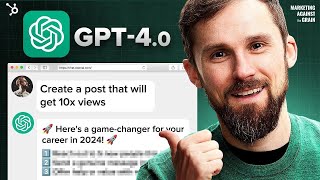
Kieran Flanagan walks through three ChatGPT workflows for LinkedIn: editing copy in David Ogilvy's style, generating posts that match your best performers, and replicating your own voice. He tests each live with GPT-4 and Claude, stressing the rule of five: never use the first output. The hosts flag AI hallucination and shallow reasoning as real limits.
Chapters
In this episode, we're going to give you three AI prompts that you can use in your day to day work. How to turn any creator into your best copywriter, how to craft the perfect LinkedIn post, and how to replicate any writer's style. You want to stay tuned because Kip and I are going to talk about where we are with AI and what we learned about the practical use cases of AI by putting together these prompts. All right, Kip. So last night, I'm sitting there after a hard day's work. It's a second half of France and Austria, and so a normal person is like, grab tea, spend time with dogs. My daughter is in bed and chill out. Weird Kieran personality takes over and says, I wonder if I can create some really good prompts for our listeners as part of the show. And, like, and the reason I wanted to do that is, like, I'm trying to understand where we are with AI and so I want to open up this entire episode with this one chart to plot, like, where we are with AI and then to show some practical use cases through prompts and then maybe close out with where do we think AI is going to go? And how the problems are going to be solved. And I'm going to speak about a couple of papers that came out this week from DeepMind. So let me start with this show.
While you were watching football, you were prompting, and by football, I really mean soccer.
I was prompt then because I want to set up the prompts with this, right? Like, this is kind of the innovation chart for AI, which is, hey, the innovation trigger for AI. And if you're listening to this, what we're showing is a curve chart where you start with the innovation trigger, you have this big increase from the peak of inflated expectations. You drop all the way down to the trough of disillusionment, and then you come up a little bit with a slop of engagement, and then you have the plateau of productivity. And this is like the innovation curve. And if you think about AI, the innovation trigger for AI was ChatGPT. And we all were like, wow, like, this is super cool. AI can do a bunch of, like, things. And then the peak of inflated expectations happen, which is like, people talk about how transformational it is, like, inclusive of me, right? I get caught up in the hype bubble as well, because I'm super excited by new technology and new paradigm shifts. And so you have this peak of inflated expectations where you're like, AI can do all of the things, and then you re. And then you start to really look at the results. And you're like, boy, like AI can't really do reasoning, right? Like it can't really do things outside of its training set. The fine tuning process is not that predictable. Like it doesn't always give you the results that you think. And AI hallucinates a lot because hallucination is a feature, not a bug. And so we are moving down, I think into maybe not the trough of disillusionment, but we're definitely moving down the first peak cycle. And I thought what we could do here is say, okay, well, like what are some like practical use cases that everyone could just start to use in their day to day work? So what we're going to go into is some prompts. Now I would just say that these prompts were done late at night and they are not the finished article, but they can give you directionally where you can go with these kind of things. And so I want to present to you first of all a prompt to be able to turn or to make David Ogilvy your copywriter or your editor.
Actually, David Ogilvie, one of the best copywriters of all time.
One of, one of the best. One of my, one of my heroes.
I think he's certainly top five.
I'm going to start with GPTO and then do Claude because I think it's good to compare. I will say I've been really impressed by GPT4.0 to the point where actually now I think it might be better than Claude. Yeah. For, for some of the writing tasks. But there is this weird thing that we do know happens which is like models get worse over time. So I don't know that that's part of it. Where I've been using Claude has been. Opus has been out. Maybe it's got a little bit worse over time. So one of the things you want to think about when you're crafting prompts is there's a couple of iterations to get to the final prompt. And so what I've done here is created a prompt that basically tells the AI that it's a copywriter and that it has a deep understanding of David Ogilvy's copyright and principles. But the first thing I did before I started to do this was to actually use AI to distill down those principles because I couldn't build the prompt unless I actually had the principles to include in the prompt. Right. So I have David Ogilvy's core philosophies of write in here in a really easy to understand way. Right. Like Conduct a thorough analysis of copy, ensure it reflects a deep understanding of the product and highlights its unique features. So there's a whole set of different guidelines in terms of how David Ogilvie would edit a piece of copy. And to be able to do that, what I used is like Claude and ChatGPT. This is the other thing I do actually that I think works really well. Again, like there's. This is not like a. The only way you can do things, but I always like do something in ChatGPT4 and then ask Claude to improve upon it and then take that and then paste it back in the chat GPT4 and say like, hey, improve upon this. So when I was doing the copyright and principles from David Ogilvy, I would say to ChatGPT, hey, like Distill David Ogilvy's approach to writing into easy to understand guidelines that I could give to a copywriter. And then I would go across the plod and I would paste those in and I would say, hey, here's a set of guardrails that allows someone to edit in the way that David Ogilvy would. How do I. Can you improve upon these? So it's like more easier to understand, punchy, more differentiated. Then I would go back, right? So I go back and forth and that's what I end up with. A final list of these kind of copyright and principles from David Ogilvy. I'll just pause there and see if that makes sense because you make sure I'm not ranting Raven.
I want to kind of play the role of the viewer and ask kind of questions. So you give great summary of Ogilvy's style and writing characteristics, everything. Is there a reason you are not also including? This is model four zero like images of some of his famous ads and like literal copywriting examples. Like obviously there's a lot of his writing out there.
Yeah, I think so. I actually do have another prompt we should get into this. So I think the thing you might be asking is like, yeah, like one of the other ones when we can get into after this one is is it able to break down write in styles? I think that's the thing you're asking for, right, Is if I, if I give it basically David Ogve's write in or I was or I give it some of the ads, would it be able to take that and distill down what makes them great in a way that you can then replicate great?
Yeah, I think what I'm asking is yes, can you see examples and get the insights from Those examples if you're artificial intelligence, or are you better if you tell them what is artificial intelligence better if you tell it what the insights are, or is it better if you give it both? If you give it the insights and the examples.
Let's actually do this as a test because I actually have a. I think that's awesome. I would say it is not good at breaking down because that's where I started. Where I started was and I was going to build a small app for this is put in. Put in any copy and then app, AI app, which is really just a prompt, right? With a. With a GUI would. Would give you a template to replicate that for you. Right. So take date. Let's get a David Ogilvy sample. All right, let. Let's upload my favorite ad of all time from David Ogilvy, which was a famous one he did for Rolls ro. Okay, so here's an example of one of his most famous ads. Obviously most people understand the short form version of this where he had the singular line. The famous ad he had was obviously at 60 miles an hour. The loudest noise in this new rules voice comes from the electric clock. What we're going to do is upload this, which is the full page ad to chatgpt4.0 gpt4.0 and basically see if it's able to distill down what.
What makes David Ogilvy a good copywriter.
Right. And I've got a prompt to do this and prompt this is to upload a writing sample and to have AI break down what makes that unique, noteworthy, why you believe the writing is compelling and engaging for readers, why it resonates with them. What are the lessons we can take from that? Now it should ask me for the PDF, although I will say that yesterday I was having some real challenges with GPT. Okay, here we go. Please upload the PDF. We're doing this.
Here we go.
Oh. Now review the PDFs. Okay, cool. And so this is. So basically this is the inverse of what I was going to do, which I think is a really good test here, which is basically instead of me iterating and working with AI and ChatGPT and Claude to like refine down what makes David Ogilvy an incredible copywriter and then apply that to content. This is AI and ChatGPT trying to distill that, trying to figure that out itself from a example piece of copy. So where are the lessons? So I'll just skip to the lessons. You can see here, it has reflection. Like it basically says, why does it stand out. Right. Everything I've noticed is like super generic.
I also find its initial insights to be very generic. Yeah, right.
Yeah you could like I could basically. So it's like its lesson is basically the writing sample teaches us several key elements of great writing. First, the importance of knowing your audience and tailoring your message to appeal to their desires and values. Yeah so it's a massive fact. I learned that in marketing class 101 understanding demographic affluent discerning individuals who appreciate quality and prestige. Second, the use of a specific tangible details create a vivid and believable image of the product. So I can basically say to say to ChatGPT, could you break this into a couple of punchy bullet points that will make my writers much better than they are today using David Ogilvie style. Please ensure the bullet points are not just generic best practice advice. So it does get, it will get better. So like even, even this version is a little bit better. Right? Like detail driven descriptions, authoritative tone, engage the intellect, narrative craft and visual structure. Use the headlines for the interactive guide, guide the reader, break up the NAS audience inside. But again it's like pretty much there's nothing like unique within here. I think in terms of its ability to understand what good looks like. I didn't just do it for this. I used the same prompt to do it for a bunch of writers. I did it for Dharmesh as a writer. I did it for a bunch of people we know. I would say it really isn't very good at like trying to like and.
Again because it's important because is real time provide like AI is not good at getting you the deep insights in the way a human would.
Because think about it like the limitation of AI is it's, it has a training set. It average like it kind of averages across that training set and so its ability to like it is not a world class writer. So it's never going to be able to really break apart, write in and tell you why it's really great. It really isn't there yet.
Kieran One thing I would just give for everybody watching today is I think one of the principles we have learned about AI and I want your take on this is that anything that a human can do really really well, AI really can't do the things that a human can't do because it doesn't have the time and effort and scale to do it. That's where I really shines. Like I can go read 100 different websites and give you kind of a more personal email for those hundred companies than a human would have time to research in a day. Right? Like that's just. AI's got way more scale than that. But if you're like, hey, I need a deep, deep, deep understanding of something. A human's better at that still today.
If you have deep expertise within something, unless it's kind of like coding or data, then the creative craft work is still. It's still a way off. Like we have talked a lot around its ability to replicate rules in that space. Now there was a news article that came out this week where a company has reduced their writing team from 60 to 1 one editor plus ChatGPT, which is pretty scary. And I suspect that Ryden is formulaic, right? It is basically formulaic, informational, educational. There is one answer. It's pretty easy to have someone craft that answer and edit that work where it's not good as like, hey, what makes us write in? What makes the top echelon of writing truly exceptional? And how do I get there now? So I think that's like a good example. A Can you use AI to basically tell help you figure out what good looks like today? I would say no. It will give you like a generic set of reasons it believes that is a good ride in but it's what it basically comes out to like just what are the things that make theoretically make good write in right. Not does not really speak to like why David Ogilvie was very, very good.
Hey everyone. You know we're always getting requests on the show for more recommendations on how you grow with a I. Well, we're bringing you another one. We've got this free guide from HubSpot on how you can use AI to completely change the way you create content. This guide, it's got it all Prompts to assist you writing and editing steps to incorporate AI into your marketing plan and guidance on how to roll out AI across your team. It is the guidebook on how to integrate AI into your content creation. I've dropped the link in the description below. You're going to want to check it out. Now back to today's show.
What we're going to do here is actually now provide it with very specific.
Reasons that we believe you're giving it the Kieran insights. You are giving it everything that you thought was really good about the way David Ogilvy writes instead of asking it to come up with what it thinks the best parts of David.
And so I basically had yeah, I went back and forth GPT Claude and I edited it. Right. So I took out things that I didn't think were that important. I kept things in that I think were important. I refined things that I thought were, like, really I wanted to, like, take up a notch. So this one here basically tells it again, it's a system prompt. Tells them to act, like, take ov Copyright principles, edit something the user puts in and then has a bunch of principles. Right. And so you're on my screen, you can see the different principles would take way too long for me to actually read them. All right. And we are going to put in a LinkedIn post I just did, which was a whimsical LinkedIn post that doesn't have a lot of content. So it might not actually be that good about the craft of marketing that Kip and I like to talk about, which I did on the train because, you know, I'm on the train because.
That'S what you do on trains.
So let's see. Ooh, put it into code. You can either paste the text. Yes. Let us paste my whimsical LinkedIn post, which I don't think is popping off in the way I thought it would. So you can make it better. All right, so this is like. You can see that it's not a long post.
No.
Oh, it's actually going to refine. I think it's going to refine it. Is it going to. So this is like. This is like AI again. Oh, yeah, it is. It's going to refine it and tell me the edits, which I really like.
Oh, that's.
So let me show you the before and after, because this is going to be funny, actually. So I have, like, marketing as a craft. The craft of turning ideas into movements. The craft of drive and click subscriptions and downloads with the value you create. I won't actually read it all out. I'm trying to do it for our listeners. You have to, like, go to YouTube if you want to see it all. So this is the before, right? The craft of the craft to make someone read, watch and listen because of your ideas. Then we'll go down to this one. So the first thing we should pay attention to is how it figures out how to do a hook. Marketing is more than a task, it's craft. That's better, actually. Yeah. All right, Daniel. But you see already the improvement and so, like, in an applicability, because I've been very specific. It's the art of turning ideas and movements. That's pretty much. Yes. Okay. It's the skill of driving click subscriptions now through the value offer. It's not different. It's a talent to make someone read. Watch. Okay, so it's. It's changing up the word craft because it probably thinks I've overused it. But I did that specifically. But I wanted to do that. So it's the ability to describe your product's value. Blah, blah. Marketing brings products to life and makes them unforgettable. Creating a connection that people. Oh, so here's a line. It makes them unbrands. Unforgettable. Creating connection that people feel deeply. No, that's not better. Next time you're pouring over data feeling stuck, remember you are a craftsperson. Your craft turns me into. Must have. Keep on crafting. All right. It didn't actually change much at all. So I think it thinks I am a Dave. I am as good as David Ogilvy. So let's see what it said in the analysis and edits. All right, so let's see what we have. And now it does analysis and edit. So it actually hasn't. It has not told me the changes it made and why. It has just given garbled best practice advice again. So let's try to push. Push it here. Let's make sure that it remembers its job. Remember, you are an incredible copywriter. You've made changes to the original post and not told me why. One of the beauties of AI is I don't need to worry about my terrible stone. Please, please point at the edits you made and then tell me why. Using the guidelines we gave on David Olga V. Style of writing. So we're trying to get it to tell us. The thing I really care about is that it will take something edited and tell you why. Because that's another way that you can use AI to get better is like, look at the edits. Oh, it's going to bold things because it's really pissed at me now.
It's like you're not smart enough to understand me. Let me make this clear for you.
It's the craft. It's the craft. Okay? It's using. It's. It's. All right. Let's see now. This is. Look how much better. Again, I really want to point out the thing you're. If you're one of the things you really are learning here. I cannot emphasize this enough. Kip actually said this earlier. It's the truest thing that can be said about AI Never accept its first output ever, ever, ever. I call it the rule of five. Push it five times before you get something really good. Look at the difference we have now. It's got original, it's got refined, and it's got reason. And this is actually pretty good, right? Marketing is. Craft is the original. Marketing is more than a task, it's a craft. The reason clarity and impact add in more than a task clarifies the importance of marketing and emphasizing its artistry. Aligning with Ogilvy's principle of making a strong clearance. I've just given you, David Ogilvy, in a prompt like, this is what we're showing you. If you iterate. I'm actually excited by this because this is pretty sweet. This is really what you want the craft to turn. So the original. The craft of turning ideas into movements. Refined. It's the art of turning ideas into movements. Simplification and appeal. Using art instead of craft makes the sentence more appealing and easier to read. Simplifying the language while maintaining the core message. I think that's debatable. Like. But the little changes it's made are interesting. Like original. The craft of driving clicks, descriptions and downloads with the value you create. Refine. It's the skill of driving clicks, subscriptions and downloads through the value you offer. Not create consumer benefit. Focus. Skill emphasizes the expertise involved and value you offer shifts the focus to the benefits for the consumer. Interesting. Making it more relatable and engageable. So I think the takeaway here is if you can really make things specific for the AI. So the original prompt that we give it, we had very clear guardrails in how we wanted it to act. Like David Ogilvie. Like, here's the guiding principles of how you should edit the content. And then we did not go like this prompt, give content. Ah, results bad AI Terrible. Go tell my friends. We push it right. We give it more because what is it? It's an excited intern. We give it more context.
We hold it to super high standards.
Exactly. And look at the difference that we have now. I actually could keep going, but in the interest of time I won't because I have another one I want to show. But if we did this three more times, the results would get better each and every time. A hot take.
Karen, Just a quick, quick aside. If you get really good at prompting like this, it will also make you a better manager of humans.
Yeah.
Because you will get way clearer, way more specific in general of how you communicate with everyone. And it's almost just like a clarity feedback loop that's forcing you to learn how to get much clearer in what you mean, what you're trying to accomplish, what the goal is.
I actually think that's A really good point. This is the number one failure of most managers is not being able to give the right context and ask. Not being able to actually be very specific in the things you want that person to excel at. What are the. So the. So the. Another version of this was actually, I'll show you this prompt. I want to show it to you, but it's. I want to like say I was refining this last night. It has not been finished. If you're listening, if you're listening, I'll kind of describe it a little bit, but if you're watching, I'll show you. This is following the same format, which is if I try to distill down what makes a LinkedIn post exceptional, it will actually do a better job at taking the topic and then crafting the post. So what I found is what I've. What I'm showing here is a prompt that basically again talks about. The task is to create a really great LinkedIn post that gets a ton of engagement. And then in the LinkedIn post style, this is generic right there. So at the moment this is just like generic things that AI believes makes LinkedIn posts are really successful. Again, what are we going to learn here? The exact same lesson. What's here at the moment that I'm showing my screen is basically saying to the AI, hey, take this topic and create a really engaging post. And here are the guardrails. Like here, here's what makes a LinkedIn post really good. And then it gives me a bunch of generic things that make a LinkedIn post really good. Because I asked AI to create those guardrails and AI makes everything quite generic. Right? Just best practice generic. Another great lesson for marketers here. AI is a bad marketer because it just follows best practice. Best practice is slow death. What actually will work here is actually I'll go and use my whimsical post again is if I actually give it an example of what good is. Right? So I will actually say match the LinkedIn post with the. I was actually what I was trying to do here was say the different types of posts that work really well on LinkedIn and then give it a topic and then say based upon this topic, match the category of LinkedIn posts like Thought provoking curiosity, make the trolls mad. But what I'm going to actually say is create, create a post the style below because this style really pops off linked LinkedIn. I think it's from a amazing creator called Kieran the LinkedIn Guy Flanagan. Okay, to begin thoroughly research LinkedIn topic, look for the Most fascinating listening anti stats. No, we don't want to do that. The other thing I was trying to do here actually is kind of interesting. I was actually getting it to brainstorm for itself. So Basically it brainstorms six to eight different options for that LinkedIn post, shows you the brainstorm and then picks one. Oh, all right. So we're going to just like again, show what good looks like and then ask it to write in that style. So don't write, write anything until you've asked the user for the topic they want the LinkedIn post on. I was doing a prompt and it would not stop doing things like it basically is like a naughty child. Like it would do a little bit of what you wanted and a little bit of what it wanted and I would basically put in the prompt is like, I will be fired if you do it. If you do, if you do anything outside of these things. Now, again, AI is like a technology that is meant to get you a bunch of different things. It actually does not get you the one right thing. So it again is working as expected. And this is one of the problems with AI is it doesn't give you a single thing. It gives you. Give you a different thing each time you ask it. Because it has 100 different answers, not one answer. But I kept saying like, oh, and then I would put in prison. And then I was like, okay, you know, carry from prison. I will be thrown off a cliff unless you like, accurately tell me this one thing. I could not get it to stop doing it. So we've given an example of what good looks like. Provide a topic you'd like a LinkedIn post to be about. So let's say the best leaders are those who stay hands on and don't turn into glorified program managers. Something you and I feel passionately about. All right, here we go. Now again, this content is going to be much better because I've been very specific on the style I wanted to replicate, right? And if you're on the screen, you can see a LinkedIn post and a pretty great style here. Like leadership is a craft. Oh, it's going to. It's going to. The craft of staying hands on, connected to the. It is actually the craft to stay in hands on and connected to the front lines. The craft of driving projects, initiatives and growth through direct involvement. Genuine good. The craft to inspire, mentor and lead by example, not just by delegation. It's replicated it too much. It's basically taken the exact words I wanted to take like the again, because it doesn't understand why it's a good post. It just tries to say, well, I'll just create a style like this.
Let's go through your rule of five real quick with everybody on this post and see if you can get it to something. It's going to be really good and then you can see how it does on LinkedIn and we can come back.
And tell people, okay, let's do one attempt here live.
That's a great first attempt. I love everybody who's listening and watching. Kieran really finds it valuable to praise the AI.
I do. I'm a good manager.
Does much better when you give the AI positive reinforcement. It is one of his things. I think he's probably right, but I'm not as positive as he is, so I don't think I know for sure.
Leadership isn't about isn't about sitting in an ivory tower. The best leaders roll up their sleeves and drive into the trenches. The real leadership is about staying hands on, not turning into glorified program managers. It's about driving projects and growth through direct involvement, not endless meetings. This would actually do well on LinkedIn. It's about inspiring your team by working alongside them, not just delegating from afar. True leaders turn challenges into opportunities and empower their teams to the same okay, what's the problem is it's way too generic. Way too generic.
You need some, some sharp LinkedIn one liners.
Make it much, much more pointed and give me some memorable one liners that I could put on a T shirt. All right. So anyway, like I think the learning here again is if you're going to use AI today, you have to really be very specific in teaching it what good is and then trying to get it to replicate good. Is it great at doing that? No. But if you put it an example in the prompt, it's much better than like trying to fine tune it with a document. I find I don't think it does really great when you actually upload a document with a bunch of data. Here's a good line. Leadership is about action, not administration.
It's a good one. You believe that is a good one? I believe that.
I think if I put that as my opener for a LinkedIn post, that's going to work. So I will do that. I'll write a post with this as my opener. Stop being a spectator. Start leading. There's some good stuff in there. So again, if you do this for any kind of content types, transcripts of YouTube chat, YouTube videos, podcasts. Again, look for the ones that you like the style that you like and iterate on it, work with it. I want to end on three things. Can I just go into the three things from DeepMind?
Go for it. Let's go.
All right, so this was like a fun us using AI to do some prompting and showing you how you can use it to do some writing. What I want to kind of end on is where are we with AI? So we show that chart. We're kind of going down the peak of incitement, not into the trough of despair, but there's definitely like a cooling off period where we're like, ah, like AI is not as good as we thought for a bunch of things.
We're kind of in the trough of despair.
Maybe we're in. Yeah, we could be like, I think people are starting to like. There was an article today that McDonald's have taken AI out of their deliver like drive throughs because it's not accurate. It hallucinates. There was a good Twitter post that I sent you yesterday from someone who had used AI as an internal search tool for their documents and try to find things. And again, it made up things hallucinated. So we probably are in the trough of despair like that we spend a trillion dollars in AI and we're trying to look to see where the upside is in these businesses. And it's hard to spot right now. There's three papers that I came out from DeepMind, I think over the past week. So there's two core problems with AI, right? Like reasoning. Right. I. AI can replicate things in its training set. Not very well all the time, but it can replicate things in this training set, but it can't do what a human can do, which is. Well, I've learned. I've learned how to do something. I can apply that to a different set of problems, right? Oh, these problems I haven't seen before, but I can do reasoning because of the things I've learned and figure out how to do them. The second thing is it's not accurate. Right. Hallucination is a feature of AI. It is not a bug. So it's not meant to give you the right answer. It's meant to give you a bunch of different things and then you have to figure out what the right answer is and work with it. Which is why Google recently have rolled back all of their AI overviews things because wow, Google, you should know that AI is not going to be right every single time. Because again, hallucination is a feature, not a boat. But what Google are probably going to use are Some of these things that I'm going to describe, I am not a machine learning expert, so please YouTube comments, if you know more than me, then feel free to describe them better than me. I'm going to describe them in the more generic term. There's three called there's three that I was interested in called verifiers, many shot and active inference. I want to start with active inference because it's like really interesting when you think of AI trying to solve a problem. AI is trying to solve a problem in a very generic kind of way. Which the way I think about this is if I'm a human and I'm not really focused on that problem that I don't really tune in to like how I specifically solve that problem. So for AI, this means I'm not fine tuned to solve that problem, right? I'm fine tuned on a broad set of data. I'm not really fine tuned a set to solve that problem. And what active inference means is that when AI goes to solve a use case, it will create a bunch of synthetic data around that use case and fine tune itself to actually focus in on that problem and solve it better. Right? It creates synthetic data. Synthetic data is like example data. So I can actually learn how to solve this problem. So I think that is an example of how AI can get much more specific on the problems it solves. The other two papers, Many shot and verifies, I'm not going to separate them out in the interest of time, but what they're trying to do is like use AI to figure out when AI is using what is called like the wrong program but the thing that leads to a bad answer, right? So it's going to go through a bunch of different verifications to make sure that AI produces the answer the person is looking for. Sam Altman in an interview way back when said, hey, I'll know GPT is really good when I ask it to give me something which has one answer 10,000 times and it gives me the same thing 10,000 times, it will not do anywhere close to that today. And these two papers talk about how AI can like recognize when it's using a bad program and actually verify that out so it's using the right things to return you a more accurate version of what you're looking for. They're the two problems that AI has to solve, right? The ability to reason and solve problems it hasn't seen before and also to solve problems in its own problems it has seen before better and that active inference and fine tuned towards them is a way to do that. Like it was like the example used was it gets 2 to 3% better, which is a huge leap. And then these kind of verification tools that allow AI to figure out when it's using bad answers versus good answers.
I think we saw all those problems come to bear in the, in the prompting and the outputs we were trying to put together today. I thought that was a great overview. Kieran, thanks for leading today's show. I learned a lot. I learned that really deeply explicit instructions and iterating to get the best output is the game. Kieran, I'm sure people are going to ask for these prompts. We're going to have to find some way to put them in the comments or put them on a page and link to that because I think people are going to want to go off and kind of see them in more detail. But this was an awesome show. If you like us going deep into prompting and deep into like what you can get with AI today, leave us a comment, let us know. We'll do more of these shows. Hit subscribe. We'll be with you real soon. On market against the green.
This data is wrong every freaking time. Have you heard of HubSpot?
HubSpot is a CRM platform where everything is fully integrated.
Whoa. I can see the client's whole history. Calls, support tickets, emails. And here's a task from three days ago I totally missed. HubSpot grow better.
More from Patrick



A NEW BREED OF PARTNER: The Partnership Ecosystem Model Journey of Patrick Biddiscombe, Part 1








Customer Success Workspace: Never Lose Sight Of What Matters Most | HubSpot Spotlight