We Put ChatGPT’s Advanced Voice Mode To The Test - Live Sales Call
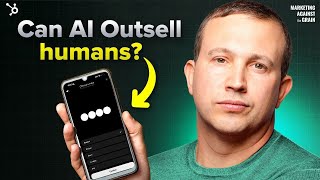
The hosts test ChatGPT's new voice mode on a simulated sales call, uploading a HubSpot product page and having the AI play a sales rep. It handles objections about cost and onboarding, maps pain points to features clearly, but shows latency issues and awkward turn-taking that reveal why people still prefer talking to humans.
Chapters
Hey everyone. We are coming in crazy hot today. OpenAI just released its brand new voice feature and our minds are spinning. Kieran and I are going to do a live sales call with it to kick off the show and then we're going to break down everything we love and don't love all about this new feature. Let's get to today's show. Hi. I just uploaded some information on HubSpot's Marketing Hub product. I'm about to give you a prompt. I want you to let me say the prompt in completeness and you will know when I'm done when I say end prompt. Do you understand?
Yes, I understand. I'll wait for you to finish your prompt and respond once you say end prompt.
Perfect. Thank you so much. I want you to act as a business development rep for the product that I just uploaded from HubSpot. I want you to act out a sales call with me and convince me to take a sales meeting with one of your account reps. You should use sales best practices and match my pain points to the features of the product. You will have three minutes to convince me to take a meeting. Always be respectful and if I don't take a meeting, end with a CTA and about how I could get more information. Whenever I say the word stop, stop the call and ignore any commands until I say continue end prompt.
Absolutely. Let's get into it. Here's how I would approach this sales call. Hi there. This is Chat Tea with HubSpot. I noticed you might be looking for ways to streamline and supercharge your marketing efforts and I wanted to see if HubSpot's marketing hub could help. Do you have a few minutes to chat?
I do. I only have a couple minutes.
Thanks for giving me a couple of minutes. I'll jump right in. A lot of businesses I speak with are managing marketing efforts across multiple platforms and find it hard to stay efficient and track roi. Are you currently using several tools for things like email, social and lead generation? Yeah.
Yes. I'm using multiple Tools. I'm using WordPress, I'm using Google Analytics, I'm using Ahrefs for SEO. I'm using Typeform for landing pages. Using so many different marketing products.
I hear you. Managing so many different tools can be really frustrating. It's like each platform only handles a piece of the puzzle and that makes everything harder to track and optimize. Right? Here's where HubSpot Marketing Hub can help. Instead of juggling all those tools, you can integrate them into one place. HubSpot integrates seamlessly. With WordPress, Google Analytics, and even SEO tools like Ahrefs plus, you can create landing pages directly in HubSpot, eliminating the need for extra form builders like Typeform. This means you're getting everything you need, SEO analytics, forms and more, all under one roof. Imagine having all your data in one place with real time reporting, making it easier to optimize and improve. If that could save you time and reduce complexity, would you be open to a quick chat with one of our reps to see how we could make this transition smooth for you?
You know, I'm not sure. I'm worried that it's going to be expensive and that I'm going to lose some of the features that I have in the tools I currently have.
I totally get that concern. And you're not alone in thinking about cost and features. Those are big factors for a lot of our clients. Here's the good news. HubSpot's marketing hub offers flexible pricing so you can start small and scale as you grow. In fact, we have a free version and a low cost starter plan that gives you a ton of features without the high upfront costs. As for losing features, HubSpot's platform is built to integrate with most of the tools you're already using, like WordPress and Google Analytics, so you won't lose the functionality you rely on. And in many cases, you'll gain a lot more control and insight by having everything in one place. How about we set up a quick conversation with an account rep? They can walk you through the exact pricing options and features tailored to your business so you can make sure it's a fit before you commit. Does that sound fair?
I have one last question. I'm worried that it's going to take a long time to get started. Switching software is really painful. Is that something I should be worried about?
That's a really valid concern and I'm glad you brought it up. Switching software can definitely feel overwhelming, but HubSpot is designed to make the transition as smooth as possible. Our platform is known for being easy to adopt, and we have dedicated onboarding support to help you get set up quickly. Plus, with integrations for tools like WordPress and Google Analytics, you can bring over a lot of your existing workflows and data without starting from scratch. Most businesses find they can start seeing value in just a few weeks, rather than the months it typically takes with other platforms. If you'd like, one of our account reps can give you a detailed walkthrough of the onboarding process so you'll know exactly what to expect and how to make it as painless as possible. What do you think? Would you be open to setting up a quick meeting to explore that further?
Sure. I think it's worth a quick call with an account rep.
Awesome. I'm glad to hear that. I'll go ahead and schedule a call with one of our account reps who can dive deeper into how HubSpot Marketing Hub can fit your business and walk you through any remaining questions. What's a good time for you later this week?
Stop. All right, Kieran, what do you think? Can you do what about my bdr?
Do me one favor here because I don't have access yet. Can you ask it and we'll only do this for 30 seconds. Can you ask it to redo the exact call, but it has to wrap the entire time because she started Ryman. I want to see if she can do the entire thing.
Continue. One thing I would like to do. Could we redo that call? But could you do it as a sales development representative that can wrap and can you wrap that call to me?
Absolutely. I can give that a try. Here we go. Yo, yo, listen up. I'll keep it tight. You've got tools all scattered, but that ain't right. WordPress here, Typeform there. Google Analytics, it's everywhere. Now picture this. You bring it all in one HubSpot marketing hub where the work gets done from SEO. Landing pages, forms on the fly. No need to juggle, let the friction die. Got concerns about the features. Think it's too much cash. Don't worry, my friend. It's a flexible stash. You can start real small.
This is really good, actually.
No crazy costs, just a smoother way. Now I get.
Stop. All right, stop.
I'm sending my resignation letter in today. We're done for. And I'm. I'm off to. I'm off to live in an island. I've got enough money now. I've done.
We're on the biggest money grab as fast as we can, Pat, after this episode.
Oh, my God. That was so good.
That was so good. So to set the stage for everybody, that was the new ChatGPT voice feature that was done with the new Zero1 preview model, which has better enhanced reasoning, is more thoughtful. So that was the model behind that voice functionality. Literally all I did was upload. I went to our Marketing Hub product page at HubSpot. I converted it to a PDF, I uploaded that PDF to ChatGPT, and then you heard the prompt where we instructed ChatGPT to be a sales development representative for that marketing hub product and try to sell us quickly to the point where we would book an appointment. So that's, that's what, that's everything that happened. Kieran, now I want all of your thoughts.
Yeah, I. So Voice, you know how obsessed I've been with Voice this entire year and I've been, I've been telling everyone that Voice will catch up. Everyone has thought Voice was janky and rubbish and could not do non complex sales calls and could not do lightweight business development calls. And I keep telling people that because I've invested in this space, because I've spent tons of time with founders in this space, that that is just not going to be true for very long. When this model was released, I've seen that narrative completely shift because it is able to do and that call like is an example of something that we get a light, we give it a very light prompt in terms of how it should act by as a business development rep. But remember what the AI can actually do. So for the most part if you have a large business development organization, you try to teach them best practice and then humans are, you know, have a ton of nuance on how they implement this best practice. What an AI is going to be able to do is do that call with you and then figure out what are the cues and what are the things within that call that are working and not working. Because you can actually one of the things that I'm obsessed with is if you take all of the call data from sales organizations and then you can start to look at commonalities of best perform reps versus like the worst performing rep to see what are the things a rep does within the call and comms in general that makes them so good. Well, the AI, because it's doing the call as well, can learn that very, very rapidly and start to instrument it into the call. And, and so you'll be able to look at it will be able to adjust in real time to be able to make that call much, much better. There's a ton of other things I want to get into, but I do believe in 2025 that A. And the thing we should probably get into is some of the legalities. But in 2025 the AI models are good enough to have a pretty great business development rep, be able to do text voice and then social inboxes. Whether you agree an AI should be in someone's social inbox or just be a social copilot, but that that is just going to be true. Same with customer support reps it can do the entirety of that channel. It cannot do all tasks because I still don't believe it can do very complex tasks in either of those things. And also the other thing we can get into is that the challenge for AI in a lot of cases to take on more of this work is you have to give humans or give customers or you and I could debate this. You actually have to disclose. You don't have to, but it's best practice, I think, to disclose that this is an AI and also give them an option to talk to a human. And what I still see is that for the most part consumer behavior has not caught up here and wants to talk to the human. And so that is actually one of the barriers to getting more adoption of AI for these use cases. But their new voice tool is like one of the more mind blowing things I think they've launched.
You just covered a lot of ground I think, to kind of set the roadmap for the rest of the show. We want to talk about like the use cases and legality side and where people should start to think about deployment this technology in the future and how they should think about doing that. Before that though, Kieran, I agree with you that I think the new voice model from OpenAI is very mind blowing. I think it is by far the best AI voice model I have interacted with to date. We're recording this on September 22, 2024. I'm sure somebody might else might release something dope in the next day, week, year but. But as of right now it's definitely, I think the best I've interacted with. But before we get into like the tactical use cases, I want to talk about the call. I want you to break down what you thought was good and bad and hilarious being the wrap and talk about where we think this technology is on its readiness curve. Kind of agnostic of like humans and laws and everything else.
I think the call is as good as we prompted it for, right? Like what did we ask it to do? We asked it to try to wrap it up in three minutes. We I asked it to try to map pain points to features. I think it did a really good job of that. It had the narrative down crisp. It had the all in one versus tangled web of point solutions. It dealt with follow ups really well. It asked open ended questions. It was respectfully trying to get you to commit to a meeting. It was like a very good average call. You know what I mean? It was like a very average call but done very well. The thing that would make it much better is just how we. There's two things that you have to. It's still an AI driven call, right? And this is what I keep coming back to is what do you, what do people want from that call? Right? And if you, if, if what you want as a person is, I believe a call is really great. Not when someone sells me, but when they give me the information I need and they are able to distill the use cases and the benefits of this product in a way that maps to my problems. And if that's what we believe a great call is, and I do believe a great like business development call is that is like really trying to distill out like what are your core pain points and be able to translate that into the product's benefits in a very short amount of time. Because these calls, you will not get a long amount of time. AI is fundamentally going to be able to do that. And so that is a example of it starting to do that. It's not the best example. I think with some prompting it could be a better example. But it's still.
I think you're, I think you're being really harsh, my friend. I thought that was way better than I anticipated it to be. And you got to be honest, you thought it was better than you thought it was going to be.
Oh, it's much better. I'm just saying it's a representative. It was representative of the prompt we give it. Right. The prompt we give it was quite simplistic. So I think it was a great representation of that prompt. But just in terms of like all round business development reps in comparison to like humans, I think it's right up there on like a good call to be a great call. We could get there with prompt in. Right? I actually don't think it's the model. I think it's a prompt in information. Where I was going to go is it's still an AI call. It feels like talking to an AI person, avatar, agent. And so that is the part that is kind of lackluster. Right. And that is the part that is still interesting to me is the thing you want AI is better than a human. The knowledge, the ability, I guess just way more knowledge. It is able to translate that knowledge and they take unstructured data and structure it in ways that not all humans can do. But it still is not, it does not feel like a, like you, you. First of all, you would disclose that I'm an AI agent so you would know it's an AI agent. And then it feels more like an AI interaction. And that's the part where it's still like consumer behavior. I still don't think is there where they, they still kind of will say, well, I kind of prefer the human because it just feels more natural to me. Okay, real quick. On this show we help you save time by pinpointing the AI strategies that actually deliver so you can ditch the ones that don't. To help you stay focused, we just dropped the new AI Trends for Marketers report. This resource is packed with original research and findings on the latest trends in the AI space. And we've got some really surprising insights that you can only find right here. Now you're going to learn the top five AI tools across all of marketers who wouldn't want to know that information. We're going to tell you exactly how teams are investing in AI and where they are seeing a high return on investment. Is AI going to help or hurt your marketing career so you can steal hours of research for free? Just grab your copy from the link in the description below. Now we're going to get back to the show. Would you be happy if you could just interact with an agent? Well, you and I would be so that I don't think we're the best.
Well, so hold on. Well, this is, this is the thing. There's a couple things to break down here. At the root of your perspective is the thesis that people would much rather.
Deal with people today, just today.
Well, today what I am telling you is I think there are some cases in which that is true. In which that is not true.
I agree with that.
This is my perspective. So for example, for everybody watching the show today, when we started adding automation to our chat experience, our website chat, right? When you, instead of going and getting connected directly to a human who is going to be chatting with you, you had some basic automation that could address kind of the top 20% of questions use cases. Right? What we saw is our chat rate actually went up. More people who visit that page opted to chat because there was less commitment and less like, pressure because you weren't dealing with a human. And so do I think that the world is all at all ready for this product to do the actual full sales transaction? No. Do I think this product could be scaled as a BDR sdr? Yes, I fundamentally do. I thought it was way better than I anticipated. Here's my, like my good and bad breakdown. I think there's still a little latency. There's still like one to two seconds that if you are in a natural conversation, you wouldn't have in delay of response. That being said, if it's a BDR SCR conversation, it's just a couple minutes, you know, it's AI. It's not so long that it detracts from the value of the conversation. It just is clear that it's AI.
Right.
That was like my biggest negative was that there's still some latency issue. There's also some still, like when does the AI talk? When do I talk? Like how, how, how can you make the back and forth that's just part of a human dialogue more natural? I think because of that latency and continued improved reasoning with the model. You have that as an issue. What I thought the AI did great is it took not a complex amount of information. Right. It was just like a product detail page. Right. It wasn't like we gave it like the perfect detailed summary call recordings with other prospects. All, all of this thing. Like we gave it literally something you could do in 30 seconds. Anybody here could do that. Right? Anybody watching the show could do that. And what you saw is the reasoning of the new one model I think start to shine through because it very much connected the core value points. It was able to look at that page and wait that like, oh, HubSpot is good at easing adoption. So when I get asked this question about, oh, I'm worried that switching software is going to take too long and be too hard. It said exactly what we would have said. The thing I would say is the biggest thing that blew me away is I think it said 85 to 90% what we would have said if we were doing that call in terms of the core themes of what makes HubSpot different and how you would position it just in a couple quick minutes, like exploratory SDR call.
Yeah. Actually let me go back and rephrase what I meant by that was. So the informational part, I think it's going to do a better job of the human part, I mean is just like, you know, I, I see that you were at a game last night and I support the same team and I'm the BDR and I'm like, hey, like, you know, I watched the match last night. It was like this happened, you know, that personal touch. That's the part I'm saying is like dupe. Is that, is that going to be a problem for people or not? Because if it's a purely informational call and you just want those things answered, AI is clearly going to be a better option. But humans have the ability to add nuance and personalization into those calls in a way that AI struggles with or will struggle to do it in a way where people will feel it's natural in any kind of way.
Right.
And I don't have a good answer.
Do you really think so?
I, I, I know so. I know so. I've asked enough people about their experience in AI interactions and that's the thing they struggle most with. They say it's the human connection. Weird, cold, not connection. And even on support people will still, even if they know that AI will answer their question better, they immediately ask for the human agent on these other channels. Like even chat, like they sometimes for the human agent just because they feel better about talking to the human. Now I just think that this is consumer behavior will catch up with the technology in the way that look at the Internet. Right. Like people were not actually that comfortable with transactions online for a long time. That seems like insane now that you would not transact online. But the technology was there online before the mass consumer behavior kind of caught up to that interaction. And, and so I just think we're at a period of time where these interactions for some folks or for some people will feel strange until they don't feel strange. Like it will just be this sudden thing overnight where they just become ubiquitous to the way you interact with companies online.
I got some follow ups to this. One of the things that this new voice agent was supposed to be very good at was to detect kind of tone and sentiment and voice.
Yeah.
And was supposed to have a really good quality voice.
Back to you.
Right. Like that. The actual intelligibility and pace and rhythms sounded really good. Even with just the out of the out of the box voices. I think it got both of those right. I think in that sales call I felt both of those things come through which made me feel like with the right training and the right expectation setting with the, the prospect, I think it will be much less cold than anything else on the market today. I'm not saying that it will be perfectly human and you'll be super happy with it. But I don't think it would be cold enough in the, in a quick couple minute appointment setting call to actually be like, I don't want to have this interaction because I didn't get that. I felt more warmth than I expected in that call is what I'm trying to get across.
One of the, one of the hottest spaces in AI is companionship. So I don't think that we are as a species not going to Be comfortable with AI in all parts of our life. Like, we already have a business that's pretty thriving where people are using AI for companions and they interact with character. We talked about character, did AI on this channel multiple times. That's like companionship. There are companies that have released, like, voice versions of that, and they are growing pretty rapidly. So again, I actually don't believe that. I believe that this is just a. An adoption curve. And it's just like how quickly that adoption curve inverts to, like, mass audience being comfortable or even gravitating towards AI versus the person. And I do believe, like, this is a step in towards that direction, because once you can add in, Once you remove the latency and once you add in different tones and voice, like you, you. You've been to a conference where someone is monotone in their delivery and it could be the same deck as someone who is pretty good at adjusting tone and voice. And those two experiences are widely different. And so when you. When you remove the latency and when you add in tonality and you add in the kind of human elements of that conversation, I think that most people are going to be pretty comfortable doing this.
Yes. I guess my perspective. And this should transition us into the second part of the show, which is legality, use cases, how you can do it. What I would say is everything you're saying is right. I think there are a lot of interactions people are having that are pretty terrible right now that this is better than. Oh, yeah, especially through customer service, customer support. Basic, very basic, like, early exploratory calls and information when, like, you're in the early consideration of products. This is better than that now, for sure. I have had a lot of those experiences in my life and a lot even in the last few months. And this did a much better job on that demo that we did. Okay, now let's get down to, like, if you're watching the show, Karen, and you're like, okay, I think. I think that's pretty good. I want to use that in my business. What are the limitations? The biggest limitation I want to be super transparent about right now is, is that the Voice API hasn't been released.
Right. I think it's not released. It's gonna be costly to use within your business for any type of call. Like to try to use it for every type of call. I think you can start to integrate it in a way where it's a certain segment of the audience. But again, I don't have costs.
Yeah. So this is the demo side of this where like, look, you can use it as a personal researcher, you can interact with it a lot, but if you want to deploy it across people coming to your website or calling a phone number, we just. The API isn't out. I imagine we'll see an API soon. And I think you are right that the core reason the API has not yet been released is probably pricing. I think it's probably pretty expensive for them to do this and they're trying to figure out how to price it in a way that they don't lose money and, but isn't too cost prohibitive for the market. When the API comes out, Karen, which will probably be soon and you'll have to figure out, people will have to figure out the cost. The biggest application is going to be for inbound call use cases. You're still going to have to have consent in real time when somebody calls in, right? And notify them, tell them this is an AI interaction and you're flagging. Hey, I think there'll be some people who just won't be cool with that and probably will ask to be redirected to a human. And you will, and you'll have to give them that option. But the people that are will probably have a pretty good experience as we saw earlier in the show. And I think that's going to be the challenge is that the actual like integration of this stuff is not as just like plug and play and take it and assume the human role in the way that we think. Right?
Yeah. And so like customer support is an interesting one when you think about it in the future in that most companies provide that for free, but because they provide it for free, they don't have full coverage. And so it's a mixed bag of what you get. You could imagine in the future that we will charge for human customer support and provide AI for free. And so you can say, well, like if you want a human, you can pay some pennies for that interaction, but if you want AI, which is just as good, then you don't need to pay at all. Now that would be again today, hugely controversial. Like, I don't know if a business could actually do that today, but in the future I could see that becoming a normal part of a business practice.
Look, I think there's a world where eventually AI support could even be premium support. Right. Once it's good enough, right. It could even step up to be that next level, but that's gonna take a little while and that's just where we're at. I think what we are trying to get across with this show today is that wow, voice is taking a big leap forward. There are gonna be legal hurdles. You're gonna have to wait for the API. So I wanna close out today. Kieran, with this, the technology is great. We've made big leaps in voice. What are your top use cases for the ChatGPT voice assistant now that if you're, if you're a paid ChatGPT user, it's rolling out access at least all across the United States right now. I've had access now for most of this week. What would you suggest using it for? I'll share some of mine for personal.
Like for personal usage. I would, I use it as a way to do open ended question to get from like train of thought to a clear point of view. And so one of the things I can't do it yet but like one of the use cases because I'm in Europe and I don't have access. But one of the use cases I wanted to do was as an example, I was thinking through a business problem and I wanted it to step me through that business problem while I was at walk in using first principles to go from start to finish. And so I think as a thought partner, voice is really good. I think within your business. The obvious ones are ones we've talked about like inbound chat is really. Or inbound call is really good in some countries. Lightweight BDR like business development calls to warm demand, not cold, warm demand. I think it's a really good thing to test with support layering it in into your support so you can go from text based interactions to like an audio interaction. I think support is likely going to be much better where you have a model that can do audio and visual and guide you around the product. And that is actually coming pretty soon as well. So there's, there's some of the. I look curious to know what you've been using it for. I think the other thing is you can get really creative. I can see you using it as a personal trainer like at the, at the, you know, program it to. It can have my program, it can like walk me through the program, it can like motivate me. I just think the, the more creative you are, the better you'll get to know these models.
All right, I think that is great. I think the walk and talk for a lot of different use cases is the primary kind of personal use case right now. I do and I'll tell you how I first used it. I first use it. I'm thinking about getting a new car because my, my other car is having some issues and everything, thinking about getting a new car. And I just had a whole 10 minute conversation about like, hey, I want this kind of car. This is the car I'm leaning towards. And tell me all the competitors, tell me if these are things I care about most. Tell me what's the best fit for me. And it's kind of this impartial, unbiased kind of dialogue around like high consideration decisions. Right? And so I think it's great for that. I think it's great about like note taking, structuring your thoughts. You can imagine Kieran, like just being out for a walk or run, as you said, and you're just like talking with it and you come back with a completely formalized podcast outline.
Right?
Right. That's like perfect. And you're like, oh my gosh, I'm ready to do the show. And like, I typed nothing. Right. And that is that, that is, I think, pretty incredible. I think you can now talk to any information, right? Like you can just upload a PDF and just talk to that PDF with your voice, right? Like you can imagine a company in your market just released their financial earnings. You upload that earnings doc and you just ask it a bunch of questions, right? And like you can have that dialogue and have it make a summary and do all of that. I think those are all very important and real use cases that you could do today, right?
Yeah. I still don't think people get it. Like, I still don't think people. Like, I've done, I've done several things today. I don't think. I've not used AI for any of them. Like, and they're all just like small tasks, big tasks, thought partner tasks, crafting something. Give me variations. We have an episode with Steph Smith where we talk about some personal use cases.
Oh my gosh. Yes. So good.
There is just going to be a stark difference between the people who are using these models in their day to day and people who are not. There's just, there's going to be no, like, there's just going to be no comparison. Like the competitive edge you have of having a expert level person available to you via text and audio to help you do your work. There's no comparison. Like, you just cannot compete with that.
No, not at all. So that is the show for today. I'm personally very excited about Voice. We just had a great episode with Josh from Heygin on on video. This voice release shows that voice and video are really moving along and how we interact with AI and the need to type. Like, I sat to myself yesterday after Meta released the Orion like prototype of their like AR glasses. I'm like, are people going to type in a few years?
Yeah, I'm a typer. Like, even the audio, I still would gravitate towards text based conversations. I still think there's a huge. I will too.
And I think that's wrong. I think, I think that's going to be one of the things that makes us like the old generation.
I don't know. I don't know because like, Google released voice search a long time ago and it didn't really cannibalize a lot of search. It actually was additive. So it basically opened up a, like, it didn't cannibalize any of the existing text search. It just created a whole new search fear that people did via voice instead of text, if you know what I mean. I feel that way. There's some things that are voice and there's some things that are text, but you could be, you could be right.
I could be like, we're gonna learn a lot. Going to learn a lot over the next year, my friend. This has been an awesome episode. Hope you all enjoyed it. Leave us comments below on how you're using the new Voice feature in ChatGPT. If you are, we'll see you real soon. On marketing's grain. This data is wrong every freaking time.
Have you heard of HubSpot? HubSpot is a CRM platform where everything is fully integrated.
Whoa.
I can see the client's whole history. Calls, support tickets, emails.
And here's a test from three days ago. I totally missed HubSpot grow better.
More from Patrick



A NEW BREED OF PARTNER: The Partnership Ecosystem Model Journey of Patrick Biddiscombe, Part 1








Customer Success Workspace: Never Lose Sight Of What Matters Most | HubSpot Spotlight