Why Influencer Marketing Campaigns Succeed (and Fail)
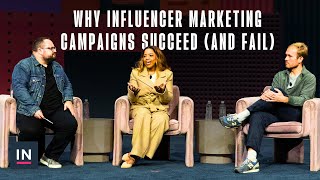
Dr. J.J. Peterson, Phil Agnew, and Alana Joseph discuss why influencer campaigns work or flop. Authenticity and creator-audience fit matter far more than celebrity status. The panel covers psychological research on persuasion and argues that giving creators control and building long-term relationships beats one-off deals.
Chapters
Today's conversation is going to be all about why influencer marketing campaigns succeed and fail. And I'm Dr. J.J. peterson. I'm the head of Story Brand and the host of the Marketing Made simple podcast. And joining me, we have Phil Agnew, who is the founder and host of the Nudge podcast. And we also have Alana Joseph, who is the head of creator partnerships at HubSpot. Let's give them a round of applause for being here. You know, this morning when we were at the opening session, one of the things that stood out to me in the midst of AI was it was said that 7 out of 10 people trust people more than brands. And According to the HubSpot marketing state of Marketing report that just came out, social media is the number one product discovery channel for Gen Z and millennials. So 31% of consumers use social media to find answers to questions. 17% of social media users report buying a product on Social. And 87% of social sellers say it's an effective use of their time. And 59% said they made more sales on social in 2023 than 2022. The use of social media we know and creators and content creators and influencers is growing. In 2023, one in four consumers bought a product based on an influencer's recommendation. So we are seeing that influencer marketing is estimated to grow. This year alone, 50% of marketers plan to use it and increase their investment. And you were saying that the number is kind of astronomical that where people are headed with this. What are some of the things from HubSpot that you are seeing when it comes to companies investing in influencer marketing?
Yeah, I think it makes so much sense why we're seeing brands make heavy investments into the creator economy. I think when you're kind of looking at it from the brand perspective, you might be thinking that, yes, you're buying a placement on a creator's channel and their advertisement and they're giving you brand awareness, but what you're really buying is an ad space. What you're purchasing as a brand is the trust that that creator has built over time with their audience. That trust is what allows a brand to sell products as an audience. I mean, I'm on TikTok all the time. I mean, yes, it's my job. It's my job, right. But I consume a lot of content and follow a lot of people.
People.
And there are creators that I genuinely trust. We have value alignment. And I think that as a brand, you want to think of brand alignment, but that brand Alignment is very much dependent on the values that the creator has and how they've been able to build that trust with their audience. So as a brand, that's really what you're purchasing. And so it makes a lot of sense that we would partner with creators to show genuinely and authentically the value of our products. And I think that it doesn't matter what your product is, they're creators for you. And so I could completely understand why brands would partner with creators. What we do here at HubSpot is, first of all, HubSpot Creators is HubSpot's in house creator agency, which is a very unique case. At HubSpot we actually have a full team that partners with creators. One, we do campaigns with creators. So those are those short flights that you're probably seeing all the time on Instagram, TikTok, et cetera. But then our bread and butter has always been long term partnerships. And this goes back to what I just said about brand alignment. When we spend the time to source the appropriate creators, so we really go out there and spend the time to look at the creators, look at their content, look at their audience. And when we find that, yes, we have value alignment, brand alignment, we don't just say, hey, we want to work with you one time for one month. No, we are like, we want to sign you for a full year. We want to really figure out what it means to integrate our products and services onto your channels in a way that makes most sense for your audience. And you know your audience best. So we want to really collaborate with you in that way.
I am a partner and Phil is also a partner. And Phil, and you really build your brand on kind of digging into research and digging into the science behind things, how things work. So again, before we get into kind of the tips and tricks of how to create a successful campaign, why does based on the science, why does influencer marketing work and why are people investing so much money in it?
Yeah, well, look, we're here to talk about influencer marketing and I don't think we can talk about influencer marketing without actually understanding how influence works. So I'm going to give you a very quick crash course in the world of influence. And to do that, we need to go all the way back to 1963 to the very famous Stanley Milgram study. This study was looking at whether people would deliver high voltage shocks to strangers just because somebody with influence told them to. Most people thought that wouldn't happen. Here's how the study was set up. The participants are the teachers and what they're doing is they are ranking the questions that are answered by the student. And if the question is answered incorrectly, they deliver a shock. They have the ability to deliver a shock from 15 volts, which is a light nothingness, really, to 450 volts, which could kill. The experimenter is a Yale scientist in a white lab coat, somebody with influence. The student wasn't a real person getting the shocks, just so you know, so that nobody was actually harmed in this study. What they found, incredibly, is that as the student got more and more questions wrong, 66% of the participants gave volts up to 300 volts, which is very, very painful. Sorry, 100% up to 300 volts, which is VERY painful. 66 gave a voltage up to 450. What this says to us, and what Stanley Milgram found was that we are heavily influenced by people in authority. And there are all sorts of other ways people influence us. For example, Melissa Bateson's study from Newcastle University, she had a coffee which was being offered to people. They wanted people to put money into the Honesty Box when they were taking their coffee. Nobody does this. And so she changed the poster. Rather than having flowers, she put eyes on the Honesty Ask, and it increased the amount that people donated into the honesty box by 2.76. And this shows us that we are influenced by people. Just the presence of other people influences us. A 2009 study found that if you put a face onto a website, the face will be the one thing that people fixate on. And as podcasters know this, you Definitely know this, JJ, because JJ's wonderful podcast has a picture of his face on it. And this makes sense. This is an iTunes, Apple Store. 19 podcasts. There 15 of them have a picture of our face. We are drawn to faces. We know this in news, Netflix, whatever else it is as well. However, there is something called focalism, which is particularly important for influencers. And it means when we judge the worth of a messenger, we put undue levels of importance onto salient messengers. And people can be salient in all sorts of strange ways. So height is an interesting one. A Psychology Today study found that a taller candidate will get more votes or almost two times more votes than a smaller candidate, regardless of their ideology. Pretty incredible. My favorite study I'm going to share with you today. This is. You can actually watch this yourself as you go around the venue. This is a Dutch study conducted in a supermarket. They watched a doorway where people could enter and exit, but it was only room for one person. So who yields the Taller person or the smaller person who gives way? It's the smaller person 66% of the time. So we naturally do this. We yield to taller people. There's Daniel Hammersmith's beauty paradox, which suggests that we get between 10 to 15% higher wages over the course of our career if we are more beautiful. There's an incredible study in Joseph Marx books, Messengers, where they digitally edited the political speeches. So it'd be high tone or low tone? High pitch or low pitch. 7 out of 10 times we vote for people with a lower pitch. This is really quite upsetting as well. A more funny one is one done with cars. So here, research assistants rented a lovely Lamborghini and then a standard car, stopped it at a green light and waited for 10 seconds. Do the people behind them beep? Well, if you're in the normal car, people beep 86% of the time. If you're in the Lamborghini, people only beep 50% of the time. So we yield to wealth as well. Another example with charity fundraisers. If you have a Tommy Hilfiger logo as you're asking for money for charity, you will not only have 86% of people stock compared to 22%, you'll get two times the amount of donations as well. An incredible one. I've been thinking about this a lot. In America, where you're not supposed to jaywalk, people don't care in London. So I've been really thinking about it. Well, this is a Levoskowitz study and he found that if somebody wearing a suit jaywalks first, we are three times more likely to follow them than if somebody wearing normal clothes does. Now, this all comes back to influence. And this is why 25% of ads in America contain a celebrity endorsement. And that's $60 billion worth of ads. And we see them all over the place. Influencers are everywhere. And there are ways that these influences can influence our political elections as well. So Taylor Swift in 2018 famously said she would vote for a candidate. That candidate received 220 increased signups for people to become voters by 200,000 people received 663% more votes. Famously, Oprah Winfrey endorsed Barack Obama and he received an estimated 1 million votes from after that. However, to finish up this whistle stop tour of everything influenced, I'm going to take you right back to the Stanley Milgram study, because there's one interesting finding. In this study, when the Yale scientists didn't wear the white lab coat when they removed their sign of influence, nobody delivered voltage shocks up to 450, that influence is gone. So we follow the actions of others. We are influenced by salient Messengers. That's why 25% of ads in the US contain a celebrity endorsement. And that's why all of this influencer marketing stuff works.
So I think the takeaway from that is be beautiful, be rich, be tall, speak really high, and you're gonna influence people. Well, thank goodness I have all of those. Yeah, you just got influenced people. You got Dr. J.J. as we listen to that. And so I think that is a lot of times when people are talking about finding ways to be successful with influencer marketing or influencer campaigns. I think a lot of times the initial look is for people who are rich, famous. It's like, well, if we could all just get George Clooney to work with us, we'd be good. Or if we could find somebody like Elise Meyers who has, you know, this is an influencer with millions of followers that we'd be successful. And so a lot of companies end up throwing money at what they think is going to influence because we see that money, fame, power, height, influences. But when you're looking at partnerships and looking to move forward with partnerships, what is it you mentioned? Value alignment. Why is value alignment, say, for everybody in the audience who is looking for successful campaigns? Why is value alignment so key?
Yeah, so I clearly work in the B2B space and everyone here has something in common, which is ambition, desire to grow, scale a business, your profession, etc. And so we're really leveraging that when it comes to creators, where I think of our creators as your on demand business mentors. They're there to help guide you, answer questions, help to educate you so you can ultimately grow and scale your business. And that works really well for HubSpot because while you have someone like JJ or Phil giving you tactics and strategies, HubSpot and our team, we are adding resources and services and products, the tools for you to be able to execute on those strategies. And so it's really important from a sourcing perspective to be able to find creators that are super talented, very personable, like jj. Right. And also have this level of knowledge in terms of their profession and their business where people are coming to them to say, like, hey, I'm having this marketing issue, or I'm trying to target this audience and I'm not quite sure how or why. That's when you find one of our creators and, and they're saying, okay, here's the tactic and strategy for you and here's a resource from HubSpot that you can use to actually execute upon this. So when we're sourcing, I'm looking for people that are educators, essentially, and people that have built that level of trust with their audience so we know that their tactics and strategies are tried and true. People respect them, they want to. To listen to them, and that's when we can really collaborate with them on what that integration and ad placement looks like.
Nice for this audience. How many people are in the B2B space? Okay. How many are in just direct B2C? Okay. And you do both. Some. Both. So a little higher on B2B. Little less on B2C. So obviously, for people who are in the B2B space, you're looking for people who are experts who are bringing some of those resources. I know you're primarily in the B2B space, but for people that are in the B2C space, have you seen how. What type of influencers and what type of creator partnerships have worked well there?
I think it's the same thing. I've talked to a lot of creators, and they're like, I'm not quite sure what brands I should be partnering with. And my first question is, well, what's in your purse? Whatever's in your purse is probably the brands that you want to. Or your backpacks, sorry, gender neutral. There's whatever is the brands that you should be working with, because you know the product, you love the product, you can talk to your audience and say, hey, this really works for me. And so I think in all cases, whether you're talking about D2C brands, any case, you're looking for creators that are aware of your product and also can share their value with it.
So.
So while you're guiding them with messaging and you're saying, here's kind of how I want you to talk about our brand. Here's what our brand is. They can really take that and translate that for their audience through their authentic voice. Because once again, what you're purchasing is that trust. So you want them to be themselves. I think we'll go into maybe some mistakes later, but I do think that that's the best. I like that you pointed to me.
When you said that we'll go into mistakes later.
No, not necessarily with you, JJ, you never make this.
Never. Thank you.
99% perfect, Phil, for you.
When you're looking at. So you are a creator and you have brand partnerships. When you are looking to go into brand partnerships, what are you looking for for a successful campaign for you as well? Because if you're putting HubSpot and your influence on the line for HubSpot and. And putting HubSpot on your podcast and in other areas of your business that reflects on you. So what are you looking for as a creator when you're looking for successful partnerships?
I think Alana said it. It's authenticity and trust. If the creator can be authentic about the. The brand they're talking about, that's the only way it'll work. So there's this, I'm going to say, another study. I'm sorry, guys. There's this idea in psychology known as the von Restorfer effect, which is that we're really good at noticing patterns. As humans, we're very, very good at recognizing patterns. And when something breaks that pattern, we spot it immediately. This is why distinctive advertising works. If you stand out, you gain recall, you gain attention. There's some people around here today walking around in pink jumpsuits, and then they're doing that because it stands out. It's different. It'll capture your attention. This can backfire. For a creator doing an ad campaign. If I'm talking in a very authentic voice on my podcast and then I do a HubSpot ad which is written by somebody else and not in my style of voice at all, people will notice immediately. They'll never trust it, and they'll never follow up. If the brand gives you the ability to customize the ad, to say it in your own style, to make it authentic, to actually test the tools you're talking about and then talk about your experience with them, that'll be so much more powerful. That will increase your level of influence. Because we've seen. I've shared how your level of influence will share based differ on a number of different factors. If you can be authentic, that'll increase the trust. And I think that's the only way an influencer campaign can really work.
It's interesting. My area of study is in story. And there's research that shows that story in and of itself is really one of the most influential things you can use to change people's minds and actions. But within the stories, in narrative studies, there's a thing called narrative transportation. Narrative transportation is the idea that whenever you experience a story or see a story and it is a good story, you put yourself in that story. So how many of you have ever, in a movie, like when something scary happens, how many of you have ever jumped? Yeah. How many of you have ever cried in a movie? Oh, heck, yeah. This guy, you know, laughed, cried, got goosebumps. You've experienced narrative transportation. Now, the research shows that the better the story, the higher level of narrative transportation that you experience. When you experience high levels of narrative transportation, there's actually measurable results that show that that story then has a greater influence on your thoughts and actions, actually changes how you think and changes how you act. So better the story, higher narrative transportation, more influence. Now, one of the things that breaks narrative transportation is in this area we call fidelity and coherency. If a story does not stick together or has something that is out of place, we stop putting ourselves in the story and being a part of the story, and we pull out. So, for instance, how many of you saw Game of Thrones when they're in, like, this big scene, and all of a sudden a Starbucks coffee cup appeared? Do you remember that? So when a Starbucks coffee cup appeared in Game of Thrones, everybody stopped being in the moment and started laughing or paused or went, wait, what? What's going on? And what happened in that moment is we stopped being influenced by the story. We stopped being in the story. Those principles can be translated and applied to stories that influencers are telling as well. So if you, as a brand come in and you have a demand on the creator to say, I need you to say these words this way, the audience in that moment, people see Phil as one of their friends. They're going to coffee every week with philosophers, right? When you're listening to his podcast, they know him. So then when he comes in and all of a sudden his tone changes, the way he says things is different. They stop experiencing narrative transportation. And it can be measured. It actually can be measured how much less influence that ad or partnership will have because the story no longer causes narrative transportation. I think what I'm hearing from both of you on this side is, especially when we're looking at the success of campaigns, what you're looking for and you're looking for is somebody who naturally uses the product, is already in that space. And you're looking for partnership with people that actually let you be you and bring your voice to the table. But how hard is that? I mean, we've had this discussion before because when we started, it was a little bit more on that side of things, if we're honest, right? Like, when we started our partnership, I used to get HubSpot ads, and it said, you have to read this line. And remember, we started that way and we've had conversations. And so how hard is it then to just go, hey, J.J. what? We trust you Say what you need to say. Like, how Hard is that for you as a brand for, especially for people who might be getting ready to enter into some partnerships with creators. How hard is that?
I think it's very hard. It's a balance, right? Because as we are really investing in the creator economy, it is slightly different than our traditional media buys, than traditional marketing, where you have a brand team who controls the narrative. That is the job of that group is to control the messaging. However, when you get to creators, as both Phil and JJ have noted, that doesn't really work. You have to lessen control, you have to take a step back. And I think that's when you really prioritize sourcing so that you trust the creators that you're working with. Because there is a level of kind of hands off where you have to guide the creator. So they know these are my leading KPIs, this is the goal of this campaign and, and this is the messaging. But I do trust you to translate that for your audience. And that takes time for brands and teams to learn. So in this example, we started the podcast network in 2021, which is crazy. We started with six shows. Now I think we have 30 something shows in that network. And when we started, yes, we had scripts because when we were purchasing ads from iHeart or other large media conglomerates, you give them a script, someone recites it, it goes live, right? That's our normal workflow. But when we work personally with creators, creators are like, this sounds really, I feel like a machine. Hello. I love HubSpot. That doesn't work. So what we did was we started shifting our scripts to almost like a MAD library where we're like, here is the key messaging for this month, here are bullet points, here are things that you have to say. But we would love for you to interject your own personal experience. Have you had experience scaling teams? Can you talk about some challenges that you've had with that and then integrate that into the script? Now as a listener, as a consumer, when you're listening to that content, you're hearing a creator problem solve with you ending in a HubSpot product, right? There is a problem I've experienced. Here is how I solved it. Now go to HubSpot.com and that's. That sounds better. It feels authentic, it feels genuine. And also because we partner with creators on a long term basis, I think their audiences know. Well, like, you know, I think I trust Phil and I trust that Phil partnered with HubSpot because he actually believes in the brand and the product. And so we start to build a relationship with their audience by proxy to the creator. And so in order to do that, we do have to take a step back. And that is hard for traditional or for marketers. It's hard to be like, ah, yeah, like, you know, yeah, you've got it, you can publish it. And we still do read and approve things. Of course, we're not just, not the wild, wild west, I would say. But there is a meeting in the middle where the creator is really taking in the messaging, the KPIs, the goal and collaborating and thinking through, here's how I would create content to really push this campaign forward. And then the brand who's like, okay, we trust that you know your audience. Here's the guidelines, here's kind of how we want to shape this. And both come in to work together and that's where you're going to get magic. That's when you're going to get really successful campaigns.
So what are you looking for in those returns? Like, is it a one to like, do you measure it the same way that you measure like emails that are going out and conversion rates and things like that? Or what kind of conversion rate return are you looking for when you're working with partners?
I think it changes. I think one of the really cool things about having a creator partnerships team and one of the reasons that brands really invest in creators is because my team can pivot really fast when a, when the company decides, here are our business objectives, here are new KPIs, here is the audience that we want to target. We can go out, find creators to do that, to be able to target that audience. And we can do that very fast in comparison to actually making the content. And so with that, I think, wait, I lost my train of thought a little bit. But we work with a lot of creators in that way where we are pivoting really quickly. And on the KPI note, circling back, circling back, we're back. We have different channels for different things. So we have email right now. We have our newsletter, HubSpot Newsletter Network, HubSpot YouTube Network, HubSpot Creator Columns. We have the podcast network and then we do social campaigns. Each of those different platforms have their own metrics and KPIs, and we really are tailoring our sourcing of creators to meet those KPIs. So to be honest, we can do pretty much anything. And my team is super, super talented. So I'm going to brag about them a little bit. They're amazing and so they can, you can just give them a KPI and Say, hey, we need you to generate X amount of leads and we can build an entire creator campaign to be able to execute on that goal within a week and that flight can start three weeks later. And so I think that that's a really unique way that we're able to grow and scale and it allows us to be really flexible in our KPIs. And they change all the time.
Because I think there is. When you're looking to work with content creators, there's like a branding play that really is associating with the value of another person's brand. And it really. Branding for me is about how you help people think about your organization. And then there's the marketing side, which is really like the leads and the conversions and going in. And I think whenever you're going into working with creators, you need to decide which play you're going in for. Because there is one thing of like, if we can get George Clooney, we're getting George Clooney, or, you know, if Taylor Swift is going to endorse somebody, we're going to get that. But that's so rare on that side of things. And I think that's what people think content creation and brand management's about. When in reality, when you can find a niche market and say, we need this many more leads in this specific area, you can actually target creators in a better way that actually gets you the results you want. So as I'm hearing, this first part about just successful campaign side of things is the idea that when you're looking for partnerships with creators we've already established influence is a thing that happens. The direction that the world is moving is leaning more into social media and influencer marketing. More people are spending time on social media. We heard this morning it's harder to get people off of social media. The typical funnel that we've been using forever is kind of broken. So we have to find new ways. There are new ways of doing this. But as we venture into this even more find the creators that align with your values, that target your audience, and then understand why you are working with them. Is it a brand play? Is it a marketing play? Is it a lead play? Where are you headed with this? I think those things will help campaigns, both creators and businesses, be really successful. But let's now get a little down and dirty with it. So, Phil, why don't. So we've kind of talked about how to create successful campaigns, but why do. Beyond even that broken kind of the strange thing, people not being authentic, why don't Campaigns work.
So, Alana, you spoke about how as a, as the brand side, you need to take a step back. I think it doesn't work if the creator takes a step in. I think that's, that's how it can work. So there's a lot of psychology which showcases Rory Sutherland says this. The amount of effort and cost that goes into creating a message directly equals the effectiveness and value of that message. We all know this intuitively. If you propose to your partner in a McDonald's, they will probably say no. If you take them on a Rolls Royce and go to a five star Michelin restaurant, they will probably say yes. If you ask your boss for a pay rise at the pub, they'll say no. If you ask after a 10 point PowerPoint slide, they'll probably say yes. The effort we put into the communication changes how valuable that communication is. I've tested this with my podcast. I did a Google survey with a thousand Brits. Half of them saw a picture of my podcast. Lego said, would you listen? Half of them saw a picture of my podcast logo superimposed onto a billboard. Wasn't really on a billboard, just looked like it was. So it looks more costly. It looks like that message took more time and effort to create. People were two times more likely to say, I would listen to that podcast if it was pictured on a billboard. And so to bring this back to influencers and creators, the best influencer marketing is going to be when that influencer is really investing time and effort into creating the ad. If they're just reading off a script, that's going to fail. If they take the time and effort to create something that's really engaging, that'll work much more. I think the place where you can see this rolling out even more effectively than podcasts is probably YouTube. Because of the YouTube algorithm. Creators are very good at knowing when people drop off. And there's no surprise in your hearing that people drop off when there's an ad. So they need to find extremely creative ways to talk about these ads. Extremely, extremely engaging ways. And that involves more time, more effort, and really engaging into creating great content. So I think your ads will fail if the creator's not engaging. And they can succeed if they really step in and do so.
Can I add something here? I think you brought up something that I want to point out, which is one way that a brand can take a step back and one way that a creator could do. What Phil just shared is the creator really has to know their audience, right? And you really have to know the Formats and the things that work and be able to experiment and test with that. Because as a creator, when you come to a brand and the brand is like, hey, here's the brief, here's what we want you to do. If you're like, I don't really want to do this, you do have to point to some form of data. You do have to say, hey, I've tried this type of format. It doesn't really work with my audience. I actually think that if we did this, when I do this type of long form LinkedIn content or whatever it may be, it performs way better for my audience. So there is a meeting in the middle there where the creator has to be incredibly educated about their own audience so that the brand can also take a step back and trust that that creator really knows their audience. So I think it's like kind of like a both and situation. But you pointed that out and I wanted to note that the creators that we work with that have really beautiful media kits that can talk to the experiments that they've run with their audience and can talk to really what performs well. That's what allows us to also be like, okay, they really know what they're doing in terms of their audience. We're going to trust them and really lean in to their suggestions. So I don't know how many creators there are in the audience, but I think that that's a really good strategy and tactic to get brands to kind of meet you in the middle in terms of creating that content.
I love that. I love that. So we're kind of getting towards the end of our conversation here. And on my podcast, it's Marketing Made Simple. We always try to end with an actionable step. So that's kind of a practical step from today's conversation and that people could immediately begin using if they're moving into this space. So I'm going to give you a second because I'll keep rambling because I'm putting you on the spot here. But while they're thinking of the practical step, how many of you currently work with creators in partnerships and campaigns? Okay, so a good number. How many people would like to move into this space but have not? Okay, nice. So a few more. Beautiful. I will tell you from a brand that is on both sides of it. So I work as a creator, as a partner with HubSpot and other organizations, and we also use people of influence like we work with use people. We work with people of influence and have them talk about our brand out in the market and everything that We've learned today, I think is just I've seen over and over be true. When you're moving into this space and when you're working in this space, I think if you can align with people who have your values, if you can understand what are your KPIs, what do you actually measurably want to walk away with in this? And you build that partnership in a way that allows both people to speak into it and invest and step in, lean into the partnership versus just this kind of transactional exchange of money. You're going to find more and more success. And that is not always easy to find. And so my practical step would be when I go into some of these partnerships, we start out small, we start out small, we get measurable results. If they work, we move forward, we invest higher. If they don't, we pull back. It's like any other marketing tool that we're using out there where you do the same thing with LinkedIn ads. If it works, you go in. If it doesn't, you pull back. Same principle here. But there are some things I think you can kind of at high level walk into understanding what you're looking for and how to get it. So, Phil, let me just ask you as we close out, what would be your, a practical step that people could take if they're looking to either go into partnership or expand Partnership?
Yeah, I think when you were talking now, I was thinking about this idea. We don't like being told what to do. And this works for both creators, for brands and for customers, especially for customers. So those of you in marketing, working in businesses, you're trying to, you're trying to tell people to buy your product. People don't like being told that. We hate being told what to do. This is my last study of the day, so I'm sorry for boring you, but it's such a wonderful study about this, which, which is a French researcher went to bus stops and asked people, can you share some change so I can take the bus? Only 22% of people say yes. However, when that Researcher just added one line, when they said, but you're free to refuse, 89% of people said yes. This is the idea of reactance. We don't like being told what to do. We don't like to be told, oh, give me change for the bus. We're more likely to, to accept if people feel they have a bit of autonomy. And this is why influencer marketing campaigns can be so effective, because it's not the brands telling you to buy their Products, it's the person they like and trust. But what I would advise brands to do is to really ask the influencer, what do they want? Don't tell them they have to read this specific line. Don't tell them they have to do the ad in very specific ways. Find something that works for them, because that will mean that reactance is kick in. It will also mean the influencer can really lean in and create a campaign that they're proud of and they know their audience will engage with as well. So that would be my takeaway.
Hmm.
So many in my head right now, honestly. Okay, this is what I'll say. We've talked a lot about campaigns, but I'm actually going to say don't focus on the campaigns. Focus on relationships. Build relationships and rapport with creators that are very aligned to your brand. That is something that you can leverage for years to come. JJ, you've been in the network, what, three years now? Two years. So these are creators we've worked with for years, and there's 30 plus more here that we've worked with for a long period of time. Our goal is to grow with creators, to source people. We really believe in creators, that we love their voice, we love what they stand for, what they teach, etc. We build a rapport with them. And I want to shout out Marie Shahadi on my team, who leads creator success. We have a team that meets with our creators regularly to say, hey, what are your challenges? What are you struggling with? How can we help you? How can we help you grow? We're in this together. And then the campaigns, when the campaigns come, we're plugging in the people that we already have, relationships that we already trust, we work with, we know their style, we know their content, etc. And so I think if I were just starting out again, I would say to focus on finding the right creators for your brand and building a relationship with them over time. And they don't have to have a million followers, Right. They can be someone that you think is just really amazing and has just the right audience for your product. And Maybe they have 20,000 followers, but you sign them or you work with them, and over time, you try to maybe invest in them, which is what we do. And then they grow, you grow, everyone grows. Now you have amazing relationships in the campaigns, the short flights, all of those things, they come and go. But ultimately, at HubSpot, we have a talent roster of 50 to 60 creators that we can plug in at any time. So a internal team didn't come to us and say, here's our KPI, here's what we want to do. And that's very easy for us to fulfill, because I can almost just call up JJ and say, hey, we have this campaign. We think you're a great fit for it. So if I were starting out, I would say just find two or three creators you really like. You really like working with them. They respond to your emails. They submit the invoices. They're just easy. They're easy and they're amazing. You can work with them over a long period of time rather than just trying to find five or six creators for every campaign. I don't think that's sustainable.
Love it. Love it. Can you give them a round of applause? Thank them for being here. Thank you guys both for all you do, for your influence on me and for the partnerships that we've had. We are going to actually continue this conversation right behind here, right next door in the creator space. We're going to be over there, the three of us. If you have specific questions, I think we're going to take questions. Yeah. But if you have questions or want to dive in a little bit more, we're going to get a little bit more nuanced in the space next door. Thank you so much for being here. Hope you enjoy the rest of your day and go out there and create great campaigns that reach a lot of people. Thanks, everybody.
Thank you, everyone.
It.
More from Patrick



A NEW BREED OF PARTNER: The Partnership Ecosystem Model Journey of Patrick Biddiscombe, Part 1








Customer Success Workspace: Never Lose Sight Of What Matters Most | HubSpot Spotlight