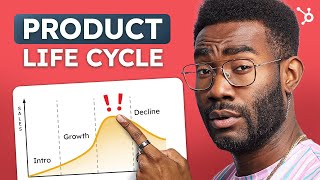
This content was created by Patrick Biddiscombe. This content was uploaded by Patrick Biddiscombe. This is a YouTube video titled "Worried Your Product Is On the Decline? WATCH THIS (Product Life Cycle)" created on April 7, 2023. It discusses the stages of the product life cycle, including research and development, introduction, growth, maturity, saturation, and decline, and offers strategies for managing products through these stages. The video also promotes HubSpot as a CRM platform.
Chapters
Why aren't people buying as much of your product as they used to? Why is your marketing not getting the engagement it used to? There's a lot of potential reasons why the world seems to have fallen out of love with whatever it is you're selling. Could be a tough economic period and people have less in their pockets. Maybe a competitor has produced something better. Or maybe you're experiencing the product lifecycle, the journey that's dictated by how the market perceives what you've got to offer. Pretty much all products go through this journey. How long that journey takes and how long you spend in different parts of that journey depends. There will be times when your business is losing money on a product. When that happens, you need to know where your product is on its journey so you can make better decisions to get cash rolling in again. So let's talk about the product life cycle and what it means for you. In this video, we'll break it down into six stages. Research and development, Introduction, Growth, maturity, saturation, and decline. See if you can figure out where you are on this journey. Number one, Research and development. You've been thinking about this for a while now. You think it could work and that people will end up buying it and your bosses have given you the green light. Good job. This is when you move from thinking to doing. Time to experiment, fail and improve towards a sleek, finished product that you can take to market. It's an exciting time and an expensive one. You haven't produced anything yet and you're pouring money into the creation of your product. And obviously you're not making any sales right now. So your cash flow is is a cash no right now. 2. Introduction. It's launch day. Weeks, months and years of hard work have all come down to this moment. Your baby's finally stepping out into the world for the first time. Look at you. You're a proud little product parent, but because the market's a busy and competitive place, you need to get potential buyers excited about your product. It's time to hit the promo trail hard. Which means investing in marketing and promotion to drive awareness. Events page, paid media, videos, endorsements, partnerships, social media, email campaigns. All that is expensive and you're not making sales yet. One way you can mitigate this pricier stage of the product life cycle is through penetrative pricing. This means setting your price to undercut your competitors and make your product more attractive to potential new customers. If you want to find out more about how to position your product in the market, check out our videos on the four P's of marketing the links in the description below. But it's likely that in the introduction phase, that cash flow is staying in the red until, number three, growth people are buying your product. And that's all thanks to the promotional efforts and the fact that you've built a super handy product. Sales are increasing along with demand. At this stage, you're doing well. You may notice your competitors trying to copy you. You know what they say, imitation is the most high form of flattery. So cool. That means that you're doing something right. But all that copying is going to make a difference later on in the life cycle. For now, as you'd expect, your cash flow is starting to turn positive. Number four, maturity. Sadly, very few demands are infinite. So as good as your product is, you're guaranteed to see demand slow down at some point. Plus, remember those pesky competitors trying to copy you? They're trying to squeeze demand as well. But it's not all bad news. Your product is established now and still selling, which means you can dial back your production and marketing costs and reduce overheads. You can also avoid overproducing and distribute more widely with a lower price tag. This will help maximize your reach and steady your sales. As a result, your cash flow should stay strong. Number five, saturation. Ever been one of those bars where it's absolutely packed and you're like, it's a little nasty in here. That's what the marketplace looks like at the saturation stage. Now there's over availability of your product and products like it, meaning supply is higher than demand. Which leads to number six, decline. Over time, your sales start to decrease. The market's now so saturated that your product in its original form isn't differentiated enough. This often leads to slowing or completely stopping production, marketing and slashing prices. And yep, you guessed it, we're back to negative cash flow. Kind of a sad story, right? Well, it's not all dower news. Product lifecycles are almost never this straightforward and there's tons of tactics you can use to help your product stay in the sun for a little bit longer. For example, you can create product extensions, release variants of the same product in new packaging or branding. Think Coca Cola creating Diet Coke and Coke Cherry Coke Zero. These are all riffs on the same idea, but massively increase Coca Cola's ability to sell to more people. Who else could your product help advertise to create a new audience or reinvigorate your current audience? Again, Coca Cola positioned Diet Coke not as a different version of the same thing, but as a healthy version a tasty drink for the calorie conscious consumer. You can also add value to your product like new features and enter new markets and geographies. And finally, keep in mind the product Life cycle is a valuable tool for tracking your journey. It helps you forecast over time and adapt your strategy depending on the stage that you're in. But it's not an exact science. It doesn't snugly fit every product out there, which can make it hard to predict how long a product is in a stage. Product can even skip an entire stage completely. Madness. So use it wisely. And remember, the best way to enjoy the product lifecycle is to build a great product. If you're looking to start your own product Lifecycle Journey, check out our Ultimate Go To Market Kit. It's full of free templates to help you plan your next product launch. Just head down to the description below. While you're down there, remember to hit that subscribe button and be sure to like the video so you can stay up to date on the latest marketing tips. Now if you'll excuse me, I've got a product that I got to go parent. Changing diapers, Burping babies. You know how it is. I'll see you next time. I can't find this client info.
Have you heard of HubSpot? HubSpot is a CRM platform so it shares its data across every application. Every team can stay aligned. No out of sync spreadsheets or dueling databases. HubSpot grow better.