Write Viral LinkedIn & X Posts With Claude 3.5 Sonnet (Tutorial)
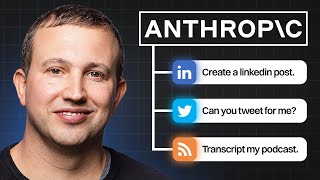
Kieran Flanagan and Kip Bodnar show how to use Claude 3.5 Sonnet to write viral LinkedIn and X posts. They walk through a template that opens with a sensory scene, builds to a turning point, lists action steps, and lands on a universal lesson. They also demo uploading example posts from Naval and Gary Vee to build a writing-style guide Claude can follow.
Chapters
Claude is our favorite model. And today we're going to show you how Claude can steal the best marketing on the Internet and replicate it for your brand with a couple of simple prompts. We're going to cover that and much more to turn you into a Claude expert in this episode of Marketing against the Grain. I'm Kieran Flanagan, your co host here as always with my co host, Kip Bodnar. Let's get into today's show. On this show, we're going to actually give you some really cool things that you can do with Claude to actually replicate great marketing for your brand really easily. One of the things that I've realized with Claude is, and the thing I've always really enjoyed about AI is can AI replicate good in a formulaic way? Right. Basically, can it take something and then give you a little template to say this is how you can replicate that thing? So there's two concepts or two inputs to how you can actually have Claude write much better content than most people are using even content tools or AI assistants. And I covered it a little bit, but I've come a long way since I did the first episode a couple of weeks back on this. So the first thing I'm showing you is this is really for all for short form content. Why have I tried short form content first? Because short form content, the structure of the post and the idea are much more simplistic to create than like a long, thought provoking piece. And I have not gone that far yet. And so it's actually easier in short form content, I think, to. To use AI to create good content. Again, not great. Great is when you edit it. So that's the other thing that people don't get when I show these different examples is great writing is in the editing. So I'm. You still should do the editing to edit to your taste.
Hey, Kieran, when you. Hold on, Kieran, when you say short form content, you break down like, what do you mean by short term form content? Like, what are the things?
Yeah, well, I built this for. I built this for LinkedIn MM X and I'm starting to do it for YouTube shorts. And so I've started to replicate Jenny, who was on the show, who's awesome, awesome, awesome. Basically use her. She gave us a four. She gave us a four minute or second by second detailed explanation of why every single thing exists in her short form video. Oh, great. Jenny has just taught my AI assistant to be able to build a template to replicate that. Right. I'm going to, but I want to the thing I'm going to show here as an example is because the one that's. We probably all know this one, right? If you're on LinkedIn, you know that personal achievement story, but this is structured in a way where it actually works. All right, so this is one template of many. So I've actually created many templates for many platforms. I can tell you they work really well on LinkedIn. X is really hard because their challenge isn't the fact that the templates of the writing doesn't work on X, it's just the kind of content I was creating doesn't work. Like marketing and business. Content is rough on X. Right now if you want to do well on X, you should post just ridiculous things. So maybe I will do one for X, but I'll actually train it on things that actually work there because I would never write them.
Right?
So the personal achievement story, what I want to take you through here, if you're reading, if you're watching, if you're listening, I'm going to describe it. What you can see in front of you is a complete breakdown of every single sentence. Remember, why am I doing this? Well, I was inspired by our great creator friend Jenny. I was like, well, I should actually detail every single part of every single post. And so you can see I have a. The opening is a sensory rich opening scene that places the reader in a moment of a challenge. Right? Next thing, the internal monologue revealing your doubts and fears. Next thing, turning point, the decision or realization that led to that action. Next thing, three to four steps you took to focus on like solving that. And it actually says like active verbs and vivid details. Climatic moment when the. Where the outcome became clear. Reflection on how this experience changed you professionally and personally. Universal lesson or. And so it gives you every single sentence. Why? How does it know to do this? Because I give it posts in that style that have done really well. Not mine, just posts. And so it knows to. It knows how to break that down, right? So that's the first thing is I'm not saying to Claude, create a post on how I transformed HubSpot's go to market. And these are the three things I want you to know about that. And just do it. I'm literally telling it sentence by sentence what I want it to do.
Hey everyone. You know we're always getting requests on the show for more recommendations on how you grow with AI. Well, we're bringing you another one. We've got this free guide from HubSpot on how you can use AI to completely change the way you create content.
This guide, it's got it all.
Prompts to assist you writing and editing, steps to incorporate AI into your marketing plan, and guidance on how to roll out AI across your team. It is the guidebook on how to integrate AI into your content creation. I've dropped the link in the description below. You're going to want to check it out. Now back to today's show. You are trying to be at a great, great teacher.
Right? Like, you're exactly.
You're not treating it like an intern, you're treating it like it's a business school student. And you're like, hey, I want to give you the deep details, the case examples and I want you to come back to me with like this amazing work output. Right?
Yeah. And we, we were joking about. Off, off mic. You shared a really funny thing with me from the Lattice CEO where they were saying they're going to provide. They're gonna basically treat their AI employees like real employees. They're gonna give them employee records, which is a PR exercise because that's part of their platform. Right. I think it's their HR platform within their PO. And everyone, like LinkedIn comments are just hilarious. I don't know why you would put that on LinkedIn thinking that you're not gonna get actually eaten alive, but.
Well, they did it because they wanted to get eaten alive.
They wanted it to go, yeah, actually, you know what? Fair play. It's because that's exactly what we say on the. Yeah, we say that in this podcast, do not care about the trolls and all. Like, do something that actually divides opinions. So kudos to. Kudos to them. But in. So everyone was like, hey, that, that's really, really funny. Everything about this post is really funny. Well, actually in there they said a lot of valid things and one of the things they said is, we are going to onboard these AI assistants just as if they were employees. Yes, exactly. And that is. This is an example of that. Right.
Like you.
And that's what I'm doing onboarding docs, right?
Yeah. Look what you just had with that prompt back there, especially for people who are on YouTube, that was essentially like the outline of a one minute screenplay that was perfectly outlined in every detail, line by line for this specific platform. There is a lot of context there that you are giving that LLM that most people just don't do. Most people are like, oh, write me a funny LinkedIn post. Right? It's like a two sentence prompt, right? And you were like, no, I want to be very Specific about every line that I am going to get back.
Exactly. And the next thing is, okay, I've got my post. So I've actually told it the structure of the post and every line that I want to be in that post. Now I want to give it a write in style. So we've got our friend Naval. I have many writing styles. I haven't used Neval before. Sounds really funny. Like, I'm not doing it on my creators. It's like my creator wardrobe. I'm gonna. Today I feel like today I feel a little bit like a novel. Like, I'm gonna have a bit of novel. I was like, Gary, Vee yesterday has Sahil. I have Sean. I have a ton of good creators. And so what we're showing on the screen is, okay, well, we have the post template. Now I want to write in style. And so this is Naval's writing style. Now I will say this is Twitter. So I have creators segmented to platforms. So I'm gonna. I don't know how well this is gonna do because it's a Twitter writing style that I'm gonna use for a LinkedIn post. So I mix and match and things there. I would prefer to just have a LinkedIn creator for a LinkedIn post, but I want to do a bit of Naval because I haven't tried it. But again, that's an example of how, like, in depth I'm going, right? I have templates per platform. I have writing styles per platform. So I'm really thinking through this. And what you're seeing on the screen is the writing style that it has created for me based upon the key principles of how Naval writes and then detailed guidelines, right? Exact guidelines of how he actually works.
Kieran, Kieran, Kieran. You just. I think you just lost everybody the writing style it created for you. I think everybody is thinking that you wrote all this. Like, what to explain? No, I explain how you got what you're showing.
I give it a prompt to say, so I'll show you people how to do this in Claude. I actually show people how to do this in Claude. You can basically tell Claude, here's an example. I don't need to write the prompt out. I can tell you exactly what to do. So you basically say to Claude, I want you to recreate a writing style based upon content I'm about to give you. That writing style should be broken into key principles and detailed guidelines that an AI assistant can use to replicate that content or to replicate that style. And I'm going to. I'm Going to start to give you examples of that person's content. And all I want you to do is after each time I give you that content, I want you to say, okay, cool, continue. And I want you to keep going until I say finish and when I say finish. And then I want you to write the guide. Right? So. So it doesn't try to write the guide after the first time I put in the Naval Twitter thread. So then I just like export examples of his posts and I upload a post and it goes, cool, continue. Cool, continue. Cool, continue. Cool, continue, Cool, continue. And then I say, cool, finish. And then when it finishes, it actually creates this style guide for me. And the style guide is based upon what I asked it to do. Now, theoretically, and I have thought about this, I do wonder if I have to give it the examples because it's trained on the Internet. Naval is such a pervasive person across. It's pervasive. That doesn't mean he's like a criminal. Right? Pervasive. Right word or public figure. Okay. He's so, you know, he has a ton of writing out there. So it's trained on his writing. So I don't know. That would be a good a B test if I a B test it, right? If I actually just asked it to. And then it's broken it. Broken into it. So the key principle is brevity and clarity, thought provoking insights, timeless wisdom, contrarian viewpoints, interconnected ideas. I thought that was really good. Interconnected ideas. And then in the guidelines, the detailed guidelines it has. I'm not gonna read these all out, but you can see them on YouTube like embrace consciousness, focus on timeless principles. Provoke thought, Use.
Provoke thought. Use aphoristic style, style. Create interconnected ideas.
Engage, leverage, contrast and paradox. Right.
These are good. But the point I was trying to make to everybody is like, unlike a student or an intern or someone, you can have the AI generate its own instructions, right? Like you are. And it's generating the instructions that you're then going to give back to it when you're actually ready to create the new thing. And so it's not like you spent all these hours doing this research and writing this all out. You did the research to get the good examples and then you use those examples to get instructions back.
All right, what's a good. This is the thing that someone on LinkedIn just, I went back and forth on is they're like, well, this just removes all of the human element to write in. No, because the idea is still the most important part. So what is like a good topic? We're probably not going to nail the topic, but what do we want to create a LinkedIn post on?
Just do a meta. Just do what you just said. Like explain why AI doesn't. Doesn't ruin writing.
Okay. Yeah. Yeah. Awesome.
All right, so for folks who are on the RSS feed, what's happening right now is Kieran's in Claude and he is basically prompting what he wants Claude to do. He wants it to write a short form piece of content for LinkedIn. He's giving it a word limit, less than 750 words and he's given it a topic of why AI doesn't kill marketing creativity. And then he's about to give it some instructions of what he wants it.
To do using the uploaded docs. So we're going to say use the. Using the uploaded docs. The. The LinkedIn post template that gives the exact format format of the post and using the write in style we uploaded for Nevaeh and then we will upload our two PDFs, gonna add those two.
Pieces of content that we just showed over the last few minutes. Right.
Did. I did one for Gary Vee and it was so Gary V. It was actually really good. It was like holy. The. The headline was holy shit, 100 million views. I love Gary Vee. Right? So like he's an incredible writer. But I was like it. It really got some, some of his stuff, right? And then it had some killer lines. It had some kill like I actually almost tried to get that one up. It had some killer lines, very Gary Vee lines. But I actually am really interested. So. Okay, we've got it. Let's see, let's see what we get from Neval. Oh, I have to tell it. It's. Even though it's not in the writing style, it always tries to do the first attempt. It always uses emojis for some reason. First time, please don't, please don't use emojis, emojis or hashtags. And so for people watching and people listening, I'm going to read, we're going to read out the post. But remember this is non. The non edited post, right? The non edited post. So you would not. You would edit it to the way that you talk and write. Because this is going to be still very like naval esque. Okay. So it's trying to like, it's interesting, right? So the first line. So what did we ask it to do again? What's it doing? It's trying to set the open and scene in A moment of challenge. The cursor blinked mockingly on my screen. You would never use that language. But we would change it. We can actually tell it to change it to make it more like. Let me just do this actually, please redo in Naval style, but make language a little more punchy. It's basically taken the fact that Naval is a philosopher in some ways. Okay, this is much better. The. That's again the problem is Naval's writing style works for his kind of philosophical style on Twitter. And this is more of a LinkedIn. His. It just wouldn't work in that way for LinkedIn, I don't think. And so I made it a little more punchy. Right. So here we go. AI. AI doesn't kill creativity, it amplifies it. Fear of AI and marketing is fear of our own potential. That's pretty good. Algorithms aren't competitors, they're collaborators. This is actually really good. So the only thing it hasn't done actually because I told it to make it punchy, is it's not followed exactly the post template. It hasn't done the open and rich scene. It has tried to do everything else. A creative process. Use AI to generate human to curate AI analysis data. Human finds insights. AI suggests human refines AI tests human learns. That's really good. I should, should have done this LinkedIn post and the one I did is actually flaming out. This is actually.
I think you have to post this for sure.
And I will post it. Post it. Yeah, I'm gonna post this exactly, actually. So basically, AI doesn't kill creativity, it amplifies it. Fear of AI and marketing is fear of our own potential. That is really good. Algorithms aren't competitors or collaborators. That is really good. I love this. A creative process Use AI to generate human to curate AI analyzes data, human finds insights. So this is very noval, right? AI suggests human refines AI tests human learns results. Unprecedented creative output lesson. Creativity is infinite. It's exponential when paired with AI. True creatives don't resist new tools, they master them. AI and marketing is like print and press for authors. It doesn't replace the writer, it magnifies their reach. The most creative marketers of the future. That's really good. Won't. Won't be those who shun AI, but those who wield it skillfully. Embrace AI or get left behind the choices yourself. Let me do something. Let me delete.
It's a little long in the tooth.
At the end, but yeah, I'll edit it, but I'm actually going to for all of those LinkedIn people, AI LinkedIn updated their algorithms. So you need to really up your game. Now. I would not copy and paste this exactly. The reason it's got a little long here is because I said 750 words. I probably should say anywhere between a certain number of words. And you can put it, you can, you can use whatever you think is the right.
But what if you told it to just condense the last 200 words into one sentence? You like to tighten up the back end.
So I can basically say so embrace AI left by. Remember, AI is a tool. Creativity is human. The magic happens at the intersection. Are you using AI to enhance your creativity or let it hold you back? Yeah, it goes on too much here. So let me say condense the following part of the post into two succinct lines that are thought provoking in Naval's style. So here's the two lines. It's connect. AI amplifies creativity. Fear diminishes it. The future favors those who ask, who ask AI the right question, not those who compete with its answers.
That's good.
Oh, that's so good. Right? That is just got some. It's got some. That's what I noticed when I was doing the Gary Vee. It had some one liners. One thing you can do is you can go to YouTube. I'm sure people know this. I'm going to go to one of our episodes and basically grab the, grab the transcript, right? For any, for any episode you want. So let me grab a transcript of a good one that we did. They're all good. But let me just say, I'll tell you what, we'll get Wes's show. That was a great show. I'm going to grab the transcript here, right? I'm literally just going to copy and I'm not, not showing on my screen. But you, it's pretty easy. You can go, go say show transcript. It comes up on the right hand screen and then you just go copy and paste the entire text. And then what would I, what I would do is I would basically say this is not going to be great, right? Because I would need time to actually think of these prompts. But let's say we, we want to build a world class podcast that's 30 minutes in length. We need an exact format that will drive a bunch of engagement and followers for the podcast. Please make sure you focus on the most critical things a podcast must master. As part of that format. Please create me a, a podcast style guide that I can use to have my editor format all our future podcasts into that style. And what I would really have done is actually taken some podcast styles. Right. That we actually think are really good styles to train it. But I'll do this to see if it comes up with something. Okay. You know, the thing I need to do is tell it. I would tell it to remove anything around the aesthetics, audio and video. Right. And just focus on the actual content. And so it would give you some sort of like, it would give you. Basically you would work to get like a style guide. Right. For any asset you want, whether that's a paid ad, whether that's a podcast, you would work to train it on and create you a certain style guide. And then what you would do is you would say, okay, well I like these podcasts, I like the way that these people are. And so let's say R1. And then you would create the kind of podcast vibe. I actually haven't done a podcast before, so that's why I'm kind of curious. But like, let's just say this was a write in, but that I grabbed that text. Right. Great. Now I want to create the right vibe for the show.
Yep.
Which is the exact ways the hosts can bring energy. I would probably think of like what actually matters, like energy, humor, insights and actionable takeaways. This is one of my favorite podcast duos. Can you, can you create a host style guide from this transcript that allows me to teach my podcast hosts to bring those things to all future shows. And with Claude, you can just like paste in the transcript, it will paste it into the doc and then it will create some sort of host style guide Again, I actually haven't done a podcast. I'd have to think really thoroughly about what I'm doing here. What? But, but like think about it. If I do paid ads, I can basically just collect a bunch of paid ads and say to create a paid ad style guide and then I can create a writing style guide for that. If I want to create blog posts, if I want to create newsletters, it again, the asset style guide, the writing style guide, the whatever style guide, the host style guide. Right. This one here. Start strong, begins with high energy, set tone. That's pretty good. Use vocal variety, modulate your voice to emphasize key points and maintain listeners. So it's showing energy and enthusiasm. It tries to do style guide humor and rapport. What does it do here? Develop a signature open and create a fun, engaging way to start each episode. Use light hearted banter, embrace self deprecating humor. It definitely got that for me. React Naturally, definitely share experience. So like it's pretty again, does pretty good job. But I would have to really refine this. But I think that's what I would take away from this episode is you have to create, you have to train it to figure out what is the right format of the thing and then train it to create the, you know, to create the right content, whatever format that might be for that, for that platform or for that asset. And that's the two, the two ways I would think about this. And you can do that for anything. Like if you, if you break down any problem have or content problem, the platform, the style, those two things can be used for pretty much most marketing assets.
And what's interesting is like, even without a ton of refinement, it's pretty good. But what you saw in the first example with your LinkedIn post is like, if you have the really great training documents.
Yeah, exactly.
It gets very good. And you did a great post in like two minutes with those training documents. Right. Like it's unbelievably fast. Once you've done the prep, it's really good.
Right? That people tell me, people tell me, I just want to create average content. Just so you know, all those people who say that that content is better than your content for the most part. Right. You're not. You're probably an average writer. Totally. It's above average. I don't know if people have seen average write in. It's Claude can create above average write in if you actually know how to use it. Can I create great write in? No, you have to edit it. Can it help you create more great writing at scale? Yes, a hundred percent. Because I'm gonna go take that post, edit it, make it much better. Because I'm able to do that. And you know, it's kind of like the post says. Let me just go back to what the post says. I'm actually. Let's end on exactly what the post says because its advice is better than. My advice.
Is going to be a great podcast test.
This could be actually scary because maybe it is better than me. Maybe it's going to start to be better than me. Okay, so like what did it say here? Yeah. Use AI to generate human to curate. Use AI. AI analyzes the data, human finds insights. But it's this one here. AI suggests human refines. AI suggests human human refines. That is the two day show the AI has suggested. I am going to refine and make better. What have we said for the entirety of the AI? Boom. The great marketeers will use AI to make themselves even better. The average marketeers will use AI to copy and paste and make themselves average at scale. I am a great marketer. I'm going to use these tools to do more great at scale.
And.
And that is like human AI suggests human refine. It's like AI Naval has nailed it. And I am actually kind of pissed on sharing this because I think I should just keep this to myself.
All right, you have to publish that post on LinkedIn and we've got it linked up. The final published post in the description below so that people can see it and see how it performed.
I will. I'm definitely going to post it. It's going to perform better than the one I put out today. Let me just tell you. That sounds like it has a good job. The thing on LinkedIn is for anyone who's trying to grow their LinkedIn, you can no long just like riff on something. You have to really think about. They really up. It's harder to get engagements. You have to really be good. All right.
I think that. I think that was an awesome show. It shows you the power of Claude. And if you do a little bit of legwork with the AI, you can create really amazing work output on, like, your best ideas, which I think is incredible. This has been an awesome episode today. Thank you, Kieran, for walking us through and we'll see everybody real soon. I'm marking Instagram.
This data is wrong. Every freaking time.
Have you heard of HubSpot?
HubSpot is a CRM platform where everything is fully integrated.
Whoa.
I can see the client's whole history. Calls, support tickets, emails. And here's a task from three days ago. I totally missed HubSpot Grow better.
More from Patrick



A NEW BREED OF PARTNER: The Partnership Ecosystem Model Journey of Patrick Biddiscombe, Part 1








Customer Success Workspace: Never Lose Sight Of What Matters Most | HubSpot Spotlight