362. Disciplined Entrepreneurship: Startup Tactics with Paul Cheek
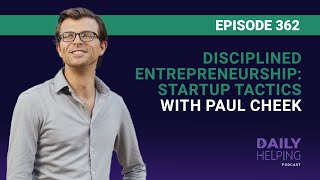
Interview (podcast/transcript) with Paul Cheek about disciplined entrepreneurship and practical startup tactics. Cheek describes a 4-stage, 15-tactic framework (Foundations → Market Testing → Product Development → Resource Acquisition), the ‘Hacker–Hustler–Hipster’ founding-team archetype, and lessons from his work at MIT and Oceanworks. The conversation emphasizes structured, test-driven early traction, adaptable frameworks, and purpose-driven ventures.
Chapters
You're starting a business. You got this idea. We absolutely love the idea. Maybe it's a good idea, but the reality is that idea is going to change. Whatever we think we're going to build today is likely to change several times over before we're actually in the market.
Hello and welcome to the daily helping with Dr. Richard Schuster. Food for the brain, Knowledge from the experts, tools to win at life. I'm your host, Dr. Richard. Whoever you are, wherever you're from and whatever you do, this is the show that is going to help you become the best version of yourself. Each episode you will hear from some of the most amazing, talented and successful people on the planet who followed their passions and strive to help others. Join our movement to get a million people each day to commit acts of kindness for others. Together, we're going to make the world a better place. Are you ready? Because it's time for your Daily Helping.
Thanks for tuning into this episode of the Daily Helping podcast. I'm your host, Dr. Richard and I am excited to share with all of you the brilliance of our guest today. His name is Paul Cheek. He is a serial tech entrepreneur, entrepreneurship educator, software engineer and patented inventor. He is the executive Director of the Martin Trust center for MIT Entrepreneurship and a senior lecturer at the Massachusetts Institute of Technology and the MIT Sloan School of Management. Paul was MIT's first hacker in residence and has since taught, mentored and advised thousands of entrepreneurs around the world. He was named to Forbes 30 under 30 and is on the definitive list of young people changing the world. He's a co founder of oceanworks, a for profit company with a mission to end plastic pollution, and previously co founded Work Today, a venture backed digital staffing and recruiting company. Paul advises startups and both speaks and consults with Fortune 500 companies and universities globally to advance entrepreneurship. We are all in for a treat. Welcome Paul, to the Daily Helping. It is awesome to have you with us today.
Oh, great to be here. Thanks for having me. And excited to talk a little bit more about entrepreneurship and entrepreneurial leadership.
Well, very near and dear to my heart. But before we do, you know, I read that bio. There's some tidbits in there that certainly piqued my curiosity. Let's go back in time, put on the Paul Cheek time machine hat and first talk to us about what puts you on the path you're on today.
Oh, well, I'm an engineer, a software engineer. I love building things. Building things from the ground up. I spend a lot of time going and building products. Uh, you know, I Have a passion for building products, software products that, that can help people. In that process, I began to explore the, the, the entrepreneurial process. How do you go and not just build a product, but how do you build a business? We always say you can build a feature, you can build a product, or you can build a business. A feature is a wonderful thing, a product is, is even better. But a business is what has the, the potential to live on for forever. Right. Because you've created value for somebody, you've captured value, they've paid you for it, and that allows you to continue to continue going to release other products. Right. But most importantly, to have an impact in the world around us. And that's what, you know, I've grown to become really passionate about, is how do we create businesses that are best set up to have an impact in the world. And now I, you know, I've done that a couple times over and now I have the opportunity to help others build their businesses, to figure out what's the innovation that they want to bring to market, what do they want to commercialize and help them. So it's my roots in, in software engineering and a passion for building.
I love that as a, as a fellow IT guy who really, that's where I got my start as well. I appreciate everything that you're saying. I couldn't help but note in your bio that I read that you were MIT's first hacker. Was this a catch me if you can sort of thing where you were doing crazy stuff and then work for the good guys?
Like.
Well, tell me about the hacking piece of your.
Yeah, absolutely. Well.
Some things I can never share, of course. No, in all seriousness. Right. It was, you know, really working with a lot of entrepreneurs. I came here first to build software, to build software to better connect entrepreneurs to the resources that they need. So hacker in the sense, not of, you know, going and, and you know, MIT has a hacking mentality. First of all, you go and you look up the hacks at mit, you're going to find some truly amazing things that MIT students have done over years. Hacking culture at MIT is really, really important. You know, I came to help connect entrepreneurs across campus and, and leveraging software to do that, but ultimately found that I could work with a lot of students one on one or in larger groups to help them. And this is actually some of where the book comes from, is the early work that I did with entrepreneurs here at mit, helping them solve their challenges. Some of them were very hacky challenges, some of them were engineering challenges. Some of Them were, how do we go run our first marketing campaign, how do we go run our first sales campaign? How do we go and do the product design, do the product development? And it was from those meetings that I wound up on a path here to try and bring all of this information into one packaged framework that anybody can leverage to go and become the entrepreneurial leader that they need to be.
Got it.
So hack in the proverbial sense of shortcuts, not hacking, as if literally sitting in a basement stealing new codes from four countries.
No, absolutely not. All above board. All above board.
Got it.
No hack. You know, we talk about entrepreneurial teams and you think about like entrepreneurial leaders and what they need to be successful. They need an amazing team. The team. The most important part now we talk about the three types of complimentary skill sets that you need on a team. The hacker, the hustler and the hipster.
Right.
The hacker is the person who's going like building things. They're the ones doing a lot of the technology, the engineering or whatever that looks like for the specific business. The hipsters. The thing is about the customer experience, the design. What is the experience we're trying to create for people. And the hustler, the person who's thinking about the finance, the sales, these sorts of things and those complementary skill sets are what set a team up for success. When you're going from the earliest stages of building a new business, you've got to have a really good combination of those skill sets on your founding team. And each of those individuals needs those leadership skills to drive this business to the next stage. So Hacker Hustler and Hipster.
Hacker Hustler, Hipster. So, oh yeah, I want to come back to those things. I'm just writing down three ages, so I remember, but I want to just take a quick step back. The book that we're talking about today, you mentioned it, but we didn't talk about the title. It's called Disciplined Entrepreneurship Startup Tactics and it's now available everywhere where I. I'd love to just find out the impetus behind the creation of this book first and then we'll take a little bit of a dive.
Yeah, yeah, absolutely. Well, it's many years coming. I spent really the past year, year and a half writing this book. But what I didn't realize when I sat down to start writing it was that I've actually been working on it for over five years. It started from a lot of these one on one meetings with entrepreneurs, helping them look at that first marketing campaign, setting their goals Helping them, you know, with the, the product development, helping them go through the fundraising process. And there were patterns and themes that emerged from those conversations. There were things that I heard that, you know, they knew what to do generally, like how to go build a really good business plan, business strategy. But their ability to actually go and take that plan and put it out into the world was somewhat limited by the variety of functional skills they had. I believe that entrepreneurial leaders are best set up for success when they have a generalist skill set with one specific expertise. How do we help entrepreneurs figure out how to go and do just enough in each of these functional areas to be, to be dangerous, to go get a lot done with limited resources? The entrepreneurial leaders, and I don't just mean startup founders, I mean anybody in any organization who wants to do more than is reasonable with the resources that they have control of, we need to make sure that they are best equipped to do all the different things you need to get a new venture off the ground, but also to lead the people who will ultimately make up their team because they know a little bit about these different functional areas. And so from all the meetings that I had, the patterns that I saw emerging, I started to run these workshops, these workshops around the functional skills that entrepreneurs need. I learned a lot in that process. We ran those for a year or so and I got feedback from people, people kept asking for the workshops and we started to integrate these sorts of tactics, if you will, into the classes that we teach here at mit, these tactics into the entrepreneurship courses to explore and iterate on how they can be best taught. I wound up starting a whole new class at MIT that we've now run at least five semesters, iterating every single time to figure out how best to teach these entrepreneurial skills, these different functional areas to student entrepreneurs. And what we found was that we look back at the 10 past 10 years of entrepreneurship education. We've done a really good job of setting people up to build the plans and the strategies to go into, to create businesses. But when it comes time to actually put that in action, we haven't necessarily done it justice. We've done a lot of ad hoc one on one, but we haven't necessarily created the structure. We think about an engineering approach to entrepreneurship. We think about the structure of the entrepreneurial process. We needed to help people take their plan, their strategy, and actually go create a business with it. So this is why I wrote the book, was to put those different entrepreneurial actions or tactics into more of a framework that's curated. There's a lot of stuff out there on the Internet about how to go, you know, do this in your business, how to go do that in your business. If you're a startup or a new venture and it felt like it needed to be all connected, there's a lot that you can get out of taking a structured, systematic approach to building a new, a new business. And that was the goal. My goal is to help entrepreneurs be more effective, more efficient with the resources they have so that they can have a greater impact and they're not missing opportunities to have that impact.
So, you know, when I think about some of these classic tech companies, I think about Apple, I think about Microsoft, you know, Bill Gates, Steve Jobs. They just grabbed their buddies, right? They grabbed their buddies that they went to school with. My company, it was founded with a, a good friend of mine from graduate school who I felt was, he's really truly the hacker amongst us. And so I, I guess the question would be because these three roles are, are crucial to a startup success or certainly make it, you know, far likelier that you'll succeed, how do you find those guys, let's say, amongst your buddies? You've got two of them, right? You got the hustler, you got the hipster, you might not have the hacker. How do you go about finding that, that person who really is kind of the chocolate to your peanut butter that you need for success?
Yeah, you know, when I think about that, Let me first clarify these three Hs. Hacker, hustler, hipster. You don't always need to have three people, right. I generally say, you know, a co founding team of one is extremely difficult and oftentimes best avoided. Not to say that it can't work, it works very frequently. But you know, the highest highs and the lowest lows of the entrepreneurial process, much better to go through that with somebody else, at least one other person. But it's not as if you need one hacker, one hustler, one hipster. Oftentimes people will have experience, training, education in multiple of those areas. So you might have somebody who is primarily the hacker, but also has some, some, some hipster experience. Right. And so can kind of fill the gaps there as needed in the early days. And, and you know, if you've got to go find the gals or guys or gals that might fill those roles, might bring that experience to your team. You know, I often say, look, look around you, right? Who have you worked with in the past specifically? Why? Because the, when you think about a co founder, you Want to bring them on. You want to kind of. You always want to trial. Co founders, you want to trial try. They say try before you buy. Right. See how you work together. See how not just when things are going great, you'll work together, but when you hit some unexpected road bump, when something's not going exactly as planned. How does everybody react? How do we drive? How do we work together in those scenarios, in those situations? That's going to give us a really good sense of whether or not that team is best suited to go chart the course forward and build this venture through the highs and the lows. Where else can you look? Not just to colleagues who you've already been through that experience with, but you can also look to, you know, other folks in your network, friends of friends. You might look sometimes to family members, but what you're looking for are people. Where there's trust, there's accountability, but most importantly, not just complimentary skills. You're looking at, do we have a shared vision? Do we have common goals, common vision? Are we doing this for the same reasons and for the right reasons? Right. If you're going to think about a team that's going to be really committed to a venture, you need to make sure that, you know, you've got people who, you know, have these entrepreneurial leadership qualities, but also that they're going to stick with it because they care so much about the purpose of the business, they care so deeply that this is a business that needs to exist and, and everybody's aligned on having that same impact.
Makes perfect sense. So with that in mind, let's say we've got our combination of, you know, whether it's two or three people, whatever it is, we've got our hacker, hustler and hipster. What are some things that you think make sense from a framework standpoint of building a startup that will have legs?
Yeah, yeah. Building a startup that has legs. I mean, I think what it comes back to, and I often see entrepreneurs skipping some of these things, making sure that our first principles are sound. And this is, you know, this is what we talk about when we talk about discipline, entrepreneurship, the foundations of entrepreneurship. Right. Having, you know, when we talk about that, we start with, who's the customer? We go, who is the customer? What's our well defined market segment? What can we actually do for that customer? How are they going to acquire a product? How do we make money? What's the product we actually go build? Having a really good strategy for going out to market with those first principles in mind, beyond that right. We think about. All right, well, we've got the business plan, we got the strategy, the framework for going and taking that and putting it out into the world that I present in the book. The Startup Tactics framework looks at these 15 tactics. It goes through four stages of, you know, the process to take a business plan and put it out into the world. Those four stages start with the foundations. The foundations, number one, the foundations. Look at what are our goals. All too often I see entrepreneurs go and they just start taking actions without necessarily knowing. You know, it's like we want to go get things done, but we don't necessarily know why we're doing them. And they don't always contribute to the next milestone that we need to hit. If we haven't sat down to define that next milestone, gotten some feedback on it, we're going to go and we're going to start building up a to do list of things that don't necessarily work us towards that. And so this is something that I think is incredibly important. We've got to have goals, we've got to have the ability to track our progress towards them. And that's where systems come in. We have to have systems that will allow us to track our progress towards those goals. That's our baseline. That's our starting point. That's the first stage. Foundations. Once we have those goals in place, you know, as entrepreneurial leaders, we sit down and we say, this is where we're going. This is our vision. Here's the next milestone to work towards that. We go to market testing. We say we want to create a new business. We know what product we're going to build. Let's go see if the market actually wants what we believe they do. I've got a great idea. I think it's amazing, right? But we've got to make sure that our potential end users, our potential customers also feel the same way. So we look at things like primary market research, going and getting to know some of our end users as well as we know our best friends. How can we learn everything there is to know about them in a short period of time? From that, we go and we think about how do we create the visual assets that will communicate to those end users the value that we want to provide them, how we will provide that value. If we're building a new venture, we've got a new value proposition that is going into a new market. It's something that's new to the world. So explaining it takes a lot of time. And when we're really Passionate about it. We'll spend a significant amount of time communicating that. The problem is as a new venture, we can't hold people's attention span all that long. So we look at how do we do that with animations, with videos that we can put in front of somebody and say in 10 seconds, this really complex new concept anybody is going to be able to digest. Once we have those, we go into marketing and sales. You might be an expert in marketing or an expert in sales, you might be the best enterprise salesperson. But selling when you don't even have a product built, selling when you know our whole process is going to be around going and building out a lead list, going and crafting that first email campaign when all we have with those visual assets to communicate our product is much more difficult. And it's much, much different. There's so much uncertainty involved. And so in this scenario, we look at how do you run a marketing campaign with a mousetrap model that targets our exact end users? And how do we communicate that in a way where we're not necessarily selling a finished product? We're just trying to get validation, real data from real people that they want what we believe they do. When we have that, when we have a line of customers waiting down the street to use what we haven't even built yet, that's when we look at the third stage, and that is product development. How do we do some early product design? How do we go and do some user testing? How do we go and actually engineer the simplest version of this product? Even if we're not engineers, non technical people can build the first version of the product that they want to put out into the world in most cases, how do we do that without hiring a bunch of talent or outsourcing it? How do we do it ourselves? If we have customers waiting down the street and we have product built, we get into the fourth stage, which is resource acquisition. And entrepreneurs most precious resources are time and money. With that in mind, how do we get more time and money to continue to grow the business and to scale it? Well, we've got to look to making sure we're incorporated, making sure that we've got a really good financial model when we don't even know what's going to happen tomorrow? We've got to look at how do we go and build the pitch deck. And I'm not just talking about a set of slides, I'm talking about a story. Entrepreneurial leaders need to be storytellers. They need to be able to communicate this and then Once we have that, we're well prepared to go out and begin fundraising, taking an approach that looks at what are the sources of funding we can go after, which one's best fit for us, and how do we actually go and run that fundraising process we know we need to fundraise, how do we do it? And lastly, once we have that money, how do we get more time? How do we go and hire the people that we need who will devote their time to this venture, to our vision, and that's who do we need to hire? Based on the goals that we set in the first tactic, what's the job description look like? How do we recruit? When we're looking at entrepreneurial talent, this framework looks at how do we empower entrepreneurs to do all of these things themselves in the early days, but more importantly, as entrepreneurial leaders, how do they develop that knowledge of these functional areas so that when the venture has grown and they've hired additional people, experts in these specific areas, they know how to lead them. If they've done it themselves in the early stages of the business, they're going to be very well positioned to lead the individuals responsible for these different areas.
Hey, guys. Dr. Richard here. For the past seven years, I've been privileged to bring you incredible guests who are changing the world and can help you become the best version of yourself. I'm really excited to share with you a new quiz that I created based on my clinical training that will curate for you a custom list of my top episodes and actionable strategies to help you wherever you are on your journey. All you need to do is go to DrRichardShuster.com to take it, and it's 100% free. You'll be taking the next step on the journey to unlocking the power of you. And I can't wait to see where you'll go.
I like this. I mean, you can clearly see there's engineering kind of mindset oozing through every bit of this. I am curious about the resource allocation and more specifically the acquisition of funds because we live in an era now and I don't know how long it's going to be like this where it is awfully hard to get funds. It used to be, you know, five, 10 years ago, you had an idea on a napkin and you could run around and you had 50 VCs who were going to throw $5 million at you. Now those dollars, across many markets, not just VC funds, have dried up significantly. So how do you, in your opinion, maybe this is in the book, maybe it isn't. But how do you cut through the noise and get kind of to the front of the line to get access to some of these funds? Because there's fewer than they have been and everybody's fighting for them.
Yeah. Well, let me first by saying the system's not perfect, and that's a reality. But one thing I do believe is that good businesses, strong businesses with strong foundations, strong first principles, with traction, with good traction, they're very well set up to fundraise, they're very well set up to go into, run a successful fundraising process. And that's what these tactics are designed to do, to provide that structured approach to go and build a strong business. The tactics think about the actions that entrepreneurs need to take with the goal of getting early traction. You know, if you can go and you can get traction, you've got a waiting list of thousands of people who want the product that you haven't even built yet. All of a sudden, that business is de risk because the market risk has diminished significantly. With market risk diminished, it becomes the question of, all right, well, can we do the technology? Well, that's what the next stage looks at. You see, these stages go through and try to de risk businesses in ways that investors are looking for. When an investor looks at any opportunity, they look, of course, first at that team. Right. Does this team have what it takes, especially in the earliest stages? But then, you know, you've got to look at, you know, is the, the business model sound? Is there traction? Is there proof that this team is not only amazing, but that they can execute and actually come back with results? And each of these tactics is designed to provide the results that are needed, specifically when market risk is greater than technology risk. We talk about this in the book, what happens when technology risk is greater than market risk. But regardless, the idea is that we want to demonstrate that traction as early as possible to make that fundraising process just a little bit easier. Of course, like I said, the system's not perfect. Good businesses and good teams, they win when going through a fundraising process.
Got it. Makes perfect sense. And I know the tactics are generally, these are the do's. Like, this is a framework of things that a startup should do as they're working their way through bringing a business to viability. So with that said, what are the don'ts?
Right?
What are the key. Don't do this. What are your biggest warnings you would give somebody who's starting a business?
Oh, that's a good question. Don't fall in love with the idea you're Starting a business. You got this idea. We absolutely love the idea. Maybe it's a good idea. But the reality is that idea is going to change. Whatever we think we're going to build today is likely to change several times over before we're actually in the market. But if we fall in love with our idea, we're not as likely to take the input from others as we go through that process of developing the idea out further. So don't fall in love with the idea. That's. That's the first thing that I would say. I would also say, you know, there's a lot of frameworks out there. This is one of them. Don't feel like you have to follow the framework exactly as it's prescribed. You're going to find that every business is different. And you have to determine how do you apply a framework within the context of your own business? And I think this is really important because there's a lot that you can learn by working through a framework. I am obviously a big believer in that. I've seen that. I've lived that. I've worked with thousands of people who followed frameworks to find success. But I also know I've seen them adapt the framework within the context of their own businesses. And I think that's a really important part of the process. Go and learn these entrepreneurial skills. Learn them in order sequentially, but know that they all continue on. They have to be executed in harmony, and you have to figure out how each one applies to your business in your context, to your team, all of that. And I say that especially because these different tactics look at different functional areas. If you are an expert marketing person. Right. The marketing tactic is one that I think you should pay attention to because it might be a little bit different than the marketing that you're used to. But at the same time, you know a lot about marketing already. You might need to spend a little bit less time on that tactic than others. So it's going to apply to different businesses, to different people in slightly different ways. Enjoy the framework. Take a lot away from it and apply it with excellence, but also know that it's different for every single business.
Got it. Got it. I love the way you frame that because it's like anything else. Right. You read a personal development book. It's not the bible. Right. It's not written in blood. Like there's things you can take from it and should take from it, but then there's other stuff that probably doesn't. Doesn't fit for you or fit as well.
Yes, exactly. And I think that's one of those things that's just, just really important, Right? You know, you think about the path from building a new venture from absolutely nothing to your first hire, from your first hire to building this into a company with 10 employees, with 100 employees, however many employees, right? Your role is going to change and how you apply this stuff is going to change over the course of time as well. It's not just about in the moment here today. And some of the examples in the book that you'll see, I think are really, really interesting just because they look at not just how do you do it from the ground up, but how do you do it once. You already have a team, you already have people, how do you work better with them? How do you lead them in a way that drives efficiencies and optimizations for the business? How do you improve your business as well? So, yeah, there's, there's a lot to this. And look in entrepreneurship, there's so many don'ts, but these are, these are a couple that I would, I would share with you.
No, I'm glad that you did. And I, I love everything about this. You're teaching people a blueprint how to build not only businesses that can be sustainable, but businesses that, that help the world, which is amazing. And, and to that end, I wanted to ask you before we close, just if you could share a little bit about oceanworks, because I think that's a really important company.
Yeah, oceanworks. Just fabulous, right? Selling recycled ocean plastic to brands that want to make more sustainable products, thinking about their sustainability journey overall. Oceanworks is, is a, is a business. You know, it's just I get so much joy and in seeing, you know, we have ocean plastic dog toys, we have, you know, Ocean plastic. You look around, you know, the room that you're in, you look around your daily life, and there's so much plastic. The initial thesis behind the company was, you know, leverage commercial demand for plastic to reduce plastic waste in our oceans. And that's, you know, we come back to one of the most important parts I mentioned earlier to any business is why are you doing it? What's the purpose? And Ocean Works is just such a strong purpose behind it as a, as a business. So one that I'm very proud of and, you know, that I think is really, really important in the world that we live in with so much plastic pollution.
Amazing. Grateful that you're doing that, Paul. This has been a phenomenal conversation. It literally flew by. I want to ask you a question that I everybody who comes on my show. And that is, what is your biggest helping? That one most important piece of information you'd like somebody to walk away with. After hearing our conversation today.
Yeah. What I would say, one thing to leave you with is that entrepreneurship is for everybody. It doesn't matter whether you're going to start a company. We need more entrepreneurs in this world and we need more entrepreneurial leaders in this world. Regardless of whether you're going to be a startup founder, you're going to go join a company, you work in a larger organization today, you lead a team within a larger organization today, there are things about the entrepreneurial process that you will find useful, that you will be able to deploy with with your team, with your business. And I would encourage you to do the hardest part. The hardest part of entrepreneurship is just getting started. Take the opportunity right here, right now, today, to go and take that first step.
I love that. Paul, tell us where people can learn more about you online and get their hands on the book, which is out everywhere.
Yeah, absolutely. Come find me paulcheek.com or on LinkedIn. The book's available anywhere and everywhere. Amazon, Barnes and Noble, bookshop.org, go check it out. And most importantly, send me feedback, send me thoughts, send me reactions as we work through it.
I love it. And for those of you in the gym, we got you covered everything. Paul Cheek will be available in the show notes for this episode@drrichardshuster.com Paul, this was a great conversation. Excited about the book. Thanks so much for coming on the show and sharing your wisdom with all of us today.
Yeah, thank you.
Absolutely. And I also want to thank each and every one of you who took time out of your day to listen to this conversation. If you liked it, if you're excited, if you're going to jump into those 15 tactics, go give us a follow and a five star review on your podcast app of choice because this is what helps other people find the show. But most importantly, go out there today and do something nice for somebody else, even if you don't know who they are. And post in your feeds using the hashtag my daily helping. Because the happiest people are those that help others.
More from Paul


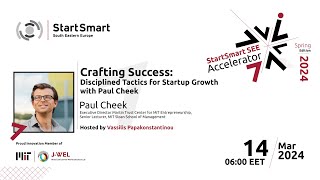
WEBCAST: Crafting Success: Disciplined Tactics for Startup Growth with Paul Cheek
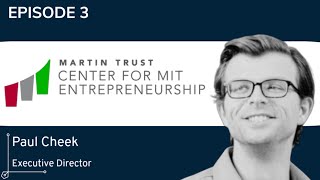
Episode 03: A Conversation With Paul Cheek of the Martin Trust Center for MIT Entrepreneurship