Single-speaker YouTube case study (blissful-invention) demonstrating a Shopify+Clickfunnels e‑commerce funnel for a baby phone product. On Shopify alone the speaker reports spending $113,000 and returning $210,000 over ~3.5 months, selling ~7,000 units, yielding a reported net profit of $45,000 after COGS, fees, and refunds (stated 1.85x ROAS and ~27% profit margin). The video also describes ad performance (CTR ~2.3%), average order value (~$27), cost per acquisition (~$15), 6% chargeback/refund rate, scaling spend timeline, and results across two brands ("Shop Baby B" and "Your Baby's Favorite").
Questions this video answers
$113,000
$210,000
$45,000 net profit
1.85x ROAS
Approximately 7,000 units sold
Chapters
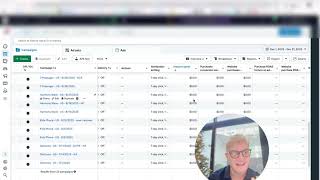
Hey, welcome back. In this video, I wanted to show you more about this case study. So we did an entire case study video how we ran a clickfunnels funnel for this baby phone. Just want to show you the website real quick. And meanwhile, I wanted to show you our separate numbers that we had on Shopify. So what we did is we took this brand, we ran it up under two brands. One is Shop Baby B and then your baby's favorite. Now besides running this on clickfunnels through a funnel, like I said, we also run it directly on Shopify. So in this video you can check it out. I covered some tips and tricks of how we ran it on Shopify, what kind of upsells, we set up the exact products so you can see exactly what worked, exactly how much we charged, etc. Now I also wanted to tell you more about the specific Shopify numbers. So in total, on Shopify alone, we spent 113k over a course of a few months and we made 210k back. Right. So right around the 2x, just slightly below a 2x and essentially this is everything. So I just want to walk you through the breakdown. The most important stuff, obviously the spend CTR. Anything above a percentage CTR is good. So 2.3, we did really well. Dollar cost per click CPM is okay as well. We sold 7,000 units on average cost per purchase, cost per acquisition was $15 and essentially average order value was around 27 bucks, 6% CBR, which is really good as well. A couple refunds, decent percentage. And we added up everything. PayPal fees, cost of goods sold, et cetera. Right. So overall we're talking about a 1.85x ROAS and then we netted 45k. So that's after everything. Cost of goods sold, PayPal fees, refunds, etcetera left us with a 1.4x27 profit margin. It's very typical solid for an e comm drop shipping business. Right. So it's not bad. And a few months took this store. So technically you're looking at 1, 2, 3, 4 months in a little bit of January, a little bit of September. So you could say like three and a half months. We made 45k net cash profit on it at 27 margin. So you can see how it goes and you can even look at the journey. Right? Like we start really small. 20 bucks, 60 bucks, 150 bucks. Like we started with like the 50 to 100 a day spend, which is what we recommend to our clients as well. And then you can See, as time went on, we slowly scaled. So we doubled it to 150, 200, 300, 400. Then we started spending like a thousand a day up to 3, 5, 3 5, 100 a day, 2k, 3k, 4k. And then when essentially each product has a cycle, they come up and down, they die. Also, Q4 CPMs get very expensive, right? So we start bringing down the spend over here, because the ROAS wasn't that good. But so during this life cycle of a product, from a single product, we made 45k. So again, in three and a half months, that's not too bad. Which averages out to like, yeah, 15k per month net. So not too bad. And then these are the kind of numbers that you're left with. So hopefully that gives you a little bit of insight. You also separated it. So we looked at two different brands. We tried a couple different things. 1.98. So this was like a 2x Roas, and we added this brand a little bit later, so this was a little bit lower. So 16% margins here and 31% margins here. So hopefully that's interesting to see, like not only on clickfunnels, but also in Shopify. And then this is also a tracking template that sometimes we give to clients or use with clients if we need to look at things manually and then just be able to identify where the leak is, what do we need to improve and how does it work. So hopefully this was interesting, insightful, and I'll see you in the next one.