What is MEMORY FLIPPING and why should you do it?
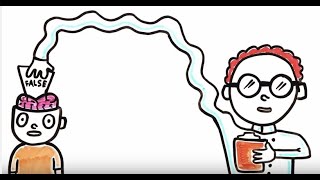
Speaker Peter Szabo explains “memory flipping,” a three-step personal-change technique: (1) identify a problematic memory by asking how it manifests, the emotion it provokes, and the earliest memory of that feeling; (2) desensitize the memory so it no longer produces strong emotion (he says this can take ~5–10 minutes for a memory); (3) flip the memory by creating a new, positive/synthetic narrative that changes beliefs and behavior. He illustrates with a childhood "lollipop" anecdote linking a feeling of worthlessness to adult self-sabotage, and frames memory flipping as the path to increased self-worth and improved life results; he also promotes a paid course with detailed instruction.
Chapters
So a lot of you guys have asked me, how do you flip the memories? Because I explained the one and the why on the webinar. For a lot of you guys, it seems to make a lot of sense. You like the idea, but how do you do it? Well, everything will be explained step by step in the course. But before that, I did want to give you at least a sneak peek so you understand exactly what happens and how we do it. It's really like a three step process. Number one, we identify the memory. Number two, we desensitize it. Number three, we flip it. So let me kind of walk you through real quick so you have a better understanding. Step one, we want to identify the memory. And how we do it is really by asking three questions. How do you know it's a problem? What's the emotion behind it and what's the root cause? Memory, where you felt that way the first time. So how do you know it's a problem? You just choose a subject you want to work on. Maybe it's that, you know, you want to start this diet, but you can't seem to stick with the diet no matter what. Or you want to make more money, but you can't seem to break through this invisible glass ceiling. You keep sabotaging yourself, making wrong decisions or procrastinating whatever the problem is. Ask yourself, how do you know this is the problem? Or maybe you look in the mirror and you don't like what you see. Ask yourself, how do you know this is a problem? If you ask why, it just reinforces the problem. Because then your brain is going to come up with all these reasons why you think it's a problem, even though there may be made up reasons, right? So pay attention that it's how, not why. So let's say I'll give you an example from my life, a real example, something that I worked on a while back was how can I make more money? And I asked myself, well, how do I know it's a problem that I can't seem to make more money, right? And I realized like, you know, I try to sit down, get work done, but then, you know, I kind of feel weird, anxious. And instead of doing work, I click on some random YouTube video, or I do this or I do that. Like I do everything but work. And of course, it's kind of hard to make money when you're not doing what you know you're supposed to do to make money, right? So then I ask myself, how does that make me feel right in that moment? Well, I Don't know, like, kind of feel anxious, that weird tension sensation in my body. Okay, and what's the first memory that pops up in my mind when I felt the same way? And the interesting thing about this part is it may have nothing to do with money, right? It doesn't have to be a money related memory, but you're going to notice that the feeling you felt right now asking these questions and is going to be identical to the feeling you felt in a memory that's gonna pop up by your unconscious mind. So when I asked myself that I remember this memory would pop up of the lollipop incident, I remember I was like, you know, 4, 5, 6 years old, I had a little lollipop. I was at my uncle's place, and I kind of walk into the kitchen with my lollipop, right? And my uncle pretty much said, or father in law, I'm not even sure what's the right naming convention for this. But he said, hey, it's, you know, lunchtime, you know, you can eat your dessert after. And I was like a rebellious kid, like, no, no, no, I want to eat it now. Right? And then, you know, for the first time in my life, I got treated really harshly because, you know, he was like a military guy, very harsh. And he ended up just literally taking the lollipop from my hand and throwing it to the chickens. And it was gone forever, right? It was in the dirt and everything. And I remember I just started crying. And you know, the worst part about it is I look around the room and I see my parents on the right, you know, just sitting down and not saying anything. You know, not defending me, not really not saying anything because, you know, we were guests at their place. They didn't want to start a conflict. And, you know, that to me, in that moment, I didn't even realize. But when I examined this memory and you know, from the future, like looking back in hindsight, and it kind of created the belief about me that I was worthless, that I was not enough. Like, why would this happen to me otherwise? Like, what did I do wrong to deserve this? Right? Because at that age I didn't quite understand. And I thought that there was something wrong with me, right? And moving forward in my life, that affected me in many different ways in terms of self image, in terms of making more money. You know, to be able to make more money, you have to unconsciously, deep down believe that you deserve it, that you are worth it, that you can create enough value in the marketplace so that you get rewarded for it. You Know if deep down you believe you're a worthless piece of shit, there's no way you're gonna make more money. You're gonna sabotage it. You're gonna have a hard time sitting down and doing the work. And it can manifest in many different ways. For me, it was kind of showing up as procrastination and self sabotage, right? So when I actually went back and worked on this memory and, and I flipped it to the complete opposite, I start to, you know, kind of love myself more, appreciate myself more, increase my value. Not in that like in a prideful egotistic way, but in a way like, you know, I am worth something as a human being. And that really allowed me to sit down, do the work and stop a lot of self sabotage. My business exploded like went to double, triple in the next few months very, very quickly. And it was not necessarily because I changed my business strategy or ads or funnels or you name it. It was simply an inner shift from the inner work that I did. You know, another thing I realized looking back when I shifted the memory, when I desensitized it, right? So let me, let me walk you through that. So again, first I identified the memory. Then there's processes that I cover inside the training that allows you to desensitize it. You know, when you recall a memory, you automatically enter a hypnotic trance. Your body re experiences what it experienced when it happened. So when you go back to happy memory, you can try it with me right now, you know, just close your eyes and try to go back to happy memory. And then, you know, try to step into your body and just see what you saw and feel what you felt. And you're gonna feel good. Your body is going to produce the same neurotransmitters, the same chemicals that you know you experienced back then. And you're gonna feel good in the now. Now we both know it's not real, it's not happening now, but your body feels as if it was happening. Now if you do the same thing, going back to a bad traumatic memory, your body is gonna produce the same stress chemicals, cortisol, norepinephrine, etc, adrenaline and put you in that same state. Now please do not go back to like a prank, you know, like a major traumatic memory. But if you just go back to memory of something small, maybe a 5 out of 10 or lower, like someone said something or something bothered you, if you close your eyes and you go back there, you're gonna start to experience those negative feelings even though it happened in the past, it's no longer true, but your body feels that way. So that's what happens when you go back to a negative memory. And that's how you know it's still affecting you because you get a bodily automatic response. So again, we cover a few techniques from hands on hard gratitude, from different tapping points from different things that allows you to desensitize it. It takes literally five, 10 minutes to do for like an entire memory. But you can take something that's like a 10 out of 10, like it's major trauma and you can take it down to like a 0 out of 10 where you literally don't care, like it doesn't bother you, like it almost happened to someone else. So that's what I did. You know, when I first recalled this memory, when I was going through this work, I literally was almost shedding tears and crying because it was so painful. But now I can talk about it just fine because I desensitized it, it no longer hurt. Now if you think about a memory, it's just a bunch of pictures, sounds, et cetera. But unless you add the feeling to it, it doesn't really feel real. The feelings, the emotions make it feel vivid, make you feel real, make it juicy. So without the emotions, it's like, yeah, whatever, I know what happened. I know it might have been really bad, but you don't really care because it's no longer affecting you. You're not attached to it, right? So that's exactly what I did. And when I was no longer attached, I could perceive it from a different standpoint. You know, when I was in it and feeling the negative feelings, it was like, I'm not enough, I must have done something bad, I'm worthless, etc. But then I could see it from a different light and I really understood that. Look, they didn't do it out of hate or because I was bad or anything. It was really an act of love that maybe not delivered in the nicest way, but it was an act of love because they just wanted me to eat the main course first and then have dessert. They cared about me, they loved me, they wanted me to eat healthy and then have dessert. Just came off a little harsh, right? But I couldn't see that before I desensitized it. And then the last step was to flip it. You see, when you start to desensitize it, it automatically kind of starts to shift. And you can also manually shift it. I just started flipping the memory and instead of, you know, my lollipop being taken away, I got extra lollipops and I got extra gifts and then I saw everybody celebrate with me. Now of course I know logically what happened. So I'm not trying to be delusional. But it's not about deluding yourself. It's about creating a new memory for your nervous system, for your unconscious body. Because if I go back to the memory now, I see a happy memory where I was smiling, where I was giving gifts and I was feeling really good. And now the new story, the new belief, the new, this new synthetic memory that I created. You know, it got me to believe that I am good enough, that I am worth something, that I am awesome the way I am and I can love myself the way I am. And with that newfound confidence and self esteem, automatically my actions, thoughts, beliefs and everything shifted. I can now finally sit down and do work. And no longer I was feeling that anxiety, that weird tension or sensation that I can't do this because then, you know, it would be conflicting with my identity. No longer would I be splurging money or making stupid decisions that, you know, got rid of the money in the first place because I could deserve the money and wealth that I wanted to create. Again, if deep down on some level you believe you're not worth it or you don't deserve this type of wealth, unconsciously you're going to do everything in your power either to not get there or even if you start making progress, to sabotage it. So that's essentially memory flipping in a nutshell. Again, we cover everything in detail, step by step, inside the course, with live examples, with examples from my life. I show you exactly how to do the desensitization, the flipping. I show you advanced ways to identify memories. But that's the bottom line. First you identify the root cause, memory behind the problem in your life. Next, you desensitize it. You take it from a 10 out of 10 in pain to 0 out of 10. Because the moment you take out the emotion, it's just a bunch of pictures in your mind. It's very easy to change. I'll give you one last tip. Like let's say you take the color of your front door. Can you imagine that real quick? Let's say it's white. Well, imagine it to be green or red or blue. You see, it's very easy to do because you're not attached to it. So you know what's, you know, the real color of your front door. But because you're not emotionally attached to it, it's very easy to change. And the same thing applies to any memory of your past. But the key, it really has to be desensitized. It has to be a 0 out of 10 for it to change. Otherwise it's impossible to change because it feels too real. Right? So that was step two, desensitize. And then the last step, flip it. You know, you take the worst thing that ever happened to you and now you flip it to the opposite. For me, it was something being taken away and it was this idea created that I'm worthless and and now it became something that I was gifted things and that I'm worthy and I'm deserving of a good life and anything good in this life. And because of this new belief and this new identity, this newfound self esteem, my thoughts, actions and results in life automatically changed and followed. Look, memory flipping is, I think, the greatest gift that I can give to any human being because it can really, truly transform your life permanently for the better. So I really wish that you give yourself this gift through investing into this course and really investing in yourself through the course and just do the work. Because if you do, I promise you, life will never be the same again. With that being said, this is Peter Salvo and I hope to see you on the inside.
More from Peter

278 Profitable Campaigns Documented Over A Year – Peter Szabo's Aicommerce Results
AI Commerce Client Feedback From Weekly Calls (for Peter Szabo's Aicommerce.co)






"I Felt Torn In The Beginning" | Wife & Husband Review of Aicommerce by Peter Szabo