Exposing the UK's Broken Education System: Peter Wood
Peter Wood, CEO of Caliber, argues UK universities teach soft skills but miss the practical and technical abilities startups need. His company now runs in-person assessments and matches graduates with employers through a network of 200 trainers, emphasizing storytelling and real-world exposure over traditional CVs.
Chapters
The problem I solve is the skills gap. Generally, the lack of trust that exists in the talent industry. It's what I've learned in business, that nobody's going to give you the right to do it. I do not know where I fit into any of this and how do I even get there? Only you can rebel against that. And if it's not happening as quick as you want, there's probably a good reason for it.
What is the state of play in the UK at the moment with the skill gap? What do you think is the biggest bucket to kind of put as many coins in as you can?
Do we just accept as a generation that there are going to be people that are going to have to stay and do those mediocre jobs and probably not be content in life because that's the way it's always been.
Oh, um, Peter, welcome to the show. Thank you for having me, lads.
Very, very excited to chat to you.
It's been a while. Yeah, obviously you guys came on the pod about a year ago, and I think a lot has changed for both of us. Well, let's kick it off.
Yeah, who are you and what problem do you solve?
So I'm Peter, I'm the, uh, CEO and founder of Caliber, which we've just launched together with the Apprentify Group. The problem I solve is the skills gap and generally the lack of trust that exists in the talent industry. We're trying to make it a much more human and, you know, real solution to what is a graduate career crisis with a huge lag in how the people are developing skills that actually are desirable in this, in this world of work. So, you Yes, that's what I've been solving. I've been doing it for like 3 years with varying degrees of success, but fast forward to now and I actually feel like I'm in a pretty good position to take it on.
What do you think makes you uniquely qualified to tackle something like that?
I think, listen, there are loads of people that are going to try and solve this in many different ways. It's going to be the people who do it with AI, and there's going to be the, the people that just brute force recruitment. But for me, like, the approach that we've taken, I think it's very true to myself. Like, I'm an incredibly curious person, and I've been interviewing people, building a community around this problem for over 3 years before I, like, proclaimed myself as a business person or anyone who had the right to solve it. But I guess what I've learned in business, that nobody's going to give you the right to do it. So, you know, especially as a young founder, you'll get belittled out the market. People will tell you, oh, don't do that, somebody's already doing it. But I think you have to believe in the nuance of what you're doing, and some of that's just, you know, proof's in the pudding. But I think in terms of my threshold for, you know, being told I can't do it and still doing it, like, I reckon, yeah, I'll stay in the game as long as they'll have me and try and give it a go.
Nice.
With—
so Peter Wood, with every entrepreneur, there's, there's typically this fault line, a before and after. So like, there's this normal life I'm going through, I'm maybe a bit of an NPC, I'm not actually awake yet, and then all of a sudden there's like this penny drop moment where something happens where you go, I'm gonna start doing something. I don't necessarily have the— all the cards yet, but I'm gonna move forward. Paint us a picture. What, what did that look like just before you dived into the water?
Yeah, I guess it's that back-against-the-wall feeling, right? You know, I think university especially does a pretty good job at making you an NPC. Like, you kind of get to a point in second year where you're like, "Oh, what have I even done for the last two years?" And I think, you know, I joined in COVID, which didn't help either, and everyone around me, like, having worked really hard to get into a good university, but not being like a natural academic myself, was just applying to these spring weeks and summer internships and starting their careers as consultants and bankers, lawyers. And I was like, I do not know where I fit into any of this. And at the same time, I'm this hugely ambitious person. And I saw— I think the effects of not knowing what I wanted to do, you know, it really— what it really triggered me to like actually sort my shit out, basically. And for me, I think that looked like, you know, knowing, okay, I've got my mates, um, you know, I'm not really a comfortable person on social media in general, but I'm gonna push through that like fear of cringe and that anxiety and just start putting myself out there on LinkedIn by platforming others, right? You know, this person said it, not me. That's kind of what you could do with a podcast. Um, I think bit by bit I realized how many people resonate with the problem I was trying to solve myself, you know, especially in the time of social media where you get exposed to like the good life and all the amazing things that people can do in the future. But that paralysis of choice leaves you, yeah, just so like, well, how do I even get there? And then I think for me it was a bit of a flight or fight moment, you know. I either double down on entrepreneurship, you know, 'You know, this is my bed, so I'm going to lie in it.' And yeah, threw so many things at the wall. I can talk about other ventures if you want, but like a water filter business, putting on hackathons in the US, you know, The Graduate Guide, all the different lives it's lived, now to Caliber. I think I feel like entrepreneurship is just like, it's just part of me at this point. And it's weird, like I don't know, it sounds weird to say, but I couldn't imagine doing anything else at this point. And that's a pretty cool position to be in at 24, you know, and actually knowing what you want to spend the rest of your life doing. Um, so I think, yeah, I— does that answer your question?
Oh, I can't carry my own pipeline.
Oh, it looks heavy.
It's really heavy.
I think it's because I've only been calling people that are 98% accurate with my current data provider.
Whoa, does that mean you're just speaking to decision makers all the time?
All day, every day.
But I bet you won't know who I'm using.
Hmm, can I guess?
Try.
Is it Prospeo?
What, you mean P-R-O-S-P-E-O dot I-O?
Prospeo.io. 98% correct data.
There's a link in the bio. Try it for free now. That's prospeo.io.
Hmm. So you said you were hugely ambitious, but there's like a period before action. So like, it sounded like there was this like ambition, these goals, these dreams, but you probably like, but how do I get there? Or what am I doing? What, what— give me an example of that.
I was just so intimidated by them, to be honest. Um, and I think that, you know, you can go back as far as you want, but like my childhood, um, I always was this sort of innately curious and somebody who cared a lot about things. And I think that kind of got bullied out of me at school a bit. And I think that happens to a lot of people and me without those two characteristics is not really much. And so I think when I slowly refound myself, I really ran so intensely away from that feeling of losing yourself towards, well, I wasn't sure at that age, but just towards a feeling where I was like, at equilibrium of what I wanted to achieve and each day felt like I was doing the best thing that I could personally be doing for me. And then, like I said, university gets in the way and I think, yeah, like it's just that— I think it's just you do what everyone else does and some of that's great, whether that's club nights, going to the pub, whatever, but I think even like degeneracy and that, like, that element of your life. I think learning to find your own relationship with that is kind of like an underspoken thing in the world of work and entrepreneurship. Especially if you're trying to build something for your own, it's very manic-depressive. Your ambitions, they're so jumbled up, and the only way you're going to do it is by putting some order on it and bringing some other people in to support that mission, be that employees or just like serendipity from, you know, people that actually care about seeing you win. And so I think that ambition has always been like, so it's just dictated my life a lot, right? And I, and so now I really put an onus on listening to it, basically. And I think, yeah, that, that's serving me well at this point in my life.
So talk to us about the skill gap and the problem that you solve. What is the state of play in the UK at the moment with the skill gap?
So, I guess you can go back to secondary school and the education that's happening there, all the way through to university and whether you should go or shouldn't, and then how that actually applies to what the working world wants. I think part of the problem, the skills gap, is that this education system got built for the service economy, and it got built for companies that were able to grow into behemoths in a sort of stable way where they could do a lot of the workplace education through grad schemes, and they don't exist anymore. Part of that's like a macroeconomic thing, right? You know, especially with AI, like, if you can cut costs, you will at the moment. And what happens is that early talent now, they've been through an education system where you know, in theory they've developed, you know, some good soft skills, you know, they've lived their life, uh, you know, they've got that out the way. And, and, you know, should you have studied the humanities, I mean, for example, you might understand, uh, basic things like how to write, how to communicate, um, but the application of it to the world of work, like if you look at startups and scale-ups, which is a market I'm focusing on, you need the people you hire to hit the ground running from day one. You can't really afford for them not to, and then you bring in probation periods and things like that. For an early talent, someone, even if they got a great degree from a great university, which by the way, it's not a lot of people, lots of people go to university and question why they've even done it in the end. And it's pretty humbling to everybody, I think, the skills gap, because the way things are changing, the skills that are needed, whether that's hard or soft, like hard, just talking tech stack, you know, like having a sort of, yeah, having an idea of how to use platforms that will make you more efficient from day one. That isn't something you'll ever learn in the education system, right? And how to actually be confident enough to say what you think, that's not something you get in the education system. How to like understand different people of, from like different stakeholders within a business, it's not something you're going to learn. And even business degrees, it's, it's, it's not applied enough education right now. And so I guess, yeah, that's how I see the skills gap, and, and we're really trying to bring something new to the table of how they get solved.
So, so if I put you in third year of a business studies degree today, and you're well aware next year I'm going out to work and get my first proper, proper jobs and stuff, what do you think is the biggest bucket to kind of put as many coins in as you can?
Oh, um, I think obviously, like, a caveat of saying it's different to each person, right? For me, how I should then build my career and build my skills is going to be different, um, to, you know, someone who's going to be more technical within a business, but I think you can almost— I find it really useful thinking, okay, if I was in a very small team and you've got CEO, CCO, you've got, um, Chief Operating Officer, you've got Chief Revenue Officer, you've got Chief Marketing Officer, who would you be within? Like, let's say it's a group project, who would you be in those, like, in that team? You know, really try and apply yourself to, like, You've got no support, you're not just a cog in a big machine, you have to— you're not going to be in a company if you can't contribute to those. And I'm not saying that they're going to graduate and become a chief whatever of any company, but it's a good perspective to think like, okay, maybe I'm the guy who's, you know, more savvy with partnerships and, you know, making things happen, and maybe I've got a bit more of the gift of the gab. Maybe you end up being way more technical than you think, especially now. Like, being a coder, you don't need to be completely hard skills. Like, you can just be really curious and on it with what the market wants and have a lot of success as a, you know, more technical person within a business. So I guess short answer is just find a way to get exposure, whether that's working with your peers and colleagues or making someone empower you with responsibility that actually applies your, your skill set and yourself to a business. That's what I would do in my final year of business studies, because you can have all the business acumen that you want, you can tick all the boxes, but it just doesn't at all reach the employers as useful. Like, they just don't care anymore, especially in the world of startups and scale-ups. If you cannot do what they want you to do in order for the business to succeed, they're not like— brutally, they're not going to take that risk on you. They're just going to go for someone more experienced. You objectively can say that.
So the— so when we think with our solution caps on and we think about let's focus on soft skills, it, it's really hard. Like, you, you're, you're shortening the, the gap between them. But when you think about how you can teach those soft skills in like a low-stakes environment So rather than it being a big lecture hall and say like, this is how I'm going to teach you how to be more confident in what you're asking for, what are some of those solutions that people can start applying from a low-stakes point of view?
So I think because soft skills, right, that there are some more hidden ones that I think like you might get, you might see on a JD, for example, a job description. The basic ones are communication, confidence, curiosity, coachability, all these kind of things that generally make you employable. But I think there are things like conscientiousness, empathy, being a good person, and a lot of the ability to portray that and show that in a world of work it's changing because CVs just are not the way to get work really anymore, unfortunately. I say unfortunately, like, I'm privileged enough to have never actually made a CV, but that's partly because I just rejected the idea of going into the corporate world at university. But like, if you think about it, like, why would you hire someone off that? Like, sometimes, like, I read people's when they ask me to, I'm like, that's not you, I know who you are, like, that's not who you're going to be hiring. So I'd say, like, in terms of soft skills, it's a new style of storytelling. You don't need to have a podcast, you don't need to have a personal brand. I'm not going to prescribe that on anybody. It's really useful to do it if you want to do certain things, but always think through the vein of, like, storytelling and being an infectious person where people want to buy into you, because otherwise those soft skills just exist in a vacuum. And, you know, I think what's also really cool is that in the world of startups, like, employment it's not as rigid. And I think, like, take our most recent hire. He did a university degree in business marketing from Edinburgh, but he did videography production freelancing for 7 years since he was a kid and never stopped doing at university. And he is so much more talented than any other person I interviewed that had been 10 years in, in industry, like, working for an agency. It's just like staying in touch with your true self. And like, the more body of work you have to prove that so people can't call you bullshit, like, the better it's going to serve you.
Okay, so that, that, that makes sense. Like, the video side of things is like, you've got this body of work, and I think you're right, like, you don't need a personal brand, you don't need a podcast, or it's all about like showcasing who you are. But if we think, right, you're a young grad, you're coming into like, I don't know, but I might have some like marketing or some operational skills, but I don't have this classic CV. Can you think of anything anecdotal that someone can do or that you've seen that is a good way to like, I'll tell you a story without being 2001?
Well, I can tell you our solution, uh, that we, we enact as a business, uh, which is that we do all of our assessments in person. Um, yes, we do screen people to get in person, but really that's more of a cultural test that we've built, and it's not dictated by what university you've been to, what degree you've done. But then when you're in person, we are basically— we have employers there on the day, so they get to— you get to meet employers, you get to actually have that feedback loop closed and learn where you're actually at your career, should you get a job or not. But you are being— you're working together with other people, you're putting yourself in a realistic office environment where you're, you're going to be uncomfortable, you're going to have a, you know, you're going to be thinking, you're going to have coming up with ideas, but having the confidence to say it in front of a room of people is actually the only way that you can be useful in a business context. I don't know if you guys agree, but like, if you had someone come to your business and they expressed all these like really amazing characteristics in the interview process, you know, they, let's say they kind flagged it a little bit in the online interviews, and you get in person, they're just like too scared to actually say what you, you know, you employed them for this, and they're not even showcasing it. Like, I— we are putting it all in person because that is the reality of business. Um, and then, you know, it also gives us a way better idea of the person so that when we provide our upskilling, um, you know, we have 200 trainers in our business all across AI, data, marketing, sales, um, and we can apply it to the right person in the right way. The more in-person they're assessed, and the more we can basically create this— I think about it almost like a video game where you've got those hexagons, like you can get, like FIFA skill points, whatever, you can actually see where you're at in terms of your ability right now and apply very strategically 'Okay, he's really confident, he doesn't— so he doesn't need coaching in his confidence, he just needs more of the hard skills so he can be more professional when he joins,' or someone completely different, it's like, 'Okay, well, this founder's associate role, like, they're really operationally savvy, but they need to get a bit better at marketing, so how can we give them that as well?' And I think it's just a really— I don't know, it's fascinating, to be honest. I mean, I guess that's why I'm doing it, but Yeah, that's what that, that's, I think just bring it in person is genuinely my answer and I'll let you know if it works.
Well, we were really connecting with that guest and I think that we're connecting today, Mr. Thompson.
I don't. But let me ask you a question.
How do you connect with qualified prospects at an alarming rate every single day?
Great question. I've been using Nookz and so many people think that Nookz is just a dialer, but actually it's so much more than just a dialer. It helps you find people. It gives you the intent signals so that when you reach out to them, you've got a great tool to sell to them.
Wow.
So it's intent and intense.
Wow.
But how would I get in touch with them straight away and start using them in my sales team?
It's nooks.ai.
Nooks.ai.
That's N-O-O-K-S dot AI.
I, I'm thinking about young people now, probably like, we're going to sound old when I say this, but you've come up for a generation where the algorithm understands you. You're very embedded with social media.
So if I do have a bit of like entrepreneurialism or business savvy.
I'm probably seeing a lot of Stephen Bartlett, but I'm also probably seeing a lot of like get-rich-quick schemes, do a bit of day trading, why not get into crypto.
Yeah.
Do you think there's any con to people looking at very short solutions on their phone then coming out into the business world?
I mean, like, algorithms are echo chambers, aren't they? Like, uh, and you can get stuck in these echo chambers really quickly without ever voluntarily decided to be in them.
Yeah.
So I think that's something to be really wary of, is like, you know, it's never been more important who you're influenced by online. I mean, you can go completely off it, but I don't think that's the answer, to be honest. I think the internet is one of the greatest inventions in the world. Like, I'm very optimistic about its future because, you know, as a history student, I look at You know, time's gone by, like information has always been power. And, you know, whether it's the creation of the radio or then the TV and the weaponization that powerful people do to like try and dictate the narrative, you know, Nazis getting in power or like, you know, awful things happening. Right now, our algorithms are controlled by very powerful people. But I think you're starting to see apathy from the users. And voices are starting to emerge that previously wouldn't, kind of as a counterweight where they are not giving you just this course selling, fleecing you with information that may have worked for them but won't work for everyone. They're actually just trying to be very vulnerable. And I think podcasts, things like that, if you can find the right ones for you where you feel heard and you're genuinely curious and you're not just doing it because you were told to, or it feels like what everyone else is doing, like, that's such a force for good. So I guess it's a long way of answering your question, but yes, do it. Like, but just really, really careful when you're doing it, because I definitely did. And I think, you know, it's just given me a wherewithal that I couldn't have had before.
And then I suppose to follow up, there's a thing with AI that I think a lot of people talk about on LinkedIn, particularly around young people, is even things like Claude updates are advertised as we now do the work of the junior person. So like the paralegal, Claude might do the work of the paralegal. So that bottom rung of the ladder of getting into like a big law firm or something, yeah, it's just become much harder. So how do you think people can make sure they're still kind of relevant against that?
Yeah, I mean, this is the thing, like, it's gonna be— there's gonna be so many teeth and problems in this changeover of what role young people play in the world of work. But if we get it right, genuinely on the other side, it's people feeling more empowered, doing more, achieving more, and doing it from wherever they want. And there is— perfection never exists, it never has throughout any period of history. But I think you have to think in your mind of like, I don't know, like, I don't want to come back to ambition again, but I have this maybe somewhat delusional belief that everybody has ambitions and everybody is ambitious to an extent. Yes, you have more Type A people that express it or apply it or shout about it more, but part of depression or feeling really down is not being able to live up to those ambitions. And I think you have to be the starting point for anything career building where, you know, let's say AI is going to take your job and everything's bad or whatever, only you can rebel against that. And I think you need to have your sort of personal life ducks in order and go like, right, well, what do I actually want to do with this world? Like, in this world, how can I get other people invested in my unique idea of, you know, career building, world building, whatever you want to call it? And And so I do feel sorry for the people that have done every single thing they were told, got into a great university, got a first, and now they're applying, and their parents would have been maybe in law, let's use that as the example. They just wanted to live the life that their parents told them was a good life and have that nice house and stable career where you go into the office and you do it. And to be honest, I think there is still room for those people, but it just can't be as many as it was because, you know, the world's basically gone. We need to do more and be more as humans, like, and the tech's advanced way quicker than people's willingness to adapt to it or like conscientiousness even.
When you're talking, Peter Wood, you've taken me back to a point where I was 15 and I was sat in my local town. You met you, but you're kind of describing two different sides of the coin. And there was a guy that I'm friends with, and I was telling him about all these big ambitious dreams and goals I had. And at the time it was probably to do with music and traveling the world and getting out of this small town that me and Zach grew up in and doing all these big things. I remember his response being something very similar to, oh, I'm just probably gonna stay here and get an admin job because someone has to stay back and do the admin jobs. And that was even at like 15. And as I've got older, like, yeah, I know, I'll tell you who it was off air and you'll say, yeah, agree with that. Um, but, but he was just like, yeah, that's what I'm gonna do. So all of a sudden— and it's not to say like, well, I'm, I'm more ambitious and you're not, so I deserve it, or whatever— but from a young age, only, only now, fucking 18, 19 years later, do I realize there's probably that level of like agency. Whereas I'm like a, show me a problem and I'll, I'll find a ladder to get over the wall.
Yeah.
Whereas even from such a young age, people are going, my life probably won't be that, and that's okay, I'm settled to that.
The key is like is he like content in that life? If, if he's— if you're content in it, like, surely there's no problem. Like, and that, like, you know, the pursuit, you know, not to make it overly wishy-washy, but why'd you do anything if you're not happy? Like, genuinely. And so if they're— if people can be lawyers, if people can be, you know, admin people, we need them, great, you know, like value-add, no mental health problem, like brilliant. But there's loads of people that just aren't that, and there's loads of people that have been doing that before that didn't like it anyway either. So Nothing's ever been like all okay. It's just being unveiled. And like you said, like companies are forcing people to be like, yeah, you're not gonna have a job. And it's like, it's, it's just really intense at the moment.
But you, so you're on this mission, and I, and I think that what you're doing is funneling into these highly ambitious people and giving them this skill gap. And I think you will, you will succeed. But I think there will be this hub in this next generation. I think you see in every generation of low-agency, unambitious people.
Yeah.
And I imagine that you probably do also spend time trying to fire these people up, motivate them, and there's probably like a small funnel of those that you can get through to the other side. But actually, do we just accept as a generation that there are going to be people that are going to have to stay and do those mediocre jobs and probably not be content in life because that's the way it's always been.
Yeah, I mean, it's, yeah, it's a huge question which I obviously don't have the answer to, but, um, so I can only speak to my experience with the Graduate Guide, um, Prize Calibre, is that, you know, I, I don't know, it's definitely not— it wasn't a waste of time, but I actually gave myself a lot of problems. And, you know, even, yeah, just like I stressed myself out for a long time because I was trying to help everybody. And even just the way that we branded ourselves and narrative was, it was really, we were trying to help everyone so we weren't helping anyone, it was the reality. And so we've lived lots of different lives, done, I mean, tried so many different things. And ultimately the thing that, the place that we're in now, like I'm really privileged that The Graduate Guide can remain this completely uncommercial, very collaborate collaborative brand partnership-based community that's hugely top of funnel where everybody is welcome. And it's meant to be this sandbox experience for careers that everybody, hopefully everybody that wants support, can go in there and feel like, oh, there's something I can go to this week where I can get exposure, I can take that exposure, I can apply it with the upskilling that we've got in that community, and then I can actually be exposed to different career paths and jobs off the back of it. And That's like the dream on that side, but fundamentally the only reason I got to this place with The Graduate, I could be there, was that I built a commercial model that worked for businesses. And in that, I actually only help the people that I can place, and I only help the businesses. And we do apprenticeship training, we do much bigger consultative projects on companies, but fundamentally we're still trying to get people into work. And you can, in that process, you can only help who the employers want. And so, you know, for me, that like, I was just a really, you know, real whack in the face, uh, working out, okay, I want to do it for everybody, but what, in what order do I have to do it in order to actually make that a viable dream?
Fill your cup first kind of thing. So then take us back to the, the earlier days. So you, you say, um, we were trying to help everybody, so we were kind of helping nobody. Talk us through maybe some of those different stages of The Graduate Guide and what that looked like?
Uh, yeah, so it started as a podcast. Um, I was in the pub where all great ideas happen, uh, and I saw my old head boy and I was like, that guy's smashing it in life, I need to spend more time with people like him. And that was literally the idea. Uh, you know, I got my brother to make a— no offense to them— quite crappy logo in a week. Found a studio below a pub near my university, and I just started inviting everyone, anyone. I don't know, again, I was back against the wall, delusional optimist, down to a T. I think my third episode was with the MD of Google, which is just hilarious because I was definitely not a good host. The equipment was definitely bad. And he was just so nice about it. And I was like, it's those moments like that. Maybe if he was a dick to me, it just might not have happened. I might be like, why am I doing this? But I just, I don't know. In the beginning it was amazing because it was like, my friends kind of knew me as the person who was always going to do something different. And so it wasn't completely out of place, but I just loved it. I was still at university. I spent no time doing work, like uni work, but still managed to get a 2:1. That's all you kind of need. And yeah, I built a water filter business that same year. I was just in love with this new sort of way I could explore my curiosities on LinkedIn, just messaging people and going, oh my God, he replied. I can speak to him now. I could maybe get to know him. I imagine. And so I just ran with it, and, you know, I never made it my business, I never made it my career, never claimed to be a founder or anything. I took a grad job putting on events in the US, which came from the podcast as well. The Waterfields business came from the podcast, which Bear Grylls now owns, which is mad. Nothing to do with me really, but still quite cool. And Yeah, and then when I decided to go full-time on it eventually, it was like, okay, it was still like, what's this going to be? I have no idea. But enough people were bought into my journey where they felt like an inevitability of it. And so we, you know, but we tried, you know, communities, tried to be in events and podcast media business. Turns out there's not huge amounts of money in that unless you're like the top dogs, and I certainly wasn't. We tried to make people pay for the community we did and then end up refunding everyone because we're like, this is just bollocks. We built different prototypes. Basically, no one could ever tell us that we weren't trying, but nothing was really sticking. And it was when basically the raising investment process was really where we got clarity on what we wanted to become. You know, we'd work with big clients, we'd place people in roles, but whether they went on to succeed or not was completely out of our control. And which is basically just what recruitment is, they just go like, yeah, have them, like, it doesn't work, come back, we'll give you a free replacement. And I hate that for recruitment, and why I'm trying to change it with upskilling and training and development, and like really like putting an onus on making that person work, you know, both for the candidate and the employer. And I think the combination of my network, the voice I'd built on LinkedIn, The rabbit-holing I'd done, like how long I'd stayed in the game when I had no right to, that caught the eye of Apprenticefire, and they basically were like, yeah, your business model is shit, like, but, and like, at this rate, you know, it's not— you're not going to make money doing it the way that you think you're going to do. But that was when everything changed because we were getting— people were angel investing in us, but I genuinely, I look back and I'm like, what were they investing in? Because I, like, they were just, I guess, investing in me to figure it out. But I'm so grateful that it's all materialized this way because the group are so amazing. Like, they're all, you know, ex-founders that are building it. It's 250 people, like, but a great culture of young people who are really ambitious. But I'm still a founder, and I'm not, you know, I have all the empowerment I need to solve the problem that we've already been speaking about a lot. And I think the skills gap, you know, even from the beginning, that is what I cared about, and it's just gotten worse and worse and worse since I started. So, the market's kind of gotten, you know, as much as it's not a nice thing that skills gap has happened, the business came from just staying in the game long enough, if that makes sense. And I think people say this to you, right, and it doesn't mean much when you're in that phase, when nothing's happening. And, you know, like, you're like, oh, you know, people are questioning it from the outside. But that's why I think you just have to be in love with it more than anyone could, like, imagine. You know, why I kept doing the podcast was that even if I had a bad day, even if nothing was moving forward, I could, I could scale my network if I couldn't scale my business, you know. So I think just have been aware of all of that, like, it's so useful for this point I'm at now. And like Yeah, like, obviously I'm only 24, and I even just talk about it now. We have— it's mad how much actually happens, even when at times it felt like nothing was happening, right?
There's, there's a lot of people who want to make the ask on LinkedIn like you've done, asking for guests. Maybe there's people who want to ask for a sale or whatever it is.
Yeah.
In terms of you reaching out to people, what did you find really worked?
Just like, like playing into absurdity a little bit. Like, obviously your guys' content as well, like, it actually gets referenced in our business. Like, yeah, these guys are like great because within sales it's so like, you know, but like just having fun with it, like putting your person like, what's the worst that can happen? Especially if you're not attached to a corporate brand, like, where obviously in that case you do need to, you know, play within the guidelines. If you're not, like, what excuse do you have not to like put some effort and You know, I send people videos, like, I like— and now with our producer, like, we make way too overproduced videos to, like, send to people to, like, just ask to go for a coffee, or, like, you know, just, just things that— even with the content I put out, it's trying to, like, be super critical. Would I respond to that? Would I stop scrolling for that? And you have to be so honest with yourself and go, like, I mean, I've put out content I'm not proud of, but I've always tried to not be like everything else on the platform. And if you can do that it's so easy to win on LinkedIn, like, because genuinely so few people are doing it.
Give us some examples of people you've reached out to and had positive results with.
Uh, well, with my documentary that I'm doing now, um, like, and I was just like, in case it doesn't happen now, just like caveat, it's like I got their attention. It was like, message the CEO of IBM with this, like, me opening the door going like 'Hey, Nicola,' and then proceeded to tell them about what the documentary was with techno music in the background. And then, yeah, she was like, 'Sounds really cool, can you speak to my head of comms?' And they were like, 'Thanks for the innovative approach, it's refreshing.' And you're like, well, if that kind of company and that kind of person is appreciative of it, probably everyone will be. So, but then, you know, if they're not, what, you know, whatever, like, you know, just crack on and on to the next.
The way I've been thinking about it at the moment is like swinging big. And I know that's like a real like baseball phrase or something like that, but you just, sometimes you just gotta throw so much shit at a wall. But like, but like, okay, you saying I'm gonna email the, the CEO of IBM. Yeah, there are 99 kids in their bedroom who probably want a job at IBM who would never even think about sending that message, and talking about like you don't need a CV, but if you pick up the phone or you say— even if you stumble through or you struggle with it, just by showing that initial 'I thought to do this' and like the video and stuff like that, I think that there's a, there's a fine line. What you just told me there doesn't scream cheesy. I had another guy sending me a meme the other day of a cat crying because I didn't reply, and I think like that's fucking well annoying. But I think like it shows the, the thought, and the, um, I'll send you the name. It's the reciprocity. Um, so let's talk about the acquisition because people will be watching this and people will be wanting to be in your shoes. They want to know how you did it. So you've been building this platform, The Graduate Guide, and then they'll want to know, you've got this opportunity on the table. I guess, one, what does that opportunity actually look like behind closed doors?
Yeah.
And two, how did it come about?
So I'll answer how it came about first because that just makes more sense in my brain. Um, it was from the podcast again. I interviewed someone called Sarah Skelton, um, who was just an MD of their sales company. I didn't know who the Apprentice by Group was or anything. And the reason why I interviewed her is because previously to that, I interviewed James Wise, who is the Principal Balderton, which is a VC. Turns out, you know, his stepdad is the CEO of the group, and like Sarah saw it, and so I started getting friendly with them. I came to their Christmas dinner not thinking any of it, and like, you know, this whole time I'm like, I'm trying to raise investment, and I'm like, you know, we were just kind of— I guess it was quite natural and authentic because we were just basically dating in business terms. And like I said, like, I think everything— like, we had other acquisition offers, we had other, you know, people investing. And each different step, I now am so appreciative of, because basically what— but by the time we got to Apprentify, we'd been getting grilled by people on our business model for months and months and months, and learning so much about business in that process. And, and really, like, Yeah, just like refining something to a point that Apprentify could take it. And basically, you know, they're private equity backed, um, they, they have huge amazing clients, they have a great brand name, um, and they saw us for— they saw in us like what they couldn't have or what they don't have, which is like that marketing brain, that, um, that we are the age of the people we're trying to help, you know, just that, that entrepreneurism that if they gave us the right investment, but not just investment expertise as well, which is why it was so big for us. It's like they told us what was good and what wasn't. They really saw us and understood us, but they didn't just like say what we wanted to hear. And I think that whole process probably took about a year. Um, And it should have done, to be honest. Like, as much as, you know, oh, I just want it to happen, I want to announce it, whatever, like, you know, you get all the validation online. It's, it's like when, if you're trying to act with intent and quickly, things will happen as quick as they can, basically. Like, and, and, and if it's not happening as quick as you want, there's probably a good reason for it. Um, so now basically the opportunity is We've built from scratch a business called Caliber, the purpose of that being that the Graduate Guide is a really powerful asset for us as a business in that it's— a recruitment business could not create the Graduate Guide because they just scream of, you know, a recruiting business, right? But this, the Graduate Guide, is always my baby. It was completely, you know, nobody had any control of it, it was just me for 3 years. And so we've taken all the commercial element out of it. No sponsors, no anything, just all partnerships, all, you know, like I said, this kind of sandbox experience for people to come in and explore different career paths. Should somebody want to join a startup or a scale-up, we are, you know, and we've been there for them when nobody else was, whether they're still at university or they're in a job at a corporate, and they've like a very authentic way of discovering new jobs. And then when they want to get placed, we have this amazing funnel to then go, right, come get assessed in person, come, yeah, come like see what jobs you are, meet some employers. And then when you get in that job, we've built a training boot camp with our 200— team of 200 trainers. We're Ofsted Outstanding rated, like this is no influencer course, this is like the pinnacle of, you know, top 1% of trainers in the country. And we get to bring that to market as something that hasn't yet been offered as a viable thing to scale-ups. And so that's like, I don't know, even just saying it, I just think it's so exciting, and I can't believe like that pub, you know, university basement thing has become this. And yeah, and you know, just aside from that, like for me working within the group, you know, I also get to wear that hat. Apprenticeships, I could— I probably won't get into it, but it's like crazy how misunderstood they are. You know, just a quick thing, if you pay over a wage, uh, if your wage bill is over £3 million, you pay 0.5% of that wage bill into an apprenticeship levy. If you don't spend it within 12 months, that's just a tax on your business. If you do spend it, you get free upskilling. And it's not the thing that you do instead you go to university. A huge, huge percentage of apprenticeship spending is on leadership and middle management and, you know, on AI. And but companies have no idea about it and it's just leaving their accounts. And they're like, me being able to speak to businesses now, like, it's crazy how, I don't know, like It's nice to have something that people actually kind of want, right? Like, early talent, I say it's not that they don't want them, but the world is not exactly screaming out for it. Like you said, you've got Claude going like, why would you do that? Why'd you hire that? Um, but apprenticeships, it's an amazing upskilling asset. And so yeah, that's, that's basically what we do now.
It feels like a really exciting time, and I think like only in hindsight when you think about like this mosaic is like finalized years down the line. So I think like in 20 30, 40 years, you'll see. And there's probably going to be points wherever we end up with AI, we might all be dead by then, who knows. But AI and the apprenticeships and the skills gap will probably kind of lead the way. So I think you're, you're doing some big exciting things, and I think keep swinging big, Peter Wood. Um, really enjoyed this conversation. If somebody has listened to this the whole way through, what is one question that they should ask themselves?
Why did you listen to all of this? I think just maybe something as simple as, like, you know, has today feel like you were doing what you were meant to be doing? You know, and if it's not, it's not to say that everything's, you know, falling apart. Like, how, you know, don't fall into that trap. But just try and be a little bit like, have a bit of perspective, be a bit critical of like, you know, what are you doing to make things happen? Because like I said, I've had many, I've had months, years of like questioning what I even did in that period. And now, you know, it's crazy how much can I can do in a week. And I think the only difference between me then and now is like being super critical of myself, but also like being kind to myself at the same time. Um, so yeah, that'll be my answer.
Thank you so much, Peter. If people want to find you or work with you, how's best to go about that?
Uh, LinkedIn, Peter Wood.
There you go.
The place. Yeah, I wouldn't follow my Instagram.
Thank you so much for joining us today.
Cheers, guys.
More from Peter
Job EXPERT Peter Wood on The Worst Job Market in 10 Years!! How to Build Online, Upskill & Find work
Peter Wood: Founder and CEO of the Graduate Guide announcing his new startup after getting acquired
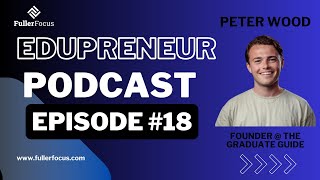
Peter Wood: Helping Grads Build Careers & Companies – Founder @ Graduate Guide | EP18