Peter Wood: Helping Grads Build Careers & Companies – Founder @ Graduate Guide | EP18
In this interview, Peter Wood, founder of The Graduate Guide, walks through his unconventional career path from a history graduate to a young entrepreneur. He explains how a university‑level podcast, created to explore startup careers, evolved into a community‑focused recruitment and employer‑branding business that connects top‑performing graduates with early‑stage startups. Wood recounts early hands‑on experiences at a water‑sports startup (Water2, later acquired by Bear Grylls Ventures) and as head of events for a blockchain education firm (EZA), highlighting the lessons they taught him about founder traits and his own unique value proposition. He details the transition from a simple interview series to a multi‑channel platform offering events, exclusive job boards, and a curated community of the top 5% of applicants, emphasizing intent, curiosity, and active engagement over traditional academic tick‑boxes. Wood critiques the current landscape of generic career advice, “gurus,” and personal‑branding hype, arguing for more accessible, digestible guidance rooted in real relationships. He stresses emotional intelligence as a core skill for connecting people, outlines the future vision of scaling the Graduate Guide’s impact while remaining focused on tangible outcomes rather than vanity metrics, and shares the biggest personal challenge—maintaining self‑belief amid criticism. Throughout, he offers practical advice on outreach, learning methods, and the importance of treating one’s environment with respect to unlock opportunities.
Chapters
Hey Peter Wood, founder of The Graduate Guide, thanks very much for joining. It'd be cool if you could start by introducing yourself.
Oh yeah, no, thanks very much for having me. As you said, I'm the founder of The Graduate Guide, which is something very different now to what it began as. In the beginning, it was a university passion project, it was just a podcast that I started because I did a history degree and I didn't know what to do with with that history degree. And while everyone else around me was sort of automatically applying for the same roles, I saw this world of startups and, you know, I really wanted to meet the founders behind them and explore the different career paths to have within them. And so yeah, I took it upon myself to create my own career guide. And yet 250 episodes later, having sort of, yeah, put dip my toe into lots of different bits of the startup world, you know, I was involved in building and scaling a water sports company, working as head of events for a blockchain education company, throwing a lot of stuff at the wall and seeing what stuck. And, uh, finally, at the age of 23, I've found out what I'm meant to be doing in my career, uh, you know, connecting really incredible people with other incredible people and helping them to build their businesses. It feels like what my career is going to be, and the Graduate Guide is an awesome lens to be doing it through right now.
And when you were doing history at uni, how did you envision your career being? What did you want to do then?
Yeah, I mean, you don't, you don't pick history for career direction, I don't think. Yeah, I, I love history a bit more now I'm graduated, but I did find like your sort of whole livelihood and feelings of achievement and success being dictated by a professor. Giving you a very subjective mark quite difficult. So I really didn't know is the answer. I found it all quite manic depressive going to university, balance careers with actually trying to get a good grade, and I was at a very competitive university. So yeah, found that, that tricky. But yeah, I always knew, I think, I probably fell a bit more onto the entrepreneurial side of things, and you know, I didn't see corporate ever fitting my mould or bringing out the best of me. And I think that's about all I knew when I was— before I started the Graduate Guide.
And have you always been entrepreneurial?
I mean, I'm definitely not that archetype of selling sweets in the playground and everything like that, but I think I've always probably had too many ideas to know what to do with, you know, a lot, some more bad than good. But I think the other thing is I've probably asked asking a lot of questions that a lot of people weren't, which I think is a big trait in entrepreneurial-minded people, and kind of not accepted just the first answer I was given as the right one. So yeah, I guess in that sense, yes, but I wouldn't call myself like a wheeler-dealer form of entrepreneur.
Yeah, that's interesting now you say that, because there is like the wheeler-dealers who've been selling sweets as kids, selling things on eBay and always doing it. And then I feel like you've got some people that fall into it. They've just been like a head at a company, then accidentally started a business when getting redundant. And then you've got people in between like yourselves. So that's interesting. And you said you had experience at some startups. I think you said the water filters and that sort of thing. Could you tell me a little bit more about that?
Yeah, so I think, I mean, now these sort of experiences are actually being coined as genuine career advice to give to people. But for me, that was essentially my first exposure to what building a startup actually looked like, an entrepreneurship apprenticeship, if you like. And yeah, I met an incredibly smart person who dropped out of UCL to build this company called Water2. Yeah, I was employee number one. I forced him to delegate some work to me as his student. I thought I could do the sales and relationship building side of things, and I did. That's what I did for a year. I dedicated more time to that than my degree, and I— and yeah, we we had really good traction and success with it, and now it's gone on to be sort of acquired by Bear Grylls Ventures and reached incredible heights. And, but for me, I didn't want, I didn't see a future of myself in that business. And I kind of always knew that I wanted to start one of my own, or actually straight after I went into events because I knew that events, I thought, would be something that would be ever-present in my career. And I think that was probably the right decision for me, actually.
How important do you think that experience was for you?
And yeah. I mean, I think it probably taught me what kind of founder I'm not meant to be and what kind of traits I wanted to take from Charles. Yeah, we're very different people. And I think, yeah, now with my co-founder of The Graduate Guide, it's been really useful working out exactly what, what I can add to a business before actually starting my own, if that makes sense. Because I think sometimes that can be the problem and you don't know your own sort of USPs. And I think that experience definitely got me a lot closer to it.
Yeah, definitely. You need complementary skills and to know exactly what you bring, or else, yeah, it's not going to be optimal. And then you said you worked in events.
Was that for a different company, or Yeah, so events, that was for a company called EZA. It's a blockchain education company. And again, yeah, they had incredible success, very successful founders. You know, I was empowered a lot. I was, you know, someone just graduated from university, you know, given the responsibility to put on hackathons in the UK and the US, probably the hardest event type to start out with. But even when I was in that job, as much as I was enjoying what I was doing as well, I think for me, I could feel that urge to really build something of my own. And the fact that the graduate never stopped that whole time, they never stopped doing it. It was always that. It kept sort of drawing me back in. And also the job market was only getting worse and not better. Yeah, for me, that experience was a necessary one, but to be building what I am with the experience that I have But yeah, definitely a stepping stone.
And you said The Graduate Guide started off as a podcast. Could you tell me more about that and its evolution?
Yeah, I think a lot of people start podcasts with this, uh, this dream of becoming famous from it, or you associate a lot with vanity metrics or the people you might get to interview and being able to show your mates. Like, for me, it really wasn't about that. I didn't have any branding, I didn't have any production team, I didn't know who— I didn't have a network that I could interview, but I knew that, again, I thought I could be a good interviewer. I thought I like to ask questions that maybe other people aren't, and I think that it didn't really exist. It just didn't exist, you know, a student asking the hard questions on behalf of other students. Given that the job market was in the state that it is, I think it was really well received in the beginning, but it was by no means a viral sensation. So I had just enough to keep me, you know, just enough support from external people to keep me going. But I think predominantly I was doing it for myself. Like, I could really tangibly feel like those relationships I was building, and every single episode's been in person, like, all of them so far, and I think that's been very tangible to me. You build that rapport and build relationships with people who are, you know, they want to see me win now. And that's a really powerful force in business. And again, it's like when I started it, it wasn't really with the intention of getting that, but I think now I would advise anyone to have some form of, some lens to actually build relationships through that's not just like asking for help or, you know, you know, very frequently asking for a coffee. I think that in this age of social media, being able to have a piece of content that you can put back into the world that's been interviewed through your own lens and sort of bit by bit get exposure to a different audience via the person you interviewed is, yeah, it's kind of like a why wouldn't you situation. And once you've got over that sort of fear of cringe and you realize that nobody actually cares, um, I think Yeah, it's a really powerful tool.
And then where did it go on from being a podcast? Like, how has it changed from a podcast to evolve into what it is today?
Yeah, so not— it wasn't a smooth or, or particularly quick process, but I also don't think that it was meant to be. I think, you know, the idea was to really know exactly what I wanted to be as a business before I, you know, ever started charging anything for anything I did. And I guess the obvious thing is that the whole time I was building up an amazing talent pool of students and graduates that were listening to what I was building. And at the same time, um, you know, I was building great relationships with employers and, and building a good reputation for myself and founder network in London. And so I think by the time I was in quite unique position where, you know, I was this recent graduate that understood the pain points of students, but I also understood on the employer side just how much talent is, you know, can make or break whether a startup succeeds, especially in the early stages. And so the business has kind of been born off those two pain points, and how we do that is through community, community-based recruitment, employer branding, and actually offering events, content, exclusive jobs board to a very top 5% of applicants to join our community.
And top 5% of applicants, like, how do you work out who's the top 5%?
Top 5%, yeah, I mean, I think it's definitely not— we've tried to steer clear of the traditional tick boxes that the sort of more corporate job um, for us it's more, you know, you could— if you go to a great university, yeah, sure, that, that does help. It shows competency, it shows strong hard work. But I think for us it's more the intent to build, uh, really saying that you are obsessed or fascinated about building something, and that the best case scenario is that you could, you know, in this community raise investment from VC or investor that we're partnered with, or the next best case, going to become incredibly employable from doing it. So we don't want anybody coming into our community that isn't engaging actively, isn't really trying to make the most of all the resources we're making for exclusively young founders who are doing it as their first venture. And yeah, that, that's That's really like the sort of top-level understanding of that, why that 5% gets accepted. But beyond that, there are more individual sort of lines of questioning that we have. But yeah, if somebody, if somebody has intent to build, they'll, they'll make you know about it.
That's right, that's right. And to recruit for your communities, I'm going to assume a lot of that's via content.
Yeah, yeah, it's, uh, it's pretty much all inbound. We do, um, go directly to university and entrepreneurship hubs as well and work with them, and they help us source it. But generally speaking, it's built off the back of being able to interview really exceptional founders and CEOs across many different industries, and, you know, having a lot of students following them who admire it. And bit by bit, you know, every single week, we're increasing our touch points with different pools of talent and, and Our goal is really to have as much cross-pollination happening as well. So, you know, we've got first years in there, we've got second years, third years, graduates. We even have, you know, sort of people from apprenticeships who graduated, really trying to get all these different walks of life building completely different projects working together. And I think the only way of doing that in this day and age is through content that no one else is doing.
And that's interesting because I think back to when I was at uni, I never really knew I wanted to build something because I didn't know it was possible. I only saw business owners as like people in their 40s who's had loads of experience. I'd never— I wasn't really aware of like the young tech founders and only when I was about 24, 25 was I aware of that. So I just wonder like, how do you make that work with a lot of students having an intent to build? Because not everyone knows it's possible. Do you have to raise awareness or?
Yeah, I mean, the foundation of the Graduate Guide is awareness. I think it's how everything started. I just was so frustrated by the lack of like actual real trans language awareness because, you know, you kind of— it happens in two ways at the moment, and both of them I feel like are wrong for their own reasons. Like, one is that you have these sort of gurus online that as soon as they build a bit of a following and they think they've learned something, they put a You know, they put a clear entry block in it by pricing people out of actually being able to access their content. And even once they've got there, it's pretty generic content. And I don't think that advice is one size fits all. I generally speaking think that the best career advice is something that you've probably heard already said by someone that you respect sufficiently at a time that you needed to hear it most. So I think that's where we I think awareness, we can do a lot online with content, but ultimately I think a lot of the learnings happen in person at our events. So we like to have both of them. And yeah, I mean, the other side of it is just people just don't know where to look at the moment. It's just, you know, there's so much of it. So many people saying different things on so many different platforms. So to actually be able to like narrow down what you're meant to listen to and what you're meant to actually act on is really difficult.
What would be some examples of like different advice or different things that people have been told?
How broad do you want me to go with that?
As broad or specific as you want. I'm just curious because in terms of career advice, like, I remember looking online and I think I found one YouTuber and he was specifically targeting finance professionals and he had like a career in banking and I found that really good. But then, yeah, there's a lot of stuff out there and I found there's a lot of— especially in the entrepreneurship space, I felt like that's where the worst advice comes with a lot of people, you know, selling courses and doing things for their own intention rather than to give good advice. I just wondered what your experiences were seeing these things.
Yeah, I mean, I don't think I've ever spent money on a course, not necessarily because I believe that there are not good ones or that I won't ever feel the need to, because I think there are some good players. It's very much like the industry of recruitment, that there's a few bad players to make the whole— corrupt the whole industry, when actually most people try to do really good things and really help people. But I think for me, I try to just, yeah, and I really encourage other people to create their own guides. And I think a lot of that can be done through serendipity of other people giving their time. Like, you know, I'm very conscious, for example, that my career was built off other people giving me the time when they had no need to. And so I always try and give it back as much as possible. You know, your podcast or whoever ask me and I always try and find time because, you know, you'll almost always learn something, whether that's sideways, down, up. And yeah, like that just doesn't seem to be the feeling when you open a social media app and you don't know how to make the algorithm work for you. But like, I just feel like the content is incredibly, incredibly gatekept or incredibly overwhelming. And I, yeah. If I were to use specific examples, then it's like this culture of personal branding gurus, for example, online. Personal branding for me just means online reputation. Means like putting stuff out there that when you then go in person, have a conversation, they already have an idea of who you are, what you've been building, who you know. And, and so that you cut, you cut the crap at the beginning of the conversation, you get straight to the juicy stuff. That's all it really is for me. And obviously there's algorithmic things you can learn and ways to get better. It's so, it's so spewed at you and it's so generalized, generally speaking, that I think for a lot of people they just go like, I don't want to be involved with that. And it should be accessible. So that's part of our mission as well, is to rid the world of gurus or gatekeeping generalized information.
Totally, yeah. And I think going through LinkedIn, you do tend to find a lot of generic advice or just a lot of random stuff. So I imagine if I was a graduate going on LinkedIn and all these places, like, how would you know? You're probably being fed AI-generated stuff and a lot of people don't need to be posting on LinkedIn, but they do because they're told to. You have to have a personal brand and then post the same AI stuff as everyone. And yeah, I can imagine it's difficult being a grad.
I do think the unique thing about, or something that I've learned along the way that I'd love to give back to anyone, um, comes before me is, uh, who's about to graduate, or should I say, um, you, you can actually build a brand of taking what other, some other person who has the most money to give says and digesting it through your own unique lens and giving it back to your demographic in a way more digestible way. That's basically what I did in hindsight is I said, I didn't say this, they did. And I platformed other people before I felt confident enough to actually start saying my own opinions. And I think, yeah, like you don't need to do a podcast or you don't need to do a newsletter. It's great. Well, why would you not do that? Because you're building a business accidentally at the side, but you can also just read and be curious and rabbit hole and And you might not become an overnight viral sensation, but I promise you, you don't want to be because you only really get one shot of virality. You want to try and make sure it's a version of yourself that you're comfortable going out to everybody, which I'm starting to feel like more and more each day that I am.
So true. Yeah, I completely agree on the point of making things more digestible and communicate. I think so many things is like barriers there just because we don't understand the language things are written in or how it's communicated. Like, for example, if you're a young person, you're not academic, and you want to learn research on dieting and nutrition, you're not going to be reading peer-reviewed journals and that sort of thing. So I've seen people on YouTube who do it and communicate that sort of thing to different audiences, and it's, it's amazing. Yeah. Have you ever seen also Ryan Halliday? Have you heard of him?
I haven't, no.
He'd become like really famous just by getting Stoic philosophy, and it was like all really old things written in confusing ways, and he just put it into a book. Literally, it's all the people's content, he put it into a book, and now he's like world famous just, just for communicating communicating some ideas more clearly.
So yeah, no, exactly. I mean, and I think like the sooner you realize, uh, what, what role you're meant to play in this world, like how you're meant to add value and be productive. Like for me, I struggled for a long time because I compared myself to people that I was never gonna have the same skill set of. Like I'm never going to be a machine learning computer scientist, but I think that I'm like, my thing is emotional intelligence, ability to understand people's ability to get, you know, things out of them that they might not previously have said, or in a way that they haven't previously said. And I think there's a lot of power in that, and it allows you to be a connector. Um, and, and the world needs them. The world needs a lot of different personality types, and you've got to play by your rules unless you're trying to build a career with one hand tied behind your back.
Definitely, definitely. And that's what business is, really— emotional intelligence and connecting. Like, if you're doing that with other business owners, other students like that. I think that's a massive skill that a founder or CEO needs to have is that emotional intelligence and the ability to connect for sure. And so your business model is, from what I'm understanding, you're essentially going into universities, building communities with graduates, and then helping these graduates either found companies or find roles with companies. Is that correct?
Yeah. You said it probably better than I would have. Yeah, in the simplest terms, like, that, that is it, right? It's the idea, how can you create this marketing vehicle that, yeah, has as many different touch points in bits of the world where, well, at the moment just the UK, but that where talent is lying and really motivating them, making them feel that entrepreneurship, working for startup is accessible, changing this kind of status quo of like automatically working for the same 100 companies and putting them on this pedestal and saying like, no, you actually can take control of your career a bit more. I think the best thing about this job market, of which I know that there aren't many, is that career building has been democratized more than ever. It's, uh, everybody has the ability to sign up to Riverside and start a podcast, and everybody has the ability to make an hour of work themselves or find out their own way of learning and actually practice that on a minute-by-minute basis. And I think the ones that are doing well in this job market, the ones that have kind of called bullshit on the significance of a degree or the sort of traditional tick boxes quicker than others. And, you know, I definitely did. And, you know, I don't— I don't know, sometimes it kind of makes me— yeah, I feel a bit weird just wondering if I just kind of rested on my laurels of having gone to a good university and you know, hoping that my history degree would make me employable. Like I see far more competent and capable people than me struggling in this job market. And that's when you realize it's just not about that really. There's a, I think it is just, it's how can you lean into yourself quicker? I think that's, you know, people say it comes with age, but in this day and age, I feel like you can do it quicker.
Well, yeah, I guess society is now like, now the amount of tools, like you say, Riverside, everything being so easy to access, it sort of really is splitting the line between the people who are like the go-getters and the non-go-getters. And I guess the go-getters are going to succeed more. It's like back in the day, it used to be about having a degree, right? Just the degree.
And then, yeah, at the same time, it's like, I don't want to take merit society to be reliant on you being a go-getter, but I just feel like the institutions, they were so complacent for so long that, you know, you didn't have to be a go-getter to succeed. And I feel like the, you know, if you can't get equality of education and a quality of life, like, which is a very impossible thing to get in society, you can at least have the equality of awareness. Because, you know, every single institution, every single school should have the same access to resources that are available to everyone. They should be working as hard as each other to distribute it to their community. And if that was happening in a perfect world, then yeah, like, you might not have the same sort of privilege of time you've been afforded to try out these things. But yeah, I think it would solve, it would do a lot, a lot of good. Just like, yeah, again, coming back to that awareness piece, like giving that back to everybody.
And what would you say is like the number one, if any, like piece of awareness that graduates are missing? I'd say for me, like when I was younger, coming from like an area that's not really got much, you don't realize what's possible. Then you come to London, you see all these like tech entrepreneurs and successful people and you think the world's your oyster. So I'm curious of like how crowds perceive the world.
Oh, I mean, I would say just as a general rule of thumb, like, if you treat where you live and what you've got well, then it will treat you really well. If you treat it badly, it will treat you like shit. Like, that's generally like— whenever I feel like hard done by, I try and check myself and anchor myself in like, am I actually like stepping back enough to realize like what I've got at my disposal you know, what is my, you know, my privileges, even if it's not purely financial, like who do I already have in my network? Who do I, whose couch could I, you know, go and surf on if I want to go stay in that city? Like, I think people need to get really creative with knowing what they have and then doing as much as possible and really treating, yeah, treating your living situation as well as possible because you will just get rewarded for that. But I think things start to go badly when you shut yourself off and you don't look for help and you don't even ask the questions before even knowing the answers. And you seclude yourself towards a very small, sort of monotonous lifestyle. Like, for me, that might sound a little bit like presumptive of other people's situations, but I think everybody has the ability to step back and if you've been dealt, you know, a bad set of cards in life, that's your— yeah, that's not your fault, and it's important to know that. But I think you have to start with what you've got and then look to see what you can build on top of from there. And I think that's what I'd like people to sort of approach, you know, graduating and life more generally with.
Yeah, totally, totally. And So how do you see the future of the Graduate Guide and Graduate Building Companies? Like, what's your plans for the future?
The future is, I think, you know, at the moment we have to really try and serve a very small amount of people, be that employers or be that students, to actually even have the initial impact on which a business can be built, and then we can scale that to have bigger impact. But I do generally see us as this company that's going to create a load of bridges that never existed between all the people that are trying to do really great things to help the situation that we're in right now. Like I said, I don't think I'm the kind of archetypal person to reinvent the wheel or produce the most innovative, like, you know, take us to the moon kind of level of thing. That's just not me, but I'm comfortable in knowing that. But I think I can see when someone's really trying to do something. And I can really see how they could help another person in achieving that. And so Gradsbuilding Companies is, you know, every day about how can we serve my mission as much as possible and ultimately get the world in person as well. I think like it's important to build this online reputation and it has been integral for our business, but numbers don't mean anything online. They just don't. And that's why I try and like, you know, when it comes to business or sales or even people sponsoring, like, I don't focus on that metrics. I focus on tangible impacts that have happened in their real life because that's all that actually does anything in this world at the end of the day.
I think it's interesting what you're doing with grad building companies because if you look at like the OpenAI average age and then I think Deepseek's average age, the people in their 20s. So I think now more than ever we're seeing that young people really can do great things. You don't need to wait a long time to start a business. If you've got the ability and the determination, you can achieve a lot.
Yeah. And you don't need to be a founder either. Like, you just don't. Like, if I wasn't that personality type, then life would probably be a lot simpler being a great employee, earning a good wage and not having to make big decisions and stress yourself out every day. Like, this is me and and I'm leaning into it. And I think, yeah, people should really question and really dig deep into themselves. What's your vehicle to add value in this world? What is it? Is it as a founder and innovator and disruptor? Is it as somebody who really helps those deluded dreams become a reality?
Yeah, and it's interesting because I think sometimes there's always the argument like, is everyone meant to be an entrepreneur? And obviously everyone's not meant to be a founder, but then it's I do wonder, like, what do you think about everyone having the ability to be an entrepreneur? Some people, it could just be having a small side hustle. Some people, it could be founding billion-dollar companies. Do you think everyone's got it in them in some capacity?
Yeah, I mean, sure, because I think everybody experiences problems. Like, the Grandeur Guide was not born out of a crazy innovative idea that I had in the shower one day. A continual battle with something I was frustrated by and felt like I might have some of the skill set to take it on, you know, and maybe the ability to actually make others believe in my way of doing it so that I could, you know, delegate and empower other people to join me on that journey. And I think everybody does have the ability to be pissed off, so in that sense, yeah, but not in like the why would everyone not just be a founder? Look how much better it is this way. Because for a lot of people it's not, and a lot of them fail. And, you know, I think the only reason I haven't gone ahead and really, like, full, you know, raised investment, failed on the business, is because, yeah, I mean, I've had loads of ideas, but I struggle to build anything that I'm not really pissed off by. Like, I'm not really building it, or at least, like, go ahead with it. And the Grunge Guide, it just isn't going anywhere. By hook or by crook, it's, it's gonna be, it's gonna, it's gonna exist and it's gonna happen in my own way and supported by other amazing people. And so yeah, I think people, people need to know it's possible, but they shouldn't feel like disheartened if they haven't got the thing that's going to give it to them because it's not a lifestyle choice. So It's like an ability to be observant in the world and, and really think about how you could go about changing a problem and just giving it a crack.
And what's the most difficult thing for you building the Graduate Guide?
Self-belief, probably. You know, like, I've had loads of ambition throughout the journey, but self-belief is when you're a young founder building something that doesn't a wild, troubled path ahead of you, trying to do it in a way that, you know, previously hasn't been done. People are going to belittle you. They're going to compare it to things that, you know, are not what you envision it as. They're going to, you know, just tell you there's no scalable business there. People are going to find ways of making you not want to keep doing it. And ultimately, all of those criticisms or pieces of constructive feedback It might have been accurate at the time, but I think the way you deliver it and the way you actually try and help someone, like, you probably only can bank on about 15% of the people you meet in entrepreneurship journey being nice and kind. So when you do meet them, you have to actually latch on to them and, um, and kind of like really guard yourself from the inevitable critics who of course will then be the ones who ask how you did it. That's just the classic thing. I mean, how many times have you heard people say that? You know, day by day I see that becoming more true.
So it sounds like you've had experiences with people being maybe brutal or harsh.
Maybe. It felt like it at the time, probably. Some of them might have just been correct and it forced me to pivot and change and whatever, but Yeah, like I said, there's a difference. Like, you know, somebody can say, you know, very flippantly, like, that's just not gonna work, like, you know, and really with an intent of like scaring you off. And you can tell that others are like, you know, this might not be the right direction, have you considered this, I know this person you could just even just talk to about that. And yet you don't need to offer the world to make, you know, to please people or keep someone doing something, but you just have to like be able to add your two cents and make sure the way you've delivered something isn't as if it's gospel. Do you know what I mean? Like, I think that's the worst thing you can do is say that there is only one way of doing anything because you're going to look like an idiot when they prove you wrong. So yeah, I don't ever try and do that.
Yeah, I think it's important to, especially with young founders, to be encouraging because it's the first time you don't want to As a VC or another founder, you don't want to be scaring young founders away. And then also, I think it's interesting because you say people said, oh, it wouldn't work. It's like, well, nothing's guaranteed to work or not. That's the whole point of the business. You start things that may not— no startup really should work. And then I can imagine a lot of people would say, I've heard it all before, like, why would you target students? It's a tough industry. Going in that industry, there's no money. And I sort of really understand what you're saying around that, because I think it's almost as if people can be forced to go into certain industries because it's more scalable, there's more money, rather than just encouraged to create good things and solve problems.
Yeah, the way that people think you have to build businesses nowadays is completely gone mental, like doodally. Everyone thinks you have to build businesses for VCs and, you know, have an AI automated version of something. And like, it's just like, you know, again, it's like grounding yourself in the fact that businesses have existed for years, even if it's not had this sort of sexy entrepreneurship title tagged along to it. So, you know, learn what they did well. You know, that's where maybe doing a history degree did come in handy, actually looking at what worked, what didn't from the past, and then, you know, try to tailor it in your own specific circumstances.
And just moving on from entrepreneurship more towards education, like, how do you like to learn new things? Do you like to consume content, podcasts, read books, or—
yeah, I mean, it's the, the term that I've sort of more recently learned and think about a lot is pedagogy. Finding your own way of learning. And for me, it's definitely through verbal discourse. It's through, you know, hearing someone say something, asking them about it, having a conversation about it, bringing that same question to other people. Yeah, that's, uh, that's how I like to learn. And, you know, podcasts are good, but you can't rely on them. You know, equally, having conversations are good, but you can't rely on that to actually make things get done. So yeah, I think it's, it's an element of, yeah, understanding that I do love to learn through listening and asking, but you have to try and get good at all of them just so that, you know, when you don't have another— any other option in digesting that, like for example, you have to get your A-levels, you have to do your university exams, you're not completely handicapped in your ability to get, get, get by.
And last question, what, what's the best advice you've been given, or do you have a guiding principle, guiding piece of advice, or guiding—
Yeah, probably my, um, my favorite piece of advice, again, like I said earlier, I think great advice comes from someone you respect sufficiently, saying at a time that you probably need it most. For me, I remember I interviewed the co-founder, Peter Wood, who I've since had on the podcast. Lovely guy, like, you know, a lot of character, and he had no sort of impressive reason to— he came on maybe as like the 40th guest, you know, there wasn't a big listenership, and you know, it was in person, and I did it below a pub. I didn't have any producer, I had crappy mic quality, I recorded it on an iPhone. And, um, and yeah, like halfway through my phone ran out of storage, so I had to spend about 10 minutes in the middle of the interview just actually talking to him, like getting to know him outside of the context of the interview. And he was kind of like to me at the end of the interview, the whole rest of it flowed a lot better. He was like, mate, why didn't you just take some time before we started the interview to just have a chat, like, and get to know me? And I was like, well, actually, that is what I really wanted to do, but for some reason I put you on this pedestal that you, you would never do that with someone like me. And I think that lesson I've never really looked back from, and I always just presume that I've got an interesting lens to ask questions through and relationships get really built off that, and I think everybody has the ability to do that.
Yeah, it's really interesting. I can imagine if you're meeting someone as big as and well known as him, it's like, it would be hard to just chat to because you don't want to waste the time. And, uh, yeah, you do put people on the pedestal, so I get that completely.
How—
and getting the founder of Huel on your podcast, you know, like such a big brand, how did you manage that?
The same way that I came on this, you know. Tune a message and, you know, personalizing it a bit, given the context of who you are, and pulling on any emotional heartstrings that you can. And, uh, and, you know, understanding what— there are loads of reasons why people say yes and might not reply, and why people say no. Some of it can be completely out of control. They could have had a shit day the day you messaged. They could have had the best day and they said yes to you at a time that they otherwise never would have. They could have had a bit, you know, busy or less busy month. And I think, you know, just understanding that you've just got to shoot your shot and not take the first 1 or 10 or even maybe even 50 as like the only outcomes that will ever happen and start being hard on yourself. Yeah, like, you know, obviously there are always intricacies and how you can actually socially maneuver yourself into a position to be able to speak to these people. But that's the general premise, right? And I still do it on a day-to-day basis. There's always cooler people to meet and that are way more separated from me. And I like that challenge.
Yeah, I guess everyone's only a message away. I've always found when messaging people, you know, who found big businesses, they just don't have the time. Like, I've messaged people, I've sent them my podcast, and they've looked at it, looked at the amount of views, and been like, there's no point me doing this. So Yeah, I find that. Yeah, well, cool that you managed that. Great achievement.
Thank you. I appreciate it. I mean, like, yeah, my podcast doesn't get shit tons of views, but like, like, it's not, you know, it's all about your, how you present yourself and why you're asking them to come on. Like, you know, I enjoy this conversation. You ask good questions. Like, I would encourage you to be a bit more confident in yourself and your ability to like add value to your question because, you know, you've lived the life as well. And I think, yeah, your USP doesn't have to be that you've made it big on TikTok or whatever. Like it can be whatever you decide it to be.
Cool.
And that's everything.
So yeah, thanks ever so much for coming on. It was amazing to hear about the Graduate Guide, what you've done, and thank you, mate. Meeting young founders building big things is always really impressive. So kudos to you for that. And thanks for coming on.
Perfect, mate. Go well and speak to you very soon.
More from Peter
Job EXPERT Peter Wood on The Worst Job Market in 10 Years!! How to Build Online, Upskill & Find work
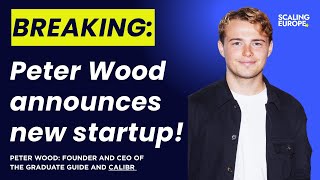
Peter Wood: Founder and CEO of the Graduate Guide announcing his new startup after getting acquired