Is the Corporate Career Dream Over?
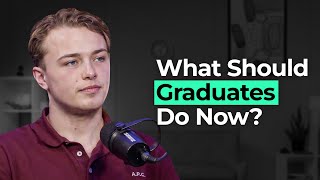
In this Ambitious Minds podcast episode, host Harry interviews Peter Wood, founder of The Graduate Guide, about the shifting landscape for recent graduates. Wood argues that the traditional university‑to‑corporate pipeline is no longer reliable due to COVID‑19, AI‑driven recruitment, and a tighter economy. He stresses that graduates must develop a strong personal brand—particularly on LinkedIn—to become visible and employable. Wood explains how The Graduate Guide uses a subscription‑based community to connect ambitious graduates with startups and scale‑ups, offering events, webinars, and a recruitment service that bridges the talent gap caused by AI screening and a shortage of skilled hires. The conversation also covers alternative pathways such as apprenticeships and entrepreneurship, the importance of self‑confidence and curiosity, and practical steps graduates can take (networking, real‑world projects, building online reputation). Wood shares his own journey from a confused history student to a 23‑year‑old founder, his views on ambition, and future plans to scale the business and possibly take on new ventures. The interview concludes with advice for listeners on how to start building their online presence and how to join The Graduate Guide community.
Chapters
What you typically observe from our parents' generation is that if you went to university, it opened the door to get a job. But actually, you're trying to sort of like take people's focus away from those corporate careers.
I never really pursued corporate as a career path at all. It's taken me a while to accept that I'm more entrepreneurially minded. I think with that, you probably are not a very good employee.
Um, was it like a level of inner self-confidence and belief that you're like, I've got I've got all of these things behind me, which is like the good university, smart, ambitious, but then looking in front of you and saying like, but I just don't know what to do.
It doesn't really mean anything if the foundations aren't strong, like in your own like sense of self. And I think like what I've learned with direction and everything, I think often you're in this period where you're like looking, you know, people ahead of you to tell you, oh no, you should just do this, or, you know, or you could be this, or, you know, give you this epiphany or moment of realization. But I genuinely believe like You can't be prescribed careers, and you certainly can't be prescribed career advice. And ultimately, the thing that actually changed me from this completely lost and confused history student to someone who feels like I've got my foot in the door, that I can achieve almost anything at this point.
The personal branding element is the differentiator for you. It's building yourself, it's putting yourself out there. If you could go back in time, would you still go to university? Peter Wood, thanks for joining me on the Ambitious Minds podcast today.
Thank you for having me.
That's an absolute pleasure. I want to jump straight in today. Um, what do you think is the biggest challenge right now facing graduates leaving university?
Yeah, I mean, there's so many, uh, there's so much that goes into this question. I would start by saying that the job market is very different. Like, even since when I graduated just over a year and a half ago, like, so much has changed. And I think the awareness has not made it down on an institutional level. Like, it's not coming through universities, it's not coming through school, it's not coming through, you know, larger institutions. And, and what that's created is everybody's sort of still building their careers in the exact same way as they were before, you know. That's idea of if you get into a good uni, you'll be fine. If you get that spring week, if you get that summer internship, then you're guaranteed some kind of job at the end. And ultimately, yeah, the job market— few factors, obviously COVID, AI, economic downturn— it's just meant that there aren't the same roles available. But there are opportunities, they're just not hiding in, you know, lying in plain sight. So you have to, in this job market, you have to really follow your curiosity a bit more. Um, and, you know, career building's been democratized because of social media and, and tools. And, you know, I think I'm sort of living proof of how crazy I've been able to make this position I sit in as a 23-year-old. Like, you can do a lot of it, and not because I'm anything special or like I think I just, you know, I called bullshit on the significance of my degree or what I had quicker than anyone else. And I think that's the main problem that people are facing. They are struggling to actually question what makes them employable, where they want to go, why they want to do that. Um, because previously you didn't have to as quickly, but now you kind of do to even have, you know, a salary, a way of living. And, um, so yeah, I think also just like generally combating societal norms, like whether that's enforced by parents, um, or, you know, your friend has got that job, so you're considered a failure if you don't go down that route. Like, for me, when I started doing anything in the startup world when I was at UCL, like, people were just like, what are you— why is he doing that? You know, why are you doing that? Um, but now that obviously the people that ask how you do it And that's just how it is, isn't it? Like, you realize when you start doing something for longer than you were traditionally meant to, people then start asking once you have some success from it how you do it. And yeah, I mean, The Graduate Guide, my company, the mission really is to just help people in, in that journey and give that awareness to everybody.
Yeah, I think it's, it's a really interesting space, um, because it feels like there's more competition than ever before for people leaving university? Like, for example, were you the first person in your family to go to university, or did your— did your parents go too?
They weren't, but they're both architects, so they went for like a real reason.
That's a real long one as well, isn't it?
Yeah, like, as in they went to facilitate that career path, whereas I went to study history because at school I was told, you know, just, just get a degree, you'll be fine.
Um, and the reason why I asked that question is because What you typically observe from the generation, our parents' generation, is that if you went to university, it got you, it opened the door to get a job, and they are now probably very senior in their industries. Whereas now you're coming out, people are coming out of university and they have a degree, some people are getting masters, and they're going even one step further than that now with things like PhDs, all fighting for these sort of like graduate jobs in in corporate industries, but actually you're trying to sort of like take people's focus away from those corporate careers and maybe look at what else is out there, exactly what you've done. But you actually started, I think, from my understanding, in more of a corporate role, didn't you, when you left university?
Um, no, I said I never really pursued corporate as a career path at all. Like, for me, you know, I was interviewing people in that space. I wanted to, to learn about having a career in that world, but I don't feel like it would play to my strengths, the world of corporate. Like, I think it's taken me a while to accept that I'm more entrepreneurially minded, but I think with that you probably are not a very good employee. Like, I'm definitely more of a disruptor, you know, more creative in what I do, and You know, I've tried out employment because I think it's important to know what that looks like. But yeah, corporate, corporate's great for a lot of people, and I would never say that you shouldn't do it, but I just think people should question it a bit more.
It's interesting what you said there, and in doing some research in advance of this conversation, I listened to the podcast you're on with James Farnfield, who's a sort of mutual friend of ours. But you said, I'm at my best when I'm having conversations and brainstorming. And I think my question here is, do you think that that actually fits into the profile of what a corporate career would actually want?
Well, I mean, I can't answer that question completely because again, I've not been in it, but I would say, I mean, ultimately there's just more red tape because of course there is, there has to be. Like there isn't that ability to, to fail fast and, and learn quickly, and you're supported by, you know, different systems and infrastructures that mean that you don't create any catastrophic blunders for the company. Whereas in the startup world, when you're building your own company, you're doing that on a day-by-day, if not hourly, basis. And, uh, so, you know, brainstorming is often invoked by we've got a problem that we need to, you know, we've either forced ourselves into being the people to try and deal with this problem, or it's genuinely like a fire that you've got to put out. Um, and you, you get together and you brainstorm and you put whatever you think might be the best solution to solve it. You just don't get given the same empowerment or responsibility to solve those problems. So yeah, I guess you just wouldn't be doing as much brainstorming on how you do it, just more becoming a very good operator doing it when someone tells you to.
Yeah, it feels like, um, people in that corporate space— I'm in a corporate space, but it's more like task-oriented. And I think that's what school sort of gears you up towards, doesn't it? Like, when you're— even the way that we have to do exams, and, you know, it's more memory-focused, for example, rather than sort of really thinking about problem-solving as you're talking about. So if there are people out there listening, I guess is the question I'm trying to ask here, is there are people that are listening and they're like, I don't really feel like I fit into that molds which they try and talk to you about in school, which is the go down that traditional career path, go to university and study your history degree or geography or whatever, um, you know, you feel like will get you that job at the end of it. If you do have your natural curiosity like you've got, you do think, think outside the box and you're a bit more of a problem solver, you know, what would you be exploring instead?
Yeah, I mean The problem is that there's so many things, um, you know, that invoke like career paralysis, and there's so much friction even though there is so much you can do. Like, the, the problem is, is that you don't actually like get to a point where you feel like you can actually just start doing. And obviously that can be like societal pressures, it can be, um, you know, not having that community that supports you in doing it. And I think in order to actually start doing anything or even knowing what you want to do that in, you've got to get your own personal life ducks in order. You've got to get the right people surrounded, surrounding you just on a human level. Do you share the same sort of level of delusional optimism? Like, are you ambitious beyond, you know, what you've been sort of told by your predecessors to do. And if you have that around you, then what you do it in doesn't really matter. Like, before the Graduate, then this, you know, the stuff that you probably wouldn't put on LinkedIn— I've, you know, I've been— I've gone through university accelerators with ridiculous ideas that, like, genuinely, you know, are laughable. And would never have worked, you know, knowing everything I know now. Um, you know, I've, I've just started working at a waterfalls company. I, um, you know, I was a ski instructor. I've done so many random eclectic things, and, and I think that, that feeling of doing, um, that's what makes you really employable in this job market, because not only does that result in out-of-the-box experiences that you can leverage in interviews and trying to make yourself indispensable, but it just creates an infectious energy. So I guess the reason I'm saying this is because you have to understand why you're even doing it in the first place. Like, are you doing it to become a founder, to really try and build something that you're so passionate about solving that problem? Or are you just trying to, yeah, keep that feeling of like momentum and you're doing— and, and when you go to somebody and you're like, okay, I want to work for that company. I want— it's not like I've done this degree, I've ticked these boxes. It's like, I know exactly who I am and exactly who I'm not because I've done all these things. I've failed at all of this, I've succeeded all this, and your company is not doing that well enough, so I think I could play a part in doing that. And that is the kind of— like, that was me age 21. Like, I'd given myself that level of confidence to go to people and say that, and So yeah, I think people should have that in the back of their mind as why they're even doing it in the first place.
Yeah, and lean into— I think that sometimes we do things because we see others doing it, or like that was the, the career path that that person took, or rather than leaning into what you enjoy, you know, what your passion is. And I think that word's been, you know, promoted a lot more since in the age of sort of social media now when people are saying explore your passion a lot more. Um, what did you— if you cast yourself back to when you were in school, what did you want to do when you were growing up?
I mean, yeah, I always had like very high expectations for myself and, you know, this underlying level of ambition, but I don't, I don't think I ever— yeah, I never had that, you know, I wanted to be a footballer, I wanted to be this my whole life and I managed to do it. And I think generally speaking, a lot of people don't, and Uh, you know, good on you if you have that, um, you have that dream from a young age, but there's pros and cons to both, right? Like, not being able to fulfill your lifelong passion is very demoralizing and hard to, to take, um, but it gives you a real sense of direction from a young age. But, you know, on the other end, if you don't have any expectations of yourself but you just have a level of ambition, it can be really manic-depressive in the beginning, like it was for me. You know, being this history student, having these moments of self-doubt, feeling like you had every, uh, possibility to do well in your career but no career prospects simultaneously. Like, that was a thing that I was stuck in for a while. Um, and so what do you mean by that? Sorry, like, in theory, I was, you know, when I started really taking my career seriously after, you know, joining UCL on lockdown, I was in my second year And I was going like, okay, I've done well my A-levels, I'm a confident guy, I think I have some skills, they're not refined and I couldn't actually put them on a piece of paper. I'm going to the number 8 best university in the world, but none of that actually meant anything in terms of my sense of direction. I could not actually formalize that into a, oh, I'm on my way to doing this or achieving this in my career. It was just like this, very like base level. You know, if I'm very honest with myself, none of those things should have made me employable. Maybe in previous job markets I could have got away with that, but the truth is that you shouldn't. My history degree should not have meant I landed, you know, X amount of responsibility to do, you know, a role for a company. Because I did the degree, I know it doesn't, um, you know, it was great. Like, I love history, but but you know, I guess that's what I mean. It's just you have a lot of things going for you in traditional terms, but inside it didn't actually feel like it was translating into anything direction-wise.
Was it like a level of sort of inner self-confidence and belief that you're like, I've got all of these things behind me, which is like the good university, smart, ambitious, and but then looking in front of you and saying like, but I just don't know what to do?
Yeah, yeah. I mean, obviously I'm, uh, like I said, like, I, I, I am, I am confident, but I feel like, um, it doesn't, it, it doesn't really mean anything if the foundations aren't, aren't strong, like, in your own, like, sense of self. And, and I think, like, what I've learned with, uh, direction and everything, I think often you're in this period where you're, like, looking people ahead of you to tell you, "Oh no, you should just do this," or, "You could be this," or give you this epiphany or moment of realization. But I genuinely believe you can't be prescribed careers, and you certainly can't be prescribed career advice. It has to be— and then ultimately, the thing that actually changed me from this completely lost and confused history student to someone who feels like I've got my foot in a door that I can achieve almost anything at this point, which is a crazy thing to feel like those words coming out my mouth now, but genuinely that, that probably is how I feel on a day-to-day basis. Um, the difference between those two outlooks were asking people that I respected the questions that I actually wanted to ask at a time that I needed to hear it most. So yeah, I think leaning into that curiosity and actually like backing that I had some level of value to offer in a conversation and a line of questioning that was unique to me. That's what changed those two different outlooks.
So when, when did you realize that The Graduate Guide would sort of become a thing? Was it— did it initially start off as a podcast where you wanted to speak to those people to get some advice? How did it all come about?
Yeah, I mean, like, you know, for all the sort of entrepreneurial things I did before, like, this was the one thing that I started with no intention of it being a business or my career. And, you know, funny how things work out, it is. And I think that's just because, you know, I think you have to be— there were a combination of factors why I just kept doing it for longer than anyone told me to do, or anything that, you know, vanity metrics would have encouraged me to do. You know, I wanted to get you know, I wanted to get good at the skills that were involved in building a podcast completely from scratch, like building the network, building rapport with people, um, learning how to do marketing, branding, partnerships, you know, really hustling, like getting good at just generally making things happen and being consistent at putting that out. Like, these are all challenges that I wanted to undertake that not many things in life allow you to do that. And have such a small barrier to entry. But then the other side of it is that, like, I think just in terms of a bigger mission and what it's turned into now, is that I was just sufficiently pissed off by, you know, how many incredibly talented people were just not becoming valuable assets in this job market. They weren't being able to contribute to the economy, they weren't feeling happy, they weren't feeling ambitious. Purely because of gurus and different people sort of gatekeeping information that should have been accessible to everyone. No content seemed to be done through my lens. It wasn't for students, it was always for entrepreneurs or CEOs or investors. It wasn't for students because, I mean, who would ever build a company to make money off the back of students? You wouldn't. Um, but for me, you know, I guess I, I was just like, yeah, confident myself, had a clear motive for why I wanted to do it, and the problem was something that I was experiencing myself and could see other people around me as well.
So what is that? So you've explained your problem there, but the problem that you're now trying to solve with the Graduate Guides? Yeah, what is that?
Yeah, I mean, it's the fact that You've got startups and scale-ups with incredible founders and amazing missions and ideas living and dying because of talent, um, you know, or the lack of it. And you've also got students that think that there are no opportunities out there, and even if they knew what the opportunities were, they are not employable in this job market. They can't break past the AI screening. Like, they just feel like they're throwing, you know, throwing themselves against a brick wall every single day they try and do applications. And like, to me, obviously finding myself in this weird middle ground where I have this student following community and this, you know, employer and founder pool from all the podcasts I've been doing and working in the startup world for a little bit now is— yeah, I mean it's really hard to fathom. Like, it's really hard to actually break down the problem into something that you could solve for a long time. And this is something that you can't really even contextualize, like, on a pitch deck or to investors. But I needed to give myself time to work out what problem I was going to be solving, because if you try and do it all at once, which I was at different times, you're just gonna— you're not even gonna be able to have any impact in the beginning. You're gonna be scattergunning, you're gonna be throwing stuff at the wall, and nothing will ever stick. So ultimately what our business is geared up for now is helping those that truly have intent to build, to remove the friction and actually start building, and then actually, you know, working with entrepreneurship hubs, working with VCs, working with institutions, like connecting loads of dots and building bridges that should have always existed but didn't, probably out of complacency, right?
I— a lot of what you're saying there, I think the skills that you have, I can really resonate with myself. And I think probably the reason why we both lent into podcasting, which is curiosity, good at networking. But also, are you good at introducing people to other people?
Yeah, well, yeah, I mean, I think generally speaking, like, I'm, I'm always speaking to people from a position of like, wow, you're like incredibly impressive. And I don't see myself in that like same light, like, which is, you know, maybe counterintuitive or, you know, opposite to how I've come across this interview. I don't have like this idea that I'm anything special. I'm always like going like, wow, that's so cool, like, do you know this person? Like, really, like, I like to platform people. Like, I, I actually get a lot from it. And I think that's something really cool. And actually knowing what your purpose is in careers, like You can't all be machine learning experts and you can't all be incredibly incredible artists. For me, I am a connector and I'm comfortable in that now.
And I don't think AI can replace that because it's understanding the nuances that can put people together. But just sorry, just on the topic of AI, I'm going to sound like a boomer here, but you said about AI screening for interviews. Is that a thing now? Is it?
Yeah, yeah, yeah. I mean, it's, uh, the reason it's happening is because it's become so easy to make applications with AI, like just a Jolla, that essentially recruitment teams of companies are just being overwhelmed to the point that they can't actually— they can't give the same amount of attention. Um, and so if you're not, you know, especially for the bigger corporates, this is less so in the startup world because you know, the startup world is a bit more of a human experience, um, and it needs to be. But for bigger, bigger companies, some of them are getting, you know, 30,000 applications for their graduate schemes, and like, you just can't, you can't look at them all. And in theory, the AI screening processes are meant to be sieves, right? But there are some people who always did what they were told and, you know, are trying to really put their best foot forward that are just losing out because they're not savvy to what these employers want. And yeah, it's pretty messed up.
So, and to give us an idea about— so I've seen your LinkedIn and you've built a very good community, you've got a lot of followers on there now, but what else are you doing? I've seen that you're doing like in-person events now as well. Is that a way to try to meet people? Are you trying to meet the graduates or the people that like the talent pool essentially to to then try to like maybe partner up with different companies? Is it almost like a recruitment arm that you're like creating out of this as well?
Yeah, so I mean, full transparency, like our business model is community. So students actually, you know, students and graduates, anyone entrepreneurial, they pay a small subscription to be part of this community where they get access to events, webinars, content, you know, community, yeah, access to investors, employers, and Basically, if they want to do anything in the startup world or build anything for themselves, we are that middle ground between I'd like to do it or I'd actually being invested by VCO, joining accelerator. So we are that, that mediator and that bridge again. And then the other two sides of the business is community-based recruitment and employer branding, so helping you know, really great startups that don't have the same money to throw at employer brand or being ever-present on campuses to cut through the noise and straight into the talent pool that we've curated through working with the entrepreneurship hubs, through building, you know, this following on LinkedIn. Um, yeah, we're able to undercut the market massively because we've got the talent pool. We don't— we're not a labor-intensive business where we need to do loads of outbound commission-driven recruitment like it used to happen. I think this is the next evolution of recruitment and maybe the way that you can reinstall a little bit of, um, I mean, credibility into the industry. I think a lot of people have their opinions on the recruitment industry and they're right to. I mean, everyone's experienced a dodgy recruiter sliding into their DMs, but And I actually had a lot of like, um, imposter syndrome, or just like, you know, I hated the idea of ever saying I was in recruitment. But I've kind of— I've accepted that recruitment is just— it's so important, right? It's, it's what makes a great business and not, um— so, and like any industry, there are good players and bad players. Um, but yeah, very long way of saying yes, that, that is our business. So Peter Wood.
It's funny you say that because yes, I think that the recruitment industry in general sometimes has a bad name, historically has had a bad name, but it's vitally important and it's even more important for early-stage startups that are using a significant amount of their capital in order to invest into someone that's going to come in and hopefully succeed. And yeah, okay, maybe like big, you know, FTSE 100 company that has huge amounts of revenues and they can afford to spend, you know, 10% or 20% on the recruiter fee to get the person in. If it doesn't work out, not the end of the world. But yeah, if you're a small business and you're growing, then you can't really afford to take those same risks. So you need to reduce the friction, as you said earlier on, to getting the best quality talent. And if you can sit there as a as an intermediary to identify the talent, match up to the right companies, the right skill sets, and all those sorts of things. Um, because a lot of it as well, you know this, like you've worked in a, in a, you've been employed, so it's about getting on with people too, you know. It's not just about having the right skill set, and I think that skill sets are now also not what they used to be. It's not, you know, as you say, the degrees and your experience. It's about attitudes. It's about beliefs. It's about how hard are you going to work, and is it a passion of yours to come into this company? I think startups, from what I've understood so far from the people that I've interviewed, um, you know, they— it isn't, it isn't your normal 9-to-5. No, no, it's a completely different skill set that's required to go to work for a startup.
Yeah, I mean, it's exciting because it's a— we're literally talking like the last year, 2 years max, 3 years that it's even about being a viable thing for a graduate to straight out of university go work for a startup. And so with that, it's an exciting opportunity to rewrite a lot of sort of what I think are outdated practices that were happening in, in the corporate way of going from, you know, education to a to your career. Uh, and yeah, I think the ability to leverage social media to bring awareness, um, and real transparency, uh, that's something that I find extremely exciting. And, and, you know, one thing that I would say about our company and how it's like just completely different to anything else on the market, and, you know, it's really only been viable again in the last couple years, is that recruitment, and that recruitment industry is generally speaking, it's people that have, you know, they've been through their career, they've spotted an irritation in their own business that they're part of or they're building, and they thought, okay, well, there's money to be made here because, you know, no one's— no recruitment company is servicing this problem properly. And they don't come at it from a, I've just been through this period of confusion and that they aren't recent graduates, they aren't students, and so they don't understand the problem. Generally speaking, any competitors serving the same startups and scaleups as we do, they're taking the employable people that come out of Oxford and Cambridge and matchmaking them. They're not actually going into the universities and institutions themselves to try and solve the problem and make people more employable. Like, and that's where I'm like, okay, the fact that at 23 I understand the problem, I have, you know, the same capabilities to perform recruitment. Like, it's not a particular— it's not a, it's not a particularly difficult thing to work out. It is just matchmaking, and you can be more tech savvy with it and all these kind of things, but fundamentally I think the USP is having this reputation online that people actually want to get to know you. They want to be part of this community. They want to, they want to be part of your talent pool. And, you know, I'm able to actually go into university and I'm not a 31-year-old ex-consultant saying like, yeah, like, I'm gonna— I really understand what you're going through, like, I'm gonna help you. Like, I genuinely do understand, and so I know what they need to be made more employable. So yeah, basically there's loads of different arms to what we do, and I think it's a really exciting model that I'm sure we'll see a lot more of in years to come.
Yeah, it's— I mean, fair play for doing this as well, because you've shown like just your own level of entrepreneurialism where you've gone out there and the problem that you're trying to solve, you know, all these people that sit in front of you on your podcast. Yeah, you know, you are in the same league because You identify the problem, you solve the problem, and like you say, that you are also relatable to the people, the sort of graduates, because of your age, and you're so young and doing this as well, which is quite incredible really. But I just want to ask a quick question about, if you could go back in time, would you still go to university?
I mean, yeah, it's— It's a difficult one because apprenticeships, for example, are a really great route. And like, when I was at school, it was not a thing at all. Like, it was not considered a, you know, at all a 'should I go to university or do an apprenticeship' kind of decision. It was 'go get into the best uni you can, do UCAS.' And, um, I think ultimately it's so like being honest and knowing, you know, the personality type that I was when I was a teenager. Like, I don't think it— I think it's hard to prompt yourself into really thinking about your career and having consciousness at that age. Um, and so, you know, university, it— the sort of underrated aspects of it, it gives you 3 years to kind of sort out who you are and sort out what you want to do. Like, you know, your personal life. Yeah, you have a lot of time And, you know, I loved it. I think it probably dragged on a little bit too long. Like, I'd probably shorten my degree if I could have. Um, but yeah, I mean, the brand name is probably always going to be useful in the beginning, but you have to actually build on top of that and not just assume that that brand name and that degree will guarantee you a job. Like, if you build on it, I think it probably still is the best route. Um, apprenticeships, you know, there are problems with that right now, and I'm sure they'll develop things to, to make it better, like helping develop social life on the side of apprenticeships. Uh, yeah, essentially allowing people to still live those years while they're in technically a 9-to-5. Like, if you are a personality type that just wants to crack on and, uh, you know, not have debt, like do an apprenticeship. But I think for me, I probably— yeah, knowing myself, like, I probably still would have gone to university. But I think we do need to again try and be more transparent and, and truthful and authentic about what the reality of going to university is like and what it gives you and what it doesn't. Obviously, that at the end of the day, universities are businesses, so they're not going to do much to try and shoot themselves in the foot. But I think everyone would benefit from just saying like listen, doing a degree is great, but do one that you actually think is going to be useful, that might help you meet people and in a space that you might want to go into. And ultimately, something that makes you feel excited to go in every day and study, because, yeah, I mean, you can fall out of love with your degree very quickly, and it can leave you, like, in debt and just very, like, demoralized. So Yeah, I would have— I think I would have just tried to really think about who I was a bit more when I was younger, um, and that would have dictated what I did.
Yeah, and again, going— leaning into like your natural curiosity or leaning into your passion. But, um, you mentioned the word brand earlier on, and I know your brand— I think you're talking about this university— but you've built a successful personal brand online. Um, and I say online, is that mostly on LinkedIn that you've done that?
Only on LinkedIn. Yeah, like, interesting. I, um, I'm not so— I've never had TikTok. I've, you know, I don't write Instagram captions. I'm not your traditional social media savvy person, and I don't want to be really. But I think LinkedIn is this kind of comfort blanket where everybody's got to put a name to a face. They've got a, you know, they've got to actually mean what they say. And, um, and like, generally speaking, I think it's a pretty like supportive community of people. There's obviously like loads of cringe on the platform and a lot of things wrong with it, but I never had any desire to build on other ones because ultimately, like, yeah, I look at sort of 16-year-olds put themselves out there on Instagram and TikTok, like, you can go viral for a person that you, you know, you actually will not be in, in 5 years' time, and it can completely ruin your self-confidence. It can, you know, it can pigeonhole you. And I think, like, my experience of LinkedIn— I built my following initially just by going like, this person said it, not me. Like, that's what the podcast allowed me to do. Like, I still didn't put my personality into it too much. And bit by bit, I was able to, like, you know, I was able to really get comfortable putting my personality into these posts and then actually saying what I thought and I don't think the other platforms really allow you to do that because of the fact that your friends are probably all watching at all times. Like, my friends didn't care about anything I was doing on LinkedIn. They were like, oh yeah, you're doing the LinkedIn stuff. And I kind of loved it. It was like, you know, it was my space that I could, you know, build things away from everything else, completely undistracted. And, um, yeah, I think, you know, I've actually got a documentary with LinkedIn coming out soon, um, And so I'm really trying to fly its flag, not for the reasons that, you know, your careers advisor at school will tell you, like, you know, job search and whatever, but like, like, it can, you know, we're here today because of it, you know. I've been on holiday with mates because of it. I've, you know, I've just had some of the most amazing experiences because of it. And ultimately, your career does become your life very quickly, so you might as well start making LinkedIn work for you when you're younger, because it can give you a very cool career off the back of it.
Yeah, and, and I think what, what you've shown is that LinkedIn is the differentiator for you. I like— I say LinkedIn, the personal branding element is the differentiator for you. It's building yourself, it's putting yourself out there, um, you're putting a face to a name, exactly as you said.
Um, I also consciously don't use the word personal brand because, I mean, I, I think so many people have said it now that I don't even know what it means. So I prefer to say online reputation because I think that's what it is, right? Like, it's your ability for when we get into a room together, you've already seen a little bit about me that you think you can get straight into the juicy stuff and, and skip the surface level conversation. That's the benefit of building an online reputation. Personal brand, I mean, like What does that actually mean? I don't know.
Yeah, I've been referencing this recently, and, um, Daniel Priestley is, um, he wrote 15 years ago, maybe more than that, The Key Person of Influence, before personal brand was a term. Yeah, it was the key person of influence. It was just, you know, put yourself out there, meet as many people as you can, build your network, make sure people know who you are. And that's ultimately what this is now, but just probably in a, in a faster format. You know, you don't have to arrange dinners and networking events. Now you put yourself online, you know, a few people like it and you get more impressions and other people see it. So it just sort of means that the, uh, the time which you can get in front of people is as much lower. Um, and you're absolutely right that personal brand is, you know, what is it now, but, uh, online reputation is probably the best description for it. Um, but you— is this something that's encouraged to do when you're at university, for example, to go onto LinkedIn and start building your online reputation?
No, I mean, well, maybe, maybe it's improved since, uh, you know, since I graduated, but people would just say like, you know, oh, you should check out LinkedIn, like, or you should be on there, have you made your LinkedIn profile? But it wouldn't come with any more context than that. Um, And again, like, you know, we're talking about like, this is a very new thing actually, using LinkedIn as a social media platform. I think like it was maybe 2020 it really started kicking off. And, and when I was at university, like, I remember I did download LinkedIn. It was like, it was this platform where emojis were flying around everywhere and successful people were congratulating other successful people. I was like, why on earth as a student would I be on this, right? And I just didn't get it. And probably a lot of people get stuck at the hurdle and never revisit it because, you know, they haven't tried to make their feed work for them or work out how to use it properly. And what I always say to people who have never used it and getting started is base your LinkedIn usage and, you know, curiosity in person. So go to a city, go to, you know, your town center or whatever, look at different office buildings, look at different brands in the supermarket. Like, genuinely think, oh, how did that happen? Like, how did, how did they grow to a team of this size? Like, who is this company? What are they behind? And you can find out who that company is, and then you can actually find out who did the partnerships behind that, who's the head of marketing, who's the CEO and founder. And you could try and message them and they might just respond. And, and when you do that, like, the algorithm, yeah, and your feed starts, you know, adapting to that because it's, you know, it's based off who you message and what you interact with. And, and then that's like, that's how I think it should be taught, but definitely was never told that at university.
Yeah, and I think LinkedIn has changed a lot in the last few years. I think you said there about 2020, but Um, but before starting the podcast, I'm not too sure I ever posted on LinkedIn. It was all about, you know, new, new jobs, work anniversaries, that sort of thing. And you'd always get these like, congratulations on your job anniversary from someone that you've not spoken to in years. It's quite funny. Um, but I mean, yeah, LinkedIn has now become, uh, so casting myself back maybe like 10 years, it was always, for me, it was like full of recruiters DMing you, as you say. And now there's a real community on there and, you know, it's a lot more sort of founder-led as opposed to, or maybe that's just the feed that I've curated, but it definitely feels now it's a lot more entrepreneurial, a lot more founders on there. It's not as sort of corporate and professional. Yeah, professional still, and I think you go on there with a professional mindset, um, but it's now a proper social media platform where you can network with people that are like you. Um, so I think personally I would advocate for everybody to start building a, a profile online. You know, you'd probably be advocating people at university to start doing that. Do you think there's almost like a race to— going back to what I said earlier on about the people get a degree and then they might go and get a master's, like if people start now at university like building their online profile, is it going to be going into like schools at some point? And it's just like, how young can you be before you start trying to build your profile? Because that's going to be your competitive advantage in the future.
Yeah, I mean, it's— I've seen 17-year-olds, 16-year-olds hustling out there. Like, we have people applying to our community, like, of, you know, not even, you know, finished school yet, and, and they found us through LinkedIn. And it's, you know, people are on there, and they're, you know, like I said, it's, it's been democratized, and, you know, the barriers to entry have been lowered for career building. So I would say, like, why not? And, you know, there probably are going to be people doing that, but I'd also be like Like, really, I don't think anything before 19 matters that much. Like, it's easy to say in hindsight, but I'm glad that I, like, that I didn't start thinking about my career until the second year of university because, you know, I worked as a ski instructor for a year. That was a very formative experience. Like, it didn't— I wasn't thinking about my career. Like, it was just something that I loved to do, and, um, and it taught me a lot of, like, real tangible skills that I use on a day-to-day basis now. My first year, you're meant to go out and drink and have fun and whatever. You should afford yourself that time. But when you are ready to start building your career, you'll know. You won't be able to bullshit yourself anymore. You'll have that real intent. And that's when these platforms start becoming interesting. I think if you go on it too early and too much just because someone told you to, you'll be a bit like, what is this? And you don't get it. But when you go like, oh, I would love to read more about this, digest it, repurpose that content through my own lens, and actually build a community of people that are similar to me, or have access to people that I would otherwise never be able to get to meet— when you start having that feeling that that's what you want, then yeah, great, do it. But I mean, yeah, I'll never go to— I do a lot of talks at schools now, and I'd never go there and tell people to start posting on LinkedIn, like, or, you know, just follow your dreams and all this kind of wishy-washy stuff. Because when you're young, you just want to, yeah, have fun, feel like you're moving somewhere, doing things. And yeah, I mean, all the career stuff can come later.
Yeah. What's, um, so what, what advice would you give to somebody, uh, that is looking to— or that is maybe in university and going through the same challenges that you went through? Um, what would be the first steps that you would recommend that they do? Would it be something like try and figure out what you are passionate about and lean into that first of all?
Yeah, yeah. I mean, like, I think there's so many— you, like, you don't just go from feeling really unambitious or, like, not confident in yourself to founding a company out of nowhere. Like, look, there has to be things that happen in the middle. And, like, for me as sort of Gen Z as this sounds, like, I did start doing DJing. Like, I started doing things that I just wanted to have that feeling like, oh, I can feel myself getting better. I can feel myself put myself out there in front of my mates at parties. And, you know, I could, you know, I was taking myself out of this, uh, this rat race that happens at university where you're letting professors, you know, dictate you on your success levels with subjective grades. And you're not doing things for yourself really. So I would say instead of going to apply for that spring week tomorrow and spending your whole day doing it and just simply doing your degree, if you are feeling in that way, like, I wish I had someone just that I really respected go and just go have a day where you're feeling like you're doing it for yourself, like you're doing things that are leaning into, yeah, your natural curiosity, your passions. Like, but I think too many people just say the easy, easy answer, like, you know, follow your dreams, pursue your passion. Like, again, like, really, when you dig deep into what does that mean, um, and it's never going to be the same for everyone else. But the one thing that you can say is that you know, the more that you have the right people in your life who just allow you to crack on and be yourself, the closer you are going to be to actually pursuing things that you're passionate about and not fearful of what others think. And then once you've done that, then it's just about, you know, trying to keep the momentum and, you know, keeping yourself sufficiently entertained in the process.
Yeah, but I think that at that age it's quite hard because you feel like a fear. Did you feel like a social pressure at all, like from your friends, what they would think of you when you were doing something a little bit different?
Yeah, yeah, definitely. I mean, you know, like I said, nobody understood at the beginning, like nobody was listening in the beginning, and you know, why would they? It was recorded on crappy mics, you know, in a basement of a pub nearby my university. Yeah, yeah, like, um, and I had no— I didn't know how to write on LinkedIn. I didn't— there were no hooks that would make them want to read it. The marketing was bad because I'm not a designer. There's all these things, but like I said, um, I wasn't doing it for those reasons. And I was saying to you before the podcast actually is that, you know, I would go from doing my degree to building a waterfalls company that's now achieved huge success but was nothing at the time I was doing it. And speaking to managing directors of Google, you know, in this basement of the pub. And like, I just thought like, this is so fun, this is so different, I know no one else is doing this. And like, it really just, uh, you know, got off on it. And, um, yeah, so I felt the fear of cringe, but like, I knew who my mates were, I knew why they liked me, and they didn't like me because I was a, you know, straight down the line conventional guy, like, you know, that just chatted about exclusively football. You know, I like talking about football, but I also like things, um, beyond that. Like, I have other passions, and I would be doing myself and the world and my friends ultimately a disservice if I was just trying to compete on other people's terms that, you know, made me unhappy, right?
You're a very you're a very ambitious person. What does ambition actually mean to you?
I mean, ambition can, you know, it can be the best and worst thing in the world. Like, it's caused the highest highs and the lowest lows in my life. And, you know, like everything in life, I think you've got to work out your relationship with it, you know, whether that's drinking, exercise, whatever. Like, if your relationship with it is not good, assuming that they're always gonna— it's always gonna be prevalent in your life, then you're never gonna, yeah, be able to leverage it sufficiently. But now I think I've got a really good relationship with ambition. Um, I would say, yeah, ambition is the thing that, you know, when you're feeling hungover or you're you know, lying in bed at night and you've completely— your brain's completely fried, that like just prompts you into this like rabbit hole of, you know, working and doing something beyond what you've been told to. And, you know, this is where, you know, 9-to-5s can be a bit frustrating. It's like it's kind of created this thing of, you know, you just switch on from 9 to 5 and the rest of the time you're just recovering. Like, it, you know, that, that's kind of how I saw it when I was in employment and And I love just being able to, like, you know, late at night just go down this weird, you know, mental rabbit hole and, you know, dumping thoughts on my notes, you know, speaking to it. Like, I literally speak to AI and I'm like, you know, how can I make this ridiculous thing a reality? And they can actually tell you some steps. And I mean, you know, I'm not an AI-savvy person and I'm not a good adopter, but I just, I laugh at how good it is, like, on a day-to-day basis, like how well it knows my voice, how well it knows my business, how well it knows me. And ambition has become my favorite thing in the world. It makes me feel like the world can be gamified some days, like it can actually be this beautiful, amazing thing. And I'm at risk of sounding like an absolute weirdo right now because I know that there's loads of crap things going on in the world, and, you know, and I know what it feels like to not be happy and everything. But I mean, I'm just trying to be as self-aware and relatable as possible and help other people, you know, achieve, you know, the goal of living up to their ambition. Because yeah, it's, uh, it's very— life's— life sucks when you feel like you're doing yourself a disservice.
Yeah, I think that What you say there is you have to play your own game as well. Like, if we worry about all these external factors too much, you fundamentally, you're not going to get anything done, and you're not going to also live up to your own potential. Um, so being able to sort of drown out the noise but have your, almost like, your, your central, um, guiding principles or your central ambition. But I agree with you, actually, it's the, it's the best thing and the worst thing at the same time because like, I feel like there's so much that I need to do during my time on this planet.
Yeah.
And I'm like, have I got enough time to do it all? And even like with me, I've got the full-time job, I've got the podcast on the side, and I'm doing all these different things. Like, I, I go, I go skiing too often that you'll probably like— I love going skiing. My girlfriend's Italian, so yeah, we've got the opportunity to do that quite a lot. But like my— I'm trying to like host a podcast. At first I was doing all the editing before I was outsourcing it. I was learning all these new skills. I've got the really important and very long hours job and then doing all this other stuff in the meantime. Like, what? Like, is this it? Like, is this— is this going to carry on forever? And then I'm like, yeah, I want it to carry on forever. It's a really weird feeling to try to balance all those things.
Yeah, no, I mean, um, It just— I don't like— I, I, it's hard to understand or comprehend that. I guess there are people that live very happy lives without it, like, and, and I've spent a lot of my life being very envious of people that don't seem to think very much, like, you know, and just seems to like be able to chill. And, you know, I'm like, that seems nice. Um, but yeah, like you said, you gotta play your own game and, um, and find your own relationship with it because if you don't, it's gonna swallow you up and, and make you hate everything and just be a very, like, um, self-pitying, like, you know, salty individual. And no, you know, I think if you ask anyone, like, that no one sets out in life to become that. But I think it's just like, the problem with building a good relationship with something is it's so mundane at times. Like, it can't— like, to fulfill ambitions, sometimes it can just be so like just do the simple small things over and over again.
And you know, sometimes without results, by the way, because you mentioned this earlier on, often when you said about like at this, at the start of the podcast, like no one was tuning into it and why would they? It's like you knew that you were doing good things with this and it was, you know, it's satisfying you because you're having these good conversations. But there's also a level of you, I'm sure, that was like, I do want people to listen to this, this is good. Like I do think think that it deserves to be listened to.
Yeah.
And it's not.
Yeah, yeah. I mean, like, yeah, you know, I, I'm not gonna sit here and say I don't care about how well a post performs or whatever on LinkedIn, because ultimately that's kind of like just caring about how your business is doing at that point. At this point, like, it's important for me to be reaching more people, and I like seeing how you can get better at marketing and all these kind of things. But, you know, some people would be like, oh, you're not ambitious enough. Or call me ridiculous for saying this, but I don't really like the— you know, I don't really subscribe to this clickbait culture where it's like you have to just try get someone to listen to this like at any cost. Like, I'm like, really, if someone's gonna listen to it, especially a podcast, like, they're gonna want to actually hear from you what you have to say, the person you're interviewing. And if they're not like you know, don't force them to do it. Like, they're probably just not going to do it. And like, I don't know, I've— there's so— there's been so many times where, you know, that classic, like, YouTube, like, you'll see a title and then you spend 6 minutes watching it, you're like, so when does the actual thing happen? And I'm like, I'd rather not build that because it's not sustainable, is it? Like, it's not sustainable for actually building a personality and a brand that people want to engage with.
I think what you do is you attract the wrong type of person. Yeah, to engage with your content if you do that and you optimize for that.
Yeah. And like, I mean, you know, now the podcasts and everything, content is, it's completely different. The reason I do it now to how I did in the beginning, like, you know, it's such a good vehicle to meet, you know, people to work with in the business, to, to yet, like you say, get the right people in the community, the right entrepreneurial minds, the right level of ambition, and You know, I'm— and this is the other thing about like LinkedIn as a platform, right, is that you're already like— and this is really, really like crazy to say— already in the top 2% of career consciousness by being on that platform, you know, in the UK. Like, there's— that's— they're not that many people on LinkedIn compared to other platforms. So like, that's already a sieve, like, okay. And then, and then you've got to stand out on that platform and then you've got to actually get someone to go click or pay or actually do something. And I think you can see them as really frustrating things in the beginning, like, oh, not enough people are doing this. But ultimately, as you get older and if you keep doing something enough and trying to improve and get better at it and improve the products and everything, you're going to actually be grateful for these sibs. Because like you said, it's no use to anyone having vanity metrics and numbers that don't really mean anything. Like, I focus exclusively on, you know, how has that helped my relationship with someone, or what— how has that improved somebody's ability to feel like they can ask me anything, uh, you know, be that student, founder, an investor, whatever it is. Um, yeah, so my framework for posting content and putting it out there is, is not at all based on loads of people seeing it anymore.
Numbers.
Yeah.
To also steal another term from Daniel Priestley, it's about building your tribe, and that's what you're doing. You're building your community. Um, but going back to ambition, what are your ambitions with the business, with The Graduate Guide?
Yeah, I mean, you know, like I said earlier, I think my, um my career is always going to be in and around connecting people and, you know, helping exceptional people meet other exceptional people and make things happen. Like, that's my, that's my role in life. Um, uh, the Graduate Guide's a really awesome— I never say awesome, I don't know why I said that— Graduate Guide is a great lens to be doing that through right now. Um, Yeah, like, I want the Graduate Guide to really make a dent and solve what is a massive problem. Like, everybody can see this, whether you're a parent of kids, whether you're, you know, the kid itself, whether you're like a company that's not being able to find any great grads, or like, this is affecting pretty much everyone. And so, yeah, I think there's so many— there's so much space for people to do great things in this early careers, uh, you know, recruitment, employer branding industry. And, and I've, you know, I'm not going to say I'm really the one to solve it myself, but like, I have a very collaborative attitude to how this happens. Um, you know, partnerships is something that I love, and, and, you know, I want to keep building The Graduate Guide based on these very, this very strong foundation that we've got, make sure I've got the right advisors and people keeping me on a good path and making sure it stays aligned to the reason I started and the brand I'm trying to build. And ultimately connect people to opportunities and get them into rooms that previously they never were. And there's loads of other intricacies and KPIs and, you know, ultimately like wealth that I'd like to gain from doing it. But yeah, fundamentally, if I can say that the graduate guide served what I intended it to and helped a lot of people. What more can you ask for from, um, from your first business, your first business that you actually try?
You use a good word there, your first business. Um, do you envisage yourself building more businesses in the future?
Yeah, I'm in too deep now. You know, ever since I decided I'm not going down the corporate route, you know, I've I made my bed and this is all just a product of me lying in there, right? Like, yeah, I think, you know, the more you become a founder, the less employable you become. So I, I do, however, I was, yeah, I've been thinking like in the next stage post The Graduate, like, I can see myself wanting to work under someone truly exceptional because I've never really, I mean yeah, I'd be doing a disservice to my previous employers. But I've never felt like, you know, really empowered underneath like just an exceptional brain, right? And I'd love to do that. So hey, yeah, I mean, I'm— yeah, like, I'll be in this world forever, whether that's as a founder or helping, helping build a company that I'm passionate about.
Have you been approached by any of your podcast guests to work for them?
Well, that's how both my previous job opportunities came. That's how I became employee number 1 at Wall Street.
Is that right? Okay, so you interviewed the founder?
Yeah, he was a university dropout from UCL.
Oh wow.
Um, that's how we— yeah, how I basically forced him to delegate some work to me and, and just kind of went from there. Um, and kept doing that, and it was very formative and a great experience. You know, EZA, the same. I wanted to do events. I thought they were— what they're building looked cool. And, and yeah, I've, you know, my, my early stages of my career was just throwing loads of stuff at the wall and seeing what stuck, and the podcast was the ultimate vehicle for all of it.
Yeah. And now you're, now you're building your network even further, um, and that's opening doors now for you to, to go on and do more and more things, um, which is really cool. And, uh, but have you thought about Do you employ anybody at the moment, or is it just you and your co-founder?
Myself, my co-founder, the production team, and then, yeah, like, we're, you know, we're close to finishing our investment round, and then, yeah, now it's time to scale the team, you know.
How do you feel about that?
I'm excited. I mean, I, I, it needs to happen soon, um, you know, like, I need to be able to pay myself, I need to be able to, you know, delegate some tasks, empower some people to do some work that I'll never be that good at. And yeah, I mean, I know recruitment's a challenge because that's what our company helps with, other companies. So it's going to be really interesting building it for our actual own team. But yeah, ultimately, like, you know, I'm excited for it. Like, I just— the opportunity to meet and be responsible for giving people their livelihood and, you know, the next stage in their career and contributing to something that, you know, you started, uh, in this— yeah, in this pub. Um, it's just cool. So yeah, it— like, the next stage of the business is exciting.
And yeah, yeah, well, fair play to you because it's a— it's a— it's an impressive business that you've built and a sort of a brand that you've built around it. But first and foremost, you're trying to solve a real problem that is being felt by— I don't know what the numbers are, hundreds of thousands, millions of people, um, at the moment. So, you know, whether that's someone has left university and they're in a job they're not enjoying, or whether they are considering going to university or in university, all these different phases.
Yeah.
And, you know, you are stepping into this position which you from the sounds of it, you wish you had this advice when you're in that position, and someone to be able to sort of lean on and understand, like, what, um, what experiences or what opportunities are out there. And the fact that you've been able to get some really, really interesting guests onto your podcast, um, and then hopefully provide multiple avenues for these people. And I think that's where my, my initial, um, desire to start the podcast was for that reason as well, to try to show people. I work in the wealth management industry, so I, I sit down in front of cool people all the time.
Yeah.
Um, and I was like, wow, like these people, that their careers or the businesses they built are amazing, and I wish that other people would learn about that as well. So I was trying to sort of like, you know, open, open the, the door really to see, for other people to see what these people did. Um, But you didn't even work in an industry like that, that was just natural to you and it's just something that you were just like, I just want to hear from these people, I want to know what they did and I want to know how they did it and what else is out there.
Yeah, I mean, it's a really powerful feeling having your back against the wall in your career, like that feeling that I alluded to earlier about feeling like I had every prospect, but, uh, but none at all at the same time. That, that back-against-the-wall feeling is what prompted, you know, that incessant level of curiosity. Obviously, like, curiosity, it, uh, it manifests itself in different ways before, you know, like whether that was dating or whatever, like other things that felt more important at the time. And I always, you know, I kind of knew that, you know, when I did find a way of applying that to my career, that that could end up being my superpower. Um, but yeah, I mean, ultimately, yeah, whatever reason you're starting it, and, you know, yours is a very admirable one, and you're also, you know, gaining, you know, huge benefits and, you know, completely different way to me. Um, you know, I think not everyone should start a podcast, of course, but everyone should have a way of actually, like, leaning into asking the questions that they want to ask. Yeah, if you can leverage it to build your online reputation, then great, like, do it. But I mean, I would— I actually say to students now, I'm like, if you are not trying to, you know, if you're not ready to encounter that, that fear of cringe that comes with putting yourself out there and, you know, asking questions to people that you don't feel like you belong in a room with, then The best way to start is, and you can genuinely do this now, is just start a newsletter where you can interview the person in a cafe, you could interview the person in a pub, you can interview the person online, you can record it, you can put it all through AI, it can learn your voice, you can prompt it in all these kind of ways. And within an hour you can have this piece of content that other people want to read done through your own authentic lens. And you've built a reputation from it. And you can put it out anonymously if you don't want anyone to see it. You can put it out for your own channel. It's like, this is how little friction there could be. I know in reality that's not what it looks like, but, you know, I'm going to continue to fly the flag of doing that for as long as possible.
Yeah, it's very admirable what you're, what you're building, and I, you know, I respect it so much. Um, I think that I wish I had something when I was in school and college. I didn't go to university, but I had someone to sort of help me, guide me to where I want to go. And listening to the podcast or joining the community, I'm sure, can do that. So, um, but on that note, yeah, um, you know, for my audience, yeah, where can people find you?
Yeah, well, maybe I'll be on other platforms soon, um, but for now it's LinkedIn, Peter Wood, um, and yeah, you can find me there pretty much most days.
And if they want to join the community, how do they do that?
Uh, we have an application process that's hosted on Airtable. The link is on my LinkedIn as well. Um, and yeah, like, you know, we don't just accept anyone. Like I said, you have to have a real entrepreneurial spirit and intent to build. But in theory, anyone can apply. It doesn't matter what stage you're at, you know, what age you are, what university you went to. Like, you know, our community is open to everyone. You just have to really be obsessed and really want to, yeah, participate in what I feel will be a movement.
So yeah, congratulations anyway. And yeah, I really enjoyed this conversation.
Thank you, mate. Likewise. Thanks for having me.
Cheers, mate.
Cheers, Harry.
It's very good.
More from Peter
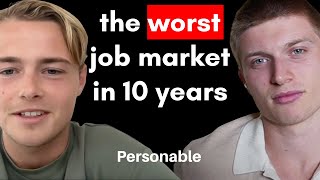
Job EXPERT Peter Wood on The Worst Job Market in 10 Years!! How to Build Online, Upskill & Find work
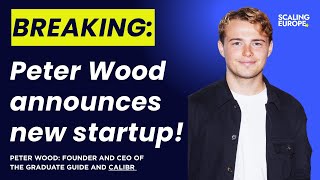
Peter Wood: Founder and CEO of the Graduate Guide announcing his new startup after getting acquired
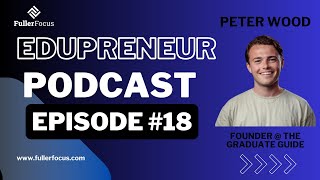
Peter Wood: Helping Grads Build Careers & Companies – Founder @ Graduate Guide | EP18