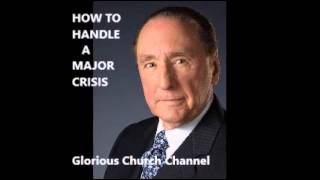
Top Level Show – Peter J. Daniels
Transcript of a Top Level TV interview (host Felicia Mabuza) with motivational speaker Peter J. Daniels (guest) and others. Daniels recounts his rags-to-riches journey from poverty and illiteracy to millionaire status via intense self-education (reading autobiographies, studying dictionaries, speaking practice). The conversation covers motivation, leadership (ethos, pathos, logos), empowerment of rural/disabled/young/ women, South Africa's economic opportunities and challenges, practical training proposals (Daniels offers 36 years of material and free copyrights for 10 years), and audience questions about implementation and social equity.
Chapters
Here we go.
Your mob kick it.
For me one time. What is the world coming to?
Welcome to Top Level, the show that gets South Africa talking with your host, Felicia Mabuza. Sut.
Thank you. How you doing?
I'm doing fine. Great to be here this afternoon.
Oh, boy.
We're going to talk today. Someone once said, if you are hard on yourself, life will be easy. If you are easy on yourself, life will be hard. This sets the tone for our program tonight. It's a unique program about motivation, entrepreneurship and success. It is a story of rags to riches, of bankruptcy to millionaire through self education to become a millionaire. We'll hear tonight. Tonight we will also share his vision with South Africa as he lifts our spirits in times of doubt, change, and yet challenging time. Don't you think so, Reverend Collins?
I think it's a great time, a great, challenging opportunity.
You guys have to stand up. Everybody stands up when they talk to me.
You know, I just don't want to stand taller than you. That's it.
Tell me about the times.
Well, I think this is the greatest times of South Africa. You know, in times of change is great opportunity. Someone said Goliath is so big, you can't defeat him. I believe we should say he's so big, we can't miss him.
That deserves an applause. Formal education will get you a job. Self education will get you a fortune. This is how our guest tonight made it. Reverend McCauley, you know what? I saw you had some rhythm in you. I'm gonna come to Rhema Church now. See, y' all have rhythm.
That's where we got it from you.
But I tell you what, I'd like you to quickly tell us about Mr. Peter Daniels.
Well, first of all, that we met over a few years back and he's one of the most successful men when it comes to training people into being quality leaders, into getting to a place where they can function successfully independent of other people. One of our political leaders the other day said this to me. He said, true liberation for our black businessmen can only come when they can function successfully independently of white businessmen. And so we really believe at this particular time that that's important. Peter Daniels, in over 130 or so countries around the world, has business interests. He's one of the most successful men in the field that he operates in in the world today. Great teacher, communicator. And he wants to be part of the solution for South Africa.
That's what we're interested in.
And he wants to get to the rural people. He wants to train Them to where they can function successfully and they can become what God wants them to become, self sufficient.
Thank you.
When you came to South Africa, they said welcome to South Africa. And you say South Africa, welcome to the real world. What do you mean by that?
Well, very simply I mean that the world that you knew before you had the sanctions has changed. And the sanctions in a sense protected you from much of the competition that the world has progressed into. We are facing within the next five years a trade war. And I believe it will be the greatest trade war in the history of the human race. And South Africa somehow has to fit into that and not only be better than anyone else, but be outstanding because the whole world is searching for business people to come and invest in their country. So I believe that South Africa has a unique challenge within the world. Economics.
We're going to be talking tonight about your books, one of which obviously I like very much. How to be Motivated at All Times. We need that motivation right now in South Africa with so many people in demotivated by a number of circumstances. And the other ones are.
The other one is how to be happy though rich and how to reach your life goals.
How can you be happy and rich? Rich people are always staying up all night and miserable.
Well, you certainly can be and I would like to maybe demonstrate how that is possible.
Okay. One thing that Rev. McCauley said, he said you also talk about leadership. How where did you come from? How can a dropout become a leader? How can a dropout become rich? Tell us your story, please.
Well, first of all I would have to go back to my childhood. I came from a third generation welfare recipient family. I had four fathers and two mothers. And most of my relatives had freebord and lodgings with King George VI that meant they were in jail. None of my family had made a mark in anything. And I went along to my first school and they thought I had brain damage and they were going to put me in a class with brain damaged children. Until finally one teacher came along called Ms. Phillips. I've often thought that she could kick start a jumbo jet. Ms. Phillips said he's not brain damaged, he's just plain stupid. And for three years she punched me, she kicked me, she slapped me, she didn't get any sense in me or out of me. And she used to get me by the chin and rattle my teeth and say, Peter Daniels, you're a bad, bad boy and you're never going to amount to anything. And that became a self fulfilling prophecy. And of course I had to Contend with rejection. My mother told me in latter years that she tried to abort me four times and I wouldn't go. And so I came from that kind of background. I'd had a fight on every street corner. I wanted to be flyweight boxing champion of the world. And then at 26 years of age, I was virtually illiterate, and my life changed.
You're a bricklayer.
That's correct.
From bricklayer to millionaire. How did you educate yourself?
Well, after having this incredible change in my life at a Billy Graham crusade, I suddenly realized that I was equal with all men before God. And I reasoned that if I was equal with all men before God, I no need to accept inequality with anybody. And so I didn't know what to do. I didn't have a mentor, I didn't have anyone to teach me. And I didn't know anyone in business. And our family, I've chased it back since then for 500 years, were serfs and servants. And so I realized that I had to become a pragmatist. I didn't even know the word at that time. But I bought three dictionaries and I put one in the bathroom, one next to my bed and one in my excuse for a motor car which had been rolled three times and had all the windows out of it. And I used to point to words and get people to repeat the words. And then I would check with several other people to make sure they told me the truth. And then I went through those dictionaries frontwards and then backwards. And then by then, I'd read about Sir Winston Churchill when he mobilized the English language and sent it into battle on behalf of a nation in great peril. And so I spoke into a tape recorder for five years just so that I could articulate words. And then by then, I'd read about Shakespeare. He said, some people are born into greatness and others have it thrust upon them. And so I wanted.
So his greatness thrust upon you?
Yes. So I wanted to see whether it was possible for an ordinary person who was illiterate at 26, who'd never had an opportunity in life, whose background was poverty and deprivation, whether it was possible to be great. And So I read 1500 autobiographies, and on a big graph paper, I plotted the strengths and weaknesses of each person to try and find out what made the great great. And then I went to the libraries, which were empty. There's nobody there. Nobody goes to the libraries anymore. And I studied law, accountancy, philosophy, theology, modern, ancient history, politics and economics. And I found the brain was like a muscle and it could be developed.
Wow. You know, the thing about the autobiography is it reminds me of a little story I normally use. I always say that if you try to hang around rich people or try to get to where they are, take pictures with them and be with them somehow by osmosis, you'll also somehow be successful. That's how I believe. When we come back, we're going to get some questions from the audience. I know the people of South Africa are just ready to ask you how, what, why, when, when we come. We are talking to Mr. Peter Daniels, who is described as an inspiring success. And guess where he's from? Australia, not America. So don't accuse me of always bringing Americans on this program. But let's hear from the people. What do they want to ask about Mr. Daniels, his greatness and how he got there? Let me start up here.
I think what Mr. Daniels has told us here is in line with something which Michael Novak once said. I'm sure he's heard of his works as well. One of the great American philosophers, economists, who said that the true source of the wealth of nations lies in human creativity. It's not necessarily how much gold you have or how many mines you have, et cetera. And in South Africa, I believe we have such an enormous wealth of creativity that is just waiting to be unlocked. And I'd like to hear his comment about what we're trying to do. For instance, at my institution, I'm Rudolf Goethe from Rand Afrikaans University. Our economics department is next year starting with a bridging course. Whether you have matric or grade one doesn't matter. You can enrol at Afrikaans University for a certificate program in economic sciences through correspondence in English or Afrikaans. No discrimination. And if you do have matric and you pass this program, you get allowed into second year degree courses. There are accusations that we're going to lower standards. It's ridiculous. We have prescribed books, we have contact sessions with the students and we will maintain our standards. Does he think that this type of approach where we get to grips with the realities surrounding us and get out of this mode, that we're part of the first world? We are to some extent, but we're also very much part of the third world and we must bring the two together and unleash this creativity. Does he think this is something worthwhile?
Maybe. I can respond in two ways. First of all, you mentioned Novak. I think it was EF Shoemaker that says economics does not start with goods, it starts with people. Their Organization and discipline. Without these three, all resources remain latent untapped potential, like the marvelous unlimited resources of Brazil. And so we have to look at the human potential. The other question that you referred to had to do with education. It's interesting to me that I speak in the universities of the world. I have asked to be a chancellor of a university. There are 38 nations with universities who want my material.
Wait, how can you be a chancellor of a university without a degree?
Well, that is the interesting thing which relates to what you just said. I don't have the qualifications to enter universities, but I have doctorates and other honours. You know, I don't think we need to go too much into theory. Theory is the language of the scholar, but pragmatism is the language of the leader.
Peter Daniels, you've actually touched on a few things. In South Africa at this time, we have pleasures that the more successful people become, they become demonized. The role models are being accused of self empowerment and self enrichment. And I'm a business leader. We're trying to move people en masse. It is becoming difficult. You know, you're trying to avoid, to be seen, to be high profile, to be in the newspapers and everything else. Because suddenly you're not playing the role of a role model where people can look up to you and you can set an example for the younger people. How are we going to overcome that? Because the people that are role models now are being demonized. But also it is deliberate, on the other hand, that we pick a few people, create a small layer of middle class people and leave the masses behind.
Are you talking about when black folks make it to the top? The media literally brings them down.
It's in both sides that the media builds them up to create just that little layer and create that discontent below the surface. And then that creates that big discontent. And at a future date we would definitely have another revolution. Thank you.
In responding to that. Let me talk about discontent and turn it into inspirational dissatisfaction. I think it's very easy to criticize other people that are moving upwards. What we should do is admire them and try to emulate what they are already doing. You see, good morals is good economics. And what we have to do is to have a morality within our economics to help someone else that is not as well off as what we are. That's what my book, how to Be Happy Though Rich stands for. I would like to see how much I can give away in my lifetime and how many people I can help. And you know, whenever we look at someone that has money. We always look at someone above us. I would like to suggest we look down on someone who has less and put our hand down and help them up.
Just touched on something I was, I've always said in my, some of my presentations, I always say that, you know, you go to these seminars or these conferences and all you see is male and pale, just white men. And I'm saying to every white man, if you want to save South Africa, bring up one woman, I don't care what color she is to that conference and bring up two black people to that conference. We're talking about saving South Africa now, not just saving our skins, but there's something out there I also like to bring to your attention. Obviously, as you can see here, we also have differently abled people here. How do they make it in this fast paced world where no one is even thinking about them? In fact, someone accused me of saying affirmative action. I just talk about blacks and women. What about differently abled people? How do they make it?
Well, you've posed about three questions all in one there. Let me maybe deal with one or two of them and try to round it off. You see, when we're talking about disabled people, let's think about Stephen Hawkins who is probably the greatest mind since Newton and he sits in a wheelchair and he is able to direct science around the world. You see, we mistake a physical person for a person that has a mind and has imagination and has dreams and a person that is in a wheelchair. And bear in mind that I was paralyzed so I understand what I'm talking about.
You were paralyzed.
I was paralyzed with meningitis. And so I understand how they feel, but don't let us put them aside. They have a mind, they have a brain, they have dreams. And if we could get the disabled people together with the empowerment they have in their brains, we could revolutionize the world economics.
We talk about the gentleman in Orange Farm who's built a school, who has ensured a disabled differently abled person. Differently abled gentleman in Orange Farm made sure that a school was built, took children there, made sure that Eskom electrifies Orange Farm so folk can do things. I really appreciate that comment. Anyone wants to ask Mr. Daniels a question here?
No. No questions so far.
No questions so far. Anyone here? Question. There's a question up here. Pam, I didn't see you. She went to school with me, but I'm still 29.
Peter Daniels.
I knew she was going to embarrass me. I'd just like to know how you are going to implement a training program in this country other than giving us books that we can read, which some of us can of course read. But practical training and practical hands on application of the concepts that are in your books. One of the greatest PR people in the country.
In responding to that, let me say that you're probably putting the cart before the horse. I think first of all, South Africa has to have a 25 year goals program. I think secondly, they need to have some sort of affirmation that would indicate to people what they stand for. I would suggest a mission statement, both a working mission statement and a sloganized mission statement. Thirdly, what they need to do is to understand how to seduce money from the rest of the world. Now having done that, I have made an offer to the government here of South Africa that I would pour all my material in, which has taken me 36 years to develop. And I do big seminars, some of them, as many as 30,000 people at a time that believe that their lives are being changed and in enhanced and enriched financially as well as spiritually and mentally around the world. I've offered that material free of charge and given the copyrights for 10 years. Secondly, I have offered my own personal services free of charge to do just that job. And I believe if they accept that and if we can come together and I'm able to spend time with the people at the grassroots level, I can develop programs that can literally change their lives. Why? Because I've been there. I know what it's like to be impoverished. I know what it's like to go into someone else's house and look through the window to see what they're eating for a meal and understand that I don't have that. I know what it's like to have the police around your home and have your friends and your relatives put in jail. So I understand from that point of view. I come from poverty. I understand it. But I also understand how to create wealth. And I believe I can help them to do just that.
Boy, that Georgia Armani suit. I don't know if you ever were there, but there's another phrase that you use. You say don't kill yourself, skill yourself. How can you not kill yourself in a country like this where now we're trying to move so fast to try and catch up?
Well, I think that was easily answerable in the first question that was asked and added to by a comment. And that is your greatest resources are the people. What we need to do is to dream. You see, people can take everything away from you. But they cannot take away your dreams. And so often what we expect is someone else to fulfill or provide the wherewithal for us to fulfill our dreams. I believe that Albert Schweitzer, before he died, was asked a very important question. He said, what's wrong with modern man? He said, he simply does not think. And we have to think. We can't expect God to do for us what we are not prepared to do for ourselves.
Peter, you mentioned rather your background is that of a bricklayer. I'm also from the housing industry. And I'm not sure if you are aware that through our Reconstruction and Development Program, the Government of National Unity has committed itself to build 1 million houses over a period of 5 years.
Have they started?
Yes. While we have gone quite far pertaining the finalization of the housing accord and the housing White Paper, that will probably start to see real implementation early next year. But my question to you is, through this program, government has also enhanced the concept of sweat equity. And I would like to know from you and through your international experience, how can South Africans grasp the reality of building happy families and sound neighborliness through housing?
Well, first of all, I think, again, you're putting the cut before the. I think what we've got to do is we've got to allow these people and encourage these people and inspire these people to get work so they can get money so that they can buy these houses and so that they can enjoy the fruits of their labour and enjoy a family lifestyle that is equitable to other people. And so I think that has to happen first. It's a wonderful thing to talk about a million houses, but we've got to start considering who will provide the funds for that. As I understand, we look at, South Africa and Russia possess 90% of the world's strategic metals. I'm concerned that they've never got together to form a cartel to quadruple the price of these metals, like an oil cartel, to provide the funds to get the job done. I think those are the decisions that need to be made.
As someone who has managed to overcome their stereotypes, how would you motivate young women to do the same? Because they also have to challenge their stereotypes that they can't be entrepreneurs or anything like that.
Maybe I could start from an earlier question that dealt with womanhood, that maybe we ought to have some women that are entrepreneurs and politicians and so on. One of the things that is happening in the Western world is that women are expecting men to put them into positions of power. Now, if we do that, what is going to happen? Is we're going to have women that are going to feel guilty in positions of power that they have not earned. And so in a political situation.
So you're saying women should seize power.
Women should earn power, they should earn power. You see, in a political situation, women live longer than men, and therefore there are usually more women than both.
We call that. We call them vet.
And so women should vote women politicians into office. Now, when we're talking about entrepreneurship, one of the fascinating things that happens to me, whether it's in Asia or in Western countries, is that the majority of people that buy my material are women. And I've warned the men, watch out for the women there on the March.
Oh, yep. Ms. Daniels, now I know why I like you. But as Margaret Thatcher says, if you want to know how to do a job, ask a man. If you want the job done, give it to a woman. When we come back, we'll talk about that. We are talking to Mr. Peter Daniels. Millionaire through self education. Why is motivation possible in a country like South Africa where uncertainty, change, challenges and violence seem to be the order of the day?
Well, of course, the word crisis has a double meaning in the Asiatic countries. It says danger and opportunity. Wherever there is danger, there is always opportunity. And I believe if you think you can or you can't, you're right. You see, wealth is not a thing, it's a thought. And we've been given to believe that wealth is something that we acquire rather than something that we earn.
I would like to ask Mr. Daniels about the disabled man. How can you be successful as a. As a disabled man? Let's say you didn't achieve that better education like he. Like he does?
No, he has not. He does not have education. He taught himself.
Or he taught himself then. But maybe there were some people who were sponsoring him concerning financial. What about the disabled people? How can they be successful like him? Let's say someone who is on a wheelchair or working.
Who sponsored you? I think that's really what he's trying to find out. Someone should have paid for you. Many people in South Africa have the motivation but cannot afford to go to school.
Nobody paid for me. As a matter of fact, for 12 years after that incident, I had to reach up to touch bottom. I bought all of my own material and what I couldn't buy, I went to the libraries and to find out. You see, the first thing we have to do is to believe that we can do it. And you need to read biographies. I have read 4,600 biographies because they build up Vocabulary of overcoming incredible odds. And if you read at least one biography a week, you'll find that suddenly your mind will take on a different stance and suddenly your dreams will start to kick start and finally your dreams will become reality.
Is Napoleon Hill author of Think and Grow Rich. Think and Grow Rich one of your mentors or role models?
No. Napoleon Hill wrote a book, Think and Grow Rich. But he became very poor towards the end of his life because he made one of the great mistakes. He felt that writing about it meant that he could do it. And we have many people today running around talking about leadership that couldn't lead a group in silent prayer. You see, we do not need more teachers, we need more examples. And I've noticed even in the short time I've been in South Africa this visit, there's a lot of people running around that want to teach. But I want to meet people that want to do that is the difference.
There's one phrase that Napoleon Hill has that I always believe in and it says every adversity carries with it the seeds of greater benefit. We are going through adversity right now. So people like you, are they going to bring us the benefits that we need?
I think the quote was that Napoleon Hill said every adversity that has a seed or equivalent of a greater benefit. And I believe that that is true because you see, with every adversity it means that we have a challenge and we either rise to that challenge or we fall to that challenge. If we rise to that challenge, then our character and our resolve is strengthened. And I think that's what he meant by that.
We have young people here and you obviously are talking a lot to young people and you say they are future. Let's hear first from this young person.
I don't actually have a question, but I just want to emphasize what Mr. Daniels has said. We actually suffer from. Like we actually want people to do things for ourselves in order to be successful. But the one thing that I liked what he said is he said that he actually taught himself. He went out there and actually believed in himself that he can achieve things. I just want to tell people a short story that I have as well. I actually didn't have buzzeries when I grew up. But like I told myself that at the end of the day I'm going to achieve what I wanted. And I wanted to do engineering. I did electrical engineering in Cape Town without having a sponsor, without having money to go to Cape Town. But at the end of the day, I did achieve my electrical engineering. Diplo.
Another Contribution to affirmative action there. And you see, it works. I told you, it works. Any question? Some young people here again.
Peter, but in some quarters you are referred as the disciple. As soon as you learn that in South Africa the. The twilight children.
These are the homeless.
Children and the homeless children and the rural people regard you as the Messiah. Are you truly that Messiah?
No, I don't believe I am. But I've been to see the homeless children. I have been in the streets, I have already been to the homes, I've nursed some of the babies, I've talked to some of the children. And in their eyes I see the hope of South Africa.
Mr. Daniels? Well, I'm going to put myself as one of the marginalized youth of South Africa, meaning the last generation. Concerning the last generation of South Africa, how can you motivate it? I mean, the mechanism you can use?
Because.
Because they were believing that after the government of National Unity it will be running banknotes or it's ever it will happen that everything will be sort of possible for them. So, well, being a bricklayer and end up being a millionaire, it's quite sort of a story which they can't fall for it that well, how can I go and make mud and sort of and build houses and then end up being a millionaire? Well, being a successful person as you, how can you try to inject maybe some mechanism to them? What type of a mechanism? What do they need so that they can achieve?
Well, I think first of all we need to understand that motivation cannot be caught like a common cold. You see, so often we hang around people that are motivated and we think that somehow we'll catch it like a cold. You cannot motivate people that don't want to be motivated. It doesn't matter what country you're in or how wealthy or how poor a country is, you will always find a percentage of people that don't want to be motivated and want someone else to look after them. I think it was Alfred Adler, the great Austrian psychiatrist, that understood this when he spoke of what he called the life lie of the neurotic. And he said it is a categorical demand of the patient's lifespan that he or she should fail by blaming their problems on someone else and thus be free from responsibility. I think the first essential ingredient of motivation is accepting responsibility for your own life and then understanding that motivation comes with a sense of the future, not the past. I know what has happened in South Africa. I'm amazed at the transition the whole world is looking towards toward you. They've seen what has happened in the past. They've seen what is happening at the moment. But they want to see what you're going to do with the future. And motivation always comes with a sense of the future.
Your son, Ye. How does this man inspire you? That's your father. Where have you gone and what have you gained from him?
My father and I are just good friends. We've been working together in business opportunities ever since I left school. So we have a very strong and a very unusual relationship. And I'm just pleased to be here with him. He's been here a number of times and each time he's been here, he's come back and said, you must go to Africa. And he said, next time I go, you must come with me. And I could see that he had a genuine heart for the people. And that's why I'm here.
Now.
Why don't you say some leaders cannot even lead in silent prayer? But you also say that leaders need ethos, pathos and logos. What do you mean by that?
Ethos is a moral character. The source of his or her ability to persuade. Pathos is understanding the intellectual side of that leadership. And the final one, of course is persuasion. And a leader needs all of those three things. But we must understand the difference between a leader and a mere power holder. All leaders are actual or potential power holders. But not all power holders are leaders.
Are leaders visionary people? Is that what you're saying?
A leader needs to be visionary, but they also need to be focused. And they also need, I believe for the long term. Because the only real measure of value is permanence. They need to have a heart for the people they're leading.
Thank you.
Thank you, Felicia. I'm from Soweto Chamber of Commerce and I'm in business of consulting. My question basically will address the business itself than the motivation because I see the motivation. It's a long term. But we're talking today about Those more than 4 million people deposited in that area where they have no infrastructure, where everything they get, they have to go to town. And even if you can give them all the books, there'll be no motivation that is done there. They still need the hands on. I'm trying to find out from yourself, addressing you as a business person, not based on your motivation books to say what are the possibilities from your side where you can invest in that particular place, there are people there where you can go there without being escorted and then from there after, where people learn by doing things on the place and also setting a precedent to other people or motivate other people in other countries to come in that area in terms of investment.
Okay.
I would respond to that in this way. The first thing that you need to do, I believe, is to have a look at a role model. The role model would have to be South Korea.