$2 Billion Residential Home Service Business Sells (Live Q & A)
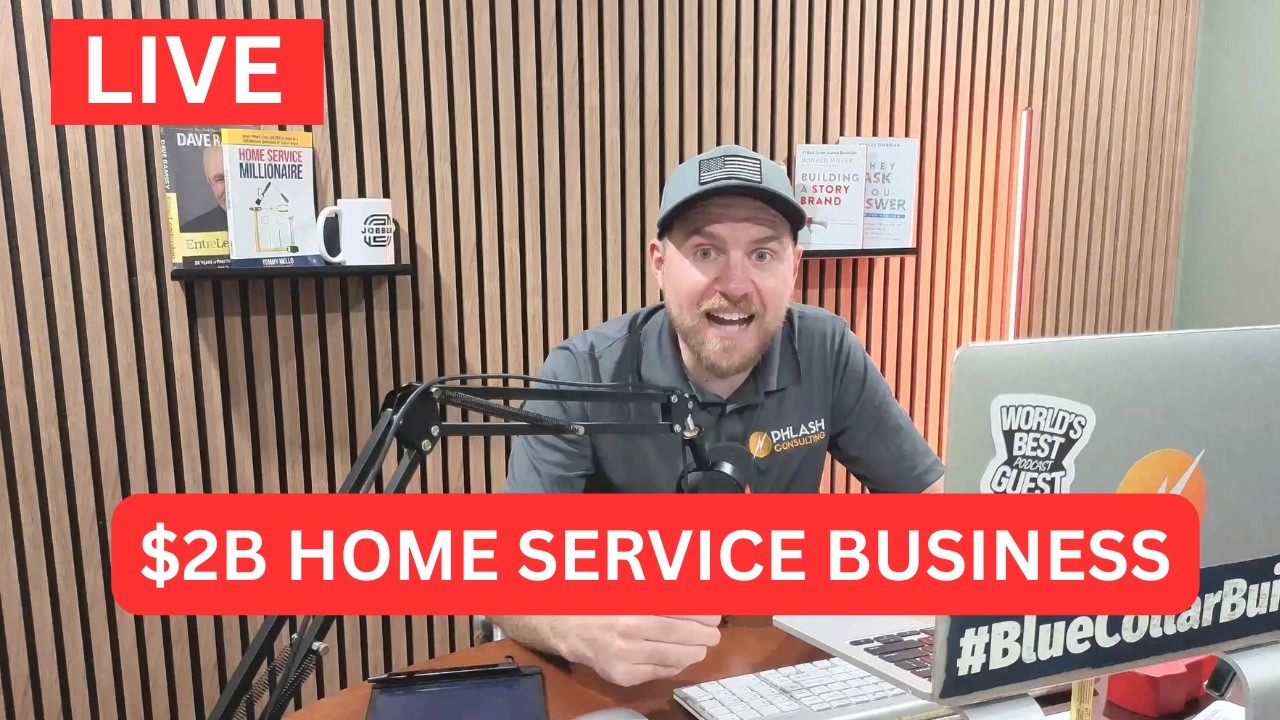
In this live YouTube/Instagram Q&A, Phil Risher opens by highlighting the recent $2 billion acquisition of A1 Garage Door Service (founded by Tommy Mello) and uses the deal as a springboard to discuss growth strategies for home‑service businesses. He emphasizes that scaling requires systematic, data‑driven processes rather than ad‑hoc lead sources. Throughout the session he answers a series of pre‑submitted and live questions covering: 1. The practical relevance of AI—agents, AI‑search, and AI‑generated content—explaining why they are real shifts (the 2027 “agent” year) and how his firm can build agents for clients. 2. The importance of tracking phone numbers per ad channel, how to maintain NAP consistency, and why tracking is essential for true ROAS. 3. Why many marketers only see impressions/clicks and miss the bottom‑line impact; he stresses the need for full return‑on‑ad‑spend data, lead‑to‑revenue attribution, and clean CRM integration. 4. Benchmark conversion metrics for home‑service firms: booking rate (~42% average, 60‑70% top) and close rate (40‑60% good range), plus tactics (immediate text/email, nurture sequences, estimate follow‑up) to improve them. 5. Strategies to filter out renter leads through geo‑targeting, intake‑form qualifiers, and platform‑level negative audience signals. 6. How to generate demand for obscure services (e.g., refinishing) via partnerships and demand‑gen ads versus demand‑capture SEO/Google ads. 7. A channel‑prioritization funnel—from online scheduling (hot) down to cold channels (direct mail, Yelp, Meta)—and a recommended rollout sequence to build a full‑funnel marketing stack. 8. Announcements about his upcoming book (launch Sept 8) that details scaling from $1 M to $10 M, and a reminder of weekly live Q&As and other content. Overall, Phil provides actionable, metric‑focused advice, demystifies hype around AI, and frames the $2 B deal as proof that home‑service businesses can achieve massive valuations through disciplined systems.
Chapters
Sold yesterday for $2 billion. Like, what in the world? This is actually crazy. Uh, I'm live. This is our live event today. We're doing some Q&A. We're gonna talk about this $2 billion home service business and what that means for home service businesses and the real possibilities that are happening. Um, while people are jumping in, feel free to hit the chat. Um, I am gonna answer real live questions. I have a couple questions that our team put together from home service business owners about marketing, AI, that kind of stuff. I'm live on Instagram. I'm live on YouTube. So as you hop in, feel free to throw it in chat. And if you're watching this after the fact, drop a comment. We add them to next week's. We do this every Thursday. Um, all right, cool. So yes, a $2 billion company sold for— a home service business sold for $2 billion. And let me pull up my screen real quick, and I'm going to share the actual report. All right, so, uh, KRR, which is, uh, some roll-up company reportedly agreed to acquire A1 Garage Door Service for approximately $2 billion. And if you know A1 Garage Door Service or you've heard the name Tommy Mello, Tommy Mello owns A1 Garage Door Service. He started it in 2007, and now literally 19 years later, he's selling it for $2 billion. Pretty crazy. If you don't know Tommy's story, he has this book actually right here, Home Service Millionaire. I highly recommend reading it. And then I also He has, you know, great content, YouTube stuff as well. He ended up, I think he got around to like $250 million and then he took some chips off the table and then doubled up again to go for this billion-dollar valuation. And now the company sold for $2 billion. What does this mean for home service businesses in particular? Well, what I can tell you is that if you are, you know, even under $1 million and you're just running on referrals and word of mouth, or you're $1 to $3 million, $3 to $5, $5 to $10. We work with $1 million to $10 million. A lot of times what Tommy talks about in this book and why I love this book so much is because it really just takes a system to actually grow. And it's not about, you know, get this new person over here that can send us leads or this new ad channel. It's literally a system and it's all built off of data. And I talk about this in my book that's coming out, but essentially you should read this book and The possibilities of a $2 billion home service business valuation and it selling within under 20 years is a real possibility that we all have the opportunity, uh, to be, to be a part of, which is pretty cool. So, uh, really cool stuff there. All right, let me hop back over here. I got some live Q&A questions. Um, IG, what's up guys? If you have a question, drop it here. Um, I'm live on Instagram and, uh, YouTube as well. So let's see. First question we got is from a remodeling company. Everyone's talking about AI search, AI agents, AI content. What actually matters for my business right now versus what's just hype I can ignore? All right. What I can tell you right now is that Sundar Pichai, the CEO of Google, said that 2027 is the year of the agent. And what that means is that agents are getting deployed on your behalf. And in Google, for example, they switched their Google search To now going into AI mode. And they also built out an agent called Spark that is a personal agent assistant type of thing that can work on your behalf. So when we talk about agents, there is a real possibility that you owning a remodeling company should be using agents in your business. Now, I've been on a lot of podcasts lately talking about agents, and here's what my, my thoughts are. Number one, yes, you can use Claude, you can use ChatGPT, you can use Gemini to build stuff and deploy stuff and try things out. I also think that as a business owner, you can get distracted by trying to do so much AI stuff that you lose track of actually growing your business. And when we talk about, do you want to be the CTO of your business? It might be fun to vibe code things and build things out and build agents. And I'm not saying not to. What I also think is that there are companies like ours that build and deploy agents on our clients' behalf so that way they don't have to vibe code, try to figure things out. We have developers and people that can build real agents that can be deployed for them. So is agents a hype? No. The reason is, is because like the agent that we built, it can do things better. It can do things faster. It can do things smarter. And it can do things that we, you know, the agent that we built literally could, it took 5 people to do this. So, um, when you build an agent, it's not just hype, right? It can actually do things that's better, faster, smarter. AI search. It's not just hype. Google, a trillion-dollar company, they switched their Google search homepage. If you go to Google right now, it used to say search. Now it says AI mode. So they're literally changing everything to AI search. So that's not hype. AI content. This is not hype. Google literally said create non-commodity content. So what I would just hesitate to say is people say AI is the end of the world. AI is going to, you know, destroy all these things. And I don't know, I don't have a crystal ball. You know, what I can tell you is that there are changes. We call them the 3 A's: agents, AI mode, and ads. And those 3 things are changing for home service businesses in 2027. And so you got to figure it out and get on board with it. So it's not, it's not just hype, it's real stuff. So hope that gives some clarity there. All right, let's see, we got— do I— okay. Do I need a separate tracking phone number for every ad channel? Doesn't that hurt my brand? Shouldn't people just know my main number? Plumbing company. Okay, so this is more of an old school thought process. If I were to ask you right now, what's the phone number for this company? You wouldn't know. let alone your own mom, probably, of her phone number, right? You know her number, but you get what I'm saying. Like a friend, you don't memorize people's phone numbers like you used to, and you don't know every single phone number like you used to. That's one thing. Number 2 is, as we think about the grand scheme of things, which is how do we actually track attribution and what do people actually do? The phone number is not the thing. It's actually the brand. So phone numbers is one way to actually track performance. Like Hey, they claim from this ad, so they call this phone number. So then you track it all the way through. And I still think that this is very important from an ad channel perspective, and it does not hurt your brand if you do it the right way. And what I think maybe what they mean by hurt your brand is there's a real thing for home service businesses called NAP—name, address, and phone number—and so you have to make sure that your name, address, and phone number match up across the board in specific places. And that is like your Google Business Profile number, your Yelp, your your meta, and there's like 70-some citations where it all has to line up because it builds trust. However, having tracking phone numbers, it does not affect that at all as long as it's done correctly. And even more importantly, it allows you to pull return on ad spend. So obviously you would want people to know your main number, but if people are coming from other channels, then the best way to track it is through tracking numbers. So that's my 2 cents on that. Um, all right, let's see. Next question we have here is My agency sends me reports with impressions and clicks, but I still don't know if I'm actually making money. What's missing? Okay, this is a custom closet company, and this one I will say is, is, yeah, this is a big one because so at my home service business, we had 28 team technicians, 4 customer service representatives. We're spending a bunch of money on ads, and same thing, we got impressions and clicks and cost per lead, and I still didn't know if I was actually making money. So So I would ask them like, who are these leads so that I can try to figure this out? And so my recommendation is whatever company that you're working with, you need to ask them to give you full return on ad spend data. And if they can't, at least as much as they can figure out using your CRM and data and working with you to fight for clean data. Because what happens is most marketing companies, they just care about outputs and not outcomes. So what that means is that you're paying for someone to run Facebook ads, you're paying for someone to run Yelp ads, you're paying for someone to do some type of ads. But you're not paying them to actually produce a return on ad spend, so you don't know if it's actually working or not. So what you're missing here is, well, your actual leads that you got. You got impressions and clicks, but who are those leads? How many did we get? How many of them actually turned into opportunities? And then how much of them actually turned into revenue? And that's how you can roll this up into actually making sense and making good data-driven marketing decisions. All right, let me just check the chat here. I'm live, so feel free to drop a comment in the chat if you have a question. I'm live on Instagram and YouTube. And let me pop over to the next question. All right. I feel like our close rate is the real problem, not lead volume. What conversion benchmarks should a home service company my size be hitting? And this is a painting company. Okay. So I feel like our close rate is the real problem, not lead volume. Well, one, a lot of people think that it's just, let me get more leads, put more leads into a leaky bucket. So what are the conversion benchmarks? And I'll break them down for you. So there's 2 main numbers in home service, and I'll give you the stats to back these up. So the first one is what we call booking rate, and booking rate is how many leads that you got versus how many jobs that you actually ran. So if you got 10 leads and you ran 4 jobs or you booked 4 jobs, that would be a 40% booking rate. Now, ServiceTitan did a big study on this, and what they found is that the average company is at 42% booking rate. So you got 10 leads and you booked 4.2 of them. You got 100 leads, you booked 42 of them into jobs. Now with that number, they said that the top performing companies are around 60 to 70% booking rate. So you can realistically get to 60 to 70% booking rate if you have all the systems in place. And I'll walk you through what the systems are to fix your booking rate. Basically, the first thing is when someone fills out a form, you need to have a text and an email to go right to them and ask them questions to start the conversation. So you want to say like, hey, can you send me a picture about the whatever, you know, um, service that you want done? Can you send me a picture of your backyard? Send me a picture of your kitchen. You're a painting company, so like send me a picture of whatever you want to get painted. And then they will start the conversation and now you have this open line of communication happening. It allows them to move the ball forward and then to communicate back and forth. The other thing with your booking rate is you need to have a system to actually call people and follow up with them. So it's cool to send a nice text and an email. People may respond, they may not respond. But then when you call them, this is what happened at my home service business, and you call them and they don't answer, well then poof, the lead is gone forever unless they call you back, right? So what you need to do is have them go into a lead nurture sequence with texts and emails and calls over like 14 days, 21 days. It depends on your business. Like if they have no heat, you want to do it a lot faster. But if it's like a painting thing, like 14 days is good. And this will allow you to then follow up with them and ultimately get them to either yes or no. Like they filled out a form for a reason. So like, let's get the most juice out of the squeeze. So that's the first number is your booking rate. The second number is your close rate. So again, this depends on your business. So in painting, let's say that you went out on an estimate. That's actually your job. Let's say you went out on an estimate. You have what's called a close rate. So you sent an estimate to these people and then they actually accepted the estimate. In home service, a good close rate is between 40% and 60%. And this is just industry benchmarks. I would say if you're at 40% to 50%, you could be happy with that. I would say if you're around 30%, it's not good. You should be around 40% to 60% in-home service. So 40% to 60% close rate. So then basically, how do you increase your close rate? You set up an estimate nurture sequence where you send out an estimate and then they get texts and emails to follow up. One pro tip on this, if you don't have any technology, is just incentivize your customer service representative to follow up on the estimate for you. And if they end up closing the estimate, then they'll get $20 or whatever it might be. It allows you to have someone who's following up on the estimates for you. Those are the 2 numbers, booking rate and close rate inside of home service. And those are the benchmarks. So hopefully that was helpful for your painting company. Um, all right, let's, uh, pop back over here. Let's see. How do I stop wasting ad dollars on leads that turn out to be renters who can't even authorize the work? Okay. Um, this one is a very tricky one because Usually when people run ads, they have 2 different issues. They have my marketing is not good and they have my actual follow-up is not good. And the reason is because you can run ads and you just feel like marketing's bad. But once you can identify, like in this situation, that it's actually my team is following up with them, but the ads themselves are going towards the wrong people. So how do you fix that? And there's 2 ways that you fix that. The first one is you want to make sure that your ads are pointed at the right place. Now, in this example, with renters in particular, you can't really say like, if you own your own home, you know, then, you know, click on this ad or something like that. But a lot of times we see this with demographics where it's like, hey, I don't want to show these ads in this area specifically, like with Google Ads. So, or even Meta ads or any ads really, you can pick the zip codes and the geographical areas. So that's one thing is like fix the ads by targeting the right areas. Now, when we talk about renters, this is where you can get more qualifiers on your intake form. So when someone goes to your page, your landing page from an ad, on that intake form is where you would have those qualifiers. So you would say, do you own a home? Do you own the home? Yes or no? If they say yes, then they can move on to the next step. If they say no, then you can say, we only work with owners, not renters. And it allows you to qualify people in and out of the actual lead. And I'll give you a pro tip on this. You can actually set up that conversion form on all these different platforms. So that way, if they say that they are renters, then you don't have to, then you won't get, it'll basically give a trigger back to Google, back to Meta saying that don't show my ad to those people because those people may be renters. And you can basically try to qualify back and forth and say, hey, this is right or this is wrong. You got to be a little, a little on Meta. I'll just be clear, like there are some like housing guidelines and different things, so you have to be very clear about what you're doing and how you, uh, delineate. But essentially that's what it is. You add friction into your intake process to try to get the right person to fill out the form. Um, awesome. Let's, uh, I'm live here, guys, so if you have questions, feel free to drop them in the chat. I'm just going through questions that have been submitted. By business owners. All right, let's see. 80% of people have no idea my service even exists as an option. How do you market something most homeowners don't know they need? And this is a refinishing company. Um, all right, so this is the classic example of demand gen versus demand capture. And when we talk about demand capture, demand capture is when someone just goes to Google and you're trying to be there so that way you capture the demand. They're super bottom of the funnel. In this instance, this company does refinishing. So I would imagine it's either like furniture refinishing or like bathroom refinishing or something. It's how do you actually create demand when people don't know that your service actually exists? And I'll say that there's 2 ways to do this. The first one is through partnerships. So let's say, let's just say that they did bathroom refinishing, you know, instead of doing a full remodel or something, they did refinishing. In order to create a partnership with a company that does bathroom remodels, let's say that there was a remodeling company that said, hey, we do remodels, but we don't do refinishing. And now you partner with them and they could either sub the work to you or they could just send you the lead and you would pay them for the lead. So basically, instead of them losing out on a $14,000 remodel, you could still capture a $4,000 refinishing job and you could still pay them, you know, maybe $500 for that lead because they paid for the lead and then it could work its way down. Just one example. There's a bunch of other ones, right? Like you could partner with painting companies. You could partner with even people at like Home Depot that are selling things. Like there's, there's a bunch of different ways you can do this partnership thing, but it allows you to go to the source of people that have the need that don't know about the solution that you have. And then those people educate them on all of their solutions and also get compensated for it. That's the first thing. And to me, I would go that route first because then you don't have to actually pay for any leads. You only pay when they send you a lead or a customer, and they're usually warmer, and you can usually close them better. That's the first thing. The second way, in my opinion, is to run ads. Specifically, when we talk about demand capture, you can do demand capture ads on Google, and then you can do more demand gen— demand generation ads on Meta. And when we do demand generation ads, we basically would run ads for people and target them It's like, hey, is your bathroom old? You don't have to spend $14K on a remodel. You could actually only spend $3,000 on refinishing. If you're interested, click right here. Like simple as that. And then you could have like a picture of a remodel for $14,000 and a picture of a refinish for $3,000. And they look very similar and then say, you know, red over here, green over here. Like that's a very simple ad for demand gen in an industry where you have to maybe create the demand. that's not necessarily— people don't know about it, they're not searching for it. Um, so pretty interesting stuff there, I would say. Um, cool, let me move on to the next question. If y'all have a question, drop it in the chat. I'm on Instagram and YouTube and, uh, happy to answer questions. And if I don't get it and you're watching this after the fact, we go live every Thursday, so I'll add it to the, to next Thursday's Q&A. All right. Direct mail, email blast, Yelp ads, Facebook referral partnerships, SEO, Google Ads. I keep hearing about new channels to try, and I don't know what to focus on first. Where do I start? And this is an HVAC business. All right, let me share my screen real quick, and I'm going to actually share this document. And that kind of plays into what we were talking about before, which is how do you actually get demand gen and demand capture? So hopefully y'all can see this. If you can't, drop a comment and I can zoom in or do something else. But essentially, when we think about all the different ad channels that are available for home service businesses, We want to work our way up from here. So if you're listening to this, then the hottest leads possible is when someone actually schedules a service online. So have online scheduling. The second one is organic referral called business. Basically, someone found your business and decided to call you. Then we have Google Local Service Ads. Then we have search ads like Google Search Ads. Then we have someone filled out a contact form. Someone did a chat widget or estimate calculator. Someone saw a popup on your website. Someone filled out a search ad form, which is what we talked about a little earlier. Someone did a Yelp call, Yelp message, YouTube ad, Meta ad. And this is from hot leads to colder audience. Now, your question was about like, what should we do first? What should we do? My recommendation, and this is what we do when we partner with companies, is we try to work our way up this funnel. And the reason is, is because we have some clients, like we had a remodeling company Where it was like, cool, let's add online scheduling to your website. Let's work on SEO to get more organic traffic. Let's turn on Google Local Service ads. And we stopped there. And he literally doubled his business in 6 months just by doing this. So then it's like, okay, we don't need to move up the funnel. Other people, when we start working with them, it's like, okay, we can start doing all these things. We can optimize your search ads. We can add new forms to your website. We can add chat widget and estimate calculator. We can add a popup. We can make sure your search ads are dialed in, and then we can layer in Yelp. And usually this is a good starter pack right here. Yelp, Yelp, and Yelp, I would say, is a little bit of an outlier. Like, we'll probably start down here of like search ads, pop-ups. Like, this is the core thing. And usually within 3 to 6 months, this starts to produce growth inside of their business when it's executed correctly. And these are the playbooks that we implement from like a new client perspective. Sometimes we might say, hey, we need to pop open Yelp and get those going. And then sometimes it's like, hey, we actually need to open this full funnel. One thing to just consider as we look at this is as we go up this funnel, your sales process has to be better and better and better because someone who scheduled online, there's literally no sales process. You kind of just show up to the thing and do the thing. When someone messages you on Yelp, or someone does a Meta form or calls you from Meta, usually they're about 45% of the way there of even working with you because it's more a colder audience. And the way that people build trust is based off of speed. So the quicker that you can get a text, an email, a call going with all of these people, the quicker that they're going to trust you and start moving closer and closer to a warm lead. So this is how we think about, you know, what should you do and in what order should you do it? and what's going to be the best use of your time and money as you move up this funnel. Cool. Hope that was helpful. Guys, I'm live, so if you have a question, drop it in the chat. A couple quick updates for us while we're still here. My book is coming out on September 8th. So this is September 3rd, so it's coming out on next Tuesday. And if you're interested in that book, you can just comment book and we'll get you the link to get on the launch team. We have a bunch of like cool free stuff that's coming out on that. It's basically how to scale a business from $1 million to $10 million, and it's everything that I learned working with a bunch of companies and generate a bunch of money for them. So hope that's helpful. And if you like content like this and you're not subscribed, please subscribe to our channel because we have videos coming out all the time. We do lives every Thursday. We have videos coming out every Tuesday. We have podcasts on Mondays. We have Shorts coming out all the time, posts coming out. So just happy to be a resource any way that's possible. And always just comment on our, comment on our videos and those questions will get put into our live Q&A. So thanks so much, guys, for hanging out with us. And
More from Phil




The companies that win the next five years won't be the ones gaming the system.


