$285k Per Month With 4 Virtual Assistants | With Brandon Lazar | Ninja VA
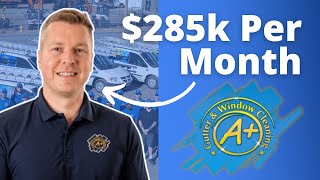
Interview with Brandon Lazar about scaling and exiting a seasonal gutter & window cleaning business and then building products/services to help home‑service owners. Brandon ran the business ~15 years, grew it to three locations (peak monthly revenue up to $285,000), ~32 technicians (two-person crews, ~16 crews), ~15 vans and ~2,500 jobs/year, and sold it about a year before this interview. He founded Ninja VA (virtual assistant matching + management software), Bonus Up (performance-pay/bonus system for field techs, integrates with Jobber/Housecall Pro), Hourly IQ, and Conquer coaching (requires $1M/year operators to be a coach; Basecamp with 250 systems). Key Ninja VA details: Philippines-based VAs, 1-in-200 selection funnel, exclusive placements (no shared call center), dashboard shows online status/timecards/bonuses, payroll handled (weekly), typical VA pay ~ $9–$11/hr vs. local CSRs $22–$25/hr; company reported saving ~$70,000 in admin overhead after switching. Typical VA tasks: CSR, CRM entry, quoting support, scheduling, follow-ups, appointment setting/cold outreach, re‑engagement campaigns. Onboarding: portal + Ninja Academy; typical time-to-candidates ~3–5 days to present 3 candidates; recommended early video check-ins (daily first week). Placement fee cited at $995 with a podcast discount (~$100 off using code described on the call).
Chapters
Welcome back to the show. I'm your host, Phil Risher. And on today's episode, we're going to be discussing how to hire a virtual assistant for your home service business to free you up to grow your business with Brandon Lazar. Thanks so much for joining us today, Brandon.
Hey, thanks for having me, Phil. It's an honor.
Yeah, for sure. Yeah. I'm so glad that we were able to connect. And so Brandon was the CEO of a gutter and window cleaning. He recently exited that business. He's also the founder of some really cool software products, Ninja Va and Bonus up, which we're gonna be talking about. Ninja Va specifically, I'm very curious about. And he's also the founder of Hourly iq and he has a conquer coach. So he coaches home service businesses on how to grow, home service business owners on how to grow. So I guess, Brandon, if we start with kind of the trades, your gutter and window cleaning business, can you tell us a little bit about that, how long you ran it, how you exited, that kind of stuff?
Yeah, I mean, humble beginnings is where I go with it. Right. Literally started in first year college in it, had a summer of free time and borrowed a friend's mom's minivan. And we had some magnet decals on the side. And, you know, we photocopied the first 250 postcards from his church's photocopier and we were in business. And, you know, through the 15 years. Sounds crazy to say that 15 years, decade and a half of running that service business. We ultimately grew it to three locations, and we would go from two technicians in February to 32 technicians in May every single year. That was like our standard operation. And we do 2,500 jobs a year.
Oh, my gosh. So 32 technicians, were they all running individual routes or they were teamed up or how did that work?
We did two person teams or pairings, So a crew lead and a technician. So roughly 16 crews. We had 15 work vans. Wow.
Yeah, so that's. You're cranking pretty good. And so just gutter cleaning and window cleaning or did you have other exteriors?
Pretty much, yeah. I would say like 45 of each of those. Gutter clean, window cleaning, and then we did a little bit of pressure washing and moss removal, roof cleaning, stuff like that, but not. Not a ton.
Wow. Okay. And then how did you make the decision to sell? I mean, if you, if you grew it pretty good, you probably made. Had some pretty good numbers and stuff.
We did, like, that was a great business. And like, we we had months where we got up to $285,000 in a single month of revenue. Right, right. And I think at the end of the day, I'm a huge loyal follower of Josh Latimer. He has the adage or the kind of concept that a home service business is awesome, but it's kind of like a training wheels business in some capacity. Right. And yes, you can totally take it and keep it for the long haul. I think you should always be building it with kind of that option to sell. And not only does that create, when you approach it from that perspective, it creates a situation where your business is more valuable, but it also operates better. And yeah, just a decade and a half in, that's a long time. And I'm. I'm an entrepreneur at heart doing home services.
Right.
Not a home service like technician type that gets full fulfillment from that kind of line of work doing business. So there's a difference there. And yeah, I just wanted to open up and do some other stuff.
Yeah. Very cool. So how did you end up selling it? Did someone come and give you an offer or was it employee or how did that go?
Yeah, so there was actually two attempts to basically make the ultimate deal. Go through the first one, you know, we kind of did all the wrong things and it, it ultimately kind of fizzled and it took nine months to fizzle, which really sucks because, you know, time is, is very valuable. You're also like your emotion and your anticipation as the owner while you're still having to like kind of come into the office and put on this brave face or few people even know that it's happening. And then all of a sudden for that to be kind of ripped out from under you, that. That sucks. But then ultimately the second approach was one of my technicians ultimately became one of the four purchasers. They kind of rolled him into the deal, which was super cool, changed his family tree forever. And the other three are, you know, an accountant and two lawyers, and they just found some, some interest in operating and owning a home service business that was quite profitable.
Wow. So. So they basically took someone who knew what they were doing from the actual job itself and said, hey, come in, partner with us. We'll maybe help with some of the capital and then you can run the day to day and maybe we'll help with the overall management of things.
Exactly. Like, they wanted someone on the ground that kind of knew what was going on because they're professionals in their own dimension. They have no idea what's going on. But they could also Provide the capital in order to make it a potential.
Yeah. Wow, that's awesome, man. Well, I'm so happy for you. That was a year ago. So how does it feel?
The weight was lifted and I got some other big things that I'm trying to achieve right now. So getting that additional capacity back was just. It was so refreshing.
Yeah, that's what I was going to ask you next. I was curious. So the real thing that piqued my interest was this Ninja VA thing. So did you start Ninja VA because you were using VAs within this home service business or how did that come about?
Yeah, like it's kind of like it was an emotional rollercoaster. Like as we went from two technicians to 32 technicians in the field, we'd have to do that same hyper expansion in the office. And the problem with the office is if you don't have really sound process and really high caliber individuals in the office, that's kind of like the brain of the operation. So things get clunky really, really quick. And ultimately that's where we found ourselves. We would have four full time CSRs in this very office that I'm in on this other end of this wall here. And I got to the point one year where it was just like, you know, it was clunky, it was expensive. We're paying 22 to 25 bucks an hour. And I remember overhearing that conversation so vividly. It's an open concept office. So as the owner, you're kind of always just listening to all things that are happening. And it was a very confusing tone of the call. And ultimately what was happening was this person was relaying the fact that we have a crew there cleaning their roof and they don't know who we are or why we're on their property and we're cleaning the wrong home. So I get it. You know, you input the wrong address when you're creating a client and the quote becomes the work order. And sure enough, there we are halfway through the wrong property. What made it really frustrating though is that was literally the second time in that same week that we're cleaning the wrong home. So at that point I was just like, this is ridiculous. This is really frustrating and it's very expensive. And I blame myself first. But ultimately I went through and I cleaned house. All four CSRs we had to terminate. And then we started in on the journey of, you know, transferring over our admin activities, the phone, the email, handling the CRM, all to virtual assistants who are located in the Philippines.
Wow. So you Went through that entire process yourself. So how are you finding your initial people? You're on upwork, interviewing random people fighting through that whole thing, basically.
Yeah, totally. Yeah, we kind of like skinned our knees and bruised our elbows, like. Yeah. Tried on upwork, but of course then they get a ping every, every time a new job gets posted and then they're just gone because they offered 50 cents more an hour. And you know, we've tried a couple other job boards and just didn't know what we didn't know. And most people are really good at like, you know, interviewing, hiring, onboarding, technicians, because that's what you do. It's like a frequent thing. But when it comes to admin, that's probably something you do less frequently. And then when it comes to virtual admin, it's like, hey, now I'm totally, you know, I got to relearn this thing off site for our business. Yeah. And then we're helping other people now as well.
Very cool. Yeah, I can see. You know, I used to be in the trades too and it's like very hands on, you know, Let me show you how to do this. Then take it off site with someone that's in the US Even then you take it a step further with international. It's like, this is crazy.
Yeah.
So, so, so what is it? So you are. You will pair home service business owners with virtual assistants and also manage the training process. Yeah.
So basically where we arrived is because we've had experience with software development through Bonus App, which does performance pay bonus systems, we were able to build out some really cool software for Ninja va. So essentially it's kind of like the hand that's being held as you go through your relationship with your va. So you can, from your dashboard you can see when your VA is online, if they're doing an awesome job, you can give them a bonus. You can see time cards, it automatically takes care of payroll so that they get paid every week. And you know that that is a component that, that's very helpful. But also kind of learning from my experience of having to go from two technicians to 32 technicians, I had to get really good at the hiring funnel for our technicians. And really what we've done through software is we've kind of translated over a lot of our learnings into kind of a web based hiring funnel for virtual assistants. So on average we're super, super picky inside of the Ninja VA ecosystem. And it's one finalized candidate for review from what was initially a respective 200 applicants. So it's a 1 in 200 ratio that we abide by.
Wow. Yeah. We have virtual assistants and it's like so hard. And then who's going to be on the phone? The all these intake calls, those 200 calls, the owner is going to sit on these calls. They're not, they don't know what they're looking for. So just even distilling that process down alone saves them a ton of time. So I definitely hear you on that. What about the actual like. So whether they're using Jobber or Housecall Pro or whatever, how do you get them up to speed on all of these things?
Yeah, so what's crucial is the assessment that we're using to find that 1 in 200 is its custom with kind of the end in mind of they're going to serve in a home service or a trades business capacity like that. That, that's it. That's the niche that we serve and we only serve that niche. So in that, you know, some of those questions are literally like a screen capture of a job or calendar that's all but full. And the question is, where would you put this job in this full calendar? Right. So when they get through that and they prove to be that 1 in 200, they might not have specific experience with Housecall Pro or Jobber, but they're going to be very intuitive, very tech savvy and they've illustrated that they're a high caliber individual because they're, they've gotten through the assessment with flying colors.
Yeah, very cool. Yeah, I mean it makes sense. And I, I think a lot of times business owners, they, they, they think they know how to hire the right people, but this is a whole nother level to it. And then I, I really like that, like, hey, there's an open spot here. Okay. Do we put that here or here? What, what about like. So I know like in the Philippines for example, they don't even have certain types of trades of like, you know, gutter cleaning or pressure washing or something.
Yeah.
How does that go with the whole process?
Yeah, I mean I think every company has its own DNA that you gotta kind of learn the nuances and the way we do things and our view on customer service and you know, like all those things have to be adopted by any person that's coming onto your team. Virtual assistants included. Right. So I would say that's just nuance. At the end of the day, you know, we have virtual assistants who are serving for like electricians and plumbers and H Vac. So like they don't need to know the technical like answers at that point. They, they can be fully validated. Knowing you know how to answer those questions and then handing it off or escalating it when needed.
Yeah, makes complete sense. So what are some of those common tasks that you would see a VA filling in a home service business like csr obviously, but are there other roles that they could fill?
It's a great question and actually I get asked that question a lot. So I literally created a guide. It's a 20 page ebook, it's ninjava.com guide and it answers the question what can a VA do in a home service business? And for me, speaking on my own experience, having used four VAs to run our 2,500 jobs a year, they were answering the phones, they were in our CRM, creating the client, creating the quote, converting the quote to a job, scheduling the job. The only kind of hiccupy area where we wanted an additional layer of control was when we were actually quoting over the phone. So all they would do there is we'd have like a Slack channel that's allocated to live quotes and they would include a screen capture. And then myself or maybe one of our local managers would just chime in and just say yep, that price is great. And from there they had all they needed to just kind of run with it and complete that entire customer journey.
Yeah, yeah, I mean it makes sense. One of the ones that I hear, I was just on a call last week actually and they do carpet cleaning, rug cleaning, that kind of stuff. They, they don't have an outside Salesperson to do B2B commercial, cold calling, appointment setting type stuff is, have you seen that practicality for virtual assistants to be able to do that kind of stuff?
Yeah, we literally have them in house. Like they're, they're calling out to other home service businesses, letting them know about. So we're practicing what we preach. And I think at the 30,000 foot perspective, what VAs do is they provide extra bandwidth for you to do the things that you know are valuable inside of your company, but maybe you just don't have the capacity to be doing. So that could be like a follow up, thank you call and a happy call. Right. If you get busy, you're not doing them, you're in response mode. Right. Or it could be like a re engagement campaign.
Right.
Here's all the customers that we serviced last year, but they haven't kind of resurfaced this year. Let's follow up with them. Right. So at 9 to $11 per hour with no burdens on top. It creates a situation where you have additional bandwidth to put them on and to kind of unlock, you know, huge amounts of value and benefit for your company.
Yeah, that was going to be. Actually my next question is the structure of pay. Do they fit into your natural payroll cycle or do you have to pay them weekly or how does it work?
No. And that's the beauty, right? So when I Transferred over from four in person CSRs to four virtual assistants, we save $70,000 in admin overhead. Right. So it is far more efficient. But I would also venture to say you just get a better caliber individual when you're comparing kind of apples to apples. Right? So more engaged, more detail oriented, better work ethic and at the end of it all like appreciative for the opportunity to work with you. Whereas like locally the bar was like did they show up at all and were they hungover and like, you know, did they last to the end of the day? You know, like it was just a very different lens to analyze the work quality through. So don't get me wrong, there's plenty of ways to do virtual assistants wrong in 2024. You go, you search that in Google and you're going to get tons of different offerings. But if you don't have somebody who speaks really great English, who's the 1 in 200 caliber and who is kind of sussed out with the end in mind being that like it's trade specific, you're kind of on shaky ground at that point. So that's what we've really tried to attack is those three deliverables.
Yeah, it makes sense. I mean the cost savings in and of itself, like even just to have another person that's going to assist with overflow calls or other random tasks for nine bucks an hour. I mean, come on. Six years ago I actually read for our work week. So if you haven't read that they talk a lot about VAs and outsourcing and I hired a VA for $7 an hour in the Philippines and she had her MBA and she still works. Yeah, she still works with me to this day. And she's a beast. Like she's amazing. So it definitely doable. I also have have the, the experience of going through people that were like, you know, not the best fits or the people that are going to try to turn and burn you with like taking on 20 clients and not fulfilling. So I think that's a really nice part of your services. You distill that down. Do you have any type of thing in there that says like, hey, if you work with one company, you can't work with 50 companies or any way to filter that out.
Yeah, great question. Let's talk about it. So the idea in the Ninja VA ecosystem is it's an exclusive placement, so they're 100% working for you. And the idea is they're not working for anyone else. When your phone rings too, it's not getting routed to a call center where 30 different people could potentially be answering it. So the idea is this is an exclusive placement with you and your company and they have the opportunity to really become like a specialist in your, the workings of your company. So that's the concept. I love the concept of the four hour work week. And you know, that largely focuses on the value of your time because ultimately like we have placements with guys that are just getting going. They literally have no technicians, but they just, they want to be doing the higher value activities on, on in terms of like what they fill their time with. And if that's selling jobs or hiring new Rockstar technicians, or training those technicians to upsell, or you know, just be more present, then that makes way more sense than, you know, doing something that someone could be doing at nine bucks an hour.
Yeah, makes complete sense. So I, in preparation for this, I had some, I got some questions from listeners. So one of them was, well, okay, this is all great, but how long does it take to get a VA up and running and get them up to speed with things?
Yeah, it's a great question. So basically through our ecosystem we've created this custom assessment where we literally have hundreds of candidates coming through daily. So because we have the volume kind of running, the whole concept of getting a VA is we want to put you on offense so you can go drive top line revenue, do handshaking, you know, create opportunities, stuff like that. And we'll kind of take care of the defense side of things. And in doing that, it's a very quick process. Basically, if you were to sign up today, you get instant access to our portal. In that portal there's what's called the Ninja Academy. And it's a bunch of guides, videos, courses, whatever you're looking for. And it'll essentially get you and your business ready for a VA to sign on board. Usually depending on the queue of people that have already been signed up and waiting for a placement, it usually takes us between three and five days to get you three candidates for review. And again, we revert back to that initial concept. We want to keep your Time of like the highest value and ultimately even the way we present the candidates to you. You log in, you see a beautiful visual resume and you learn about that candidate, what they're good at, what their disc assessment and their personality type is, their work experience, how much looking to work. And you actually even see a pre recorded interview with one of our HR managers so you can gauge how well they speak, what their energy is like, you know what their outlook is like and the broken down results of them going through our customized assessment that's specific for the home services and the trades and really all you got to do is you click the button saying I want to meet this person and the next step is we hop on an interview with them.
Well, okay. And then once you kind of get them up and running, do you kind of just treat them as if they're a CSR on your team? How often should you meet with them? Like, like a normal employee, I guess is how you would treat it.
Yeah, great question. So what I recommend is in the first week, let's do a video call, check in and a video call at the end. And I say video call right. With intention. That would be kind of for the first week. This would ensure that they don't have any questions, they don't have any struggles and ultimately gives you an opportunity to kind of just get a feeling and formulate a sentiment as to how well they're doing. Right. In addition to that, always have like a group messaging platform as well because they are in the Philippines. So you don't want to be if, if you're just texting your team right now, might be a good opportunity to implement something like Slack or WhatsApp or Voxer. And then after that first week I would say you could probably revert back to like one check in call, video call a day and then kind of just as needed thereafter.
Yeah, I completely agree. I think the most important part, especially when they're VA's overseas, is having open line of communication always. You don't want them to feel like they're literally out on the island because they don't know, you know, at all. So the more that you can support them, I think to get them up to speed.
Well, and we know how important culture is, right. And I think we want to extend and include as much as we possibly can. So I think the wrong way to do a VA is to have them feeling like a bolted on entity on the side of your company. Right. Whereas like the way we did it, honestly they were in all of our chats Our company chats, they were, you know, anytime we got a review, they were kind of chiming in with excitement, just as, you know, any one of our field technicians were. So I. I think bringing them in right into the fold is the way to go for sure.
Yeah, we actually send ours logoed polos too. Just like, hey, you're part of the team.
Love that. Yeah.
Yeah, wicked. Another quick question. So what are some red flags? Like, obviously, if they go through your process, hopefully it's pretty tight, but, like, I'm sure there's things that come up that you're like, I don't know about.
This and even before.
Yeah, yeah.
So just a couple that kind of come off the top of my. My mind slow to respond. Right. We want somebody who's very responsive, be it email or Slack or WhatsApp. Responsiveness is really important, especially in an environment where we're not sharing the same space. Right, right. Responsiveness is very important. I would say, obviously, if they're late or sick in the first, you know, call it month, as we would kind of have our concerns with a field technician having those issues early on. That would kind of hold true with respect to a virtual assistant as well. I would also say anytime we have a call, make it a video call. So we have a concept or a request or, you know, a process that says, anytime we have a call, we never have a call with cameras off. It's always cameras on. So that would be not a red flag, but it's just. It's a requirement, you know, and it allows you to connect and to make sure that you're on the same wavelength. Ultimately, we want to make sure that we can communicate well and communicate what the expectations are and hold them accountable to whatever your expectations are. And yeah, I think those would be the main ones. I would also say too, if you give any sort of feedback, because, like, at the end of the day, I always say the blood is still red. Right. And ordinarily, my success ratio with virtual assistants was far greater than it ever was with in person, but the blood is still red. And if you do give feedback, really kind of tune yourself into what is that response? Like, is it one of those ones where it's like, yes, thank you, I will grow from this. Or almost like a defensive nature of like, you know, well, I actually did this and I meant to do that, and it wasn't my fault. So those would be a few things to chew on.
Yeah, cool. Well, yeah, I mean, this sounds great. So I'm curious, though, to ask you, because I don't know much about this. So you had mentioned bonus up. You started that before, and then you kind of got into ngpa. What is bonus up? I don't know anything about it.
Yeah, Bonus up. Does performance pay bonus systems for field technicians. So instead of just. Just paying your tax, a base wage, and asking them to go work hard and be productive and get reviews and take good care of the customer and get upsells while you're at it, we got to create kind of a system that incentivizes them to do those things and ultimately creates a reality where we're in alignment. They care about the same things as you do as the owner.
Yeah. Makes sense. And then it connects into jobber or CRMs or something like that.
Yeah. So we API with Jobber and Housecall Pro. Ultimately, you need to know the hours work for the technician as well as the value of the jobs. If we have those two things, then we know kind of what their man hour rate was or how productive they were. And ultimately, if they're super productive, meaning they got a large amount of work done in a short period of time, then we can afford to recognize and reward them for being awesome.
Yeah, makes sense. Yeah. Cool. So what are some of the biggest changes coming up in home services with AI technology? I mean, yours seem to be on the front of this kind of stuff like web dev and all this. What are you seeing coming down the pike? Any cool stuff from VAS AI?
Yeah, I think the cream is going to rise to the top, and ultimately, if you're open to it, you're going to be empowered with these tools to just move that much quicker and provide that much better of a service. I think at the end of the day, we're all in the convenience game. Right. Our customer calls in and they have this thing and they just want it off their list. And if they weren't in that position, then they would just do it on their own on their weekend. Right. So we always got to maintain that clear perspective that, you know, throughout the entire process of getting us hired or a quote from us or getting our crews there or how we unfold the job at the day. You know, are we abiding by that concept that, like, we want to value them?
We.
We want to provide an experience and ultimately provide a very convenient solution.
Yeah. I did a Jobber podcast and it was all about how can you stand out from the big guys, the competition? And I think it's a lot about that customer experience and how can you utilize VA's AI? Technology to build that level of experience because then it validates that you could charge more. Also, customers are going to come back. It gives you that room for things. So I completely agree. I did want to go back and ask you a little bit more about scaling the business from the copier flyers to this big thing. Did you implement anything in there like traction or profit first or any of these resources as you started to scale or where did you hit different parts? I'm just curious to hear about that trajectory a little bit.
Yeah. So I was always of the mindset that if something happens, something goes sideways or an obstacle presents itself, yes, we have to go deal with the issue at hand. But always we gotta look at it from like a higher level perspective. And like, is there a system that could have been in place that could have minimized or mitigated that thing from happening? Right. And I think too often the people I work with, they're like, oh, a fire, let's go put out the fire. Well, if that's the end of the equation, then what happens? In three months or a year from now the same thing's going to happen again because we, we didn't look at it systemically and provide some sort of a solution to mitigate it from happening again.
Yeah. I think you're talking about with your conquer coaching. A lot of them are firefighting instead of finding at least.
Yeah, yeah. Ultimately like a home service business. It's a bunch of great systems ran by a bunch of great people. And that's all it is. Right. So we need those systems in place. And you got to be mindful. Like I would go into the off season because we're, we're not only seasonal here, we're hyper seasonal. I go into the off season with like three pages of like bullet point list items of all the things that I gotta go break or recreate or that like need to be implemented. And we gotta be mindful. Cause when you get to what is your busy season, you know, over to the slow season, it all kind of just feels like a blur usually. So you gotta kind of. You have to have a system for harnessing or grabbing what those opportunities for growth are.
Yeah. I'm really curious about your thoughts on this. So with systems it's so. And I used to be in the trades. I used to be in the office and out on the truck. And also it's so easy, you know, to build a Google Doc and then give it to your VAs and train them on that. But how, what are the systems that you can Implement with your techs and how do you get them to use those systems?
Yeah.
What have you seen to be most effective?
Yeah, Two of the core documents that we followed, like I love technology, but for these two documents we did pen and paper and I literally print out like 2,500 of one at the beginning of the year and 5,000 of the other. And one was a job sheet and one was a day sheet. And the job sheet basically was the perfect job spelled out. So it was a guide that they were to follow and fill out as they went through the respective job. On the backside there was a job hazard assessment because like at the end of the day, if somebody's gonna get hurt or worse, there's no point in doing what we're about to do today. Right. So for every job they'd fill that out. And ultimately that was kind of like the step by step guide to consistently delivering a very high level of service. So I reflect back on that one and then the other one was the job sheet. So you know, sign in, do the pre truck walk around and then when you get back to the yard, these are the six or seven things that need to happen so that we're, you know, basically treating our vehicle like it's a fire truck and it's ready to go out fully equipped, fully of gas and, and sound.
Yeah. The other thing I'm really curious about is going from, you know, no text to then ramping up to 32 technicians every single year. How did you bring the same people back or did they have part time job or. Yeah, how did that work?
Yeah, I wish we did, but you know, our, our Avatar was a 19 to 23 year old. Right. So in the fall they would either leave to go back to, to school or, or they would go play hockey or football. And of those 32 technicians, we'd be lucky if we had six returning faces around the morning circle. So we had to like hyper systematize our process. Right. So even down to like we had this training center which was basically just framed up on the back of a shipping container. And ultimately it provided a very neutral environment where somebody with a great work ethic but not specific experience in this trade could kind of develop their skills. And we're not training at a customer's home and we would, we would basically just systematize it from, from the ground up. Every square inch, every step of the process was systematized.
Yeah. So cool. I feel like in that model it's like every year you're almost like starting the business again. A little bit like getting everyone up to speed, getting them back in, and then at the end of the year evaluating, well, how did this go? Almost like football. It seems like, like you go into your main season and you go into training camp or something, you are.
But I actually saw that as a real opportunity.
Right.
Because on, on the opposite side, okay, you got a bunch of these veterans that have been around for, you know, 10 years. It's really tough to pivot that business and to continue to progress. Because, like, what I've learned is your business, if it's, if it's going to really hit some awesome benchmarks of growth. Humans are generally not designed that way where they'll, they'll fluctuate a little bit. But ultimately, like, what I time and time found was when we start up the new season, having completed that three pages of laundry list of implementations and building out new systems and stuff, like, the business is different. It looks and feels and drives differently. And for that same technician that kind of subscribed to the beginning of last year, like, that's hard for them to adopt and to stay with. So I actually saw it as an opportunity.
Yeah. Oh, 100%. You can take exactly what you just learned and the mistakes and then now you tweak it again and then you go back at it. It sounds amazing. Yeah, for sure.
For sure.
Yeah. Very cool. And so ain't. I'm curious. We got a couple more minutes here. But with Conquer coaching, I'm not too familiar with how that works. Do they give you a structured kind of like, hey, here's the roadmap for people to go through, or do you kind of come up with it as you go?
Yeah. So to start out, in order to be considered as a coach, you have to have a million dollar a year service business. Okay. So it's one of those things where it's not like going to college, where it's just taught by people that have never been successful in the real world. So that's kind of like the first key differentiator to begin with. After that, we've built out what's called Basecamp. And IT has over 250 systems that are available for download. And you can kind of customize it, add your logo, and then you're like ready to go. And then from there there's kind of two main offerings. So you can do a solo, which is just one on one with a coach, or it could be more of a group environment. So usually four other entrepreneurs. Sorry, four in total, including yourself and the coach. And they'll all be at kind of the similar size of business and they'll be experiencing the same pain points as you are, as well as the same wins. And there's just such a value in having that element of community. But in an environment where these people are not your competition, they're. They're scattered around the country and it, it can really, you know, amplify what you're here to do.
Yeah, it makes sense because. Because then for you as the coach, they're all kind of facing similar things. If they're all around 500,000 in revenue or 2 million in revenue, whatever, so. And then they can bounce over. This is working for me. That's not. And some mini cohort almost of people.
So, yeah, I think for, for, you know, a good amount of them, they would find success eventually. But it's all about, know, compression of time. Right. If, if you're matched up with a coach, like, there's that, that idea that, like, you are in a position to help your former version of yourself. Right. And those people are kind of the former version of me when I was trying to fumble around and figure it out. And it doesn't take a lot of effort, especially with my perspective being kind of up on the mountainside, watching it all unfold down below to, to really, you know, get them to where they want to go.
Yeah. In preparation for this call, I restarted reading. I mean, I finished it many times before, but. Buy back your time by Dan Martell.
He lives like an hour and a half away from me. He is an absolute beast. I love that guy.
Yeah. And it talks so much about time and thinking about time intervals. And if you're doing. If you have a problem and you have the money to solve the problem, you don't have a problem because you can solve it. And it ties all this together with VAS coaching. Like, if you have the money, then you have the solution.
Yeah. And I don't want to, like, hijack his idea, but like, his concept of, you know, the buyback rate is, you know, if you value your time at 100 bucks an hour, which, you know, if you're a service business owner is very realistic.
Yeah.
Then you kind of get the quarter multiplier of the value of your time in order to basically buy bits and pieces of your calendar back. Right. So in that scenario, you'd have up to 25 bucks an hour to start to take things back out of your calendar so that you have more bandwidth to do the higher value activities. The other concept that I always like to talk about too is like we're always so focused on dollars per hour of value, which is very important. Like what you choose to fill your day with ultimately will be, you know, the days turn into weeks, turn into months, and that will be the end conclusion of of your season. I also like to consider too though is like does that specific task bring me energy or does it take my energy? Right. Because you as the leader, the owner, the CEO, if you're doing a bunch of tasks, like for me it was fielding callbacks. I hated feeling fielding callbacks because it's just everyone that's pissed off. Right. So after a day of fielding callbacks, I had nothing left to give to my family, to the business, to my health. Right. So yes, time consideration and value is very important. But also you got to look at the energy side of things too. And if you don't like doing something, then get somebody else to do it.
Yep, I completely agree. Well, Brandon, this has been great, man. So where should people go to to learn about Ninja va? Bonus up you your conquer coaching any of that stuff?
Yeah. So basically the way Ninja VA works is I'm on a mission here to help 1,000 entrepreneurs each save a thousand hours of time. So a million hours of give back is what I'm looking for. And if you feel like what we talked about today would be a good fit, basically there's a one time placement fee. It's 995 but I've actually set up a discount code for this podcast. So if you just put in flash 100 flash with a ph then basically you'll save 100 bucks off your placement fee and you can expect to break even when comparing that to an in person admin inside of two weeks. So it's a really quick break even. And if you want to just hop on for a demo too, this is my passion right now and I'm trying to help people to save their time. And that's@ninjava.com awesome.
Well, yeah, we'll be sure to put all that stuff in the show notes as well. But it's been really great getting to know you, man. And hopefully we continue getting to know each other.
Yeah. It was an honor. Thank you for having me on.
You got it. Later.
More from Phil




The companies that win the next five years won't be the ones gaming the system.


