"Blue is The New White Collar" With Josh Zolin - Grow Local Business with #PhlashConsulting
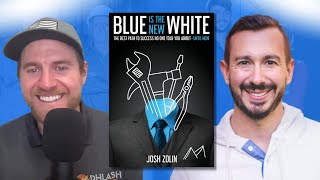
This is a transcript of a March 25, 2024 YouTube interview where Phil Risher speaks with Josh Zolin (CEO of Windy City Equipment) about scaling a family-owned commercial equipment business and advocating for skilled trades via his "Blue is the New White" book, podcast, and academy. Key themes: growth from a two-person shop to ~70 employees across multiple branches, hiring experienced technicians to improve ROI, introducing technology and basic financial tracking, experimenting with incentive models then shifting to value-based peer recognition, and creating training (soft skills and financial literacy) for frontline employees.
Chapters
Welcome back to the show. I'm your host, Phil Risher. And on today's episode, we're going to be discussing why blue collar is the new white collar and how to grow your business with Josh Zolin. Josh, thanks so much for joining us today, man.
Phil, thanks for the invite, man. I really appreciate it. I'm excited to, to get into it with you.
Yeah, likewise. So you have a podcast, Blue is the New White. You're author of a book, Blue is a New White. You're also CEO of Windy City Equipment. And from what I know, from what I've researched about you, you got into this industry because your dad's business, he was running a two man show and you're like, hey, let me hop in here. And you ended up scaling this business. Can you tell us a little about that, that your dad's business and how you got involved?
Yeah, no, absolutely. So Windy City Equipment is my dad's business. He started that back in 2003. And so when he started that here in Arizona, I was out in California. I won't get too much into my previous life unless you ask me questions about it, you know, but, but I ended up moving out here to work with him completely night and day from the career that I was in previously. And, and so, you know, it was, it was one of those things like you said. He was, he was a one man show. I didn't know what the hell he did for a living. I didn't know anything about the trade. I'd never worked a trade before, you know, and I did know though that there was opportunity in it. And so I wanted to explore that opportunity with him. And, and I came on and my dad's really old school, so there's no riding coattails, there's no free passes, nothing like that. I spent almost 10 years in the field as a technician, you know, learning how to fix restaurant equipment before even getting my arms around the back end, you know, dispatching, quoting, all that kind of stuff. But, but yeah, that's kind of, that's kind of how I got into it from, from that aspect.
Yeah. What, so what is the business you, you do like equipment for commercial stuff?
Yeah. So, so it started as commercial kitchen equipment. So ovens, fryers, stoves, you know, basically anything that got hot, right, is, is what we focused on. That's my trade background, you know, so that's, that, that's kind of where we started. We had since expanded into commercial H vac, commercial refrigeration, fabrication, installation, you know, all that kind of stuff. You know, and obviously we've got installation departments now. We've got preventative maintenance departments now. And then we've got our, our typical regular R M service department.
Nice. So two you with two you. Well, your dad and then two people. And then you kind of came in and you scaled it and so where are you at right now?
Right now we're almost, let's see, we're close to 70 employees. We've got four branches in the Southwest here. Phoenix, Tucson, Albuquerque, New Mexico, and Houston, Texas. And yeah, it's been a hell of a ride. We actually landed on the, the Inc. 5000 list of fastest growing companies in America three times, three years in a row. That was 2018, 2019, 2020. I have since taken my foot off the gas a little bit, you know, for, for my health and the sanity of my team. But it has been fun and we do continue to grow to this day.
Yeah, that's awesome. So you kind of went through this process and you realized, well, blue is the new white. You can make a bunch of money in the trades. I guess you kind of probably had this epiphany. What does my dad do? Got into the technician side of things. But how did that morph for you into seeing the light of that? You can actually make a whole bunch of money in this field.
Yeah. Well, I'll tell you this, it certainly didn't happen right away. I was like, I made a big mistake, you know, and, and honestly, it was just, my lifestyle was, was completely different. And I am just, I really began to resonate with the skilled trades and the blue collar world and the service world. Once I got into it, once I started learning how to do it, and once my customers started looking at me and saying, hey, thank you, you just saved my ass on a Friday night. Now my business can continue to operate over the weekend and I can feed my family. And so that's really, that was kind of the turning point where I was like, there's something here. It wasn't until we began to grow, however, because again, my dad's an old school guy, so, you know, I made peanuts when I first started. It was nothing. I had a. I, my, my second job was delivering pizzas at night. Right. So I would, I would work at this business from 5 o' clock in the morning to 6 o' clock at night and I would deliver pizzas from like 7 to 11 and then get up and do it all all over again the next day just so I could pay rent.
Right, right.
And so, but once we started to Grow. And once we started to bring on more employees and technicians, then that's when I was like, oh, wait, to be competitive with the bigger companies, this is what I have to offer for wages. This is what I have to offer for benefits. This is what I have to, you know, provide from a cultural standpoint, from a, from an incentive standpoint, commission standpoint. Back then we don't do commission anymore, but back then, you know, and it kind of got me thinking, like, okay, you know, aside from how the skilled trades have, have resonated with me, now there's a big part of this that's financially lucrative. How come nobody knows about that? I was never taught that. I was taught to avoid being a plumber or, you know, a construction worker or anything like that. So that's kind of where I started to see the opportunity that existed in these fields.
Yeah, it's so interesting because your dad was in the trades and maybe they in, in school and society, they teach you to go, you know, go to college, get good grades, the whole thing. I know a little bit about your background, but you were in, you were in high school, really smart guy. And they were kind of pushing you to like, go to college. And you went to one semester or something of entrepreneur class or something. You're like, I'm out of here. This is not for me. Is that kind of how.
That's right. That's right. I am. So, so I won't get too much into it, but when I was a kid, I was a stuntman, right? My who a stunt was stunt people. And that's kind of what I did. So I knew I wasn't going to call it, wasn't going to go to college. I was a smart kid in high school, but, you know, I mean, when I went to high school, I went to class, you know, I got really good grades. But. But yeah, it was, it was one of those things where everyone was like, even though I had this family background and I had this path that I was going to go down, even my counselors, they were like, well, you know, you know, even as a, you know, you really should go to college in this day and age, you know, if that doesn't work out, you know, you got that to fall back on. And no one ever told me to fall back on a trade. No one ever told me to look into a trade. It was all, you know, go to college, go to college, go to college. So, you know, right after high school, I didn't end up moving out to California just yet. It took me about Six months or so. I tried one class in a technical college. It was entrepreneurship one, because I was always interested in business ownership. And I think it was like my third or fourth class when the instructor stood up there and in all seriousness, looked at the class and said, if you're going to succeed in business.
You.
Cannot have a passion for what you do. I think at the time, I knew what he was trying to say, but the fact that he couldn't articulate it in a way that landed with me. I was like, all right, out. Thanks for your time.
Wow. Wow. Well, most of the people that listen to this show are business owners or interested in the trades of some sort. I know they're all saying, dude, you got two people and now you're 70. Like, what the heck did you do? So. So you were a tech for, like, for 10 years, you said. But what were some of those milestones that you kind of hit? Most of the people I would say that are listening are maybe 1 to 10 million in revenue. Maybe they're like 800, 900, and trying to get over that threshold. So maybe walk us through when you were at that stage, what were some of those things?
Yeah, absolutely. That's a really good question. I appreciate. I appreciate that. You know, it's so funny. Like, looking back now, at the time, I had no idea if I was doing any of it, right? So I'll just. I'll preface it with that, you know, but looking back now, I can kind of see how. How the strategy, you know, was put together. But really, you know, it was about controlling costs. And listen, this is all fundamental stuff, right? It was about controlling costs. It was about bringing on the right people, right? So, you know, when it was. Here's a lesson that I learned, okay? So when it was just me and my dad, he had taught me how to be a tech, you know, we started to get busy. We got to a point where we just couldn't take on all the work, right? And that's. That was. That's been our M.O. up until today. We. We never put the cart before the horse. We always exhaust ourselves before bringing on somebody to alleviate that, right? I always put it on my shoulders, put a task or a position or a department on my shoulders until it got to be too much and I had to bring somebody in to take it off. Then I put something else on my shoulders and do the same thing, right? But one of the lessons we learned was we would bring on people and train them, because our thought process was, well, if we bring on people at A low cost and then train them how to, how to do it the way we did it. You know, that's how we can kind of train success. Looking back, it wasn't until we kind of went away from that model and started to bring on experienced technicians and experienced people in the industry that we really got to start seeing that roi. It takes a long time to train people. There's a lot of opportunity costs that people miss during the training process because they think that they're ready to be in front of a customer. They think that they're ready to fix the equipment themselves. And that's all good and that's all necessary. But I would say focus on getting that experience and getting people who can hit the ground running so you can fuel that part of your business, you can fuel the training, you can fuel the apprenticeships and you can develop that talent, but it's supplemented by experience and hard roi.
That's so good. I think a lot of times people hire minions and they're like, you know, listen to whatever I say. I'm the, I'm the best, I'm the hero. I'll tell you exactly what to do. And then you have a bunch of minions running around.
Yeah.
When if you just spend a little bit more money and hire that expert and they're going to come into your business and say, no, no, no, I've done this before and this is what worked, this is what didn't work, let's skip over that year long of trials and tribulation and just get to the end result and implement this system.
That's right. And at the time you're going to say to yourself, how can I afford this? And you've got to flip that question to how can I not?
Yeah, that's so good. I, I, I was just doing like a solo episode with the rich dad, poor dad of like, I can't afford that. Well, no, how can you afford that? Because when you ask those questions, you start coming up with solutions of like, what am I going to do? How am I going to pay this person? Maybe it is a commission structure. Maybe there is some like burnt bonuses or something that's attached to their performance. But I think that that's so good. So you, you mentioned about controlling your costs and a lot of that sounds like was hiring the right people that could come in and actually execute and not just like crushing your overhead with, with people that, that weren't producing an roi. How are some of those ways that you were tracking your roi? You mentioned that that was like a Very important part of this equation.
Yeah. So to put this into context, when I came on to the company, my dad wasn't even accepting credit cards. Like, there was zero technology in the business. I mean, he. Okay, so let me, let me rephrase that. He was using QuickBooks, but he was using it very poorly. Yeah, I mean, really, he was just, he was a technician trying to do business. Yeah, right. And, and he'll tell you that till he's blue in the face. So that's why I'm comfortable telling you that, too. But, but yeah, we, you know, once I got on, once I, once I got my arms around everything, I said, okay, let's start accepting credit cards. What was the next step? Okay, well, let's digitize some of the things that we're doing, the invoicing process. Let's get pictures. Okay, let's start collecting the data that we need to answer that question. And, you know, it takes time, and that's the hard part, especially for somebody like me. Listen, I've done enough personality profiles to know that, like, I want to be here and get to here in, like, negative three days. And so, you know, but you have to go through that process of collecting the data, and then when you can organize that data, usually in today's world, it's via software. Right? Kind of. Back then, it was a combination of implementing this software, this technology, and also manual tracking. Right. And, and, and when I say manual tracking, I mean, you know, utilization of QuickBooks. But we were meant manually entering all the paper invoices at the end of every single day. That's what I would do. I take our stack of invoices, I put it on the desk, I would enter each one into QuickBooks individually, and then it would tell me, okay, well, this was, this was my cost. This is what I made. So it started very, very simple. Right. And, yeah. And again, I have half a semester of entrepreneurship one under my belt. So, like, you know, this is hieroglyphics to me. And, but, you know, once you look at it enough and once you can start, you know, connecting the dots and seeing. Okay, well, you know, I've, I, I've sold this part this many times. If I did a 5% increase on this part, this is what it's going to translate to on my bottom line. And here's the thing. When we started bringing on the right people, the experienced people, what it did was it freed me up to ask these questions to myself. That's freed me up to sit down and actually look at this and Say I need to know beyond a shadow of a doubt that we're making money.
Yeah, that's right.
You know, that's what we do. We figure it out.
Yeah. I don't know if you've read the book buy back your time with Dan Martell. Well, it's a. It's basically you're hitting the nail on the head. What he says is like, once you put the weight on your shoulders and you max out your stuff, then you know that you can buy back your time and hire someone to do this position. And then you move on to the next thing and you're keep buying back your time into the next phase of things.
What's it called? Buyback. Buy back.
Buy back your time. Yeah. Really, really good book. One of the things that I'm curious about, you mentioned in the beginning, you don't offer, you don't pay commission. Now, how. How do you incentivize your team or what? Can you talk through that? Because I'm sure other people that peek their ears like, wait, wait, what?
Yeah, so. So full, you know, full disclosure, there is a difference between residential and commercial, Right. So the commercial world isn't as used to commission as the residential world. In order to be competitive in the residential world, you know, maybe I'd be singing a different tune right now, but that's not the world I live in. Yeah. That being said, there are still some commercial businesses, especially H vac specific businesses that work on commission. Now, you know, we do several different trades, so that probably plays a part into it as well. But incentivization is something that I am passionate about. And so, you know, we've gone through over the years different ways to incentivize, specifically technicians, but other areas of the business as well. Technicians. It was. Okay, well, you know, let's have a sales goal every quarter, and if they hit it, they get a bonus. Okay. Seems easy enough. You know, logistics, as you grow something that simple get is crazy as it sounds, it doesn't. You reach a threshold where it doesn't work. Okay. And then we were like, okay, well, let's incentivize then. Let's add a qualifier to it. Let's go. Here's your sales. But if you get two or more customer complaints, you're not eligible. Right. Or if your profit margin is below X, you're not eligible. Right. Or. And then, you know, you find how these things kind of affect people's behaviors during the day, and you start to make small changes like, okay, well, maybe that wasn't the way to word it, maybe it's. We'll give you more money if your profit margins are above X, not take away money if they're below. You know what I mean?
Yeah.
So we went through years and years of trying to refine this process and ultimately got rid of it. We ultimately, you know, we, we put it, what we did is we calculated the, the bonuses that the, the best techs typically did. We added it to their salary, you know, so kind of normalized everything. Just said, basically, we're guaranteeing you a bonus. It's part of your, your hourly rate now. And, and that was fine, but then I really wanted to. As you grow, culture becomes very important, you know, and, and in the world we live in today with the skills gap and technicians can go wherever they want and make a ton of money. It's really lucrative. So what makes them want to stay at your company? And so we flipped the incentivization to upholding our company values. So we've got five company values, communicate relentlessly, one team, own everything, change the standard, and endlessly improve. So we've ingrained this throughout the business. And now if anyone on the team notices somebody else exhibiting one of those values, they nominate them for a raffle ticket. So you got all these people nominating all these other people peer to peer, and everyone's getting raffle tickets. It's going into a bin. It's going into a bin. Then at the end of every month, or beginning of every month, I should say, we do a drawing from the previous month and a person can win a $50 gift card. Whoever's name gets drawn. More raffle tickets in the bin. Better chance you have of, you know, getting that 50 bucks. The fun part is that even if you win or if you don't or whatever, all of those go back into the till, you know, into the annual till. And then at the end of the year, we raffle off. Vacations, TVs, tools, game systems, gift cards, cash. Whole bunch of fun stuff. Right? And it's all tied back to the company values.
Yeah, I love that. I think that in, in our space values, and it can be frou frou, and people say, I have these core values, but they don't actually implement them or all this. And so I think that's one way where you get your team involved in the fun part of the values while also then building the peer to peer recognition. So that way it's not just on you, Josh, saying, hey, here's our values. You're not exhibiting these or painting them on the wall or something.
Yeah, you have to live them. You have to live them. You've got a higher fire, reward and reprimand based on the values. You've got to remind people on a daily basis, you know, what, what they mean, why they're there. Take any and every opportunity to highlight it. I mean, it's really, you know, like you said, people hear values and it's like a pay to play. Honesty, integrity, accountability, you know, check, check, check, check, check. And that ain't it, man. It's, it's, it's a reflection of who you are as an owner, who your leadership team is, and ultimately how people view your entire business. And everyone's got to live it.
Yeah, I completely agree. So you went from 2 to 70 in that time period. You realize, hey, there's a lot of opportunity out here in the trade space. And how did you get going with the blue collars, the new white? How did that all come about? You probably were so excited and people were asking you, dude, how are you making all this money or doing this kind of thing or what? What was that process like?
Yeah, so that was. So blue is the new white. That's a passion project of mine, and it started as a book. All right. Because I, I, my, my nature is to help people. I really love to be able. I mean, I'm in the service business. I mean, that's not by accident. Right, right. And so, you know, I was, it was really starting to bother me that I couldn't find any resources on, you know, why the skilled trades or why the blue collar world is so important. There's literally, there's, there was no books. There was no. Even back then. There was, you know, it wasn't on social media like it is today, which is fantastic, by the way. They don't talk about it in schools. They, you know, so it's just, you know, I've heard before that the opposite of love isn't hate, it's indifference. Right. And I use this example a lot. It's not that people hate the skilled trades. It's that they're completely and utterly indifferent to them. You know, it's, it's like that sock on the, on the dryer or the penny on the dresser that people just completely disregard. It becomes white noise and it's just taken for granted.
Yes.
Right. So that frustrated me to no end. And I was complaining about it to my wife one day and she was like, well, instead of complaining about how there's no books out there, why don't you just write One I had previously shared with her before that I would like to write a book. And I never connected the dots, right. And trust me, it's, it's kind of the irony of this is you couldn't pay me to, to read a book in high school. I didn't start reading until I got, you know, older.
Yeah, same.
But that's, that's kind of how that came about. And so she, you know, credit to her, you know, she's, she's a big Orange is the New Black fan. And she was like, I got a name for your book.
Oh, my gosh, that's great.
Like, oh my gosh, that's perfect. What a great name. So the book launched and, and it was a hit. I mean, it was adopted into several high schools across the country. It created outreach from the skilled trades, the blue collar community, you know, saying, hey, this is amazing. Can I, can I have a copy? Can I share a copy? Know, how can I get my hands on this? And so that's how the blues, the new white brand, started to unfold. That was back in 2019.
Wow, that's a cool story. I'm glad that your wife, like, she called you to action. She said, hey, man, like, go do it. You keep complaining about it. That's, that's awesome. I love that. And one of the things I heard you on another podcast talking about was my story. I. My dad was a technician, a pest control technician.
And he was.
He's still in the. He's a service manager now. Pest control. So 30, 40 years. Grew up like this. You know, go to school, get good grades, go to college. I took out student loans, I went to college. I majored in international business. Who knows what the heck I'm gonna do? Then I ended up at Enterprise Rent a Car. Renting cars. And I started blogging about personal finance because that was something I got pushed into this whole thing. And I end up in the trades. I end up as a business development manager at air duct cleaning company. Oh, you know, making like 70, $80,000 a year. And the technicians were making more than me. I'm like, I'm like the head tech here is making a hundred thousand dollars and I'm the director of business development. Literally growing this 5,6 million dollar service business trying to scale this thing. And this guy's making more money than me. And I'm like, I have this all wrong. And when you were talking about that on the podcast, I was into. I'm like, that's literally me. I. I fell into the trades. I Wasn't in the trades, got into the trades, and then I went through this whole process. So to your point, people don't know that this is literally like, you can make six figures as a technician or a salesperson in the trades easy.
Exactly, exactly. And that's, you know, that's the biggest. That's the biggest marketing mistake in this industry, period, is that we, as business owners in the space have failed to go toe to toe with the colleges out there who are incredible at marketing. Yeah, we've. We have failed to go toe to toe with them and say, hey, this can be a lucrative, fulfilling, rewarding career path. Let me show you how.
Yep, exactly. And I think also it, at least in my market, it's a lot of people that, you know, come from overseas or they come in from, you know, Spanish or something like that, and they get into the trades and they make an awesome living for themselves.
Yeah.
And then you have kids going to college that are five, six years in with $200,000 in student loan debt, and they have nothing to show for it, and they're making $50,000 a year. And it's like, guys, there's so much opportunity and potential. It's crazy. So then. So you got the book, and then you started the podcast, and now I believe you have a course or something. Are you. And. Or that's rolling out, Is that right?
Yeah, that's right. So. So right after the book came out, you know, I told you, I had all these people reaching out and saying how the book resonated with them, and they wanted to tell me their stor the blue collar world created success for them. So I started listening to some of these stories, and I was like, well, this is amazing. I should start recording this. And so that's where the podcast came in. Right. And so for the last five years or so going on five years this May, we've been strictly an advocacy podcast. It was, you know, hey, this is. These are the skilled trades. This is what they do. These are the people in them. This is why they love what they do, and this is how they succeed, you know, and. And it's been a. An incredible hit. I can't stress enough, you know, how great it is to have a podcast, a platform like that, you know, not only for what it can do for the people out there, but also what it does for my network, which has been incredible. Two of my podcast guests, my previous podcast, past podcast guests, are executives on my team now here at Windy City. So it's. And it just goes to show you know, the kind of connection that you can make doing stuff like this, it's, it's incredible. So fast forward to, to, you know, the, the first of this year. You know, my passion, I told you at the beginning of this, you know, is entrepreneurship. I love to build business. You know, I, I knock on wood. I'm doing an okay job here. Right. We're, we're growing steadily and you know, this past year we hit almost 12 million in revenue, which is, which is great. I mean, we're not a huge company, but we're definitely not a small company.
Definitely.
And all I want to do is share my success with, you know, anybody that will listen, really. And so we're realigning the podcast to speak directly to blue collar business owners about how they can better run and grow their business, how they can better serve their customers, how they can better develop their employees and their technicians in hopes of inspiring change from the inside out. Right. It's really great doing this whole outside in thing and showing people the benefits of the trades, but now I feel this strong pull to help the people already here that employ everybody in these industries. So we pivoted that and then the first of the year, we launched our coaching courses. So I do like blue collar business coaching, growth strategy, that kind of stuff. I'll also do some personal development, career development coaching. There's any technicians out there that want to know how to advance their career, you know, if they want to learn more about what employers value, that kind of stuff to help them create more for themselves, I'll do that. And then next month we launch our courses. So it's Blue is the new White Academy. Right. And, and we've got courses specifically for employers to implement into their teams to teach their entire team soft skills. So communication, leadership initiative, conflict resolution, asking the right questions, active listening, you know, stuff like that. The things that as employers, we walk around and we say, oh man, I really love how that person carries themselves, or I wish all of my employees acted like this one. Or, you know, man, this stuff just can't be taught. You know, you tell me something can't be taught enough times and I'm going to damn well try to teach it. Yeah. You know what I mean?
Absolutely.
And so we're rolling that out. And then there's also a very, I think a very powerful piece to that is understanding the numbers. One of the things that I preach is unless everybody in your company is rowing in the right direction, it's going to be very hard to achieve success. And it's Gonna be very hard to grow. You know, you have some people moving forward, you've got some people moving to the left, you got some people moving to the right, and you get some people moving backward. That makes it really hard to push the whole company forward. A big piece to that is that the frontline employees are often shielded and guarded from the financial workings. I think it comes from fear. I think it, business owners are afraid they're gonna, they're gonna jump ship and start their own company. And you know, all of the time and effort they've spent into training them will be lost, which is a whole nother conversation. I've helped four people now in my own company start their own businesses. But my thought process here is that as an employer, if your employees know just enough about the finances to help move the needle and row in the same direction, you as an owner will benefit, your entire team will benefit, and your company and your customers will benefit too. You know, things like, what's the difference between markup and margin? What's the difference between revenue and profit? How do you drive Both? What are KPIs, what are, what's utilization and how does that affect you as a technician? You know, and, and cash flow? I mean, in this business, especially on the commercial side, everybody is net, net 30, net 45, net 60. What does that mean, you know, and how do you keep money in the bank if you have to pay all this out, but you're waiting 30 or 45 days to get it back?
Yes, you're absolutely correct. So let me unpack a little bit of this here. So the, so the first thing that really piqued my interest, which I think a lot of people, is the numbers part of, part of stuff. Because when you think about the numbers, you as a business owner, you have all these numbers swirling in your head. Maybe your texts know their close rates, that kind of stuff. Let's. Are there specific numbers that maybe in a monthly meeting you would want to share with your team? Maybe high level, like hey, our goal this month is to hit X amount of revenue or is it to hit 10 growth? Or what are some of those things that you would say are this is what you got to share with them or things not, maybe it's not too much, maybe it's enough. What would you say?
Yeah, no, that's a really good question. So I think it's, it's company specific and more so it's size specific. The bigger you get, the harder that becomes because you've got so many different personalities, so many different People in the business, you've got to be very careful about what you say, you know, and anything you do say. Here's the, here's the key, right. It has to be backed by education. I can't just say our goal is, you know, $1.2 million this month in revenue because there's going to be somebody sitting in that room saying, well, then I deserve a raise.
Exactly.
You know, but they don't know that I keep $50,000 of that at best. Yeah, yeah, right. And so, you know, and then they, they don't understand how that $50,000, 50,000 kept is kept so we can grow. It gets reinvested back into my money.
I'm not going on a trip to Hawaii. I'm leaving it in the business so that I can invest to help us all grow and make more money.
It's exactly. I drive a Jeep, man. I don't have a Bugatti, you know what I'm saying? And so, so it's so you know that. But to directly answer your question, I think there's power in, in that. And I think it's, it's company specific. It's what you feel comfortable sharing and it's, it's what you have the capacity and the bandwidth to teach. But some of the things that come to mind are technician utilization. What's your utilization rate? You know, so we shoot, I believe, for 75% or 80%. And for those out there asking what that is, it's hours billed divided by hours worked. It just shows how efficient you are as a technician from a billing standpoint. Right. The lower that percentage, the more free time you have basically on the clock.
So is this something like if you use service Titan or CRM or something, you can see when they check into the job and not and leave the job, that could be like your billable hours maybe, versus however many that they clocked on their pay, their paycheck or something.
Correct. I would take it one step further and I would say you take it actual actually from the invoice and what the hours they billed were. So instead of the hours that they were on the job, you know, because if they, you know, if they clocked into the job at 5:00 and left at 7:00', clock, but only billed for one hour, I'm gonna take that one hour. I'm not going to take two. So. But yeah, that's same premise. And so that's a, that's a very important number and that can, that can help point people in the right direction. As to how well they're doing for your business. You know, other things like callback rate and I like to talk about growth. You mentioned growth. You know, that's a good relative number. So it doesn't get you too far into the weeds. Right. We're shooting for 5% growth this month, this year over the same month last year. That's what we're shooting for. You know, something like that. And then you know, you can show, you can show that growth rate and that's something you can celebrate as well. So couple of, couple of things there that you can definitely use to move that needle.
Yeah. One thing I, Dave Ramsey entre leadership, I really like his stuff. One thing that I got from him is we have like a quarterly meeting where we share our growth percentage and we don't share the exact dollar amounts, but we share like, hey, this is a percentage of growth that we're shooting for and this is what we hit. Like great job. That kind of stuff. I think the granular, you know, sales numbers and like call booking rates and stuff, you should already kind of be doing that. I think to your point of scaling your business thinking, having them think bigger than just like your day to day job. How is your, what you're doing actually helping the performance of the company? Whether it's your utilization rate, if you're not booking people on this stuff, I think that that's a great way to elevate their position into the entire company.
Then one more piece on top of that is, is with them. Right. It's an acronym. What's in it for me? So how does the company success tie back to their success? That's where you close that gap and you get people to start performing to the best of their ability. Because if they're doing it just for the company, there's an element missing. Right. I mean as selfless as some people are, they still have to be mindful of taking care of their family and making sure that they have enough to put food on the table and achieving their own goals. Right. Whether that's company, whether that's growth within the company or, or more money or more vacation time or whatever it may be. So how do we tie that company success back to the individual employees success?
Yeah, you're so right. We, we recently had Mike Michalowicz on and he just came out with a.
Book called all in.
And he says in that book, if you, if, if you're not all in on your employees, how can your employees be all in on your company? And he had a story where he flipped a chart and it was $10 million. And everyone's like, oh, great, more work. To your point, it's like, what's in it for me, man? Like, okay, we're gonna hit 10 million, but does that mean I get more money? Does that mean that I get this?
Yeah, that means I finally get my Bugatti. Yeah, obviously.
Exactly. So inside of your, your course, you mentioned going through some of the numbers and help training that. And then you also mentioned some of these soft skills and coaching your team. So would this be something where you kind of enroll your technicians into some soft skills training of some sort?
Yes. So it's all online based course curriculum style learning. So it's, it's a whole, it's called Blue Collar Hero is the soft, soft skill course. Okay, right. And, and basically it's, it's provided to the employer to roll out to their employees. Right. So each employee will have their own login and basically their own license to go through this course. After every lesson, there's a test, you know, a quiz. And this is not one of those stupid, you know, what color was the test or the text in this, you know, you know what I'm talking about. You know, this is a real tangible quiz, you know, that will, that will make sure that the information that is being taught is actually being absorbed. And it won't let them move forward in the course until that quiz is passed. Then it will issue a certificate, issue a certificate afterward that shows that they completed the training and passed the course. And then there's also a component you can add to, to do coaching, like in between sessions as well. You know, so we would do, like if they want to implement, you know, their leadership team or, or their technician team or whatever, they would get together with me, you know, once every few weeks to say, hey, all right, let's talk about what we learned. Let's talk about how we can apply it on a daily basis. What questions do we have, you know, and how can we really make this information stick? You know, our whole thing is, is how do we make our every employee our best employee? Right? Because that, that's the ultimate goal and it's achievable. You know, the problem is that these soft skills that I mentioned, the leadership, the initiative, the communication, the active listening, all this stuff isn't usually taught until you're on the path to management or, you know, being part of a considered for an executive position. You know, the front line is never taught this stuff. Sure, we'll teach them how to fix an Ice machine. We'll teach them how to, you know, how to get proper readings. We'll do manufacturer training on, on, you know, Aeon units or any of these other things. But, but this soft skill training is such a missing piece and no one ever thinks to, to provide it to, to the people on the front line of the business.
Yeah, you're absolutely right. Any, anyone can, you know, fix your furnace. Anyone can fix the ice machine. It's about how you do it and the way that you interact with the customer and you leave them feeling and you build the relationship. It's not just, hey, I worked with, you know, whatever H vac, it's. I work with Phil, I work with Josh, and it's that relationship piece. Of those soft skills, is there one in particular that you would say, like, hey, when you implement this in your business, it's going to make a big impact?
Yeah. So there's, there's, there's. It's so hard to choose. You know, I was very selective of these and I put out a ton of surveys to see what, you know, what business owners would want the most. I think it's the communication piece, you know, as, especially through the growth, if any business out there has experienced, you know, excessive growth. Like we have, you know, the, the difficulty of communication, right? When you start, like, let's take me and my dad, for example, right? It was me and my dad. We had two points of communication. Very, very easy. He knew what I was doing, I knew what he was doing. We only had one other person, each of us to communicate with. The second that we added a third person. Now we have 1, 2, 3, 4, 5, 6 ways of communication, right? And so you can see how that begins to compound when you have four people, five people, six people. And so it, it's not necessarily to remember to communicate. It's how we communicate, right? It's, it's how we interact with one another. You know, what does it mean to listen to somebody? What are micromannerisms? If I'm sitting here and I'm like, yeah, you know, let's talk, but I'm on my phone. I mean, what if I was doing this whole podcast and I was like, yeah, Phil, that's right. That sounds really good. I appreciate it. But this is the stuff that we see. That's right. And so I think that that communication piece, if you can get everybody on the team to communicate in a way that's conducive to respect and growth, that just the, the everybody rolling in the same direction is inevitable.
Yeah. I completely agree. And I think communication, a lot of times there's a huge breakdown because you have techs in the field, and they may go straight from their home to the job site and never even step into your office. And you might never even talk with them. I mean, maybe, maybe monthly they come in or something, but if you don't have a process in a standard procedure, they're going to be out there doing their own thing. Who knows what they're fixing, how they're treating people. To your point, if you don't have a plan for communication, it's very, very hard to scale your business because everyone's doing their own thing.
Yeah. And here's the other thing, too. We live in a digital world, right? So we're communicating via email, we're communicating via text, we're communicating via Slack, via social media. And you know as well as I do, Phil, there's a reason we're not doing this. This interview right now over email. Yeah, right. You just. You can't. It's not the same communication. So how do you communicate over email? How do you communicate over text? And when do you pick up the phone? And when do you schedule a meeting face to face so you can shake somebody's hand, look them in the eye and say, thanks for what you do? There's a whole, whole different feel doing that than in an email. I mean, it was like six months ago that I read that the next generation is construing a period at the end of a sentence as aggressive. Bill, you put a period at the end of your text and people are like, what's wrong?
Yeah, just do on everything.
Right, Right. Or exclamation point. It has to be an exclamation point. One exclamation point. Two exclamation points means you're mad. Three, you know, the sky is falling, but one means you're excited and.
Exactly. No, I get that. Well, yeah, I definitely think communication is super important. Would you say, is there any education or, like, books or podcasts that you've seen have been pivotal for your business or even programs like Profit first or Traction or something that you would say, like, hey, these are things that I did or listened to or read that have been impactful?
Yeah, actually, the two that you mentioned. So Profit First. We started doing that eight years ago. It was a game changer. Yeah, it's fantastic. We've got, you know, my CPA hates it, but, you know, we've got a couple.
You have all these accounts.
What do you. Yeah, we've got all these accounts. But, but it's great. I mean it really, it, it. You pay yourself first. It really helps to at least. And listen, it's not a perfect science. You're going to reach parts in your business where it's not going to be conducive to, to be able to do that, you know, which I know the book is completely against, but this is the real world we're talking about. Yeah. So that's a good one. Profit first traction. We also run EOs here, you know, so. Gino Wickman, that's a great book. I really love. So listen, this is what led me to do soft skill training. Right. I really love the books. Like my all time favorite book is how to Win Friends and Influence People. Yeah, right. I mean that's a great book. Yeah, that, that book resonated with me almost better than anything else. I liked Principles by Ray Dalio. You know that. That really kind of helped me distinguish the difference between what is just truth and what our company values. How do you, how do you separate the two? A lot of respect for that guy. Gosh, I've read so many books. The last book I read, A Diary of a CEO, was really good. I don't know if you've read that one.
No, I never read.
He's got a podcast. Forget his name. It's evading me off the top of my head. But that's a really good book actually. Quite a bit of synergies with marketing. The marketing aspect of things too. But, but I really liked that one. Geez. God, there's so many. I'm an avid reader now, so I, I read probably. I probably read at least 50 to 60 books a year and I don't remember which ones they are.
Yeah, I have like a select few that I rotate every year that I bring and I reread like Built to Sell or like Profit First. I try to read that every once in a while.
Good to grade seven habits.
Yeah. Keep them in the rotation.
One of, one of the ones that really resonated with me and I know it's a little bit on the woo woo scale, but it was Think and Grow Rich Napoleon.
Yeah, Napoleon Hill.
Yeah. I mean his books are so awesome, but that Think and Grow Rich, man. There are some, there's, there's a lot of truth to that. For a long time I had a little, A little thing up on my mirror that I looked at every morning that said, hey, you know, by this date I'm gonna have a million dollars in my bank account, you know, and I used to put. I used to put done next to him. And I remember one of my friends came over and they saw it and they saw the word done and they were like, what the hell?
Yeah, yeah, yeah. That's so good. I think with those types of books, too, when you revisit them a year or two downline, you get a whole new perspective on it because you're in a new place and you. It's like, yeah, I never read it that way before, and now I'm reading it and I'm taking it this way.
Yeah, that's right. That's right. And as far as podcasts go, I'm a big Andy Frisella fan.
Yeah, yeah, yeah, yeah.
He's a good dude. So I listen to his. I don't listen to a ton of podcasts. I have started listening to Michael Neal. I don't know if you know who Michael Neal is. No, I don't. So he is. His podcast is Caffeine for the Soul, but he's been called the coaches coach. He's a. He's a performance coach, you know, for personal development and stuff like that. He wrote. He wrote the book Shoot. Living from the Inside Out, I think is what it was. Or Super Coach was. Was actually the better one. Super Coach is a great book by Michael Neal and he's. His perspective on things. I like. I like different perspectives. Yes. I'm into that kind of stuff, and I really like helping people. So whenever I can find a coach, that really resonates with me, you know, I. I like to absorb that.
Yeah. Well, this has been awesome, Josh. It's so good to get to know you and learn about you. Where can people go to learn about what you're doing and your company and you? It's the best.
Yeah, absolutely. So I'm on social media everywhere at Josh Zolin. You know, I'm. I'm all over the place. Not really by. By choice. It just. Just am.
Comes with the territory.
Yeah, I guess. But bluesandhoid.com or if you're. If you're interested in the academy, it's bit new. The acronym for blue is New white bitnw dot Academy. So you can find it there. Or my. My day job. Right. Windy City Equipment. You can find us@wcecommercial.com Otherwise, that's. That's it. You find a way to get a hold of me. I'm an open book.
Awesome. Well, thanks, Josh. It's really been great and I appreciate your. Your time and hopefully friendship now going on.
Likewise Phil, thank you so much for having me on, man. This has been great.
All right, you got it. Take care.
Later.
More from Phil




The companies that win the next five years won't be the ones gaming the system.


