Fake Automation Boom | Job Count Importance | $9M Mistake | Q&A
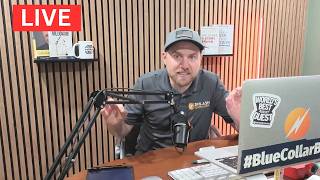
Phil Risher warns home-service owners that most AI automation platforms won't scale a business from $1M to $10M. He shows how a $9M plumbing company grew by tracking return-on-ad-spend and systematically increasing budget, and introduces the "Jobs Not Leads" philosophy: set monthly job targets, use team bonuses, and measure four core levers: booking rate, estimate-close rate, average ticket, and customer-acquisition cost.
Chapters
Today we are talking about explaining the boom of AI automation and these gurus that are coming around home service business. I got a couple other things I want to specifically talk about and then we're going to do some Q and A. I got a couple questions here that our team put together that were submitted. I'm live, so if you have questions, you can drop it on Instagram, you can drop it on YouTube and I'll be answering your questions. So the first thing that we're going to be talking about is I'm going to explain the boom of AI automation gurus everywhere, especially for home service businesses. So right now I'm sure if you own a home service business, you've been approached by people that are saying, hey, I'm the AI go to person and I'm going to help you with your AI answering service and all these automation tools. There is a tool out there called Go High Level G H L and basically what it does is it allows you to white label automation tools to help businesses. So like my company, we use Go High Level and we do white label it into a tool called Flashlight. And we don't per se sell this to people, we use it more internally to put a bunch of stuff together. But a lot of people out there, they don't know this and they're getting approached by all these automation tools and everyone's automations and AI and everyone does this stuff and it almost is like burning people out on automations and AI and what should I do and why do I do this? Here's the bigger issue for this. The bigger issue is that business owners, especially the ones that we work with 1 million to $10 million in business, they get stuck and they get stuck in this hamster wheel. They have digital marketing company that's out here that's doing stuff, they have AI automation company out here that's doing stuff. And then they have their CRM data that's actually over here. And what happens is if you're one to $10 million, if you use one of these white label cookie cutter type of automation tools and they tell you that they do digital marketing, nine times out of ten they're just slapping digital marketing on top of the automation tool that they're using and, and it's very, very cookie cutter, rinse and repeat and it's fine. You know, if you're trying to get to a million dollars, it's fine even 500,000 to 800,000. But when you go from 1 to 10 million, you need performance marketing and more importantly you need data in your CRM and home service businesses, they can't run on this, you know, GHL or whatever other tool chirp hatch. You know, all these tools are cool, they're all good automation tools, but if you don't layer in digital marketing tied together with data, you're going to stall out. And more importantly, the business owner is going to be the one that's trying to be the brains around all these things happening. So if that's you and you feel like that's the case, this is probably what's happening in your business. And if you're getting approached, this is this big boom that's going on for businesses. Next. I did a post on this on LinkedIn and it had probably like 12 to 12,000 some views on it and it's good engagement. So I thought it would be something that was important to share. So we work with a $9 million plumbing company and they were stuck in revenue revenue wise because they didn't know how to grow. And the first thing that we did when we came in was we said, okay, where are you spending money? They have money in Yelp, they have money on Google LSAs, they have money on Google search ads, all these different places. And the owner was the one who was providing return on ad spend, reporting to the actual marketing company. So the owner was going in, pulling all the data, giving it to the marketing company. The problem is, is that the marketing company wasn't strategic about what to do with the data. So the example is this is the exact situation. They were doing $2,500 a month on Google Local Service ads, $2,500 a month on Google Local service ads. But they were pulling the data and they were saying, okay, this is working. But they didn't actually take that data and say, okay, what are we going to do with it? So in this example, it's $2,500 a month. We set up return on ad spend and they generated a 5x return. So they generated over $12,000 by spending this money, 2,500 bucks. So we said, okay, well we need to do more of that. So let's double from 2500 to 5000 the next month. They went from 5000 spend and they 7xed it. So they went to $35,000, close to $40,000 in revenue. So guess what we did again? We doubled it again. And there's two parts to this. One, people think that ads can be a black hole. You just spend a bunch of money and, you know, pray to the Google gods and hopefully they bless you with leads and hopefully it makes you money. But the second part is actually what could be holding people back is that they don't actually know how good it's performing. So they don't know if they should increase their budget or not. And they're just operating on gut feeling. And that we see so many times that people just don't know the leverage to pull. And it's just like I'm throwing money out there for my marketing budget, but I don't know what to actually do with the money that I have and what's actually working. Big, big opportunity for a lot of businesses. The next thing that I want to talk about is this premise called Jobs Not Leads. I was on a call with a, we're interviewing people and this guy, he started this SaaS company for GCS out in Denver, and he told me that the name of it was Jobs not leads and it has since shut down. But when he said that, I was like, jobs, not leads. Like, that's genius because you could spend a ton of money on marketing and get leads. You could go up the funnel and get a bunch of leads from Facebook, a bunch of leads from Angie, a bunch of leads from Yelp, but they're not going to turn into anything. And. And you're just looking at here saying, oh, I got a bunch of leads. And I had this exact issue at my home service business. So we were 3 million dollar home service business. And the issue was that we were getting leads coming in and we were getting shots at the leads, but we were very commoditized in pricing. Everyone was like, how much does it cost to do this thing? So what I did was I said, okay, let's take the next step. Leads. I care about leads, but I care way more about jobs on the books. I don't care if we book 30% of them or 80% of them. I mean, I do care this, but I care more about the job count. So let me focus on job count first. So what I did was I went to last year and I said, okay, January, February, March, April, May, how many jobs did we book? And if we wanted to grow 30%, for example, then I knew that we needed from 500 jobs and we needed 650 jobs. So 500 jobs last January, we need 650 jobs this January. So every single month I had this goal set. Then I went into the office where the CSRs were. We have four CSRs. And on the whiteboard I wrote up 650 jobs the first of the month. Then when they would come in every single day, I would have a new jobs total there. And everyone knew what they were working towards. And the secret sauce to this was I gave them a bonus. And I said, if we hit 650, then we're going to split 650amongst the four of you. So you each get an extra $120 by doing your job and executing. The reason this was important and this was a big unlock for us because the first month I did it, I tried to give each CSR a goal of like, okay, well, we need 650. So you're going to do 200. You're going to do 250. And the customer service representatives, they're not competitive. They don't paid, you know, based on their performance before. And so they were like, okay, well, I just talked to this person. But then they called back and talked to Phil, and then Phil booked it. So who does that count for? And then I want the credit because I want to hit my goal. And. And so it created a little bit of negative competition in our business. So I said, okay, before we roll that out fully, let me give them a group goal. So that way, if they call back and talk to me or they talk to someone else, we're all working towards the greater good and we're all going to make money on this. It's the downside of it is that someone's not holding their weight and da, da, da. But with this team that we had, it was four girls. They all got along great. They were friends. They. It was weird for them to instantly turn on some competitiveness. But all that to say that job count is the most important thing inside of your business. Specifically, if you go out and you make money on jobs or you generate estimates for jobs, you shouldn't care much about leads. Leads obviously flow into jobs, but it's not. Jobs is really what you want to track for your business because that's going to give you the most opportunities. All right, so I'm going to open this up to some Q A. So if you're on here, you know, looks like we have a couple people joined on Instagram and we had a couple of people on YouTube. So if you have questions, you can drop a comment. I'm going to go through some Q and A real quick. So first one we got submitted here, and if you want to submit any Q and A, just go to any video and drop a comment and our team will get it and then we'll put on these lives. All right, so I've got about 5,000 warm leads in Jobber, past customers and estimates, and another 10,000 to 20,000 scrape leads. But I'm trying to piece together follow up. I'm trying to piece together follow up has been a nightmare. What's the first sales process that you would put in place so these don't rot? I'm going to kind of break it out for you. So let's just start with the first part. I've got about 500 warm leads in jobber and another 10 to 20,000 scrap leads. Okay. So it sounds like you're getting leads coming into your business, but you don't have a way to convert them into customers. So the first thing I'd ask you is, do you. Do you do any type of email, newsletter or monthly. Newsletter or monthly email to your prospects, customers, your entire database. If you don't do that, this is the number one way. Especially if you have 20,000 scrap leads, you know, 50,000 warmly 20,000 scrap leads. What I would recommend doing is taking those 10,000 people and sending them an email every single month and have a theme. So I don't know your business in particular, but let's say that you did remodeling or something. Okay. Then every single month you're going to say have a theme and then you're going to talk to them about what they need to do. Like for example, let's say it's January. You're going to say, hey, are you planning a remodel for this year? Then you know, reach out to us and start the conversation. And then maybe in February, it's like, hey, are you planning to redo your mud room? For example, come springtime, it's going to be really nice when it starts to rain and you start educating them on this. And you have an email going out. Now here's a secret sauce that we do. We do what's called a two step revenue email sequence. So we send out that first email, which is just very top of the funnel, and we're looking for intent or interest. So we send them a subject line that's very specific. So in the, in the case of 2026 remodel project, we would put that in the subject line. Planning a 2026 project. Because we know that if someone clicks on that email and they open it, then they probably have some type of a project that they're planning or they're interested in somewhat of what that email has to say. So that's the first step. The second step is we take all the opens and we send A second email. The second email is more like a traditional Gmail looking email that you would send or Outlook email. In the subject line, it says in your area. And then in the body it says, hey, Phil, we're going to be in your area next week doing an estimate for a remodel project. I want to see if you want us to stop by and take a look at any projects you might have on hand. You know that they showed interest because they open your email and now you're giving them a direct call to action in the second step. So we did this for a company, they had 6,000 people. So not too far off from this, 10,000 people. They had 6,000 people. We sent out one email every single month and they generated $263,000 in revenue just by doing this. So that's the first part to this. If you have warm people in your database and you're not reaching out to them, you need to do that system and generate a bunch of money because they already know, like and trust you. All you need to do is just call them back to action and have them use you. We have a saying that you can't get lifetime value without a lifetime relationship. So do that. Second, I think there's a bigger issue here. If I just kind of read through the lines, which is you got a bunch of leads coming in. I think this person submitted another question. Let me just see. I think there's another issue here, which is you're getting a bunch of leads coming in, but you're not converting them through your funnel. Oh, here, here, here it is. Yeah. Okay, so this is them. We used to do 2.1 million a year. We dropped to 1 million, got back to 1.4 million. I'm not lacking leads, I'm lacking process. And this is kind of what I'm alluding to is I think that they're, they are lacking processes. What do I measure first to stop guessing? All right, so this kind of goes back to the jobs not leads mindset, but essentially it says that I'm not lacking leads. And clearly you're not. You're lacking the process. And here's the process that you need. You need a lead to sales conversion funnel. You need. When a lead comes in, you need to nurture that lead and then give it an estimate. And if you don't give them an estimate then, and you don't get the opportunity to give them an estimate, then that lead is basically gone. So that's why you need what's called booking rate. You need to track Your booking rate. I got this many leads and I turned them into this many jobs or this many estimates. And then when you generate the estimates, you need an estimate nurture sequence and you need to track your estimate. Close rate. I got this many estimates and I closed this many. And this is my nurture sequence. For any home service business, there's four things that you need to look at if you want to grow. Booking rate. I got this many leads and I converted them into this many jobs. Your close rate. I got this many estimates and I converted them in this many sales, Your average ticket and then your customer acquisition cost. Average ticket is total revenue divided by number of sales closed. That's going to give you your average ticket and then customer acquisition cost. How many new customers that I get for the amount of marketing money that I spent. The reason that these are the only four ways is because if you were, if you were closing rate is like let's say 60%. Your booking rate is 60%. If you were to get that up to 80%, you would book 20% more jobs and not spend another dime on marketing. And this is why it's one of the hidden levers in business to help them grow. Same thing with your close rate. We had a company that we were working with, they were closing at 47% and we set up an estimate nurture sequence. They went up to 52%, so 5% increase and they ended up closing five more estimates every single month. Average ticket was $3,000, so $15,000 a month extra with no more marketing spend just by adding an automation sequence. So if you feel like you're on this roller coaster, 2.1 million, 1 million, 1.4 million. It's because you don't have a system to nurture your leads through your sales process. And you're probably missing out on tons of opportunity. And what I can tell you about a business like this, where you have, you're not lacking leads. This is exactly how my home service business was. We had tons of leads coming in. We missed this system like what you're saying, and, and we missed return on ad spend tracking. So we didn't know what was actually generating revenue. And then we didn't know how to capitalize on the leads to pull them through the funnel. And once we fixed this, we went from 3 million to 4 million, 4 million to 5 million, and then sold the company. And this is 9 times out of 10 what's, what's happening here. And the other thing I'll say about this is that usually the business owner Is good at marketing and good at sales, and they're good at building the top of the funnel. But what they're not good at is systems and operations. And they just hire a CSR and office manager and think that they know how to do it. And this is why I uncovered that it's actually a marketing and sales function inside of the business with automations, with nurturing your leads via email and text and then what to say to them to get them to cross finish line. It's marketing and sales, and a lot of businesses miss this inside of their conversion funnel and they just keep trying to put more fuel on the fire. And this is why they get frustrated and they stalled out. All right, I'm live. So any questions? If you're on YouTube, I got YouTube over here, I got Instagram over here. Feel free to drop a comment. I'm just answering some questions here. So we got a couple more Q and A. See, every agency tells me to spend more. I want the opposite. Well, good. What's the rule you use before recommending more ad spend? Okay, so the cool thing about this is that I used to be in your shoes, okay? I worked at a home service business, and at the home service business, I was trying to grow, I got. I was incentivized to help the company grow. And every time I talked to my agency, they said, spend more on ads. And I would say, why? Why do we spend more on ads? Oh, because our cost per conversion and our leads are this amount. So if we. If our cost per conversion is $100, if we just spend a hundred more dollars, we'll get another lead. Okay, I can see that making sense. But are these good quality leads? Do they actually. Do these leads from this channel actually turn into revenue? And then what they would say every single time? Well, I don't know. Tell us, let us know. And this was a big gap that I uncovered in home service businesses that I had to plug in. Our business was that we could get leads all day, but what was the return on ad spend and were they actually good quality leads? So before we say spend more on ads, we say, well, is this actually making us money or not? If we spent $2,000, did we make 10,000 or do we make zero? Because why would we spend more on ads? If we made zero, Then what we do is we look at two things. And if you're in this exact situation, you can look at these two things. One, is the lead quality good? Because this could be leads from all over the world. They could be tire kickers. Price shoppers, you know, don't speak English, whatever the case is. Or is your intake process not good? Do you have a call script? Are you actually nurturing the leads to get them into jobs? Right. They could be three minute long conversations, but then they say, hey, you know, I'm going to give you a call back. And then it's gone forever. So those are the two things. So before you spend any more on ads, you need to know, is this actually helping you make money or not? Then you double down on that. Kind of like the story I mentioned at the top with the $9 million home service business. They were spending 2,500 bucks a month. They didn't know their return on ad spend and they weren't capitalizing on it. They were doing 5x return. So we told them, they didn't even ask us. We told them, you should double this. They doubled it. And then they went from a 5x return to a 7 extra turn. Then we said we should double this again. If you want more money and you want more leads that are actually revenue producing, we should do more of what's working. So the other piece to this is that if your agents, if you go to your agency and you say we're slow and all they say is spend more on ads, that to me is a red flag because there are so many other things that you can do to grow your business. For example, you could take all your past prospects and customers and send them some type of an offer. You could go out and build B2B partnerships and get referrals coming in. You could go to a new ad channel that maybe wasn't producing and say, hey, let's try this ad channel. Because we know this, for example, like Yelp or Google search ads or Meta or some other platform, LSAs, right? It's not just like spend more on ads and just throw money out there at the Google gods or it's just silly. So I feel your pain on that. And I would say I want the opposite too. And even as a marketing company, we want the opposite because we know that good, good home service businesses are not just built on ad platforms. It's not just spend more on ads and grow your business or everyone would do that. It's actually building a sound company that can take the leads, convert them into jobs and help them book. I'll give you one other story on this. I had a call, this was probably like a year ago, and I felt really bad for the guy, to be honest. He had just bought an electrical contracting business. I Think he was out in Kansas City. He had bought electrical contracting business. He didn't know anything about home service business, but he knew that he wanted to get into the trades and this was like a million dollar business. So he went and found a marketing company, and they said, spend a bunch of money on ads. So he spent $30,000. And he told me on that call that he only made $1,000 off of the $30,000. He spent 30. He made a thousand. And I said, oh, man, that's crazy. But then I dug in, and this is the part that uncovers a lot of the issues. I asked him, well, what's your booking rate look like? Like, what's your process when a lead comes in? And he didn't know his booking rate and he didn't know what his lead process was, he's like, yeah, the leads come in and then our guys call, our customer service representatives, call them. And I said, what if they don't get in touch with them? And then he's like, well, you know, I don't. You know, then they try to call them again, hopefully, but they might get busy. That's not a good process. Okay, you need to have a lead nurture sequence. Then I asked him, well, what's your close rate on estimates? He didn't know. I'm like, okay, man, like, these are the numbers that grow your business. And it's unfortunate because a lot of times business owners, they go out and talk to these marketing companies, and the marketing companies are gonna say, yeah, run ads, spend more on ads, do this stuff, but they don't build the infrastructure. And this is what I'm talking about. It's like, you got to build an infrastructure in your business before you just dump a bunch of money on ads to try to grow your business. Because you're going to get burned by marketing companies. They're going to get frustrated. All right, I'm live, guys. If you got a question, drop it here. I got a couple more Q and A. Let's see, you mentioned a goal before of 10% website conversion rate into leads. My site feels like it's underperforming. What do you actually do to push conversions up? All right, so what this person is asking is what, when someone goes to your website, we want them to convert into a lead at 10%, you get a hundred people to your website, you want 10% of those, so 10 of those people to turn into a lead. And this is something that we track every single month because we want to know if we're getting good traffic. To the site. And we want to know that the traffic is actually turning into leads. Well, duh. Who want, you know, of course you want leads. A lot of companies, they'll get you traffic, but is it local traffic? Right? Like, you could do SEO for all over the world. You could write a blog post about a lunchbox and get traffic from kids, but who cares, right? You want traffic from local people that need the service that you offer that are going to turn into a customer or a lead. This is why we track the 10% rule. So if you feel like your website's underperforming, here's how you can figure this out. Your. Your marketing company should be looking at this stuff, but if they're not, it's. You go to your Google Analytics and you find out how many people came to your website that month. And then you go and you see how many web forms you got and how many calls you got from your website. And then you take the number of leads and then you divide it by the number of website visitors, and that gives you your conversion rates. Website leads into website visitors into leads. You asked about, what do you do specifically to push conversions up. Great question. Something that I'm very passionate about. We had a company, one of the first companies that I started working with, they were getting like a thousand people to their website every single month, and they were local traffic, and they were generating 14 leads. 14, you know, like 1%. And we know that you should be getting at least 10% of your traffic into leads. So we said, okay, let's add these things to the website. So here's what we added. We added a chat widget. So a little widget in the corner that turns the chat into a text. Okay. I don't want you sitting out there chatting back and forth with random people. We need to turn that chat into a text message, and then we need to start nurturing that lead with questions. So, hey, they got a question. Cool. Can you send over a picture or something like that? Chat widgets, number one. Usually we see you can get about 2 to 3% of your traffic into leads, more by adding a chat widget the second one. And for this company, it crushed. And for a lot of companies that have some type of a flat pricing, it crushes. I mean, even plumbing companies, H. Vac companies, they have some type of flat pricing as well. We set up an estimate calculator, and this was really the big pop for them, an estimate calculator. People could put in one, two, maybe three questions and get a basic estimate output on the other side. And that's all that people wanted to know when they came to this site. How much does it cost and when can you do it? So those two things, if you can add them to your site, an online scheduling tool and an estimate calculator, it crushes. The company that I worked at, that was $3 million. I built an estimate calculator for them eight years ago and it still generates over 100 leads every single month. 100 leads every single month just from the estimate calculator, sometimes 200 leads. The other thing that we add to websites is on mobile. So if you go to your mobile website and it takes you longer than 10 seconds to turn into a lead, then it's probably losing customers because most people are not spending more than 10, 20 seconds on a website. They already made their decision. When they read your Google reviews, they got referred to you, whatever. They just go into your website to turn to a customer. So on mobile you want to have what's called sticky headers. So as you're scrolling through your website, you want right at the top a call now button and a get a quote button or you know, schedule service button. That way as people are scrolling, it's very easy for them to turn into a customer Right there. These are like some, some small fixes. There's a couple other things that you can do, but those are like the big ones that get big conversion rate swings. So if you don't have those, you should set them up. Awesome. Thanks everyone for joining today. This live Q and A. If you're watching this after the fact, drop a comment. We got some cool resources down in the description as well. 11 ways to get more customers for your business. You can set up some time to talk about your business, discuss your business. We actually it's probably pretty cool. We just got a five star Google review from a discovery call that we had and the person was just glowing about how awesome the call was. And they weren't even the right fit for us. They were a little too small. But our whole goal is give the recipe, sell to cooking. So even if you just want to get on there and talk about your business and see, you know, what would make sense as far as like if it makes sense to work with us. But also just like, hey, here's what I got in my business, like let's have a call. So happy to be.
More from Phil




The companies that win the next five years won't be the ones gaming the system.


